Quick Summary: Image recognition for CPG brands uses AI-powered computer vision to automatically analyze retail shelf photos, detecting product presence, placement, out-of-stocks, and planogram compliance. This technology enables CPG companies to monitor thousands of stores in real-time, replacing slow manual audits with automated insights that drive sales, optimize merchandising, and uncover competitive intelligence at scale. Walk into any grocery store and you’ll see the battlefield where CPG brands fight for consumer attention. Product placement matters. Shelf space drives revenue. Out-of-stocks kill sales. But how do Consumer Packaged Goods companies know what’s actually happening across thousands of retail locations? Manual audits are slow, expensive, and cover only a fraction of stores. That’s where image recognition changes everything.
What Is Image Recognition Technology for CPG?
Image recognition uses artificial intelligence to analyze images and videos, identifying objects and conditions in real-time. For Consumer Packaged Goods brands, it provides a way to monitor retail shelves, track product placement, track competitor placements, ensure compliance, and capture execution data that was previously impossible to collect at scale. The technology works through computer vision algorithms trained on product images. Field reps, merchandisers, or even store personnel snap photos of shelves with a smartphone. Within seconds, the AI identifies every SKU visible, checks planogram compliance, flags out-of-stocks, measures share of shelf, and spots competitive threats. No manual counting. No spreadsheets. No guesswork.
The Technology Behind CPG Image Recognition
Modern image recognition systems combine deep learning models with massive product databases. Research analyzing e-commerce product datasets found that exploratory data analysis on 13,000 products revealed product descriptions missing for 32%, while detailed specifications are missing for 20% of products. This data gap makes training accurate models challenging. But once trained, these systems deliver remarkable precision—industry implementations report SKU recognition accuracy reaching 95-97%. The architecture typically includes object detection, classification, and semantic segmentation. The model must distinguish between hundreds or thousands of similar-looking products, handle varying lighting conditions, account for partial occlusions, and work with images captured by non-professional photographers using consumer-grade smartphones. 
Turn Image Data Into AI Software With AI Superior
AI Superior helps companies build custom AI solutions, including computer vision systems for object detection, image analysis, segmentation, OCR, and classification. Their process can cover discovery, data review, MVP development, integration, and result evaluation. For CPG teams, this can help with product recognition, packaging checks, shelf monitoring, assortment review, or other image-based workflows.
Need Image Recognition Built for Real Workflows?
AI Superior can help with:
- building custom computer vision solutions
- recognizing and classifying product images
- testing image recognition ideas with PoC or MVP work
- integrating AI tools into existing systems
👉 Contact AI Superior to discuss your project.
Key Applications of Image Recognition for CPG Brands
The practical applications stretch across the entire retail execution workflow. Here’s where CPG companies are seeing the biggest impact.
Digitized Store Audits
Traditional store audits require field teams to manually count products, record facings, and note out-of-stocks—a tedious process that limits coverage. Digitized store audits use image recognition to cover more stores, boosting field team productivity with 95% accuracy—far better than manual retail audits. Field reps visit more locations in less time. Each visit captures more data. And headquarters gets standardized, comparable information across the entire retail network.
Planogram Compliance Monitoring
CPG brands negotiate planograms with retailers—specific shelf layouts designed to maximize visibility and sales. But execution varies wildly. Products get misplaced, competitors encroach on your space, and store staff don’t always follow the agreed layout. Image recognition systems compare actual shelf conditions against planogram specifications, highlighting deviations instantly. Brands know which stores need attention and can quantify the revenue impact of non-compliance.
Share of Shelf Analysis
How much shelf space does your brand control compared to competitors? Share of shelf correlates directly with market share, but measuring it manually across thousands of stores is impractical. Computer vision calculates share of shelf automatically from each photo, tracking trends over time and revealing opportunities to negotiate better placement or identify stores where competitors are gaining ground.
Out-of-Stock Detection
Empty shelf space represents lost sales—immediately. But without real-time visibility, brands don’t know where stockouts are happening until it’s too late. Image recognition flags out-of-stocks the moment a photo is captured. Field teams can address the issue during the same visit, or the system can trigger alerts to store managers and distributors to expedite restocking.
Promotional Execution Verification
CPG companies invest heavily in promotional displays, shelf talkers, and point-of-sale materials. Did the retailer actually set up your end-cap display? Is your promotional signage visible? Image recognition verifies promotional execution, documenting what was installed and confirming it matches what was paid for. This accountability protects marketing spend and ensures promotional ROI.
| Application | Manual Process Time | IR Process Time | Accuracy Improvement |
|---|---|---|---|
| Store audit (50 SKUs) | 25-35 minutes | 3-5 minutes | +40-60% |
| Planogram compliance check | 15-20 minutes | 30-60 seconds | +50-70% |
| Share of shelf calculation | 10-15 minutes | Instant | +80% |
| Promotional verification | 5-10 minutes | 15-30 seconds | +90% |
Benefits Driving CPG Adoption
So why are Consumer Packaged Goods brands rushing to implement image recognition? The value proposition is compelling across multiple dimensions.
Massive Productivity Gains
Field teams accomplish in hours what previously took days. More stores audited, more data collected, more problems identified and solved. That productivity boost directly impacts the bottom line—either through reduced field team costs or expanded coverage with the same headcount.
Data Quality and Standardization
Human observation varies. One merchandiser might count four facings while another counts five for the same product. Image recognition applies consistent logic every time, generating standardized data that’s actually comparable across regions, channels, and time periods.
Competitive Intelligence
Every shelf photo captures your competitors’ execution too. Where are they gaining shelf space? What promotional tactics are they deploying? Which stores favor their products over yours? This competitive visibility was nearly impossible to gather systematically before image recognition. Now it’s a byproduct of routine store visits.
Real-Time Visibility
Traditional reporting lags by weeks. Image recognition delivers insights within minutes of photo capture. Problems surface while field reps are still on-site to fix them. Headquarters sees store conditions as they happen, not after the fact. That speed enables agile response—addressing issues before they compound, capitalizing on opportunities while they’re fresh, and making data-driven decisions in real time. 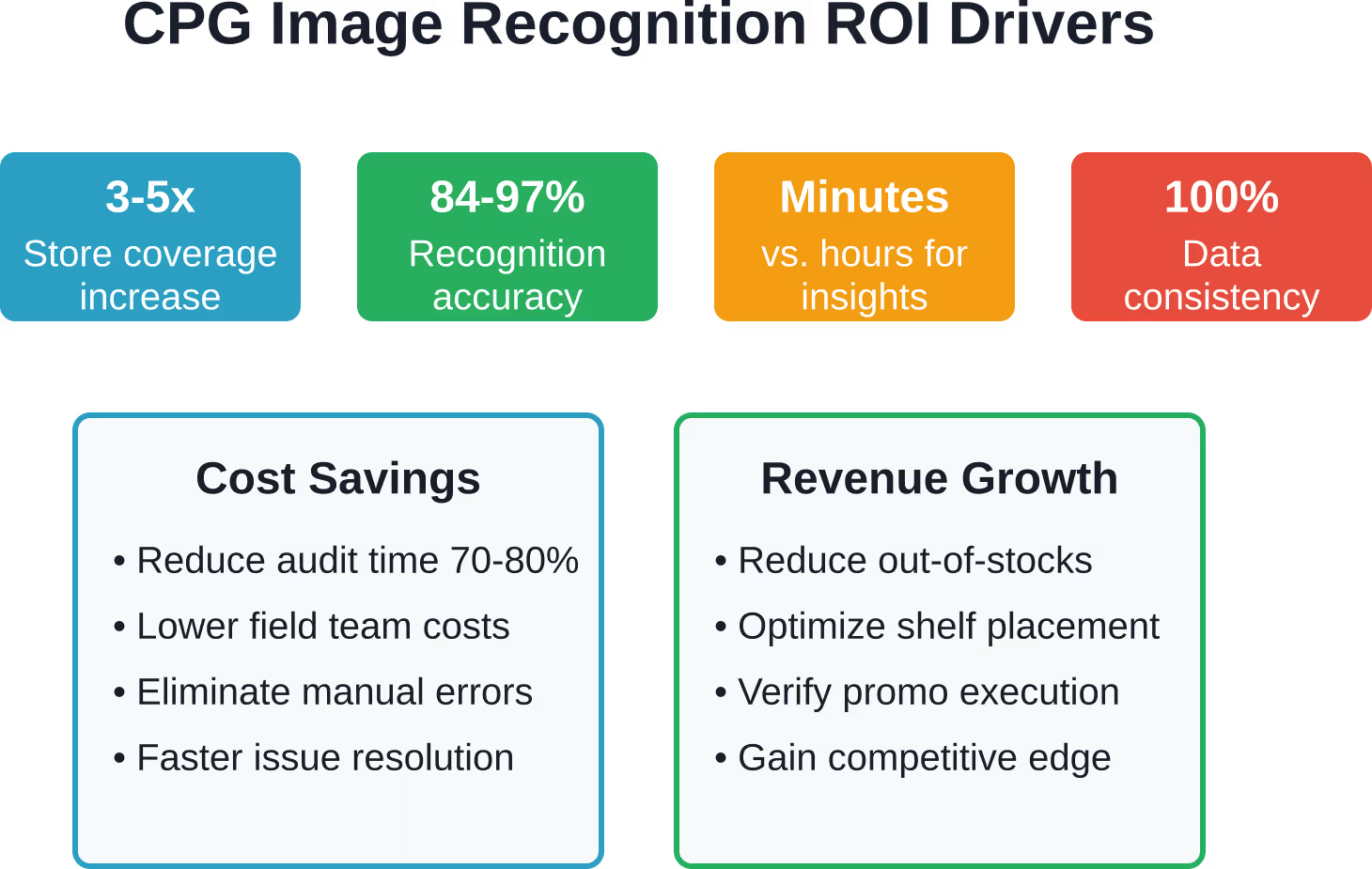
Overcoming Image Recognition Challenges
No technology is perfect. CPG brands implementing image recognition face real obstacles that can derail success if not addressed proactively.
The Accuracy Problem
While leading implementations achieve 95-97% SKU recognition accuracy, many fall short. Factors that kill accuracy include poor lighting in stores, products at unusual angles, partially obscured items, similar packaging across SKUs, and inadequate training data for new products. The fix? Invest in comprehensive training datasets, implement quality checks on captured images, provide clear photo guidelines to field teams, and continuously retrain models as product portfolios evolve.
Change Management Resistance
Field teams sometimes resist image recognition, viewing it as surveillance rather than support. They worry about job security, distrust the technology, or simply prefer familiar manual methods. Successful CPG implementations note that teams must understand that image recognition doesn’t punish—it helps. It eliminates unnecessary bureaucracy, provides accurate performance data, and increases team satisfaction through transparency. Successful rollouts emphasize the productivity benefits, involve field teams in pilot testing, celebrate early wins publicly, and frame the technology as enabling better performance rather than monitoring it.
Integration with Existing Systems
Image recognition generates valuable data, but only if it flows into the systems where decisions get made—trade promotion management platforms, CRM systems, business intelligence tools, and ERP systems. APIs and data pipelines matter as much as the AI itself. Plan integration architecture early, ensure clean data handoffs, and build dashboards that surface insights where stakeholders already work.
Cost and ROI Concerns
Implementation costs vary widely depending on scale, customization needs, and existing infrastructure. Some executives question whether the investment justifies the returns. The strongest ROI cases focus on specific, measurable outcomes: percentage reduction in audit time, increase in store coverage, decrease in out-of-stock incidents, or improvement in planogram compliance rates. Pilot programs that demonstrate quick wins help secure broader rollout funding.
GS1 Standards and Image Recognition
The GS1 organization maintains product image specification standards that support effective image recognition implementation. These standards define primary image types including Product Image for web use, High Resolution images, and Supporting Elements imagery. The GS1 Image Specification Standard (updated in 2025) utilizes a 20-position naming convention to accommodate enhanced metadata for AI training, where position 19 indicates Sustainability/Recycling markers and position 20 specifies Digital Twin Compatibility level. CPG brands following GS1 standards create consistent, structured image libraries that train recognition models more effectively and ensure interoperability across platforms and partners.
The Future: Multimodal Analysis
Image recognition isn’t standing still. Research analyzing video advertisements found that the majority of video content contains audio elements alongside visual components. This research explored how multimodal frameworks combine visual, audio, and text analysis to understand consumer engagement more deeply. For product relevance modeling, advanced systems leverage large-scale datasets combining human annotations with LLM-generated labels to classify product-query relevance. These large-scale datasets demonstrate strong generalization capabilities across product categories. Product-query relevance distributions show variation in how products map to search queries across different relevance levels—insights that help CPG brands optimize digital shelf positioning and search advertising. The takeaway? Image recognition is evolving toward comprehensive multimodal intelligence that understands context, intent, and engagement patterns alongside visual shelf data.
FAQ: Image Recognition for CPG
What is image recognition in CPG?
Image recognition in CPG refers to AI-powered computer vision technology that automatically analyzes retail shelf photos to identify products, verify placement, detect out-of-stocks, measure share of shelf, and validate promotional execution. It replaces manual store audits with automated, real-time data collection.
How accurate is CPG image recognition?
Leading implementations achieve 95-97% SKU recognition accuracy under optimal conditions. However, accuracy varies based on image quality, lighting, product similarity, and training data completeness. Industry experience shows digitized store audits reach approximately 95% accuracy, significantly outperforming manual audits.
What are the main benefits of image recognition for CPG brands?
Primary benefits include 3-5x increase in store coverage per field rep, 70-80% reduction in audit time, real-time visibility into retail execution, standardized data quality across locations, competitive intelligence gathering, faster identification and resolution of out-of-stocks and planogram violations, and quantifiable ROI through reduced costs and increased sales.
What challenges do CPG companies face implementing image recognition?
Common challenges include achieving consistent accuracy across diverse retail environments, managing change and gaining field team buy-in, integrating image recognition data with existing enterprise systems, justifying upfront investment costs, handling products with similar packaging or frequent redesigns, and maintaining updated training datasets as product portfolios evolve.
Do I need special equipment for CPG image recognition?
No specialized equipment is required. Most modern image recognition systems work with standard smartphones used by field reps and merchandisers. The AI processing happens in the cloud, so the device just needs a decent camera and internet connectivity to upload images for analysis.
How long does it take to implement image recognition?
Implementation timelines vary by company size and complexity. Pilot programs typically launch in 2-4 months, covering a limited geographic area or product portfolio. Full enterprise rollouts can take 6-12 months, including training data preparation, system integration, field team training, and phased expansion across regions.
Can image recognition track competitor products too?
Yes. One of the most valuable features of shelf image recognition is that it captures all visible products—yours and competitors’—in every photo. This generates systematic competitive intelligence about competitor shelf share, placement, promotional activity, and pricing that was previously difficult to collect at scale.
Moving Forward with Image Recognition
Image recognition for CPG isn’t emerging technology anymore—it’s table stakes for brands serious about retail execution. The productivity gains are real, the data quality improvements are measurable, and the competitive advantages are substantial. But success requires more than just buying software. It demands thoughtful change management, investment in training data and integration, clear ROI targets, and commitment to continuous improvement as the technology evolves. The brands winning at retail today aren’t the ones with the biggest field teams. They’re the ones with the best visibility, the fastest response times, and the deepest understanding of what’s actually happening on shelves. Image recognition delivers that visibility. The question isn’t whether to implement it—it’s how quickly can you get started.