
Quick Summary: Predictive analytics transforms pharmaceutical development by using machine learning and statistical modeling to forecast drug efficacy, optimize clinical trials, and reduce development costs. The technology analyzes vast datasets to predict outcomes, patient responses, and market potential—helping pharma companies move from reactive to proactive decision-making. With clinical trial failure rates historically reaching 38% in Phases II and III, predictive models now enable earlier risk detection and smarter resource allocation.
The pharmaceutical sector faces a persistent challenge: enormous R&D investments paired with discouragingly low success rates. Pharmaceutical companies pour more than $300 billion into research and development annually, but just 12% of drugs entering clinical trials eventually reach market approval.
Here’s the thing though—predictive analytics is reshaping that equation. By harnessing machine learning, statistical modeling, and vast clinical datasets, pharmaceutical companies can now forecast outcomes with unprecedented accuracy.
The data tells a sobering story. Between 1998 and 2008, clinical trials in Phases II and III experienced a 54% failure rate. The primary culprit? Lack of efficacy accounted for 57% of failures, while safety concerns drove 17% of rejections.
Some studies suggest variations in Phase II and Phase III success rates across different time periods, though exact figures vary by source.
What Is Predictive Analytics in Pharmaceuticals?
Predictive analytics applies statistical algorithms and machine learning techniques to historical and real-time data, generating forecasts about future events. In pharma, this means analyzing clinical trial data, patient records, molecular structures, manufacturing metrics, and market trends to predict outcomes before they occur.
The technology isn’t about crystal balls. It’s about pattern recognition at scale—identifying correlations humans might miss across millions of data points.
Think of it as moving from reactive to proactive decision-making. Traditional pharma development relied on sequential trial-and-error. Predictive models compress learning cycles by simulating outcomes computationally before committing resources to physical trials.

Use Predictive Analytics with AI Superior
AI Superior works with data-heavy environments where predictive models are used to support research, operations, and compliance processes.
The focus is on building models that handle complex datasets and fit into regulated workflows.
Looking to Apply Predictive Analytics in Pharma?
AI Superior can help with:
- assessing available data
- building predictive models
- integrating models into existing systems
- refining outputs based on usage
👉 Contact AI Superior to discuss your project, data, and implementation approach
Drug Discovery and Development Forecasting
Early-stage drug development represents the highest-risk, highest-cost phase of pharmaceutical innovation. Predictive analytics now enables researchers to screen thousands of molecular compounds virtually, identifying promising candidates before synthesis.
Machine learning models analyze molecular structures, protein interactions, and bioavailability predictions to rank drug candidates by their likelihood of success. This computational screening dramatically reduces the number of physical compounds requiring laboratory synthesis and testing.
According to recent medical research, machine learning-driven bioavailability prediction enhances efficiency in early-stage development where conventional experimental approaches consume excessive time and resources. The models learn from historical pharmacokinetic data, applying those patterns to novel compounds.
One significant application involves predicting adverse drug reactions before human trials begin. By analyzing molecular similarities to compounds with known safety issues, predictive systems flag potential toxicity risks early—addressing the 17% of failures attributed to safety concerns.
Clinical Trial Optimization and Patient Selection
Clinical trials represent the most expensive component of drug development. Predictive analytics optimizes multiple dimensions: patient recruitment, site selection, protocol design, and endpoint prediction.
Patient stratification stands out as particularly impactful. Machine learning models analyze electronic health records, genomic data, and biomarkers to identify ideal trial candidates—patients most likely to respond to the investigational therapy and least likely to experience adverse events.
This precision reduces trial size requirements while improving statistical power. Smaller, better-targeted trials cost less and complete faster without sacrificing regulatory rigor.
The FDA has acknowledged AI’s growing role in clinical trial design. According to agency guidance, artificial intelligence and machine learning are increasingly integrated into trial design, protocol optimization, and data monitoring—areas where the FDA actively develops regulatory frameworks.
Predictive models also forecast enrollment timelines. By analyzing historical recruitment rates, geographic patient distributions, and competing trials, analytics platforms estimate realistic enrollment schedules. This planning prevents costly delays and site underutilization.
Real-Time Monitoring and Adaptive Trials
Adaptive trial designs leverage predictive analytics to modify protocols mid-study based on accumulating data. These aren’t arbitrary changes—they’re statistically rigorous adjustments informed by interim analyses.
Predictive algorithms monitor safety signals in real-time, flagging unexpected adverse event patterns before they escalate. Early detection enables protocol amendments that protect patient safety without terminating promising studies.
Dose optimization represents another adaptive application. Rather than testing fixed doses throughout a trial, predictive models analyze early pharmacokinetic and efficacy data to recommend optimal dosing for later cohorts.
Manufacturing Quality Control and Predictive Maintenance
Pharmaceutical manufacturing operates under strict quality regulations. Even minor deviations can trigger product recalls, supply shortages, and regulatory penalties.
Predictive analytics transforms quality control from reactive batch testing to proactive process monitoring. Sensors throughout production lines generate continuous data streams—temperature, pressure, mixing speeds, chemical concentrations.
Machine learning models trained on this data detect subtle deviations that precede quality failures. When sensor patterns diverge from normal operating signatures, the system alerts operators before defective product forms.
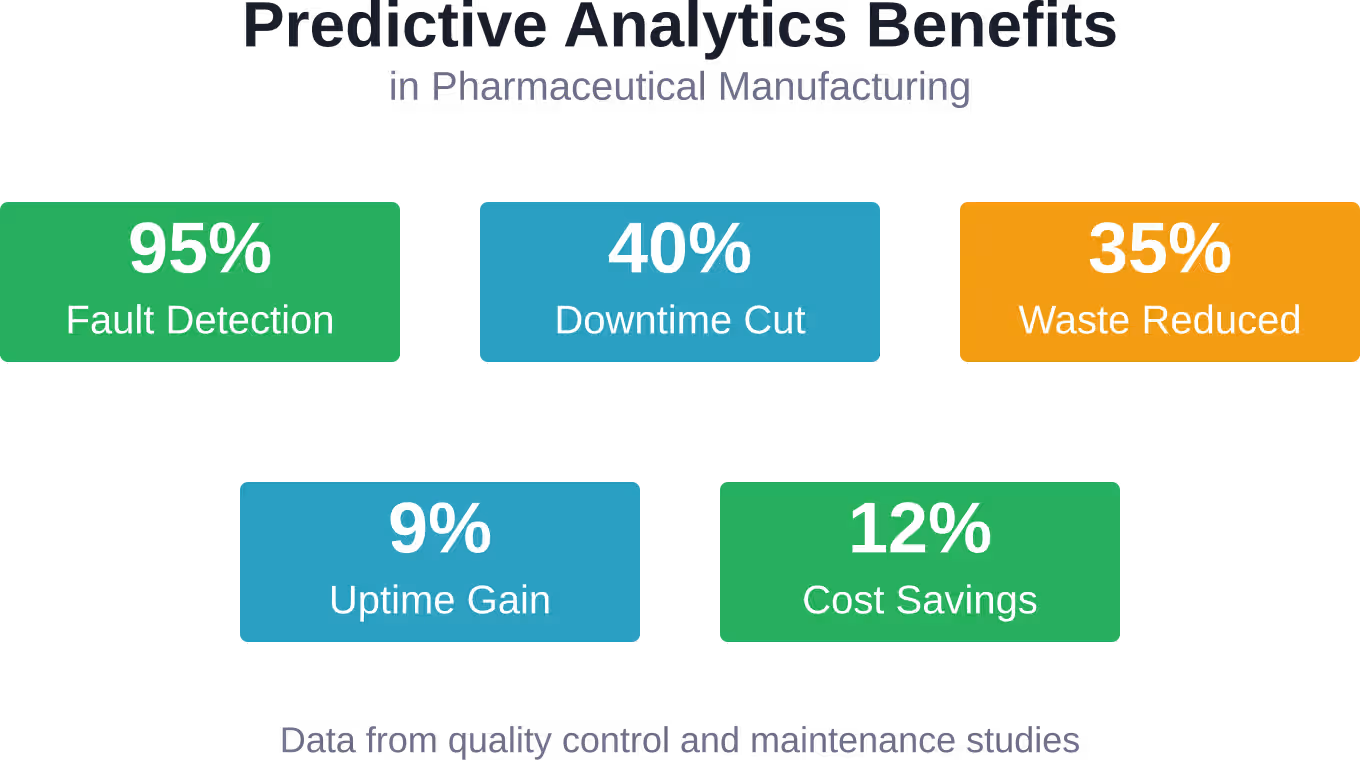
Research on big data analytics in pharmaceutical quality control demonstrates impressive results. Advanced analytics systems achieve 95% fault detection rates while reducing manufacturing downtime by 40% and waste by 35%. These improvements exceed traditional quality control benchmarks.
Predictive maintenance applies similar principles to equipment reliability. By analyzing vibration patterns, temperature fluctuations, and operational hours, models forecast when machinery requires maintenance—preventing unexpected breakdowns that halt production.
Predictive maintenance can improve factory uptime and reduce maintenance costs through more reliable equipment operation.
Market Forecasting and Commercial Analytics
Once a drug reaches approval, commercial success depends on accurate demand forecasting, pricing strategy, and market positioning. Predictive analytics informs each component.
Demand forecasting models integrate prescription data, epidemiological trends, competitor launches, and payer coverage policies. These predictions guide manufacturing capacity planning, distribution logistics, and inventory management.
Accurate forecasts prevent two costly extremes: stockouts that lose revenue and excess inventory that expires before use. For specialty medications with limited shelf life, precision forecasting directly impacts profitability.
Pricing analytics examine willingness-to-pay across patient segments, payer negotiation dynamics, and competitive positioning. Machine learning models simulate pricing scenarios, projecting revenue under different price points and market access strategies.
Patient Adherence and Outcomes Prediction
Post-approval surveillance increasingly leverages real-world evidence—data from actual clinical practice rather than controlled trials. Predictive models analyze this evidence to identify patients at high risk of treatment discontinuation.
Factors predicting non-adherence include polypharmacy complexity, side effect profiles, dosing frequency, and socioeconomic barriers. By flagging at-risk patients, pharma companies can deploy targeted support programs: reminder systems, financial assistance, or simplified dosing regimens.
Improved adherence benefits everyone. Patients achieve better outcomes, payers see reduced complications, and manufacturers maintain revenue streams while demonstrating real-world effectiveness.
Challenges and Implementation Considerations
Real talk: predictive analytics isn’t a magic solution. Implementation faces substantial obstacles.
Data quality remains the foundational challenge. Models trained on incomplete, biased, or inaccurate data produce unreliable predictions. Pharmaceutical datasets often suffer from fragmentation—clinical data siloed from manufacturing data, disconnected from supply chain systems.
Integration requires significant investment in data infrastructure. Legacy systems don’t communicate easily. Establishing unified data platforms with consistent standards demands both capital and organizational change management.
Regulatory uncertainty complicates adoption. While agencies like the FDA acknowledge AI’s potential, formal guidance remains evolving. Companies face ambiguity about validation requirements, documentation standards, and liability frameworks for algorithm-driven decisions.
Explainability presents another hurdle. Complex machine learning models—particularly deep neural networks—function as “black boxes.” Regulators and clinicians want to understand why a model makes specific predictions, but algorithmic transparency often trades off against predictive accuracy.
The talent gap shouldn’t be underestimated. Effective pharmaceutical analytics requires hybrid expertise: domain knowledge in drug development combined with data science proficiency. These individuals remain scarce and expensive.
| Challenge | Impact | Mitigation Strategy |
|---|---|---|
| Data Quality Issues | Unreliable predictions, regulatory risk | Invest in data governance, standardization, validation protocols |
| System Integration | Siloed insights, incomplete visibility | Unified data platforms, API connectivity, phased integration |
| Regulatory Uncertainty | Compliance risk, slow adoption | Early agency engagement, robust documentation, pilot programs |
| Model Explainability | Limited clinical trust, approval barriers | Interpretable algorithms, visualization tools, hybrid approaches |
| Talent Shortage | Implementation delays, quality concerns | Training programs, partnerships, managed services |
The Path Forward: AI and Generative Models
Predictive analytics continues evolving rapidly. Generative AI—systems that create novel outputs rather than just classifying inputs—represents the next frontier.
Generative models can design entirely new molecular structures optimized for specific therapeutic targets. Rather than screening existing compounds, these systems propose novel chemicals predicted to have desired properties.
The technology also accelerates clinical documentation. Natural language processing models extract structured data from unstructured clinical notes, expanding the datasets available for predictive modeling without additional manual coding.
But wait. The same challenges apply with amplified intensity. Generative models are even less transparent than traditional predictive systems. Regulatory frameworks haven’t caught up. Validation becomes more complex when algorithms generate outputs with no historical precedent.
The pharmaceutical industry finds itself navigating this tension: enormous potential paired with substantial uncertainty. Early adopters gain competitive advantage but assume higher risk. Conservative players avoid pitfalls but may fall behind.
Most likely, the industry will segment. Large pharma companies with deep pockets will invest aggressively, establishing internal AI capabilities and pushing regulatory boundaries. Smaller firms will access analytics through partnerships, contract research organizations, and software-as-a-service platforms.
FAQ: Predictive Analytics in Pharmaceutical Industry
What is predictive analytics in pharmaceutical development?
Predictive analytics applies statistical modeling and machine learning to pharmaceutical data—clinical trials, manufacturing metrics, molecular structures, and market trends—to forecast outcomes before they occur. The technology enables drug developers to predict trial success probability, identify optimal patient populations, forecast manufacturing issues, and estimate commercial performance with greater accuracy than traditional methods.
How does predictive analytics improve clinical trial success rates?
Predictive models analyze patient characteristics, biomarkers, and historical trial data to identify candidates most likely to respond to investigational therapies. This precision patient selection increases statistical power while reducing trial size and duration. Models also monitor safety signals in real-time and optimize dosing strategies through adaptive trial designs, addressing the primary failure reasons—lack of efficacy (57% of failures) and safety concerns (17%).
What role does predictive analytics play in pharmaceutical manufacturing?
Manufacturing applications include quality control monitoring and predictive equipment maintenance. Sensor data from production lines feeds machine learning models that detect deviations predicting quality failures before defective product forms. Research demonstrates these systems achieve 95% fault detection while reducing downtime by 40% and waste by 35%. Predictive maintenance forecasts equipment failures, improving uptime and cutting maintenance costs.
Can predictive analytics reduce drug development costs?
Yes, through multiple mechanisms. Virtual screening reduces the number of compounds requiring physical synthesis. Better patient selection decreases trial size requirements. Accurate enrollment forecasting prevents site inefficiencies. Manufacturing optimization lowers waste and prevents costly recalls. Market forecasting improves inventory management. While implementation requires upfront investment, these efficiencies compound across development timelines, potentially saving hundreds of millions per approved drug.
What are the main challenges in implementing pharmaceutical predictive analytics?
Key obstacles include data quality issues (incomplete or fragmented datasets), system integration complexity (legacy platforms that don’t communicate), regulatory uncertainty (evolving validation requirements), model explainability demands (black-box algorithms that clinicians distrust), and talent scarcity (limited professionals combining pharma domain expertise with data science skills). Successful implementation requires addressing these systematically rather than treating analytics as purely a technology purchase.
How do regulatory agencies view AI and predictive analytics in pharma?
The FDA and other regulators acknowledge AI’s growing role in clinical trial design and drug development. Agencies are actively developing guidance frameworks while encouraging innovation. However, formal validation standards remain evolving. Companies should engage regulators early, maintain robust documentation, and prioritize model transparency. Regulatory acceptance will likely expand as evidence accumulates demonstrating improved safety and efficacy outcomes.
What is the difference between predictive analytics and generative AI in pharmaceuticals?
Predictive analytics forecasts outcomes based on historical patterns—predicting trial success, patient responses, or equipment failures. Generative AI creates novel outputs—designing new molecular structures, generating synthetic patient data, or producing clinical documentation. Predictive models classify or estimate; generative models produce. Both leverage machine learning but serve different functions. Generative AI represents a newer, more experimental frontier with greater potential and higher regulatory uncertainty.
Conclusion: Data-Driven Transformation
Predictive analytics fundamentally reshapes how pharmaceutical companies develop, manufacture, and commercialize therapies. The technology addresses the industry’s core challenge: unacceptable failure rates consuming enormous resources.
Evidence demonstrates tangible impact. Clinical trial success rates have improved. Manufacturing quality metrics have strengthened. Commercial forecasting has become more reliable. These aren’t theoretical benefits—they’re measurable outcomes already visible in leading organizations.
The transformation will accelerate. As data infrastructure matures, algorithms improve, and regulatory frameworks clarify, predictive analytics will transition from competitive advantage to baseline expectation. Companies that build capabilities now position themselves for long-term success.
But success requires more than technology deployment. It demands organizational commitment to data quality, cross-functional integration, and continuous learning. The algorithms provide insights; humans must act on them effectively.
For pharmaceutical organizations evaluating predictive analytics initiatives, start with focused pilot programs addressing specific pain points—patient recruitment for one trial, quality monitoring for one product line, or demand forecasting for one therapeutic area. Prove value at small scale, then expand systematically.
The future of pharmaceutical development is predictive. The question isn’t whether to adopt these capabilities, but how quickly and effectively an organization can build them.
 English
  German
  Arabic
  French
  Dutch
Dutch  Spanish