
Quick Summary: A certificate in predictive analytics provides specialized training in statistical modeling, machine learning, and data forecasting to help professionals drive data-based business decisions. These programs typically take 12-24 months to complete and prepare graduates for high-demand analytical roles with median salaries of $103,300 for statisticians as of May 2024.
Predictive analytics sits at the intersection of statistics, machine learning, and business intelligence. Organizations increasingly rely on data-driven forecasting to make strategic decisions, creating strong demand for professionals who can transform raw data into actionable insights.
For those looking to break into this field or level up existing analytics skills, certificate programs offer a focused pathway without the time commitment of a full master’s degree.
What Is a Certificate in Predictive Analytics?
Predictive analytics certificate programs teach students to use statistical methods and machine learning algorithms to analyze historical data and forecast future outcomes. These courses cover modeling techniques, data visualization, and business application across industries.
According to the Bureau of Labor Statistics, statisticians earned a median annual wage of $103,300 in May 2024. The field shows solid growth prospects, with 8 percent projected employment growth for mathematicians and statisticians from 2024 to 2034, translating to approximately 2,700 total employment change over 10 years.
Most certificate programs target working professionals and offer flexible formats. Timeline options vary—advanced certificate programs typically require 12-24 months to complete on either full-time or part-time schedules. Many institutions offer rolling admission with start terms available in Fall, Spring, and Summer.

Build Practical Predictive Analytics Skills with AI Superior
AI Superior provides training and consulting focused on real-world predictive analytics use cases, not just theory. The approach is based on working with actual data and systems, helping teams understand how models are built, tested, and used in practice.
Looking to Develop Predictive Analytics Skills?
AI Superior can help with:
- training teams on predictive analytics and AI
- working with real datasets and use cases
- explaining modeling and implementation steps
- supporting practical skill development
👉 Contact AI Superior to discuss training and implementation needs.
Core Skills and Curriculum
What exactly do these programs teach? Here’s the thing though—curriculum varies by institution, but most certificate programs cover similar foundational territory.
Statistical Modeling and Machine Learning
Students learn regression analysis, classification algorithms, and time series forecasting. Python and R dominate as programming languages of choice, with hands-on training in libraries like scikit-learn, pandas, and TensorFlow.
Courses typically progress from basic statistical inference to advanced techniques like ensemble methods and neural networks.
Data Visualization and Communication
Technical skills alone won’t cut it. Predictive analytics professionals need to translate complex findings into clear business recommendations.
Programs emphasize visualization tools—Tableau, Power BI, and Python’s matplotlib—alongside training in data storytelling and presentation skills.
Business Application
The best programs ground technical training in real-world context. Case studies cover inventory optimization, customer churn prediction, risk assessment, and marketing analytics across retail, finance, healthcare, and other sectors.
| Skill Category | Key Topics | Common Tools |
|---|---|---|
| Statistical Methods | Regression, hypothesis testing, time series | R, SAS, Minitab |
| Machine Learning | Classification, clustering, neural networks | Python, scikit-learn, TensorFlow |
| Data Management | SQL, data cleaning, ETL processes | SQL, pandas, Apache Spark |
| Visualization | Dashboards, interactive reports, storytelling | Tableau, Power BI, matplotlib |
Program Options and Formats
Predictive analytics certificates come in several flavors, each targeting different audiences and career goals.
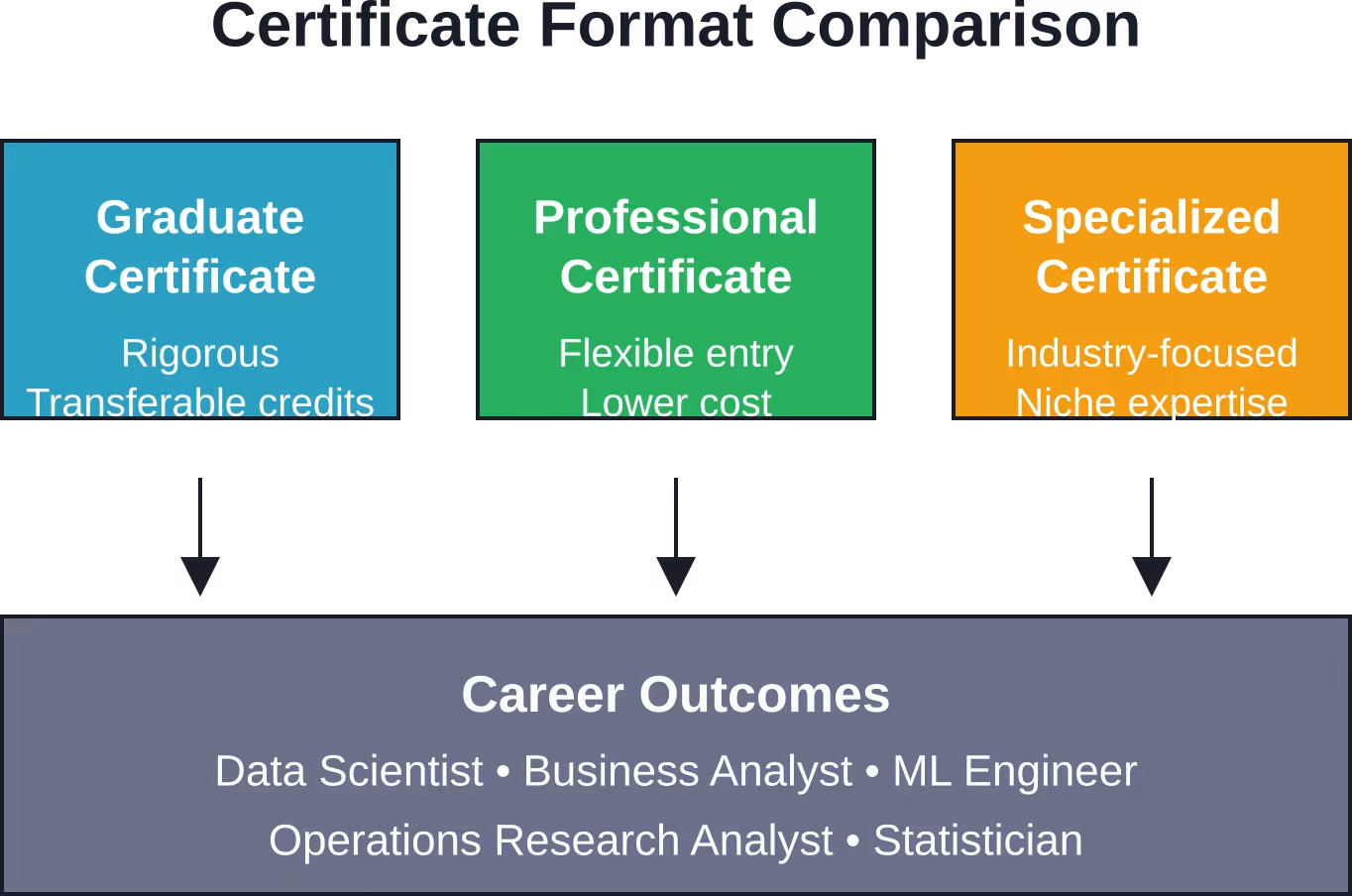
Graduate Certificates
Graduate-level programs require a bachelor’s degree and often appeal to professionals with some quantitative background. These tend to be more rigorous and may include credits that can transfer toward a master’s degree.
Real talk: if you’re considering an eventual master’s in data science or analytics, starting with a graduate certificate can test the waters while building stackable credentials.
Professional Certificates
Professional certificates often have more flexible prerequisites. Online platforms like Coursera and edX offer professional certificate programs from universities and industry partners, typically at lower price points than traditional graduate certificates.
These work well for career switchers who need to demonstrate skills quickly.
Specialized Focus Areas
Some programs narrow their scope to specific industries or techniques. Options include certificates in health analytics, retail analytics, financial modeling, or specific technical areas like Python-based predictive analytics.
FIT’s Predictive Analytics for Inventory and Marketing Certificate is an interactive course that covers analytics techniques applied to retail and fashion-related industries.
Career Outcomes and Salary Expectations
Sound familiar? The “data is the new oil” cliché persists because organizations genuinely struggle to find qualified analytics talent.
Certificate holders typically pursue roles like data analyst, business intelligence analyst, or predictive modeler. With experience, career paths lead toward data scientist, machine learning engineer, or analytics manager positions.
Salary data from the Bureau of Labor Statistics shows strong compensation across related fields. As of 2026, operations research analysts command competitive salaries, while actuaries earned competitive compensation.
Employment distribution matters too. A significant portion of mathematicians work in federal government positions, with distribution across academic and professional service sectors. Government mathematicians earn a mean annual wage of $128,300, while those in specialized manufacturing sectors command premium compensation.
Census Bureau data reveals that 73% of mathematics majors work in occupations requiring a bachelor’s degree or higher, and 50% hold advanced degrees—suggesting that certificates often complement rather than replace degree programs.
Choosing the Right Program
Not all certificates deliver equal value. Here’s what to evaluate:
- Accreditation and reputation. Programs affiliated with established universities or professional organizations (like the Society of Actuaries or Casualty Actuarial Society) carry more weight with employers.
- Curriculum relevance. Does the program cover current tools and techniques? Check that Python and modern machine learning methods feature prominently, not just legacy statistical software.
- Hands-on projects. The best programs emphasize applied work over pure theory. Look for capstone projects, case studies, or portfolio-building opportunities.
- Flexibility. Can the program accommodate a working professional’s schedule? Online, hybrid, and evening options expand accessibility.
- Cost versus value. Professional certificates on platforms like Coursera or edX typically cost substantially less than university-affiliated graduate certificates. Weigh the credential’s market recognition against the investment required.
Frequently Asked Questions
How long does it take to complete a predictive analytics certificate?
Most programs require 12-24 months depending on whether students enroll full-time or part-time. Professional certificates on online platforms can sometimes be completed faster, in 6-12 months, though this varies by program structure and individual pace.
Do I need a technical background to start a predictive analytics certificate?
Prerequisites vary by program. Graduate certificates typically require a bachelor’s degree and may expect basic statistics or programming knowledge. Professional certificates often have more flexible entry requirements, though some quantitative aptitude helps. Many programs offer preparatory modules for students who need to build foundational skills.
What’s the difference between a certificate and a master’s degree in analytics?
Certificates provide focused training in 12-24 months, while master’s programs typically take two years of full-time study and cover broader theoretical foundations. Certificates cost less and get professionals into the workforce faster. Some graduate certificate credits can transfer toward a master’s degree, making certificates a good testing ground for those considering further study.
Can I complete a predictive analytics certificate online?
Many institutions offer fully online or hybrid formats. Online platforms like Coursera, edX, and university extension programs provide flexible options for working professionals. Quality and rigor can match on-campus programs, though hands-on lab work and networking opportunities may differ.
What salary can I expect after earning a predictive analytics certificate?
Entry-level positions like data analyst or business intelligence analyst typically start in the $60,000-$80,000 range. With experience and advanced skills, statisticians earn a median of $103,300 as of May 2024. Actual compensation depends on industry, location, prior experience, and specific role requirements.
Which industries hire predictive analytics professionals?
Practically every sector uses predictive analytics. Insurance companies apply it to risk assessment and pricing. Retailers forecast inventory needs and customer behavior. Healthcare organizations predict patient outcomes and resource utilization. Financial services use it for fraud detection and credit scoring. Manufacturing optimizes supply chains and maintenance schedules.
Is Python or R more important for predictive analytics?
Python has broader industry adoption and dominates machine learning applications. R remains strong in academic research and specialized statistical analysis. Most programs teach both, but Python skills are more universally demanded in job postings. Learning Python first, then adding R as needed, works well for most career paths.
Taking the Next Step
The field continues to grow as organizations realize that data-driven decision-making isn’t optional anymore—it’s survival.
A certificate in predictive analytics offers a practical entry point or skill upgrade without the time and financial commitment of a full degree. Programs combine statistical foundations, machine learning techniques, and business application, preparing graduates for roles where data transforms into strategic advantage.
Start by clarifying career goals. Are you looking to switch into analytics, or deepen existing data skills? Does your target industry favor certain credentials or technical tools? Research program options that align with those objectives, checking curriculum details, format flexibility, and graduate outcomes.
The data revolution needs skilled professionals who can bridge technical methods and business insight. Certificate programs provide that bridge—now it’s about choosing the right path and taking action.
 English
  German
  Arabic
  French
  Dutch
Dutch  Spanish