
Quick Summary: Machine learning in retail transforms how stores serve customers through personalized recommendations, optimized pricing, demand forecasting, and fraud detection. According to MIT Center for Transportation and Logistics research from April 2026, 66% of retailers deploy ML for personalized product recommendations and 64% use AI for customer experience functions. The technology cuts operational costs while boosting sales—retailers implementing ML-optimized marketing mix modeling achieved 229% average profit improvement per store.
Walk into any major retailer today and machine learning is already shaping your experience. That product recommendation? Powered by algorithms analyzing millions of purchase patterns. The price you see? Dynamically optimized based on demand signals.
The retail industry has moved beyond experimentation. As of 2025, digitally influenced sales exceed 60% of all retail transactions, and artificial intelligence sits at the heart of that transformation. Retailers adopting machine learning aren’t just keeping pace—they’re pulling ahead with measurable gains in both revenue and operational efficiency.
But what does machine learning actually do in retail? And more importantly, which applications deliver real business value versus overhyped promises?
How Machine Learning Works in Retail Operations
Machine learning algorithms analyze historical data to identify patterns and make predictions without explicit programming for each scenario. In retail contexts, these systems process transaction histories, inventory levels, customer behavior, seasonal trends, and external factors like weather or local events.
The difference from traditional business intelligence? ML models improve automatically as they process more data. A demand forecasting system learns which variables matter most for predicting sales of specific product categories, refining its accuracy with each cycle.
According to research from Washington University’s Olin Business School, machine learning for pricing optimization helps retailers move beyond simple rule-of-thumb strategies like fixed percentage markups. The algorithms identify which variables—seasonality, competitor pricing, local demographics—drive purchase decisions for each product.

Turn Retail Data Into AI Software With AI Superior
AI Superior helps companies build AI-based applications and custom software using machine learning models and algorithms. Their services cover AI software development, consulting, R&D, predictive analytics, computer vision, NLP, BI, and big data analytics.
For retail teams, this can support demand forecasting, customer behavior analysis, product recommendations, stock-related insights, or image-based store workflows.
Need Machine Learning Connected to Your Retail Data?
AI Superior can help with:
- building custom AI and ML tools
- creating predictive analytics models
- analyzing customer and product data
- integrating AI into retail systems
👉 Contact AI Superior to discuss your project.
Top Machine Learning Applications Transforming Retail
Personalized Product Recommendations
Product recommendation engines represent the most visible ML application in retail. These systems analyze browsing patterns, purchase history, and similar customer behaviors to suggest relevant products.
The adoption rate tells the story: 66% of retailers deploy ML for personalized product recommendations, according to MIT Center for Transportation and Logistics data from April 2026. That’s the highest implementation rate among all retail AI applications.
Retailers using sophisticated recommendation systems report an average 10-30% boost in sales. The algorithms continuously test which product combinations convert browsers into buyers, learning from millions of micro-interactions that would overwhelm human merchandisers.
Demand Forecasting and Inventory Optimization
Getting inventory right matters more than ever in omnichannel retail. Stock too much and margin evaporates. Stock too little and customers buy elsewhere.
Machine learning demand forecasting considers hundreds of variables simultaneously—historical sales patterns, promotional calendars, weather forecasts, social media trends, local events. The systems identify which factors actually correlate with sales for specific products in specific locations.
Currently, over 80% of retailers use AI for demand forecasting and 60% apply it to inventory management. The impact shows in reduced waste and better product availability, especially critical for fashion retail where return rates hit 40%.
Dynamic Pricing Optimization
Pricing represents one of the most powerful profit levers in retail. Small price adjustments compound across millions of transactions.
Machine learning pricing systems test and learn continuously. They analyze competitor prices, inventory levels, demand signals, and purchase patterns to identify optimal price points that maximize revenue or profit depending on business goals.
Research from Washington University demonstrates the potential: retailers implementing ML-optimized marketing mix modeling achieved 229% average profit improvement per store. That’s not a typo—proper price optimization combined with promotional timing delivers step-change improvements.
Customer Segmentation and Targeting
Traditional retail segmentation relied on broad demographics. Machine learning creates micro-segments based on actual behavior patterns, identifying groups of customers with similar purchase triggers, price sensitivity, and product preferences.
These behavioral segments enable more precise marketing. Rather than blasting the same promotion to all customers, retailers target offers to segments most likely to respond. The result? Higher conversion rates and lower marketing waste.
Among retailers using advanced AI tools, 48% have deployed large language model chat tools for personalization and 41% use generative AI copilots for customer experience, according to MIT research.
Fraud Detection and Loss Prevention
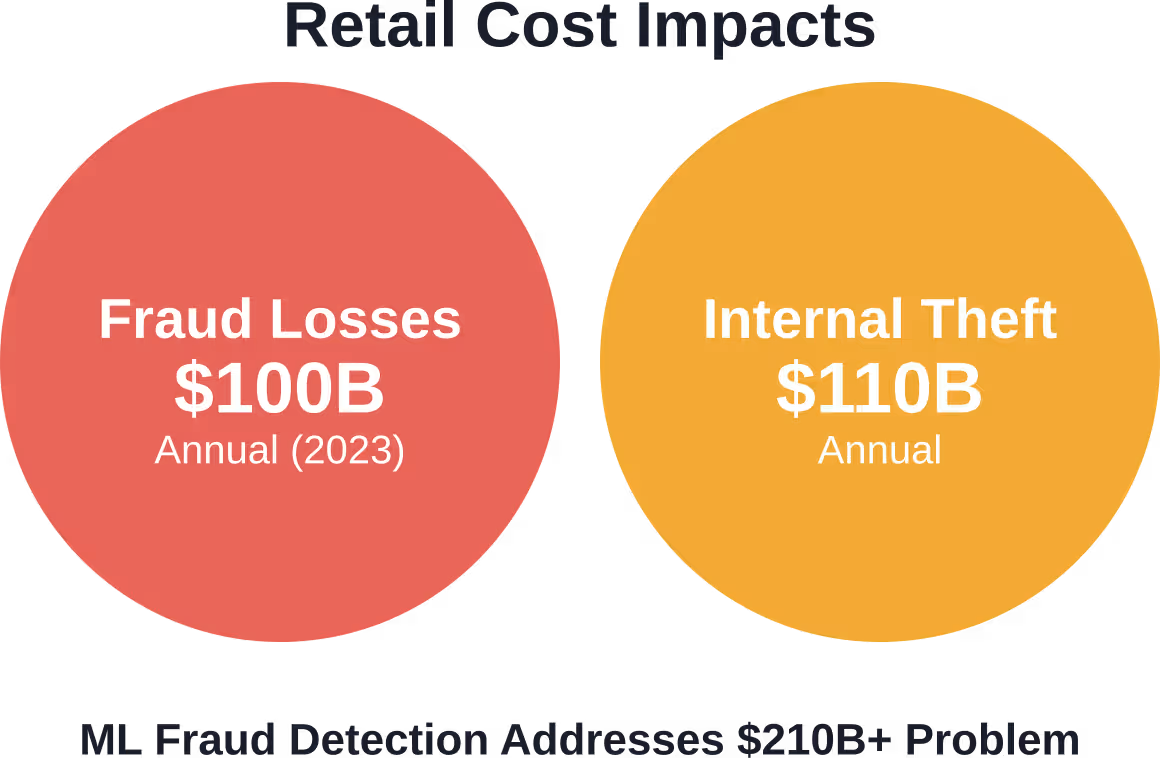
Retail fraud costs add up fast. Fraudulent transactions cost the retail industry over $100 billion in 2023, according to data from American Public University. Internal theft adds significant additional losses annually.
Machine learning fraud detection systems analyze transaction patterns in real time, flagging potentially fraudulent activity based on hundreds of behavioral signals. The algorithms learn to distinguish genuine purchases from suspicious patterns—unusual purchase combinations, shipping address mismatches, velocity of transactions.
Japanese tech company Vaak built an AI solution fed with 100,000 hours of surveillance data to identify shoplifting behavior patterns and alert store managers. These systems catch threats human monitors might miss while reducing false positives that waste security resources.
Key Benefits Driving ML Adoption in Retail
What’s driving retailers to invest heavily in machine learning? The benefits break into three categories: revenue growth, cost reduction, and competitive positioning.
Revenue Growth Through Personalization
Personalized experiences convert better. When customers see products matched to their preferences and needs, conversion rates climb. The 10-30% average sales boost from recommendation systems compounds across the entire customer base.
Retailers also capture incremental purchases through better cross-selling and upselling. ML systems identify which complementary products customers actually want rather than generic bundle suggestions.
Operational Cost Reduction
Inventory optimization cuts carrying costs while reducing markdowns on excess stock. Better demand forecasting means products arrive when and where customers want them, minimizing emergency shipping and stockouts.
ML systems for warehouse management (deployed by 61% of retailers) and fulfillment operations (56% adoption) streamline logistics. Transportation optimization using AI (58% adoption) reduces shipping costs across the supply chain.
Competitive Advantage Through Speed
Machine learning systems operate at speeds impossible for human analysis. Pricing algorithms adjust in real time based on market conditions. Fraud detection flags suspicious transactions in milliseconds.
This speed advantage compounds. Retailers who optimize faster than competitors capture more margin, serve customers better, and pull ahead in market share.
| ML Application | Primary Benefit | Adoption Rate | Implementation Complexity |
|---|---|---|---|
| Product Recommendations | Sales lift 10-30% | 66% | Medium |
| Demand Forecasting | Reduced stockouts | Over 80% | High |
| Dynamic Pricing | Profit up 229% | ~45% | High |
| Fraud Detection | Loss prevention | ~50% | Medium |
| Customer Segmentation | Marketing ROI | ~55% | Low-Medium |
Implementation Challenges and Solutions
Machine learning delivers impressive results, but implementation isn’t trivial. Retailers face several common obstacles.
Data Quality and Integration
ML models need clean, integrated data. Many retailers struggle with data silos—transaction data in one system, inventory in another, customer data scattered across platforms.
The solution involves investing in data infrastructure before jumping to advanced models. Industry estimates say 80% of the data from the newest media and content channels is unstructured, requiring preprocessing to become useful for ML systems.
Talent and Expertise Gaps
Building and maintaining ML systems requires specialized skills—data scientists, ML engineers, domain experts who understand retail operations.
Some retailers build internal teams. Others partner with specialized vendors or consultants. The key? Start with high-impact use cases that justify the investment, then expand capabilities over time.
Change Management
ML systems often challenge existing business processes. Buyers accustomed to intuition-based inventory decisions may resist algorithm recommendations. Pricing managers worry about surrendering control to automated systems.
Successful implementations involve stakeholders early, demonstrate results through pilot programs, and maintain human oversight during rollout phases.
Real-World ML Success Stories
Alfamart, a major retailer in Asia, uses machine learning for loyalty program personalization through their Alfagift program. The system analyzes purchase patterns across thousands of stores to deliver targeted offers.
Large-scale results validate the approach. Retailers leveraging ML for marketing mix optimization see the 229% profit improvement per store mentioned earlier, according to research from Washington University.
According to NRF’s 2025 retail predictions, digitally influenced sales exceed 60% and AI agents personalize recommendations, streamline decision-making, and handle auto-replenishment tasks.
The Future of Machine Learning in Retail
Current adoption rates—64% for customer experience, 66% for recommendations—represent the early majority phase. What comes next?
Generative AI represents the newest frontier. Already, 48% of retailers use large language model chat tools for personalization and 41% deploy GenAI copilots for customer experience. These tools will expand into more functions—automated product descriptions, personalized marketing content, customer service.
Retail media networks grew from tentative early adoption in 2016 to hit $30 billion USD per year, and will increasingly rely on ML for ad targeting and performance optimization. With the United States and China representing major shares of global retail media spend, competition for effective ML-driven advertising will intensify.
The omnichannel challenge grows more complex. In some developed Asia Pacific markets, significant portions of retail transactions occur online. Managing inventory, fulfillment, and customer experience across channels requires the precision that only ML systems can deliver at scale.
Getting Started with Machine Learning in Retail
For retailers ready to implement ML, prioritization matters. Not all use cases deliver equal value, and building multiple systems simultaneously strains resources.
Start with applications that leverage existing clean data and deliver measurable impact. Product recommendations work well as a first project—transaction data is usually clean, and sales lift is directly measurable.
Demand forecasting offers high value but requires more complex data integration across inventory, sales, promotional calendars, and external factors. Save this for phase two after proving ML capabilities with simpler applications.
Partner selection matters too. Some retailers build proprietary systems; others use vendor solutions. The right choice depends on technical capabilities, budget, and strategic importance. For core differentiators like personalization, proprietary development might make sense. For fraud detection, proven vendor solutions often work well.
FAQ
What is machine learning in retail?
Machine learning in retail refers to algorithms that analyze data patterns to make predictions and decisions—personalized product recommendations, demand forecasts, dynamic pricing, fraud detection. These systems improve automatically as they process more data, unlike traditional rule-based software.
How much does machine learning cost to implement in retail?
Implementation costs vary widely based on use case complexity and whether retailers build custom systems or use vendor solutions. Starting with focused applications like recommendation engines typically costs less than comprehensive demand forecasting systems requiring extensive data integration. Many cloud-based ML platforms now offer usage-based pricing that scales with business size.
Which retailers are using machine learning successfully?
Major retailers worldwide have deployed ML systems. Alfamart uses ML for loyalty personalization. Walmart has invested heavily in AI for operations and customer experience. Retailers implementing ML-optimized marketing mix modeling achieved 229% average profit improvement per store according to Washington University research.
What data do you need for retail machine learning?
Essential data includes transaction history, product information, inventory levels, and customer data. More advanced applications benefit from external data—weather, local events, competitor pricing, social media trends. Data quality matters more than quantity—clean, integrated datasets deliver better results than massive but messy data.
How long does it take to see results from retail ML implementation?
Timeline depends on the application and existing data infrastructure. Product recommendation systems can show sales lift within weeks of deployment. Demand forecasting systems typically need several seasonal cycles to fully optimize. Most retailers see measurable improvements within 3-6 months for initial use cases.
What’s the difference between AI and machine learning in retail?
AI (artificial intelligence) is the broad category of systems that perform tasks requiring intelligence. Machine learning is a specific AI approach where algorithms learn from data patterns rather than following explicit programmed rules. In retail, most AI applications use machine learning techniques, though newer generative AI tools add different capabilities for content creation and conversational interfaces.
Can small retailers benefit from machine learning?
Absolutely. Cloud-based ML platforms and SaaS solutions make the technology accessible without massive infrastructure investment. Small retailers can start with vendor-provided recommendation engines, fraud detection services, or inventory optimization tools. The key is choosing focused applications that address specific business challenges rather than attempting comprehensive transformations.
Conclusion
Machine learning has moved from experimental to essential in retail. With 66% of retailers deploying ML for personalized product recommendations and 64% using AI for customer experience functions, the technology delivers proven results—10-30% sales increases, 229% profit improvements, and major operational cost reductions.
The retailers winning with ML share common traits: they start with high-impact use cases, invest in data infrastructure, and expand capabilities systematically. They don’t chase every shiny new algorithm; they focus on applications that solve real business problems.
For retailers still on the sidelines, the gap widens daily. Competitors optimizing prices in real time, personalizing at scale, and forecasting demand with ML precision gain compounding advantages. The question isn’t whether to adopt machine learning in retail—it’s which applications to prioritize and how quickly to implement them.
Start with one focused use case. Prove the value. Then expand systematically. That’s the path forward in an industry where machine learning has become table stakes for competition.
 English
  German
  Arabic
  French
  Dutch
Dutch  Spanish