
Quick Summary: Machine learning is transforming drug development by accelerating target identification, compound screening, and clinical trial design. The technology addresses the industry’s 6.2% success rate from Phase I to approval and $2.8 billion average development costs through predictive modeling, molecular design optimization, and patient stratification. From FDA-guided AI frameworks to deep learning applications in toxicity prediction, ML tools are now embedded across preclinical and clinical phases.
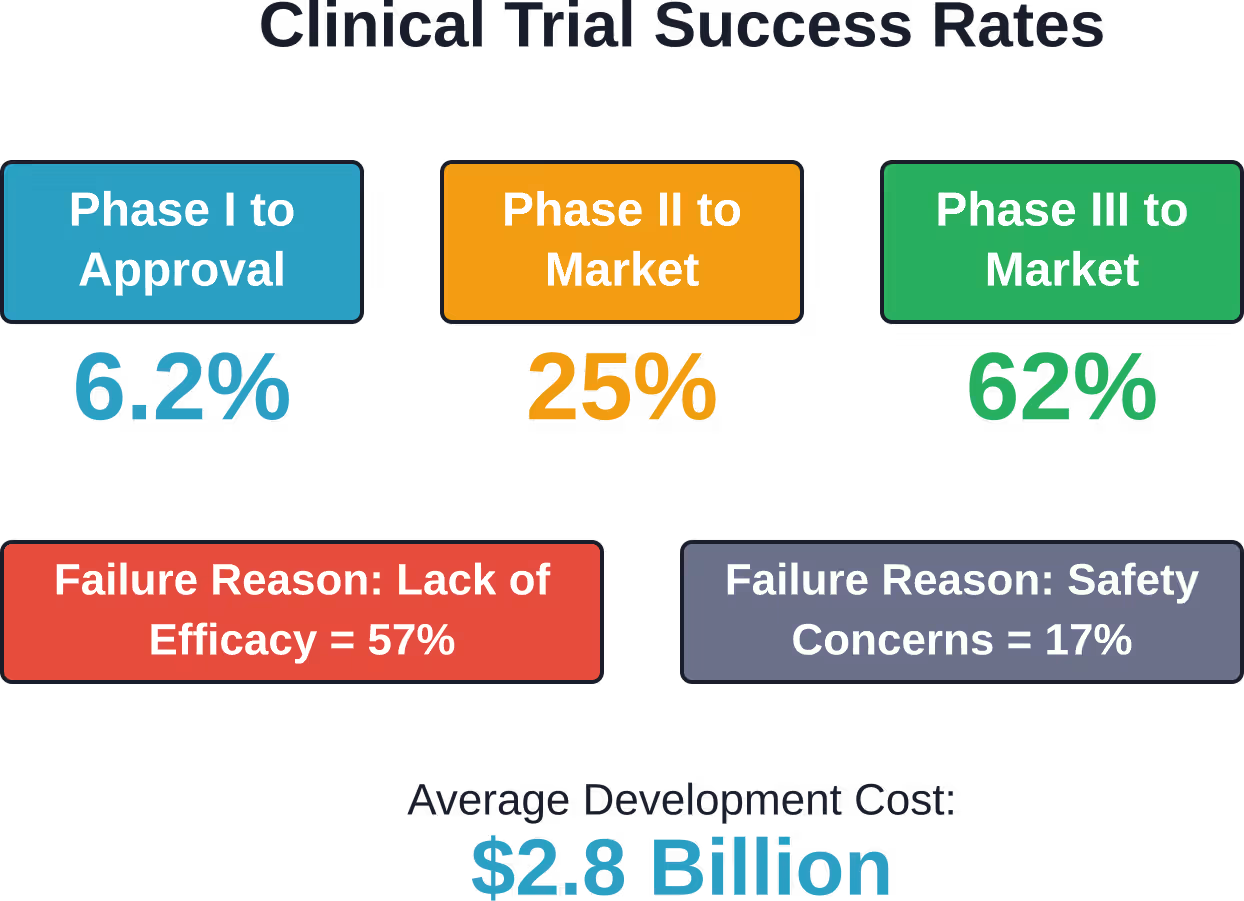
Bringing a new drug to market is expensive, slow, and often ends in failure. The pharmaceutical industry faces a brutal reality: only 6.2% of drug candidates that enter Phase I clinical trials eventually receive approval. With average development costs reaching $2.8 billion and timelines stretching over a decade, the pressure to innovate has never been higher.
Machine learning offers a way forward. By analyzing massive datasets, predicting molecular behavior, and identifying patterns humans might miss, ML algorithms are reshaping how drugs are discovered, tested, and brought to patients.
Here’s what’s actually working right now.
The Drug Development Crisis ML Is Addressing
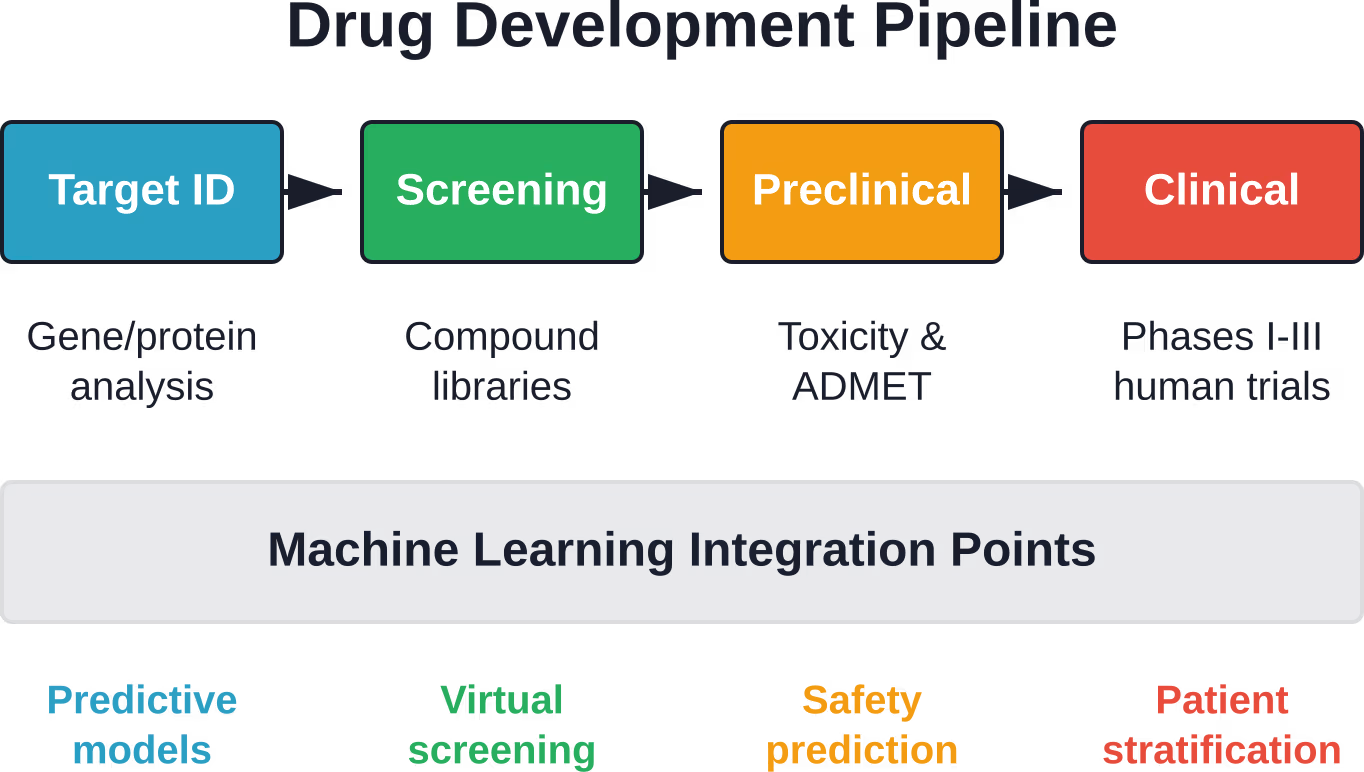
Traditional drug development follows a linear, time-intensive path. Researchers identify a biological target, screen thousands of compounds, run preclinical tests on animals, then move promising candidates into human trials across three phases. At each stage, most candidates fail.
The numbers tell a harsh story. Between 1998 and 2008, clinical trials in Phases II and III showed a 54% failure rate. More recent data shows that even among drug candidates reaching Phase II, only 25% eventually gain approval. For Phase III pipelines, that number rises to 62%, but still leaves more than a third failing after years of investment.
Why the high failure rate? Lack of efficacy accounts for 57% of drug candidate failures, while safety concerns cause 17%. The traditional approach struggles to predict how complex biological systems will respond to new molecules.
Machine learning attacks these problems directly. Instead of relying solely on laboratory experiments and clinical intuition, ML models learn from historical data, molecular structures, genetic information, and clinical outcomes to make predictions before expensive trials begin.
FDA’s AI Framework for Drug Development
Regulatory guidance matters. The FDA issued a discussion paper ‘Using Artificial Intelligence and Machine Learning in the Development of Drug and Biological Products’ in May 2023 and has been releasing framework documents and specific guidance throughout 2023 and 2024. By January 2025, the industry was already operating under established foundational AI/ML frameworks provided by the agency. According to the FDA, artificial intelligence refers to a machine-based system that can make predictions, recommendations, or decisions influencing real or virtual environments based on human-defined objectives. These systems perceive environments through machine and human inputs, abstract those perceptions into models, and use model inference to formulate options.
The FDA collaborated with the European Medicines Agency to develop 10 guiding principles for AI practice in drug development. These principles address transparency, reproducibility, data quality, and validation—critical concerns when algorithms influence decisions affecting patient safety.
Regulatory clarity accelerates adoption. Pharmaceutical companies now have frameworks for documenting AI model development, validating predictions, and demonstrating reliability to regulators.
Target Identification and Validation
Drug development starts with identifying a biological target—typically a protein or gene whose activity contributes to disease. ML algorithms analyze genomic data, protein-protein interactions, and disease pathways to suggest promising targets.
One approach uses deep learning to predict protein-protein interactions (PPIs). Research using 34,100 validated PPIs from Saccharomyces cerevisiae datasets achieved impressive accuracy: the Deep Interact approach demonstrated 98.31% accuracy, 86.85% sensitivity, and 98.51% specificity in PPI prediction.
That level of precision matters because false predictions waste years of downstream work. If an algorithm incorrectly suggests a protein as a drug target, teams invest resources in developing molecules that were never going to work.
Machine learning also identifies disease biomarkers. Classification tree models analyzing gene expression patterns achieved 88.9% accuracy in predicting biomarker efficiency profiles, while random forest models reached 83.3% accuracy for drug treatment response analysis.
Molecular Design and Virtual Screening
Once a target is validated, researchers need molecules that interact with it effectively. Traditional approaches screen physical compound libraries—testing thousands of molecules in laboratory assays. It’s slow and expensive.
Virtual screening uses ML to predict which molecules will bind to a target before any lab work begins. Convolutional neural networks analyze molecular structures, predicting binding affinity and biological activity. Recurrent neural networks with reinforcement learning achieved 95% accuracy in molecular scoring functions.
DeepTox software exemplifies this approach. The system predicted toxicity for 12,000 drugs, helping researchers identify safety concerns early. Catching toxicity issues before preclinical testing saves enormous resources and prevents unsafe compounds from reaching human trials.
Generative models now design novel molecules from scratch. These algorithms learn the characteristics of successful drugs, then generate new molecular structures optimized for specific properties—potency, selectivity, and favorable pharmacokinetics.
Preclinical ADMET Prediction
ADMET stands for Absorption, Distribution, Metabolism, Excretion, and Toxicology. Understanding how the human body processes a drug candidate determines whether it can become a viable medicine. Poor ADMET properties kill many promising compounds.
Machine learning models trained on historical pharmacokinetic data predict ADMET characteristics before animal testing. These predictions guide medicinal chemists in optimizing molecular structures to improve drug-like properties.
The impact is tangible. With 90% of therapeutic molecules failing in Phase II clinical trials and regulatory approval, ADMET prediction helps filter out problematic candidates early. Better preclinical filtering means the compounds that advance to expensive clinical trials have higher success probability.
But here’s the thing: data quality determines model performance. Machine learning practitioners report that 80% of their effort goes into data processing and cleaning. Poor data leads to unreliable predictions, which is why pharmaceutical companies invest heavily in curating high-quality datasets.
Clinical Trial Optimization
Clinical trials represent the most expensive phase of drug development. They’re also where many candidates fail despite showing promise in earlier stages. Machine learning helps design better trials and identify patients most likely to benefit.
Patient stratification uses ML to analyze genetic profiles, biomarkers, and clinical histories. Instead of treating all patients as identical, algorithms identify subgroups that respond differently to treatment. This precision approach increases trial success rates and paves the way for personalized medicine.
Adaptive trial designs incorporate machine learning to adjust protocols based on accumulating data. If early results suggest a dose is ineffective or a patient subgroup shows particular benefit, the algorithm recommends protocol modifications without starting a new trial from scratch.
Real-world evidence integration is growing. ML models analyze electronic health records, insurance claims, and patient registries to supplement traditional clinical trial data. This broader evidence base helps regulators and clinicians understand how drugs perform in diverse, real-world populations.

Structure Drug Development ML Projects With AI Superior
Machine learning is used to analyze complex datasets and support decision-making throughout drug development processes. AI Superior delivers AI consulting and custom software development for organizations building machine learning systems and data-driven applications.
Looking for Technical Help in Drug Development AI?
AI Superior can support your project with:
- Custom ML solution design and development
- Data-driven analysis and modeling
- AI consulting and MVP development
👉Talk to AI Superior to discuss your drug development machine learning project.
Current Limitations and Challenges
Machine learning isn’t a magic solution. The technology faces real limitations that pharmaceutical companies must navigate.
Data availability remains a bottleneck. ML algorithms need large, high-quality datasets to learn effectively. Proprietary data silos mean valuable information stays locked within individual companies. Public datasets exist but often lack the scale or quality needed for robust model training.
Model interpretability poses challenges for regulatory acceptance. Deep learning models—especially large neural networks—function as black boxes. They make accurate predictions but don’t explain their reasoning in ways scientists can validate. Regulators understandably want to understand why an algorithm recommends a particular decision.
Validation requirements are strict. An algorithm might achieve high accuracy on historical data but fail when applied to new compounds or patient populations. Rigorous validation across diverse datasets is essential before trusting ML predictions for critical decisions.
Integration with existing workflows takes time. Pharmaceutical companies have established processes, quality systems, and regulatory frameworks. Introducing machine learning requires training personnel, updating standard operating procedures, and demonstrating reliability to skeptical stakeholders.
Successful Applications and Case Studies
Despite challenges, machine learning is already delivering results across therapeutic areas.
Drug repurposing represents a particularly successful application. ML algorithms analyze existing drugs to identify new uses. This approach leverages safety data from original development, potentially shortening timelines. Collaborative filtering and Bayesian optimization techniques support this work.
Oncology has seen substantial ML adoption. Cancer’s complexity—with diverse genetic drivers and treatment responses—makes it ideal for machine learning approaches. Algorithms analyze tumor genomics to match patients with therapies, predict treatment responses, and identify combination strategies.
Rare disease drug development benefits from ML’s ability to extract insights from small datasets. Traditional statistical methods struggle with rare diseases because patient numbers are limited. ML techniques designed for small-data scenarios help identify targets and predict outcomes despite limited clinical information.
Industry Adoption and Investment Trends
Pharmaceutical companies are committing resources to machine learning. Major firms have established AI research groups, formed partnerships with technology companies, and acquired ML-focused startups.
Publications reflect growing interest. Research on AI in healthcare reached nearly 70 publications per year by 2020, with 67% of articles published between 2017 and March 2021. The pace continues accelerating.
Biotech startups built entirely around ML-driven drug discovery are emerging. These companies claim they can develop drugs faster and cheaper than traditional approaches. Some have advanced candidates into clinical trials, providing real-world tests of whether the AI-first model delivers on its promises.
| Development Stage | Traditional Approach | ML-Enhanced Approach | Key Benefit |
|---|---|---|---|
| Target Identification | Literature review, genomic studies | AI-powered pathway analysis | Faster target validation |
| Hit Discovery | High-throughput screening | Virtual screening, generative models | Reduced compound synthesis costs |
| Lead Optimization | Iterative synthesis and testing | Predictive ADMET modeling | Fewer optimization cycles |
| Preclinical Testing | Animal studies for safety | In silico toxicity prediction | Earlier hazard identification |
| Clinical Trial Design | Standard protocols | Patient stratification, adaptive design | Higher success probability |
Future Directions
Where is machine learning in drug development headed? Several trends are shaping the next phase.
Multi-modal learning will integrate diverse data types—molecular structures, genomic sequences, clinical images, electronic health records, and wearable device data. Models that synthesize information across modalities promise more comprehensive predictions than those using single data types.
Federated learning addresses data privacy concerns. Instead of centralizing sensitive patient data, federated approaches train models across distributed datasets without moving the data. This technique could unlock larger training sets while preserving privacy.
Quantum computing applications are being explored. Drug discovery involves optimizing across vast chemical spaces—a task where quantum algorithms might offer advantages over classical computing. It’s early days, but pharmaceutical companies are investigating the potential.
Automation is increasing. Robotic laboratory systems combined with ML create closed-loop discovery platforms. The algorithm designs experiments, robots execute them, and results feed back into the model. This integration accelerates the learning cycle.
Practical Implementation Considerations
Organizations considering ML adoption for drug development should think through several practical aspects:
- Start with well-defined problems: Machine learning works best when the question is specific, the outcome measurable, and historical data available. Vague goals like “use AI to find better drugs” won’t succeed. Focused applications like “predict hERG channel binding to reduce cardiotoxicity risk” provide clear targets.
- Invest in data infrastructure: Before algorithms, build systems for data collection, storage, annotation, and quality control. Poor data infrastructure guarantees poor ML outcomes regardless of algorithmic sophistication.
- Build cross-functional teams: Effective ML in drug development requires collaboration between data scientists, medicinal chemists, biologists, clinicians, and regulatory specialists. No single discipline has all necessary expertise.
- Plan for regulatory engagement: Discuss ML applications with regulators early in development. The FDA and EMA have established pathways for these conversations. Early engagement prevents surprises during regulatory review.
Frequently Asked Questions
How does machine learning actually reduce drug development costs?
ML reduces costs by filtering out unlikely-to-succeed candidates early, before expensive clinical trials. Virtual screening eliminates compounds with poor properties, toxicity prediction catches safety issues in silico, and patient stratification increases trial success rates. Each improvement reduces wasted investment in doomed candidates.
What’s the difference between AI and machine learning in this context?
Artificial intelligence is the broader concept—machine-based systems making predictions and decisions. Machine learning is a specific AI approach where algorithms learn patterns from data rather than following explicit programming. Most AI applications in drug development use ML techniques like deep learning, random forests, and neural networks.
Can machine learning replace traditional drug development methods?
No. ML augments rather than replaces traditional methods. Algorithms make predictions, but laboratory experiments validate those predictions. Clinical trials remain essential for demonstrating safety and efficacy in humans. The value lies in making traditional processes faster and more efficient, not eliminating them.
How reliable are ML predictions for drug development decisions?
Reliability varies by application and data quality. Well-validated models for established problems—like predicting certain toxicity endpoints—achieve high accuracy. Novel applications with limited training data remain less reliable. That’s why pharmaceutical companies validate ML predictions experimentally rather than trusting them blindly.
What types of data do drug development ML models use?
ML models integrate molecular structures, genomic sequences, protein structures, clinical trial results, electronic health records, medical imaging, biomarker measurements, and patient demographics. Multi-modal models combining diverse data types generally outperform single-data-type approaches.
Do smaller pharmaceutical companies have access to ML tools?
Yes. Cloud-based ML platforms, open-source software, and specialized service providers make these tools accessible beyond large pharmaceutical companies. Academic collaborations and public datasets further democratize access. The barrier isn’t technology cost—it’s data quality and specialized expertise.
How long before ML-discovered drugs reach patients?
Several ML-assisted drug candidates are already in clinical trials. The first approvals will likely come within the next few years. However, even with ML acceleration, drug development takes many years. ML shortens timelines but doesn’t eliminate the need for thorough safety and efficacy testing.
Conclusion
Machine learning is reshaping pharmaceutical research in tangible ways. The technology addresses real problems—high failure rates, enormous costs, lengthy timelines—with practical solutions grounded in data analysis and predictive modeling.
From FDA regulatory frameworks to deep learning applications achieving 98% accuracy in protein interaction prediction, ML has moved beyond experimental curiosity to operational reality. The $2.8 billion price tag for bringing a drug to market and the dismal 6.2% success rate from Phase I to approval create powerful incentives for better approaches.
Success requires more than sophisticated algorithms. Data quality, cross-functional collaboration, regulatory engagement, and realistic expectations all matter. Organizations that understand both ML’s capabilities and limitations—and invest accordingly—will lead the next generation of drug development.
The question isn’t whether machine learning will transform pharmaceutical research. It already has. The question is how quickly the industry can scale these approaches while maintaining the rigorous standards patient safety demands.
 English
  German
  Arabic
  French
  Dutch
Dutch  Spanish