
Quick Summary: Machine learning transforms accounts payable by automating invoice data capture, PO matching, and exception handling while continuously improving from historical patterns. Research from Stanford shows AI-powered accounting teams finalize monthly statements 7.5 days faster and spend 8.5% less time on routine processing compared to traditional methods. The technology learns from each transaction, reducing manual work and improving accuracy without replacing finance professionals.
Accounts payable teams have been drowning in invoice data for decades. Manual data entry, vendor matching, exception handling—the same repetitive tasks that consume hours every week.
But here’s the thing: machine learning is changing that reality. Not through wholesale replacement of finance professionals, but by handling the tedious work that’s always slowed teams down.
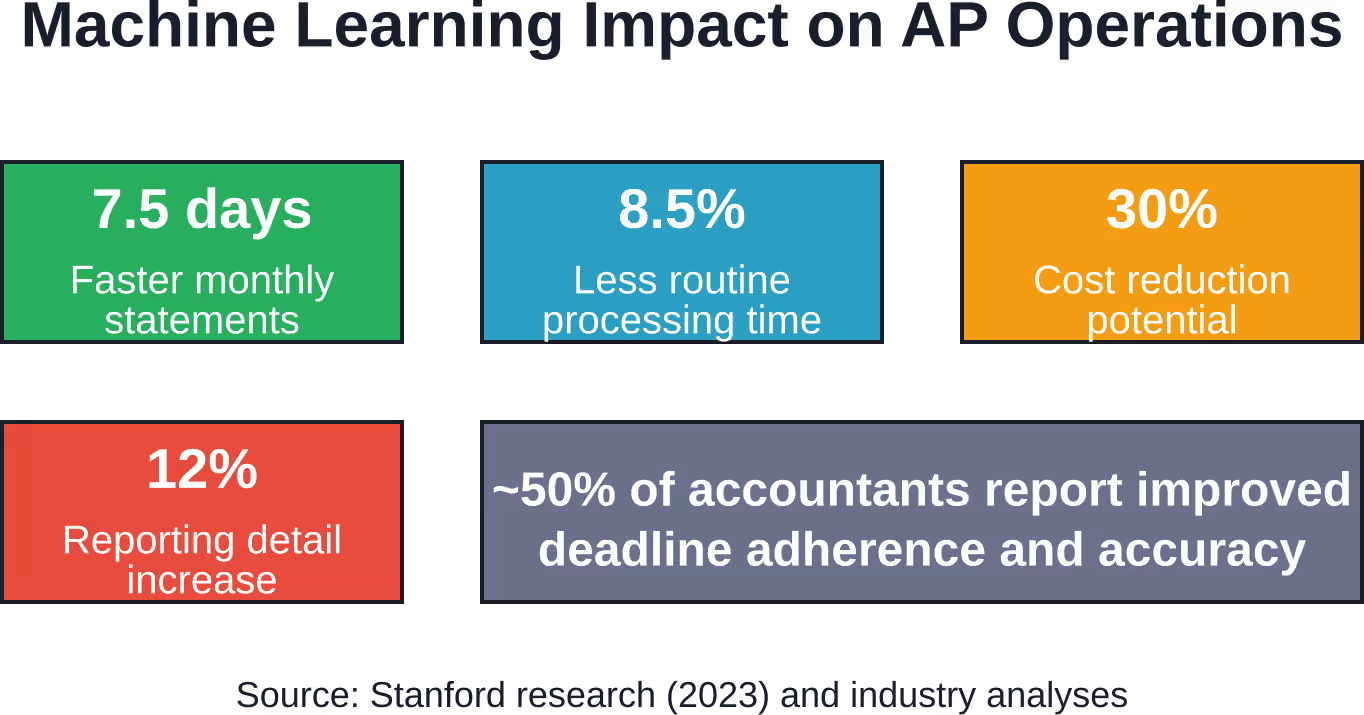
According to Stanford research, accountants using AI support finalize monthly statements 7.5 days faster than those using traditional methods. They also spend 8.5% less time on routine back-office processing.
That’s not futuristic speculation. It’s happening now.
How Machine Learning Fits Into Accounts Payable
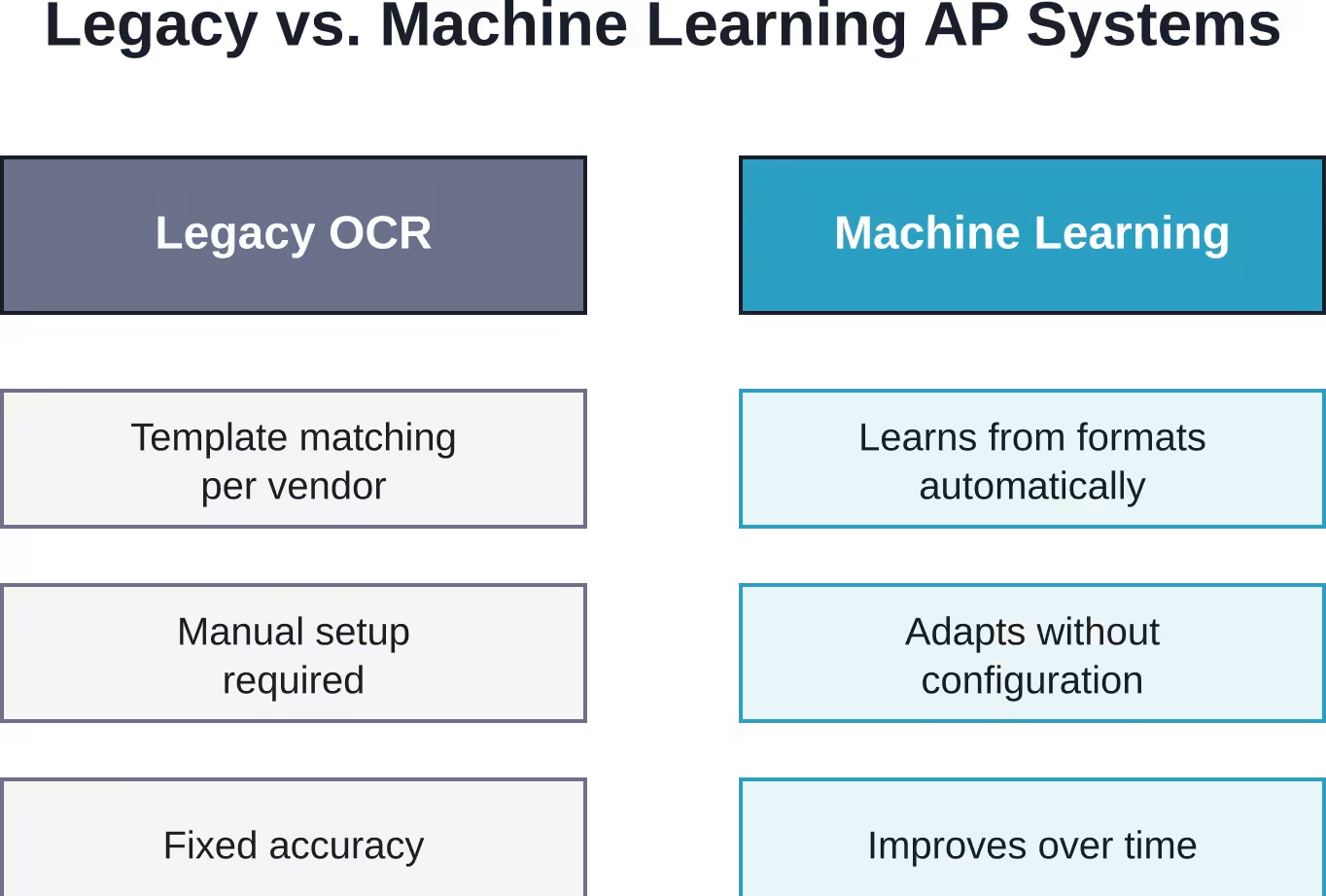
Machine learning in accounts payable enables software to learn from historical invoice data and continuously improve automation. Unlike rule-based systems that follow fixed templates, machine learning adapts.
The technology tackles several core functions:
- Invoice data capture and extraction
- Purchase order matching and validation
- Exception identification and routing
- Duplicate detection and fraud flagging
- Payment term analysis and forecasting
Instead of looking for specific keywords or relying on template matching, machine learning models understand invoices the way humans do. They identify relationships between text, layout, and semantics.
Each processed invoice makes the system smarter. That’s the fundamental difference.

AI Superior: Turn Accounts Payable Data Into AI Software
AI Superior helps companies assess AI use cases and turn them into working software. Their services cover AI consulting, AI software development, R&D, training, and integration into existing workflows.
For accounts payable teams, this can support invoice analysis, duplicate detection, approval routing, anomaly checks, document processing, or reporting automation.
Need Machine Learning for AP Workflows?
AI Superior can help with:
- assessing machine learning use cases
- building custom AI and ML tools
- developing document and data analysis models
- integrating AI into finance systems
👉 Contact AI Superior to discuss your project.
What Machine Learning Actually Does Inside AP
The practical applications break down into three main areas that directly impact daily operations.
Invoice Data Capture and Extraction
Machine learning handles different invoice formats without manual setup. A PDF from one vendor looks nothing like a scanned image from another, yet the system extracts vendor names, dates, amounts, line items, and tax details from both.
Traditional OCR systems required templates for each vendor. Change a vendor’s invoice format? Build a new template. Machine learning eliminates that maintenance burden.
Intelligent Matching and Validation
The technology matches invoices to purchase orders even when descriptions don’t align perfectly. A PO lists “Office Supplies – Bulk Order” while the invoice shows “Stationery Items Kit.” Machine learning recognizes these as the same transaction.
It also flags anomalies: duplicate invoices, pricing discrepancies, unusual vendor patterns. According to Deloitte, organizations processing 5-7 million transactions daily with a 1% failure rate spend roughly 6 days monthly rectifying errors. Machine learning reduces that failure rate substantially.
Exception Handling and Routing
Not every invoice follows the happy path. When exceptions occur—missing PO numbers, price mismatches, new vendors—machine learning routes them to the right approvers based on historical patterns.
It learns which exceptions specific team members handle and predicts the appropriate workflow without hardcoded rules.
The Measurable Impact on Finance Teams
Stanford research provides concrete numbers on what changes when accounting teams adopt AI tools. Beyond the 7.5-day improvement in statement finalization and 8.5% reduction in processing time, the study found additional benefits in reporting capabilities.
Around 50% of accountants reported that generative AI tools helped them meet deadlines and improve accuracy. Real talk: that’s significant adoption for technology that’s still relatively new in finance departments.
Organizations implementing focused machine learning solutions report potential cost reductions through process automation.
What Finance Professionals Actually Worry About
Adoption isn’t frictionless. The same Stanford study revealed legitimate concerns among accounting professionals:
| Concern | Percentage | Context |
|---|---|---|
| AI-generated errors | 62% | Worry about accuracy and audit trails |
| Data security risks | 43% | Concerns about sensitive financial data |
| Job stability impact | 37% | Fear of role elimination |
These aren’t unfounded anxieties. But the evidence suggests machine learning augments rather than replaces finance roles. Teams shift from data entry to analysis, from processing to strategy.
The boring stuff gets automated. The complex work that requires judgment stays human.
Key Use Cases Delivering Value in 2026
Forrester research identifies six primary areas where AI delivers significant value for accounts payable teams:
- Invoice data capture: Automated extraction from any format, reducing manual keying
- Three-way matching: Intelligent reconciliation of invoices, POs, and receipts
- Duplicate detection: Pattern recognition to flag potential duplicate payments
- Fraud management: Anomaly detection based on vendor behavior and payment patterns
- Payment forecasting: Predictive analytics for cash flow planning
- Vendor risk assessment: Analysis of payment history and market signals
Organizations aren’t implementing all six simultaneously. Most start with invoice capture and matching, then expand as teams build confidence.
What’s Changed Recently
The shift from template-based systems to self-learning AI represents the biggest evolution. Earlier automation required extensive configuration—building rules for every vendor format, every exception scenario, every approval workflow.
Modern machine learning systems ship with pre-trained models that understand invoice structures generically. They improve from day one without custom setup.
Cloud deployment has also accelerated adoption. Finance teams can activate machine learning capabilities without lengthy IT projects or infrastructure investments.
And the technology is becoming more transparent. Black-box AI concerned auditors and compliance officers. Current systems explain their decisions, showing which data points influenced which conclusions.
Looking Ahead: Where This Technology Is Heading
Autonomous processing is the logical endpoint. Systems that handle entire invoice-to-payment workflows without human intervention for standard transactions.
Deloitte’s research on autonomous enterprises points toward environments where machine learning doesn’t just process invoices but proactively manages vendor relationships, negotiates payment terms, and optimizes working capital.
Integration with broader financial ecosystems is accelerating. Machine learning in accounts payable will connect with procurement, treasury, and financial planning systems to provide unified spend intelligence.
Expect tighter coupling with payment rails too. As stablecoin adoption grows according to industry analyses on payments innovation, machine learning will optimize payment method selection based on cost, speed, and risk factors.
Frequently Asked Questions
How does machine learning differ from regular AP automation?
Regular AP automation follows fixed rules and templates configured for specific scenarios. Machine learning adapts automatically, learning from each transaction to handle new formats and exceptions without manual programming. Traditional automation breaks when invoice formats change; machine learning adjusts on its own.
What data does machine learning need to work effectively?
Machine learning systems require historical invoice data, purchase orders, payment records, and vendor information. The more transaction history available, the faster the system learns patterns. Most implementations need at least 3-6 months of historical data for initial training, though pre-trained models can work with less.
Can machine learning handle invoices from new vendors?
Yes. Unlike template-based systems that need configuration for each vendor, machine learning recognizes invoice structures generically. It identifies standard fields—vendor name, date, amount, line items—regardless of layout. Accuracy improves as the system processes more invoices from that vendor, but it doesn’t require setup for new suppliers.
How long does implementation typically take?
Implementation timelines vary based on system complexity and integration requirements. Cloud-based machine learning AP solutions can be operational in 4-8 weeks for standard deployments. Organizations with complex ERP integrations or custom workflows may require extended timelines. The technology itself isn’t the bottleneck—data migration and change management typically take longer.
What accuracy rates can teams expect?
Machine learning invoice capture systems can achieve high accuracy levels on standard invoices after initial training. Complex invoices with unusual formats or handwritten elements may have lower rates initially but improve over time. Accuracy depends on invoice quality, data consistency, and transaction volume for training.
Does machine learning replace AP staff?
Research indicates machine learning augments rather than replaces AP professionals. Stanford data shows accountants using AI spend less time on routine tasks but take on more complex analytical work. Teams typically redeploy capacity toward vendor relationship management, spend analysis, and strategic activities rather than reducing headcount.
What about audit trails and compliance?
Machine learning systems maintain complete audit trails showing data sources, extraction confidence levels, and decision logic. Modern platforms are designed for SOC compliance and support standard accounting controls. The technology actually improves auditability by documenting every processing step and flagging anomalies human reviewers might miss.
Making Sense of Machine Learning in AP
The fundamental shift is from automation that follows instructions to automation that learns from experience. Machine learning transforms accounts payable from a rule-following function into an adaptive system that gets smarter with every invoice.
The measurable benefits—faster close cycles, reduced processing time, lower costs—make the business case clear. The 7.5-day improvement in monthly statement finalization alone justifies exploration for most finance organizations.
But adoption requires more than technology implementation. Teams need training, processes need redesign, and concerns about accuracy and job impact need addressing through transparency and communication.
For finance leaders evaluating machine learning in accounts payable: start with a focused use case like invoice capture, measure results rigorously, and expand based on demonstrated value. The technology works. The question is how to implement it effectively within your specific operational context.
 English
  German
  Arabic
  French
  Dutch
Dutch  Spanish