
Quick Summary: Machine learning has transformed biological research by enabling rapid analysis of complex genomic, proteomic, and imaging data. From drug discovery achieving high accuracy in molecular scoring to protein structure prediction trained on large-scale protein sequence data, ML applications now span cancer diagnostics, personalized medicine, and systems biology. The field grew 85% from 2017-2022, with accessible platforms now allowing biologists without coding expertise to leverage deep learning for experimental design and data interpretation.
The intersection of artificial intelligence and life sciences has created one of the most transformative developments in modern research. Machine learning algorithms now analyze biological datasets that would take human researchers decades to process manually.
And the results? They’re remarkable.
Recent recognition of computational protein design and structure prediction has highlighted ML’s role in biological discovery—acknowledging its fundamental importance in advancing research. But that’s just the beginning.
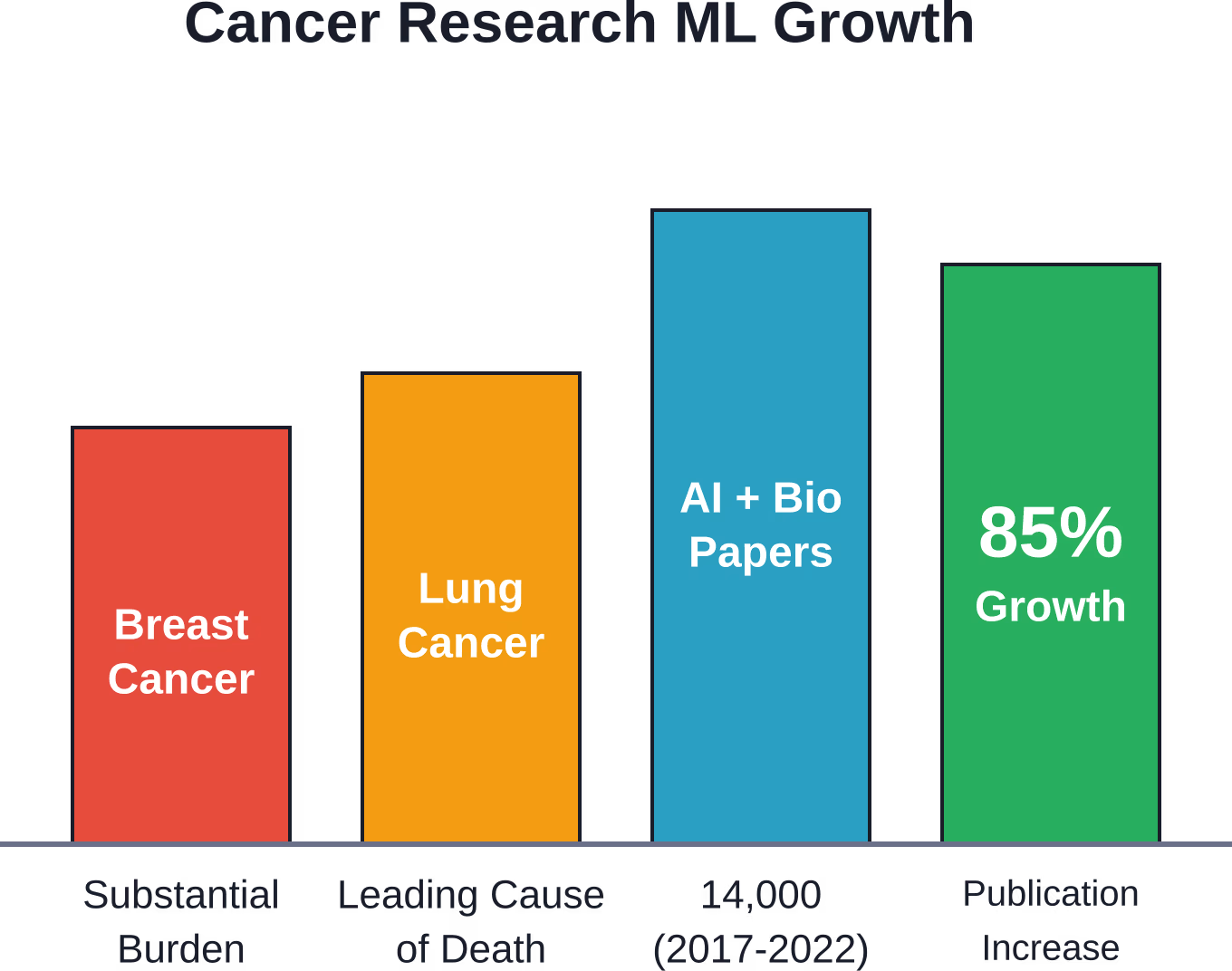
From predicting cancer treatment outcomes to designing novel antibiotics, machine learning methods are accelerating every phase of biological investigation. The scale of adoption is staggering: over 14,000 AI and computational biology articles were published between 2017 and 2022, representing 85% growth in just five years.
This article breaks down how machine learning actually works in biological contexts, which algorithms dominate the field, and what recent breakthroughs mean for researchers working at the bench.
What Makes Machine Learning Essential for Modern Biology
Biological data has exploded in volume and complexity. A single genomic sequencing project can generate terabytes of information. Protein interaction networks contain hundreds of thousands of validated connections—the Saccharomyces cerevisiae dataset includes over 160,000 validated protein-protein interactions.
Traditional statistical methods can’t keep up.
Machine learning excels precisely because it identifies patterns in high-dimensional data without requiring researchers to specify every relationship manually. Instead of programming explicit rules, ML algorithms learn from examples.
Here’s what that means in practice: feed a neural network thousands of protein sequences along with their known structures, and it learns to predict structures for entirely new sequences. No human needs to write code explaining how amino acid chemistry determines folding patterns—the model discovers those relationships through training.
The scope of biological questions now addressable through ML spans:
- Genomic variant classification and disease risk prediction
- Drug candidate screening and molecular property prediction
- Medical imaging analysis for diagnostics
- Protein structure and function prediction
- Systems biology network inference
- Evolutionary relationship reconstruction
- Treatment response stratification in clinical settings
But understanding which ML technique suits which biological problem requires knowing how these algorithms actually work.
Core Machine Learning Techniques in Biological Research
Not all machine learning methods are created equal. Biological applications demand different approaches depending on data type, sample size, and the nature of the question being asked.
Supervised Learning: Teaching Algorithms With Labeled Examples
Supervised learning requires training data where both inputs and correct outputs are known. Think of it as learning from a textbook with answer keys.
For cancer diagnosis, researchers might feed a model thousands of tissue images labeled as either malignant or benign. The algorithm learns which visual features distinguish the two categories, then applies that knowledge to classify new, unlabeled images.
Common supervised techniques in biology include:
- Random Forest Models: These build multiple decision trees and aggregate their predictions. In drug development, random forest approaches have been used for profiling treatment efficacy across different compounds. They’re particularly robust when dealing with noisy biological measurements.
- Support Vector Machines: SVMs find optimal boundaries between different classes in high-dimensional space. They’ve proven effective for protein classification and gene expression analysis, especially when sample sizes are limited.
- Neural Networks: These layered architectures learn hierarchical representations of data. Deep neural networks have revolutionized biological imaging—convolutional neural networks trained on 200,000 echocardiographic images achieved 91.7% accuracy classifying 15 standard views.
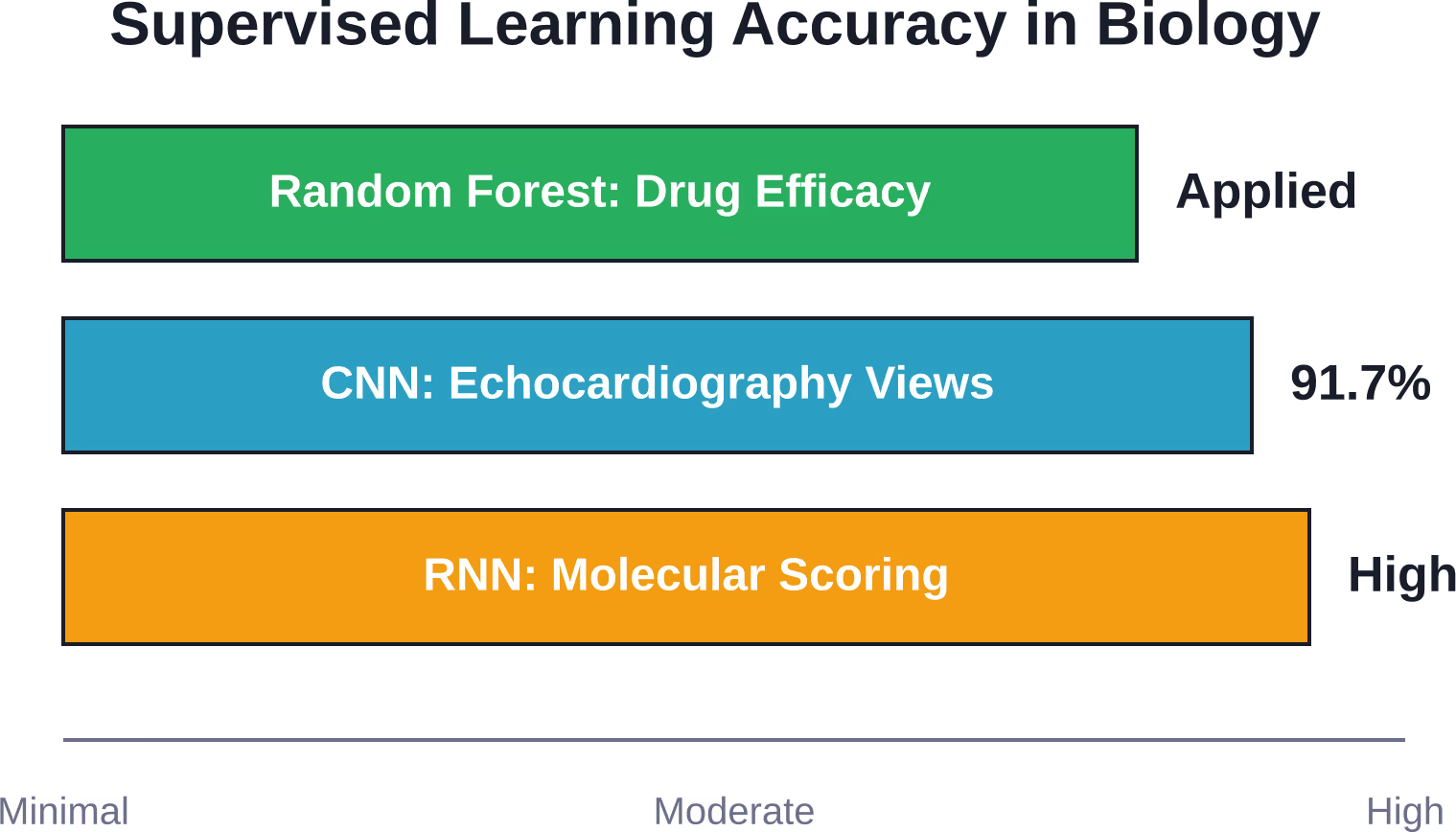
Neural networks have achieved high accuracy in molecular scoring functions for drug discovery applications.
Unsupervised Learning: Finding Hidden Patterns
Sometimes researchers don’t have labeled training data—or don’t even know what patterns they’re looking for. Unsupervised learning discovers structure in unlabeled datasets.
Clustering algorithms group similar biological entities together. In single-cell RNA sequencing, clustering reveals distinct cell types within heterogeneous tissue samples without requiring prior knowledge of what cell types exist.
Dimensionality reduction techniques like PCA and t-SNE compress high-dimensional biological data into visualizable representations. Researchers use these methods to identify which genes contribute most to variation between experimental conditions.
These approaches are invaluable for exploratory analysis when the biological question itself is still being formulated.
Deep Learning: The Power Behind Recent Breakthroughs
Deep learning uses neural networks with many layers to learn complex, hierarchical representations. Each layer extracts progressively more abstract features from raw data.
For medical imaging, early layers might detect edges and textures, middle layers recognize anatomical structures, and deep layers identify disease-specific patterns. This hierarchical learning mirrors how biological vision systems process information.
AlphaFold exemplifies deep learning’s impact. Trained on large-scale protein sequence data, it predicts three-dimensional protein structures from sequence information with remarkable accuracy—solving a problem that had challenged researchers for decades.
Recent applications of deep learning in biology include detecting delayed myocardial enhancement in cardiac imaging using deep learning models and classifying hypertrophic cardiomyopathy using 2D-echocardiography with machine learning models.

Explore Biology Research Applications With AI Superior
Biology research often involves large experimental datasets, statistical analysis, and pattern recognition tasks that are difficult to scale manually. AI Superior supports organizations and research teams applying machine learning to biological analysis and data-driven research workflows. Their work covers AI consulting, machine learning, data science, AI software development, and model evaluation.
AI Superior can support biology-related ML work through:
- Evaluation of biological and experimental datasets
- Development of predictive and classification models
- Proof of concept creation for research workflows
- Pattern analysis in structured biological data
- AI model validation and performance assessment
- Integration planning for analytical tools and research systems
For biology applications, this may include experimental data interpretation, biological classification, and computational research support.
👉Contact AI Superior to review the research scope.
Drug Discovery and Development: ML’s Biggest Impact
Pharmaceutical development faces a brutal reality: only a small percentage of drug candidates that enter clinical trials ultimately receive approval. The process is expensive, time-intensive, and riddled with failure.
Machine learning is changing that equation.
Target Identification and Validation
Before designing drugs, researchers must identify biological targets—usually proteins—whose modulation could treat disease. ML algorithms analyze genomic, proteomic, and phenotypic data to predict which targets are most likely to be both therapeutically effective and biochemically tractable.
Classification tree models have been applied to biomarker gene expression analysis, helping identify which molecular signatures indicate disease progression or treatment response.
Compound Screening and Optimization
Traditional drug screening tests thousands of compounds experimentally. ML accelerates this by predicting which molecules are most likely to bind target proteins effectively.
Virtual screening uses trained models to evaluate millions of compounds computationally, prioritizing only the most promising candidates for experimental validation. This reduces both cost and time investment dramatically.
Molecular property prediction has become particularly sophisticated. Neural networks now estimate absorption, distribution, metabolism, excretion, and toxicity (ADMET) properties before synthesis, filtering out compounds likely to fail in later development stages.
Clinical Trial Optimization
Patient stratification represents another ML breakthrough. Instead of treating all patients identically, algorithms identify subgroups likely to respond differently to treatment based on genetic, demographic, and clinical characteristics.
This enables precision medicine approaches where therapy is tailored to individual patient profiles—improving outcomes while reducing adverse effects in patients unlikely to benefit.
| Drug Discovery Stage | ML Application | Key Benefit | Performance |
|---|---|---|---|
| Target Identification | Gene expression classification | Biomarker discovery | Applied to analysis |
| Lead Optimization | Molecular scoring functions | Binding affinity prediction | High accuracy |
| Efficacy Profiling | Random forest models | Treatment response prediction | Applied effectively |
| Clinical Trials | Patient stratification | Personalized treatment | Reduces trial failure rate |
Genomics and Precision Medicine Applications
Genomic data poses unique challenges: high dimensionality, complex interactions, and individual variation. Machine learning excels in exactly these conditions.
Variant Classification and Disease Risk
Whole genome sequencing identifies millions of genetic variants per individual. Determining which variants cause disease requires integrating sequence context, evolutionary conservation, protein structure effects, and population frequency data.
ML classifiers trained on known pathogenic and benign variants now predict disease relevance for novel mutations with high reliability. This accelerates clinical genetic diagnosis and enables proactive health monitoring.
Cancer Genomics and Treatment Selection
Cancer is fundamentally a genomic disease. Tumor genomes contain hundreds to thousands of mutations, but only a subset drives malignancy. ML identifies driver mutations and predicts which targeted therapies will be most effective.
Lung cancer remains a leading cause of death globally, with significant disease burden projected to increase. Machine learning models analyze mutation patterns, gene expression profiles, and imaging data to guide treatment decisions and predict patient outcomes.
Breast cancer represents another success story. The disease represents a substantial global disease burden with increasing incidence over recent decades.
ML-based drug discovery frameworks now identify novel therapeutic compounds, prioritize drug candidates based on predicted efficacy, and stratify patients for clinical trials—addressing the urgent need for more effective treatments.
Protein Interaction Network Prediction
Proteins rarely function in isolation. Understanding cellular processes requires mapping how proteins interact within complex networks.
ML models trained on validated interaction datasets achieve high performance in protein-protein interaction detection. These models predict novel interactions for experimental validation, accelerating systems biology research.
Medical Imaging and Clinical Diagnostics
Medical imaging generates massive amounts of visual data. Radiologists, pathologists, and cardiologists examine images to diagnose disease, but human interpretation is time-consuming and subject to variability.
Deep learning models trained on large image datasets now match or exceed human expert performance across multiple diagnostic tasks.
Cardiac Imaging Analysis
Echocardiography produces real-time moving images of heart structure and function. Proper interpretation requires correctly identifying anatomical views before measurements can be taken.
Convolutional neural networks trained on 200,000 echocardiographic images achieved 91.7% accuracy classifying 15 standard views—performance comparable to experienced sonographers.
For more complex diagnostic tasks like detecting delayed myocardial enhancement in cardiac imaging using deep learning models, advanced analysis techniques help identify tissue damage after heart attacks.
Distinguishing pathological heart conditions from normal variation presents another challenge. ML classifiers achieved strong performance differentiating hypertrophic cardiomyopathy from athlete’s heart using 2D-echocardiography—conditions that can appear similar on imaging but require vastly different management.
Predicting Clinical Outcomes
Beyond diagnosis, ML predicts patient trajectories. Hospital length of stay prediction using machine learning helps optimize resource allocation and discharge planning, allowing care teams to identify and proactively manage high-risk cases.
Global Research Landscape and Publication Trends
The geography of AI and biology research reveals interesting patterns about where innovation is happening.
Research publication patterns show significant geographic variation in AI and computational biology research contributions across countries.
But volume doesn’t tell the whole story.
Research growth rates vary significantly across biological subdisciplines. While AI applications in computational biology grew 85% from 2017-2022, other areas expanded even faster:
- AI in pharmacology showed substantial growth
- AI in neuroscience showed significant growth
- AI in genetics showed strong growth
These growth rates suggest computational biology represents just one facet of AI’s broader transformation of life sciences. Drug discovery and neuroscience are seeing particularly rapid adoption of machine learning methods.
| Research Area | Publication Growth (2017-2022) | Primary Applications |
|---|---|---|
| Pharmacology | Substantial | Drug screening, ADMET prediction, compound optimization |
| Neuroscience | Significant | Brain imaging analysis, neural network modeling |
| Genetics | Strong | Variant classification, GWAS analysis, gene regulation |
| Computational Biology | 85% | Systems biology, protein structure, network inference |
Accessible Tools: ML for Biologists Without Coding Experience
One major barrier has historically prevented widespread ML adoption in biology: most experimental biologists lack programming expertise. Building and training machine learning models traditionally required substantial computational skills.
That’s changing rapidly.
Automated Machine Learning Platforms
New platforms automate the entire ML workflow—from data preprocessing through model selection, training, and interpretation. BioAutoMATED represents one such tool designed specifically for biological sequence analysis.
Researchers without ML expertise can input their sequence data and receive trained models that predict properties like translation efficiency. BioAutoMATED identified an optimal model using the DeepSwarm algorithm rapidly with minimal human intervention—performance matching models created by professional ML experts but requiring minimal coding.
These platforms democratize access to sophisticated ML techniques, enabling bench scientists to incorporate predictive modeling directly into their experimental workflows.
Cloud-Based Analysis Environments
Cloud computing platforms provide pre-configured environments with popular ML libraries already installed. Researchers can run analyses on powerful remote servers without maintaining local computational infrastructure.
Jupyter notebooks and similar interactive environments allow biologists to execute code step-by-step, see immediate results, and modify analyses iteratively—making the learning curve much less steep than traditional programming.
Challenges and Limitations in Biological ML
Machine learning isn’t a silver bullet. Biological applications face specific challenges that researchers must navigate carefully.
Data Quality and Quantity
ML models are only as good as their training data. Biological datasets often suffer from:
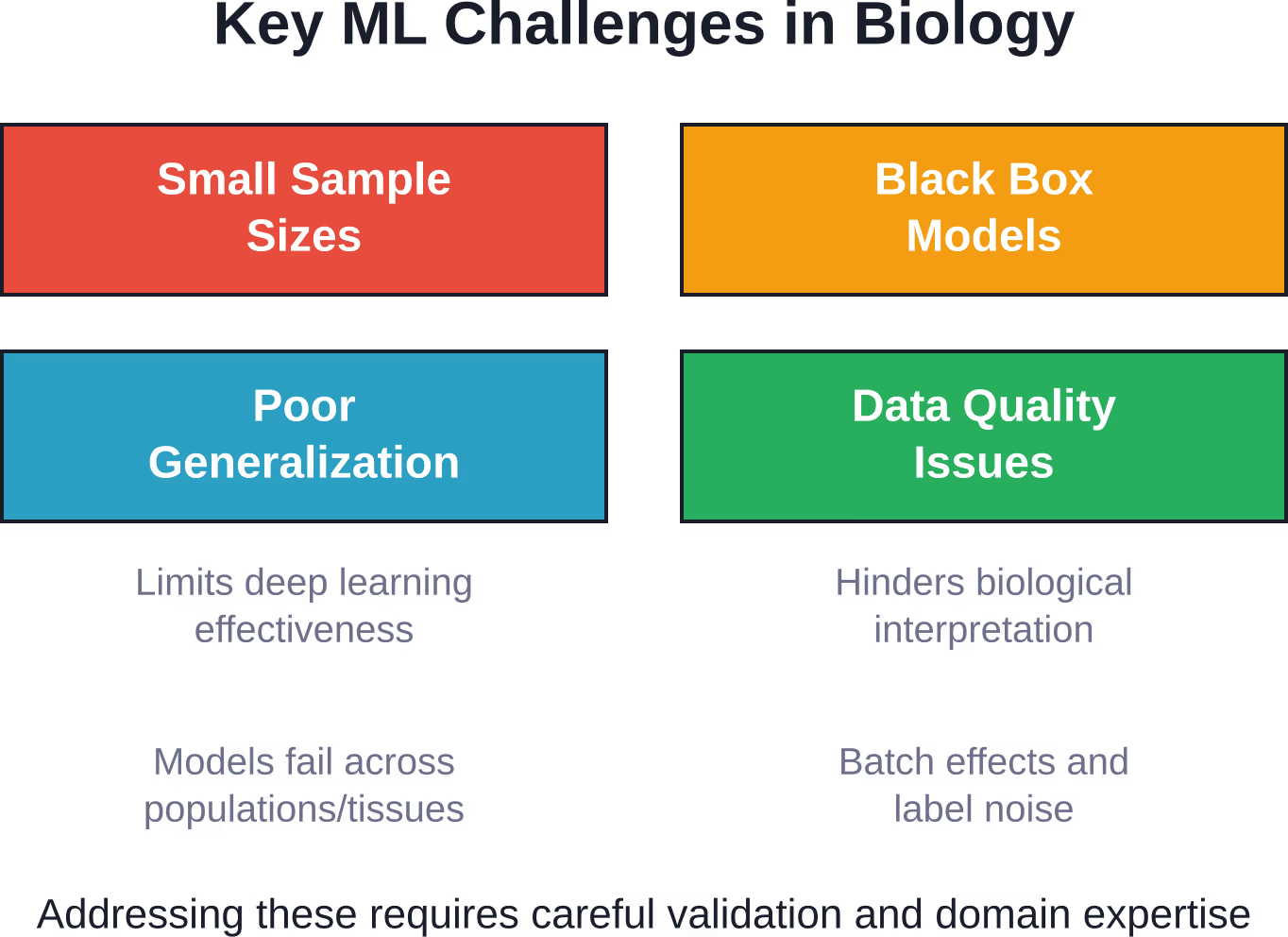
- Small sample sizes: Clinical studies may have hundreds of patients, not the millions of examples ideal for deep learning
- Label noise: Biological ground truth is sometimes uncertain or subjective
- Batch effects: Technical variation between experiments can confound biological signals
- Class imbalance: Rare diseases or events are underrepresented in training data
Addressing these issues requires careful experimental design, data augmentation strategies, and appropriate model validation.
Interpretability vs. Performance Tradeoffs
Deep neural networks achieve impressive accuracy but function as “black boxes”—their internal decision-making processes are opaque. For biological research, understanding why a model makes particular predictions is often as important as the predictions themselves.
Simpler models like decision trees or linear regression are more interpretable but may sacrifice predictive power. Researchers must balance accuracy against the need for mechanistic insight.
Recent work on explainable AI aims to bridge this gap by developing methods that reveal which features most influence complex model predictions.
Generalization Across Biological Contexts
Models trained on one population, tissue type, or experimental condition may fail when applied to different contexts. A cancer diagnostic algorithm developed using data from one hospital may perform poorly at another institution with different patient demographics or imaging equipment.
Validating models across diverse datasets and understanding their limitations is critical before clinical deployment.
Reproducibility and Standardization
ML research sometimes suffers from inadequate reporting of model details, training procedures, and hyperparameter choices. This makes it difficult to reproduce published results or compare different approaches fairly.
The biological ML community is working toward better standards for model sharing, benchmark datasets, and performance reporting to address these concerns.
Best Practices for Implementing ML in Biological Studies
Successfully applying machine learning to biological problems requires more than technical knowledge. Here’s what actually works in practice.
Start With Clear Biological Questions
ML should serve biological inquiry, not the other way around. Define specific hypotheses or clinical needs before selecting algorithms. “Can we predict treatment response from baseline genomic profiles?” is better than “let’s apply deep learning to our data and see what happens.”
Invest in Data Curation
Garbage in, garbage out applies doubly to biological ML. Spend time cleaning datasets, documenting metadata, and ensuring label accuracy. This unglamorous work determines model success more than algorithmic sophistication.
Use Appropriate Validation Strategies
Training and testing on the same data produces overly optimistic performance estimates. Hold out independent test sets, use cross-validation, and validate on external datasets when possible.
For clinical applications, prospective validation—testing models on data collected after model development—provides the most rigorous evidence of real-world utility.
Avoid Overfitting
Complex models can memorize training data rather than learning generalizable patterns. Regularization techniques, early stopping, and monitoring validation performance help prevent overfitting.
When sample sizes are limited, simpler models often outperform complex ones despite lower training accuracy.
Collaborate Across Disciplines
The most impactful biological ML work combines domain expertise with computational skills. Biologists understand data context, experimental limitations, and relevant prior knowledge. ML experts bring algorithmic knowledge and implementation experience.
Effective collaboration between these groups produces better science than either could achieve independently.
Future Directions and Emerging Opportunities
Where is the biological ML heading? Several trends are worth watching.
Foundation Models for Biology
Large language models like ChatGPT learn general patterns from massive text corpora, then adapt to specific tasks with minimal additional training. Biological foundation models follow similar principles—training on enormous datasets of sequences, structures, or images to learn fundamental biological patterns.
These models can then be fine-tuned for specific applications with relatively small datasets, potentially overcoming the sample size limitations that plague many biological ML projects.
Active Learning and Experimental Design
Rather than passively analyzing existing data, ML can guide which experiments to perform next. Active learning algorithms identify the most informative experiments—those that would reduce model uncertainty most effectively.
This creates a feedback loop: perform experiments, train models, use models to design better experiments, repeat. The approach accelerates discovery by efficiently exploring experimental space.
Multimodal Integration
Biological systems are studied through multiple data types: genomics, proteomics, metabolomics, imaging, clinical records. Most ML models analyze single data modalities, but biology happens at their intersection.
Multimodal models that jointly analyze diverse data types should capture more complete pictures of biological processes—though integrating fundamentally different data types poses significant technical challenges.
Causal Inference and Mechanistic Understanding
Current ML excels at prediction but struggles with causation. Knowing that gene X correlates with disease doesn’t prove X causes disease—it might be downstream, upstream, or merely associated through shared regulation.
Developing ML methods that infer causal relationships from observational data would transform biological understanding, enabling researchers to identify therapeutic targets with higher confidence.
Clinical Translation and Regulatory Frameworks
As ML models move from research settings into clinical practice, regulatory agencies must establish approval pathways. Questions about model transparency, ongoing monitoring, and liability when algorithms make errors remain partially unresolved.
Building robust frameworks for clinical ML deployment will determine how quickly innovations reach patients.
Learning Resources for Biologists
Want to develop ML skills? Multiple pathways exist depending on existing computational background:
- For complete beginners: Start with conceptual understanding before diving into code. Online courses introducing ML concepts using biological examples provide gentle entry points. Focus on understanding when different algorithms are appropriate rather than implementation details initially.
- For those with basic programming experience: Python has become the standard language for biological ML. Learning NumPy for numerical computing, pandas for data manipulation, and scikit-learn for ML provides a solid foundation. Biological sequence analysis benefits from BioPython integration.
- For advancing practitioners: Deep learning frameworks like TensorFlow and PyTorch enable building custom neural networks. Understanding backpropagation, optimization algorithms, and architecture design allows tackling complex biological problems.
Community discussions on platforms like Reddit’s machine learning and bioinformatics forums provide practical insights into real implementation challenges and solutions.
Frequently Asked Questions
What’s the difference between machine learning and artificial intelligence in biology?
Artificial intelligence is the broader field encompassing any computational system that performs tasks requiring intelligence. Machine learning is a subset of AI focused specifically on algorithms that learn from data rather than following explicitly programmed rules. In biology, most current AI applications use ML techniques—neural networks, random forests, support vector machines—that improve performance through exposure to training examples.
Do I need a computer science degree to use machine learning in biological research?
Not anymore. Automated ML platforms like BioAutoMATED now enable researchers without programming backgrounds to build and deploy models for biological sequence analysis. These tools handle technical details automatically while allowing biologists to focus on experimental design and interpretation. That said, understanding basic ML concepts helps researchers choose appropriate methods and interpret results critically, even when using automated platforms.
How much data do I need to train a machine learning model?
It depends on the complexity of both the biological question and the model architecture. Simple linear models might work with dozens to hundreds of examples. Deep neural networks typically require thousands to millions of training samples for optimal performance. Transfer learning and foundation models can reduce data requirements by leveraging knowledge from large pre-training datasets. For small biological datasets, simpler algorithms often outperform complex ones despite lower theoretical capacity.
Can machine learning replace traditional experimental biology?
No. ML models learn from experimental data—they don’t replace the need to generate that data. The most powerful approach combines ML with classical experimental methods in a feedback loop: experiments generate data, ML identifies patterns and makes predictions, experiments validate those predictions and generate new data. Computational predictions must always be verified experimentally before drawing firm biological conclusions.
How do I know if my machine learning results are reliable?
Rigorous validation is essential. Use independent test sets that were completely excluded from training. Apply cross-validation to assess consistency. Test models on external datasets from different labs, populations, or experimental conditions. Compare ML performance against appropriate baselines—both simple algorithmic approaches and human expert performance where applicable. Report confidence intervals and examine which types of examples the model gets wrong. Be skeptical of perfect accuracy, which often indicates data leakage or overfitting.
What biological problems are best suited for machine learning?
ML excels when problems involve high-dimensional data, complex nonlinear relationships, and sufficient training examples. Genomic variant classification, medical image analysis, protein structure prediction, and drug-target interaction prediction all fit these criteria well. ML is less suitable when sample sizes are tiny, when mechanistic interpretability is paramount, or when the cost of prediction errors is extremely high without human oversight. Pattern recognition tasks generally benefit more than problems requiring causal reasoning or creative hypothesis generation.
How is machine learning used in drug discovery specifically?
ML accelerates multiple drug development stages. In target identification, algorithms analyze genomic and proteomic data to predict which proteins are suitable drug targets. During lead discovery, virtual screening models evaluate millions of compounds computationally to identify promising candidates. ADMET prediction estimates how compounds will behave in the body before synthesis. In clinical trials, patient stratification identifies subgroups most likely to benefit from treatment. These applications reduce both time and cost compared to purely experimental approaches, though experimental validation remains essential.
Conclusion: The Convergence Continues
Machine learning has fundamentally altered how biological research is conducted. From achieving high accuracy in drug discovery scoring functions to predicting protein structures with unprecedented precision, ML techniques now underpin much of modern molecular biology, genomics, and clinical medicine.
The numbers tell the story clearly: 85% growth in AI and computational biology publications over five years, 14,000 articles published between 2017 and 2022, and applications spanning every major biological subdiscipline from cancer genomics to cardiac imaging.
But we’re still in early stages.
Current models mostly tackle well-defined pattern recognition tasks using existing datasets. The next frontier involves causal inference, active experimental design, and seamless integration of diverse data modalities. As foundation models trained on massive biological datasets mature, they’ll likely democratize access to sophisticated ML capabilities even further.
The most successful biological research groups won’t be those that apply ML blindly to every problem. They’ll be the ones that thoughtfully combine computational predictions with experimental validation, understand model limitations, and maintain focus on answering fundamental biological questions.
For researchers just beginning to incorporate ML into their work, the path forward is clearer than ever. Accessible tools exist, training resources abound, and the biological community is actively building best practices for rigorous application.
Start small. Pick a well-defined problem. Curate quality data. Choose appropriate algorithms. Validate rigorously. Then build from there.
The convergence of machine learning and biology isn’t coming—it’s already here. The question is how effectively each researcher will leverage these tools to advance their specific area of investigation.
 English
  German
  Arabic
  French
  Dutch
Dutch  Spanish