
Résumé rapide : L'apprentissage automatique révolutionne l'automatisation des tests en permettant la génération intelligente de tests, la création de scripts auto-réparateurs, la prédiction des défauts et l'optimisation de leur exécution. Les algorithmes d'apprentissage automatique analysent le comportement des applications, réduisent la maintenance manuelle et améliorent la précision des tests grâce à un apprentissage continu. Les entreprises qui utilisent l'apprentissage automatique dans leurs tests constatent des cycles de mise en production plus rapides et une meilleure qualité logicielle.
Les tests logiciels ont atteint un point de rupture. Les frameworks d'automatisation traditionnels nécessitent des mises à jour manuelles constantes, peinent à gérer les interfaces dynamiques et ne parviennent pas à prioriser ce qui compte vraiment.
L'apprentissage automatique change complètement la donne.
Au lieu de scripts fragiles qui se cassent à chaque modification de l'interface utilisateur, les systèmes de test basés sur l'apprentissage automatique apprennent du comportement de l'application, s'adaptent aux changements et prédisent où les défauts apparaîtront avant même que les utilisateurs ne les rencontrent.
L'idée principale est la suivante : l'intégration du machine learning dans l'automatisation des tests ne vise pas à remplacer les testeurs humains. Il s'agit plutôt d'accroître leur efficacité en automatisant les tâches répétitives de reconnaissance de formes que les machines gèrent mieux que les humains.
Qu’apporte l’apprentissage automatique à l’automatisation des tests ?
L'apprentissage automatique applique des techniques d'analyse de données qui permettent aux systèmes d'apprendre à partir de modèles sans programmation explicite. Dans le contexte des tests logiciels, cela se traduit par des frameworks de test qui améliorent leur précision au fil du temps.
L'automatisation traditionnelle suit des règles fixes : cliquer sur ce bouton, vérifier ce texte, répéter. Lorsque le bouton se déplace ou que le texte change, le test échoue et quelqu'un doit mettre à jour le script manuellement.
L'automatisation basée sur l'apprentissage automatique détecte que le bouton existe toujours, mais à un autre emplacement. Elle identifie les éléments d'interface utilisateur par leur fonction et leur contexte plutôt que par des repères fixes. Le système apprend le comportement “ normal ” d'une application et signale les anomalies réelles au lieu des faux positifs.
Les recherches de l'IEEE explorent des cadres qui combinent les tests logiciels automatisés avec l'apprentissage automatique et les capacités d'intelligence artificielle, démontrant des améliorations significatives dans l'efficacité de la génération et de l'exécution des tests.
Capacités fondamentales d'apprentissage automatique pour les tests
Plusieurs techniques d'apprentissage automatique se révèlent particulièrement précieuses pour l'automatisation des tests :
- reconnaissance de formes: Identification des éléments d'interface utilisateur dans différents états et tailles d'écran
- Algorithmes de classification: Catégorisation des défauts par type, gravité et cause probable
- Analyse de régression: Prédire quelles modifications de code présentent le risque de défaut le plus élevé
- Méthodes de clusteringRegrouper les scénarios de test similaires afin d'éliminer les redondances
- Réseaux neuronauxGestion des tests visuels complexes et de la détection des anomalies
Chaque technique répond à des défis de test spécifiques qui consomment un effort manuel excessif dans les cadres traditionnels.

Créez des outils d'assurance qualité plus intelligents grâce à l'IA supérieure
IA supérieure Cette entreprise aide les sociétés à évaluer les cas d'usage de l'IA et à les transformer en logiciels fonctionnels. Ses services comprennent le conseil en IA, le développement de logiciels d'IA, la R&D, la formation et l'intégration aux flux de travail existants.
Pour l'automatisation des tests, cela peut prendre en charge la priorisation automatisée des tests, la détection des modèles de défaillance, l'analyse des données de test, l'automatisation des rapports ou les outils qui aident les équipes d'assurance qualité à réduire le travail répétitif.
Besoin de Machine Learning pour vos flux de travail QA ?
AI Superior peut vous aider avec :
- évaluation des cas d'utilisation de l'automatisation
- création d'outils d'IA et d'apprentissage automatique personnalisés
- développement de modèles d'analyse et de prédiction
- intégrer l'IA dans les flux de travail de test
👉 Contactez l'IA supérieure pour discuter de votre projet.
Principales applications du ML dans l'automatisation des tests
L'apprentissage automatique améliore de nombreux aspects du cycle de vie des tests. Voyons en détail où son impact est le plus important.
Génération de tests intelligents
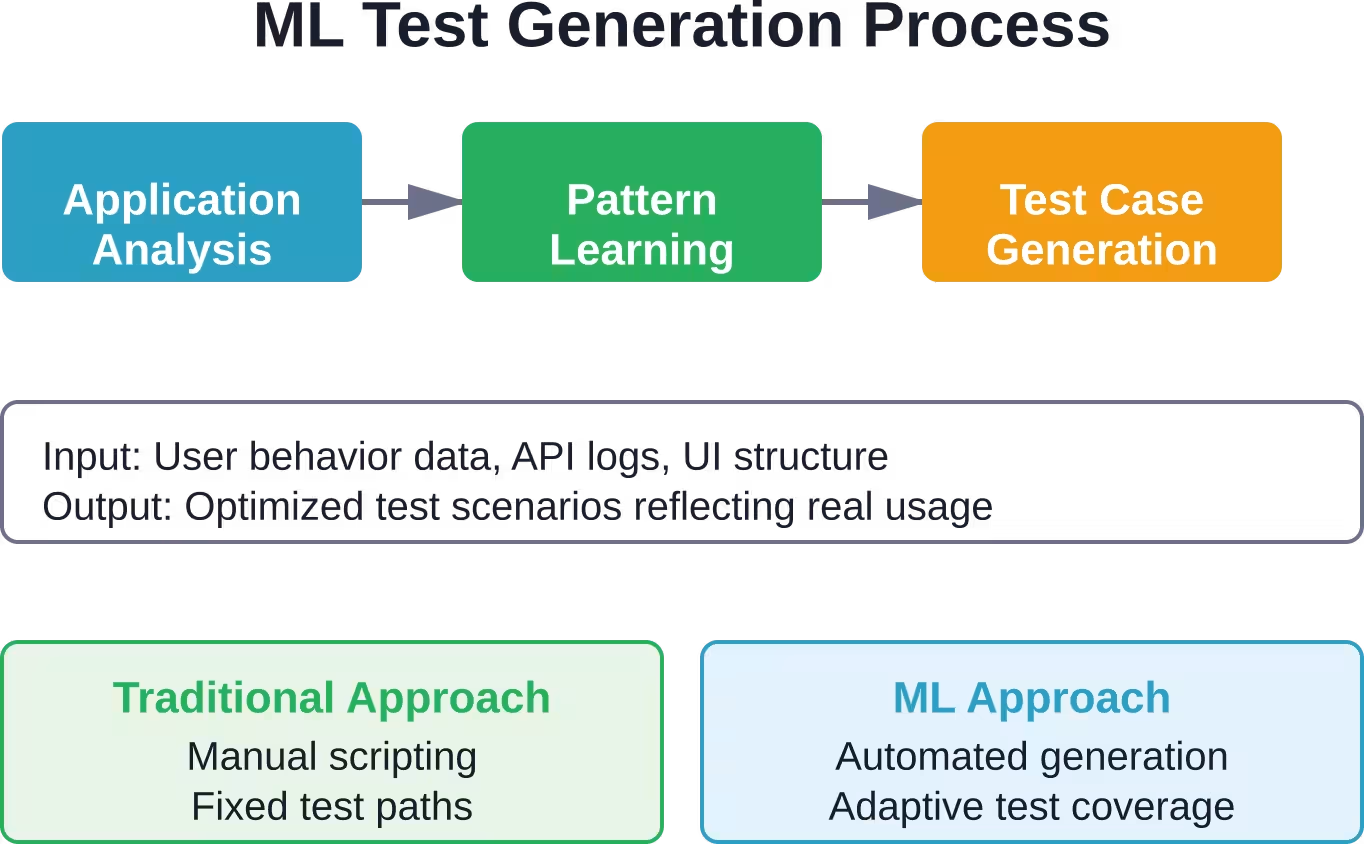
Plutôt que de rédiger manuellement chaque cas de test, les systèmes d'apprentissage automatique analysent la structure de l'application et les modèles de comportement des utilisateurs afin de générer automatiquement des scénarios de test pertinents.
Les recherches sur la génération automatisée de tests indiquent que l'intégration du ML permet une création de tests plus efficace en tirant des enseignements des suites de tests existantes et des modèles de comportement des applications.
Le système observe comment les utilisateurs interagissent réellement avec l'application : les parcours qu'ils suivent, le temps qu'ils y passent et les informations qu'ils fournissent. Il génère ensuite des scénarios de test qui reflètent une utilisation réelle plutôt que des cas limites théoriques imaginés par les ingénieurs.
Cette approche permet de déceler des problèmes que les tests créés manuellement ne permettent pas de résoudre, car elle reflète le comportement réel des utilisateurs plutôt que des suppositions.
Scripts de test d'auto-réparation
La maintenance des tests consomme d'énormes ressources. Les recherches indiquent que moins de 251 000 000 de notebooks restent exécutables sans erreurs, et que seulement 41 000 000 000 reproduisent les résultats attendus lors d'une nouvelle exécution, ce qui souligne la fragilité des approches de test traditionnelles.
L'apprentissage automatique résout ce problème grâce à ses capacités d'auto-réparation. Lorsqu'un test rencontre un élément d'interface utilisateur modifié, l'algorithme recherche cet élément en utilisant d'autres stratégies d'identification : texte similaire, position relative, contexte environnant ou rôle fonctionnel.
Le système enregistre la stratégie qui a fonctionné et intègre ces enseignements dans les tests suivants. Au fil du temps, les tests deviennent plus robustes sans intervention manuelle.
Prédiction et prévention des défauts
L'apprentissage automatique excelle dans l'identification de schémas qui échappent aux humains. En analysant les données historiques de défauts, les indicateurs de complexité du code et les modèles de modifications, les modèles d'apprentissage automatique prédisent quels modules présentent le risque de défaut le plus élevé.
Des recherches montrent que les classificateurs d'apprentissage automatique peuvent détecter les discussions relatives à la dette technique avec une précision nettement supérieure aux recherches par mots-clés. L'analyse des problèmes du projet Chromium a révélé qu'environ 161 000 problèmes suivis étaient liés à la dette technique (441 des 1 934 étiquettes), une tendance difficile à identifier manuellement.
Les équipes de test utilisent ces prédictions pour prioriser l'exécution des tests, en concentrant les ressources sur les zones à haut risque plutôt que d'exécuter chaque test à chaque modification.
Priorisation des cas de test
Tous les tests n'ont pas la même valeur. Certains détectent fréquemment des défauts ; d'autres n'ont pas échoué depuis des mois. Les algorithmes d'apprentissage automatique analysent l'historique d'exécution des tests afin de les classer selon leur probabilité de détecter des problèmes dans la modification de code actuelle.
Cette priorisation s'avère cruciale pour les pipelines d'intégration continue disposant de temps limité. Il convient d'exécuter en premier les tests les plus susceptibles de détecter les problèmes et de reporter les tests à faible valeur ajoutée à des étapes ultérieures.
| Facteur de priorisation | Méthode d'analyse ML | Impact sur la sélection des tests |
|---|---|---|
| Étendue des modifications de code | Cartographie des dépendances de fichiers | Identifie les zones de couverture de test affectées. |
| taux d'échec historique | Analyse des séries chronologiques | Classe les tests par fréquence de détection des défauts |
| Complexité du code | Métriques d'analyse statique | Tests de poids couvrant des modules complexes de niveau supérieur |
| Modifications récentes | Regroupement de fréquence de changement | Priorise les tests pour les sections de code volatiles |
Tests visuels et d'interface utilisateur
La validation de l'exactitude visuelle sur différents navigateurs, appareils et tailles d'écran nécessite traditionnellement des comparaisons au pixel près, ce qui génère de faux positifs pour des différences de rendu non pertinentes.
Les réseaux neuronaux convolutifs distinguent les défauts visuels significatifs des variations acceptables. Le modèle d'apprentissage automatique apprend à différencier un véritable problème d'interface utilisateur des différences mineures de rendu qui n'affectent ni la fonctionnalité ni l'expérience utilisateur.
Selon une étude de l'IEEE sur les applications d'automatisation des tests d'interface graphique, les techniques d'apprentissage automatique améliorent considérablement la précision et la maintenabilité des tests visuels par rapport aux méthodes traditionnelles de comparaison d'images.
Les algorithmes d'apprentissage automatique au service de l'automatisation des tests
Différentes techniques d'apprentissage automatique permettent de relever des défis spécifiques en matière de tests. Comprendre quel algorithme convient à quel problème aide les équipes à mettre en œuvre l'apprentissage automatique efficacement.
Arbres de décision et forêts aléatoires
Les arbres de décision excellent dans la prédiction des défauts en classant les modules de code en fonction de mesures de complexité, de la fréquence des changements et de la densité historique des défauts.
Les forêts aléatoires (ensembles de plusieurs arbres de décision) améliorent la précision en agrégeant les prédictions de plusieurs modèles.
Ces algorithmes traitent à la fois les données catégorielles et numériques, ce qui les rend polyvalents pour l'analyse de diverses métriques de test.
Machines à vecteurs de support
Les SVM classent les points de données en trouvant les frontières optimales entre les catégories. Dans le contexte des tests, elles permettent de distinguer les régions de code sujettes aux défauts des régions stables, ou de catégoriser les échecs de test selon leur cause racine probable.
Cette technique fonctionne bien avec des données multidimensionnelles, ce qui est utile pour analyser simultanément du code présentant de nombreuses métriques de complexité.
Réseaux neuronaux
Les réseaux d'apprentissage profond gèrent des tâches complexes de reconnaissance de formes comme l'analyse d'images pour les tests visuels ou le traitement du langage naturel pour l'analyse des journaux de tests et des descriptions de défauts.
Les réseaux neuronaux convolutifs traitent les informations visuelles et identifient les anomalies d'interface utilisateur sur les captures d'écran. Les réseaux neuronaux récurrents analysent les données séquentielles, telles que les journaux de session utilisateur, afin de prédire les points de défaillance dans les flux de travail complexes.

Algorithmes de clustering
Les algorithmes K-means et de clustering hiérarchique regroupent les cas de test similaires, révélant ainsi les redondances dans les suites de tests. En identifiant des groupes de tests couvrant des parcours d'application quasi identiques, les équipes éliminent les doublons et concentrent leurs ressources sur des scénarios uniques.
Le clustering permet également de regrouper les défauts similaires, aidant ainsi les équipes à identifier les problèmes systémiques plutôt que de traiter chaque bug comme un incident isolé.
Mise en œuvre et résultats concrets
Les organisations qui mettent en œuvre l'automatisation des tests améliorée par l'apprentissage automatique font état d'améliorations potentielles mesurables sur de multiples indicateurs.
Données de performance du cadre
Les tests comparatifs des frameworks AutoML ont révélé des différences de performances entre les implémentations. Auto-sklearn a démontré des performances supérieures aux solutions TPOT et H2O AutoML pour les tâches de classification.
Fiabilité des assertions de test
Les recherches sur la génération automatisée d'assertions pour les tests de régression dans les notebooks d'apprentissage automatique indiquent que les approches automatisées peuvent générer des assertions de test fiables. Cependant, les études montrent que moins de 250 000 notebooks restent exécutables sans erreur, ce qui souligne les difficultés liées à la fiabilité des tests.
Avantages et inconvénients
L'apprentissage automatique transforme l'économie de l'automatisation des tests, mais sa mise en œuvre nécessite de comprendre à la fois ses avantages et ses limites.
Principaux avantages
Les tests améliorés par l'apprentissage automatique offrent plusieurs avantages convaincants :
- Frais généraux de maintenance réduitsLes tests d'auto-réparation s'adaptent automatiquement aux modifications de l'interface utilisateur, réduisant considérablement le temps de mise à jour manuelle.
- Détection des défauts plus rapideLes modèles prédictifs identifient les zones à haut risque avant que les problèmes n'atteignent la production.
- Couverture de test amélioréeLa génération automatisée de tests explore des scénarios que la programmation manuelle néglige.
- Meilleure allocation des ressourcesLa priorisation permet de concentrer les efforts de test là où ils sont le plus importants.
- Amélioration continueLes modèles améliorent leur précision au fil du temps à mesure qu'ils traitent davantage de données.
Les organisations constatent des cycles de publication plus rapides car les tests ne constituent plus un goulot d'étranglement dans les pipelines de déploiement avec des suites de tests fragiles et nécessitant une maintenance importante.
Défis liés à la mise en œuvre
Mais l'apprentissage automatique n'est pas une solution miracle. Plusieurs défis nécessitent une attention particulière :
- Exigences en matière de donnéesLes modèles d'apprentissage automatique nécessitent un volume important de données d'entraînement. Les organisations ne disposant pas d'un historique d'exécution de tests ou d'un système de suivi des anomalies conséquents ne pourront pas effectuer de prédictions précises.
- Transparence du modèleLes réseaux neuronaux fonctionnent comme des boîtes noires. Lorsqu'un modèle classe un module comme présentant un risque élevé, il est difficile d'en comprendre les raisons, ce qui complique la confiance et l'adoption.
- Investissement initialDévelopper des capacités d'apprentissage automatique exige des compétences spécialisées, une infrastructure et du temps. Les bénéfices se font sentir plus tard, une fois que les modèles ont appris à partir de données suffisantes.
- fausse confianceLes équipes peuvent trop se fier aux prédictions de l'apprentissage automatique, et ne pas suffisamment tester les zones que le modèle considère comme à faible risque, mais qui recèlent en réalité des défauts critiques.
| Aspect | Automatisation traditionnelle | Automatisation améliorée par l'apprentissage automatique |
|---|---|---|
| Maintenance des tests | effort manuel élevé | Largement automatisé |
| Complexité de la configuration | Investissement initial plus faible | Nécessite une expertise et une infrastructure en apprentissage automatique |
| Adaptation aux changements | Fragile, défaillances fréquentes | Auto-guérison, résilience |
| Priorisation des tests | Manuel ou basé sur des règles | Optimisation basée sur les données |
| Prédiction des défauts | Tests réactifs | Ciblage proactif des risques |
Premiers pas avec le ML dans l'automatisation des tests
La mise en œuvre de l'apprentissage automatique ne nécessite pas de remplacer du jour au lendemain l'infrastructure de test existante. Une adoption progressive apporte de la valeur tout en minimisant les risques.
Commencez par les points douloureux spécifiques
Identifiez les points de friction majeurs de l'automatisation traditionnelle. La maintenance des tests est-elle trop chronophage ? Les faux positifs surchargent-ils l'équipe ? Des défauts critiques passent-ils inaperçus malgré des tests approfondis ?
Privilégier les solutions d'apprentissage automatique ciblées plutôt que de viser une transformation globale. Les scripts d'auto-réparation réduisent les coûts de maintenance. La prédiction des défauts comble les lacunes de couverture. L'apprentissage automatique basé sur les tests visuels réduit les faux positifs.
S'appuyer sur les données existantes
Les modèles d'apprentissage automatique nécessitent des données d'entraînement. Heureusement, la plupart des organisations en disposent déjà : journaux d'exécution des tests, historique de suivi des anomalies, métriques du dépôt de code et données du pipeline CI/CD.
Commencez par regrouper ces informations dans un format exploitable par les algorithmes d'apprentissage automatique. Les résultats des tests historiques, indiquant quels tests ont détecté quels défauts et pour quelles modifications de code, constituent la base des modèles de priorisation.
Choisir les bons outils
Plusieurs plateformes intègrent désormais des fonctionnalités d'apprentissage automatique dans leurs frameworks d'automatisation des tests. Privilégiez les solutions qui s'intègrent à votre infrastructure de test existante plutôt que celles qui nécessitent un remplacement complet.
Le NIST mène des recherches sur les méthodes de test, d'évaluation, de validation et de vérification (TEVV) de l'IA et a annoncé des programmes tels que ARIA (2024) et le NIST GenAI Challenge pour établir des approches standardisées pour l'évaluation des systèmes basés sur l'apprentissage automatique.
Évaluez les outils en fonction des capacités spécifiques nécessaires (auto-réparation, tests visuels ou prédiction des défauts) plutôt que d'essayer de tout adopter simultanément.
L'avenir des tests pilotés par l'apprentissage automatique
Les recherches portant sur l'avenir de l'automatisation des tests logiciels identifient plusieurs tendances émergentes qui façonneront la manière dont l'apprentissage automatique s'intègre aux pratiques de test.
Les modèles deviendront plus transparents, offrant une IA explicable qui aidera les équipes à comprendre le raisonnement derrière les prédictions. Ceci résout le problème de la boîte noire qui limite actuellement la confiance dans les recommandations d'apprentissage automatique.
L'intégration aux flux de développement sera renforcée. Au lieu de phases de test distinctes, l'apprentissage automatique fournira un retour d'information en temps réel pendant que les développeurs écrivent du code : il signalera les modifications à haut risque avant leur validation et suggérera des tests pour vérifier les fonctionnalités.
Les recherches sur les systèmes basés sur l'apprentissage automatique indiquent que relever les défis de la collaboration au niveau des exigences, des données d'entraînement et de l'intégration produit-modèle exige de nouvelles approches. À mesure que ces pratiques se perfectionnent, les tests d'apprentissage automatique deviendront plus accessibles aux organisations ne disposant pas d'équipes dédiées à la science des données.
L'apprentissage par transfert permettra aux petites organisations de tirer parti du ML sans disposer de vastes ensembles de données d'entraînement. Les modèles entraînés sur des bases de code importantes et diversifiées pourront être affinés pour des applications spécifiques avec des données historiques limitées, démocratisant ainsi l'accès aux tests basés sur le ML.
Questions fréquemment posées
Quelle est la différence entre l'IA et le ML dans l'automatisation des tests ?
L'intelligence artificielle (IA) est un concept plus large désignant les machines capables d'effectuer des tâches qui requièrent généralement l'intelligence humaine. L'apprentissage automatique (ML) est un sous-ensemble spécifique de l'IA, axé sur les systèmes qui apprennent à partir de données sans programmation explicite. En automatisation des tests, les algorithmes de ML analysent les tendances dans les données de test afin d'améliorer la précision, tandis que l'IA englobe le ML ainsi que d'autres techniques telles que les systèmes à base de règles et le traitement automatique du langage naturel.
Ai-je besoin d'une équipe de data scientists pour implémenter le ML dans les tests ?
Pas nécessairement. De nombreuses plateformes modernes d'automatisation des tests intègrent des fonctionnalités d'apprentissage automatique qui fonctionnent sans nécessiter d'expertise en science des données. Ces outils gèrent automatiquement l'entraînement et l'optimisation des modèles. Toutefois, les organisations qui développent des solutions d'apprentissage automatique personnalisées ou qui travaillent avec des scénarios complexes ont tout intérêt à collaborer avec des spécialistes en science des données pour optimiser la sélection des modèles, l'ingénierie des caractéristiques et l'interprétation des résultats.
De combien de données historiques les modèles d'apprentissage automatique ont-ils besoin pour l'automatisation des tests ?
Les exigences varient selon le cas d'utilisation. Les scripts d'auto-réparation peuvent commencer à apprendre immédiatement à partir des tests en cours. Les modèles de prédiction des défauts nécessitent généralement plusieurs mois d'historique d'exécution des tests et de données de défauts pour identifier des tendances significatives ; il s'agit généralement de centaines, voire de milliers, de tests. Les approches d'apprentissage par transfert réduisent les besoins en données en affinant les modèles pré-entraînés sur des ensembles de données plus petits et spécifiques à votre application.
L'apprentissage automatique peut-il remplacer complètement les tests manuels ?
Non. L'apprentissage automatique améliore l'automatisation en prenant en charge la reconnaissance de formes répétitives et en réduisant les coûts de maintenance, mais il ne remplace pas le jugement humain. Les tests exploratoires, l'évaluation de l'utilisabilité et la compréhension du contexte métier nécessitent toujours l'intervention de testeurs humains. L'apprentissage automatique est plus efficace lorsqu'il renforce l'efficacité humaine plutôt que de tenter d'éliminer complètement l'intervention humaine.
Quel est le délai de retour sur investissement pour l'automatisation des tests d'apprentissage automatique ?
La mise en place initiale nécessite un investissement dans l'infrastructure, la préparation des données et l'entraînement des modèles ; il faut généralement compter 2 à 4 mois avant d'observer des résultats significatifs. Le retour sur investissement s'accélère à mesure que les modèles apprennent à partir de davantage de données. Les entreprises constatent généralement un seuil de rentabilité sous 6 à 12 mois grâce à la réduction des coûts de maintenance, à une détection plus rapide des anomalies et à une meilleure couverture des tests. Ce délai varie en fonction de la taille de la suite de tests, de l'expertise de l'équipe et des capacités d'apprentissage automatique spécifiques mises en œuvre.
Comment fonctionnent réellement les tests d'auto-guérison ?
Lorsqu'un élément d'interface utilisateur modifié est détecté lors d'un test, le système d'apprentissage automatique explore d'autres stratégies d'identification : recherche par contenu textuel, similarité visuelle, position relative ou attributs fonctionnels, en remplacement du localisateur initial. L'algorithme enregistre la stratégie ayant fonctionné et intègre cette information au script de test. Au fil des exécutions, le test gagne en robustesse en apprenant à identifier chaque élément de différentes manières, ce qui réduit sa vulnérabilité face aux modifications d'interface.
Qu’en est-il des faux positifs issus des prédictions d’apprentissage automatique ?
Tous les modèles prédictifs produisent des faux positifs. Les systèmes d'apprentissage automatique améliorent leur précision au fil du temps grâce au traitement de davantage de données, mais la perfection est illusoire. L'essentiel est de veiller à ce que les faux positifs ne génèrent pas plus de travail qu'ils n'en épargnent. Commencez par des prédictions à forte confiance et ajustez les seuils en fonction de la tolérance de votre équipe face aux fausses alertes et aux défauts non détectés. Privilégiez une approche combinant les prédictions de l'apprentissage automatique et le jugement humain plutôt que d'automatiser entièrement les décisions.
Pour conclure
L'apprentissage automatique transforme fondamentalement l'automatisation des tests, passant de scripts rigides et nécessitant une maintenance importante à des systèmes adaptatifs qui s'améliorent grâce à l'expérience.
Cette technologie n'a rien de magique : elle exige des données d'entraînement de qualité, une mise en œuvre réfléchie et des attentes réalistes. Mais pour les organisations confrontées à des coûts de maintenance des tests trop élevés, une couverture insuffisante ou une détection des défauts trop lente, l'apprentissage automatique offre des solutions éprouvées, étayées par les recherches de l'IEEE, du NIST et d'institutions universitaires.
Commencez modestement. Ciblez un problème précis. Mesurez les résultats. Développez votre stratégie en fonction des résultats obtenus.
L'avenir des tests logiciels repose sur l'alliance de l'expertise humaine et de la reconnaissance automatique des schémas. Les entreprises qui sauront trouver le juste équilibre livreront des logiciels de meilleure qualité plus rapidement que leurs concurrents qui s'en tiennent à des approches purement manuelles ou à l'automatisation traditionnelle.
 French
  English
  German
  Arabic
  Dutch
Dutch  Spanish