
Résumé rapide : L'apprentissage automatique révolutionne la sécurité des réseaux en permettant la détection automatisée des menaces, l'identification des anomalies en temps réel et la défense prédictive contre les cyberattaques en constante évolution. Les algorithmes d'apprentissage automatique analysent d'immenses volumes de trafic réseau pour identifier des schémas que les systèmes de sécurité traditionnels ne détectent pas, réduisant ainsi les temps de réponse de plusieurs heures à quelques secondes. Malgré la persistance de défis tels que les attaques adverses et les faux positifs, les systèmes de sécurité basés sur l'apprentissage automatique deviennent indispensables pour protéger les réseaux modernes contre les menaces sophistiquées.
Le paysage de la sécurité réseau a considérablement évolué. Les défenses traditionnelles basées sur les signatures ne peuvent plus faire face au volume et à la sophistication des cybermenaces modernes. Les entreprises voient quotidiennement des volumes massifs de paquets de données traverser leurs pare-feu, et même un taux d'erreur de catégorisation de 0,11 TPT3T peut bloquer par erreur une quantité considérable de trafic légitime.
C'est là que l'apprentissage automatique change la donne.
Les algorithmes d'apprentissage automatique traitent le trafic réseau à une vitesse inégalée par l'humain, identifiant en temps réel les schémas suspects et les anomalies. D'après les programmes de formation répertoriés dans le catalogue NICCS de la CISA, l'analyse pilotée par l'IA améliore considérablement les capacités de détection et de réponse aux cybermenaces. Cette technologie analyse les liens entre les menaces (fichiers malveillants, adresses IP suspectes, activités internes) en quelques secondes au lieu de plusieurs heures.
Mais l'apprentissage automatique en sécurité réseau ne se résume pas à la vitesse. Il s'agit de s'adapter aux menaces qui ne figurent encore dans aucune base de données de signatures.
En quoi l'apprentissage automatique est-il différent pour la sécurité des réseaux ?
L'apprentissage automatique en cybersécurité consiste à utiliser des algorithmes qui améliorent la détection des menaces, la réponse aux incidents et l'évaluation des vulnérabilités en apprenant à partir des données plutôt qu'en suivant des règles statiques. Ces systèmes analysent d'importants volumes de trafic réseau et apprennent à distinguer les comportements normaux des menaces potentielles.
Le problème est le suivant : la sécurité des réseaux présente des défis uniques pour l'apprentissage automatique qui n'existent pas dans d'autres domaines.
Les applications d'apprentissage automatique traditionnelles tolèrent des taux d'erreur plus élevés. Un système de recommandation de produits qui se trompe 51 % du temps ? C'est agaçant, mais gérable. Un système de sécurité réseau avec le même taux d'erreur ? Cela représente potentiellement des milliers de fausses alertes ou de menaces manquées chaque jour.
Les enjeux sont fondamentalement différents. Selon les recherches du NIST sur l'apprentissage automatique adverse, les attaquants ciblent spécifiquement les systèmes d'apprentissage automatique à l'aide de techniques sophistiquées conçues pour échapper à la détection ou corrompre les données d'entraînement. Le document NIST AI 100-2 E2025 (publié en mars 2025) propose une taxonomie complète de ces attaques et des stratégies d'atténuation.
Trois approches fondamentales d'apprentissage automatique en sécurité réseau
Les implémentations de sécurité réseau utilisent généralement trois types d'apprentissage automatique, chacun possédant des capacités distinctes :
| Type ML | Comment ça marche | Application de sécurité réseau |
|---|---|---|
| Apprentissage supervisé | Entraîné sur des ensembles de données étiquetés avec des menaces connues et un trafic normal | Classification des logiciels malveillants, détection des intrusions, filtrage des spams |
| Apprentissage non supervisé | Identifie les tendances et les anomalies sans données pré-étiquetées | Détection des menaces zero-day, analyse du comportement du réseau, détection des anomalies |
| Apprentissage par renforcement | Apprend les réponses optimales par essais et erreurs et boucles de rétroaction. | Stratégies de défense adaptatives, réponse automatisée aux incidents, optimisation des politiques |
L'apprentissage supervisé excelle lorsqu'on sait précisément ce que l'on cherche. Il est entraîné sur des ensembles de données où des experts en sécurité ont déjà identifié les menaces, ce qui permet au système de reconnaître des schémas similaires. Sa limite ? Il peine face aux attaques inédites qui ne correspondent pas aux données d'entraînement.
L'apprentissage non supervisé inverse cette approche. Il établit le comportement normal du réseau, puis signale toute anomalie significative. Cela le rend particulièrement précieux pour détecter les exploits zero-day et les menaces internes qui ne correspondent pas aux signatures d'attaque connues.
L'apprentissage par renforcement va plus loin en adaptant continuellement ses réponses en fonction des résultats. Si le blocage d'un certain type de trafic s'avère efficace, le système apprend à appliquer des blocages similaires de manière proactive.
Comment l'apprentissage automatique traite le trafic réseau en temps réel
Le fonctionnement de la sécurité réseau basée sur l'apprentissage automatique diffère considérablement des approches traditionnelles. Au lieu de comparer les paquets à des bases de données de signatures, les systèmes d'apprentissage automatique utilisent des pipelines d'analyse multi-étapes.
La première étape consiste à collecter les données. Chaque paquet, tentative de connexion et action de l'utilisateur génère des points de données. Les systèmes d'apprentissage automatique ingèrent ces informations en continu, créant ainsi des profils comportementaux de référence pour les utilisateurs, les appareils et les segments de réseau.
Vient ensuite l'extraction des caractéristiques. Les données réseau brutes sont transformées en attributs significatifs : durée de connexion, distribution de la taille des paquets, modèles d'utilisation des protocoles, variations selon l'heure, origines géographiques. Ces caractéristiques alimentent des modèles d'apprentissage automatique entraînés à détecter les anomalies.
L'analyse s'effectue en quasi temps réel. Les systèmes d'apprentissage automatique modernes traitent les événements réseau en quelques millisecondes et attribuent des scores de risque en fonction de multiples facteurs. Une anomalie isolée peut ne pas déclencher d'alerte, mais un ensemble d'anomalies connexes (heure de connexion inhabituelle, appareil inconnu, schéma d'accès aux données atypique) accroît le niveau de menace.
Cas d'utilisation critiques transformant la défense des réseaux
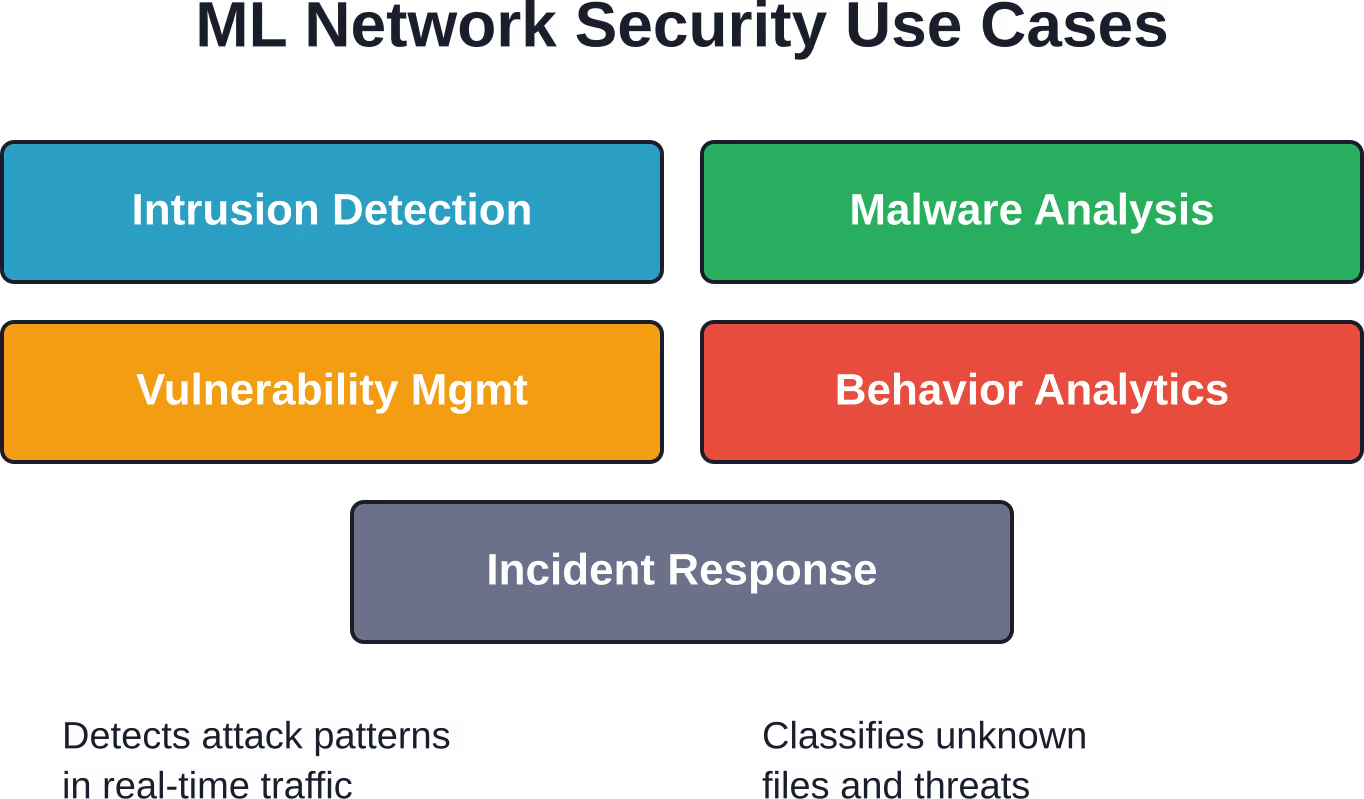
L'apprentissage automatique apporte des améliorations concrètes dans de nombreux domaines de la sécurité réseau. Il ne s'agit pas d'applications théoriques : les organisations les déploient quotidiennement pour lutter contre des menaces réelles.
Détection et prévention des intrusions
Les systèmes de détection d'intrusion basés sur l'apprentissage automatique représentent une évolution majeure par rapport aux approches fondées sur les signatures. Des recherches universitaires menées à l'Université du Minnesota démontrent que la combinaison de systèmes experts et d'apprentissage automatique améliore considérablement la précision de la détection des intrusions réseau.
Ces systèmes analysent les schémas de trafic réseau afin d'identifier les activités de reconnaissance, les déplacements latéraux et les tentatives d'exfiltration de données. Contrairement aux systèmes de détection d'intrusion traditionnels qui se déclenchent sur des signatures d'attaque connues, les modèles d'apprentissage automatique détectent des anomalies comportementales subtiles indiquant une compromission.
Les recherches de l'IEEE démontrent que les approches hybrides combinant réseaux de neurones convolutifs (CNN) et réseaux LSTM bidirectionnels offrent des performances supérieures en matière de détection d'intrusions réseau par analyse d'anomalies. Le composant CNN excelle dans l'extraction de caractéristiques spatiales à partir des paquets réseau, tandis que le réseau LSTM bidirectionnel capture les dépendances temporelles dans les séquences de trafic.
Détection et analyse des logiciels malveillants
L'analyse statique des fichiers par apprentissage automatique permet de prévenir les menaces avant même l'exécution de code malveillant. Les modèles d'apprentissage automatique examinent les attributs des fichiers, la structure du code et les indicateurs comportementaux afin de les classer comme bénins ou malveillants.
Cette approche présente des avantages considérables par rapport aux antivirus basés sur les signatures. Les nouvelles variantes de logiciels malveillants capables de contourner les défenses traditionnelles sont signalées en fonction de leurs similarités structurelles avec des menaces connues. Le système tire des enseignements de chaque détection, améliorant ainsi continuellement la précision de sa classification.
D'après une étude de MITRE sur les menaces pesant sur les systèmes d'IA, les attaquants tentent activement de dérober des modèles d'IA précieux par rétro-ingénierie. Sécuriser les systèmes de détection de logiciels malveillants basés sur l'apprentissage automatique devient donc un enjeu crucial.
Gestion et priorisation des vulnérabilités
Les organisations sont confrontées chaque année à des milliers de vulnérabilités signalées. Les systèmes d'apprentissage automatique transforment la gestion des vulnérabilités en analysant les renseignements sur les menaces, la disponibilité des exploits, la criticité des actifs et l'exposition du réseau afin de recommander des priorités.
Au lieu de se baser uniquement sur les scores CVSS pour l'application des correctifs, les systèmes pilotés par l'apprentissage automatique prennent en compte le contexte organisationnel. Une vulnérabilité critique dans un système exposé à Internet et traitant des données sensibles est considérée comme plus prioritaire que la même vulnérabilité dans un environnement de développement isolé.
Les travaux du NIST sur l'apprentissage automatique pour la vérification des politiques de contrôle d'accès démontrent comment l'apprentissage automatique peut identifier les conflits de politiques et les erreurs de configuration qui créent des failles de sécurité.
Analyse du comportement des utilisateurs et des entités (UEBA)
Les systèmes UEBA établissent des profils comportementaux pour les utilisateurs et les appareils, définissant ainsi le comportement normal de chaque entité. Lorsqu'un utilisateur accède soudainement à des fichiers qu'il n'a jamais utilisés, se connecte depuis un lieu inhabituel ou transfère d'importants volumes de données à 3 heures du matin, le système le signale.
Cela s'avère particulièrement précieux pour détecter les menaces internes et les identifiants compromis – des scénarios où l'attaquant dispose d'un accès légitime mais présente un comportement anormal.
Réponse automatisée aux incidents
L'apprentissage automatique permet aux plateformes SOAR (Security Orchestration, Automation, and Response) de prendre des décisions de triage intelligentes. Au lieu de submerger les analystes d'alertes, le système met en corrélation les événements, évalue leur gravité et déclenche automatiquement les réponses appropriées.
Les alertes de faible niveau de confiance peuvent être consignées pour analyse. Les menaces de niveau de confiance moyen déclenchent une surveillance accrue. Les incidents de haut niveau de confiance entraînent des mesures de confinement : isolation des systèmes affectés, blocage des adresses IP malveillantes et révocation des identifiants compromis.
MITRE Caldera, une plateforme open source d'émulation d'adversaires, aide les équipes de sécurité à tester leurs défenses basées sur l'apprentissage automatique face à des scénarios d'attaque réalistes. MITRE Caldera a déployé de nouvelles fonctionnalités d'émulation d'adversaires, jetant ainsi les bases de futures capacités de simulation de menaces pilotées par l'IA.

Renforcez l'analyse de la sécurité réseau grâce à l'IA supérieure
Les équipes de sécurité réseau travaillent souvent avec de grands volumes de journaux, de données de trafic et d'alertes difficiles à traiter manuellement. IA supérieure peut soutenir les projets d'apprentissage automatique axés sur la détection des comportements suspects, l'identification des anomalies et l'amélioration des flux de travail de surveillance de la sécurité.
AI Superior peut prendre en charge les projets d'apprentissage automatique en matière de sécurité réseau grâce à :
- Analyse des journaux de sécurité, du trafic et des données de surveillance
- Définition des cas d'utilisation de la détection des menaces ou des anomalies
- Élaboration de modèles de sécurité de validation de concept
- Développement de modèles pour la classification ou l'analyse comportementale
- Test de la précision et de la fiabilité du modèle
- Intégration planifiée aux systèmes de sécurité existants
- Soutien au déploiement dans les environnements opérationnels
En matière de sécurité réseau, cela peut s'appliquer à la détection d'intrusions, à la classification des menaces, à la détection d'anomalies, à l'analyse du trafic suspect et à la priorisation automatisée des alertes.
Contactez AI Superior pour discuter du projet.
Des avantages mesurables en environnement de production
Les organisations qui mettent en œuvre une sécurité réseau basée sur l'apprentissage automatique constatent des améliorations quantifiables sur des indicateurs clés. Il ne s'agit pas de gains marginaux, mais de changements fondamentaux dans les opérations de sécurité.
Temps de réponse considérablement réduits
Les opérations de sécurité traditionnelles reposent largement sur des analystes humains qui examinent les alertes, enquêtent sur les incidents et déterminent les réponses à apporter. Ce processus prend des heures, voire des jours. Les systèmes d'apprentissage automatique analysent les menaces en quelques secondes ou minutes, selon les supports de formation de la CISA sur l'analyse des menaces par l'IA.
La corrélation automatisée des menaces élimine le travail manuel de mise en relation des événements connexes entre différents systèmes. Ce qui nécessitait auparavant qu'un analyste vérifie les journaux des pare-feu, des terminaux, des passerelles de messagerie et des systèmes d'identité est désormais automatisé.
Une capacité de manipulation que les humains ne peuvent égaler
Les réseaux modernes génèrent d'énormes volumes de données. Les équipes de sécurité ne peuvent pas examiner manuellement chaque connexion, transfert de fichier ou tentative d'authentification. Les systèmes d'apprentissage automatique traitent ce volume de données de manière routinière, en analysant des millions d'événements par jour tout en garantissant une précision constante.
Cet avantage d'échelle devient crucial lors d'incidents actifs. Lorsqu'un attaquant compromet un système et entame une propagation latérale, l'apprentissage automatique peut repérer le schéma de propagation sur le réseau plus rapidement que les analystes humains ne pourraient collecter les journaux pertinents.
Détection des menaces inconnues
Les failles zero-day et les nouvelles techniques d'attaque contournent par définition les défenses basées sur les signatures. Les modèles d'apprentissage automatique entraînés sur des schémas comportementaux détectent ces menaces en reconnaissant une anomalie, même sans pouvoir identifier précisément ce qui se passe.
Cette capacité s'avère particulièrement précieuse contre les menaces persistantes avancées (APT) qui utilisent des logiciels malveillants personnalisés et des techniques furtives et patientes conçues pour échapper à la détection traditionnelle.
Réduire la fatigue liée aux faux positifs
Les outils de sécurité traditionnels génèrent un nombre considérable de faux positifs. Les analystes s'y habituent et les menaces réelles se perdent dans le bruit. Les systèmes d'apprentissage automatique, quant à eux, apprennent le contexte organisationnel au fil du temps, en comprenant ce qui est normal pour des utilisateurs, des systèmes et des processus métier spécifiques.
Cette prise en compte du contexte réduit considérablement les faux positifs. Le système sait que l'équipe financière télécharge des rapports volumineux en fin de mois, que les développeurs effectuent des impulsions de validation de code et que les systèmes de sauvegarde génèrent des schémas de trafic prévisibles.
Défis et limites réelles
L'apprentissage automatique en sécurité réseau n'est pas sans défis majeurs. Comprendre ces limitations est tout aussi important que comprendre ses capacités.
Attaques adverses d'apprentissage automatique
Les attaquants ne se contentent pas de contourner les systèmes d'apprentissage automatique ; ils s'attaquent directement aux modèles. La taxonomie AI 100-2 E2025 du NIST (publiée en mars 2025) recense de nombreux vecteurs d'attaque contre les systèmes d'apprentissage automatique.
Les attaques par empoisonnement injectent des données malveillantes dans les ensembles d'entraînement, amenant les modèles à identifier à tort les menaces comme bénignes. Les attaques par évasion créent des entrées spécifiquement conçues pour tromper les modèles entraînés. Les attaques par extraction de modèle dérobent le modèle d'apprentissage automatique lui-même, permettant aux attaquants de tester des failles de sécurité hors ligne.
MITRE ATLAS (Adversarial Threat Landscape for Artificial-Intelligence Systems) offre une base de connaissances exhaustive sur les tactiques et techniques d'attaque des systèmes d'apprentissage automatique. Ce cadre aide les équipes de défense à comprendre et à se préparer à ces menaces.
Le problème des données déséquilibrées
Les données relatives à la sécurité des réseaux sont intrinsèquement déséquilibrées. Le trafic légitime surpasse largement le trafic malveillant, parfois dans un rapport de 10 000:1, voire plus. Les recherches de l’IEEE s’attaquent précisément à ce problème et démontrent que les approches d’apprentissage automatique classiques sont peu performantes sur de tels ensembles de données déséquilibrés.
Le problème ? Les modèles entraînés sur des données déséquilibrées ont tendance à s’optimiser pour le cas le plus fréquent. Ils excellent dans la reconnaissance du trafic normal, mais peinent à détecter les attaques rares qui sont pourtant les plus critiques.
Des techniques comme le suréchantillonnage synthétique des minorités, l'apprentissage sensible aux coûts et les méthodes d'ensemble sont utiles, mais le défi fondamental demeure.
Explicabilité et confiance du modèle
Les modèles d'apprentissage profond fonctionnent souvent comme des boîtes noires. Ils signalent une connexion comme suspecte, mais ne peuvent pas en expliquer clairement la raison. Les analystes de sécurité doivent comprendre les menaces pour y répondre efficacement et justifier leurs décisions auprès de la direction.
Ce manque d'explicabilité engendre des problèmes de confiance. Lorsqu'un système d'apprentissage automatique bloque du trafic métier légitime ou ne détecte pas une menace réelle, les opérateurs perdent confiance. Si le système ne peut expliquer son raisonnement, son amélioration devient difficile.
Qualité et disponibilité des données de formation
Les modèles d'apprentissage automatique ne valent que par la qualité de leurs données d'entraînement. Les jeux de données étiquetés de haute qualité pour la sécurité des réseaux restent rares. La plupart des organisations ne peuvent pas partager leur trafic réseau pour des raisons de confidentialité et de concurrence. Les jeux de données publics deviennent rapidement obsolètes face à l'évolution des techniques d'attaque.
L'élaboration d'étiquettes précises exige un investissement important en temps et en expertise. Étiqueter par erreur le trafic d'attaque comme bénin (ou inversement) dégrade les performances du modèle. Le coût et la complexité de la maintenance de données d'entraînement à jour et correctement étiquetées représentent un défi opérationnel majeur.
Besoins en ressources de calcul
L'entraînement de modèles d'apprentissage automatique sophistiqués exige des ressources de calcul considérables. L'inférence en temps réel à la vitesse du réseau nécessite des implémentations optimisées et souvent du matériel spécialisé.
Les organisations doivent trouver un équilibre entre la sophistication des modèles et les contraintes pratiques de déploiement. Un modèle atteignant une précision de 99% mais nécessitant une infrastructure GPU de $500 000 pourrait ne pas être viable par rapport à un modèle précis à 95% fonctionnant sur du matériel standard.
| Défi | Impact | Approche d'atténuation |
|---|---|---|
| Attaques adverses | Les mannequins peuvent être trompés ou empoisonnés. | Entraînement contradictoire, validation des entrées, surveillance du modèle |
| Données déséquilibrées | Mauvaise détection des menaces rares | Échantillonnage synthétique, méthodes d'ensemble, apprentissage sensible aux coûts |
| Modèles de boîte noire | Difficile de faire confiance à la méthode et de la déboguer. | Techniques d'IA explicables, approches hybrides, supervision humaine |
| Pénurie de données d'entraînement | Les modèles manquent d'exposition à des menaces diverses | apprentissage par transfert, génération de données synthétiques, intégration du renseignement sur les menaces |
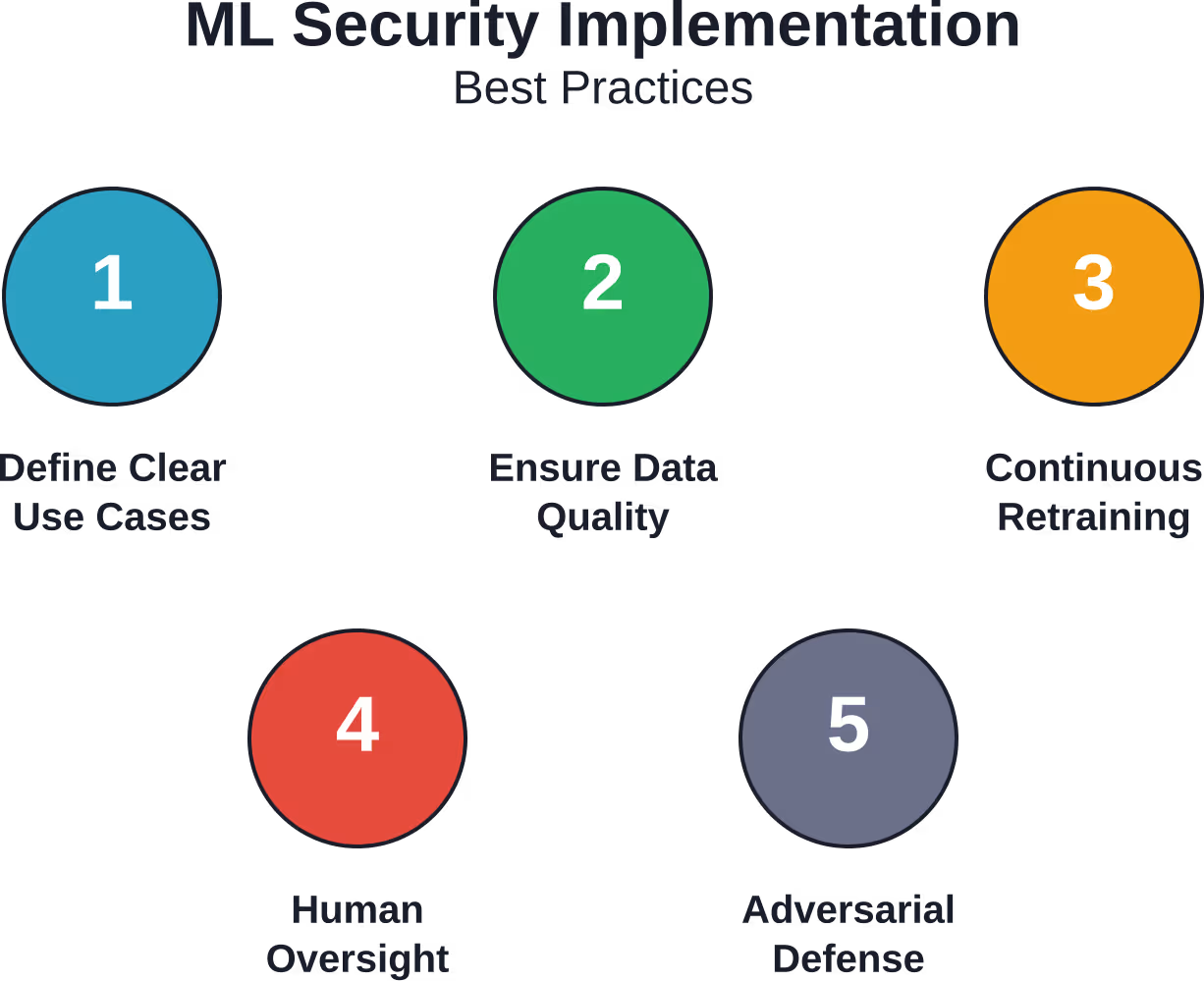
Considérations relatives à la mise en œuvre pour les équipes de sécurité
Le déploiement réussi du ML dans la sécurité des réseaux ne se limite pas au choix des outils. Les organisations ont besoin de stratégies de mise en œuvre réfléchies qui prennent en compte les exigences techniques et opérationnelles.
Commencez par des cas d'utilisation clairs
N'essayez pas de tout résoudre simultanément avec l'apprentissage automatique. Identifiez les points faibles spécifiques où l'apprentissage automatique apporte des avantages indéniables. Parmi les points de départ courants, citons le tri des alertes, l'accélération de la recherche de menaces et la détection des anomalies de comportement des utilisateurs.
Mesurez les indicateurs de référence avant la mise en œuvre. Combien d'alertes l'équipe examine-t-elle quotidiennement ? Quel est le délai moyen de détection et de résolution des incidents ? Quel est le pourcentage de faux positifs ? Ces données de référence permettront de démontrer ultérieurement la valeur ajoutée du ML.
Prioriser la qualité des données et la conception du pipeline
Les systèmes d'apprentissage automatique nécessitent des données complètes et cohérentes. Il est essentiel d'auditer les sources de journaux existantes, d'identifier les lacunes et de normaliser les formats. L'absence de données provenant de systèmes critiques compromet les capacités de détection.
Concevez des pipelines de données fiables et évolutifs. En cas de pics de trafic réseau ou de surcharge des systèmes générant des alertes, les pipelines doivent supporter la charge sans perte de données. Toute perte de données crée des zones d'ombre en matière de sécurité.
Plan de maintenance continue du modèle
Les modèles d'apprentissage automatique se dégradent avec le temps, au gré de l'évolution des environnements réseau et des techniques d'attaque. Ce qui fonctionnait bien au départ peut devenir inefficace six mois plus tard. Il est donc essentiel de mettre en place des processus de surveillance des performances des modèles, de réentraînement sur de nouvelles données et de mise à jour des modèles déployés.
Selon des programmes de formation tels que celui d'ingénieur certifié en apprentissage automatique (répertorié dans le catalogue NICCS de la CISA), les systèmes d'apprentissage automatique traitant des données sensibles nécessitent une surveillance continue pour détecter les failles de sécurité et un renforcement des modèles contre les attaques.
Maintenir la supervision humaine
L'apprentissage automatique renforce les équipes de sécurité ; il ne les remplace pas. Les décisions critiques — blocage de segments de réseau majeurs, isolation des systèmes de production, attribution des incidents à des acteurs malveillants spécifiques — nécessitent toujours un jugement humain.
Concevez des flux de travail qui tiennent les analystes informés. Le système d'apprentissage automatique fournit des recommandations et des données probantes ; les analystes prennent les décisions finales et fournissent des commentaires qui permettent d'améliorer les modèles.
Robustesse face aux adversaires
Intégrez des mécanismes de défense contre les attaques spécifiques au ML dans votre architecture de sécurité. Selon des programmes comme la certification Certified Machine Learning Engineer, cela inclut la protection des données, les tests de robustesse face aux attaques adverses, le renforcement des modèles et la surveillance des tentatives de manipulation.
Testez vos systèmes face à des exemples adverses. Si des attaquants peuvent facilement concevoir des entrées qui trompent vos modèles, ils le feront. Les tests proactifs révèlent les vulnérabilités avant que les adversaires ne les exploitent.
L'évolution des menaces réseau et des réponses en matière d'apprentissage automatique
Les acteurs malveillants s'adaptent rapidement. À mesure que les défenses basées sur l'apprentissage automatique se généralisent, les attaquants développent des techniques spécifiquement conçues pour les contourner ou les exploiter.
D'après le cadre ATLAS de MITRE, les adversaires testent désormais régulièrement des attaques contre les systèmes de sécurité d'apprentissage automatique. Ils recherchent les faiblesses des modèles, conçoivent des entrées malveillantes et tentent de corrompre les données d'entraînement. La course aux armements en cybersécurité s'étend désormais au domaine de l'apprentissage automatique.
Cela crée une boucle de rétroaction. Les défenseurs déploient des systèmes d'apprentissage automatique pour détecter les attaques sophistiquées. Les attaquants développent des techniques pour contourner ces systèmes. Les défenseurs améliorent leurs modèles grâce à un entraînement adverse et des techniques de robustesse. Les attaquants recherchent de nouvelles failles.
L'enseignement principal ? L'apprentissage automatique n'est pas une solution miracle. C'est un outil puissant qui nécessite un investissement, une surveillance et une adaptation continus.
Techniques émergentes et orientations futures
La recherche continue de faire progresser les capacités d'apprentissage automatique pour la sécurité des réseaux. Plusieurs pistes prometteuses laissent entrevoir un potentiel d'amélioration de la détection et de la réponse.
L'apprentissage par transfert permet d'adapter à une autre des modèles entraînés sur les données d'une organisation, palliant ainsi le problème de la rareté des données d'entraînement. Au lieu de partir de zéro, les organisations peuvent exploiter des modèles pré-entraînés comme points de départ.
L'apprentissage fédéré permet l'entraînement collaboratif de modèles sans partage de données sensibles. Plusieurs organisations entraînent un modèle partagé à l'aide de leurs données locales, bénéficiant ainsi de la diversité des ensembles d'entraînement tout en préservant la confidentialité des données.
Les techniques d'IA explicable rendent les décisions des modèles plus interprétables. LIME (Local Interpretable Model-agnostic Explanations) et SHAP (SHapley Additive exPlanations) aident les analystes à comprendre pourquoi les modèles ont signalé certains événements comme suspects.
Selon la certification CEH v13 d'EC-Council, les tests d'intrusion pilotés par l'IA utilisent désormais des algorithmes d'apprentissage automatique pour identifier les vulnérabilités plus efficacement. Cette même technologie aide les équipes de défense à mieux comprendre leur surface d'attaque.
Mesure des performances des systèmes de sécurité ML
L'évaluation de l'efficacité des modèles d'apprentissage automatique en matière de sécurité réseau exige des indicateurs allant au-delà des mesures d'apprentissage automatique standard telles que la précision. Les considérations spécifiques à la sécurité sont primordiales.
Le taux de détection (ou taux de vrais positifs) mesure le pourcentage de menaces réelles que le système repère. Cependant, il est essentiel de trouver un équilibre entre ce taux et le taux de faux positifs. Un système qui signale systématiquement toutes les menaces atteint une détection parfaite, mais au prix d'une spécificité inutilisable.
Le délai de détection est crucial. Découvrir une intrusion trois jours après la compromission initiale peut entraîner des dommages importants. La détecter en quelques minutes permet un confinement efficace.
Le coût des faux négatifs varie selon le type de menace. Ne pas détecter le déploiement d'un ransomware a des conséquences différentes de ne pas passer par une analyse de reconnaissance. Une pondération tenant compte de la gravité de la menace permet une évaluation des performances plus pertinente.
La surveillance de la dérive du modèle permet de suivre la dégradation de ses performances au fil du temps. Lorsque les taux de détection diminuent ou que les faux positifs augmentent, elle signale la nécessité d'un réentraînement sur les données actuelles.
| Métrique | Ce que cela mesure | Portée de tir |
|---|---|---|
| Taux de vrais positifs | Pourcentage de menaces réelles détectées | >95% pour les menaces critiques |
| Taux de faux positifs | Des événements bénins ont été signalés par erreur. | <1% pour les systèmes de production |
| Temps moyen de détection | Délai moyen entre la compromission et la détection | <5 minutes pour les attaques actives |
| Modèle de confiance | Certitude du système dans les prédictions | Niveau de confiance élevé concernant les alertes critiques |
Intégration à l'infrastructure de sécurité existante
Les systèmes d'apprentissage automatique ne fonctionnent pas de manière isolée. Ils doivent s'intégrer parfaitement aux pare-feu, aux plateformes SIEM, à la protection des terminaux, aux systèmes d'identité et aux outils d'orchestration de la sécurité.
L'intégration d'API permet aux moteurs d'apprentissage automatique d'extraire des données de sources multiples et de transmettre des alertes ou des mesures d'application aux systèmes concernés. Lorsqu'un modèle d'apprentissage automatique détecte un déplacement latéral, il doit communiquer avec les pare-feu pour segmenter le réseau et avec les fournisseurs d'identité pour révoquer les identifiants compromis.
La normalisation des données devient essentielle dans les environnements hétérogènes. Les journaux provenant de différents fournisseurs utilisent des formats, des noms de champs et des classifications de gravité différents. Les systèmes d'apprentissage automatique ont besoin de données cohérentes et normalisées pour fonctionner efficacement.
De nombreuses organisations adoptent une approche multicouche, intégrant des composants optimisés par l'apprentissage automatique à chaque niveau de sécurité. L'analyse réseau pilotée par l'apprentissage automatique au niveau du périmètre, l'analyse comportementale de l'activité des utilisateurs et la protection des terminaux basée sur l'apprentissage automatique contribuent toutes à une défense en profondeur.
Compétences et formation pour la sécurité basée sur l'apprentissage automatique
Les équipes de sécurité ont besoin de nouvelles compétences pour exploiter efficacement les systèmes basés sur l'apprentissage automatique. L'expertise traditionnelle en sécurité réseau demeure essentielle, mais les connaissances spécifiques à l'apprentissage automatique deviennent de plus en plus importantes.
Les analystes en sécurité doivent maîtriser les fondamentaux de l'apprentissage automatique : comment les modèles apprennent, quelles sont leurs limites, quand se fier aux prédictions et comment fournir un retour d'information utile. Selon des programmes de formation tels que la certification « IA et apprentissage automatique pour le renseignement cybernétique » (répertoriée dans le catalogue NICCS de la CISA), les professionnels doivent apprendre comment l'analyse pilotée par l'IA améliore la détection et la réponse aux cybermenaces.
Les compétences en science des données aident les équipes à évaluer les performances des modèles, à résoudre les problèmes et à collaborer efficacement avec les équipes d'ingénierie en apprentissage automatique. Les professionnels de la sécurité n'ont pas besoin de devenir des spécialistes en science des données, mais une connaissance de base des concepts et des indicateurs d'apprentissage automatique s'avère précieuse.
La connaissance des attaques adverses en apprentissage automatique aide les équipes de défense à anticiper les attaques contre leurs systèmes d'apprentissage automatique. La compréhension des attaques par empoisonnement, des techniques d'évasion et des menaces d'extraction de modèles permet aux équipes de mettre en œuvre des mesures de protection appropriées.
Questions fréquemment posées
En quoi l'apprentissage automatique améliore-t-il la sécurité des réseaux par rapport aux méthodes traditionnelles ?
L'apprentissage automatique traite en temps réel d'immenses quantités de données réseau, identifiant des schémas et des anomalies que les systèmes basés sur les signatures ne détectent pas. Les systèmes d'apprentissage automatique repèrent les menaces zero-day et les anomalies comportementales sans nécessiter de signatures d'attaque prédéfinies, tout en réduisant considérablement les temps de réponse, de plusieurs heures à quelques secondes. Selon les recommandations de la CISA et les études sectorielles, les systèmes d'IA analysent les relations entre les menaces, telles que les fichiers malveillants et les adresses IP suspectes, beaucoup plus rapidement qu'une analyse manuelle.
Quels sont les principaux défis liés à la mise en œuvre du ML pour la sécurité des réseaux ?
Les principaux défis comprennent les attaques adverses contre les systèmes d'apprentissage automatique, où les attaquants ciblent directement les modèles, les données d'entraînement déséquilibrées (où les attaques sont largement moins nombreuses que le trafic normal), les problèmes d'explicabilité des modèles opaques et les importants besoins en ressources de calcul. Le document AI 100-2 du NIST (publié en mars 2025) recense des taxonomies exhaustives d'attaques contre les systèmes d'apprentissage automatique. Les organisations doivent également assurer la maintenance continue de leurs modèles face à l'évolution des réseaux et des menaces.
L'apprentissage automatique peut-il détecter les attaques zero-day ?
Oui, les systèmes d'apprentissage automatique excellent dans la détection des attaques zero-day grâce à l'analyse comportementale et à la détection d'anomalies. Contrairement aux défenses basées sur les signatures, qui nécessitent des schémas d'attaque connus, les modèles d'apprentissage automatique non supervisés établissent des références de comportement normal du réseau et signalent les écarts significatifs. Cette approche permet de détecter les nouvelles techniques d'attaque qui ne correspondent à aucune signature existante, même si la gestion des faux positifs demeure essentielle.
Comment les attaquants contournent-ils ou attaquent-ils les systèmes de sécurité d'apprentissage automatique ?
D'après les recherches de MITRE ATLAS et du NIST, les attaquants utilisent des attaques par empoisonnement pour corrompre les données d'entraînement, des attaques d'évasion avec des entrées soigneusement conçues pour tromper les modèles, et l'extraction de modèles pour voler des systèmes d'apprentissage automatique à des fins de tests hors ligne. L'apprentissage automatique adverse est devenu une discipline à part entière, les attaquants développant des techniques spécifiques pour exploiter les faiblesses des systèmes d'apprentissage automatique. Les organisations doivent mettre en œuvre un entraînement adverse et une surveillance continue pour se prémunir contre ces attaques.
Quelles compétences les équipes de sécurité doivent-elles posséder pour travailler avec les systèmes d'apprentissage automatique ?
Les équipes ont besoin d'une expertise combinée en sécurité réseau traditionnelle et en apprentissage automatique. Les analystes de sécurité doivent maîtriser les fondamentaux de l'apprentissage automatique, notamment le fonctionnement des modèles, leurs limites et les niveaux de confiance appropriés pour les prédictions. Des formations telles que la certification « IA et apprentissage automatique pour le renseignement cybernétique » (disponible via le NICCS de la CISA) répondent à ces exigences. La gestion des flux de données, l'évaluation des performances des modèles et la sensibilisation aux attaques par apprentissage automatique sont devenues des compétences essentielles pour les opérations de sécurité modernes.
À quelle fréquence les modèles de sécurité ML nécessitent-ils un réentraînement ?
La fréquence de réentraînement des modèles dépend de la dynamique du réseau et du rythme d'évolution des menaces. La plupart des systèmes de production nécessitent un réentraînement trimestriel ou lorsque les indicateurs de performance présentent une dérive. Les organisations doivent surveiller en continu les taux de détection, les tendances des faux positifs et les scores de confiance des modèles. Lorsque ces indicateurs se dégradent significativement, un réentraînement sur les données actuelles devient nécessaire. Certains systèmes mettent en œuvre des pipelines d'apprentissage continu qui mettent à jour les modèles progressivement à mesure que de nouvelles données étiquetées sont disponibles.
Quelle est la différence entre l'IA et l'apprentissage automatique dans le domaine de la sécurité des réseaux ?
L'apprentissage automatique (ML) est une branche de l'intelligence artificielle qui se concentre sur les systèmes apprenant à partir des données. Dans le domaine de la sécurité des réseaux, le ML désigne généralement des algorithmes spécifiques de détection, de classification et de prédiction des menaces. L'IA, quant à elle, représente le concept plus large de machines effectuant des tâches nécessitant de l'intelligence, incluant potentiellement les systèmes experts, le traitement automatique du langage naturel et la prise de décision autonome. De manière générale, les applications de sécurité des réseaux actuelles utilisent principalement des techniques de ML plutôt que l'IA générale, bien que cette distinction soit souvent floue dans les supports marketing.
Utiliser l'apprentissage automatique pour la défense des réseaux
L'apprentissage automatique est passé du stade expérimental à celui d'élément essentiel de la sécurité des réseaux. Face à des menaces sophistiquées et à des volumes massifs de données, les organisations ne peuvent plus se contenter d'une analyse manuelle. Les systèmes d'apprentissage automatique offrent l'évolutivité, la rapidité et l'adaptabilité indispensables à une défense moderne.
Mais le succès exige des attentes réalistes. L'apprentissage automatique n'est pas magique : c'est un outil puissant qui nécessite des données de qualité, une maintenance continue, des opérateurs qualifiés et une intégration appropriée à l'infrastructure de sécurité existante.
Les organisations qui obtiennent les meilleurs résultats commencent à se concentrer sur l'essentiel. Elles identifient des cas d'usage précis où l'apprentissage automatique offre des avantages indéniables, établissent des indicateurs de performance pour mesurer les progrès et développent progressivement leur expertise. Elles maintiennent une supervision humaine pour les décisions critiques tout en tirant parti de l'automatisation pour gagner en envergure.
Plus important encore, ils considèrent la sécurité du ML comme un programme continu plutôt que comme une mise en œuvre ponctuelle. Les modèles nécessitent un réentraînement régulier. Les nouvelles menaces exigent une logique de détection mise à jour. Les adversaires développent de nouvelles techniques d'évasion qui requièrent des adaptations défensives.
Comme le soulignent de nombreuses ressources et formations du secteur, le renseignement cybernétique piloté par l'IA représente un changement fondamental dans la manière dont les organisations détectent les menaces et y répondent. La technologie continuera d'évoluer, mais le principe de base demeure inchangé : l'apprentissage automatique amplifie l'expertise humaine, permettant aux équipes de sécurité de défendre les réseaux à une échelle et une vitesse inégalées par les méthodes manuelles.
Prêt à renforcer la sécurité de votre réseau grâce au machine learning ? Commencez par auditer vos sources de données actuelles, identifier vos cas d’usage prioritaires et développer les compétences de votre équipe nécessaires à une mise en œuvre réussie. Les menaces évoluent rapidement, mais grâce à des défenses basées sur le ML, vous serez prêt.
 French
  English
  German
  Arabic
  Dutch
Dutch  Spanish