
Résumé rapide : Le modèle de science des données en tant que service (DSaaS) permet aux organisations d'accéder à des capacités avancées d'analyse, d'apprentissage automatique et d'intelligence artificielle sans avoir à constituer d'équipes ni d'infrastructures internes. Les entreprises tirent parti d'une expertise externe et de plateformes cloud pour extraire des informations pertinentes de leurs données, réduire leurs coûts et accélérer le retour sur investissement, tout en évitant la complexité liée au recrutement de talents spécialisés.
D'après IBM, 821 millions de tonnes de données d'entreprises sont confrontées à des silos de données qui perturbent leurs flux de travail, et 681 millions de tonnes de données restent inexploitées. C'est un gaspillage considérable d'informations précieuses.
Le modèle de la science des données en tant que service s'est imposé comme la solution pratique à ce défi. Au lieu d'investir des années dans le développement de compétences internes, les entreprises peuvent désormais accéder à la demande à une expertise pointue et à une infrastructure analytique éprouvée.
Le modèle a considérablement mûri. Ce qui n'était au départ qu'un simple système de reporting est devenu des plateformes sophistiquées offrant des fonctionnalités d'apprentissage profond, de modélisation prédictive et d'analyse en temps réel, le tout sans nécessiter de personnel permanent ni d'investissements en infrastructure.
Qu’est-ce que la science des données en tant que service ?
La science des données en tant que service (DSaaS) est un modèle d'externalisation où des prestataires externes fournissent des capacités d'analyse aux entreprises clientes. Au lieu d'embaucher des data scientists, de développer une infrastructure et de maintenir des outils spécialisés en interne, les entreprises accèdent à ces ressources par le biais de contrats de service.
Ce service comprend généralement plusieurs composants fonctionnant de concert. Des plateformes cloud hébergent l'infrastructure de calcul. Des data scientists et des analystes expérimentés prennent en charge la modélisation et l'interprétation des données. Des algorithmes et des frameworks préconfigurés accélèrent le déploiement. Enfin, des services d'intégration connectent l'ensemble aux systèmes d'information existants de l'entreprise.
Il s'agit plutôt de louer une expertise que de l'acquérir. Le prestataire assure la relève, se tient au courant des nouvelles techniques et répartit les coûts d'infrastructure entre plusieurs clients.
En quoi le DSaaS diffère-t-il de l'analyse traditionnelle ?
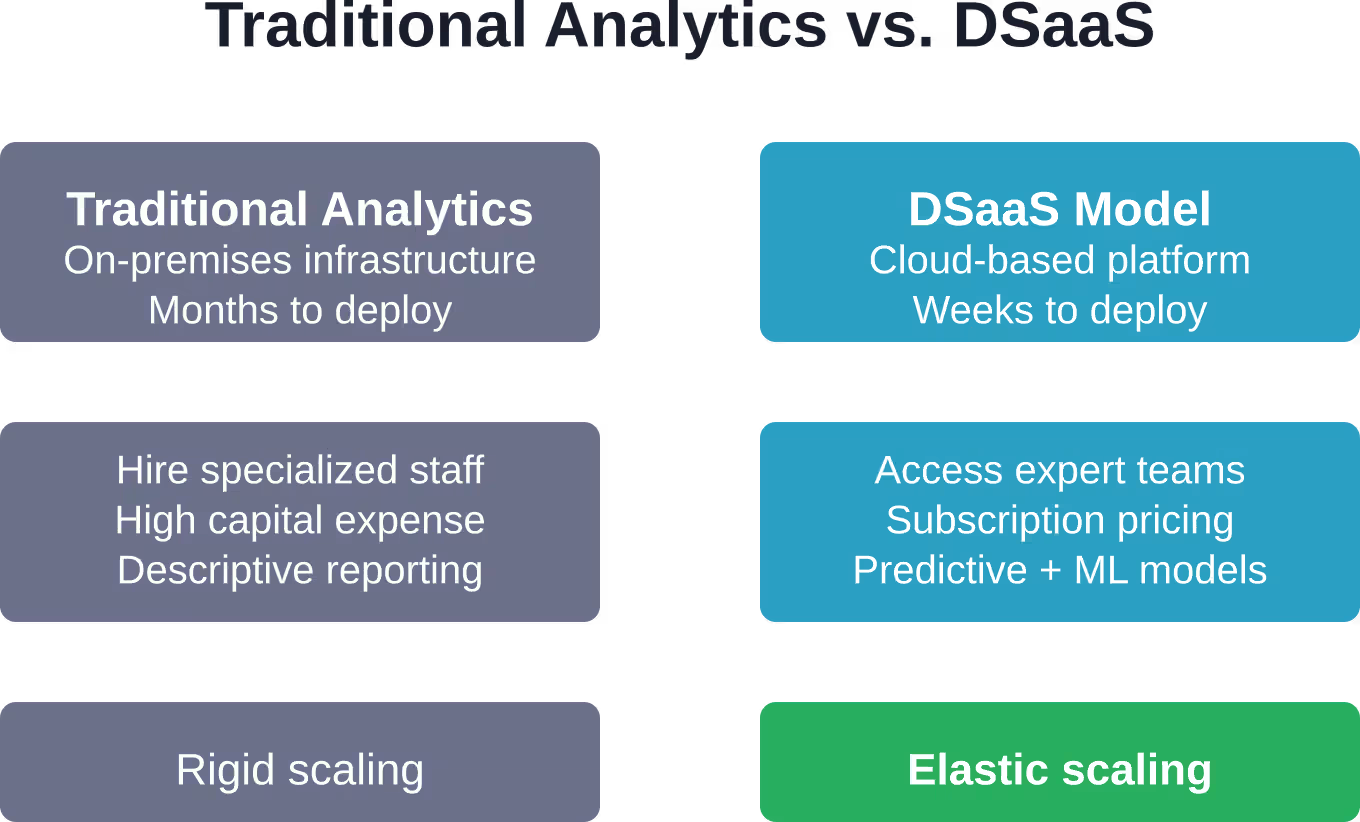
Les outils traditionnels de veille stratégique génèrent des rapports à partir de données historiques. Les solutions DSaaS vont plus loin en appliquant l'apprentissage automatique, la modélisation statistique et des algorithmes prédictifs pour déceler des tendances qui pourraient échapper à l'œil humain.
Le modèle de déploiement est également important. Les solutions analytiques traditionnelles nécessitaient une installation sur site, des cycles de mise en œuvre longs et des ressources informatiques dédiées. Le DSaaS fonctionne dans le cloud, avec un déploiement plus rapide et une tarification par abonnement qui transforme les dépenses d'investissement en dépenses opérationnelles.

Créez des outils de science des données avec une IA supérieure
IA supérieure Elle développe des logiciels d'IA sur mesure, notamment des modèles d'apprentissage automatique, des analyses prédictives, des outils de BI, l'analyse de données massives, le traitement automatique du langage naturel (TALN) et des solutions de vision par ordinateur. Son équipe peut accompagner les projets depuis la phase de découverte et d'analyse des données jusqu'au développement d'un MVP, à l'intégration et à l'évaluation des résultats.
Dans le cadre du Data Science as a Service, cela peut aider les entreprises à transformer des données brutes en outils opérationnels pour la prévision, le reporting, l'automatisation et l'aide à la décision.
Besoin d'une science des données conçue autour de vos données ?
AI Superior peut vous aider avec :
- création de solutions personnalisées en science des données
- développement de modèles d'apprentissage automatique et d'analyse
- Tester des idées par le biais d'une preuve de concept ou d'un développement MVP
- intégrer les outils d'IA aux systèmes existants
👉 Contactez l'IA supérieure pour discuter de votre projet.
Principaux avantages de la science des données en tant que service
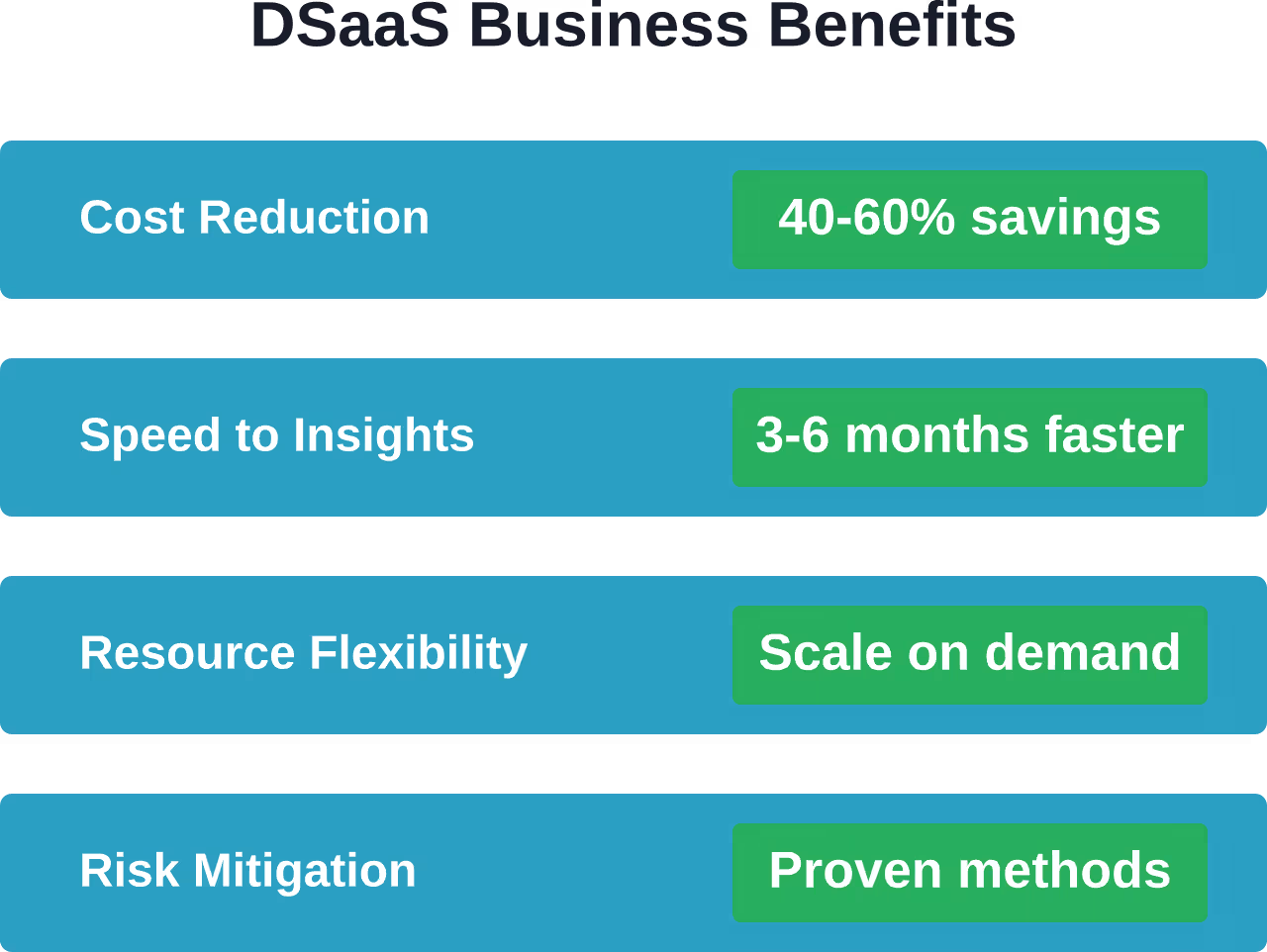
Le modèle DSaaS répond simultanément à plusieurs enjeux commerciaux critiques. Les organisations acquièrent ainsi des capacités qui, autrement, nécessiteraient des investissements et un temps considérables.
Accès rapide à une expertise spécialisée
Recruter des data scientists qualifiés prend des mois et coûte très cher. La concurrence pour attirer les talents est féroce, et constituer une équipe complète nécessite de recruter des spécialistes de plusieurs disciplines : statisticiens, ingénieurs en apprentissage automatique, ingénieurs de données et experts du domaine.
Les fournisseurs de DSaaS disposent déjà de ces équipes. Ils ont réuni les talents, surmonté les difficultés d'apprentissage et mis en place des méthodologies éprouvées. Les clients accèdent immédiatement à cette expertise collective grâce à des contrats de service.
Rentabilité et prévisibilité des dépenses
Développer des compétences internes en science des données nécessite un investissement initial conséquent. Les salaires des spécialistes expérimentés sont élevés. Les coûts d'infrastructure comprennent les ressources de calcul, le stockage, les licences logicielles spécialisées et les outils de développement.
Le modèle d'abonnement transforme ces dépenses en coûts mensuels prévisibles. Les entreprises paient uniquement ce qu'elles utilisent, sans avoir à maintenir une capacité suffisante pour les pics de demande. Il n'y a ni amortissement, ni ressources inutilisées en période creuse, ni dépenses imprévues lors de la montée en charge.
Délai de rentabilisation plus court
Les projets internes s'enlisent souvent lors de la phase de configuration. Les équipes passent des mois à configurer les environnements, à mettre en place les pipelines de données et à maîtriser les outils avant de pouvoir générer la moindre valeur ajoutée pour l'entreprise.
Les fournisseurs de DSaaS proposent des plateformes préconfigurées et des processus éprouvés. Ils ont déjà résolu les problèmes techniques courants. Les projets passent directement à l'analyse et à l'obtention de résultats, sans passer des mois sur l'infrastructure.
Risque technique réduit
Les projets de science des données comportent des risques importants.
Les prestataires expérimentés ont su relever ces défis auprès de nombreux clients. Ils savent ce qui fonctionne, ce qui ne fonctionne pas et comment éviter les pièges courants. Leur expérience réduit considérablement le risque d'échec d'un projet.
Cas d'utilisation courants dans différents secteurs
Les applications DSaaS couvrent pratiquement tous les secteurs. La flexibilité du modèle permet aux fournisseurs d'adapter leurs solutions aux défis spécifiques de chaque secteur.
Commerce de détail et commerce électronique
La prédiction du comportement client alimente les moteurs de personnalisation. Les systèmes de recommandation analysent l'historique d'achats, les habitudes de navigation et les profils clients similaires afin de suggérer des produits pertinents. La prévision de la demande optimise les niveaux de stock sur l'ensemble des réseaux de distribution.
Les algorithmes d'optimisation des prix ajustent dynamiquement les tarifs en fonction de la concurrence, des signaux de la demande et des exigences de marge. La prédiction du taux de désabonnement identifie les clients à risque avant qu'ils ne partent, permettant ainsi de mettre en place des campagnes de fidélisation ciblées.
Services financiers
Les systèmes de détection de fraude traitent les transactions en temps réel et signalent les comportements suspects pour analyse. La modélisation du risque de crédit évalue la probabilité de défaut de paiement d'un emprunteur à partir de sources de données plus larges que les systèmes de notation traditionnels.
Les stratégies de trading algorithmique analysent les conditions du marché et exécutent les transactions automatiquement. Le calcul de la valeur vie client oriente les dépenses d'acquisition et l'investissement dans la relation client.
Santé et sciences de la vie
Les modèles prédictifs permettent d'identifier les patients à haut risque de réhospitalisation ou de progression de la maladie. L'optimisation des essais cliniques améliore l'appariement des patients et la sélection des critères d'évaluation. Les plateformes de découverte de médicaments accélèrent le criblage des composés et la modélisation moléculaire.
L'analyse opérationnelle permet d'optimiser les effectifs, l'utilisation des équipements et le flux de patients dans les établissements.
Production et chaîne d'approvisionnement
Les algorithmes de maintenance prédictive analysent les données des capteurs des équipements afin de planifier les réparations avant toute panne. Les systèmes de contrôle qualité détectent automatiquement les défauts grâce à la vision par ordinateur. L'optimisation de la chaîne d'approvisionnement permet d'équilibrer les stocks, les coûts de transport et les niveaux de service au sein de réseaux complexes.
La détection de la demande intègre des signaux en temps réel pour améliorer les prévisions à court terme au-delà des méthodes traditionnelles de séries chronologiques.
Choisir le bon fournisseur DSaaS
Tous les fournisseurs n'offrent pas des capacités équivalentes. Plusieurs facteurs distinguent les partenariats efficaces des partenariats décevants.
Expertise et expérience dans le domaine
La connaissance du secteur d'activité est primordiale. Les prestataires spécialisés dans un secteur donné comprennent les types de données, les contraintes réglementaires et les indicateurs clés de performance. Ils ont déjà rencontré des problèmes similaires et développé des solutions éprouvées.
Demandez des études de cas d'organisations comparables. Renseignez-vous sur les défis spécifiques qu'elles ont relevés et les résultats mesurables obtenus. Les affirmations générales importent moins que les exemples concrets.
Capacités et outils techniques
Évaluez l'infrastructure technique du fournisseur. Prend-elle en charge les frameworks d'apprentissage automatique modernes ? Est-elle capable de gérer les volumes et la vitesse de traitement des données générées par votre organisation ? Qu'en est-il de l'intégration avec les systèmes existants ?
Le choix de la plateforme cloud influe sur l'évolutivité et les coûts. Les fournisseurs opérant sur plusieurs clouds offrent une plus grande flexibilité que ceux liés à un seul fournisseur.
Sécurité et conformité des données
La sécurité est primordiale lors du traitement des données sensibles d'une organisation. Les violations de données entraînent des coûts importants et des risques considérables pour la réputation de l'entreprise.
Vérifiez les certifications de sécurité et les cadres de conformité du prestataire. Comment gère-t-il le chiffrement des données, les contrôles d'accès et les pistes d'audit ? Qu'advient-il des données client une fois le projet terminé ?
Les exigences réglementaires varient selon le secteur d'activité. Les organismes de santé doivent se conformer à la loi HIPAA. Les services financiers sont soumis à diverses réglementations. Les activités en Europe doivent respecter le RGPD.
| Critères d'évaluation | Pourquoi c'est important | Questions à poser |
|---|---|---|
| Expérience dans l'industrie | La connaissance du domaine accélère les résultats | Combien de clients similaires ? Des résultats précis ? |
| Plateforme technique | Détermine l'évolutivité et les capacités | Quels frameworks de ML ? Plateformes cloud ? Options d'intégration ? |
| Posture de sécurité | Protège les données sensibles et la réputation | Certifications ? Chiffrement ? Contrôles d'accès ? |
| Modèle de service | Définit la flexibilité d'engagement | Par projet ? En continu ? Équipes hybrides ? |
| Structure tarifaire | Impacts sur la prévisibilité budgétaire | Forfait fixe ? Tarification à l’usage ? Frais cachés ? |
Modèles de service et types d'engagement
Les prestataires proposent différentes formules d'engagement. Certains interviennent uniquement en tant que consultants, réalisant des projets spécifiques avec des objectifs précis. D'autres offrent des services gérés continus avec une optimisation et un suivi constants.
Les fournisseurs de plateformes privilégient les outils en libre-service, avec un soutien d'experts disponible en cas de besoin. Ce modèle convient parfaitement aux organisations disposant de certaines ressources internes et nécessitant ponctuellement une aide spécialisée.
Les modèles hybrides combinent des éléments de chaque approche. Les projets initiaux peuvent être fortement pilotés par le prestataire, un transfert progressif des connaissances permettant aux équipes internes de gérer les tâches courantes de manière autonome.
Considérations relatives à la mise en œuvre
L'adoption réussie d'une solution DSaaS nécessite une planification qui va bien au-delà du simple choix d'un fournisseur. Plusieurs facteurs influencent considérablement les résultats.
Préparation et qualité des données
Une mauvaise qualité des données compromet même les analyses les plus sophistiquées. La préparation des données prend généralement plus de temps que la modélisation elle-même.
Avant de faire appel à des prestataires, évaluez la qualité des données actuelles. Les champs clés sont-ils renseignés de manière cohérente ? Les définitions restent-elles stables dans le temps ? Les données provenant de différentes sources peuvent-elles être appariées de manière fiable ?
Les organisations disposant de données propres et bien organisées obtiennent des résultats plus rapides et une meilleure précision.
Préparation organisationnelle
Les données analytiques ne créent de valeur que si les organisations les exploitent. Le meilleur modèle prédictif est inutile si les recommandations n'atteignent jamais les décideurs ou si les processus opérationnels restent inchangés.
Réfléchissez à la manière dont les informations seront utilisées. Qui doit y avoir accès ? Sous quel format ? À quelle fréquence ? De quel pouvoir disposent-ils pour agir sur les recommandations ?
La gestion du changement est tout aussi importante que la mise en œuvre technique. Les parties prenantes doivent comprendre le fonctionnement des modèles, avoir confiance en leurs résultats et les intégrer aux processus métier.
Commencer par des projets pilotes
Des objectifs initiaux trop ambitieux mènent souvent à la déception. Les projets complexes augmentent les risques et retardent la création de valeur. Commencer modestement permet aux organisations de se familiariser avec le modèle d'engagement et de démontrer sa valeur avant de passer à l'échelle supérieure.
Sélectionnez des projets pilotes présentant une valeur commerciale claire, des résultats mesurables et des exigences en matière de données gérables. Leur succès créera une dynamique et l'adhésion de l'organisation aux initiatives de plus grande envergure.
Modèles de tarification pour les DSaaS
Les fournisseurs de DSaaS structurent leurs prix de plusieurs manières courantes. Comprendre ces modèles permet aux organisations d'établir un budget approprié et de comparer équitablement les différentes options.
Tarification basée sur les projets
Les projets à prix fixe définissent le périmètre en amont et font l'objet d'une facturation unique pour la réalisation. Ce modèle garantit la maîtrise du budget, mais exige une spécification détaillée des besoins. Les modifications en cours de projet entraînent généralement des frais supplémentaires.
La facturation au temps passé et aux matériaux utilisés correspond aux heures réellement travaillées. Elle offre une plus grande flexibilité pour s'adapter à l'évolution des besoins, mais une moindre prévisibilité des coûts. Ce modèle convient aux projets exploratoires dont le périmètre ne peut être entièrement défini initialement.
Modèles d'abonnement et de contrat de maintenance
Les abonnements mensuels offrent un accès continu aux outils d'analyse. Les entreprises peuvent souscrire à un certain nombre d'heures d'assistance, à un accès à la plateforme ou à des niveaux de service spécifiques. Les coûts restent fixes d'un mois à l'autre, ce qui simplifie la gestion budgétaire.
Les contrats de services garantissent la disponibilité des ressources des prestataires. Les organisations paient pour un accès prioritaire même si elles n'utilisent pas la totalité des capacités à chaque période.
Tarification basée sur l'utilisation
Les modèles de facturation à la consommation facturent l'utilisation réelle des ressources : temps de calcul, données traitées, appels d'API ou exécutions de modèles. Les coûts sont proportionnels à l'utilisation, ce qui minimise le gaspillage pendant les périodes de faible activité.
Les formules hybrides combinent des frais fixes de base avec des frais d'utilisation variables. Les frais fixes couvrent l'accès à la plateforme et le support ; les frais d'utilisation s'appliquent aux ressources de calcul consommées.
| Modèle de tarification | Idéal pour | Avantages | Considérations |
|---|---|---|---|
| Projet fixe | Des initiatives bien définies | certitude budgétaire | Les changements de périmètre sont coûteux |
| Temps et matériaux | Travaux exploratoires | Flexibilité maximale | Incertitude des coûts |
| Abonnement | Besoins continus | Coûts prévisibles | Payez même en cas de faible utilisation |
| Basé sur l'utilisation | Charges de travail variables | Payez uniquement pour l'utilisation | Complexité budgétaire |
Défis et limites
Le DSaaS résout de nombreux problèmes, mais soulève également certains défis qu'il convient de reconnaître d'emblée.
Dépendance envers le fournisseur
Une forte dépendance à l'égard de prestataires externes engendre des risques. En cas de rupture de la relation avec le prestataire, les organisations peuvent avoir des difficultés à maintenir leurs modèles ou à accéder à leurs travaux antérieurs. La propriété intellectuelle est essentielle : les contrats doivent clairement définir qui détient les modèles développés et les enseignements qui en découlent.
Réduire la dépendance par le transfert de connaissances. La documentation, la formation et le développement progressif des compétences permettent de réduire la dépendance au fil du temps.
Complexité de l'intégration
Connecter les plateformes des fournisseurs aux systèmes existants s'avère parfois plus difficile que prévu. Les infrastructures héritées, les restrictions de sécurité et les incompatibilités de formats de données créent des frictions.
Pour réussir une intégration, il est indispensable de collaborer entre les équipes du fournisseur et le personnel informatique interne. Prévoyez suffisamment de temps et de ressources pour l'intégration : c'est rarement aussi simple que d'appuyer sur un bouton.
Communication et alignement
Les équipes externes ont besoin de directives claires concernant les objectifs et les contraintes de l'entreprise. Un décalage entre les activités des prestataires et les priorités de l'organisation entraîne un gaspillage de ressources et un retard dans la création de valeur.
Mettez en place un système de communication régulier. Définissez clairement les indicateurs de réussite. Assurez-vous que les deux parties comprennent ce qui constitue un résultat positif.
L'avenir de la science des données en tant que service
Le marché du DSaaS continue de mûrir rapidement. Plusieurs tendances façonnent l'évolution des services.
L'automatisation et l'analyse assistée par l'IA réduisent l'effort manuel requis pour les tâches courantes. Les plateformes AutoML peuvent désormais gérer la sélection des modèles, l'optimisation des hyperparamètres et l'ingénierie des caractéristiques avec une intervention humaine minimale. Cela démocratise les capacités d'analyse, rendant les techniques sophistiquées accessibles aux utilisateurs moins techniques.
Les solutions sectorielles se multiplient. Plutôt que des plateformes génériques, les fournisseurs proposent de plus en plus de modèles et de flux de travail préconfigurés et adaptés à des secteurs spécifiques. Ces solutions accélèrent le déploiement et améliorent la précision en intégrant la connaissance du domaine directement dans la plateforme.
Les capacités d'analyse en temps réel se développent. Le traitement des flux et l'analyse en périphérie permettent d'exploiter les données en mouvement, et non plus seulement l'historique. Des applications comme la détection des fraudes et la tarification dynamique bénéficient grandement d'une latence réduite.
L'éthique de l'IA et l'explicabilité suscitent un intérêt croissant. Les organismes de réglementation et les clients exigent de la transparence quant au processus décisionnel des modèles. Les fournisseurs mettent de plus en plus l'accent sur les modèles interprétables et les outils qui expliquent les prédictions individuelles.
Questions fréquemment posées
Quelle est la différence entre DSaaS et DaaS ?
Le DaaS (Data as a Service) donne accès à des ensembles de données organisés, fonctionnant essentiellement comme un service d'abonnement aux données. Le DSaaS (Data Science as a Service) fournit des capacités d'analyse appliquées aux données de votre organisation. L'un fournit les données elles-mêmes, l'autre permet d'en extraire des informations grâce à des techniques d'analyse avancée et d'apprentissage automatique.
Combien de temps dure généralement la mise en œuvre d'un DSaaS ?
Les projets pilotes donnent généralement des résultats initiaux sous 6 à 12 semaines. Les déploiements en production nécessitent généralement de 3 à 6 mois, selon la disponibilité des données, la complexité de l'intégration et les processus d'approbation organisationnels. Les projets en cours évoluent continuellement grâce à des mises à jour régulières du modèle et à l'ajout de nouvelles fonctionnalités.
Avons-nous besoin de data scientists internes pour utiliser efficacement le DSaaS ?
Pas nécessairement. De nombreuses organisations tirent pleinement parti des solutions DSaaS sans équipe interne de data scientists. Toutefois, disposer de personnel technique maîtrisant les concepts analytiques facilite la communication avec les fournisseurs et permet de concrétiser les analyses. Les analystes métier familiers avec les données comblent souvent efficacement cet écart.
Le DSaaS peut-il gérer des données sensibles ou réglementées ?
Oui, mais vérifiez que les certifications de conformité du fournisseur correspondent aux exigences. Les fournisseurs réputés offrent des environnements sécurisés dotés de contrôles appropriés pour les données de santé, financières et personnelles. Certains prennent en charge le déploiement sur site ou dans un cloud privé pour les organisations soumises à des exigences strictes en matière de résidence des données.
Comment mesurer le retour sur investissement des initiatives DSaaS ?
Définissez des indicateurs de succès avant de lancer un projet. Parmi les mesures courantes, citons l'augmentation du chiffre d'affaires grâce à un ciblage amélioré, les économies réalisées grâce à l'optimisation des opérations, la réduction des pertes liées à la fraude ou l'amélioration du taux de fidélisation client. Comparez les coûts aux résultats commerciaux mesurables plutôt que d'essayer d'évaluer l'analyse de manière abstraite.
Que se passe-t-il si nous voulons internaliser certaines fonctionnalités ultérieurement ?
Négociez dès le départ les modalités de transfert de connaissances. Les bons prestataires documentent leurs méthodologies, donnent accès aux modèles et proposent des formations aux équipes internes. Certaines organisations débutent avec une solution DSaaS, approfondissent leurs connaissances, puis évoluent progressivement vers des modèles hybrides combinant ressources internes et externes.
De combien de données avons-nous besoin pour que le DSaaS soit efficace ?
Les exigences varient selon le cas d'utilisation. Certaines applications d'apprentissage automatique nécessitent des milliers, voire des millions d'exemples. D'autres fonctionnent avec des ensembles de données plus restreints, combinés à des techniques appropriées. Les fournisseurs peuvent évaluer la suffisance des données lors des consultations initiales et recommander des approches adaptées aux volumes de données disponibles.
Conclusion
La science des données en tant que service représente une solution pratique pour les organisations qui recherchent des capacités d'analyse avancées sans avoir à supporter les coûts liés à la création d'équipes et d'infrastructures à partir de zéro.
Ce modèle répond à des défis concrets : la pénurie de talents, les coûts élevés, les longs cycles de mise en œuvre et la complexité technique. En accédant à une expertise pointue grâce à des contrats de services flexibles, les entreprises accélèrent le retour sur investissement et réduisent les risques.
Le succès ne se résume pas au choix d'un prestataire. La qualité des données, la préparation de l'organisation et des objectifs commerciaux clairs influencent considérablement les résultats. Commencer par des projets pilotes ciblés permet d'acquérir de l'expérience et de démontrer la valeur ajoutée avant de déployer des initiatives à l'échelle de l'entreprise.
Le marché continue d'évoluer rapidement. L'automatisation, la spécialisation sectorielle et les capacités en temps réel élargissent le champ des possibles. Les organisations qui adoptent ces capacités se positionnent pour être plus compétitives sur des marchés de plus en plus axés sur les données.
 French
  English
  German
  Arabic
  Dutch
Dutch  Spanish