Résumé rapide : L'apprentissage automatique révolutionne la sécurité du cloud en automatisant la détection des menaces, l'analyse des comportements et la réponse aux attaques en temps réel. Ces systèmes basés sur l'IA traitent d'immenses volumes de données pour identifier les anomalies que les méthodes traditionnelles de signature ne détectent pas, réduisant ainsi les faux positifs tout en s'adaptant à l'évolution des menaces. Les organisations qui exploitent l'apprentissage automatique dans leurs environnements cloud bénéficient d'une réponse aux incidents plus rapide, d'un contrôle de conformité amélioré et d'une protection renforcée des données sensibles.
Les environnements cloud sont confrontés à des défis de sécurité que les outils traditionnels ne peuvent relever. L'échelle, la complexité et la nature dynamique de l'infrastructure cloud créent des zones d'ombre où les menaces se dissimulent.
L'apprentissage automatique change la donne. Ces algorithmes ne se contentent pas de suivre des règles prédéfinies : ils apprennent des schémas, s'adaptent aux nouvelles menaces et traitent les données de sécurité à une vitesse que les analystes humains ne peuvent égaler.
Le hic, c'est que la mise en œuvre du ML pour la sécurité du cloud n'est pas une mince affaire. Elle nécessite de comprendre quels algorithmes sont efficaces face à des menaces spécifiques, comment entraîner les modèles sur des données de qualité et quand l'automatisation est pertinente par rapport à la supervision humaine.
Qu’apporte l’apprentissage automatique à la sécurité du cloud ?
L'apprentissage automatique renforce les systèmes de sécurité grâce à des algorithmes qui analysent les schémas, détectent les anomalies et s'adaptent aux menaces. Cette approche diffère des méthodes basées sur les signatures, qui nécessitent des mises à jour manuelles pour chaque nouvelle variante de menace.
Les outils de sécurité traditionnels s'appuient sur des signatures de menaces connues, c'est-à-dire une base de données de logiciels malveillants, de schémas d'attaque et de codes malveillants déjà identifiés. Lorsqu'une nouvelle variante apparaît, ces systèmes deviennent inefficaces tant que la base de données de signatures n'est pas mise à jour.
L'apprentissage automatique inverse ce modèle. Au lieu de se baser sur des menaces connues, les algorithmes d'apprentissage automatique établissent des comportements normaux et signalent les anomalies. Un employé qui télécharge soudainement des gigaoctets de données à 3 heures du matin déclenche des alertes non pas parce que cette action correspond à une signature, mais parce qu'elle s'écarte des schémas établis.
L’Institut national des normes et de la technologie (NIST) a publié des lignes directrices sur les cadres de gestion des risques liés à l’IA qui mettent l’accent sur le développement de la confiance dans les technologies d’IA tout en atténuant les risques – particulièrement pertinents à mesure que les organisations déploient l’apprentissage automatique pour des fonctions critiques en matière de sécurité.
Approches fondamentales d'apprentissage automatique pour la sécurité du cloud
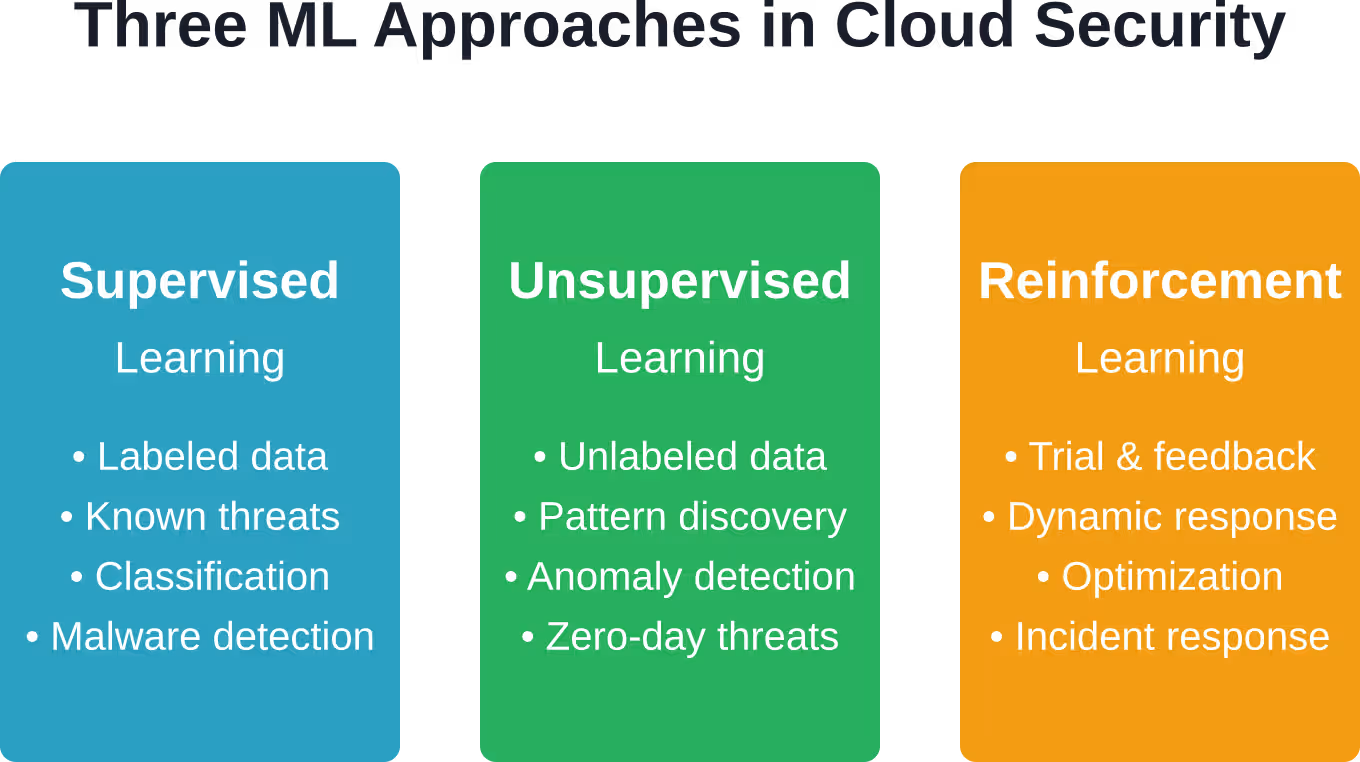
Trois méthodologies d'apprentissage automatique dominent les applications de sécurité du cloud :
- Apprentissage supervisé L'algorithme est entraîné sur des ensembles de données étiquetés, contenant des exemples d'activités malveillantes et bénignes. Il apprend les caractéristiques distinctives et applique ces connaissances à de nouvelles données. Cette méthode est efficace pour la détection des menaces lorsque des données d'entraînement de qualité sont disponibles.
- Apprentissage non supervisé Ces algorithmes détectent les schémas sans données pré-étiquetées. Ils excellent dans la détection d'anomalies, identifiant les comportements inhabituels pouvant indiquer des failles zero-day ou des menaces internes. Ils n'ont pas besoin d'exemples pour chaque attaque possible ; une simple compréhension de ce qui constitue un comportement “ normal ” suffit.
- Apprentissage par renforcement L'amélioration se fait par l'expérimentation et le retour d'information. Les systèmes de sécurité qui utilisent cette approche testent leurs réponses aux menaces et affinent leurs actions en fonction des résultats. Au fil du temps, ils optimisent leurs stratégies de réponse aux incidents.

Créez des outils d'IA pour la sécurité du cloud avec AI Superior
AI Superior Cette entreprise conçoit des solutions d'IA et d'apprentissage automatique pour l'analyse prédictive, l'analyse de données, le traitement automatique du langage naturel (TALN), la veille stratégique (BI), l'analyse du Big Data et le développement de logiciels sur mesure. Son travail permet aux équipes de transformer des ensembles de données volumineux et complexes en outils pour une analyse plus rapide et des décisions plus éclairées.
Pour la sécurité du cloud, cela peut prendre en charge la détection des anomalies, l'évaluation des risques, l'analyse des signaux de menace, l'examen des schémas d'accès ou les systèmes d'alerte internes.
Besoin d'une IA connectée aux données de sécurité ?
AI Superior peut vous aider avec :
- création de modèles d'apprentissage automatique
- outils de détection d'anomalies de construction
- tester les cas d'utilisation de la sécurité via une preuve de concept ou un MVP
- connecter les outils d'IA aux plateformes existantes
👉 Contactez AI Superior pour discuter de votre projet.
Détection automatisée des menaces par l'analyse comportementale
La reconnaissance des schémas comportementaux permet d'éliminer le bruit qui submerge les équipes de sécurité d'alertes. La réduction des faux positifs diminue considérablement le volume d'alertes tout en détectant plus rapidement les menaces réelles.
L'analyse comportementale des utilisateurs et des entités (UEBA) illustre cette approche. Ces systèmes créent des profils pour chaque utilisateur, appareil et application dans l'environnement cloud. Ils suivent les heures de connexion, les habitudes d'accès aux données, les connexions réseau et l'utilisation des ressources.
En cas de comportement anormal, le système attribue un score de risque. De petites anomalies peuvent justifier une surveillance. Les écarts importants, comme un compte de service accédant soudainement à des données financières ou un utilisateur se connectant depuis trois pays différents en une heure, déclenchent une enquête immédiate.
Soyons francs : l’analyse comportementale de référence n’est pas infaillible. Des changements de comportement légitimes peuvent générer de faux positifs. Un employé qui passe aux horaires de nuit ou voyage à l’étranger peut paraître suspect jusqu’à ce que le système s’adapte. Or, l’alternative – la détection par signature – passe complètement à côté des attaques sophistiquées.
Réduire la fatigue liée à l'alerte
Les équipes de sécurité sont submergées d'alertes. Les outils traditionnels signalent quotidiennement des milliers de menaces potentielles, la plupart inoffensives. Les analystes passent des heures à enquêter sur de faux positifs, tandis que de véritables attaques passent inaperçues.
Les moteurs de corrélation basés sur l'apprentissage automatique résolvent ce problème en reliant les alertes connexes en récits d'attaque cohérents. Au lieu de cinquante alertes distinctes concernant des échecs de connexion, un trafic réseau inhabituel et des modifications de fichiers, le système présente un seul incident : “ Attaque potentielle par bourrage d'identifiants ciblant les comptes d'administrateur. ”
Les évaluations de MITRE ont démontré que les plateformes de sécurité avancées intégrant l'apprentissage automatique réduisent considérablement le volume d'alertes par rapport aux systèmes traditionnels. Il ne s'agit pas seulement d'un gain de temps : c'est ce qui fait la différence entre détecter les attaques et les laisser passer noyées dans le flot d'alertes.
Algorithmes d'apprentissage automatique pour les applications de sécurité du cloud
Différents algorithmes excellent dans différentes tâches de sécurité. Le choix du bon algorithme dépend du type de menace, des caractéristiques des données et des exigences en matière de réponse.
| Type d'algorithme | Cas d'utilisation principal | Points forts | Limites |
|---|---|---|---|
| Forêt aléatoire | Classification des logiciels malveillants | Haute précision, bonne gestion des données bruitées | Nécessite une puissance de calcul importante pour les grands ensembles de données |
| Réseaux neuronaux | Reconnaissance de formes complexes | Détecte les attaques sophistiquées, s'adapte en permanence | Nécessite des données de formation substantielles |
| Clustering K-means | Détection d'une anomalie | Détecte les menaces inconnues, sans avoir besoin de données étiquetées. | Difficultés liées aux groupes qui se chevauchent |
| Machines à vecteurs de support | Détection d'intrusion | Efficace avec des données multidimensionnelles | Entraînement lent sur de grands ensembles de données |
| Apprentissage profond (CNN/RNN) | menaces persistantes avancées | Identifie les schémas d'attaque à long terme | Décisions opaques, difficiles à interpréter |
Les classificateurs de forêts aléatoires dominent la détection de logiciels malveillants car ils gèrent les données complexes et incomplètes, fréquentes dans les journaux de sécurité réels. Ces méthodes d'ensemble combinent plusieurs arbres de décision, chacun apprenant différents aspects des données. Le vote collectif produit des classifications robustes, même lorsque des arbres individuels commettent des erreurs.
Les réseaux neuronaux et les modèles d'apprentissage profond s'attaquent à des problèmes trop complexes pour les algorithmes traditionnels. Ils détectent les menaces persistantes avancées (APT) qui se déploient sur plusieurs semaines, en reliant des événements apparemment sans lien entre eux pour former des chaînes d'attaques. Le revers de la médaille ? Ces modèles nécessitent d'immenses ensembles de données d'entraînement et d'importantes ressources de calcul.
Le rôle des réseaux neuronaux artificiels
Les réseaux neuronaux artificiels imitent les processus d'apprentissage biologiques grâce à des nœuds interconnectés organisés en couches. Les couches d'entrée reçoivent les données de sécurité, les couches cachées les traitent par le biais de connexions pondérées et les couches de sortie produisent des classifications ou des prédictions.
En matière de sécurité du cloud, les réseaux neuronaux convolutifs (CNN) analysent les schémas de trafic réseau, tandis que les réseaux neuronaux récurrents (RNN) traitent les données séquentielles telles que les fichiers journaux. Ces architectures repèrent des indicateurs subtils de compromission que les algorithmes plus simples ne détectent pas.
Mais les réseaux neuronaux sont des boîtes noires. Ils n'expliquent pas pourquoi ils ont signalé un élément comme malveillant, ce qui représente un problème majeur pour les équipes de sécurité qui doivent comprendre les menaces et se conformer à la réglementation. L'IA explicable demeure un domaine de recherche actif visant à pallier cette limitation.
Mise en œuvre de la sécurité ML dans les environnements cloud
Le déploiement ne se limite pas à l'entraînement d'un modèle et à son achèvement. Les systèmes de sécurité ML en production nécessitent une surveillance continue, un réentraînement régulier et une intégration à l'infrastructure de sécurité existante.
Les pratiques MLOps, empruntées au DevOps, garantissent l'efficacité des modèles d'apprentissage automatique dans le temps. Les menaces de sécurité évoluent constamment. Un modèle entraîné sur des données d'attaques de 2025 ne pourra pas détecter les techniques de 2026 à moins d'être réentraîné sur de nouveaux exemples.
Le programme Certified Machine Learning Engineer (CMLE) d'organisations comme Tonex met l'accent sur la protection des données, la robustesse face aux attaques et le renforcement des modèles — des exigences essentielles lorsque les systèmes d'apprentissage automatique deviennent eux-mêmes des cibles d'attaque.
Défis liés à la qualité des données et à la formation
Le principe « données erronées en entrée, données erronées en sortie » s'applique d'autant plus à l'apprentissage automatique en sécurité. Les données d'entraînement doivent refléter les conditions réelles, tant le comportement normal que les schémas d'attaque réels. Les données synthétiques sont utiles, mais ne permettent pas de reproduire pleinement la créativité des adversaires.
Les jeux de données déséquilibrés posent des problèmes particuliers. Dans la plupart des environnements, l'activité normale est largement plus fréquente que les attaques. Les modèles entraînés sur ces données ont tendance à tout classer comme bénin, car c'est statistiquement plus sûr. Des techniques comme le suréchantillonnage des attaques, le sous-échantillonnage de l'activité normale ou l'ajustement des seuils de classification permettent d'améliorer la précision.
Les attaques adverses ciblent directement les modèles d'apprentissage automatique. Les attaquants conçoivent des entrées qui trompent les classificateurs : logiciels malveillants déguisés en programmes inoffensifs ou trafic d'attaque formaté pour contourner la détection. Les mesures défensives comprennent l'entraînement adverse (exposition des modèles à des exemples d'attaques) et les méthodes d'ensemble qui combinent plusieurs modèles.
Défis de sécurité spécifiques au cloud et solutions d'apprentissage automatique
Les environnements cloud présentent des complexités de sécurité auxquelles les centres de données traditionnels ne sont pas confrontés. Le mutualisation implique que des utilisateurs malveillants et légitimes partagent l'infrastructure. La mise à l'échelle automatique crée des ressources éphémères qui apparaissent et disparaissent. Les architectures distribuées répartissent les données et les charges de travail entre les régions.
L'apprentissage automatique répond à ces défis grâce à des applications spécialisées :
Les courtiers de sécurité d'accès au cloud (CASB) utilisent l'apprentissage automatique pour surveiller les flux de données entre les utilisateurs et les services cloud, détectant les tentatives d'accès non autorisé ou d'exfiltration de données.
La sécurité des conteneurs utilise l'apprentissage automatique pour analyser les images de conteneurs à la recherche de vulnérabilités et surveiller le comportement d'exécution afin de déceler les signes de compromission dans les environnements Kubernetes et Docker.
La sécurité sans serveur exploite l'apprentissage automatique pour analyser les invocations de fonctions, détectant les schémas d'exécution anormaux pouvant indiquer des attaques par injection ou une élévation de privilèges non autorisée.
AWS a intégré des fonctionnalités d'IA pour la détection automatisée des menaces et la réponse aux incidents sur l'ensemble de ses services cloud. Conformément aux recommandations d'AWS, les institutions financières peuvent utiliser l'IA pour traiter d'importants volumes de données et identifier les schémas révélateurs de menaces de sécurité, ce qui permet une réponse plus rapide tout en garantissant la sécurité des composants d'IA dans le respect des cadres de gouvernance.
Automatisation de la conformité et des audits
La conformité réglementaire (RGPD, HIPAA, PCI DSS, SOC 2) exige une surveillance continue et des journaux d'audit détaillés. Les contrôles de conformité manuels ne peuvent suivre le rythme des évolutions des infrastructures à l'échelle du cloud.
L'apprentissage automatique automatise la surveillance de la conformité en apprenant les exigences des politiques et en analysant en continu les configurations, les contrôles d'accès et les pratiques de gestion des données. En cas d'anomalie (par exemple, un compartiment S3 rendu public, un chiffrement désactivé sur une base de données ou des identifiants intégrés en dur dans le code de l'application), le système signale immédiatement les violations.
La remédiation automatisée va encore plus loin. Au lieu de se contenter d'alerter, les systèmes d'apprentissage automatique peuvent déclencher des actions correctives : restauration des modifications de configuration, renouvellement des identifiants compromis ou isolation des ressources affectées. La rapidité est essentielle. Les temps de réponse manuels, qui se mesuraient en heures, deviennent des réponses automatisées en quelques secondes.
Résultats concrets et indicateurs de performance
La théorie importe moins que les résultats. Les organisations qui mettent en œuvre l'apprentissage automatique pour la sécurité du cloud constatent des améliorations mesurables sur l'ensemble des indicateurs clés.
Une société de services financiers utilisant Amazon SageMaker pour la détection des fraudes a réalisé une réduction de plus de 751 000% téléchargements () du temps de déploiement de ses modèles d'apprentissage automatique et une amélioration de 91 000% téléchargements () des performances globales de ces modèles. Ces gains sont le fruit de la migration des flux de travail d'apprentissage automatique sur site vers une infrastructure cloud dotée de contrôles de sécurité intégrés.
Le taux de faux positifs diminue considérablement lorsque l'analyse comportementale remplace la correspondance de signatures. Les équipes de sécurité explorent ainsi moins de pistes infructueuses et se concentrent sur les menaces réelles. Le délai moyen de détection (MTTD) et le délai moyen de réponse (MTTR), indicateurs clés de performance en matière de sécurité, s'améliorent car les systèmes automatisés repèrent et neutralisent les menaces plus rapidement que les analystes humains.
| Indicateur de sécurité | Approche traditionnelle | Approche améliorée par l'apprentissage automatique | Amélioration |
|---|---|---|---|
| Délai moyen de détection | Quelques heures à quelques jours | Quelques minutes à quelques heures | 10 à 100 fois plus rapide |
| Taux de faux positifs | 60-95% d'alertes | 10-30% d'alertes | Réduction 70-85% |
| Alerte enquête Time | 20 à 45 minutes par alerte | 5 à 10 minutes par alerte | Réduction 60-80% |
| Détection Zero-Day | Limité à aucun | Taux de détection élevé | Amélioration qualitative |
Défis et limites
L'apprentissage automatique n'est pas une solution miracle en matière de sécurité. Les difficultés de mise en œuvre et les limitations inhérentes exigent une évaluation honnête.
- lacunes d'explicabilité Cela crée des problèmes de confiance. Lorsqu'un réseau neuronal signale une activité comme malveillante, les équipes de sécurité doivent en comprendre la raison. Des décisions opaques compliquent la gestion des incidents et la conformité réglementaire.
- Coûts de calcul Les coûts s'accumulent rapidement. L'entraînement de modèles complexes sur des ensembles de données de sécurité massifs exige d'importantes ressources de calcul dans le cloud. L'inférence à grande échelle (exécution de modèles sur du trafic en temps réel) nécessite des investissements continus dans l'infrastructure.
- Apprentissage automatique adverse La course aux armements se poursuit. Les attaquants développent des techniques d'évasion ciblant spécifiquement les classificateurs d'apprentissage automatique. Les modèles nécessitent des mises à jour continues pour rester efficaces face à des adversaires adaptatifs.
- déficits de compétences L'adoption de l'apprentissage automatique reste limitée. Une sécurité efficace en matière d'apprentissage automatique exige une expertise à la fois en apprentissage automatique et en cybersécurité, une combinaison rare. Les organisations peinent à recruter et à fidéliser des professionnels possédant ces deux compétences.
La CISA propose des outils open source comme Batea, une application pratique d'apprentissage automatique pour les tests d'intrusion et la reconnaissance de réseau, qui traite les rapports cartographiques grâce à une analyse de réseau contextuelle. Ces ressources permettent aux organisations d'explorer les capacités de sécurité de l'apprentissage automatique sans investissement initial important.
Complexité de l'intégration
La plupart des organisations utilisent des architectures de sécurité hétérogènes : plateformes SIEM, protection des terminaux, surveillance du réseau et outils natifs du cloud. L’intégration de capacités d’apprentissage automatique au sein de cette infrastructure engendre des défis techniques et opérationnels.
Les silos de données empêchent une analyse exhaustive. Les journaux de sécurité dispersés entre les systèmes doivent être agrégés avant que les modèles d'apprentissage automatique puissent les traiter. Les limitations des API, les incohérences de format et les problèmes de latence complexifient les pipelines de données.
Les systèmes existants ne sont pas toujours compatibles avec les outils d'apprentissage automatique modernes. Les entreprises ne peuvent pas remplacer leur infrastructure de sécurité existante du jour au lendemain. Les stratégies d'intégration progressive sont utiles, mais elles allongent les délais de mise en œuvre.
Orientations futures et tendances émergentes
Les capacités de sécurité en matière d'apprentissage automatique continuent d'évoluer rapidement. Plusieurs tendances déterminent l'orientation future du domaine.
- Apprentissage fédéré Permet une veille collaborative sur les menaces sans partage de données sensibles. Plusieurs organisations entraînent des modèles sur leurs données locales, puis partagent les mises à jour des modèles, sans partager les données elles-mêmes. Cela préserve la confidentialité tout en renforçant les capacités de détection.
- Accélération GPU Rend la sécurité du ML en temps réel applicable à grande échelle. Les cours sur l'accélération GPU pour l'apprentissage automatique mettent l'accent sur l'optimisation des modèles de ML à l'aide du matériel GPU pour un entraînement plus rapide et un déploiement à grande échelle. La protection de l'infrastructure GPU devient cruciale lorsque les modèles de ML traitent des tâches sensibles à la sécurité telles que la reconnaissance faciale et la détection d'anomalies.
- ML résistant à la physique quantique Ce projet se prépare aux menaces liées à la cryptographie post-quantique. Les recherches explorent comment l'informatique quantique pourrait compromettre les modèles de sécurité actuels en apprentissage automatique et quelles mesures de défense seront efficaces.
- Systèmes de réponse autonome Il s'agit d'aller au-delà de la simple détection et d'intégrer la remédiation automatisée. Les futures plateformes d'apprentissage automatique isoleront les systèmes compromis, révoqueront les identifiants et corrigeront les vulnérabilités sans intervention humaine — un impératif compte tenu de la vitesse des attaques, que les opérateurs humains ne peuvent égaler.
Lors de re:Invent 2025, AWS a annoncé des innovations en matière de sécurité, optimisées par l'IA, qui renforcent la sécurité du cloud grâce à l'automatisation. Les entreprises devraient augmenter leurs dépenses en sécurité, passant de 104 000 milliards de dollars en 2025 à 104 000 milliards de dollars en 2028, à mesure qu'elles adoptent l'IA générative ; une hausse de 771 000 milliards de dollars qui souligne l'importance accordée à la sécurisation des investissements dans l'IA.
Premiers pas avec la sécurité du cloud ML
Les organisations n'ont pas besoin de tout construire à partir de zéro. Des mesures concrètes permettent une adoption progressive :
- Commencez par des cas d'utilisation à forte valeur ajoutée. Mettez en œuvre le ML pour des problèmes spécifiques où il offre un retour sur investissement clair : détection des menaces dans le trafic réseau, analyse automatisée des vulnérabilités ou détection des anomalies dans le comportement des utilisateurs.
- Tirez parti des outils natifs du cloud. Les principaux fournisseurs de cloud proposent des services de sécurité basés sur l'apprentissage automatique intégrés à leurs plateformes. AWS, Azure et Google Cloud fournissent des modèles pré-entraînés, une infrastructure d'apprentissage automatique gérée et des API dédiées à la sécurité, ce qui réduit les coûts de développement.
- Investissez dans la qualité des données. Les modèles d'apprentissage automatique ne fonctionnent correctement qu'avec des données d'entraînement propres et représentatives. Il est donc primordial de privilégier l'infrastructure de collecte, d'étiquetage et de gestion des données avant de concevoir des modèles sophistiqués.
- Constituez des équipes transversales. Une sécurité efficace en matière d'apprentissage automatique exige une collaboration entre les data scientists, les analystes de sécurité et les ingénieurs cloud. Aucun de ces rôles ne possède à lui seul toute l'expertise nécessaire.
- Planifier l'amélioration continue. Déployez les modèles en sachant qu'ils nécessiteront des mises à jour régulières. Mettez en place des pipelines MLOps prenant en charge le réentraînement, le versionnage et la restauration.
FAQ
Comment l'apprentissage automatique améliore-t-il la sécurité du cloud par rapport aux méthodes traditionnelles ?
L'apprentissage automatique traite d'énormes quantités de données de sécurité en temps réel, identifiant les schémas et les anomalies que les outils basés sur les signatures ne détectent pas. Il s'adapte automatiquement aux nouvelles menaces sans nécessiter de mises à jour manuelles pour chaque variante. L'analyse comportementale détecte les exploits zero-day et les menaces internes que les méthodes traditionnelles ne peuvent pas repérer faute de signatures prédéfinies.
Quels sont les principaux défis liés à la mise en œuvre du ML pour la sécurité du cloud ?
La qualité des données demeure le principal défi : les modèles nécessitent des données d’entraînement représentatives, incluant à la fois des comportements normaux et des exemples d’attaques réelles. Les attaques adverses ciblent spécifiquement les classificateurs d’apprentissage automatique, ce qui exige des mises à jour continues des modèles. Les organisations sont également confrontées à une pénurie de compétences et ont besoin de professionnels maîtrisant à la fois l’apprentissage automatique et la cybersécurité. L’intégration à l’infrastructure de sécurité existante ajoute à la complexité technique.
Les systèmes de sécurité basés sur l'apprentissage automatique peuvent-ils fonctionner sans supervision humaine ?
Pas encore. Les systèmes d'apprentissage automatique actuels complètent le travail des analystes humains sans les remplacer. La détection automatisée et la réponse initiale fonctionnent bien, mais les incidents complexes requièrent un jugement humain. Les limites de l'explicabilité impliquent que les analystes doivent valider les décisions prises par les systèmes d'apprentissage automatique. Les exigences réglementaires et de conformité imposent souvent un examen humain des mesures de sécurité, en particulier celles qui affectent les systèmes ou les données critiques.
Quels algorithmes d'apprentissage automatique sont les plus performants pour la détection des menaces dans le cloud ?
Les forêts aléatoires excellent dans la classification des logiciels malveillants grâce à leur robustesse face aux données bruitées. Les réseaux de neurones détectent les schémas d'attaque complexes et les menaces persistantes avancées. Le clustering K-means permet la détection d'anomalies sans nécessiter de données d'entraînement étiquetées. Le choix optimal dépend des types de menaces spécifiques, des caractéristiques des données disponibles et des exigences de performance. La plupart des systèmes de production combinent plusieurs algorithmes.
Combien coûte la mise en œuvre d'une sécurité cloud basée sur le ML ?
Les coûts varient considérablement en fonction de l'échelle, de la complexité et de l'approche. Les services cloud natifs des principaux fournisseurs proposent une tarification à l'usage, avec des coûts mensuels minimes pour les fonctionnalités de base. Les implémentations personnalisées nécessitent un investissement dans l'infrastructure de ML, les data scientists et l'entraînement continu des modèles, pouvant atteindre plusieurs centaines de milliers d'euros par an pour les déploiements en entreprise. Des outils open source, proposés par des organisations comme CISA, offrent des options gratuites pour explorer ces solutions.
Quelle est la différence entre l'IA et le ML dans la sécurité du cloud ?
L'apprentissage automatique (ML) est une branche de l'intelligence artificielle (IA) qui se concentre sur les algorithmes apprenant à partir des données. Dans le domaine de la sécurité du cloud, ces termes sont souvent utilisés indifféremment. L'IA englobe des capacités plus larges, comme le traitement automatique du langage naturel pour l'analyse des rapports de sécurité ou les systèmes experts pour la prise de décision automatisée. La plupart des applications pratiques de sécurité du cloud utilisent l'apprentissage automatique, notamment des algorithmes d'apprentissage supervisé et non supervisé qui s'améliorent grâce à l'expérience.
Comment mesurer le retour sur investissement des investissements en sécurité liés au ML ?
Suivez des indicateurs clés tels que le délai moyen de détection, le délai moyen de réponse, la réduction des faux positifs et les coûts liés aux violations de données évitées. Calculez le temps d'analyse économisé grâce à l'automatisation et à la réduction des alertes. Mesurez les gains d'efficacité en matière de conformité et le temps de préparation des audits. Les entreprises constatent généralement un retour sur investissement grâce à la réduction des coûts de réponse aux incidents, à la diminution du nombre de violations réussies et aux gains de productivité des équipes de sécurité, plutôt qu'à une augmentation directe du chiffre d'affaires.
Conclusion
L'apprentissage automatique transforme radicalement la sécurité du cloud, la faisant passer d'une approche réactive à une approche proactive. Les outils traditionnels basés sur les signatures ne peuvent plus faire face à l'ampleur, la vitesse et la sophistication des menaces modernes ciblant les infrastructures cloud.
L'apprentissage automatique ne supprime pas les défis de sécurité ; il les déplace. Les organisations délaissent la recherche manuelle de menaces au profit de l'entraînement et de la maintenance des modèles. Elles troquent la saturation d'alertes contre des questions d'explicabilité. Au final, leur niveau de sécurité s'en trouve sensiblement amélioré.
Les organisations qui obtiennent les meilleurs résultats considèrent l'apprentissage automatique comme un élément de leur stratégie de défense en profondeur, et non comme une solution miracle. Elles combinent la détection algorithmique à l'expertise humaine, la réponse automatisée à l'analyse manuelle, et les outils natifs du cloud à des modèles personnalisés adaptés à leurs profils de risque spécifiques.
Commencez modestement. Choisissez un cas d'usage à fort impact, mettez en œuvre une solution à l'aide des outils existants de votre fournisseur cloud et mesurez les résultats. Apprenez de ce qui fonctionne en production avant de passer à l'échelle supérieure. La technologie continue d'évoluer rapidement : les pionniers acquièrent une expertise qui devient un avantage concurrentiel à mesure que la sécurité liée au ML se généralise.
Les environnements cloud vont devenir de plus en plus complexes. La surface d'attaque s'étend à chaque nouveau service, API et intégration. L'apprentissage automatique offre aux équipes de sécurité l'évolutivité et l'adaptabilité nécessaires pour protéger les infrastructures que les outils traditionnels ne peuvent pas sécuriser efficacement. La question n'est plus de savoir s'il faut adopter l'apprentissage automatique pour la sécurité du cloud, mais plutôt à quelle vitesse les organisations peuvent le mettre en œuvre efficacement.