Résumé rapide : L'apprentissage automatique révolutionne la création de contenu en automatisant les tâches répétitives, en personnalisant les productions à grande échelle et en ouvrant de nouvelles perspectives créatives. Des modèles de traitement automatique du langage naturel qui rédigent des articles aux systèmes de vision par ordinateur qui génèrent des images et des vidéos, les algorithmes d'apprentissage automatique alimentent désormais des outils utilisés par des millions de créateurs à travers le monde. Face à cette adoption croissante, les créateurs doivent concilier les gains d'efficacité avec les considérations éthiques liées à l'originalité, aux biais et à la transparence.
La création de contenu a connu une transformation plus importante ces cinq dernières années qu'au cours des cinquante précédentes. Les algorithmes d'apprentissage automatique rédigent désormais des titres, créent des visuels, montent des vidéos, optimisent les publications sur les réseaux sociaux et composent même de la musique. Pour les 207 millions de créateurs de contenu à travers le monde, cette transformation n'est pas à venir : elle est déjà une réalité.
Mais voilà : l’apprentissage automatique ne remplace pas la créativité, il la décuple. Bien utilisés, les outils d’apprentissage automatique prennent en charge les tâches fastidieuses, permettant ainsi aux créateurs de se concentrer sur la stratégie, la narration et une véritable intuition humaine. Le défi consiste à comprendre les capacités et les limites de ces systèmes, leurs points forts et les domaines où le jugement humain demeure irremplaçable.
Les enjeux économiques sont colossaux. Selon les données de la Brookings Institution, les technologies d'IA, notamment les applications d'apprentissage automatique, pourraient contribuer à hauteur de 15 700 milliards de dollars au PIB mondial d'ici 2030, dont 3 700 milliards pour la seule Amérique du Nord. La création de contenu représente une part importante de cette croissance, des services marketing aux studios de divertissement.
Que fait réellement l'apprentissage automatique dans la création de contenu ?
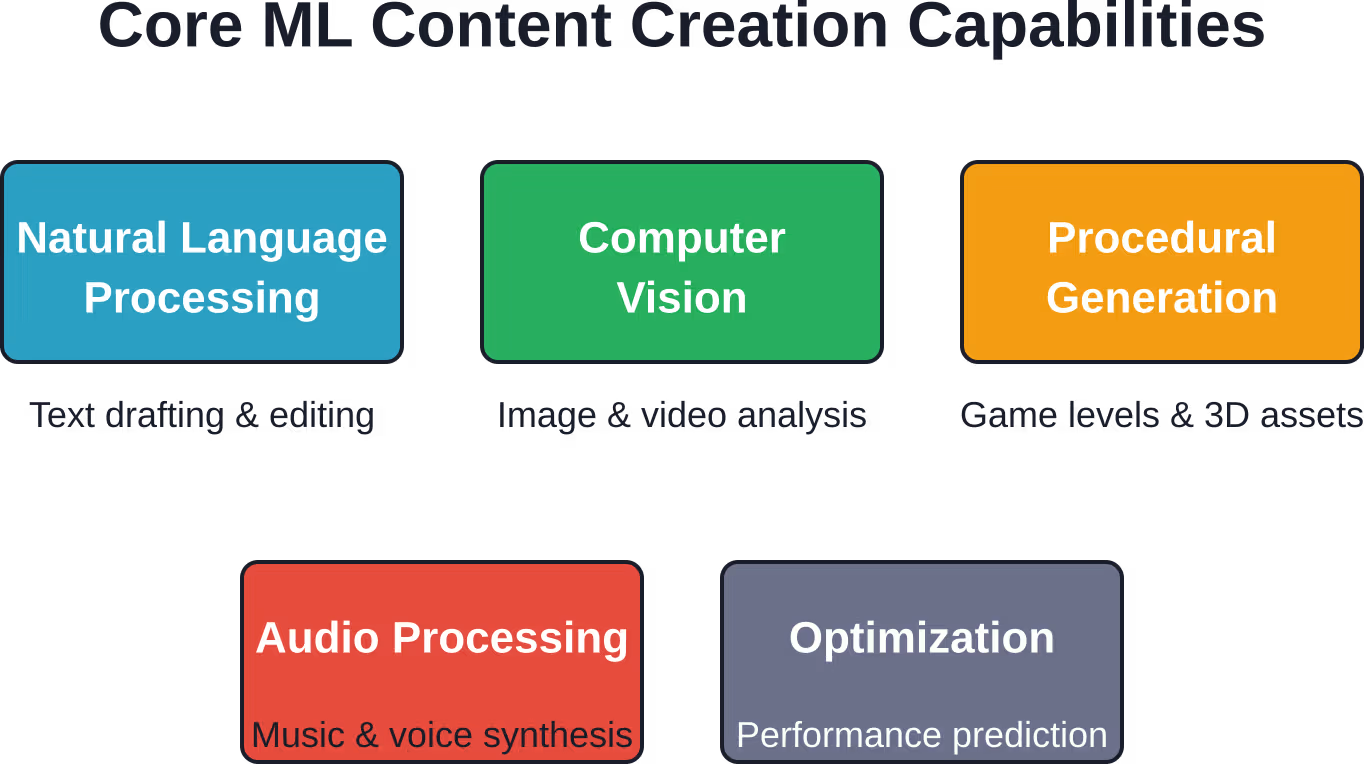
L'apprentissage automatique appliqué à la création de contenu se décompose en plusieurs fonctionnalités clés. Chacune résout des problèmes différents et s'intègre à des flux de travail différents.
Traitement automatique du langage naturel pour la génération de texte
Les modèles de traitement automatique du langage naturel (TALN) analysent les structures de vastes ensembles de données textuelles, apprenant la syntaxe, le style et la structure. Ils peuvent rédiger des articles, générer des descriptions de produits, créer des légendes pour les réseaux sociaux et suggérer des titres. GPT-4, lancé en 2023, représente une avancée majeure dans ce domaine avec environ 1 800 milliards de paramètres, ce qui ne représente toutefois qu'environ 1 à 21 000 milliards de connexions synaptiques sur les quelque 100 à 200 000 milliards de connexions du cerveau humain.
Les applications pratiques sont multiples. Les équipes marketing utilisent le traitement automatique du langage naturel (TALN) pour personnaliser les campagnes d'e-mailing à grande échelle. Les médias déploient des modèles pour générer des rapports financiers et des résumés sportifs. Les plateformes de commerce électronique créent des milliers de descriptions de produits automatiquement.
Vision par ordinateur pour le contenu image et vidéo
Les systèmes de vision par ordinateur basés sur l'apprentissage automatique analysent, catégorisent, modifient et génèrent du contenu visuel. Ces algorithmes reconnaissent les objets, les visages, les scènes et les styles. Ils peuvent recadrer automatiquement les photos selon différents formats, suggérer des vignettes optimales pour les vidéos et appliquer un étalonnage des couleurs cohérent à l'ensemble des séquences.
Une étude publiée sur arXiv a démontré l'efficacité d'outils d'apprentissage automatique pour les créateurs de vidéos sur les réseaux sociaux, notamment la sélection automatique des vignettes et l'optimisation des titres. Leurs tests A/B ont montré que le déploiement de ces outils entraînait une augmentation moyenne de 12,91 % du nombre de vues des vidéos.
Génération procédurale de contenu pour les jeux et les médias interactifs
La génération procédurale de contenu par apprentissage automatique (PCGML) crée des niveaux de jeu, des environnements 3D, des personnages et des récits interactifs. Contrairement aux systèmes traditionnels basés sur des règles, les approches d'apprentissage automatique s'inspirent du contenu existant pour générer des variations inédites qui semblent avoir été réalisées à la main.
Les défis restent importants. Une étude sur PCGML a révélé qu'environ 201 000 000 niveaux générés par les GAN pour les jeux étaient injouables, soulignant ainsi le fossé entre la génération de contenu et la garantie de sa qualité et de sa fonctionnalité.
Traitement audio et génération musicale
Les modèles d'apprentissage automatique composent désormais de la musique originale, génèrent des voix off et améliorent la qualité audio. Les technologies audio spatiales basées sur l'apprentissage automatique sont largement utilisées dans les applications grand public.
Optimisation et prédiction des performances
Au-delà de la simple génération de contenu, les algorithmes d'apprentissage automatique prédisent quel contenu sera le plus performant. Ces systèmes analysent les comportements des utilisateurs, les signaux d'engagement et les attributs du contenu afin de recommander les moments de publication optimaux, de suggérer des titres à fort potentiel de clics et d'identifier les sujets qui trouvent un écho auprès de publics spécifiques.
Applications concrètes dans tous les secteurs d'activité
Les outils de création de contenu basés sur l'apprentissage automatique ne sont pas théoriques. Ils sont déployés à grande échelle dans de nombreux secteurs, chacun présentant des exigences et des contraintes uniques.
Marketing et publicité
Les services marketing sont confrontés à une demande incessante de contenu : publications sur les réseaux sociaux, campagnes d’e-mailing, publicités, landing pages, articles de blog. Les outils d’apprentissage automatique permettent de gérer ce volume sans sacrifier la personnalisation. Les algorithmes segmentent les audiences, adaptent les messages et optimisent le moment de leur diffusion.
Son principal atout ? L’échelle. Une équipe marketing de cinq personnes peut personnaliser simultanément les campagnes pour des dizaines de segments d’audience. L’algorithme gère les variations, permettant ainsi aux spécialistes du marketing de se concentrer sur la stratégie et la direction créative.
Gestion des médias sociaux
Les plateformes sociales s'appuient fortement sur les algorithmes d'apprentissage automatique pour la modération des contenus, les moteurs de recommandation et la curation des flux. Mais les créateurs et les marques utilisent également ces outils pour gérer plus efficacement leur présence sur les réseaux sociaux.
Les discussions au sein de la communauté indiquent que 54 % des Américains s'informent au moins partiellement via les réseaux sociaux, et 25 % déclarent s'informer “ souvent ” de cette manière. Face à cette audience massive, l'optimisation algorithmique est cruciale pour la visibilité des contenus.
Divertissement et jeux
Les studios utilisent l'apprentissage automatique pour l'analyse de scénarios, les tests auprès du public, l'optimisation des bandes-annonces et la génération d'éléments graphiques. Dans le domaine du jeu vidéo, la génération procédurale permet de créer des mondes immenses sans avoir à concevoir manuellement chaque élément. Les studios d'animation déploient l'apprentissage automatique pour accélérer le rendu, automatiser la synchronisation labiale et générer des simulations de foule.
Édition et journalisme
Les médias d'information sont confrontés à un défi stratégique à l'ère de l'IA générative. Une étude publiée sur arXiv (arXiv:2406.05187) examine comment les créateurs de contenu humains devraient élaborer des stratégies face à l'IA générative. Dans des domaines sensibles au facteur temps comme l'actualité, où la valeur du contenu diminue rapidement, l'étude montre qu'il n'existe pas d'algorithme polynomial permettant de déterminer la stratégie dynamique optimale pour un humain, à moins que l'hypothèse d'une complexité exponentielle aléatoire ne soit erronée.
En langage académique, cela signifie que c'est compliqué et qu'il n'existe pas de solution miracle. Les médias doivent trouver leur propre angle d'approche.
| Secteur industriel | Application principale d'apprentissage automatique | Avantage clé | Défi principal |
|---|---|---|---|
| Commercialisation | génération de campagnes personnalisées | Évolutivité sans perte de qualité | Maintenir la cohérence du ton de la marque |
| Réseaux sociaux | Optimisation et modération du contenu | Amélioration des indicateurs d'engagement | Biais algorithmique et bulles de filtrage |
| Jeux | Génération procédurale du monde | Du contenu riche avec des équipes restreintes | Contrôle qualité et jouabilité |
| Édition | Création de rapports et édition automatisées | Rapidité pour le contenu urgent | Différenciation par rapport au contenu généré par l'IA |
| Commerce électronique | génération de descriptions de produits | Couverture des catalogues massifs | Exactitude et alignement de la marque |
Des avantages qui comptent vraiment
L'engouement autour des outils de création de contenu par apprentissage automatique masque souvent leurs véritables atouts. Voici ce que les faits démontrent.
Gains de vitesse et d'efficacité
Les outils d'apprentissage automatique réduisent considérablement le temps consacré aux tâches routinières. La rédaction d'une première version d'un article, qui prenait auparavant deux heures, peut désormais se faire en quinze minutes grâce à un modèle de traitement automatique du langage naturel qui fournit la structure initiale. Les monteurs vidéo peuvent automatiser la correction colorimétrique, qui exigeait auparavant des heures de réglages manuels.
Cela ne signifie pas une réduction globale de la charge de travail, mais une réorientation des activités vers des tâches à plus forte valeur ajoutée. La stratégie, la créativité et le contrôle qualité deviennent prioritaires.
Personnalisation à grande échelle
Créer manuellement du contenu personnalisé pour des milliers, voire des millions d'utilisateurs, est impossible. L'apprentissage automatique automatise cette tâche. Les sites de e-commerce génèrent des recommandations de produits uniques. Les plateformes de streaming proposent des interfaces personnalisées. Les plateformes marketing conçoivent des variantes d'e-mails adaptées au comportement de chaque utilisateur.
Optimisation basée sur les données
Les algorithmes d'apprentissage automatique testent et apprennent en continu. Ils identifient les titres les plus performants, les images qui génèrent de l'engagement et les moments de publication qui maximisent la portée. Cette boucle de rétroaction permet une amélioration constante sans avoir recours à des tests A/B manuels pour chaque décision.
Accessibilité et démocratisation
Les outils d'apprentissage automatique facilitent l'accès à la création de contenu. Une personne sans formation en design peut désormais créer des graphismes de qualité professionnelle. Une petite entreprise peut produire des supports marketing qui nécessitaient auparavant le recours à une agence. Un créateur indépendant peut gérer une stratégie de contenu multiplateforme.

Améliorez vos flux de travail de création de contenu grâce à AI Superior
La création de contenu implique souvent de grands volumes de texte, de médias, de métadonnées et d'informations relatives au public, qui peuvent être difficiles à gérer manuellement. AI Superior peut aider les organisations à appliquer des méthodes d'apprentissage automatique et de traitement automatique du langage naturel (TALN) pour soutenir l'analyse de contenu, l'automatisation et les flux de production.
AI Superior peut aider les projets liés au contenu avec :
- Structuration des ensembles de données de contenu et d'engagement
- Développement de modèles de traitement automatique du langage naturel et de classification
- Création de prototypes d'IA pour les flux de travail de contenu
- Automatisation des processus d'étiquetage et d'analyse
- Évaluation de la qualité de la production et de l'efficacité du flux de travail
- Prise en charge de l'intégration dans les systèmes d'édition ou internes
👉Contactez AI Superior discuter du flux de contenu et des données disponibles.
Défis et limites dont personne ne parle
Les outils d'apprentissage automatique pour le contenu ne sont pas magiques. Ils présentent de réelles limites que les praticiens rencontrent quotidiennement.
Le contrôle qualité reste manuel
Les modèles d'apprentissage automatique génèrent du contenu rapidement, mais la vérification de la qualité exige toujours un jugement humain. Ces modèles produisent des erreurs factuelles, des formulations maladroites, des messages hors sujet et parfois même des absurdités. Chaque élément doit être relu.
La question n'est pas de savoir si vous avez besoin d'un contrôle qualité, mais plutôt à quel point. Une légende pour les réseaux sociaux peut nécessiter une légère correction. Un livre blanc, en revanche, exige une vérification rigoureuse des faits et un travail stylistique approfondi.
Originalité et différenciation
Lorsque tous les acteurs utilisent des outils d'apprentissage automatique similaires, entraînés sur des ensembles de données comparables, les contenus finissent par se ressembler. Le défi de la différenciation s'intensifie. Comment faire ressortir un contenu lorsque le niveau de qualité minimal s'élève pour tous ?
Soyons francs : votre perspective, votre expertise et votre voix sont uniques. L’apprentissage automatique ne peut pas reproduire ce qui rend vos analyses précieuses pour votre public cible.
Biais algorithmiques et équité
Les modèles d'apprentissage automatique apprennent à partir de données d'entraînement, héritant ainsi des biais qu'elles contiennent. Une étude de la Brookings Institution met en lumière comment les biais algorithmiques peuvent, par inadvertance, engendrer des inégalités entre les groupes démographiques. Amazon a abandonné un outil de recrutement basé sur l'apprentissage automatique après avoir constaté qu'il discriminait les femmes : le modèle avait intégré des biais issus de pratiques de recrutement antérieures.
Le gouvernement américain a pris conscience de ces risques. Selon le NIST, le Réseau international des instituts de sécurité de l'IA a annoncé en novembre 2024 un financement de plus de 104 011 millions de dollars pour la recherche sur les contenus synthétiques.
Le plafond de la créativité
L'apprentissage automatique excelle dans la reconnaissance et la reproduction de formes. Il peine cependant à innover véritablement. Les modèles remixent et recombinent des formes existantes ; ils ne proposent pas d'idées novatrices ni ne remettent en question les hypothèses fondamentales. Cela requiert la créativité humaine.
| Défi | Niveau d'impact | Stratégie d'atténuation |
|---|---|---|
| Incohérence de la qualité | Haut | processus d'examen humain robustes |
| Inexactitudes factuelles | Haut | Protocoles de vérification des faits et citations |
| biais algorithmique | Moyen-élevé | Données de formation diversifiées et audits des biais |
| Sortie générique | Moyen | Montage intensif et injection de perspective unique |
| créativité véritable limitée | Moyen | Utilisez le ML pour l'exécution, pas pour la stratégie créative. |
| Problèmes éthiques | Variable | Politiques claires d'attribution et de transparence |
Considérations éthiques liées à la création de contenu en apprentissage automatique
À mesure que les outils d'apprentissage automatique se généralisent, les questions éthiques passent du théorique au pratique.
Transparence et divulgation
Les contenus doivent-ils indiquer quand des outils d'apprentissage automatique ont contribué à leur création ? Les pratiques varient considérablement. Certaines organisations le mentionnent clairement. D'autres considèrent l'apprentissage automatique comme un outil parmi d'autres dans leur flux de travail, au même titre que les correcteurs orthographiques ou les logiciels de traitement de texte.
Il n'existe pas encore de norme universelle, mais la transparence instaure la confiance. Le public souhaite de plus en plus être informé.
Attribution et originalité
Les modèles d'apprentissage automatique sont entraînés sur du contenu existant, souvent sans l'autorisation explicite des créateurs originaux. Cela soulève des questions d'attribution, de droit d'auteur et de juste rémunération. Les cadres juridiques sont encore en train d'évoluer pour s'adapter à cette technologie.
Préoccupations liées au déplacement d'emplois
L'apprentissage automatique va-t-il supprimer les emplois de création de contenu ? Les données suggèrent plutôt une transformation. Les rôles évoluent vers la supervision, la stratégie et le travail créatif spécialisé. Mais cette transition n'est pas sans heurts, et tout le monde ne peut pas s'y adapter facilement.
Désinformation et deepfakes
Les mêmes capacités d'apprentissage automatique qui aident les créateurs permettent également aux acteurs malveillants de les exploiter. Les médias synthétiques peuvent diffuser de la désinformation, usurper l'identité de personnes et manipuler l'opinion publique. La frontière entre les outils de contenu utiles et les technologies de tromperie nuisibles est ténue.
Tendances futures façonnant la création de contenu en apprentissage automatique
Où cela va-t-il nous mener ? Plusieurs tendances se dessinent déjà.
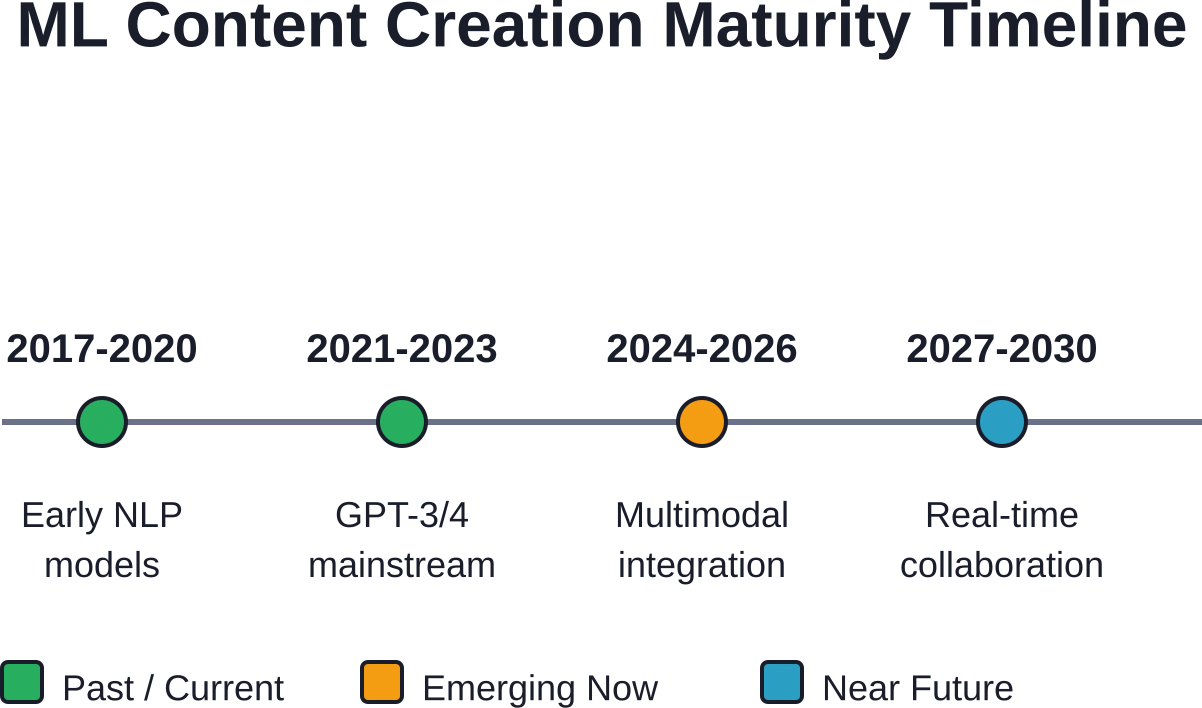
Modèles multimodaux
Les modèles actuels se spécialisent (texte, images, audio, vidéo). La nouvelle génération fonctionne de manière fluide entre ces modalités. Un modèle capable de comprendre un concept décrit par texte et de générer des images, du son et de la vidéo correspondants ouvre de nouvelles perspectives créatives.
Collaboration en temps réel entre humains et IA
Plutôt que de laisser l'apprentissage automatique générer du contenu que les humains modifient ensuite, les nouveaux outils permettent une collaboration en temps réel. Le créateur travaille, l'apprentissage automatique suggère des améliorations, le créateur accepte ou refuse – un dialogue constant au sein d'un partenariat créatif fluide.
Modèles de domaine spécialisés
Les modèles généralistes fonctionnent dans différents contextes, mais manquent d'expertise approfondie dans un domaine spécifique. La tendance est à la spécialisation des modèles, entraînés sur des contenus propres à un secteur : rédaction juridique, information médicale, documentation technique, fiction créative. Ces modèles de domaine comprennent le contexte et la terminologie qui font défaut aux modèles généralistes.
Personnalisation améliorée
La personnalisation actuelle s'effectue au niveau des segments, en regroupant les utilisateurs similaires. Les systèmes futurs personnaliseront au niveau individuel et en temps réel, en adaptant le contenu de manière dynamique en fonction du contexte immédiat et des signaux comportementaux.
Mise en œuvre pratique : Premiers pas
Prêt à intégrer le ML dans vos flux de travail de contenu ? Commencez par une approche stratégique.
Identifier les cas d'utilisation à fort impact
N'essayez pas d'automatiser tout d'un coup. Quelles tâches sont particulièrement chronophages pour des résultats relativement standardisés ? Ce sont d'excellentes candidates. Les descriptions de produits, la planification des publications sur les réseaux sociaux, le redimensionnement d'images et la rédaction des premières ébauches figurent souvent en tête de liste.
Établir des normes de qualité claires
Définissez les résultats acceptables avant de déployer des outils d'apprentissage automatique. Mettez en place des processus de revue. Déterminez qui évalue la qualité et quels critères appliquer. Sans normes claires, la qualité se dégrade.
Commencez petit et itérez
Commencez par tester les outils d'apprentissage automatique sur du contenu non critique. Apprenez-en davantage sur leurs forces et leurs limites dans un environnement à faible risque. Recueillez les commentaires des créateurs et des publics. Améliorez les processus avant d'étendre le périmètre.
Maintenir la supervision humaine
L'apprentissage automatique doit compléter le travail des créateurs humains, et non le remplacer. Il est essentiel de maintenir l'humain impliqué dans les décisions stratégiques, la direction créative, le contrôle qualité et les évaluations éthiques. Les implémentations les plus réussies utilisent l'apprentissage automatique pour l'exécution, tandis que les humains se concentrent sur la stratégie et le perfectionnement.
Surveiller les indicateurs de performance
Suivez les indicateurs clés avant et après la mise en œuvre du ML. Gagnez-vous réellement du temps ? La qualité du contenu est-elle maintenue ? Comment évoluent les indicateurs d’engagement ? Une évaluation basée sur les données permet d’éviter que les suppositions ne prennent le pas sur la réalité.
L'élément humain demeure essentiel
Voici ce que l'on oublie souvent dans le battage médiatique autour du ML : la technologie ne crée pas de lien. Les algorithmes optimisent les indicateurs d'engagement, mais ne peuvent pas établir de véritables relations avec les publics.
Le contenu le plus efficace allie la puissance du ML à l'intuition humaine. Utilisez les algorithmes pour gérer la mise à l'échelle, la personnalisation et l'optimisation. Réservez la créativité humaine à la stratégie, à la narration, à l'empathie et aux subtilités du jugement que les algorithmes ne peuvent pas prendre.
Un contenu qui trouve un écho auprès du public n'est pas seulement techniquement correct et bien optimisé. Il comprend ses besoins, aborde ses véritables préoccupations, offre des perspectives uniques et instaure la confiance. Ces qualités requièrent l'humain, qualités que l'apprentissage automatique complète sans les remplacer.
Questions fréquemment posées
L'apprentissage automatique peut-il remplacer complètement les créateurs de contenu humains ?
Non. Si l'apprentissage automatique excelle dans la génération d'ébauches, l'optimisation des performances et la gestion à grande échelle des tâches routinières, il manque de créativité véritable, de réflexion stratégique et de capacité à établir un lien authentique avec le public. L'approche la plus efficace combine l'efficacité de l'apprentissage automatique avec la supervision, la créativité et le jugement humains. Une étude publiée sur arXiv, portant sur la stratégie humaine à l'ère de l'IA générale, confirme que la recherche d'une stratégie créative humaine optimale demeure complexe sur le plan informatique, ce qui suggère que la créativité humaine offre des avantages que les algorithmes peinent à reproduire.
Quel est le principal risque lié à l'utilisation du ML pour la création de contenu ?
Le contrôle qualité représente le principal risque. Les modèles d'apprentissage automatique peuvent générer des informations factuellement erronées, reproduire les biais des données d'entraînement et produire un contenu générique qui ne se distingue pas de la concurrence. Sans processus de vérification humaine rigoureux, le contenu généré par l'apprentissage automatique peut nuire à la crédibilité et à la réputation de la marque. Le second risque majeur concerne les biais algorithmiques : les systèmes d'apprentissage automatique peuvent, par inadvertance, discriminer ou créer des résultats inéquitables si les données d'entraînement contiennent des biais historiques.
Combien coûte la mise en œuvre d'outils de contenu ML ?
Les coûts varient considérablement selon l'approche. De nombreux outils d'écriture automatique et de génération d'images destinés au grand public proposent des versions gratuites ou des abonnements à moins de 100 000 € par mois. Les solutions pour entreprises, avec modèles personnalisés, intégration d'API et infrastructure dédiée, peuvent coûter plusieurs milliers d'euros par mois. Pour la plupart des entreprises qui se lancent, l'expérimentation avec les outils commerciaux existants nécessite un investissement minimal ; le coût principal réside dans le temps consacré par le personnel à l'apprentissage des systèmes et à l'optimisation des processus.
Le contenu relatif au ML va-t-il nuire au référencement naturel ?
Les moteurs de recherche évaluent la qualité, la pertinence et la valeur ajoutée du contenu pour l'utilisateur, et non les outils utilisés pour le créer. Un contenu bien édité, optimisé par l'apprentissage automatique et apportant une réelle valeur ajoutée, est bien référencé. Le risque provient des contenus générés par l'apprentissage automatique, peu travaillés et non édités, qui n'offrent que peu de valeur ajoutée. Google a déclaré privilégier les contenus de haute qualité, quelle que soit leur méthode de création, tout en pénalisant les contenus superficiels et inutiles, qu'ils soient générés par des humains ou par des machines.
De quelles compétences les créateurs de contenu ont-ils besoin dans un monde basé sur l'apprentissage automatique ?
La pensée critique, la planification stratégique, l'évaluation de la qualité et l'expertise du domaine prennent une importance accrue à mesure que l'apprentissage automatique (ML) prend en charge les tâches routinières. Savoir comment orienter efficacement les outils de ML constitue une nouvelle compétence. La capacité d'apporter un point de vue unique, de vérifier l'exactitude des faits, de préserver l'identité de marque et de porter des jugements éditoriaux nuancés demeure essentielle. Une culture technique est un atout, mais une spécialisation poussée en ML n'est pas requise pour la plupart des postes liés au contenu.
Comment puis-je m'assurer que le contenu généré par l'apprentissage automatique corresponde à l'image de marque ?
Commencez par une documentation claire sur la voix de marque, consultable par les relecteurs humains. Lors de l'utilisation d'outils d'apprentissage automatique, fournissez des instructions détaillées précisant le ton, le style et le vocabulaire souhaités. Générez plusieurs variantes et sélectionnez celle qui correspond le mieux. Veillez à toujours adapter les résultats aux normes de la marque : l'apprentissage automatique fournit des points de départ, et non des produits finis. Certains outils avancés permettent un réglage fin du contenu spécifique à la marque, créant ainsi des modèles qui comprennent mieux les codes de communication de l'organisation.
Existe-t-il des problèmes juridiques liés au contenu généré par l'apprentissage automatique ?
Les cadres juridiques sont encore en évolution. Parmi les principales préoccupations figurent les questions de droit d'auteur relatives aux données d'entraînement, les risques de contrefaçon si les résultats de l'apprentissage automatique ressemblent fortement à des œuvres protégées par le droit d'auteur, et la responsabilité en cas d'erreurs factuelles ou de propos diffamatoires dans les contenus générés par l'apprentissage automatique. Actuellement, les créateurs et éditeurs humains restent légalement responsables des contenus qu'ils publient, quelle que soit la méthode de création. Il est conseillé aux organisations qui déploient des outils d'apprentissage automatique à grande échelle de consulter un conseiller juridique spécialisé dans les questions d'IA et de contenu.
Conclusion
L'apprentissage automatique a profondément transformé la création de contenu, sans pour autant supprimer le besoin de créateurs humains. Cette technologie excelle en matière d'automatisation, d'optimisation et de mise à l'échelle, permettant ainsi aux créateurs de se concentrer sur la stratégie, la créativité et l'établissement d'un lien authentique avec le public.
Dans ce nouveau contexte, les gagnants ne seront pas ceux qui possèdent les outils d'apprentissage automatique les plus sophistiqués. Ce seront les créateurs qui sauront allier avec intelligence l'efficacité algorithmique à une véritable intuition humaine, maintenir des normes de qualité élevées, gérer les questions éthiques de manière responsable et placer le public au cœur de chaque décision.
L'apprentissage automatique est un outil, pas un substitut. Utilisez-le de manière stratégique. Gardez le contrôle. Concentrez-vous sur ce qui rend le contenu utile pour les utilisateurs. Cette approche reste valable quelle que soit la prochaine fonctionnalité d'apprentissage automatique qui verra le jour.
Prêt à explorer les outils d'apprentissage automatique pour vos flux de travail de contenu ? Commencez par identifier une tâche répétitive et chronophage liée au contenu. Testez les solutions d'apprentissage automatique disponibles sur ce cas précis avant de les étendre à d'autres situations. Mesurez les résultats avec objectivité et itérez en fonction des solutions performantes.