Résumé rapide : L'apprentissage automatique en informatique quantique combine la mécanique quantique et les algorithmes d'IA pour résoudre des problèmes complexes plus rapidement que les ordinateurs classiques. L'apprentissage automatique quantique (QML) englobe l'exécution d'algorithmes quantiques sur du matériel quantique pour les tâches d'apprentissage automatique, l'utilisation d'ordinateurs quantiques pour accélérer l'apprentissage automatique classique et l'application de l'apprentissage automatique classique pour optimiser les systèmes quantiques. Les recherches menées par des institutions comme le NIST démontrent que les méthodes quantiques peuvent réduire les besoins de réglage de 70% et réaliser des tâches de classification spécialisées, bien que les avantages pratiques restent limités par les limitations matérielles actuelles.
L'informatique quantique promet des gains de vitesse exponentiels pour certaines tâches de calcul. L'apprentissage automatique offre de puissantes capacités de reconnaissance de formes et d'optimisation. Leur combinaison donne naissance à l'apprentissage automatique quantique : un domaine qui explore comment la mécanique quantique peut améliorer les algorithmes d'IA et comment l'IA peut résoudre les problèmes de l'informatique quantique.
Mais qu'est-ce que cela signifie concrètement ?
La relation entre l'informatique quantique et l'apprentissage automatique est multidirectionnelle. Les algorithmes quantiques peuvent potentiellement accélérer les tâches d'apprentissage automatique. Les techniques d'apprentissage automatique classiques permettent d'optimiser le matériel quantique. Enfin, de nouveaux paradigmes d'apprentissage, propres à l'informatique quantique, émergent sans équivalent classique.
Le fait est que nous n'en sommes qu'aux prémices. La plupart des ordinateurs quantiques actuels fonctionnent dans ce que les chercheurs appellent l'ère NISQ (informatique quantique intermédiaire bruitée), où les taux d'erreur et le nombre limité de qubits restreignent les applications pratiques. Ce cycle d'avancées majeures en informatique quantique, suivies du rattrapage de l'informatique classique, continue de faire progresser les deux domaines.
Qu'est-ce que l'apprentissage automatique quantique ?
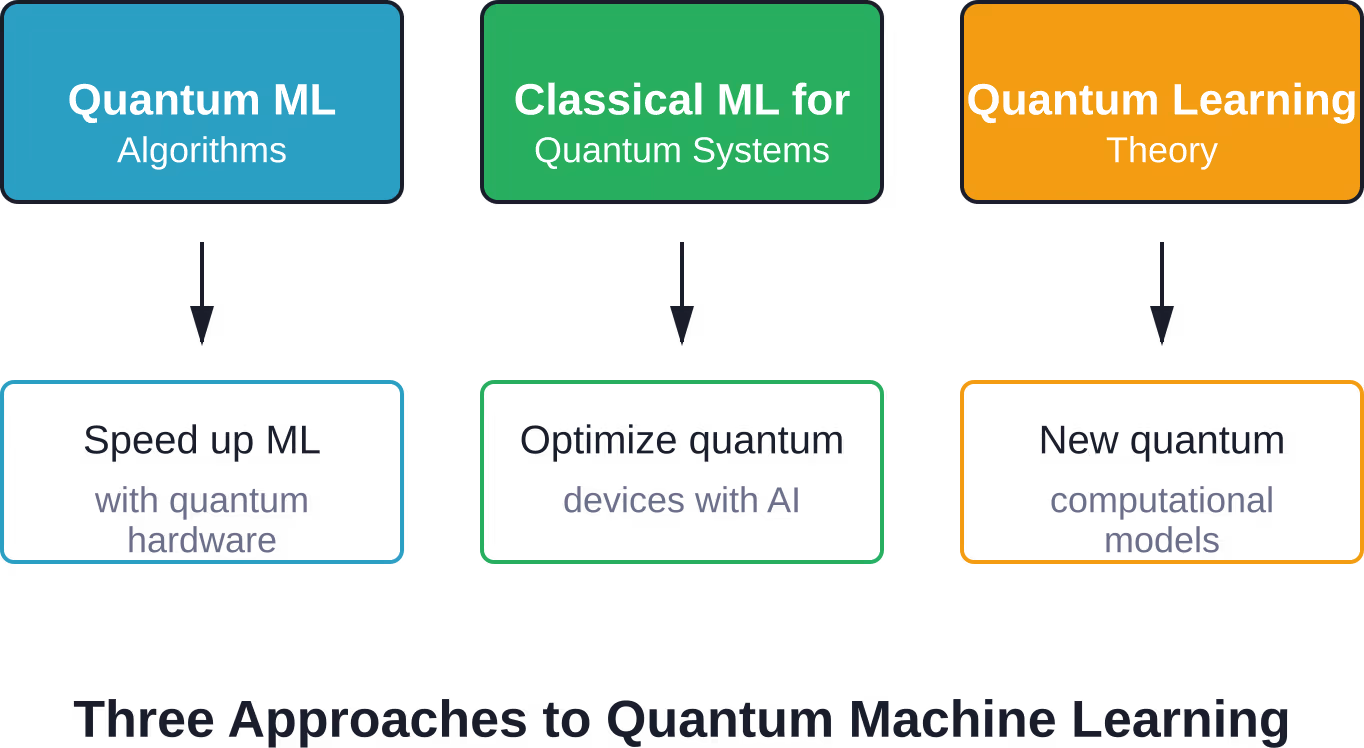
L'apprentissage automatique quantique se situe à la croisée de l'informatique quantique et de l'intelligence artificielle. Ce domaine englobe trois axes de recherche distincts, souvent regroupés, mais qui s'attaquent à des problèmes fondamentalement différents.
Premièrement, il y a l'exécution d'algorithmes d'apprentissage automatique sur du matériel quantique. Cette approche consiste à exécuter des tâches telles que la classification, le regroupement ou la reconnaissance de formes à l'aide de circuits quantiques plutôt que de processeurs classiques. L'objectif ? Exploiter les propriétés quantiques comme la superposition et l'intrication pour obtenir des gains de puissance de calcul.
Deuxièmement, l'apprentissage automatique classique est appliqué aux problèmes de l'informatique quantique. Les chercheurs utilisent des réseaux de neurones, l'apprentissage par renforcement et d'autres techniques d'IA pour optimiser les circuits quantiques, régler les dispositifs quantiques et résoudre des simulations de chimie quantique. Selon une étude du NIST, le réglage basé sur l'apprentissage automatique peut réduire le nombre de points de mesure requis par le 70% pour les dispositifs à points quantiques.
Troisièmement, la théorie de l'apprentissage quantique explore des modèles de calcul entièrement nouveaux. Ces approches quantiques natives ne correspondent pas nécessairement aux tâches d'apprentissage automatique classiques ; elles représentent des modes de traitement de l'information fondamentalement différents.
Franchement, la terminologie est confuse. Différents chercheurs utilisent l'expression “ apprentissage automatique quantique ” avec des significations différentes, ce qui engendre de la confusion lorsqu'il s'agit d'évaluer les affirmations concernant les avantages de l'informatique quantique.
Les trois saveurs de QML
Il est important de comprendre la direction que prend une approche QML particulière, car chacune fait face à des défis et des opportunités différents :
- Les algorithmes quantiques pour l'apprentissage automatique visent à accélérer les tâches d'apprentissage automatique classiques. Parmi les exemples, citons les machines à vecteurs de support quantiques, les réseaux de neurones quantiques et les méthodes à noyau quantique. Ces approches encodent les données classiques dans des états quantiques, les traitent à l'aide de circuits quantiques, puis reconvertissent les résultats sous leur forme classique.
- L'apprentissage automatique classique appliqué aux problèmes quantiques inverse cette relation. Dans ce cas, des réseaux de neurones conventionnels ou des algorithmes d'optimisation s'attaquent aux défis spécifiques à l'informatique quantique : le calibrage des qubits, la réduction des erreurs ou la conception de circuits quantiques plus performants. Cette approche a permis d'obtenir des résultats concrets à court terme parmi les plus probants.
- La théorie de l'apprentissage quantique développe de nouveaux cadres de calcul. Les chercheurs étudient comment les systèmes quantiques apprennent, quels problèmes les systèmes quantiques peuvent résoudre et que les systèmes classiques ne peuvent pas, et quelles garanties théoriques existent pour les algorithmes d'apprentissage quantique.

Développer des projets d'apprentissage automatique en informatique quantique grâce à AI Superior
Les projets d'informatique quantique et d'apprentissage automatique impliquent souvent des flux de travail expérimentaux, des ensembles de données de recherche et des approches de modélisation avancées. AI Superior peut aider les organisations à explorer comment les méthodes d'apprentissage automatique peuvent être appliquées dans des environnements de recherche en informatique quantique ou dans des flux de travail d'IA hybrides.
AI Superior peut aider les équipes à :
- Examen des ensembles de données informatiques et de recherche disponibles
- Définition du cas d'utilisation de la recherche en apprentissage automatique
- Construction de modèles de validation de concept
- Test de l'évolutivité du modèle et des performances expérimentales
- Développement de flux de travail prédictifs ou d'optimisation
- Soutenir le développement expérimental de l'IA
- Intégration de la planification dans les environnements de recherche
Pour les projets d'informatique quantique, cela peut s'appliquer à la recherche en optimisation, aux flux de travail d'IA hybrides, au support de simulation, à l'analyse de données et à la modélisation informatique expérimentale.
Contactez AI Superior examiner les exigences techniques.
Comment l'informatique quantique améliore l'apprentissage automatique
La mécanique quantique introduit des propriétés que les ordinateurs classiques ne peuvent reproduire. La superposition permet aux qubits d'exister simultanément dans plusieurs états. L'intrication crée des corrélations entre les qubits qui n'ont pas d'équivalent classique. L'interférence permet aux algorithmes quantiques d'amplifier les réponses correctes tout en annulant les incorrectes.
Ces propriétés ouvrent de nouvelles possibilités pour les charges de travail d'apprentissage automatique.
Méthodes à noyau quantique
Les méthodes à noyau transforment les données en espaces de dimension supérieure où les motifs deviennent plus facilement séparables. Les ordinateurs classiques calculent des fonctions noyau entre les points de données pour mesurer leur similarité. Les méthodes à noyau quantiques utilisent des circuits quantiques pour estimer ces noyaux, accédant potentiellement à des espaces de caractéristiques inaccessibles aux ordinateurs classiques.
Le processus fonctionne comme suit : encoder des données classiques en états quantiques, exécuter un circuit quantique qui implémente la carte de caractéristiques, mesurer le produit scalaire entre les états quantiques et utiliser la matrice noyau résultante avec des algorithmes d’apprentissage automatique classiques comme les machines à vecteurs de support.
Des recherches démontrent que les noyaux quantiques peuvent produire des résultats sur le matériel actuel. Ces recherches montrent que les méthodes à noyaux quantiques atteignent une précision moyenne d'environ 62% sur des tâches de classification en traitement automatique du langage naturel à cinq voies — une performance modeste, mais qui prouve que l'approche fonctionne sur de véritables dispositifs quantiques.
C'est là que ça devient intéressant. Les recherches d'IBM montrent que les taux d'erreur ont un impact considérable sur les performances des noyaux quantiques. En présence de taux d'erreur élevés dans les circuits quantiques profonds, sans mécanisme de correction d'erreur, les résultats se dégradent rapidement ; par exemple, dans les systèmes à 10 qubits, la fidélité des mesures chute significativement.
Réseaux neuronaux quantiques
Les réseaux de neurones quantiques (RQN) remplacent les neurones et les fonctions d'activation classiques par des circuits quantiques paramétrés. Ces circuits quantiques variationnels contiennent des portes ajustables dont les paramètres sont optimisés par l'apprentissage, à l'instar des poids dans les réseaux de neurones classiques.
Les réseaux de neurones quantiques (QNN) sont confrontés à des défis uniques. Le problème du plateau stérile entraîne une diminution exponentielle des gradients à mesure que la profondeur du circuit augmente, ce qui rend l'apprentissage difficile. La connectivité limitée des qubits sur le matériel actuel contraint les architectures de réseau. Enfin, le théorème de non-clonage empêche la copie directe des états quantiques, ce qui complexifie certaines conceptions de réseau.
Mais attendez. Des recherches récentes sur la distillation des connaissances sont prometteuses pour la compression des modèles quantiques. Des études démontrent une amélioration de la précision des tests, passant de 52,31 TPP3T à 81,71 TPP3T pour de petits réseaux d'apprentissage à deux qubits et deux couches, apprenant à partir de réseaux d'apprentissage plus vastes. Pour des réseaux d'apprentissage à sept qubits et une seule couche, la précision a bondi de 86,01 TPP3T à 99,81 TPP3T grâce à la distillation des connaissances, se rapprochant ainsi de la précision de 98,31 TPP3T du réseau d'apprentissage à sept qubits et deux couches.
Circuits quantiques variationnels
Les circuits quantiques variationnels (CQV) constituent la base de nombreuses approches d'apprentissage automatique quantique. Ces algorithmes hybrides quantiques-classiques alternent entre l'exécution de circuits quantiques et des étapes d'optimisation classiques.
L'ordinateur quantique évalue le circuit et mesure les sorties. Un optimiseur classique traite ces mesures, calcule les gradients ou autres signaux de mise à jour, et ajuste les paramètres du circuit. Cette boucle se répète jusqu'à convergence.
Les classificateurs quantiques variationnels (VQC) fonctionnent bien sur les dispositifs NISQ car ils utilisent des circuits peu profonds qui minimisent l'accumulation d'erreurs. Des recherches sur la classification des chiffres MNIST à l'aide de 500 images montrent que les classificateurs quantiques variationnels conservent une précision de test raisonnable même en cas de perturbations des entrées ; la précision ne diminue significativement que lorsque la fidélité des entrées passe en dessous de 60%.
| Approche QML | Atout clé | Défi principal | État actuel |
|---|---|---|---|
| Noyaux quantiques | Accès aux espaces de fonctionnalités multidimensionnels | Sensibilité aux erreurs, preuves limitées de l'avantage quantique | Démonstration réalisée sur du matériel NISQ avec une précision modeste |
| Réseaux neuronaux quantiques | Expressivité quantique pour les motifs complexes | Plateaux arides, difficultés d'entraînement | Recherche active, amélioration par la distillation des connaissances |
| Circuits variationnels | Flexibilité hybride compatible NISQ | Complexité du paysage d'optimisation | L'approche la plus pratique à court terme |
| Recuit quantique ML | Optimisation naturelle pour certains problèmes | Portée limitée du problème, exigences de refroidissement | Systèmes commerciaux disponibles, applications de niche |
Apprentissage automatique pour l'optimisation des systèmes quantiques
L'apprentissage automatique classique résout de plus en plus de problèmes créés par l'informatique quantique. Le réglage des dispositifs quantiques, la réduction des erreurs et la conception de circuits quantiques bénéficient tous des techniques d'IA.
Réglage automatisé des dispositifs quantiques
Les ordinateurs quantiques nécessitent un étalonnage précis. Les paramètres des portes logiques doivent être ajustés, les fréquences des qubits correctement définies et les impulsions de contrôle optimisées. Effectuer ces opérations manuellement requiert des heures, voire des jours, de travail d'experts.
L'apprentissage automatique automatise ce processus. Des chercheurs du NIST ont développé des systèmes de réglage pilotés par l'IA qui agissent comme des “ mécaniciens ” pour les ordinateurs quantiques. Leur cadre de réglage des dispositifs à points quantiques, basé sur les rayons, réduit le nombre de points de mesure requis par le 70% pour les systèmes à deux points, tout en préservant la précision.
Cette approche repose sur l'entraînement de modèles d'apprentissage automatique à reconnaître les états quantiques à partir de données de capteurs. Les réseaux neuronaux apprennent des schémas indiquant la formation correcte des qubits, puis guident des procédures de réglage automatisées qui convergent plus rapidement que les méthodes manuelles ou une simple automatisation.
Justyna Zwolak, chercheuse au NIST spécialisée dans les plateformes d'informatique quantique, s'intéresse à l'utilisation d'algorithmes d'apprentissage automatique et d'intelligence artificielle pour automatiser le contrôle des réseaux de points quantiques. Ses recherches étendent les méthodes de réglage à des systèmes de plus grande dimension, au-delà des simples configurations à deux points.
Atténuation des erreurs quantiques
Les ordinateurs quantiques actuels sont souvent sujets à des erreurs. La décohérence entraîne une perte d'information quantique au niveau des qubits. Les imperfections des portes logiques introduisent des erreurs de calcul. Le bruit environnemental perturbe les résultats.
L'apprentissage automatique classique permet d'identifier et de corriger ces erreurs. Les algorithmes apprennent les schémas d'erreur à partir de données d'étalonnage, prédisent les erreurs probables pour les nouveaux circuits et appliquent des corrections aux résultats de mesure. Certaines approches utilisent des réseaux de neurones pour reconstruire des états quantiques sans erreur à partir de mesures bruitées.
L'atténuation des erreurs diffère de la correction d'erreurs quantiques complète, qui exige de nombreux qubits physiques par qubit logique – un luxe que le matériel actuel ne peut se permettre. Les techniques d'atténuation utilisent un post-traitement classique pour améliorer les résultats sans ressources quantiques supplémentaires.
Conception et optimisation des circuits quantiques
Concevoir des circuits quantiques efficaces est complexe. Les ingénieurs doivent minimiser le nombre de portes logiques, respecter les contraintes de connectivité matérielle, trouver un équilibre entre la profondeur du circuit et l'accumulation d'erreurs, et optimiser le circuit pour des processeurs quantiques spécifiques.
Les algorithmes d'apprentissage automatique s'attaquent à ce problème de conception. Les agents d'apprentissage par renforcement explorent l'espace des circuits possibles, apprenant quels choix de conception permettent d'obtenir de meilleures performances. Les algorithmes génétiques font évoluer des populations de circuits vers des implémentations améliorées. Les réseaux de neurones prédisent les performances des circuits sans recourir à des simulations quantiques coûteuses.
Le département américain de l'Énergie a annoncé un financement pour des projets d'informatique quantique, notamment par le biais des initiatives ARPA-E, afin de soutenir le développement d'algorithmes quantiques pour la chimie et la science des matériaux. Nombre de ces projets intègrent des techniques d'apprentissage automatique pour la conception et l'optimisation des algorithmes.
Applications et cas d'utilisation concrets
L'apprentissage automatique quantique dépasse le cadre théorique pour s'investir dans des domaines pratiques. Si l'obtention d'avantages à grande échelle reste un objectif à long terme, les applications actuelles démontrent sa faisabilité et ouvrent des perspectives prometteuses.
Découverte de médicaments et simulation moléculaire
La simulation du comportement moléculaire représente un défi pour les ordinateurs classiques. Les systèmes quantiques modélisent naturellement d'autres systèmes quantiques : molécules, réactions chimiques, propriétés des matériaux. L'apprentissage automatique améliore ces simulations en prédisant les propriétés moléculaires, en optimisant les paramètres de simulation et en identifiant des composés candidats.
Le programme ARPA-E du Département de l'Énergie finance des projets d'informatique quantique axés sur la chimie computationnelle. Ces travaux développent des algorithmes quantiques capables de simuler des matériaux inaccessibles aux ordinateurs classiques, grâce à des composantes d'apprentissage automatique qui accélèrent les processus de découverte.
Le Laboratoire national Lawrence Livermore développe des logiciels, basés sur l'informatique quantique et l'apprentissage automatique, pour la découverte d'aimants ultra-puissants et légers, essentiels aux moteurs électriques et aux technologies de l'information du futur. Leurs algorithmes hybrides classiques-quantiques combinent ces deux paradigmes de calcul.
Science et conception des matériaux
La conception de nouveaux matériaux exige la compréhension des interactions à l'échelle atomique. Les approches d'apprentissage automatique quantique permettent de prédire les propriétés des matériaux à partir de leur composition atomique, de simuler leur comportement dans différentes conditions et d'optimiser leurs structures pour obtenir les caractéristiques souhaitées.
Alice & Bob USA développe des algorithmes quantiques tolérants aux pannes qui simulent des matériaux magnétiques afin de créer des aimants permanents sans terres rares. Ces aimants sont des composants essentiels des moteurs et des générateurs. Leur développement réussi permettrait de réduire la dépendance des États-Unis aux importations de minéraux critiques.
La découverte de matériaux magnétiques accélérée par la physique quantique combine la simulation quantique et l'optimisation par apprentissage automatique. Les ordinateurs quantiques modélisent le comportement quantique des électrons dans les systèmes magnétiques. Les algorithmes d'apprentissage automatique explorent efficacement l'espace de conception.
Modélisation financière et analyse des risques
Les institutions financières explorent l'apprentissage automatique quantique pour l'optimisation de portefeuille, l'évaluation des risques, la détection des fraudes et la prévision des marchés. Les algorithmes quantiques permettent potentiellement d'évaluer des scénarios financiers complexes plus rapidement que les méthodes classiques.
Le défi ? La plupart des données financières sont classiques, et leur encodage dans des états quantiques engendre des coûts supplémentaires. Les avantages quantiques n’apparaissent que lorsque le gain de vitesse apporté par le traitement quantique dépasse le coût d’encodage – un équilibre qui n’est pas encore atteint pour la plupart des applications financières.
Cybersécurité et protection des réseaux
L'informatique quantique menace les méthodes de chiffrement actuelles tout en permettant le développement d'une cryptographie résistante à l'informatique quantique. L'apprentissage automatique améliore les applications de sécurité quantique grâce à la détection d'intrusions, la reconnaissance des schémas de menaces et les systèmes de défense adaptatifs.
Les recherches sur l'apprentissage fédéré combiné à l'apprentissage automatique quantique pour la détection d'intrusions réseau sont prometteuses. Les approches fédérées permettent aux systèmes de sécurité distribués d'apprendre à partir de données décentralisées sans centraliser les informations sensibles.
Limitations et défis actuels
L'apprentissage automatique quantique se heurte à des obstacles importants. Comprendre ces contraintes est essentiel pour formuler des attentes réalistes quant au moment et à la manière dont les avantages quantiques se concrétiseront.
Contraintes matérielles
Les ordinateurs quantiques actuels fonctionnent avec un nombre limité de qubits, généralement de quelques dizaines à quelques centaines. Le taux d'erreur reste élevé par rapport aux ordinateurs classiques. Le temps de cohérence des qubits limite la durée des calculs. Enfin, les restrictions de connectivité limitent les qubits pouvant interagir directement.
Ces limitations matérielles restreignent fondamentalement les performances actuelles des algorithmes d'apprentissage automatique quantique. L'écart entre les propositions théoriques et leur mise en œuvre pratique demeure important.
Le problème de l'encodage des données
L'apprentissage automatique classique fonctionne avec des données classiques. Les algorithmes quantiques nécessitent des états quantiques. L'encodage des données classiques sous forme quantique prend du temps et des ressources quantiques.
Pour de nombreux problèmes, le coût de l'encodage dépasse largement le gain de vitesse apporté par le traitement quantique. L'optimisation des méthodes d'encodage reste un domaine de recherche actif. Certaines approches utilisent des méthodes d'encodage approximatives qui privilégient une préparation plus rapide au détriment d'une fidélité parfaite ; les recherches montrent qu'un encodage atteignant une fidélité de 60% permet de maintenir une précision d'entraînement à peine inférieure à celle d'un encodage exact.
Le problème du plateau aride
L'entraînement des réseaux de neurones quantiques se heurte à un phénomène appelé « plateaux stériles ». À mesure que la profondeur du circuit augmente, les gradients diminuent de façon exponentielle, rendant l'optimisation quasi impossible. Le paysage d'entraînement devient plat et les optimiseurs basés sur le gradient ne parviennent plus à identifier de pistes d'amélioration.
Les chercheurs travaillent sur des stratégies d'atténuation : conception soignée des circuits, meilleures méthodes d'initialisation, approches d'optimisation alternatives. Cependant, les plateaux stériles demeurent un défi fondamental pour le passage à l'échelle des réseaux neuronaux quantiques.
Mesurer l'avantage quantique
Démontrer que l'apprentissage automatique quantique offre des avantages par rapport aux méthodes classiques est complexe. Les algorithmes classiques ne cessent de s'améliorer. Les progrès matériels pourraient combler les lacunes que les approches quantiques visent à combler. Et pour de nombreux problèmes, la meilleure méthode de référence classique reste incertaine.
Ce cycle de solutions quantiques suivies de solutions classiques améliorées se poursuit. Chaque avancée quantique incite les chercheurs classiques à optimiser davantage les méthodes, découvrant souvent au passage de meilleurs algorithmes classiques.
| Défi | Impact | Orientations actuelles de la recherche |
|---|---|---|
| qubits limités | Limite la taille du problème et la capacité du modèle | Mise à l'échelle matérielle, meilleure qualité des qubits |
| taux d'erreur élevés | Dégrade la précision des calculs | Atténuation des erreurs, correction partielle des erreurs |
| Surcoût d'encodage des données | Élimine les gains de vitesse potentiels | Schémas de codage efficaces, méthodes approximatives |
| Plateaux arides | Empêche l'entraînement des réseaux quantiques profonds | Conception architecturale soignée, optimiseurs alternatifs |
| Concours classique | Réduit la fenêtre d'avantage quantique | Identifier les problèmes où la mécanique quantique est fondamentale |
L'avenir de l'apprentissage automatique quantique
Quel avenir pour l'apprentissage automatique quantique ? Plusieurs tendances façonneront la trajectoire de ce domaine au cours des prochaines années.
Améliorations matérielles
Les ordinateurs quantiques continuent de progresser. Le nombre de qubits augmente, les taux d'erreur diminuent et les temps de cohérence s'allongent. À mesure que le matériel gagne en maturité, les algorithmes actuellement inopérants en raison du bruit deviendront viables.
L'IEEE Standards Association considère l'informatique quantique comme un domaine prioritaire. En février 2026, l'IEEE a mis en lumière les tendances en informatique quantique et l'importance des normes pour favoriser la collaboration et garantir l'interopérabilité à mesure que cette technologie passe de la théorie à la pratique.
Les Nations Unies ont proclamé 2025 Année internationale des sciences et technologies quantiques, afin de sensibiliser le public et de stimuler les investissements dans les technologies quantiques à l'échelle mondiale.
Systèmes hybrides classiques-quantiques
L'apprentissage automatique quantique pratique utilisera probablement des approches hybrides combinant traitement classique et quantique. Les ordinateurs classiques prennent en charge les tâches où ils excellent : prétraitement des données, optimisation et post-traitement des résultats. Les ordinateurs quantiques, quant à eux, s'attaquent à des sous-routines spécifiques où la mécanique quantique offre des avantages.
Cette répartition des tâches correspond aux capacités matérielles actuelles et offre une voie pratique pour l'avenir, même si les ordinateurs quantiques totalement tolérants aux pannes ne seront disponibles que dans plusieurs années.
Algorithmes quantiques spécialisés
Plutôt que de chercher à quantifier l'ensemble de l'apprentissage automatique, les chercheurs se concentrent de plus en plus sur des problèmes spécifiques où les approches quantiques offrent des avantages fondamentaux. La simulation quantique, certains problèmes d'optimisation et les calculs de noyaux spécialisés représentent des créneaux prometteurs.
La tendance actuelle s'éloigne des “ versions quantiques de tout ” pour s'orienter vers l'identification de véritables avantages quantiques pour des classes de problèmes restreintes mais importantes.
Apprentissage classique amélioré par la technologie quantique
Parfois, l'informatique quantique trouve sa meilleure utilité dans l'amélioration de l'apprentissage automatique classique. La génération de données d'entraînement, l'exploration d'espaces de solutions ou la fourniture de représentations de caractéristiques de haute qualité peuvent s'avérer précieuses même si le modèle final est exécuté de manière classique.
Cette perspective déplace l'attention de l'apprentissage purement quantique vers l'augmentation quantique des flux de travail classiques.
Premiers pas avec l'apprentissage automatique quantique
Vous souhaitez explorer l'apprentissage automatique quantique ? Plusieurs voies d'accès s'offrent à vous, en fonction de votre profil et de vos objectifs.
Ressources pédagogiques
IBM Quantum propose des ressources pédagogiques complètes, notamment des tutoriels sur les méthodes à noyau quantique, les réseaux neuronaux quantiques et des guides pratiques d'implémentation. Sa plateforme inclut des exemples concrets utilisant Qiskit, le framework open source d'IBM pour l'informatique quantique.
Pour obtenir la certification IBM Quantum Machine Learning, les participants doivent obtenir un score minimum de 70% à un questionnaire de 20 questions. Le cours aborde les principes fondamentaux de l'apprentissage automatique quantique à travers des exemples de code concrets.
Outils et frameworks open source
Plusieurs frameworks permettent d'expérimenter l'apprentissage automatique quantique. Qiskit offre des capacités de calcul quantique avec des extensions pour l'apprentissage automatique. PennyLane propose une programmation quantique différentiable pour les tâches d'apprentissage automatique. TensorFlow Quantum intègre le calcul quantique à TensorFlow.
Ces outils permettent de réaliser des expériences sans nécessiter d'accès à du matériel quantique physique ; les simulateurs permettent le développement et le test d'algorithmes sur des ordinateurs classiques.
Accès à l'informatique quantique dans le cloud
Les plateformes cloud permettent d'accéder à de véritables ordinateurs quantiques. IBM Quantum Platform propose à la fois des simulateurs et des processeurs quantiques. Parmi les autres fournisseurs figurent AWS Braket, Microsoft Azure Quantum et les systèmes quantiques d'IonQ.
L'accès varie, allant de formules gratuites pour l'éducation et l'expérimentation à des abonnements commerciaux pour la recherche et le développement. Consultez les sites web officiels pour connaître les options d'accès et les tarifs en vigueur.
Questions fréquemment posées
Qu'est-ce que l'apprentissage automatique quantique en termes simples ?
L'apprentissage automatique quantique associe l'informatique quantique à l'intelligence artificielle. Il comprend l'exécution d'algorithmes d'IA sur des ordinateurs quantiques pour potentiellement obtenir des résultats plus rapides, l'utilisation de l'IA classique pour optimiser les systèmes quantiques et le développement d'approches d'apprentissage entièrement nouvelles basées sur la mécanique quantique. Ce domaine explore si des propriétés quantiques telles que la superposition et l'intrication peuvent améliorer les tâches d'apprentissage automatique.
Les ordinateurs quantiques peuvent-ils réellement accélérer l'apprentissage automatique ?
Pour certains problèmes spécifiques, les ordinateurs quantiques pourraient à terme permettre des gains de vitesse. Le matériel quantique actuel présente des limitations – taux d'erreur élevés, nombre limité de qubits et surcharge liée au codage des données – qui empêchent d'en tirer des avantages concrets pour la plupart des tâches. La recherche démontre la faisabilité sur des dispositifs quantiques réels aux performances modestes, mais des avantages à grande échelle nécessitent un matériel plus mature. Les approches hybrides quantiques-classiques sont plus prometteuses à court terme que les solutions purement quantiques.
Quels sont les principaux défis auxquels est confronté l'apprentissage automatique quantique ?
Les contraintes matérielles figurent en tête de liste : les ordinateurs quantiques actuels disposent d’un nombre limité de qubits, de taux d’erreur élevés et de temps de cohérence courts. Le problème du plateau stérile rend difficile l’entraînement des réseaux quantiques profonds. L’encodage des données classiques dans des états quantiques introduit une surcharge qui peut annuler les gains de vitesse potentiels. Et prouver de réels avantages quantiques demeure un défi, car les algorithmes classiques continuent de s’améliorer. La recherche s’attaque à ces défis par la réduction des erreurs, une meilleure conception des circuits et l’identification des problèmes présentant des avantages quantiques fondamentaux.
Quels secteurs tireront le plus grand profit de l'apprentissage automatique quantique ?
La découverte de médicaments et la science des matériaux présentent un fort potentiel, les ordinateurs quantiques simulant naturellement les systèmes quantiques tels que les molécules et les matériaux. Les services financiers explorent l'apprentissage automatique quantique pour l'optimisation de portefeuille et l'analyse des risques. Les applications en cybersécurité incluent la cryptographie résistante à l'informatique quantique et une détection améliorée des menaces. L'énergie et le développement durable bénéficient de la découverte de matériaux pour les batteries, les cellules solaires et les catalyseurs. Les premières applications pratiques se concentrent sur les domaines nécessitant une simulation poussée, où la mécanique quantique joue un rôle fondamental.
Quel est le niveau de précision actuel des modèles d'apprentissage automatique quantique ?
La précision actuelle varie considérablement selon le problème et l'approche. Des recherches font état d'une précision de 621 TPE/3 sur des tâches de classification NLP à cinq voies, utilisant des noyaux quantiques améliorés sur du matériel quantique réel. La distillation des connaissances améliore la précision des réseaux neuronaux quantiques, la faisant passer de 52,31 TPE/3 à 81,71 TPE/3 pour les petits modèles et de 86,01 TPE/3 à 99,81 TPE/3 pour les architectures plus importantes. Les taux d'erreur ont un impact considérable sur les performances : avec des taux d'erreur élevés dans les circuits quantiques profonds sans atténuation des erreurs, un système à 10 qubits subit une dégradation significative de la fidélité de mesure. La précision s'améliore à mesure que les taux d'erreur du matériel diminuent.
Quand l'apprentissage automatique quantique deviendra-t-il pratique pour les entreprises ?
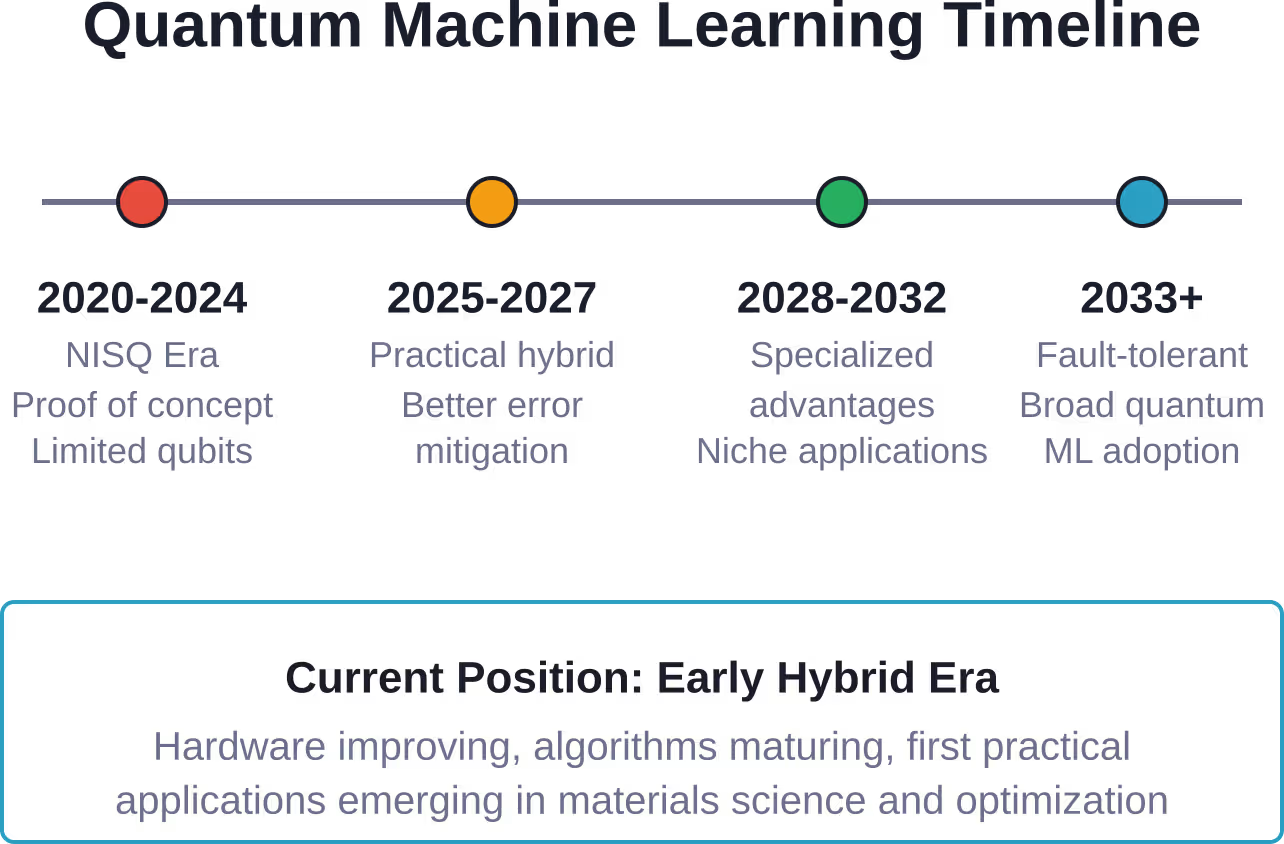
Des applications spécialisées pourraient émerger d'ici 5 à 7 ans pour des cas d'usage de niche, comme la simulation de matériaux et certains problèmes d'optimisation. Une adoption plus large par les entreprises nécessitera probablement 10 à 15 ans, le temps que le matériel quantique arrive à maturité, que les taux d'erreur diminuent et que des systèmes tolérants aux pannes se développent. À court terme, la valeur ajoutée réside dans les approches hybrides combinant traitement classique et quantique pour des sous-routines spécifiques. Les organisations doivent suivre les évolutions, expérimenter les plateformes d'apprentissage actuelles et identifier les cas d'usage potentiels, tout en conservant des attentes réalistes quant aux délais.
Ai-je besoin de connaissances en physique quantique pour travailler dans le domaine de l'apprentissage automatique quantique ?
Pas nécessairement, même si cela peut être utile. De nombreux outils d'apprentissage automatique quantique offrent des abstractions de haut niveau qui masquent les détails de la mécanique quantique. Les développeurs peuvent apprendre des frameworks comme Qiskit ou PennyLane et implémenter des algorithmes quantiques sans connaissances approfondies en physique. Comprendre les fondamentaux de l'informatique quantique (qubits, superposition, intrication, portes logiques) est néanmoins précieux. L'expertise en apprentissage automatique est souvent plus importante que les connaissances en physique pour de nombreuses tâches d'apprentissage automatique quantique. Les ressources pédagogiques d'IBM, les cours en ligne et la documentation open source offrent des points d'entrée accessibles aux développeurs de tous horizons.
Conclusion : L'avenir quantique-classique
L'apprentissage automatique en informatique quantique représente un domaine de pointe où convergent deux technologies transformatrices. Cette relation est bidirectionnelle : les algorithmes quantiques peuvent potentiellement accélérer l'apprentissage automatique, tandis que l'IA classique optimise les systèmes quantiques.
État des lieux ? Nous sommes encore au stade expérimental. Les limitations matérielles restreignent les applications pratiques. Le taux d’erreur demeure élevé. Et les algorithmes classiques continuent de progresser, conservant des performances compétitives pour la plupart des tâches.
Mais les progrès se poursuivent. Les recherches menées par des institutions comme le NIST démontrent des améliorations mesurables : des réductions des mesures de réglage du 70%, une distillation des connaissances qui améliore considérablement la précision du modèle et la preuve que les approches quantiques fonctionnent sur du matériel réel malgré le bruit.
La voie à suivre combine l'informatique quantique et classique au sein de systèmes hybrides qui tirent parti des atouts de chaque technologie. Les ordinateurs quantiques prennent en charge des sous-routines spécifiques où la mécanique quantique offre des avantages. Les systèmes classiques, quant à eux, gèrent le prétraitement des données, l'optimisation et l'analyse des résultats.
L'élaboration de normes par des organisations comme l'IEEE garantit l'interopérabilité. Les investissements publics, notamment via des programmes comme l'ARPA-E du Département de l'Énergie, financent des recherches essentielles. Enfin, le développement de ressources pédagogiques rend l'apprentissage automatique quantique accessible à un public plus large.
Alors, où cela vous mène-t-il ? Si vous vous intéressez à l’apprentissage automatique quantique, concentrez-vous sur la compréhension des principes fondamentaux, l’expérimentation avec les outils disponibles et l’identification des problèmes pour lesquels les approches quantiques pourraient offrir de réels avantages. Gardez des attentes réalistes quant aux délais et restez informé(e) des évolutions du domaine.
La révolution de l'apprentissage automatique quantique ne se fera pas du jour au lendemain. Mais ses fondements se mettent en place, un qubit et un algorithme à la fois. Et lorsque des applications novatrices verront le jour, elles transformeront notre façon de résoudre les problèmes informatiques dans les domaines scientifiques, industriels et technologiques.
Prêt à explorer davantage l'apprentissage automatique quantique ? Découvrez la plateforme d'apprentissage d'IBM Quantum, expérimentez avec des frameworks open source et restez informé des dernières avancées de la recherche. L'avenir quantique se construit aujourd'hui.