Résumé rapide : L'apprentissage automatique transforme le développement logiciel en automatisant les tâches routinières, en améliorant la qualité du code et en permettant des prédictions. Les modèles d'apprentissage automatique apprennent à partir des données pour améliorer la précision des tests, optimiser les performances, accélérer les cycles de développement et créer des applications plus intelligentes sans programmation explicite pour chaque scénario.
Le développement logiciel a atteint un point d'inflexion. Les méthodes de programmation traditionnelles qui ont servi l'industrie pendant des décennies sont désormais complétées, voire remplacées dans certains cas, par des systèmes qui apprennent à partir des données plutôt que de suivre des instructions explicites.
L'apprentissage automatique représente un changement fondamental dans la manière dont les logiciels sont conçus, testés et maintenus. Au lieu que les développeurs définissent des règles pour chaque scénario possible, les algorithmes d'apprentissage automatique identifient des tendances dans les données d'entraînement et prennent des décisions en fonction de ces tendances. Les implications se font sentir à chaque étape du cycle de vie du développement.
Mais voilà : l’apprentissage automatique n’est pas qu’un simple effet de mode. Les recherches menées par les institutions académiques démontrent des applications concrètes qui apportent des améliorations mesurables. D’après des revues systématiques de la littérature publiées sur arXiv, les pipelines d’apprentissage automatique font désormais partie intégrante des pratiques d’ingénierie logicielle, permettant de relever les défis de qualité et d’efficacité que les approches manuelles peinent à résoudre.
Ce que l'apprentissage automatique apporte aux équipes de développement
L'apprentissage automatique est une branche de l'intelligence artificielle où les systèmes analysent les tendances des données et prennent des décisions sans programmation explicite pour chaque résultat. Dans le domaine du développement logiciel, cette technologie aide les équipes à automatiser les tâches répétitives, à améliorer la précision des prédictions et à optimiser l'expérience utilisateur.
Cette distinction est importante. Les logiciels traditionnels suivent une logique prédéterminée : si X se produit, alors Y est exécuté. Les systèmes d’apprentissage automatique examinent des milliers d’exemples et déduisent la relation entre les entrées et les sorties. Fournissez à un modèle d’apprentissage automatique suffisamment d’exemples de code, et il apprendra à repérer les bogues, à suggérer des optimisations, voire à générer des extraits de code fonctionnels.
Cette capacité d'apprentissage transforme plusieurs domaines du développement :
- Les processus de revue de code nécessitaient autrefois des heures de travail de développeurs senior.
- Des scénarios de test dont la rédaction manuelle prendrait des semaines.
- Optimisation des performances reposant sur le savoir tribal
- Estimation de projet basée sur l'intuition et des conjectures historiques
Soyons francs : le ML ne supprime pas le besoin de développeurs qualifiés. Il prend simplement en charge les tâches d’analyse fastidieuses et répétitives qui épuisent les talents et ralentissent la livraison des produits.
ML vs. IA générative vs. Modèles de langage de grande taille
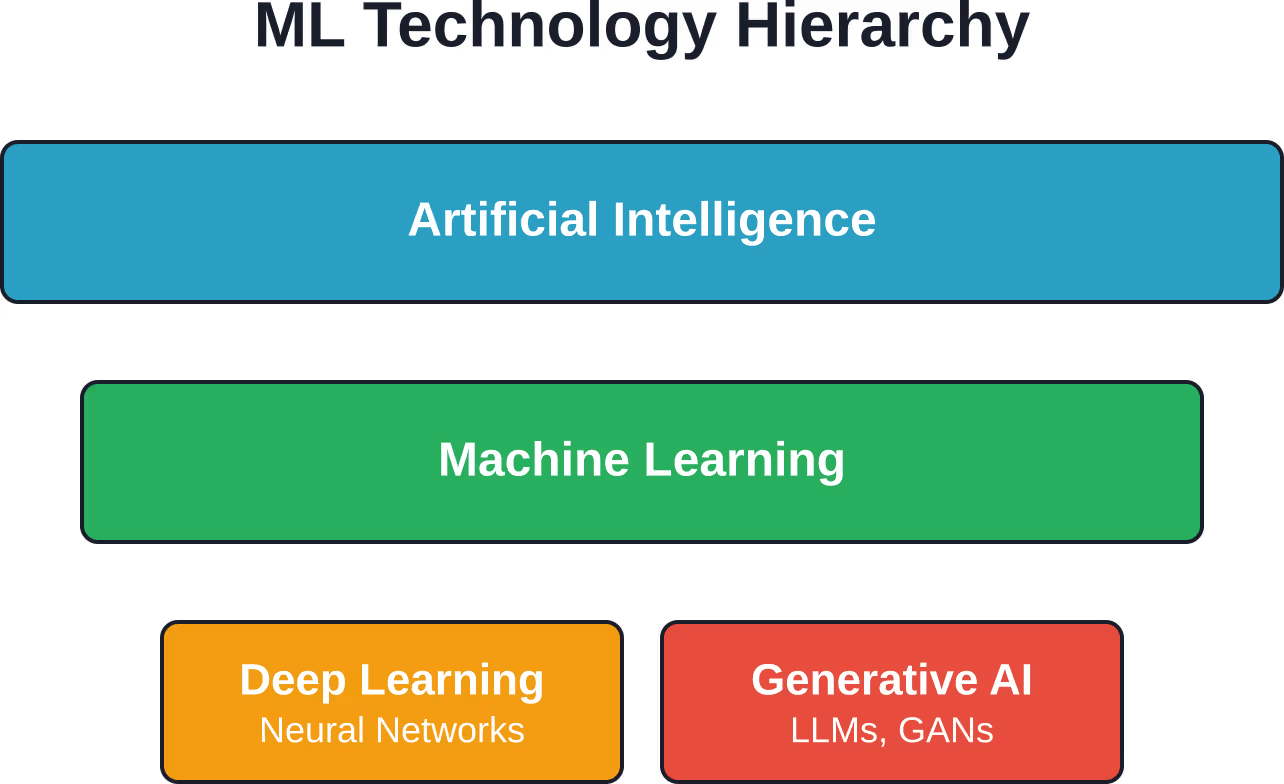
La confusion règne lorsque les développeurs amalgament l'apprentissage automatique avec ses cousins plus spécialisés. Bien que l'apprentissage automatique soit souvent associé à l'intelligence artificielle générative, ces technologies fonctionnent différemment.
L'apprentissage automatique englobe des algorithmes qui analysent des données, reconnaissent des tendances et font des prédictions. Un filtre anti-spam utilise l'apprentissage automatique, tout comme un moteur de recommandation. Le système apprend à partir d'exemples étiquetés et applique ces connaissances à de nouvelles données.
L'IA générative représente un sous-ensemble spécialisé de l'apprentissage automatique, axé sur la création de contenu (texte, images, code). Les grands modèles de langage, comme ceux utilisés par les outils de complétion de code, appartiennent à cette catégorie. Ils sont entraînés sur d'immenses ensembles de données (l'entraînement de grands modèles de langage nécessite des semaines, voire des mois, sur un cluster de machines, d'après la documentation open source) et produisent des résultats comparables à ceux d'un humain.
Cependant, l'apprentissage automatique ne génère pas systématiquement de contenu. Les modèles de classification, les algorithmes de régression et les systèmes de clustering analysent et prédisent plutôt que de créer. Comprendre ces distinctions permet aux équipes de choisir les outils les plus adaptés à leurs défis de développement spécifiques.

Créez des logiciels d'apprentissage automatique avec AI Superior
AI Superior Cette entreprise développe des logiciels d'IA sur mesure, notamment des modèles d'apprentissage automatique, des applications basées sur l'IA, des applications web et mobiles, ainsi que des produits logiciels personnalisés. Son équipe peut accompagner les projets depuis la phase de découverte et d'analyse des données jusqu'au développement d'un MVP, à l'intégration et à l'évaluation des résultats.
Pour les équipes de développement logiciel, cela peut faciliter l'analyse du code, la planification des fonctionnalités, la veille produit, les outils de recommandation ou l'ajout de fonctionnalités d'IA aux applications existantes.
Besoin d'un système d'apprentissage automatique conçu autour de vos données ?
AI Superior peut vous aider avec :
- création de solutions d'apprentissage automatique personnalisées
- développement d'outils logiciels basés sur l'IA
- Tester des idées par le biais d'une preuve de concept ou d'un développement MVP
- intégrer l'IA aux systèmes existants
👉 Contactez AI Superior pour discuter de votre projet.
Applications essentielles transformant les flux de travail de développement
L'apprentissage automatique est présent à presque toutes les étapes du cycle de vie du développement logiciel. Certaines applications sont devenues des outils prêts pour la production, tandis que d'autres restent expérimentales. C'est là que l'apprentissage automatique apporte aujourd'hui une valeur ajoutée concrète.
Analyse intelligente du code et de la qualité
La revue de code mobilise traditionnellement entre 20 et 30 millions de dollars du temps des développeurs seniors. Les modèles d'apprentissage automatique, entraînés sur des millions de commits de code, identifient désormais les problèmes que les relecteurs humains manquent ou négligent par fatigue.
Ces systèmes analysent les modèles de code selon des dimensions que l'analyse manuelle peine à évaluer de manière cohérente :
- Failles de sécurité correspondant à des schémas d'exploitation connus
- Anti-modèles de performance basés sur les données de profilage d'exécution
- Incohérences de style par rapport aux conventions du projet
- Métriques de complexité prédisant la charge de maintenance
Ces modèles ne remplacent pas le jugement humain. Ils signalent plutôt les problèmes potentiels et en expliquent le raisonnement, permettant ainsi aux relecteurs de se concentrer sur les décisions architecturales et la logique métier plutôt que sur les erreurs de syntaxe.
Tests prédictifs et détection des défauts
Des tests suffisamment exhaustifs pour détecter les bogues critiques avant la mise en production exigent des efforts considérables. Les outils de test basés sur l'apprentissage automatique utilisent les données historiques de défauts pour prédire quelles modifications de code présentent le risque le plus élevé.
L'approche fonctionne ainsi : un modèle est entraîné sur les commits précédents, les résultats des tests et les incidents de production. Le modèle apprend quels schémas de code, types de fichiers et développeurs sont historiquement corrélés aux défauts. Lors de l'arrivée de nouveau code, le système prédit la probabilité d'échec et priorise la couverture des tests en conséquence.
Les indicateurs d'évaluation du modèle sont ici essentiels. Des recherches sur GitHub montrent que des systèmes soigneusement paramétrés atteignent un taux de vrais positifs de 76,01 % et un taux de vrais négatifs de 85,01 % lorsqu'ils sont configurés avec des seuils appropriés. Bien que ces prédictions ne soient pas parfaites, elles améliorent considérablement l'allocation des ressources.
Optimisation automatisée des performances
L'optimisation des performances a longtemps relevé davantage de l'art que de la science. Les développeurs analysent les applications, identifient les goulots d'étranglement et appliquent des correctifs en se basant sur leur expérience et leur intuition.
Les systèmes d'apprentissage automatique abordent l'optimisation différemment. Ils analysent le comportement des applications dans diverses conditions, testent différentes configurations et déterminent quels ajustements améliorent les indicateurs de performance. Le processus s'apparente à un test A/B ultra-performant : des milliers d'expériences sont menées pour découvrir des optimisations inattendues.
L'optimisation des requêtes de bases de données constitue une application pratique. Un modèle d'apprentissage automatique examine les schémas de requêtes, les plans d'exécution et l'utilisation des ressources, puis suggère des stratégies d'indexation ou des réécritures de requêtes que les analyses traditionnelles pourraient manquer.
Estimation de projet et planification des ressources
L'estimation des projets reste notoirement imprécise. Les développeurs proposent des échéanciers optimistes, les gestionnaires ajoutent des marges de sécurité, et les projets prennent malgré tout du retard.
Les modèles d'apprentissage automatique entraînés sur des données de projets finalisés (commits, points d'effort, heures réelles, dépendances) peuvent générer des estimations plus réalistes. Ces modèles identifient des tendances que les estimateurs humains négligent : certains développeurs sous-estiment systématiquement le travail d'intégration d'API, les tâches front-end prennent plus de temps lorsqu'elles utilisent certaines bibliothèques, et les projets démarrés en décembre accusent un retard moyen de deux semaines.
Ces estimations ne sont pas parfaites. Mais elles sont systématiquement moins biaisées que le jugement humain et s'améliorent au fil du temps à mesure que le modèle intègre davantage de données de projet.
Intégrer les capacités d'apprentissage automatique dans les pipelines de développement
L'intégration de l'apprentissage automatique aux flux de travail existants exige des choix d'architecture réfléchis. Les équipes ne peuvent pas simplement greffer de l'apprentissage automatique sur des systèmes existants et espérer des résultats.
Stratégies d'intégration des pipelines
Les modèles d'apprentissage automatique nécessitent des données pour leur entraînement et une infrastructure d'inférence pour effectuer les prédictions. Les chaînes de développement doivent prendre en compte ces deux exigences.
Les pipelines d'entraînement collectent l'historique des données de développement : commits, demandes de fusion, résultats de tests et indicateurs de performance. Ces données sont nettoyées, étiquetées et intégrées aux algorithmes d'entraînement qui génèrent des modèles. Ce processus s'exécute périodiquement (hebdomadairement ou mensuellement) afin de maintenir les modèles à jour en fonction de l'évolution du code.
Les pipelines d'inférence intègrent des modèles entraînés aux outils de développement. Lorsqu'un développeur valide du code, cette validation déclenche le modèle d'analyse de code. Lors de l'exécution des tests, le modèle de prédiction des défauts évalue les modifications. Ces prédictions s'affichent en plus des résultats habituels des outils.
Le principal défi ? La qualité des données. Les modèles d’apprentissage automatique entraînés sur des données incomplètes ou biaisées produisent des prédictions peu fiables. Les équipes ont besoin d’une collecte de données rigoureuse dès le départ, avant même de développer leurs compétences en apprentissage automatique.
Sélection et intégration des outils
Le marché des outils d'apprentissage automatique a explosé. Des dizaines de fournisseurs proposent des solutions d'analyse de code, de génération de tests et d'optimisation des performances.
Le choix des outils appropriés nécessite l'évaluation de plusieurs dimensions :
| Critères d'évaluation | Pourquoi c'est important | Signaux d'alarme |
|---|---|---|
| Transparence du modèle | Les développeurs doivent comprendre pourquoi un modèle a signalé leur code. | Prédictions opaques sans explication |
| Effort d'intégration | L'adoption échoue si les outils nécessitent des modifications majeures du flux de travail. | Nécessite la réécriture des scripts de compilation ou l'intégration continue/déploiement continu (CI/CD). |
| Taux de faux positifs | Un taux élevé de faux positifs incite les développeurs à ignorer toutes les alertes. | Allégations d'exactitude sans mesures de précision/rappel |
| Protection des données | Le code est une propriété intellectuelle qui ne peut être divulguée. | Modèles exclusivement cloud avec une gestion des données peu claire |
| Personnalisation | Les modèles génériques ne tiennent pas compte des spécificités de chaque projet. | Impossible de se recycler sur des données internes |
De nombreuses équipes performantes débutent avec des frameworks de ML open source et développent des modèles personnalisés adaptés à leur code source. Cette approche exige un investissement initial plus important, mais offre de meilleurs résultats à long terme que les outils commerciaux standardisés.
Exigences en matière de données d'entraînement
La qualité des modèles d'apprentissage automatique dépend de la qualité de leurs données d'entraînement. La création de modèles efficaces pour le développement logiciel exige un volume important de données historiques.
Pour les modèles de revue de code, cela implique des milliers de demandes de fusion examinées, avec des décisions d'acceptation/refus claires et des commentaires de l'examinateur. Pour la prédiction des défauts, cela implique des mois d'historique des commits liés aux incidents de production. Pour l'optimisation des performances, cela implique des données de profilage exhaustives sous différentes conditions de charge.
Les équipes qui ne disposent pas de ces données historiques se trouvent face à un dilemme : les modèles ont besoin de données pour s'entraîner, mais la collecte de ces données prend du temps. La solution ? Commencer petit. Créer des modèles simples avec les données disponibles, les déployer, recueillir des retours et les améliorer progressivement.
Un point de départ pratique : tout consigner. Même sans projet d’apprentissage automatique immédiat, une documentation exhaustive des activités de développement constitue la matière première des futurs modèles.
Défis et limites
L'apprentissage automatique en développement logiciel n'est pas une solution miracle. Plusieurs défis importants limitent les possibilités actuelles.
Le problème du démarrage à froid
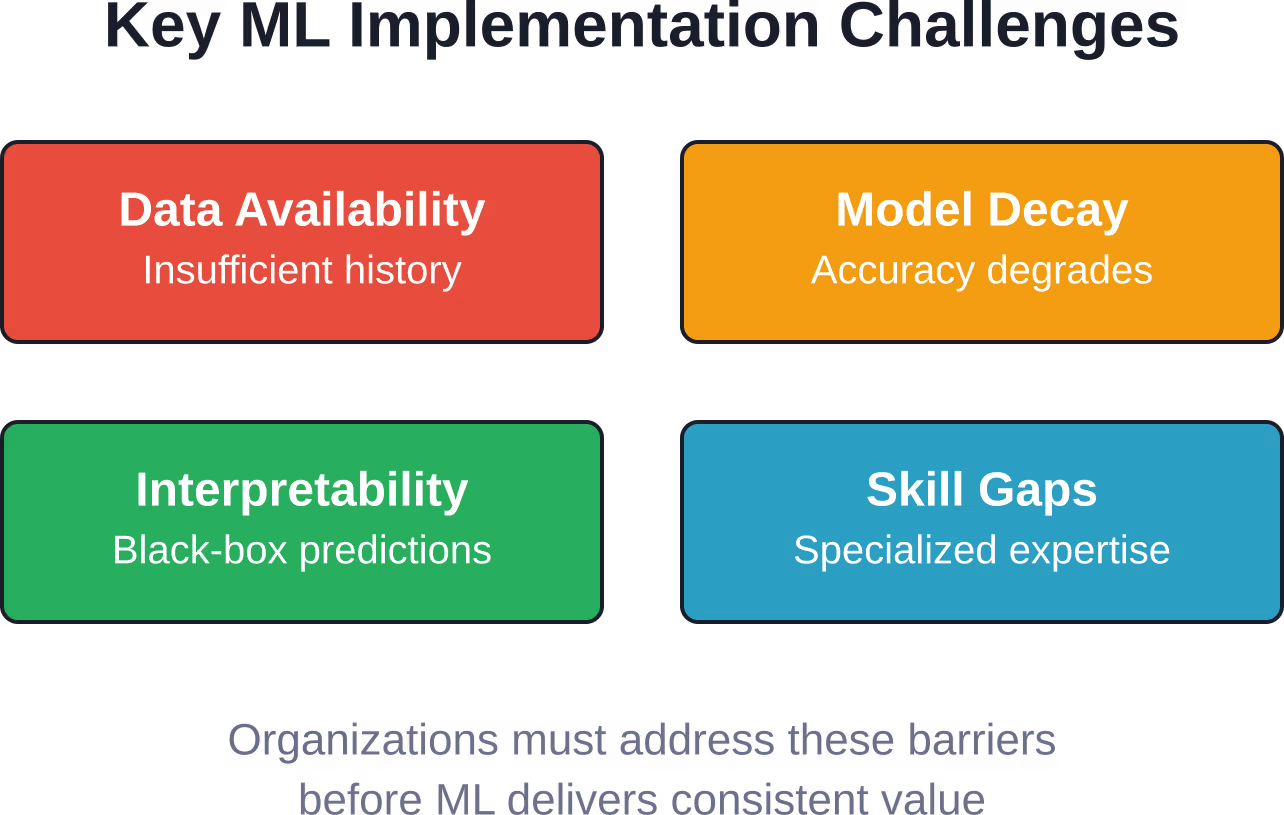
Les nouveaux projets ne disposent pas des données historiques nécessaires aux modèles d'apprentissage automatique. Une start-up qui développe son premier produit ne peut pas entraîner un modèle de prédiction des défauts, car aucun défaut n'a encore été constaté. Une organisation qui adopte de nouvelles technologies ne peut pas optimiser ses performances faute de données de référence.
Il existe des solutions, comme l'apprentissage par transfert qui permet aux modèles entraînés sur des projets open source d'appliquer leurs connaissances à des bases de code privées, mais elles sont imparfaites. Le problème du démarrage à froid signifie que l'apprentissage automatique apporte une valeur maximale aux projets matures disposant d'un historique conséquent.
Charge de maintenance du modèle
Les modèles d'apprentissage automatique se dégradent avec le temps, au fur et à mesure de l'évolution du code. Un modèle entraîné sur les conventions de Java 8 ne reconnaîtra pas les idiomes de Java 17. Un modèle entraîné avant une refonte majeure produira des prédictions inadaptées par la suite.
La maintenance des systèmes d'apprentissage automatique en production exige un effort constant : réentraînement des modèles, surveillance de la précision des prédictions, analyse des baisses de performance et mise à jour des pipelines de fonctionnalités. Cette charge opérationnelle dépasse les attentes de nombreuses équipes.
Compromis entre interprétabilité et précision
Les modèles d'apprentissage automatique les plus précis — les réseaux neuronaux profonds comportant des millions de paramètres — sont aussi les moins interprétables. Ils prédisent les résultats avec une grande précision, mais n'apportent que peu d'explications quant aux raisons de ces prédictions.
Lors des revues de code, l'interprétabilité est primordiale. Les développeurs se méfient d'un modèle qui signale des erreurs dans leur code sans explication. De ce fait, les équipes privilégient des modèles plus simples et plus transparents, quitte à sacrifier un peu de précision au profit de la compréhension.
Trouver le juste équilibre entre précision et interprétabilité reste un domaine de recherche actif.
Besoins en ressources et en expertise
La conception et la maintenance de systèmes d'apprentissage automatique requièrent des compétences spécialisées dont les équipes de développement traditionnelles sont souvent dépourvues. Les data scientists maîtrisent les algorithmes, mais pas les pratiques du génie logiciel. Les développeurs, quant à eux, comprennent l'ingénierie, mais pas la modélisation statistique.
Combler cet écart nécessite soit d'embaucher des ingénieurs en apprentissage automatique ayant une expérience en développement logiciel, soit de former les développeurs existants aux fondamentaux de l'apprentissage automatique. Ces deux approches requièrent des investissements importants.
Les ressources de calcul nécessaires à l'entraînement des modèles représentent un coût supplémentaire. L'entraînement de grands modèles de langage sur des ensembles de données comme The Pile (un ensemble de 800 Go de texte extrait d'Internet) exige des semaines de calcul sur des clusters. La plupart des organisations ne disposent pas de cette infrastructure.
Étapes pratiques pour démarrer
Les équipes souhaitant adopter l'apprentissage automatique pour le développement logiciel devraient procéder avec méthode. Vouloir en faire trop trop vite conduit à l'échec et à la désillusion.
Commencez par des cas d'utilisation à retour sur investissement élevé
Toutes les applications d'apprentissage automatique n'offrent pas la même valeur. Certaines procurent des avantages immédiats et mesurables, avec une complexité maîtrisable.
Le formatage et la vérification de style automatisés du code grâce à des modèles d'apprentissage automatique entraînés sur les conventions du projet permettent d'obtenir des résultats rapides. Ces modèles apprennent les schémas spécifiques au projet que les outils d'analyse statique ne détectent pas, améliorant ainsi la cohérence du code sans nécessiter de revue manuelle approfondie.
L'analyse des journaux et la détection d'anomalies constituent un autre point de départ à fort retour sur investissement. Les modèles d'apprentissage automatique, entraînés sur le comportement normal des applications, signalent les schémas inhabituels susceptibles d'indiquer des bogues ou des failles de sécurité. Ces modèles nécessitent une intégration minimale : il suffit de leur fournir les données de journal existantes.
À l'inverse, tenter d'automatiser entièrement la génération de code ou des décisions architecturales complexes comme premier projet est généralement voué à l'échec. Ces applications nécessitent des modèles sophistiqués, des données d'apprentissage volumineuses et une personnalisation poussée.
Construisez d'abord l'infrastructure de données
Avant d'entraîner des modèles, il est essentiel de mettre en place un système robuste de collecte et de stockage des données. Utilisez les outils de développement pour capturer les événements pertinents, stockez ces données dans des formats interrogeables et créez des pipelines pour les nettoyer et les étiqueter.
Ce travail d'infrastructure peut sembler une étape intermédiaire – il ne produit pas de capacités d'apprentissage automatique immédiates – mais il constitue un fondement essentiel. Sans données de qualité, aucune sophistication algorithmique ne permettra de créer des modèles utiles.
Piloter avant d'étendre
Déployez les premières fonctionnalités d'apprentissage automatique au sein d'une seule équipe ou d'un seul projet plutôt qu'à l'échelle de l'organisation. Ce périmètre limité permet une itération rapide, une collecte de retours d'information ciblée et un apprentissage par l'échec maîtrisé.
La phase pilote doit répondre à des questions essentielles : le modèle améliore-t-il réellement les résultats ? Les développeurs font-ils confiance à ses prédictions et agissent-ils en conséquence ? Quel taux de faux positifs est jugé acceptable ? Quel est le niveau de maintenance requis par le système ?
Ce n'est qu'après avoir validé que le projet pilote apporte une valeur ajoutée nette que les équipes devraient procéder à un déploiement plus large.
Investir dans l'éducation
Les développeurs doivent posséder des connaissances de base en apprentissage automatique pour travailler efficacement avec ces systèmes. Ils n'ont pas besoin de maîtriser les algorithmes de rétropropagation, mais ils doivent comprendre comment les modèles apprennent, la signification des données d'entraînement et les raisons pour lesquelles les prédictions échouent parfois.
Les organisations devraient proposer une formation en apprentissage automatique accessible et adaptée aux ingénieurs logiciels. Les discussions communautaires et les ressources industrielles offrent des perspectives pratiques complémentaires aux cours universitaires.
Le paysage en évolution
L'apprentissage automatique dans le développement logiciel continue d'évoluer rapidement. Plusieurs tendances déterminent l'orientation future de ce domaine.
Modèles fondamentaux et apprentissage par transfert
Les grands modèles de base entraînés sur d'immenses référentiels de code sont de plus en plus accessibles. Ces modèles comprennent les langages de programmation, les schémas courants et les concepts fondamentaux du génie logiciel.
Les développeurs peuvent affiner ces modèles de base pour des tâches spécifiques avec des quantités relativement faibles de données propres au domaine. Cette approche d'apprentissage par transfert réduit considérablement les besoins en données pour la construction de systèmes d'apprentissage automatique efficaces.
À mesure que les modèles de base s'améliorent, les barrières à l'entrée pour les outils de développement enrichis par l'apprentissage automatique diminuent. Davantage d'équipes pourront ainsi développer des fonctionnalités personnalisées sans investissement initial massif.
Apprentissage automatique automatisé (AutoML)
Les outils AutoML sélectionnent automatiquement les algorithmes, ajustent les hyperparamètres et optimisent les modèles sans intervention manuelle d'experts en apprentissage automatique. Cette automatisation démocratise les capacités d'apprentissage automatique, permettant aux équipes de développement sans data scientists de créer des modèles performants.
Bien que l'AutoML ne puisse pas remplacer une expertise approfondie pour les problèmes complexes, il gère suffisamment bien les cas d'utilisation simples pour apporter de la valeur.
Déploiement en périphérie et confidentialité
L'exécution des modèles d'apprentissage automatique directement sur les machines des développeurs plutôt que dans le cloud permet de répondre aux préoccupations en matière de confidentialité des données et de réduire la latence. Les frameworks modernes permettent une inférence efficace sur du matériel standard.
Cette tendance au déploiement en périphérie signifie que le code sensible ne quitte jamais l'organisation, rendant les outils d'apprentissage automatique viables pour les entreprises soucieuses de la sécurité qui évitaient auparavant les solutions basées sur le cloud.
Questions fréquemment posées
En quoi l'apprentissage automatique diffère-t-il de la programmation traditionnelle ?
La programmation traditionnelle exige des développeurs qu'ils spécifient des règles explicites pour chaque scénario. Les systèmes d'apprentissage automatique, quant à eux, apprennent des modèles à partir d'exemples de données et prennent des décisions en fonction de ces modèles, sans programmation explicite pour chaque cas. L'apprentissage automatique excelle lorsque les règles sont complexes ou difficiles à formuler manuellement.
Quelles compétences les développeurs doivent-ils posséder pour travailler avec les outils d'apprentissage automatique ?
Les développeurs n'ont pas besoin d'une expertise approfondie en apprentissage automatique pour utiliser efficacement les outils qui en dépendent. Une compréhension de base du fonctionnement des modèles, des facteurs influençant la précision des prédictions et des causes des faux positifs suffit pour la plupart des applications. La création de systèmes d'apprentissage automatique personnalisés requiert des connaissances supplémentaires en statistiques et en algorithmique.
De combien de données historiques a-t-on besoin pour entraîner des modèles efficaces ?
Les besoins en données varient considérablement selon le cas d'utilisation. Des tâches de classification simples peuvent donner des résultats utiles avec quelques centaines d'exemples, tandis que des modèles d'apprentissage profond complexes en nécessitent des milliers, voire des millions. De manière générale, plus les données sont nombreuses, meilleures sont les prédictions, mais l'apprentissage par transfert à partir de modèles pré-entraînés réduit sensiblement ces besoins.
Les modèles d'apprentissage automatique peuvent-ils remplacer complètement la revue de code et les tests ?
Non. Les modèles d'apprentissage automatique complètent, et non remplacent, le jugement humain lors des revues de code et des tests. Ils excellent dans l'identification de schémas et le signalement de problèmes potentiels, mais ils ne possèdent pas la compréhension du contexte, la connaissance du métier et la vision architecturale qu'apportent les développeurs expérimentés. L'approche la plus efficace consiste à combiner l'automatisation par apprentissage automatique et l'expertise humaine.
Quels sont les principaux risques liés à l'adoption du ML dans les flux de travail de développement ?
Les principaux risques comprennent une dépendance excessive à des prédictions inexactes, une charge de maintenance accrue due à la dégradation des modèles au fil du temps, des problèmes de confidentialité des données si du code sensible est utilisé pour entraîner des modèles cloud, et des lacunes en compétences qui entravent un dépannage efficace. Les organisations devraient commencer modestement, valider la valeur ajoutée avant de passer à l'échelle supérieure et investir dans la formation des développeurs.
Comment mesurer le retour sur investissement des initiatives d'apprentissage automatique dans le développement logiciel ?
Suivez les indicateurs liés à des améliorations spécifiques : réduction du temps de revue de code, diminution du taux de défauts non détectés en production, exécution des tests plus rapide, meilleure précision des estimations ou réduction des incidents de performance. Comparez ces indicateurs avant et après l’adoption du ML. Tenez compte des coûts de mise en œuvre et de maintenance pour calculer le bénéfice net.
Quelle est la différence entre l'apprentissage automatique pour le développement logiciel et l'apprentissage automatique dans les produits logiciels ?
L'apprentissage automatique appliqué au développement logiciel améliore la façon dont les équipes conçoivent les logiciels : automatisation des revues de code, prédiction des défauts, optimisation des performances. Dans les produits logiciels, l'apprentissage automatique concerne les fonctionnalités destinées aux clients, telles que les moteurs de recommandation, la détection des fraudes ou la reconnaissance vocale. Les premiers se concentrent sur les processus de développement internes, tandis que les seconds contribuent aux fonctionnalités du produit.
Aller de l'avant
L'apprentissage automatique, autrefois sujet de recherche, est devenu un outil pratique en développement logiciel. Utilisée à bon escient, cette technologie permet d'améliorer sensiblement la qualité du code, l'efficacité des tests et la rapidité de développement.
Mais le succès exige des attentes réalistes. L'apprentissage automatique n'est pas magique : il s'agit de statistiques appliquées aux données de développement. Les modèles commettent des erreurs, nécessitent une maintenance et sont plus performants lorsqu'ils complètent l'expertise humaine plutôt que de la remplacer.
Les organisations qui privilégient des cas d'usage ciblés, investissent dans une infrastructure de données performante et forment leurs équipes en tireront le meilleur parti. Celles qui cèdent à la mode ou se lancent dans des projets initiaux trop ambitieux risquent d'être déçues.
Le domaine continue d'évoluer rapidement. Les modèles de base, les outils d'apprentissage automatique et les capacités de déploiement en périphérie rendent l'apprentissage automatique plus accessible aux équipes de développement classiques. D'ici cinq ans, les outils de développement enrichis par l'apprentissage automatique seront aussi courants que les environnements de développement intégrés le sont aujourd'hui.
La question n'est pas de savoir si l'apprentissage automatique va transformer le développement logiciel : c'est déjà le cas. Il s'agit plutôt de savoir à quelle vitesse les équipes peuvent adapter leurs processus, leurs outils et leurs compétences pour tirer pleinement parti de ces capacités. Entamer ce processus d'adaptation dès maintenant, par étapes mesurées et avec des objectifs clairs, permet aux organisations de se positionner avantageusement dans un environnement de développement de plus en plus marqué par l'apprentissage automatique.