
Résumé rapide : L'apprentissage automatique appliqué à l'analyse prédictive révolutionne la manière dont les organisations anticipent les résultats futurs en identifiant automatiquement les tendances dans les données historiques. Les algorithmes d'apprentissage automatique permettent aux systèmes d'apprendre en continu à partir de nouvelles informations, améliorant ainsi la précision des prédictions sans reprogrammation manuelle. Cette approche favorise de meilleures décisions commerciales dans tous les secteurs, de la santé à la finance. Le marché mondial de l'apprentissage automatique était évalué à 34,56 milliards de dollars américains en 2021 et devrait atteindre 74,99 milliards de dollars américains d'ici 2028.
Les organisations croulent sous les données, mais peinent à en extraire des informations pertinentes. Historique, interactions clients, journaux de transactions : tout s’accumule tandis que les décideurs s’efforcent d’en tirer du sens. Les méthodes d’analyse traditionnelles ne peuvent suivre le rythme du volume et de la complexité des ensembles de données modernes.
L'apprentissage automatique change la donne. Au lieu de passer au crible des feuilles de calcul et de construire des modèles statiques, les algorithmes d'apprentissage automatique détectent automatiquement les tendances, apprennent des nouvelles informations et génèrent des prédictions qui s'améliorent avec le temps. Le changement n'est pas progressif, il est radical.
Les chiffres parlent d'eux-mêmes. Le marché mondial de l'apprentissage automatique était évalué à 34,56 milliards de dollars américains en 2021 et devrait atteindre 74,99 milliards de dollars américains d'ici 2028, soit un taux de croissance annuel composé de 25,71 milliards de dollars. Il ne s'agit pas d'un effet de mode, mais d'une adoption motivée par des résultats concrets.
L'apport du Machine Learning à l'analyse prédictive
L'analyse prédictive utilise les données historiques pour prévoir des résultats spécifiques et orienter les décisions commerciales. Cette approche repose sur des algorithmes statistiques et l'analyse de données afin d'identifier la probabilité d'événements futurs à partir de tendances observées dans les informations passées.
L'apprentissage automatique s'appuie sur ce principe et le décuple. Au lieu d'exiger des analystes qu'ils spécifient manuellement chaque règle et relation, les algorithmes d'apprentissage automatique découvrent ces liens de manière autonome. Le système apprend à partir des données, identifie des tendances et construit des modèles sans programmation explicite pour chaque scénario.
Mais voilà le point essentiel : l’apprentissage automatique ne se limite pas à une analyse prédictive plus rapide. Il est fondamentalement différent par sa portée et ses capacités.
La distinction fondamentale
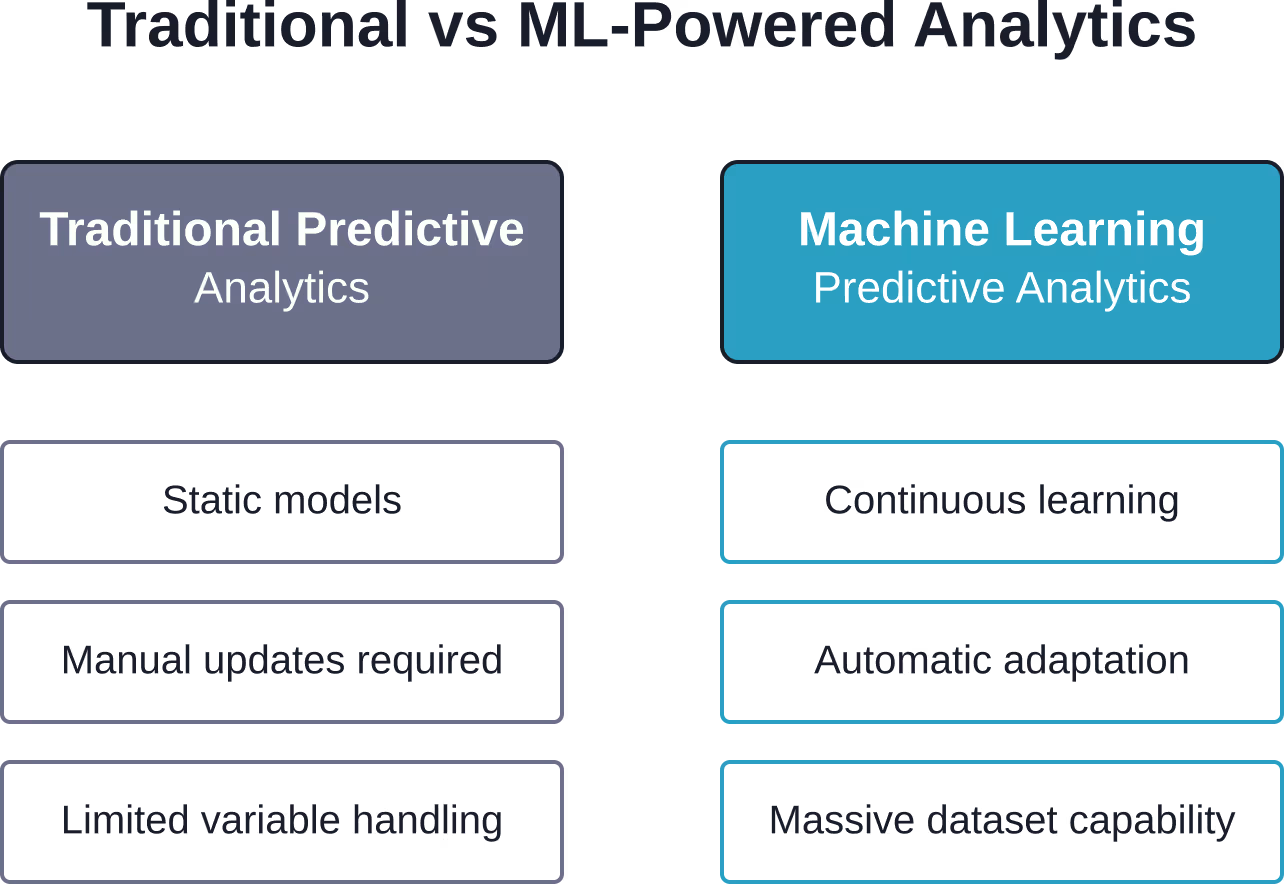
L'analyse prédictive traditionnelle repose souvent sur des modèles statistiques prédéterminés. Les analystes sélectionnent les variables, définissent les relations et testent les hypothèses en fonction de leur connaissance du domaine. Ces modèles sont statiques, sauf s'ils sont mis à jour manuellement.
Les algorithmes d'apprentissage automatique, en revanche, s'adaptent en permanence. Alimentez-les avec de nouvelles données, et ils ajustent automatiquement leurs paramètres internes. Cette capacité d'apprentissage dynamique permet d'améliorer les prédictions à mesure que de nouvelles informations sont disponibles.
Quel est l'impact concret ? Les systèmes prédictifs basés sur l'apprentissage automatique gèrent simultanément beaucoup plus de variables, détectent des schémas subtils que les humains pourraient manquer et s'adaptent à des ensembles de données massifs qui submergeraient les approches traditionnelles.

AI Superior : Transformez vos données en logiciel d'IA prédictive
AI Superior Cette entreprise aide les sociétés à évaluer les cas d'usage de l'IA et à les transformer en logiciels fonctionnels. Ses services comprennent le conseil en IA, le développement de logiciels d'IA, la R&D, la formation et l'intégration aux flux de travail existants.
En matière d'analyse prédictive, cela peut permettre de réaliser des prévisions, d'évaluer les risques, d'analyser les comportements, de détecter les anomalies ou de fournir des outils d'aide à la décision basés sur les données de l'entreprise.
Besoin de modèles prédictifs adaptés à votre flux de travail ?
AI Superior peut vous aider avec :
- évaluation des cas d'utilisation de l'analyse prédictive
- création d'outils d'IA et d'apprentissage automatique personnalisés
- élaboration de modèles de prévision et de risque
- intégrer l'IA dans les systèmes quotidiens
👉 Contactez AI Superior pour discuter de votre projet.
Techniques fondamentales d'apprentissage automatique au service des prédictions
Plusieurs approches d'apprentissage automatique dominent le paysage de l'analyse prédictive. Chacune apporte des atouts distincts face à différents défis de prévision.
Modèles de régression
Les techniques de régression permettent de prédire des résultats numériques continus à partir de variables d'entrée. La régression linéaire établit des relations entre les variables indépendantes et dépendantes, tandis que des variantes plus sophistiquées traitent les relations non linéaires.
Ces modèles excellent dans la prévision des quantités : volumes de ventes, projections de revenus, besoins en ressources. Les algorithmes identifient les facteurs qui influencent le résultat visé et leur degré d’influence.
En pratique, la régression est un outil fondamental pour de nombreuses prévisions commerciales. Les chaînes de distribution prévoient leurs besoins en stocks. Les institutions financières estiment les taux de défaut de paiement des prêts. Les fabricants prévoient les besoins de maintenance des équipements.
Arbres de décision et forêts aléatoires
Les algorithmes d'arbres de décision décomposent les problèmes de prédiction en questions séquentielles. Chaque nœud de l'arbre représente un point de décision basé sur une variable spécifique, et se ramifie vers différents résultats.
Pour l'évaluation du risque de crédit, un arbre de décision peut prendre en compte les scores de crédit supérieurs à 700, les niveaux de revenus dépassant certains seuils et la stabilité de l'emploi au-delà de certaines durées. Les branches de cet arbre permettent d'établir des classifications de risque.
Les forêts aléatoires améliorent les arbres de décision individuels en combinant plusieurs arbres entraînés sur différents sous-ensembles de données. Cette approche d'ensemble réduit le surapprentissage et augmente la fiabilité des prédictions.
Réseaux neuronaux
Les réseaux neuronaux d'apprentissage profond traitent les données à travers de multiples couches interconnectées, chacune extrayant des caractéristiques de plus en plus abstraites. Ces modèles permettent de gérer des schémas extrêmement complexes dans de vastes ensembles de données.
Les réseaux neuronaux excellent dans les domaines aux relations complexes : reconnaissance d’images, traitement automatique du langage naturel, prévision de séries temporelles complexes. En contrepartie, leur intensité de calcul est élevée et leur interprétabilité réduite par rapport aux modèles plus simples.
Mais lorsque la précision des prédictions importe plus que la compréhension exacte des raisons pour lesquelles le modèle effectue des prédictions spécifiques, les réseaux neuronaux offrent souvent des résultats supérieurs.
Machines à vecteurs de support
Les machines à vecteurs de support déterminent les frontières optimales entre différentes catégories dans un espace de grande dimension. L'algorithme identifie la frontière de décision qui maximise la séparation entre les classes.
Les problèmes de classification tirent particulièrement profit des SVM : prédiction du taux de désabonnement des clients, détection des fraudes, diagnostic des maladies. Cette technique permet de gérer la séparation linéaire et non linéaire grâce aux fonctions noyau.
Là où l'analyse prédictive par apprentissage automatique donne des résultats
La théorie importe moins que les résultats. Les organisations de tous les secteurs déploient l'analyse prédictive basée sur l'apprentissage automatique pour obtenir un impact commercial concret.
Applications de santé
Les établissements médicaux utilisent l'apprentissage automatique pour prédire l'évolution des patients, les risques de réadmission et la progression de la maladie. Des algorithmes analysent les dossiers médicaux électroniques, les images diagnostiques et les données génétiques afin d'identifier des schémas que les cliniciens pourraient manquer.
Les modèles prédictifs identifient les patients à haut risque de complications, permettant ainsi des interventions proactives. L'allocation des ressources est optimisée lorsque les hôpitaux peuvent prévoir le volume d'admissions et les besoins en traitements.
Les modèles de prédiction clinique exploitent des ensembles de données accessibles au public pour atteindre une précision remarquable. La recherche démontre que des modèles correctement entraînés peuvent faciliter les décisions diagnostiques et pronostiques pour de nombreuses pathologies.
Services financiers
Les banques et les sociétés d'investissement utilisent l'analyse prédictive par apprentissage automatique pour évaluer le risque de crédit, détecter les fraudes et prévoir les marchés. Les algorithmes traitent les schémas de transactions, les comportements des comptes et les indicateurs externes afin de générer des scores de risque.
Les stratégies de trading intègrent de plus en plus l'apprentissage automatique pour prédire les fluctuations des prix, optimiser les portefeuilles et exécuter des décisions automatisées à des vitesses impossibles à atteindre pour les traders humains.
Commerce de détail et commerce électronique
La prédiction du comportement client alimente les moteurs de personnalisation du commerce en ligne. Les algorithmes d'apprentissage automatique prévoient les produits que chaque client est susceptible d'acheter, le moment où il risque de se désabonner et les promotions qui auront le plus d'impact.
La gestion des stocks bénéficie de prévisions de la demande tenant compte de la saisonnalité, des tendances et des facteurs externes. L'optimisation de la chaîne d'approvisionnement repose sur des prévisions des délais de livraison, de la fiabilité des fournisseurs et des goulets d'étranglement logistiques.
Les systèmes de recommandation — l'épine dorsale du commerce électronique moderne — sont essentiellement des modèles prédictifs estimant les préférences des utilisateurs en fonction de leur comportement historique et des schémas clients similaires.
Fabrication et opérations
La maintenance prédictive transforme la gestion des équipements. Au lieu de programmes de maintenance fixes ou de réparations réactives après les pannes, les modèles d'apprentissage automatique prévoient les défaillances probables des machines en se basant sur les données des capteurs, les conditions de fonctionnement et les historiques de défaillance.
L'optimisation de la production utilise les prévisions de rendement, de qualité et de débit pour ajuster les paramètres du processus. La prévision de la consommation d'énergie permet une meilleure planification des ressources et une gestion plus efficace des coûts.
L'Institut national des normes et de la technologie souligne l'importance cruciale de l'analyse des données pour les systèmes de fabrication intelligents, en mettant l'accent sur les normes et les méthodologies qui permettent aux petites et moyennes entreprises d'appliquer ces techniques pour améliorer la prise de décision et les performances.
Création de modèles prédictifs d'apprentissage automatique efficaces
La réussite de la mise en œuvre ne se limite pas à la sélection d'un algorithme et à son alimentation en données. Plusieurs étapes cruciales déterminent si les prédictions s'avèrent exactes et exploitables.
Préparation et qualité des données
« Mauvaises données en entrée, mauvaises données en sortie » demeure la loi d'airain de l'apprentissage automatique. Les modèles apprennent à partir de données d'entraînement ; la qualité des données influe donc directement sur la précision des prédictions.
La préparation des données occupe généralement la majeure partie du temps d'un projet : correction des incohérences, traitement des valeurs manquantes, suppression des valeurs aberrantes et transformation des variables dans des formats appropriés. Ce travail ingrat est plus déterminant pour la réussite d'un projet que les algorithmes sophistiqués.
L'ingénierie des caractéristiques — la création de variables pertinentes à partir de données brutes — distingue souvent les modèles corrects des modèles exceptionnels. L'expertise du domaine est essentielle à ce stade. Comprendre quelles variables influencent réellement les résultats permet de sélectionner efficacement les caractéristiques.
Stratégie de division train-test
Les modèles doivent être évalués sur des données qu'ils n'ont pas utilisées lors de l'entraînement. Autrement, les indicateurs de performance reflètent la mémorisation plutôt qu'une véritable capacité de prédiction.
L'approche classique consiste à diviser les données disponibles en ensembles d'entraînement et de test. Il est généralement recommandé d'allouer entre 20 et 30 000 tâches de données aux tests, bien que cette proportion puisse être plus faible pour les ensembles de données plus volumineux.
Les techniques de validation croisée offrent une évaluation plus robuste en entraînant et en testant le modèle sur plusieurs sous-ensembles différents. Cette approche permet de mieux estimer les performances du modèle sur de nouvelles données.
Sélection et réglage du modèle
Aucun algorithme n'est universel. Le choix optimal dépend des caractéristiques des données, des objectifs de prédiction, des exigences d'interprétabilité et des contraintes de calcul.
Commencez par des méthodes simples. Les modèles linéaires et les arbres de décision donnent souvent d'excellents résultats et offrent des avantages en termes d'interprétabilité. N'optez pour des approches plus complexes que lorsque les méthodes simples s'avèrent insuffisantes.
Le réglage des hyperparamètres — l'ajustement des paramètres de configuration qui contrôlent le comportement de l'algorithme — a un impact significatif sur les performances. Les méthodes de recherche par grille et de recherche aléatoire testent systématiquement différentes combinaisons de paramètres afin de trouver les configurations optimales.
Éviter le surapprentissage
Le surapprentissage se produit lorsque les modèles apprennent trop bien les données d'entraînement, capturant ainsi des anomalies et des particularités qui ne se généralisent pas. Le modèle fonctionne alors très bien sur les données d'entraînement, mais très mal avec de nouvelles informations.
Les techniques de régularisation pénalisent la complexité du modèle, favorisant ainsi des schémas plus simples qui se généralisent mieux. La validation croisée permet de détecter le surapprentissage en révélant les écarts de performance entre les ensembles d'entraînement et de validation.
L'équilibre entre la complexité du modèle et sa généralisation représente un compromis fondamental dans l'analyse prédictive par apprentissage automatique.
Mesure de la performance des prédictions
La quantification de la précision des prédictions des modèles détermine leur valeur pratique. Différentes métriques conviennent à différents types de prédiction.
| Métrique | Taper | Idéal pour | Interprétation |
|---|---|---|---|
| Précision | Classification | Ensembles de données équilibrés | Pourcentage de prédictions correctes |
| Précision | Classification | Minimiser les faux positifs | Prédictions positives correctes / nombre total de prédictions positives |
| Rappel | Classification | Minimiser les faux négatifs | Prédictions positives correctes / cas positifs avérés |
| RMSE | Régression | Résultats continus | Racine carrée des erreurs quadratiques moyennes |
| MAE | Régression | Résultats continus | Différence absolue moyenne par rapport aux valeurs réelles |
| AUC-ROC | Classification | Classification binaire | Aire sous la courbe ROC (Receiver Operating Characteristic) |
Le contexte détermine les indicateurs les plus pertinents. En médecine, la fiabilité est primordiale : un faux négatif (détection manquée) a un coût plus élevé qu’un faux positif (fausse alerte). En matière de filtrage anti-spam, la précision est essentielle : les courriels légitimes classés à tort comme spam sont plus frustrants pour les utilisateurs que les spams occasionnels qui parviennent à leur boîte de réception.
Des études en analyse de l'apprentissage démontrent que des modèles prédictifs bien conçus peuvent atteindre des niveaux de précision élevés dans la prédiction des résultats des étudiants.
Défis et limites
L'analyse prédictive par apprentissage automatique n'est pas une solution miracle. Plusieurs obstacles peuvent compromettre les efforts de mise en œuvre.
Exigences en matière de données
Pour être efficaces, les modèles nécessitent des données de haute qualité en quantité suffisante. Les petits ensembles de données limitent les capacités d'apprentissage des algorithmes. Des données d'entraînement biaisées produisent des prédictions biaisées, perpétuant ainsi les inégalités historiques.
La dérive des données — lorsque les propriétés statistiques des données évoluent au fil du temps — dégrade les performances du modèle. Les prédictions basées sur des tendances historiques s'avèrent erronées lorsque les relations sous-jacentes changent.
Compromis entre interprétabilité et précision
Les modèles complexes offrent souvent des prédictions plus précises, mais expliquent moins bien les raisons de ces prédictions. Les modèles simples fournissent des explications plus claires, mais peuvent être moins précis.
Dans un contexte réglementaire et face à des décisions cruciales, la transparence est de plus en plus essentielle. Les prêts financiers, les diagnostics médicaux et les applications en matière de justice pénale font l'objet d'un examen minutieux lorsque les prédictions ne peuvent être justifiées.
Les techniques d'IA explicable tentent de combler cet écart, en fournissant des informations sur le raisonnement du modèle sans sacrifier complètement son pouvoir prédictif.
Complexité de la mise en œuvre
Le déploiement de l'analyse prédictive par apprentissage automatique exige des compétences en statistiques, en programmation, en expertise du domaine et en ingénierie. Les organisations sont confrontées à une pénurie de talents et à des défis en matière d'infrastructure.
L'intégration des prédictions dans les processus opérationnels exige une gestion du changement. Les décideurs doivent pouvoir se fier aux résultats des modèles et les utiliser à bon escient, sans ignorer les informations précieuses ni suivre aveuglément des prédictions erronées.
Ressources informatiques
Les modèles sophistiqués exigent une puissance de calcul considérable. L'apprentissage profond, en particulier, nécessite du matériel spécialisé pour des temps d'entraînement raisonnables.
Pour vous donner une idée, une configuration haut de gamme pour les tâches d'apprentissage profond pourrait inclure du matériel comme la NVIDIA RTX 3090 avec 10 496 cœurs CUDA, 328 cœurs Tensor, 24 Go de mémoire GDDR6X et une bande passante mémoire de 936,2 Go/s.
Meilleures pratiques pour une mise en œuvre réussie
Les organisations qui déploient avec succès l'analyse prédictive basée sur l'apprentissage automatique suivent plusieurs schémas communs.
Commencez par définir des objectifs commerciaux clairs.
La maîtrise technique est vaine sans valeur ajoutée pour l'entreprise. Définissez les problèmes précis à résoudre et les indicateurs de réussite avant de construire des modèles.
À quelle décision les prédictions serviront-elles à répondre ? Quelles mesures seront prises en fonction des résultats du modèle ? Quelle est la valeur d’une précision accrue ?
Itérer et affiner
Les premiers prototypes atteignent rarement la qualité de production. Prévoyez un développement itératif : créez rapidement des versions initiales, mesurez leurs performances, identifiez leurs points faibles et améliorez-les systématiquement.
La surveillance continue des modèles déployés permet de détecter la dégradation des performances et la dérive des données avant qu'elles ne causent des problèmes.
Combiner l'expertise humaine et les connaissances issues du ML
Les approches les plus efficaces combinent prédictions algorithmiques et jugement humain. Les modèles excellent dans le traitement de vastes ensembles de données et l'identification de tendances subtiles. L'intervention humaine apporte une compréhension contextuelle, un raisonnement éthique et une capacité de résolution créative des problèmes.
L'augmentation des capacités est préférable au remplacement. L'apprentissage automatique doit améliorer la prise de décision humaine, et non l'éliminer complètement des choix cruciaux.
Investir dans l'infrastructure de données
La qualité des prédictions dépend de la qualité et de l'accessibilité des données. Les organisations ont besoin de systèmes robustes pour la collecte, le stockage, le nettoyage et la gouvernance des données.
Les pipelines de données qui automatisent le flux des entrées brutes vers des formats prêts pour la modélisation réduisent les frictions et accélèrent les cycles de déploiement.
L'avenir de l'analyse prédictive en apprentissage automatique
Plusieurs tendances façonnent l'évolution de l'apprentissage automatique et de l'analyse prédictive.
Apprentissage automatique automatisé
Les plateformes AutoML démocratisent l'accès à l'apprentissage automatique en automatisant la sélection des modèles, l'ingénierie des caractéristiques et l'optimisation des hyperparamètres. Les organisations ne possédant pas d'expertise approfondie en apprentissage automatique peuvent ainsi créer des systèmes prédictifs performants.
Ce compromis implique une réduction du contrôle et de la personnalisation. Les approches automatisées gèrent bien les scénarios courants, mais peinent face à des exigences spécifiques ou à des structures de problèmes inédites.
Edge Analytics
Au lieu d'envoyer toutes les données à des systèmes centralisés pour traitement, l'informatique de périphérie exécute les modèles prédictifs localement sur les appareils. Cette approche réduit la latence, les besoins en bande passante et les problèmes de confidentialité.
Les capteurs industriels, les appareils mobiles et les systèmes IoT intègrent de plus en plus de modèles d'apprentissage automatique pour des prédictions en temps réel sans connexion au cloud.
Intégration avec Prescriptive Analytics
La prédiction seule ne détermine pas l'action à entreprendre. L'analyse prescriptive va au-delà de la simple prévision pour recommander les décisions optimales compte tenu des résultats prévus.
Cette combinaison indique non seulement ce qui va se passer, mais aussi ce qu'il faut faire pour y remédier — une solution plus complète pour la prise de décision en entreprise.
IA éthique et atténuation des biais
La prise de conscience croissante des biais algorithmiques favorise le développement de techniques permettant de détecter et d'atténuer les prédictions injustes. Les méthodes d'apprentissage automatique intégrant l'équité visent à garantir que les modèles ne perpétuent pas la discrimination.
Les cadres réglementaires exigent de plus en plus de transparence et de responsabilité dans les systèmes de décision automatisés, notamment pour les prédictions ayant des conséquences importantes pour les individus.
Questions fréquemment posées
Quelle est la différence entre l'apprentissage automatique et l'analyse prédictive ?
L'analyse prédictive est un objectif : utiliser les données pour prévoir les résultats futurs. L'apprentissage automatique est une méthode : des algorithmes qui apprennent à partir des données pour effectuer ces prédictions. L'apprentissage automatique a une portée plus large et inclut des approches allant au-delà de la simple prédiction, tandis que l'analyse prédictive peut utiliser à la fois l'apprentissage automatique et les méthodes statistiques traditionnelles. La principale différence réside dans le fait que les systèmes d'apprentissage automatique s'améliorent automatiquement avec l'augmentation des données, tandis que l'analyse prédictive traditionnelle nécessite généralement des mises à jour manuelles du modèle.
De combien de données avez-vous besoin pour l'analyse prédictive par apprentissage automatique ?
Les besoins en données varient considérablement selon la complexité du problème et l'algorithme choisi. Des modèles linéaires simples peuvent fournir des prédictions utiles avec quelques centaines d'observations. Les réseaux de neurones profonds nécessitent généralement des milliers, voire des millions d'exemples. En règle générale, il est conseillé de commencer avec au moins 10 à 20 fois plus d'observations que de variables d'entrée. La qualité des données prime sur la quantité : des données propres et pertinentes sont préférables à de grands volumes d'informations bruitées.
Les petites entreprises peuvent-elles tirer profit de l'analyse prédictive basée sur l'apprentissage automatique ?
Absolument. Les plateformes cloud et les outils automatisés ont considérablement réduit les obstacles à l'entrée sur le marché. Les petites entreprises peuvent commencer par des applications ciblées : prédire le taux d'attrition client, prévoir les besoins en stock ou identifier les opportunités de vente. L'essentiel est de partir de problèmes bien définis, où les prédictions permettent de mener des actions spécifiques. De nombreuses plateformes proposent des modèles préconfigurés pour les scénarios commerciaux courants, ne nécessitant que des compétences techniques minimales pour leur mise en œuvre.
Dans quelle mesure les prédictions issues de l'apprentissage automatique sont-elles précises ?
La précision dépend de la qualité des données, de la complexité du problème et de la méthode de mise en œuvre. Des études en analyse de l'apprentissage démontrent que des modèles prédictifs bien conçus peuvent atteindre une grande précision dans la prédiction des résultats scolaires. Les modèles de détection de la fraude ont démontré une précision de 80 % (80 % de vrais positifs) sur des données de test. Cependant, certains problèmes de prédiction demeurent fondamentalement difficiles en raison de l'incertitude inhérente. L'objectif n'est pas la prédiction parfaite, mais l'amélioration de la prise de décision par rapport aux alternatives. Même des gains de précision modestes peuvent générer une valeur ajoutée significative à grande échelle.
Quel est le principal défi lié à la mise en œuvre de l'analyse prédictive par apprentissage automatique ?
La qualité et la préparation des données constituent généralement le principal obstacle. La performance des modèles dépend de la qualité de leurs données d'entraînement. Les organisations constatent souvent que leurs données sont incomplètes, incohérentes, cloisonnées entre les systèmes ou mal documentées. Résoudre ces problèmes exige un effort considérable avant toute modélisation. Le second défi majeur consiste à intégrer les prédictions aux processus opérationnels et à garantir que les utilisateurs fassent confiance aux résultats des modèles et les exploitent de manière appropriée.
Avez-vous besoin de data scientists pour utiliser l'analyse prédictive par apprentissage automatique ?
Cela dépend de la complexité et de l'ambition. Les plateformes préconfigurées et les outils d'apprentissage automatique permettent aux analystes métier de déployer des modèles prédictifs simples sans expertise approfondie en apprentissage automatique. Cependant, les solutions personnalisées, les problèmes complexes et l'optimisation des performances requièrent généralement des compétences en science des données. De nombreuses organisations adoptent une approche hybride : elles utilisent des outils accessibles pour les applications simples et font appel à des spécialistes pour les projets sophistiqués. Développer des compétences internes en apprentissage automatique offre un avantage concurrentiel durable.
À quelle fréquence les modèles prédictifs doivent-ils être mis à jour ?
La fréquence des mises à jour dépend de la rapidité d'évolution des tendances sous-jacentes. Les prévisions de la demande dans le secteur du commerce de détail peuvent nécessiter des mises à jour hebdomadaires, voire quotidiennes, en fonction des fluctuations du comportement des consommateurs. Les modèles de risque de crédit peuvent être réentraînés mensuellement ou trimestriellement. L'essentiel est de surveiller les performances : lorsque la précision diminue, il convient de réentraîner le modèle avec des données récentes. Certains systèmes mettent en œuvre un apprentissage continu, intégrant automatiquement les nouvelles informations. Les modèles statiques finissent par devenir obsolètes face à l'évolution du contexte ; des mises à jour régulières permettent de maintenir leur pouvoir prédictif.
Poursuivre l'utilisation de l'analyse prédictive par apprentissage automatique
L'apprentissage automatique a transformé l'analyse prédictive, d'un exercice statistique spécialisé, en un outil pratique pour les décisions commerciales quotidiennes. La technologie continue d'évoluer rapidement, mais ses principes fondamentaux restent inchangés.
La réussite repose sur des objectifs clairs, des données de qualité, des méthodes appropriées et une intégration aux processus décisionnels. Les organisations qui envisagent l'analyse prédictive par apprentissage automatique comme un cheminement plutôt que comme une finalité acquièrent des avantages concurrentiels durables.
La question n'est pas de savoir s'il faut adopter l'apprentissage automatique pour les prédictions, mais plutôt à quel rythme et sur quoi concentrer les efforts initiaux. Avec un marché mondial de l'apprentissage automatique en croissance annuelle de 25,71 milliards de dollars, la pression concurrentielle s'intensifie pour les organisations qui s'appuient encore uniquement sur l'intuition et l'analyse rétrospective.
Commencez modestement. Choisissez des problèmes précis et mesurables, pour lesquels des prédictions permettent de prendre des décisions claires. Développez vos compétences progressivement. Tirez des leçons de vos échecs comme de vos réussites.
Les organisations qui maîtrisent l'analyse prédictive par apprentissage automatique ne se contenteront pas de réagir à l'avenir. Elles l'anticiperont, s'y prépareront et le façonneront à leur avantage. Les données sont déjà là. Les outils existent. La seule question est de savoir s'il faut les utiliser.