
“Smart city” sounds like a single project. In reality, it’s a collection of decisions, trade-offs, and systems layered onto a city that already exists. That’s why asking how much it costs doesn’t have one clean answer. The price depends less on ambition and more on how carefully the solution is scoped, built, and rolled out.
Some cities burn through large budgets and end up with platforms nobody uses. Others start small, reuse existing infrastructure, and get real value without rewriting the whole city. The difference usually comes down to priorities, not technology.
This article breaks down what actually goes into the cost of developing a smart city solution. Not futuristic megaprojects, but the practical components, common budget ranges, and the choices that quietly push costs up or keep them under control.
What Counts as a Smart City Solution and Its Cost?
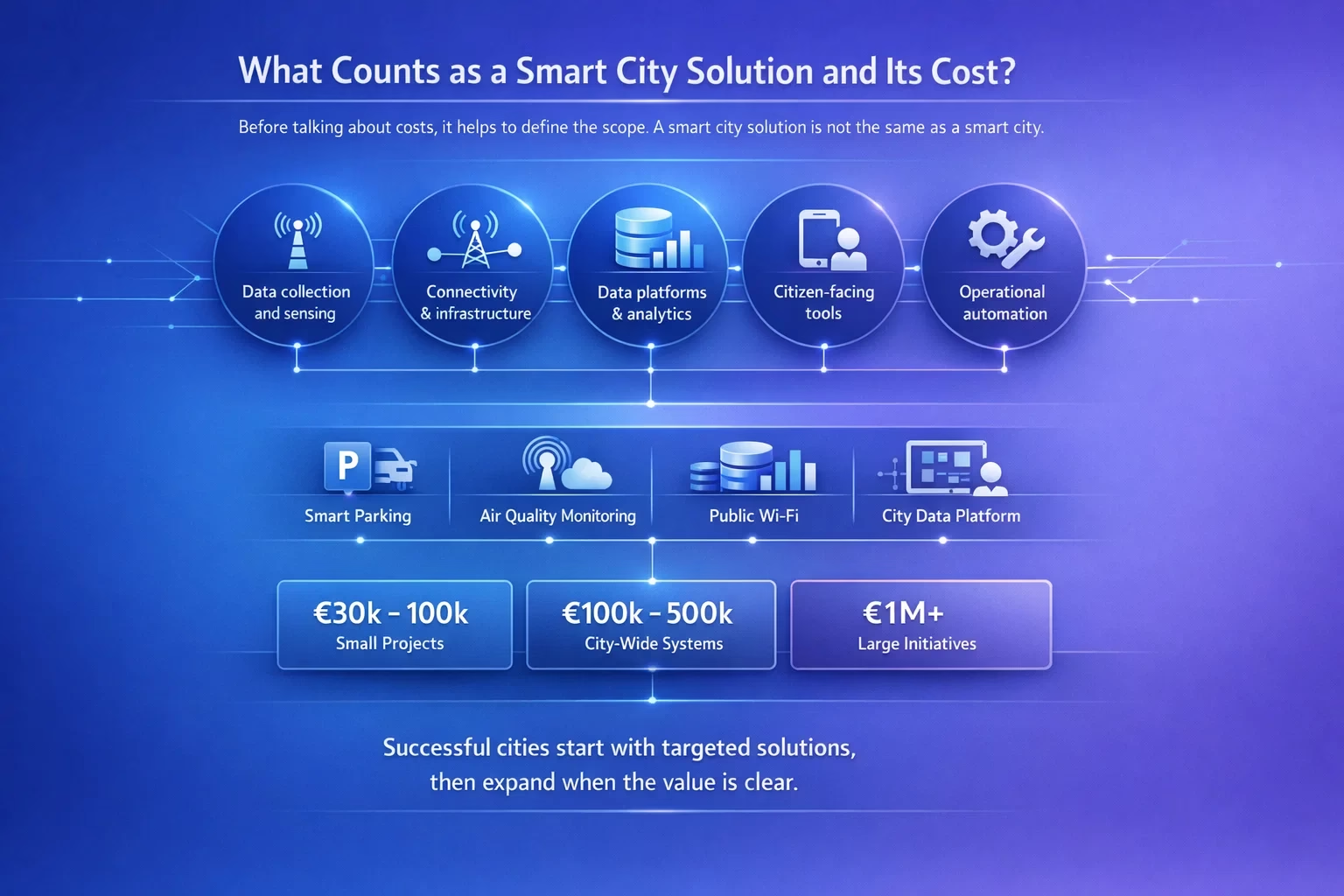
Before talking about costs, it helps to define the scope. A smart city solution is not the same as a smart city.
In practice, cities rarely build everything at once. They develop solutions in parts. These usually fall into a few broad categories:
- Data collection and sensing
- Connectivity and network infrastructure
- Data platforms and analytics
- Citizen-facing tools
- Operational automation for city services
A smart parking system, an air quality monitoring network, a public Wi-Fi rollout, or a city data platform are all smart city solutions. Each can stand alone. Each has its own cost profile.
In most real-world cases, developing a single smart city solution falls into one of three rough cost ranges. Small, focused projects often start around €30,000 to €100,000. Broader, city-wide systems typically land between €100,000 and €500,000. Large, multi-domain initiatives can exceed €1 million, especially when multiple departments and legacy systems are involved.
This distinction matters because many cost estimates fail by treating smart cities as all-or-nothing projects. In reality, the most successful cities start with focused solutions that solve specific problems, then expand only when the value is clear.
Core Cost Components of a Smart City Solution
Rather than chasing a single headline number, it is more useful to understand where the money actually goes. Smart city budgets are usually spread across a few core components, each with its own cost drivers.
Data Collection and Sensors
This is often the first and most visible cost in a smart city project.
Depending on the use case, this layer may include environmental sensors for air, noise, or water, cameras and computer vision hardware, parking sensors and smart meters, or IoT devices embedded in lighting and waste systems.
Typical Cost Range
- €20,000 to €50,000 for a small pilot
- €100,000 to €300,000+ for broader or city-wide deployments
Costs vary based on the number of devices, hardware quality, installation complexity, and environmental conditions. While hardware draws early attention, it is rarely the largest long-term expense.
Connectivity and Network Infrastructure
Data is useless if it cannot move reliably.
Connectivity investments may include municipal Wi-Fi, cellular or private LTE networks, fiber backhaul, and edge computing infrastructure.
Typical Cost Range
- €30,000 to €150,000 for targeted coverage
- €200,000 to €500,000+ for city-wide or multi-use networks
One important lesson from recent projects is that connectivity infrastructure often supports multiple services. A network built for cameras can also power public Wi-Fi, smart lighting, or event management. When designed as shared infrastructure, these investments can reduce overall costs over time.
Data Platforms and Analytics
This is where many smart city initiatives struggle.
Cities often collect large volumes of data but fail to translate it into usable insight. Dashboards are built late, underfunded, or abandoned altogether.
Typical Cost Range
- €10,000 to €20,000 per year for cloud-based analytics platforms
- €80,000 to €250,000+ for custom-built data platforms
Modern cloud platforms significantly reduce upfront costs and deployment time. Custom-built platforms take longer and usually cost more once development, testing, and maintenance are included. The real decision here is not ownership, but usability and adoption.
Citizen Interaction Tools
Smart cities are not only about monitoring. They are about interaction.
This layer includes mobile apps, chatbots and messaging integrations, feedback and reporting systems, and alert or notification tools.
Typical Cost Range
- €15,000 to €50,000 for basic interaction tools
- €60,000 to €150,000+ for multilingual, integrated systems
These tools are often underestimated because they seem simple. In practice, they shape how residents perceive the entire initiative. A well-designed feedback system can build trust. A poorly designed one can quietly fail regardless of budget.
Integration With City Operations
This is where the most expensive mistakes usually happen.
A smart solution that does not integrate with existing departments creates parallel workflows. Staff end up duplicating work instead of saving time.
Typical Cost Range
- €30,000 to €100,000 for limited integration
- €150,000 to €400,000+ for multi-department integration
Connecting systems used by maintenance teams, emergency services, utilities, and planners takes time. It requires coordination, training, and often organizational change. These costs are easy to underestimate but hard to avoid.
Hidden Costs Cities Often Forget
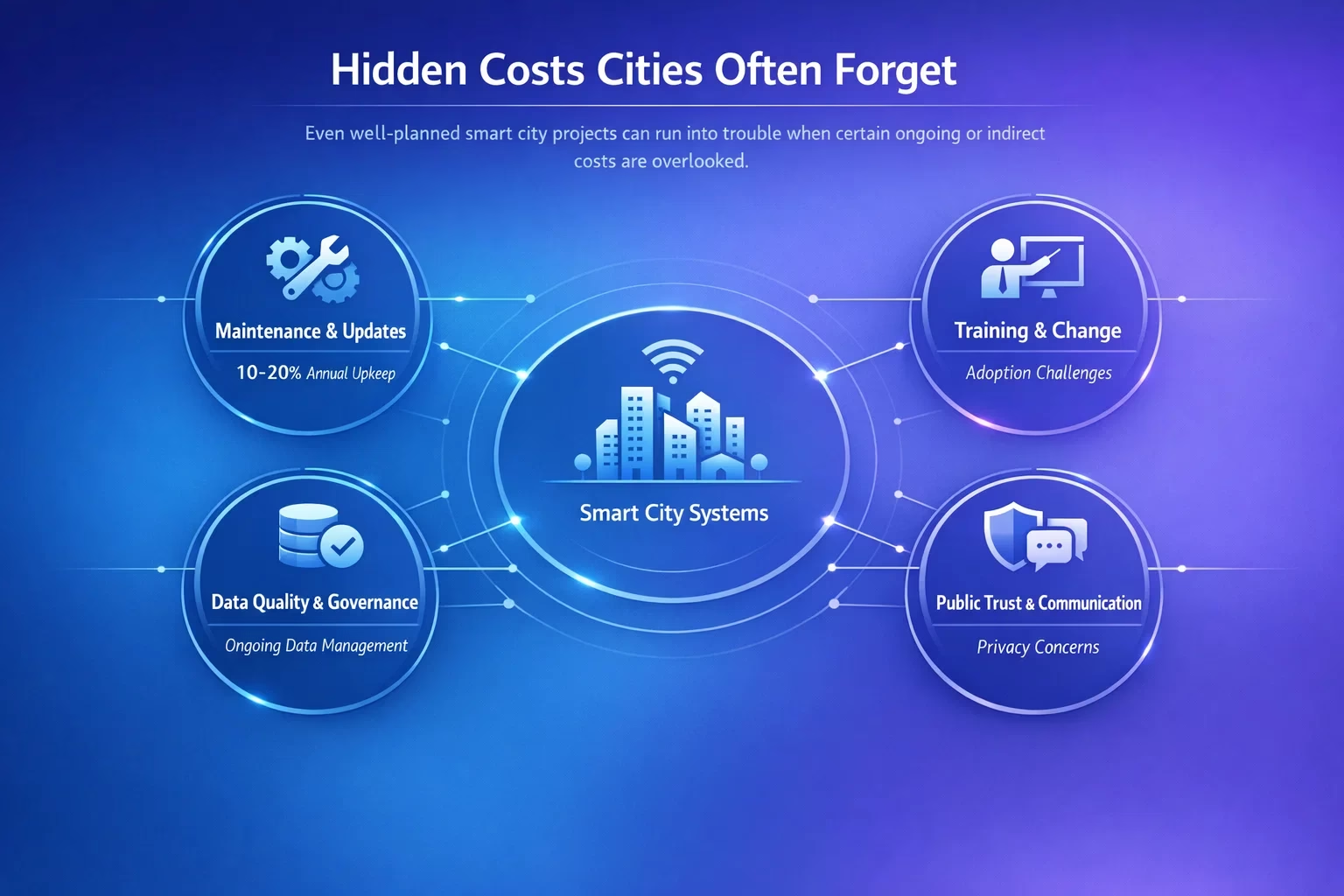
Even well-planned smart city projects can run into trouble when certain ongoing or indirect costs are overlooked. These expenses may not appear in initial proposals, but they strongly affect long-term success.
- Maintenance and Updates. Sensors fail, hardware wears out, and software updates can break existing integrations. Security patches are ongoing, not optional. Annual maintenance often adds 10 to 20 percent of the initial development cost.
- Training and Change Management. City staff need time to learn new tools, and departments often need to adjust workflows. When training is skipped or rushed, adoption drops and the investment loses value.
- Data Quality and Governance. Bad data leads to bad decisions. Cleaning, validating, and governing data requires continuous effort across departments. These costs are rarely visible at the planning stage but grow over time.
- Public Trust and Communication. Residents care about privacy, transparency, and whether a system is genuinely useful. Poor communication can create resistance, slow adoption, and increase costs indirectly through delays or redesigns.

How AI Superior Helps Building Practical Smart City Solutions
At AI Superior, we help cities turn smart city ideas into working systems that deliver measurable value. From our experience, the biggest cost risk is not AI itself, but building solutions that are too broad, too complex, or disconnected from real urban needs.
We take an end-to-end approach, starting with use case discovery and feasibility analysis, then moving into MVP development, scaling, and integration. Our teams combine PhD-level data science expertise with practical engineering, which allows us to assess when AI makes sense, and how to apply it without unnecessary cost or risk.
Rather than pushing large, monolithic platforms, we focus on modular smart city solutions such as computer vision for infrastructure monitoring, predictive analytics for traffic and utilities, and NLP-based tools for citizen interaction. These solutions are designed to integrate with existing systems and scale gradually, keeping budgets predictable and outcomes clear.
Our goal is simple: help cities start smart, validate early, and scale only when the value is proven.
Why Smart City Costs Vary So Widely
You will often see cost estimates that range from tens of thousands to billions. That gap exists for a reason.
Existing Infrastructure Matters More Than Technology
Cities are not blank canvases. Most of what people will use in the future already exists today.
Older buildings, legacy utilities, outdated data systems, and fragmented ownership all affect cost. Retrofitting smart solutions into existing infrastructure is usually cheaper than building new districts, but it is also more complex. Cities that assume they can “start fresh” often underestimate both cost and resistance.
Unclear Goals Drive Costs Up
Many smart city initiatives fail not because of technology, but because of ambition without focus.
A project that starts as traffic optimization quietly expands into public safety, energy management, citizen engagement, and open data portals. Each addition seems reasonable on its own. Together, they inflate cost and delay results. Clear goals reduce cost more effectively than cheaper technology.
Build Versus Buy Decisions Shape the Budget
Cities that try to build everything from scratch usually pay more and wait longer.
Ready-made platforms for mapping, analytics, feedback collection, or connectivity often cover most real-world needs. Custom development should fill gaps, not replace proven tools. The more a project reinvents existing solutions, the higher the cost and risk.
Adoption Is a Cost Factor, Even If It Is Invisible
A system that looks good in a demo but is hard to use will fail regardless of budget.
Low adoption creates hidden costs. Staff time is wasted. Systems are duplicated. New tools are abandoned while old processes continue. Design and testing with real users is not optional. It directly affects return on investment.
Why Some Smart City Projects Fail Despite Large Budgets
Large budgets do not guarantee successful outcomes. In many cases, they make problems harder to see until it is too late. Across different cities and initiatives, the same failure patterns tend to repeat, regardless of geography or technology stack.
Common reasons smart city projects fail include:
- Solutions built without real user testing, leading to systems that look good in demos but do not fit daily workflows
- Overly complex platforms that only a small group of specialists can operate or understand
- Technology-first decisions that prioritize new tools over clearly defined urban problems
- Projects designed to impress investors or stakeholders, rather than serve residents and city staff
Successful projects often look less ambitious on paper. They start with a limited scope, test assumptions in real conditions, and measure impact early. Only after value is proven do they expand. This approach reduces risk, keeps costs under control, and builds systems people actually use.
A More Practical Way To Think About Smart City Costs
Instead of asking how much a smart city costs, it is more useful to ask what problem needs to be solved and what the most reliable way is to solve it. Cost alone says very little without context. A €50,000 solution that improves daily operations can be more valuable than a million-euro platform that looks impressive but goes unused. Framing decisions around specific outcomes helps cities avoid spending on technology for its own sake.
Smart cities are not finished products that can be purchased and installed. They are ongoing processes that evolve over time. The most cost-effective cities treat smart solutions as building blocks rather than grand projects. They reuse existing infrastructure, design systems that can be shared across departments, and expand only when results are proven. This approach keeps costs predictable and ties investment directly to real-world value.
Final Thoughts: Cost Is Not The Real Challenge
Technology is no longer the limiting factor. Tools are available. Connectivity is improving. Platforms are mature. The real challenges are prioritization, governance, and humility.
Cities that accept complexity, listen to users, and resist the urge to overbuild tend to spend less and achieve more. Those that chase grand visions without grounding often pay for it later. A smart city solution does not need to be expensive. It needs to be useful. And usefulness, more than budget size, is what determines success.
Frequently Asked Questions
How much does it cost to develop a smart city solution?
Costs vary based on scope and complexity. Small, focused solutions usually range from €30,000 to €100,000. Mid-scale city-wide systems often fall between €100,000 and €500,000. Large, multi-domain initiatives can exceed €1 million, especially when multiple departments and legacy systems are involved.
What factors have the biggest impact on smart city costs?
The biggest cost drivers are scope, integration with existing infrastructure, data quality, and long-term maintenance. Decisions around building from scratch versus using existing platforms also have a major impact on budget and timeline.
Is it better to start with a pilot or build a full solution?
Starting with a pilot is usually the smarter and more cost-effective approach. Pilots allow cities to test assumptions, validate adoption, and measure impact before committing to larger investments. Most successful smart city programs grow incrementally.
Why do some smart city projects go over budget?
Projects often exceed budgets due to unclear goals, scope creep, poor integration planning, and low adoption. Failing to budget for training, maintenance, and data governance also leads to unexpected costs later.
 English
  German
  Arabic
  French
  Dutch
Dutch  Spanish