
The cost of a smart city platform is rarely a single number. It depends on what a city is trying to solve, how much infrastructure already exists, and how quickly leaders want results. For some municipalities, it starts with a focused pilot around traffic, safety, or utilities. For others, it’s a long-term transformation that touches nearly every department.
What often gets overlooked is that smart city spending isn’t just about technology. It’s about planning, integration, operations, and the ability to scale without locking the city into rigid systems or runaway costs. Hardware may be the most visible line item, but software, connectivity, data platforms, and ongoing maintenance usually determine the real price over time.
This article breaks down what it actually costs to implement a smart city platform, where the biggest expenses come from, and how cities can budget realistically without overbuilding or underestimating long-term commitments.
The Core Components of a Smart City Platform
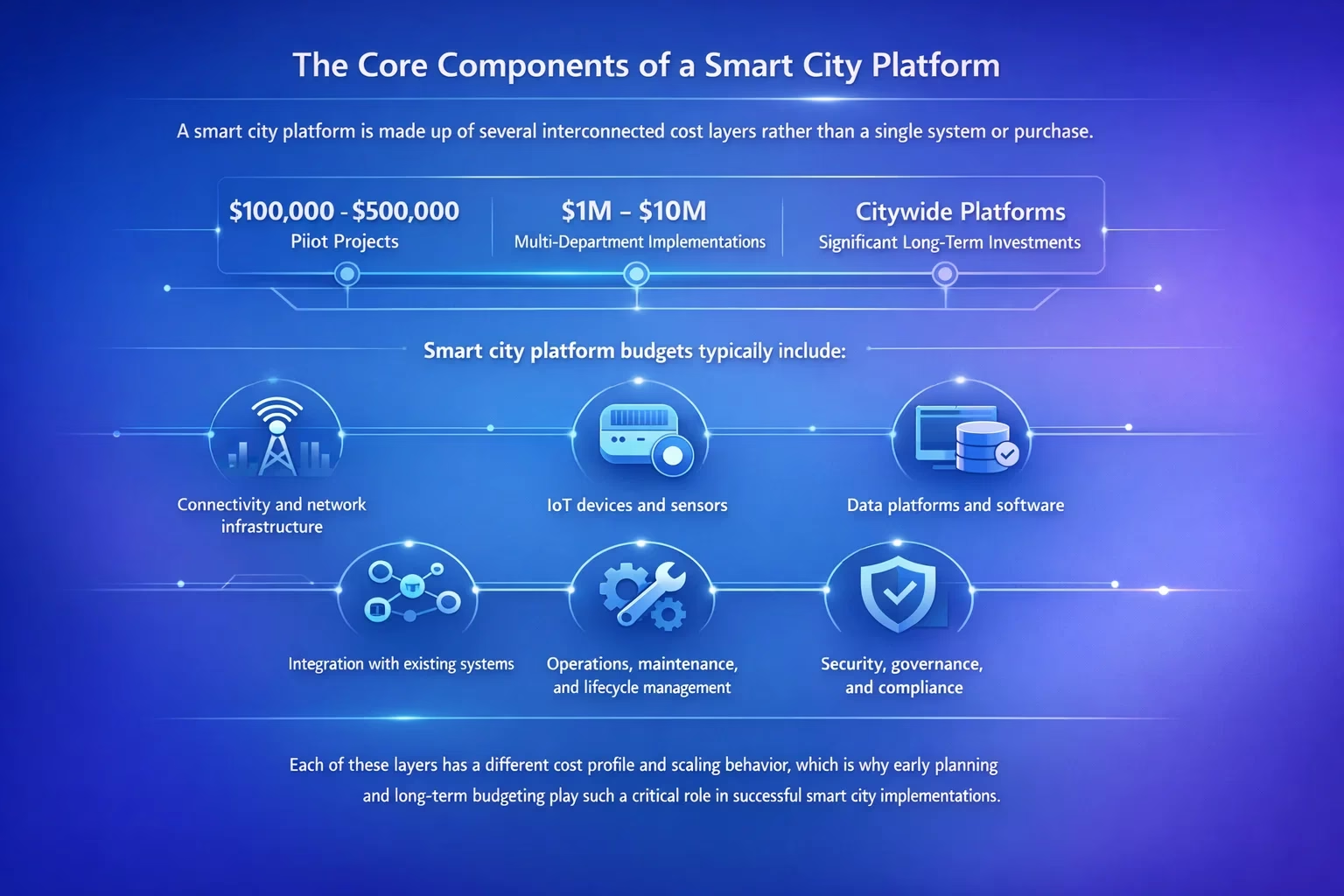
A smart city platform is made up of several interconnected cost layers rather than a single system or purchase. At a high level, cities often spend $100,000 to $500,000 on focused pilot projects, $1 million to $10 million on broader multi-department implementations, and significantly more over time for fully citywide platforms. The total cost depends on how widely the platform is deployed and how deeply systems are integrated.
Most smart city platform budgets are typically distributed across the following components:
- Connectivity and network infrastructure
- IoT devices and sensors
- Data platforms and software
- Integration with existing systems
- Operations, maintenance, and lifecycle management
- Security, governance, and compliance
Each of these layers has a different cost profile and scaling behavior, which is why early planning and long-term budgeting play such a critical role in successful smart city implementations.
Smart City Platform Cost Breakdown By Category
The cost of implementing a smart city platform is best understood by looking at its major cost categories rather than a single headline number. Each category plays a different role in the overall system, and each scales differently as a city expands from pilot projects to full deployment.
Some costs are front-loaded, such as infrastructure and devices. Others grow steadily over time, especially software, maintenance, and security. Understanding how these layers interact is key to building a realistic budget and avoiding surprises later.
Below is a breakdown of the primary cost areas cities should plan for when implementing a smart city platform.
Connectivity and Network Infrastructure Costs
Connectivity forms the backbone of a smart city platform. Without reliable networks, data cannot move between sensors, platforms, and applications, making every other investment less effective.
Most cities allocate 30 to 35 percent of early smart city budgets to connectivity and network infrastructure.
Typical Cost Ranges
- Fiber or wired backbone deployment: $50,000 to $150,000 per mile for new builds, $5,000 to $20,000 per site when existing fiber is available
- Wireless networks (public Wi-Fi, private LTE, CBRS): $1,500 to $5,000 per access point, $250,000 to $2 million for district-level coverage
- Low-power wide-area networks for sensors: $20 to $100 per connected device, $50,000 to $300,000 for citywide gateway infrastructure
- Edge computing infrastructure: $5,000 to $50,000 per edge node, $100,000 to $500,000 for distributed deployments
In addition to installation, cities should expect annual operating costs of 10 to 20 percent of initial network investment for monitoring, upgrades, and redundancy.
IoT Devices and Sensor Deployment Costs
IoT devices are the most visible part of a smart city platform. This category includes cameras, parking sensors, traffic detectors, environmental sensors, smart meters, and lighting controls.
In many implementations, devices account for 40 to 50 percent of total smart city technology spending.
Typical Cost Ranges
- Environmental and utility sensors: $50 to $500 per unit
- Parking and traffic sensors: $200 to $1,000 per unit
- Smart street lighting controllers: $150 to $800 per fixture
- Video and safety cameras: $1,000 to $5,000 per unit
- Installation and mounting: $100 to $1,500 per device, depending on location and power access
Hardware costs are only part of the equation. Replacement cycles, battery changes, firmware updates, and device failures add recurring expenses that must be planned from the start.
Data Platforms and Software Licensing Costs
Once devices begin generating data, cities need platforms to store, analyze, and visualize that information. This layer turns raw data into operational insight and decision support.
Cities typically allocate 10 to 15 percent of smart city budgets to data platforms and software.
Typical Cost Ranges
- Cloud or hybrid data platforms: $50,000 to $500,000 per year
- Analytics and visualization tools: $20,000 to $250,000 per year
- Departmental dashboards and reporting tools: $10,000 to $100,000 per year
- API access and integration services: often bundled or charged per connection
Licensing costs often scale with the number of devices, users, or data volume. Platforms that start affordably at pilot scale can become expensive when expanded citywide without renegotiation.
Integration With Existing Systems Costs
Integration is one of the most underestimated cost categories. Cities rarely start from scratch. Traffic systems, utilities, public safety platforms, and administrative software often predate smart city initiatives by years.
Integration typically consumes 15 to 20 percent of initial project budgets.
Typical Cost Ranges
- Data normalization and middleware development: $50,000 to $300,000
- Custom connectors for legacy systems: $25,000 to $200,000 per system
- Testing, validation, and quality assurance: $20,000 to $150,000
Poor integration increases operational overhead and reduces trust in the platform. Cities that invest early in open standards and shared architectures tend to reduce long-term integration costs.
Operations, Maintenance, and Lifecycle Costs
Ongoing operations are where smart city platforms incur their largest long-term expenses. Installation marks the beginning, not the end, of spending.
Over time, operations and maintenance typically account for 25 to 30 percent of total smart city costs, with lifecycle expenses reaching two to three times the initial capital investment.
Typical Cost Ranges
- Device monitoring and repairs: $10 to $50 per device per year
- Software updates and platform support: $50,000 to $300,000 per year
- Network maintenance and cloud usage fees: $25,000 to $250,000 per year
- Staff training and operational support: $20,000 to $150,000 per year
Predictive maintenance tools can reduce unexpected failures but still require upfront investment and ongoing oversight.
Security, Privacy, and Compliance Costs
As cities connect more systems, security and privacy become unavoidable cost categories. Every connected device and data stream introduces risk.
Cybersecurity and compliance typically represent 10 to 15 percent (or more) of smart city infrastructure budgets.
Typical Cost Ranges
- Device authentication and encryption: $10 to $50 per device
- Network security monitoring: $25,000 to $150,000 per year
- Identity and access management systems: $20,000 to $100,000 per year
- Compliance audits and incident response planning: $15,000 to $75,000 annually
Privacy governance adds additional operational costs through policy development, data retention management, and public transparency efforts.

Building Practical Smart City Platforms With AI Superior
At AI Superior, we help cities and public organizations turn smart city ideas into systems that actually work at scale. Our focus is not just on deploying AI, but on doing it in a way that makes sense financially, technically, and operationally.
We work end to end, from early strategy and feasibility through to development, integration, and scaling. That often means starting small, validating assumptions, and expanding only when the value is clear. Whether it’s computer vision for traffic and public safety, predictive analytics for infrastructure and utilities, or data platforms that support better decision-making, we build solutions designed to last, not quick demos.
Our teams combine PhD-level data science expertise with hands-on engineering experience, which helps keep projects grounded in reality. For smart city platforms especially, that balance is what helps control costs, reduce risk, and deliver outcomes cities can actually rely on.
Funding Models and Cost-Sharing Strategies
Few cities fund smart city platforms from a single budget line. Most successful implementations rely on a mix of funding sources that spread costs across departments, timelines, and partners. Instead of treating smart city initiatives as standalone projects, cities often reallocate existing departmental budgets, align investments with routine infrastructure replacement cycles, and introduce smart capabilities as part of planned upgrades rather than new builds.
Public-private partnerships also play a significant role, particularly for services that can generate measurable returns. Smart parking systems, digital advertising, and data-driven services can help offset infrastructure costs while creating incentives for private sector participation. In parallel, many cities pursue grants and national funding programs to support pilot projects or expand proven initiatives without placing additional strain on local budgets.
Cost-sharing works best when infrastructure is designed to serve multiple purposes. Assets such as smart poles that combine lighting, sensors, connectivity, and public safety functions typically deliver better returns than isolated deployments. Cities that approach smart infrastructure as a shared resource tend to reduce duplication, improve budget coordination across departments, and create more sustainable funding models over time.
Why Starting Small Often Costs Less In The Long Run
One of the clearest lessons across smart city projects is that starting small saves money.
Pilot projects allow cities to:
- Validate technology choices
- Test integration assumptions
- Measure real-world performance
- Build internal expertise
Early successes also make future funding easier. Decision-makers are more likely to support expansion when benefits are visible and measurable.
Starting small does not mean thinking small. The most effective pilots are designed with future scale in mind, using platforms and standards that can grow without major rework.
What Determines Whether A Smart City Platform Is Worth The Cost
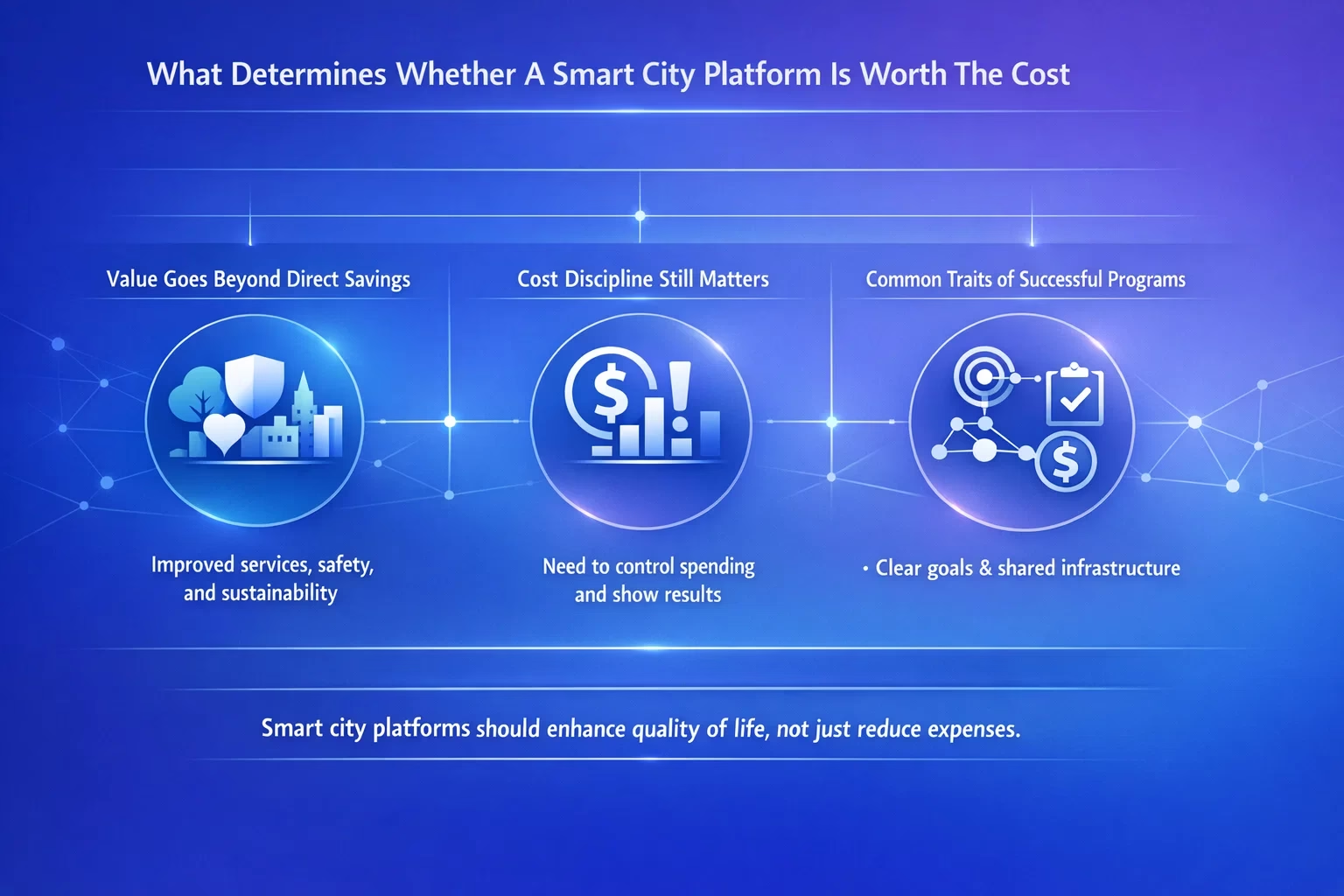
The value of a smart city platform cannot be measured by cost savings alone. While efficiency gains matter, the real return often shows up in better public services, improved safety, stronger sustainability outcomes, and a higher overall quality of life for residents.
Value Goes Beyond Direct Savings
Many of the most important benefits of smart city platforms are indirect. Faster emergency response, cleaner air, smoother traffic flow, and more reliable utilities do not always translate neatly into budget line items, but they have a real and lasting impact on how a city functions.
Cost Discipline Still Matters
At the same time, discipline around spending is essential. Platforms that expand faster than available budgets tend to lose political and public support. Systems that clearly demonstrate measurable outcomes, even on a limited scale, are far more likely to earn continued investment and long-term backing.
Common Traits of Successful Smart City Programs
Cities that consistently get value from smart city investments tend to focus on a few core principles:
- Clear objectives tied to real, well-defined problems
- Shared infrastructure instead of isolated, siloed projects
- Realistic lifecycle budgeting that accounts for long-term costs
- Transparent metrics and reporting that show progress and impact
Smart city platforms are not about deploying technology for its own sake. At their best, they are practical tools for managing complexity, supporting growth, and helping cities make better decisions as demands on urban systems continue to increase.
Final Thoughts on Budgeting for Smart City Platforms
There is no single answer to how much it costs to implement a smart city platform. Costs depend on ambition, context, and discipline.
What can be said with confidence is this: the biggest risk is not spending too much upfront. It is spending without a long-term plan.
Cities that treat smart platforms as evolving systems, budget for lifecycle costs, and build shared foundations tend to get far more value from every dollar invested.
The smartest cities are not the ones that spend the most. They are the ones that spend with intention, clarity, and patience.
Frequently Asked Questions
How much does it typically cost to implement a smart city platform?
The cost depends on scope and scale. Small pilot projects often range from $100,000 to $500,000, while multi-department implementations usually fall between $1 million and $10 million. Fully citywide platforms can exceed that over time, especially once long-term operations and maintenance are included.
What is the biggest cost driver in smart city projects?
Connectivity and IoT devices are usually the largest upfront expenses. Over time, operations, maintenance, and lifecycle costs often become the biggest contributors, sometimes reaching two to three times the initial investment over the life of the platform.
Can cities start with a pilot instead of a full rollout?
Yes, and many successful projects do. Starting with a pilot allows cities to test technology, validate integration, and measure real-world impact before committing larger budgets. Pilots also make it easier to secure future funding once results are visible.
How long does it take to see a return on investment?
This varies by use case. Some projects, such as smart lighting or parking, can show measurable savings within one to two years. Others, like public safety or environmental monitoring, deliver value over a longer horizon through improved outcomes rather than direct cost reduction.
Are smart city platforms expensive to maintain?
Maintenance is a significant part of the total cost. Ongoing expenses typically account for 25 to 30 percent of total smart city spending over time. These include device upkeep, software updates, network management, and staff training.
 English
  German
  Arabic
  French
  Dutch
Dutch  Spanish