Quick Summary: Machine learning in direct marketing enables businesses to predict customer behavior, personalize campaigns at scale, and optimize targeting with precision that traditional methods can’t match. By analyzing massive datasets in real-time, ML algorithms identify patterns, segment audiences dynamically, and automate decision-making to drive higher conversion rates and ROI. This technology transforms direct marketing from broad outreach into hyper-targeted, data-driven engagement. Direct marketing used to be a numbers game. Send 10,000 mailers, hope for a 2% response rate, and call it a day. Not anymore. Machine learning has fundamentally changed how direct marketing campaigns get planned, executed, and optimized. The technology analyzes customer data at scales humans simply can’t process, predicts who’s most likely to convert, and personalizes messaging for each recipient based on behavioral patterns. According to Harvard’s Professional Development research, AI presents marketers with opportunities to personalize customer experiences in ways that were impossible just a few years ago. The data backs this up—industry analyses indicate that 92% of companies now use AI-driven personalization to drive growth. But here’s the thing: most marketing teams still treat machine learning as some distant future technology when it’s already powering campaigns at companies from Amazon to small regional banks. This guide breaks down exactly how machine learning works in direct marketing, the specific applications that deliver results, real-world performance data, and the challenges teams face when implementing these systems.
What Machine Learning Actually Does in Direct Marketing
Machine learning refers to algorithms that improve automatically through experience. Instead of following rigid rules programmed by humans, these systems learn patterns from data and make predictions or decisions based on what they’ve observed. In direct marketing contexts, that means algorithms can analyze thousands of customer attributes—purchase history, browsing behavior, demographic data, engagement patterns—and identify which combinations predict specific outcomes. The practical difference? Traditional marketing automation might send an email to everyone who abandoned a cart. Machine learning sends that email only to customers the algorithm predicts are likely to convert, at the time they’re most likely to open it, with messaging customized to their specific interests. The UCI Machine Learning Repository maintains datasets from real direct marketing campaigns, including a Portuguese banking institution’s phone campaign dataset with 45,211 instances. These datasets demonstrate the complexity ML systems handle—analyzing 16 different features to predict which clients will subscribe to a term deposit.
How ML Differs from Rule-Based Marketing
Rule-based systems operate on explicit instructions: if a customer does X, then send Y. They’re predictable, but rigid. Machine learning systems identify patterns humans miss. They might discover that customers who browse on Tuesday evenings and have previously purchased category A respond better to discount messaging, while morning browsers in the same category prefer product education content. No marketer would manually write rules accounting for every possible combination of variables. ML handles that complexity automatically.
Core Applications of Machine Learning in Direct Marketing
The technology shows up across multiple marketing functions. Some applications deliver immediate wins, while others require more sophisticated implementation.
Predictive Customer Segmentation
Traditional segmentation groups customers by demographics or past behavior. ML-driven segmentation predicts future behavior. Algorithms analyze behavioral patterns to identify micro-segments—groups of customers who share similar likelihood to respond to specific offers, churn risk, lifetime value potential, or product affinity. These segments update dynamically as new data arrives. Research in marketing analytics indicates that with ML-driven segmentation, marketers can target each group with personalized messages best suited to their needs, increasing relevance and engagement. Real-world data shows that 65% of customers cite targeted promotions as a reason they engage with brands. 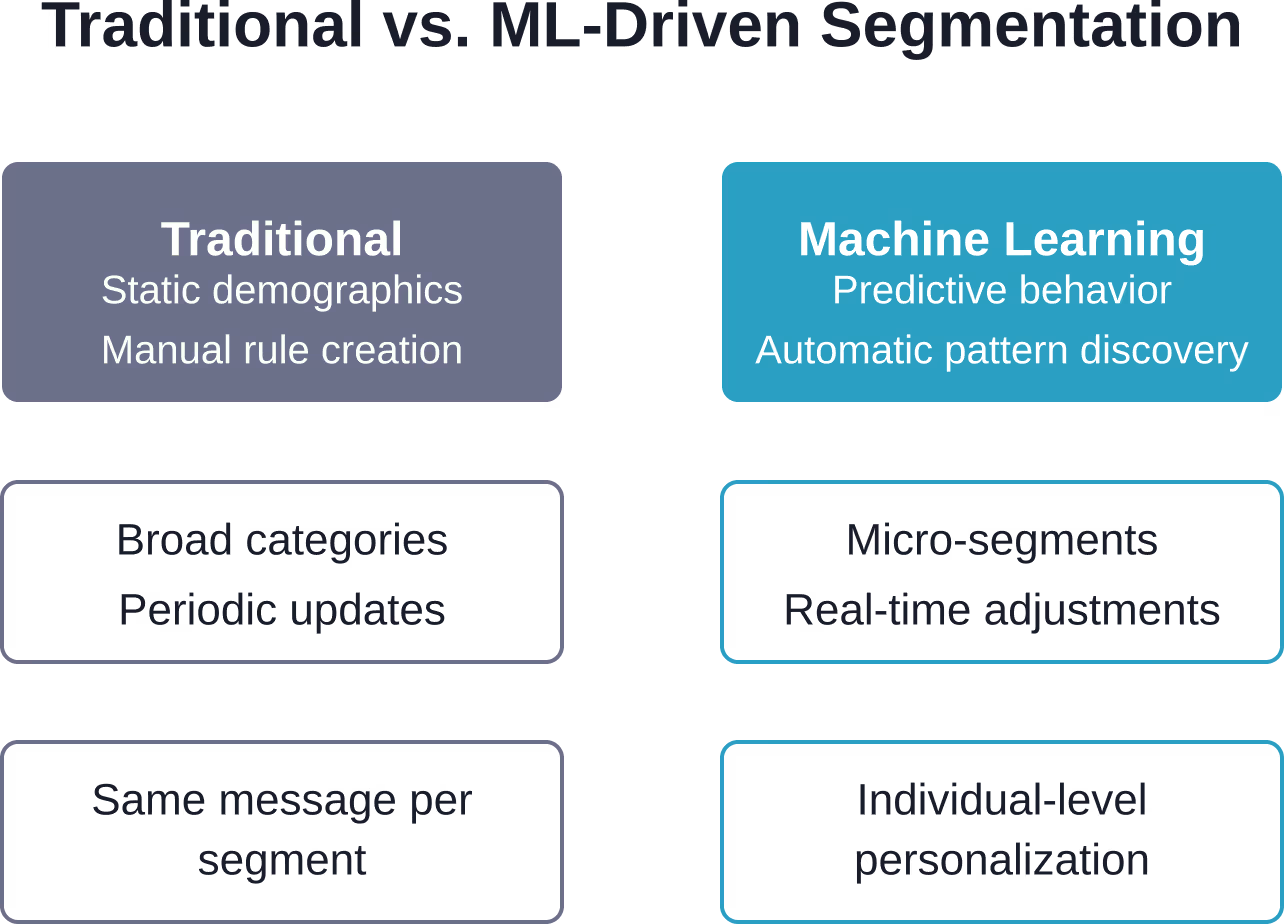
Response and Conversion Prediction
ML models predict which customers will respond to specific offers before campaigns launch. This prevents wasted spend on low-probability prospects. The algorithms consider hundreds of variables simultaneously: past purchase patterns, email engagement history, website behavior, seasonal trends, product affinity, and channel preferences. The output is a probability score for each customer. Marketers then set threshold scores—only targeting customers above a certain conversion probability. This precision targeting significantly improves ROI compared to broad campaigns.
Send-Time Optimization
When a message arrives matters as much as what it says. ML algorithms analyze individual engagement patterns to determine optimal send times for each recipient. One customer might consistently open emails at 7 AM on weekdays. Another engages primarily on Sunday evenings. Manual scheduling can’t account for thousands of individual patterns, but ML systems handle this automatically. By analyzing user behavior across touchpoints, these systems can recommend send times, tailor content, and adapt frequency based on each recipient’s likelihood to open or convert. This turns generic batch emails into precisely timed, individualized outreach.
Dynamic Content Personalization
Beyond timing, ML personalizes the actual message content. Algorithms select which product recommendations, offers, images, or copy variations each recipient sees. For instance, website visitors who book certain activities might be offered personalized content promoting related experiences depending on their preferences. According to documented case studies, Turtle Bay Resort achieved a 40% increase in customer engagement through personalization powered by Salesforce. The system continuously learns which content elements drive engagement for each customer segment, automatically testing variations and optimizing based on performance.
Churn Prediction and Prevention
ML models identify customers at high risk of churning before they actually leave. The algorithms detect subtle behavioral changes—decreasing engagement, reduced purchase frequency, browsing competitor sites—that signal attrition risk. Once high-risk customers are flagged, automated campaigns deploy retention offers, personalized outreach, or satisfaction surveys. This proactive approach prevents churn rather than reacting after customers have already disengaged.
Lifetime Value Forecasting
Not all customers deliver equal long-term value. ML predicts each customer’s lifetime value based on early behavioral signals, allowing marketers to allocate acquisition and retention budgets efficiently. High-LTV prospects receive more aggressive acquisition campaigns. Low-LTV customers get cost-effective nurture sequences. This targeting prevents overspending on customers who won’t generate sufficient return. 
Build Direct Marketing Models With AI Superior
Direct marketing depends on reaching the right audience with the right message, and machine learning can help when there is enough customer and campaign data to work with. AI Superior can support teams that want to use ML for targeting, response prediction, audience selection, or campaign planning. Their services include AI consulting, machine learning, data science, AI software development, proof of concept development, and model evaluation. This is useful when a company needs to understand whether its data can support reliable marketing models before building a full system. AI Superior can support direct marketing projects with:
- Defining the targeting or response prediction use case
- Reviewing customer, transaction, campaign, and response data
- Creating proof of concept models
- Developing models for audience scoring or customer segmentation
- Checking model accuracy and reliability
- Planning integration into campaign workflows
- Supporting development from prototype to deployment
For direct marketing, this may be relevant for customer scoring, offer personalization, response prediction, campaign list optimization, and retention campaigns. Contact AI Superior to discuss the project.
Real-World Performance Data
The theoretical benefits sound compelling, but what results do organizations actually see? Documented case studies reveal measurable impact across multiple metrics:
- 21% increase in average user sessions
- 31% increase in conversions
- 24% uplift in revenue per user
- 13% improvement in repeat purchases
- 250% lift in conversion rates
- 49% increase in tickets sold per campaign
These results come from organizations implementing ML across email marketing, recommendation engines, and campaign optimization. The performance improvements aren’t marginal—they represent fundamental shifts in campaign effectiveness. But here’s what matters: these gains compound over time. ML systems improve as they process more data, meaning performance typically increases months after initial implementation. 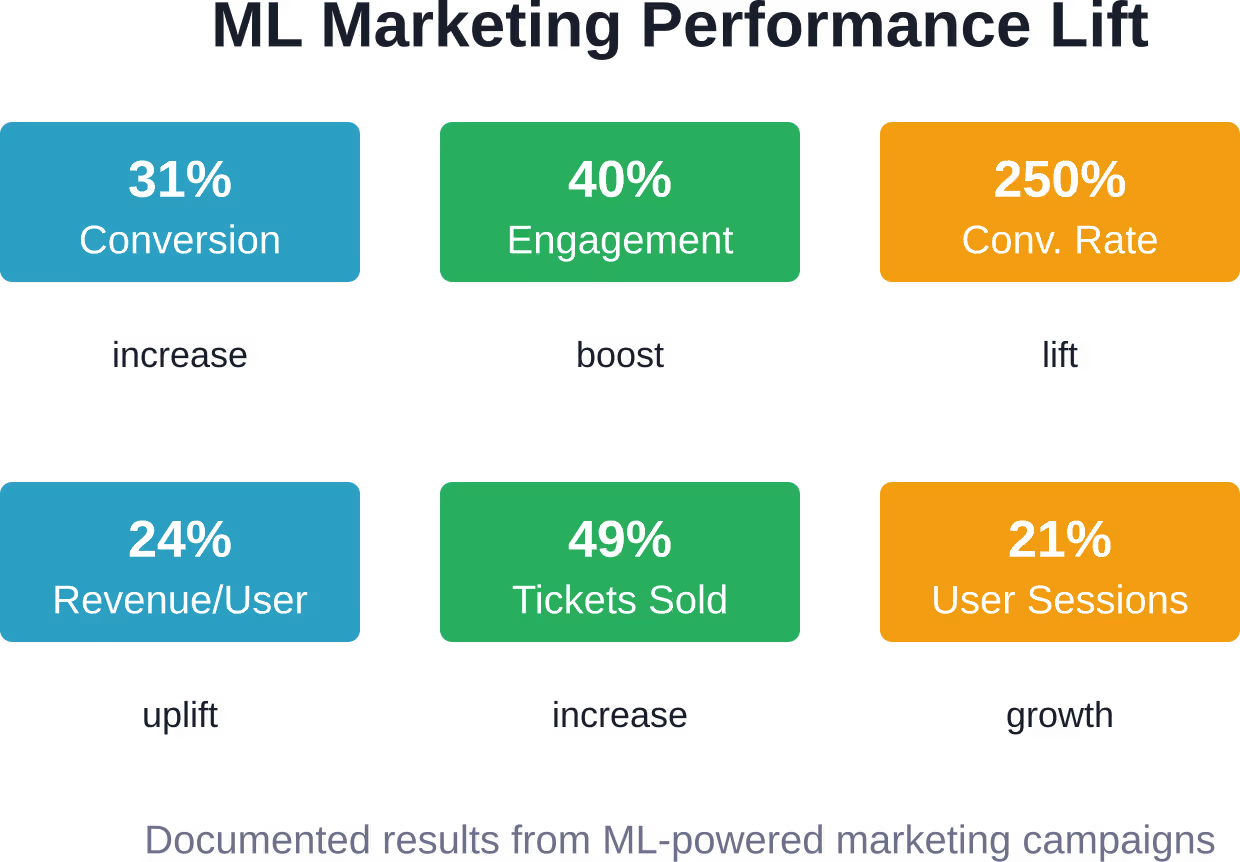
How Machine Learning Improves Marketing Operations
Beyond individual campaign performance, ML transforms how marketing teams operate day-to-day.
Automated Decision-Making at Scale
Marketing teams can’t manually optimize thousands of customer journeys. ML systems make real-time decisions across entire customer bases—which offer to display, when to send messages, what content to prioritize. This automation frees marketers from repetitive optimization tasks, allowing focus on strategy, creative development, and testing new approaches.
Faster Testing and Optimization Cycles
Traditional A/B testing requires weeks or months to reach statistical significance. ML-powered multi-armed bandit algorithms continuously test variations while automatically shifting traffic toward winning options. The result? Optimization happens in days instead of weeks, and campaigns improve continuously rather than in discrete test cycles.
Pattern Recognition Humans Miss
ML excels at identifying non-obvious correlations in complex datasets. The algorithms might discover that customers who browse certain product combinations, at specific times, after viewing particular content, convert at unusually high rates. No human analyst would manually test every possible variable combination. ML handles that complexity automatically, surfacing insights that inform both automated optimization and strategic decisions.
Implementation Challenges and Considerations
Machine learning delivers results, but implementation isn’t trivial. Organizations face several common obstacles.
Data Quality and Volume Requirements
ML models need substantial data to train effectively. Small customer bases or limited historical data constrain what’s possible. The data must also be clean, consistent, and properly structured. Organizations often discover their data infrastructure isn’t ML-ready—customer records are fragmented across systems, tracking is inconsistent, or critical attributes are missing. Data preparation typically consumes 60-80% of ML project timelines. Teams must audit existing data, implement proper tracking, unify customer records, and establish data governance before meaningful ML work begins.
Integration with Existing Marketing Technology
ML systems need to connect with CRM platforms, email service providers, advertising platforms, analytics tools, and content management systems. Building these integrations requires technical expertise and ongoing maintenance. Many marketing teams lack in-house data science capabilities. Implementing ML means either hiring specialized talent, partnering with agencies, or adopting platforms with built-in ML features.
Regulatory and Privacy Considerations
The FTC has increased scrutiny of how companies use consumer data for targeting. Organizations have faced significant FTC penalties for data privacy violations. AAccording to the FTC’s 2024 announcements, the agency has cracked down on deceptive AI claims through Operation AI Comply, which was officially launched in late 2024. The FTC has also cracked down on deceptive AI claims through Operation AI Comply, announcing enforcement actions against operations making misleading AI capability statements. Organizations implementing ML for marketing must ensure compliance with data protection regulations, obtain proper consent for data usage, and avoid manipulative practices the FTC has labeled as “dark patterns.”
Model Bias and Fairness
ML models can perpetuate or amplify biases present in training data. If historical data reflects discriminatory patterns, the model learns those patterns as valid targeting criteria. This creates both ethical concerns and legal risk. Marketing teams must audit ML systems for unintended bias, especially when models influence access to credit, housing, employment, or other protected categories.
Explainability and Trust
Many ML models operate as “black boxes”—they make predictions, but marketers can’t easily explain why a particular decision was made. This lack of transparency creates challenges when business stakeholders need to understand campaign logic or when customers question why they received specific messaging. Explainable AI techniques are improving, but achieving both high performance and interpretability remains a tradeoff.
| Challenge | Impact Level | Primary Mitigation |
|---|---|---|
| Insufficient data volume | High | Start with simpler models; aggregate data across longer timeframes |
| Data quality issues | High | Invest in data cleaning; implement tracking standards |
| System integration complexity | Medium | Use platforms with native ML capabilities; phased rollout |
| Privacy compliance | High | Legal review; explicit consent; data minimization |
| Model bias | Medium | Regular audits; diverse training data; fairness metrics |
| Lack of in-house expertise | Medium | Partner with specialists; adopt pre-built ML platforms |
Getting Started with Machine Learning in Direct Marketing
Organizations don’t need to implement every ML capability simultaneously. A phased approach delivers results while building internal capabilities.
Start with High-Impact, Lower-Complexity Applications
Predictive segmentation and send-time optimization deliver meaningful results without requiring complex infrastructure. These applications can often be implemented through existing marketing platforms with built-in ML features. More sophisticated applications—real-time personalization engines, custom recommendation systems, multi-channel attribution modeling—require greater technical investment and should come later.
Establish Data Foundations First
Before implementing ML, ensure proper data infrastructure exists. This means unified customer records, consistent tracking across channels, defined data governance policies, and clean historical data. Attempting ML without solid data foundations leads to poor model performance and wasted resources.
Define Clear Success Metrics
ML projects need specific, measurable objectives. “Improve campaign performance” is too vague. “Increase email conversion rate by 15% within six months” gives clear direction. Establish baseline metrics before implementation so improvement can be accurately measured. Track both primary goals and secondary effects—ML might improve conversion rates but impact other metrics like customer satisfaction or operational costs.
Plan for Iteration and Continuous Improvement
ML systems improve over time as they process more data and receive feedback. Initial performance might be modest, with gains accelerating after several months. Build processes for ongoing model monitoring, performance tracking, and periodic retraining as customer behavior evolves.
The Evolving ML Marketing Landscape
Machine learning capabilities continue advancing rapidly. Several trends are reshaping what’s possible in direct marketing.
Real-Time Decision-Making
Early ML implementations often worked in batch mode—models ran periodically to update segments or generate recommendations. Modern systems make real-time decisions as customers interact with marketing touchpoints. When someone visits a website, the ML system instantly predicts their intent, selects optimal content, and determines whether to present an offer—all within milliseconds. This real-time capability dramatically improves relevance.
Cross-Channel Intelligence
Advanced ML systems track customer journeys across email, web, mobile apps, direct mail, and other channels. This holistic view enables more sophisticated predictions and coordinated messaging. The algorithm might recognize that a customer who receives an email and visits the website within 24 hours has much higher conversion probability, triggering a follow-up direct mail piece or retargeting ad.
Multimodal AI Capabilities
Modern ML systems analyze text, images, and behavioral data simultaneously. This enables automatic generation of personalized creative assets, not just personalized targeting. The technology can select optimal product images for each customer, generate customized email copy, or create individualized video content at scale.
Privacy-First Machine Learning
As regulations tighten and consumer privacy expectations evolve, ML approaches are adapting. Techniques like federated learning train models without centralizing sensitive customer data. Differential privacy methods add mathematical guarantees that individual customer records can’t be reverse-engineered from model outputs. These privacy-preserving ML techniques will become standard as regulatory requirements increase. 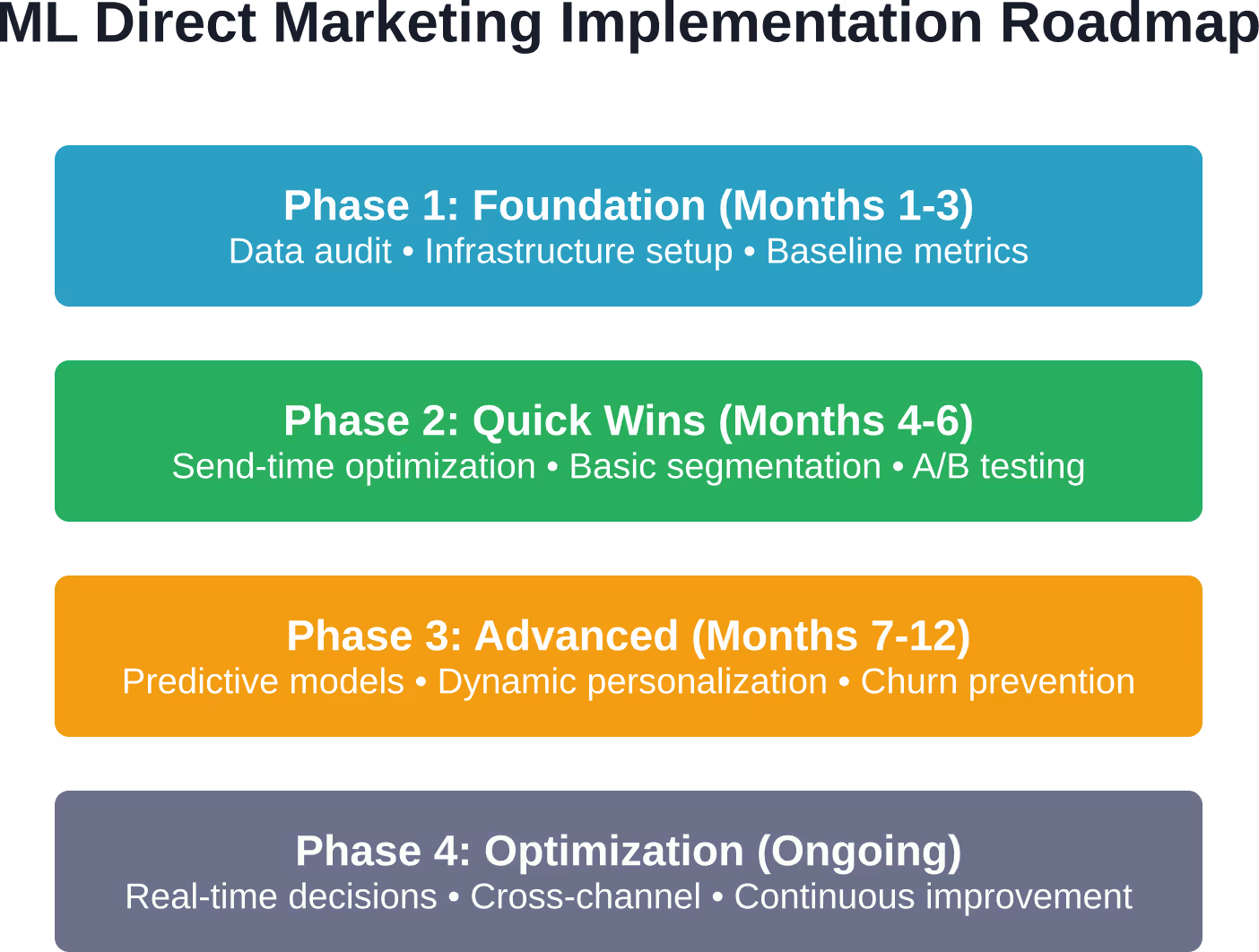
Measuring ROI of Machine Learning Investments
ML implementations require investment in technology, talent, and infrastructure. Justifying these costs requires clear ROI measurement.
Direct Revenue Impact
The most straightforward metric is incremental revenue generated by ML-optimized campaigns versus control groups or historical baselines. Track conversion rate improvements, average order value changes, and customer lifetime value increases.
Efficiency Gains
ML automation reduces manual work required for campaign optimization, audience segmentation, and performance analysis. Calculate the value of marketing team hours redirected from optimization tasks to strategic initiatives.
Reduced Waste
Better targeting means less budget spent reaching low-probability prospects. Measure cost savings from improved targeting efficiency—lower cost per acquisition, reduced email send volume while maintaining or improving results, and decreased ad spend on unlikely converters.
Competitive Positioning
Some ML benefits are harder to quantify but strategically important. Better personalization improves customer satisfaction and brand perception. Faster optimization cycles enable quicker response to market changes. These advantages compound over time even if immediate ROI is modest.
Common Pitfalls to Avoid
Organizations implementing ML for direct marketing frequently encounter avoidable mistakes.
Expecting Immediate Perfection
ML systems improve with time and data. Initial performance might not dramatically exceed existing approaches. Teams sometimes abandon ML initiatives prematurely before the systems have sufficient data to reach full potential.
Neglecting the Human Element
ML augments marketing expertise—it doesn’t replace it. Successful implementations combine algorithmic optimization with human creativity, strategic thinking, and customer empathy. Over-reliance on automation without human oversight leads to tone-deaf messaging or missed strategic opportunities.
Ignoring Edge Cases
ML models optimize for the majority, sometimes at the expense of minority segments. Monitor performance across customer subgroups to ensure the system doesn’t systematically underserve certain populations.
Treating ML as Set-and-Forget
Customer behavior evolves, market conditions change, and products get updated. ML models trained on historical data can become stale. Implement monitoring systems that detect performance degradation and trigger model retraining.
The Competitive Imperative
Machine learning in direct marketing has moved from experimental advantage to competitive necessity. Organizations that master ML-driven personalization, predictive targeting, and automated optimization deliver substantially better customer experiences while operating more efficiently. The gap between ML-enabled marketers and those relying on traditional approaches will widen. As ML systems process more data and improve their predictions, they create self-reinforcing advantages—better targeting generates more revenue, funding additional investment in data and technology, which further improves performance. For organizations still operating with rule-based segmentation and batch-and-blast campaigns, the window to catch up is closing. The good news? The technology has matured enough that implementation paths are well-established. Platforms offer pre-built ML capabilities that don’t require building systems from scratch. The real question isn’t whether to adopt machine learning for direct marketing. It’s how quickly organizations can build the data foundations, technical capabilities, and operational processes to leverage ML effectively.
Frequently Asked Questions
What’s the minimum data volume needed to implement machine learning in direct marketing?
Generally speaking, meaningful ML models require several thousand customer records with sufficient attribute data. For basic applications like send-time optimization or simple segmentation, datasets of 5,000-10,000 customers with at least six months of behavioral history can work. More sophisticated predictive models—churn prediction, lifetime value forecasting—typically need 50,000+ records for reliable performance. Organizations with smaller datasets should start with simpler ML applications or aggregate data over longer timeframes before attempting complex modeling.
How does machine learning differ from traditional marketing automation?
Traditional marketing automation follows explicit rules defined by marketers—if a customer does X, trigger action Y. Machine learning systems discover patterns in data and make predictions without explicit programming. While automation executes predefined workflows, ML continuously learns which customers are likely to respond, what content resonates with each segment, and when to engage each individual. ML augments automation by making the decision logic adaptive rather than static.
Can small businesses benefit from machine learning in direct marketing?
Absolutely. While enterprises have resources to build custom ML systems, small businesses can leverage ML through platforms that embed these capabilities—email marketing tools with built-in send-time optimization, e-commerce platforms with ML-powered product recommendations, or advertising platforms with automated bidding. The key is choosing tools that handle ML complexity behind the scenes rather than attempting custom implementation. Start with simple applications that deliver quick wins rather than comprehensive ML transformation.
What privacy regulations should marketers consider when implementing ML?
The regulatory landscape varies by jurisdiction. In the United States, the FTC actively enforces rules around deceptive practices, consumer data protection, and children’s privacy under COPPA. Europe’s GDPR imposes strict requirements on data collection, consent, and automated decision-making. California’s CCPA grants consumers rights around data access and deletion. Key principles across jurisdictions include obtaining explicit consent for data usage, providing transparency about how ML systems make decisions, allowing consumers to opt out of automated profiling, and implementing security measures to protect customer data. Consult legal counsel familiar with the specific regulations applicable to your business and customer base.
How long does it take to see results from machine learning implementations?
Timeline varies significantly based on starting point and scope. Organizations with solid data infrastructure might see initial improvements from simple ML applications—send-time optimization, basic predictive segmentation—within 2-3 months. More comprehensive implementations requiring data cleanup, system integration, and custom model development typically take 6-12 months before delivering substantial results. ML performance generally improves over time as systems process more data, meaning the most significant gains often appear 12-18 months after launch rather than immediately. Patience and commitment to iterative improvement are essential.
Do I need a data science team to implement machine learning for marketing?
Not necessarily, though technical expertise helps. Many marketing platforms now include built-in ML capabilities that work without data science skills—tools automatically optimize send times, recommend content, or segment audiences using embedded algorithms. For standard use cases, these pre-built solutions often suffice. Custom ML implementations—proprietary models, unique data sources, specialized business logic—do require data science expertise, either through in-house hiring or partnerships with agencies and consultants. Start with platform-native ML features to build familiarity before investing in custom development.
What’s the biggest mistake companies make when implementing ML for direct marketing?
The most common mistake is neglecting data quality and infrastructure before implementing ML. Organizations get excited about advanced algorithms while their underlying data is fragmented across systems, inconsistently tracked, or riddled with errors. ML models trained on bad data produce bad predictions. The unsexy work of data cleaning, customer record unification, tracking implementation, and governance policy creation must happen first. Attempting ML without solid data foundations wastes resources and produces disappointing results that unfairly discredit the technology.
Conclusion
Machine learning has fundamentally transformed direct marketing from intuition-driven outreach into precision-targeted, data-driven engagement. The technology enables predictions humans can’t make, personalization at scales humans can’t manage, and optimization speeds humans can’t match. Organizations already implementing ML are seeing measurable results—conversion rates up 31%, engagement increasing 40%, revenue per user climbing 24%. These aren’t marginal improvements. They represent structural advantages that compound over time as systems process more data and refine their predictions. The implementation path requires investment in data infrastructure, technical capabilities, and process changes. Challenges around data quality, system integration, privacy compliance, and model bias are real and require deliberate attention. But the competitive imperative is clear. As MIT Sloan research indicates, direct mail is reemerging as a profitable channel in the digital age—but only when powered by ML-driven targeting and personalization that cuts through the noise. The same principle applies across all direct marketing channels. Organizations that treat ML as optional or futuristic will find themselves increasingly unable to compete with marketers leveraging predictive targeting, real-time personalization, and automated optimization. The window to develop these capabilities while maintaining competitive positioning is limited. Start with data foundations. Implement quick-win applications that build confidence and demonstrate value. Expand gradually toward more sophisticated capabilities. Most importantly, commit to ML as an ongoing operational capability rather than a one-time project. The future of direct marketing isn’t about choosing between human creativity and machine intelligence. It’s about combining both—using ML to handle optimization at scale while freeing marketers to focus on strategy, storytelling, and customer understanding that algorithms can’t replicate. The technology is ready. The platforms exist. The competitive pressure is mounting. The question is whether your organization will lead this transformation or scramble to catch up.