
Quick Summary: Machine learning in sales uses AI algorithms to automate tasks, predict outcomes, and personalize customer interactions. Sales teams leverage ML for lead scoring, forecasting accuracy, and reducing manual work by up to 50%. Companies adopting ML see improvements like 35% conversion rate boosts and cost reductions of 40-60%. Sales teams have always relied on data to close deals. But here’s the thing: the volume of data available today far exceeds what any human can process effectively. Machine learning steps in to analyze patterns across thousands of interactions, predict which leads will convert, and automate the grunt work that eats up productive selling time. The technology isn’t some distant future concept anymore. Real companies are already seeing measurable results. AI-driven recommendations account for more than 35% of Amazon’s sales according to industry research, setting the industry standard for e-commerce. Companies that adopted Salesforce Einstein experienced a 35% boost in lead-to-opportunity conversion rates and an 18% improvement in deal closure times. But does machine learning actually deliver for the average sales team? The answer depends on understanding what ML does well, where it fits into existing processes, and how to implement it without disrupting what already works.
What Machine Learning Actually Means for Sales Teams
Machine learning is a subset of artificial intelligence that allows systems to learn from data and improve performance without explicit programming for each task. Instead of following rigid rules, ML algorithms identify patterns, classify information, predict outcomes, and make decisions based on historical data. For sales professionals, this translates to systems that can:
- Analyze thousands of past deals to predict which current opportunities will close
- Score leads based on behavior patterns rather than arbitrary point systems
- Generate personalized email copy that adapts based on engagement metrics
- Forecast revenue with accuracy that improves over time
- Automate data entry and administrative tasks that consume selling hours
The difference between traditional sales software and machine learning tools lies in adaptability. Standard CRM systems store data and run reports based on filters you set. ML systems learn which filters matter, discover correlations you didn’t know existed, and adjust their recommendations as new data arrives.
The Three Core Types of Machine Learning
Understanding how ML works helps clarify what sales applications make sense. Machine learning breaks down into three main categories, each suited to different sales challenges.
- Supervised learning trains on labeled historical data to predict outcomes. In sales, this means feeding the algorithm data from past deals marked as won or lost, then using those patterns to score new opportunities. Lead scoring and deal forecasting rely heavily on supervised learning because the goal—closed deal or not—is clearly defined.
- Unsupervised learning finds hidden patterns in data without predefined labels. This approach works for customer segmentation, where the algorithm clusters prospects based on behavior similarities that might not be obvious. Instead of manually creating segments, the system identifies natural groupings that share conversion characteristics.
- Reinforcement learning improves through trial and feedback, optimizing actions to maximize rewards. Email optimization tools use this approach—sending variations of messages, measuring click-through rates, and automatically adjusting copy to improve engagement. Without human intervention, one company’s AI technology analyzed email campaign results and used that data to create new email copy, achieving a 450% increase in email click-through rates at its peak.

Turn Data Into AI Software With AI Superior
AI Superior helps companies assess AI use cases and turn them into working software. Their services cover AI consulting, AI software development, R&D, training, and integration into existing workflows. For sales teams, this can support lead scoring, customer segmentation, sales forecasting, churn prediction, pipeline analysis, or reporting automation.
Need Machine Learning for Sales Workflows?
AI Superior can help with:
- assessing machine learning use cases
- building custom AI and ML tools
- developing forecasting and analytics models
- integrating AI into sales systems
👉 Contact AI Superior to discuss your project.
Predictive Sales Forecasting: Moving Beyond Guesswork
Sales forecasting has traditionally relied on rep intuition and manager judgment. According to one survey, 25% of salespeople admit they’re superstitious about selling, and 66% find magic in the sales process. Machine learning replaces superstition with statistical probability. Academic research comparing ML forecasting models to traditional linear regression found significantly enhanced predictive accuracy. Academic research comparing ML forecasting models to traditional approaches found ML reduced forecasting error by 68% compared to simple regression models and by 26% compared to multivariate regression, particularly over intermediate and long-term forecast horizons. For B2B sales organizations, predictive modeling creates a systematic workflow. Historical sales opportunity data gets enriched with additional features—deal size, industry vertical, engagement history, competitor presence, economic indicators. ML classification models train on this enriched dataset, then generate probability scores for active opportunities along with optimal decision boundaries for prioritization. Real-world application proves the value. A major global B2B consulting firm implementing ML-based forecasting found that decision-making based on algorithm predictions was more accurate and brought higher monetary value than traditional methods.
What Makes ML Forecasting More Accurate
Traditional forecasting typically weighs a handful of variables—deal stage, size, and rep’s gut feeling. Machine learning processes dozens or hundreds of variables simultaneously, identifying subtle correlations that human analysis misses. Consider timing patterns. ML might discover that deals initiated on Tuesdays in manufacturing verticals close 23% faster than those started on Fridays in the same vertical. Or that prospects who engage with pricing documentation before the second meeting have a 40% higher close rate. These insights emerge from pattern recognition across thousands of data points. The systems also adapt. When market conditions shift or new competitors enter, ML models retrain on recent data and adjust their weightings. Static forecasting formulas require manual updates; ML updates itself. 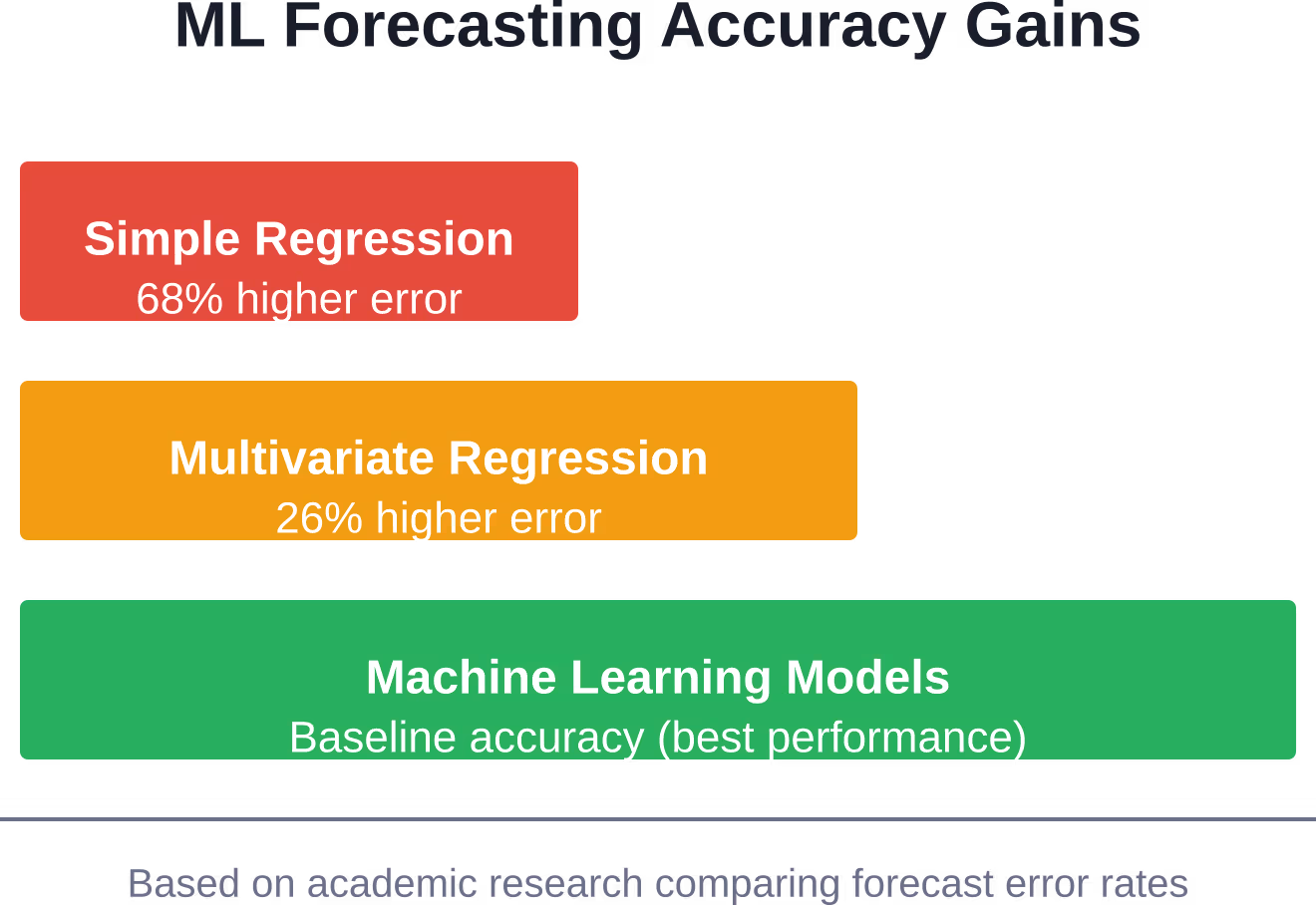
Intelligent Lead Scoring That Actually Works
Manual lead scoring typically assigns points for actions: download a whitepaper, 10 points; attend a webinar, 15 points; visit the pricing page, 20 points. Seems logical. But these systems have problems. First, they treat all prospects the same. A Fortune 500 procurement manager downloading a whitepaper means something different than a college student doing research. Second, they don’t account for patterns across multiple behaviors. Third, they require constant manual adjustment as markets shift. Machine learning flips this model. Instead of assigning arbitrary point values, algorithms analyze which combination of behaviors actually preceded closed deals in the past. The system weighs factors dynamically based on their real predictive power. Companies implementing ML-driven lead scoring through platforms like Salesforce Einstein report significant improvements. The 35% boost in lead-to-opportunity conversion rates stems from sales teams focusing energy on prospects the algorithm identifies as high-probability.
Beyond Basic Demographics
Traditional scoring relies heavily on firmographic data—company size, industry, revenue. ML incorporates behavioral signals that reveal intent. Engagement velocity matters. A prospect who visits the site once per week for two months shows different intent than someone who visits daily for five consecutive days. Email engagement patterns—which links get clicked, how quickly after sending—provide signals. Even navigation paths on the website reveal priorities: someone comparing feature matrices is further along than someone reading introductory blog posts. ML models also learn from negative signals. Prospects who request information but never open follow-up emails might score lower than those with less overall activity but higher engagement rates on what they do open. The result is dynamic scoring that adjusts in real-time as new behavioral data arrives. A lead’s score might jump or drop based on yesterday’s activity, giving sales teams current intelligence rather than static snapshots.
Automating the Time-Wasters
Here’s real talk: salespeople spend shocking amounts of time on non-selling activities. Data entry, meeting notes, email follow-ups, research—these tasks consume hours that could go toward actual customer conversations. Analysis shows companies implementing comprehensive sales automation report time reductions of 40-50% on mundane tasks, allowing sales professionals to focus on relationship building and deal strategy. That’s not a marginal improvement. That’s reclaiming half the workday. The automation happens across multiple touchpoints:
- Automatic CRM updates after calls and meetings
- AI-generated follow-up email drafts based on conversation content
- Research summaries on prospect companies pulled from multiple sources
- Meeting scheduling that negotiates time slots without back-and-forth
- Deal documentation that populates templates from conversation transcripts
Companies implementing comprehensive sales automation report substantial operational improvements. Research on sales automation shows an increase in leads and appointments of more than 50%, cost reductions of 40% to 60%, and call time reductions of 60% to 70%. Now, skeptics worry that automation makes sales impersonal. The opposite proves true in practice. By handling administrative grunt work, ML frees up time for the high-value human interactions that actually close deals—understanding customer pain points, crafting customized solutions, building trust. 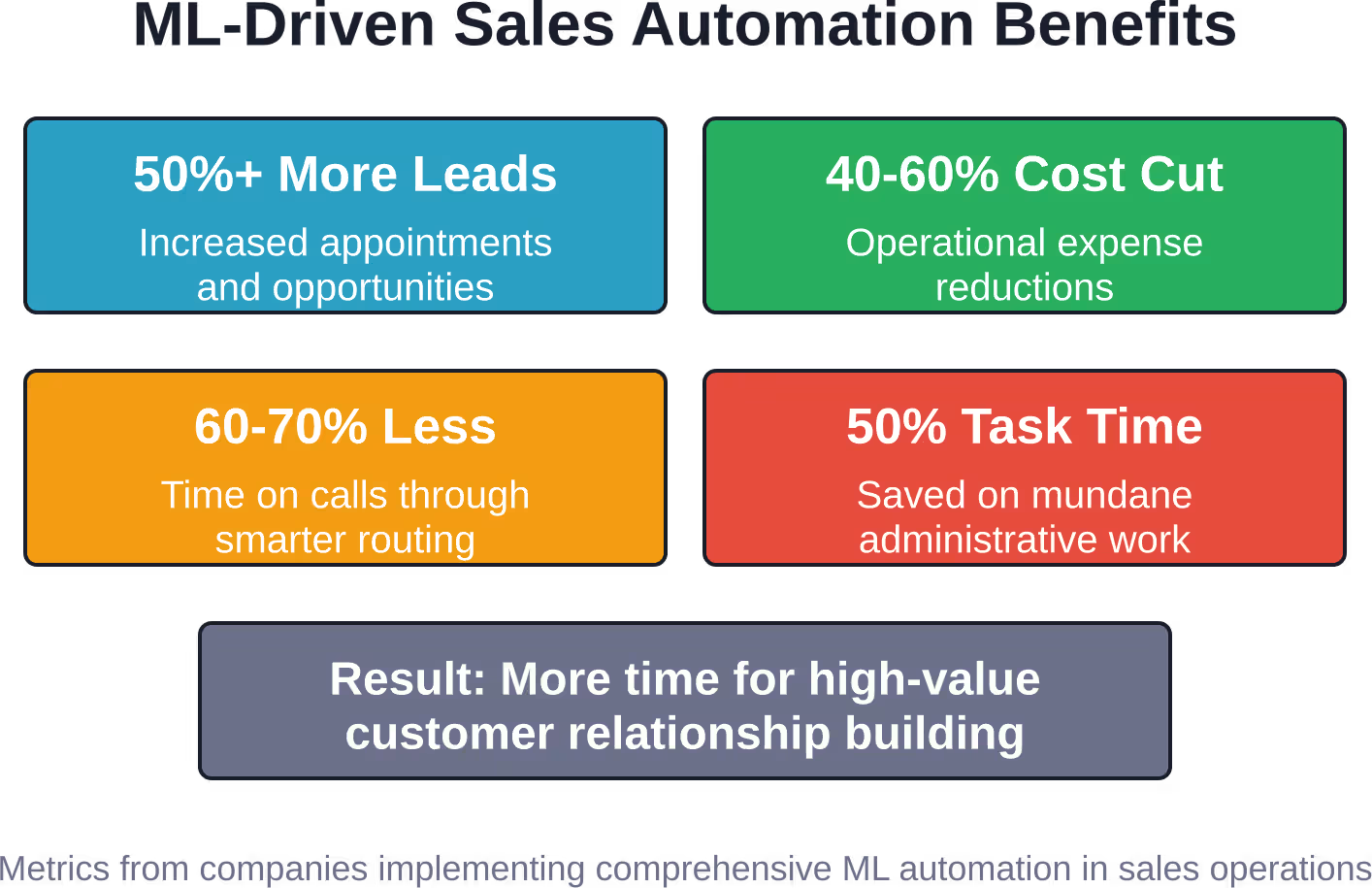
Personalization at Scale
Every sales professional knows personalization matters. Prospects respond better to messages that acknowledge their specific situation, challenges, and context. The problem? Personalization takes time. Research each company, understand their pain points, craft custom messaging—multiply that by hundreds of prospects and the math doesn’t work. Machine learning solves the scale problem. ML systems analyze prospect data—industry, company size, technology stack, recent news, hiring patterns, competitive landscape—and generate personalized message templates that incorporate relevant details automatically. The business impact is substantial. According to McKinsey, companies that excel at personalization often see 5–15% revenue lift and 10–30% return on investment gains. The best performers combine ML-generated insights with human creativity to deliver messages that feel authentic while being efficiently produced. Email optimization provides a clear example. Reinforcement learning algorithms test subject lines, message copy, send times, and call-to-action variations across segments, then automatically shift toward combinations that drive engagement. The system learns which approaches work for which audiences without requiring manual A/B test setup for every campaign. Content recommendations work similarly. When a prospect visits your site, ML analyzes their behavior alongside patterns from similar visitors who eventually converted, then surfaces content most likely to advance the buying decision. Amazon’s recommendation engine—responsible for more than 35% of their sales—demonstrates the power of getting this right.
Dynamic Pricing and Offer Optimization
Pricing strategy in B2B sales often involves significant negotiation and customization. Machine learning helps determine optimal pricing and discount levels based on historical deal data, competitive positioning, and customer characteristics. The algorithms identify patterns in past negotiations: which customer segments accepted which discount levels, where pricing became a deal-breaker, which value-adds closed deals without discounting. This intelligence lets sales teams enter negotiations with data-backed pricing strategies rather than arbitrary discount authority levels. Some organizations use ML to generate dynamic proposal configurations—recommending product bundles, service tiers, and contract terms that maximize both close probability and deal value based on the specific prospect profile.
Real Implementation Challenges
Machine learning in sales sounds compelling on paper. Implementation is messier. Organizations face genuine obstacles that determine whether ML initiatives deliver value or become expensive disappointments.
- Data quality makes or breaks ML. Garbage in, garbage out remains true. If your CRM contains incomplete records, inconsistent data entry, and outdated information, ML models will learn from flawed patterns and generate unreliable predictions. Many organizations need to invest significant effort cleaning historical data before ML training makes sense.
- Integration complexity creates friction. Sales teams already juggle multiple tools—CRM, email platform, calendar, communication tools, analytics dashboards. Adding ML capabilities that don’t integrate seamlessly with existing workflows creates adoption resistance. The best ML tools embed directly into platforms sales teams already use rather than requiring separate logins and processes.
- Change management matters more than technology. Sales professionals who’ve succeeded with existing approaches often resist new systems, especially when algorithms question their judgment on lead prioritization or deal probability. Successful implementations involve sales teams in the rollout, demonstrate clear value quickly, and position ML as augmentation rather than replacement of human expertise.
- Model transparency builds trust. Black box algorithms that provide scores or recommendations without explanation generate skepticism. Sales professionals want to understand why the system scored a lead as high-priority or predicted a deal would close. ML implementations that provide reasoning—“this opportunity scores high because the company matches the profile of our top 10% of customers and engagement velocity increased 300% this week”—gain adoption more readily.
Measuring Machine Learning ROI
Executives funding ML initiatives rightfully demand measurable returns. Several metrics indicate whether sales ML implementation is working:
| Metric | What It Measures | Target Improvement |
|---|---|---|
| Forecast accuracy | How closely predicted revenue matches actual results | 15-30% reduction in variance |
| Lead conversion rate | Percentage of scored leads that become opportunities | 20-35% increase |
| Sales cycle length | Average time from first contact to closed deal | 10-20% reduction |
| Time on administrative tasks | Hours spent on data entry, research, documentation | 40-50% reduction |
| Win rate | Percentage of qualified opportunities that close | 10-25% increase |
| Average deal size | Revenue per closed deal | 5-15% increase |
Track these metrics with a baseline period before ML implementation, then measure changes after adoption stabilizes—typically 3-6 months for fair assessment. Early results often underperform as teams learn the system and algorithms accumulate training data. But wait. Not every improvement comes from ML alone. Isolating ML impact from other variables—market conditions, new hires, product changes, marketing campaigns—requires careful analysis. Control groups or phased rollouts help establish causation rather than correlation.
Practical Use Cases Worth Prioritizing
Organizations considering ML in sales face a menu of options. Starting with high-impact, lower-complexity use cases builds momentum and demonstrates value before tackling more ambitious implementations.
Next-Best-Action Recommendations
ML analyzes deal stage, customer behavior, and historical patterns to suggest the optimal next action for each opportunity. Should the rep send additional case studies, schedule a technical demo, introduce an executive sponsor, or propose a pilot project? The algorithm recommends actions based on what moved similar deals forward. This application requires solid historical data on deal progression but integrates relatively cleanly into existing CRM workflows. Sales teams get actionable guidance without needing to change fundamental processes.
Churn Prediction for Customer Success
For businesses with recurring revenue, predicting which customers are at risk of churning allows proactive intervention. ML models analyze usage patterns, support ticket history, payment behavior, and engagement metrics to flag accounts needing attention before renewal risk becomes critical. Customer success teams can then prioritize outreach, offer training, address concerns, or adjust service levels for at-risk accounts. Retaining existing customers almost always costs less than acquiring new ones, making churn prediction high-ROI.
Territory and Account Assignment Optimization
Assigning accounts to sales reps typically follows geographic regions or arbitrary splits. ML can optimize assignments based on rep strengths, industry expertise, relationship history, and workload capacity to maximize coverage efficiency and win probability. The algorithms consider factors like which rep characteristics correlate with success in specific industries or deal types, then recommend assignments that play to team strengths. This approach works especially well for inside sales teams where geography matters less.
Competitive Win/Loss Analysis
ML can analyze win/loss patterns to identify which factors most influence outcomes when competing against specific rivals. Does your team win more often when leading with certain features? Do particular objections signal likely losses against Competitor X but not Competitor Y? These insights inform battle cards, competitive positioning, and deal strategy. Rather than generic competitive intelligence, ML provides situational guidance based on what actually worked in past head-to-head contests.
The Human Element Still Matters
Despite all the automation and prediction, sales remains fundamentally about human relationships. Machine learning handles the quantifiable aspects—data analysis, pattern recognition, repetitive tasks—but doesn’t replace the judgment, empathy, and creativity that close complex deals. Top sales professionals use ML as augmented intelligence rather than artificial intelligence. The algorithms provide recommendations, scores, and predictions. The human decides when to follow that guidance and when context requires a different approach. Consider a scenario: ML scores a lead as low-priority based on firmographic data and limited engagement. But the sales rep knows the contact personally from a previous role at a different company and understands they’re the decision-maker for a major initiative. Human context overrides the algorithm. Conversely, ML might flag an opportunity as high-probability when the rep has doubts. Rather than ignoring the data, effective salespeople investigate what signals the algorithm detected that they missed. Sometimes the rep’s intuition is right and the model needs refinement. Other times the data reveals patterns the human didn’t see. The best implementations create feedback loops. When reps disagree with ML recommendations, they document why. This feedback helps refine models and capture context that wasn’t in the original training data. Over time, the system becomes more nuanced and the human-machine partnership more effective.
Looking Ahead: Where Sales ML Is Heading
Machine learning in sales continues evolving rapidly. Several trends are shaping where the technology goes next. Conversational AI is getting sophisticated enough to handle initial customer interactions—qualifying leads, answering basic questions, scheduling meetings—with quality approaching human performance. Gartner projected that by 2020, customers would manage 85% of their interactions with organizations without human involvement. That prediction is now materializing in sales contexts. Emotion and sentiment analysis adds psychological dimensions to traditional data. ML algorithms analyze tone, word choice, and engagement patterns to assess prospect sentiment and buying readiness beyond explicit actions. If email responses become terse or meeting attendance drops, sentiment analysis flags potential concerns before the deal stalls obviously. Predictive content generation is advancing. Current systems suggest content to share with prospects. Next-generation tools will generate customized content—proposals, presentations, case studies—tailored to specific prospect characteristics and buying stage, with human review and refinement rather than creation from scratch. Cross-functional ML integration will connect sales insights with marketing, product, and customer success. Closed-loop systems where sales outcome data improves marketing lead generation, which produces better sales opportunities, which generates more training data, creating compounding improvements across the customer lifecycle.
Frequently Asked Questions
How much data do you need for machine learning in sales to work?
Practitioners typically recommend datasets of at least 500-1000 historical deals for supervised learning models to be viable like lead scoring and forecasting. More data improves accuracy, but modern ML techniques can extract useful patterns from relatively modest datasets. Starting with a pilot on one product line or region that has sufficient data makes more sense than waiting until the entire organization has years of perfect CRM history.
Can small sales teams benefit from machine learning or is it only for enterprises?
Small teams absolutely benefit, though the use cases differ slightly. While enterprise-scale forecasting might not apply to a 5-person sales org, lead scoring, email optimization, and automation of administrative tasks deliver value regardless of team size. Cloud-based ML platforms have dropped implementation costs dramatically—many tools are now accessible at sub-$100 per user monthly pricing rather than requiring six-figure custom development.
What happens when machine learning predictions are wrong?
ML predictions are probabilistic, not guarantees. A lead scored at 80% conversion probability still has a 20% chance of not converting. Treating scores as absolute certainties creates problems. The key is calibration—does the system’s confidence level match reality? A well-calibrated model where 80% predictions actually convert 75-85% of the time is useful. Regular monitoring and model retraining on new data helps maintain accuracy as market conditions change.
Does machine learning replace sales jobs?
ML automates tasks, not entire roles. Administrative work, data entry, and basic research get automated, but relationship building, complex problem-solving, negotiation, and strategic account management remain human activities. The shift is toward higher-value work. Just as spreadsheets didn’t eliminate accounting jobs but changed what accountants do, ML transforms sales roles toward more strategic, consultative functions. Organizations implementing ML typically redeploy saved time toward more selling activity rather than reducing headcount.
How do you get sales teams to actually use machine learning tools?
Adoption requires demonstrating clear value quickly, minimizing workflow disruption, and involving sales teams in the implementation. Forcing tools that add steps or complexity without obvious benefit generates resistance. The most successful approaches identify pain points sales teams actually feel—too much admin work, difficulty prioritizing leads, inconsistent forecasting—and show ML solving those specific problems. Starting with volunteers rather than mandates, celebrating early wins, and incorporating feedback builds momentum.
What’s the difference between AI and machine learning in sales?
Artificial intelligence is the broad concept of machines performing tasks that typically require human intelligence. Machine learning is a specific subset of AI focused on systems that learn from data rather than following explicitly programmed rules. In sales contexts, AI often refers to any intelligent automation—chatbots, recommendation engines, predictive analytics—while ML specifically describes the learning algorithms powering those capabilities. The terms overlap significantly in practice.
How long does it take to see results from machine learning implementation?
Quick wins like basic lead scoring can show results within 4-8 weeks of implementation. More sophisticated applications like accurate forecasting or complex personalization typically need 3-6 months as algorithms accumulate training data and teams adapt workflows. Full ROI from comprehensive ML integration often materializes over 12-18 months. Setting realistic expectations and measuring incremental progress prevents premature abandonment when results don’t materialize instantly.
Making Machine Learning Work for Your Sales Organization
Machine learning in sales has moved from experimental to essential. Organizations that treat ML as optional increasingly find themselves at a competitive disadvantage against teams leveraging data-driven insights, automation, and predictive analytics. But successful implementation requires more than adopting the latest AI-powered sales tool. It demands clean data, thoughtful integration with existing processes, genuine commitment to change management, and realistic expectations about what ML can and cannot do. Start small. Pick one high-impact use case—lead scoring, forecasting, or administrative automation—where you have adequate data and clear success metrics. Prove value there before expanding to more ambitious applications. Invest in data quality. ML models are only as good as the data they learn from. If CRM hygiene is poor, address that foundational issue before layering ML on top of flawed data. Keep humans in the loop. ML augments sales teams, not replaces them. The most effective implementations combine algorithmic insights with human judgment, creating partnerships where each contributes what they do best. The sales organizations thriving in 2026 are those that figured out this balance years ago. The window for competitive advantage from early ML adoption is closing. But the window for avoiding competitive disadvantage by ignoring ML is still open—barely.