Quick Summary: Machine learning, particularly neural machine translation (NMT), has revolutionized website translation by enabling context-aware, accurate translations that adapt to linguistic nuances. Unlike rule-based systems, NMT models trained on parallel data can handle complex sentence structures and domain-specific terminology, making multilingual website localization faster and more cost-effective while maintaining quality that approaches human translation. Website translation used to be straightforward—expensive, slow, and entirely dependent on human translators. Then statistical methods arrived, crunching through billions of words to find patterns. Now? Neural networks have changed everything. Machine learning, specifically neural machine translation, handles the heavy lifting for businesses expanding into multilingual markets. The technology doesn’t just swap words between languages. It understands context, maintains brand voice, and adapts to domain-specific terminology in ways that earlier systems couldn’t touch. Here’s the thing though—not all machine translation is created equal. The difference between rule-based systems and modern NMT is massive.
The Evolution From Rules to Neural Networks
Early translation systems relied on linguistic rules—grammar structures, dictionaries, and syntax patterns painstakingly coded by experts. Rule-Based Machine Translation (RBMT) worked, sort of. It struggled with idioms, context shifts, and the messy reality of how people actually write. Statistical Machine Translation (SMT) improved things by analyzing massive collections of parallel texts. Google’s early translation system used this approach, scanning billions of document pairs to predict likely translations. Better than rules alone, but still rigid. Then neural networks entered the picture. According to Google Research, their Neural Machine Translation system introduced a fundamental shift—instead of translating phrase by phrase, the entire sentence became the unit of analysis. Context flowed through the network, capturing nuances that statistical methods missed.
| Translation Method | Core Approach | Key Limitation |
|---|---|---|
| Rule-Based MT | Linguistic rules and dictionaries | Struggles with context and idioms |
| Statistical MT | Probability from parallel texts | Phrase-level focus loses sentence meaning |
| Neural MT | Deep learning on full sentences | Requires substantial training data |
The Transformer architecture, introduced by Google Research in 2017, accelerated this revolution. Self-attention mechanisms allowed models to weigh the importance of different words in a sentence simultaneously, rather than processing sequentially like earlier recurrent networks.
How Neural Machine Translation Works
Neural machine translation operates through encoder-decoder architecture. The encoder reads the source sentence and compresses its meaning into a mathematical representation—a context vector capturing semantic essence. The decoder then generates the target language output from this representation. But wait. The real magic happens in the attention mechanism. Instead of forcing all sentence information through a single fixed-length vector, attention lets the decoder focus on relevant parts of the source sentence while generating each target word. Training these models requires parallel data—matched sentences in source and target languages. Research shows that model performance scales with both parameter count and training data volume. The Transformer architecture demonstrated significant improvements on translation benchmarks. 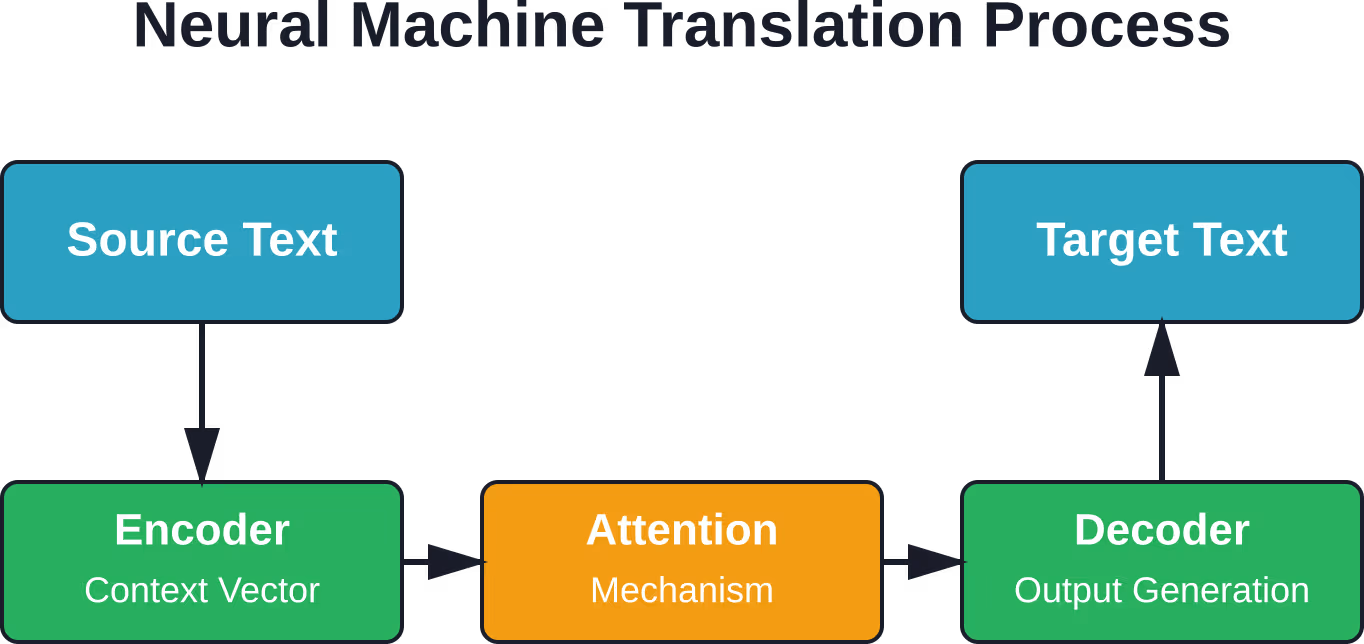 Multilingual models take this further. Google Research demonstrated that a single NMT model can translate between multiple language pairs, including zero-shot translation—translating between languages the model never explicitly trained on together. The model learns shared representations across languages.
Why Businesses Choose NMT for Website Localization
Speed and scale matter for global expansion. Traditional human translation handles perhaps 2,000-3,000 words per day per translator. Neural machine translation processes millions of words instantly. That said, raw speed means nothing without quality. Modern NMT systems deliver translations that often require only light post-editing rather than complete rework. The technology handles domain adaptation—training on industry-specific content produces models that understand technical terminology, legal language, or marketing copy. Cost efficiency drives adoption too. Building custom NMT engines requires upfront investment in training data and compute resources, but the marginal cost of each additional translation drops dramatically. For websites updating content daily, this economics shifts from prohibitive to practical.
Content Localization Beyond Word Substitution
Website localization extends beyond translating strings. Layout considerations, cultural adaptation, and maintaining brand voice across languages require systems that understand context. Neural models trained on parallel data that includes similar content types learn these patterns. Research from arXiv on content-localization for dialectal Arabic translation demonstrated how models could adapt Spanish and French content specifically for Levantine and Gulf Arabic audiences, handling not just language differences but regional dialect variations. The training approach matters. Studies split data into training and testing sets—typically 90% for training and 10% for testing as shown in neural translation research. Additional validation splits (often 20% of the remaining training data) help prevent overfitting and ensure the model generalizes to new content.
Training Machine Translation Engines
Building effective translation models requires three core elements: parallel data, computational resources, and evaluation frameworks. Parallel data consists of matched sentence pairs in source and target languages. Quality matters more than quantity, though both help. Domains should match—training on legal documents won’t produce great marketing translations. Research on ad localization workflows showed that deep learning systems with human-in-the-loop refinement significantly improved efficiency. Real talk: data cleaning determines success. Misaligned sentences, encoding errors, or inconsistent terminology corrupt model learning. Preprocessing pipelines handle tokenization, normalization, and quality filtering before training begins. 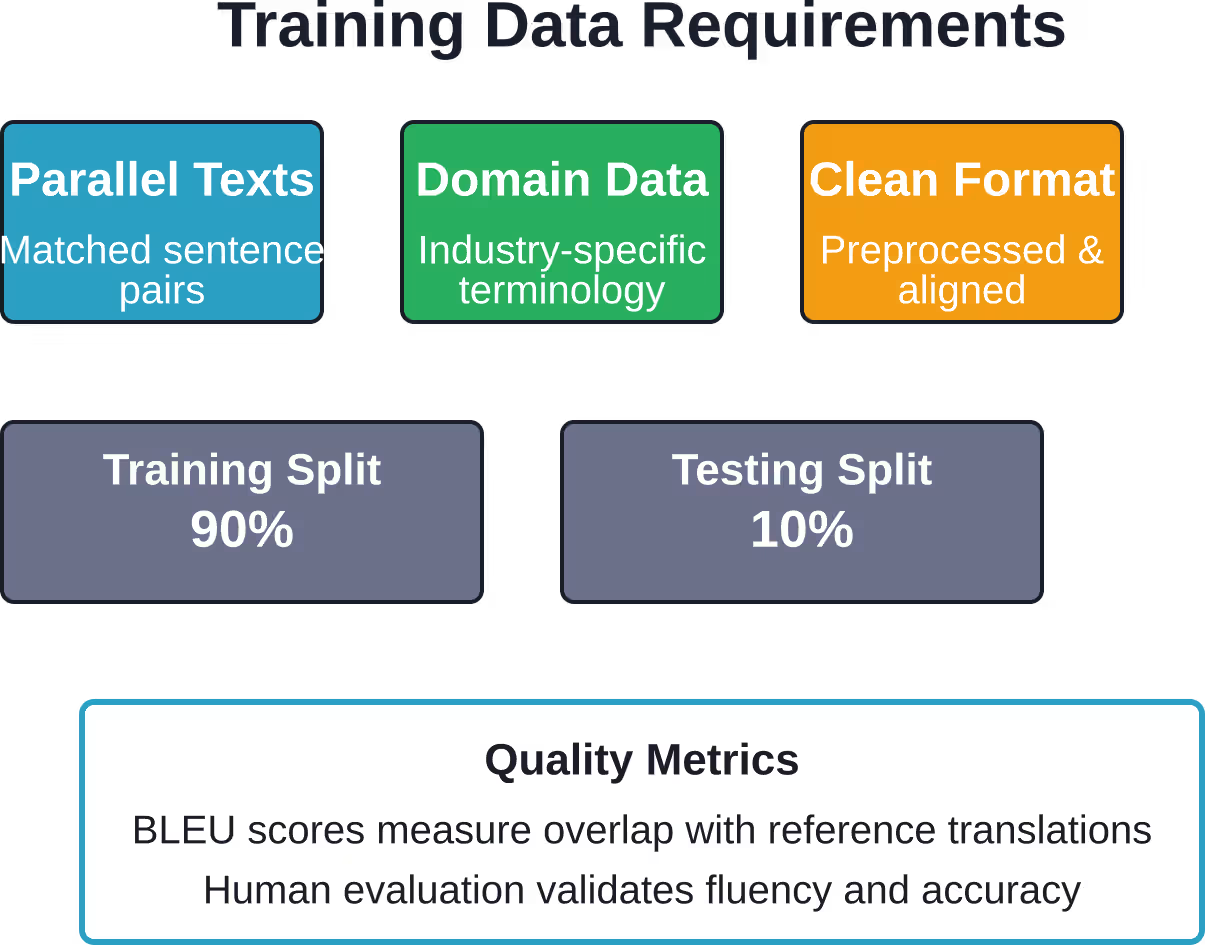
Evaluation and Continuous Improvement
BLEU scores provide automated quality measurement by comparing machine output against human reference translations. Higher scores indicate better overlap, but they’re not perfect. A BLEU score of 30+ generally indicates understandable translation, while 40-50+ is considered high quality. Human evaluation remains essential. Fluency—does the translation read naturally?—and accuracy—does it preserve meaning?—require human judgment. Research on Estonian translation datasets compared human versus machine-translated benchmarks, finding that human translation consistently improved model accuracy in evaluation tasks. Post-editing time offers another practical metric. If professional translators spend 60% less time editing machine output than translating from scratch, the system delivers value. Research on ad localization workflows showed annotation time dropped from 40 minutes to 15 minutes after implementing deep learning systems with human-in-the-loop refinement. 
Apply Machine Learning to Website Translation With AI Superior
Website translation projects often involve large amounts of multilingual content, NLP workflows, and ongoing content updates. AI Superior can help teams apply machine learning to translation systems, language processing, and automated multilingual workflows. Their services cover AI consulting, NLP, machine learning, AI software development, proof of concept development, and model evaluation. AI Superior can support website translation projects with:
- Reviewing multilingual datasets and content structures
- Building proof of concept translation workflows
- Defining translation and NLP use cases
- Testing translation quality and consistency
- Developing NLP-based language processing systems
- Supporting workflow automation and content processing
- Planning integration into websites or CMS platforms
For website translation, this may apply to multilingual content processing, automated translation workflows, localization support, language classification, and NLP-based content analysis. Reach out to AI Superior to discuss the implementation approach.
Practical Implementation Challenges
Low-resource languages present the biggest hurdle. Neural models need substantial training data—thousands or preferably millions of sentence pairs. Languages with limited digital content struggle. Transfer learning and multilingual models help. Google Research demonstrated systems translating over a thousand languages by learning shared representations. Models trained on high-resource language pairs can bootstrap low-resource translation through these shared patterns. Domain adaptation requires ongoing work. A model trained on general web content won’t immediately excel at medical translation. Fine-tuning on domain-specific parallel data adjusts the model, but acquiring that specialized data takes effort.
Integration With Existing Workflows
Website translation systems need to handle more than plain text. HTML markup, placeholders, formatting codes, and special characters must pass through untouched. Preprocessing pipelines protect these elements during translation. Version control matters. Websites update constantly—new product descriptions, blog posts, UI strings. Translation memory systems track what’s already been translated, sending only new or changed content through the NMT engine. Quality assurance workflows combine automated checks (terminology consistency, number preservation, tag integrity) with selective human review. High-visibility content like homepage copy gets more scrutiny than user-generated comments.
The Role of Large Language Models
Large language models like GPT-4 represent a paradigm shift, as noted in recent arXiv research on machine translation’s future. These models, trained on massive multilingual text corpora, demonstrate translation capabilities without explicit parallel data training. The short answer? LLMs bring broad linguistic knowledge and contextual understanding. They handle rare language pairs, adapt to different domains through prompting, and can incorporate external context like glossaries or style guides. But specialized NMT models still outperform general LLMs on specific language pairs and domains where dedicated training data exists. The ideal approach often combines both—LLMs for unusual requests or low-resource languages, fine-tuned NMT for high-volume, quality-critical translation.
Multilingual Benchmarks and Quality Assessment
Standardized evaluation matters. Multilingual benchmarks like NanoBEIR (covering five languages including English, Korean, Japanese, Thai, and Vietnamese with 649 queries across 13 diverse retrieval tasks) enable consistent quality comparison across systems. These benchmarks test 13 different information retrieval tasks, measuring how well translation systems preserve searchability and semantic meaning. For website localization, maintaining search functionality across languages proves critical. Community-driven evaluation also provides insights. User experiences and real-world testing complement academic benchmarks, revealing edge cases and practical challenges that controlled datasets miss. 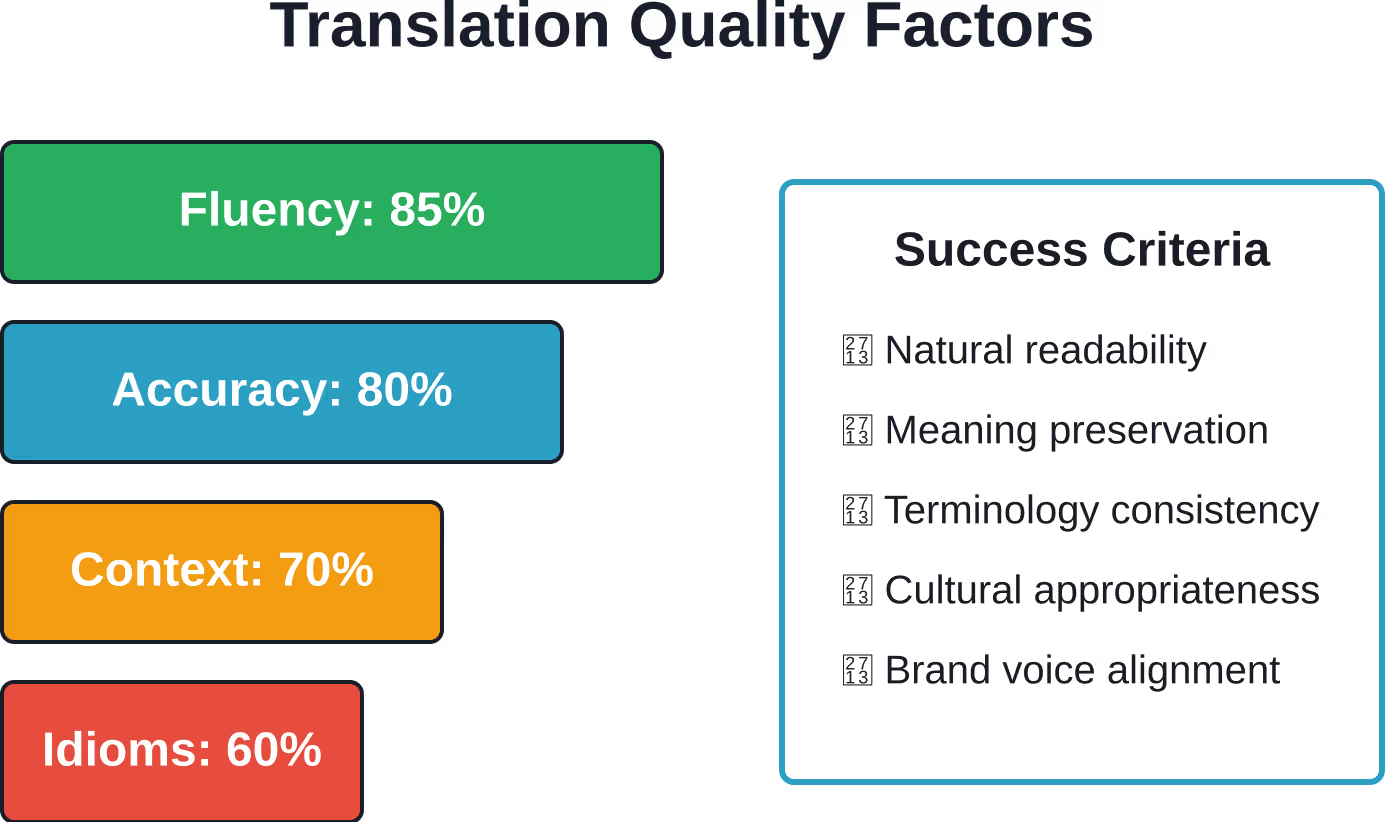
Future Developments in Translation Technology
Multimodal translation systems process text alongside images, video, and audio. For websites with rich media content, this means translating not just captions but understanding visual context to improve accuracy. Real-time adaptation continues improving. Models that learn from user corrections during post-editing get better over time without full retraining. Active learning identifies uncertain translations for human review, focusing expert effort where it matters most. Privacy-preserving translation addresses concerns about sensitive content. On-device models and federated learning approaches enable translation without sending data to external servers—critical for legal, medical, or confidential business content.
FAQs
How accurate is neural machine translation compared to human translation?
Neural machine translation quality varies by language pair and content type. For high-resource languages like English-French or English-Spanish with substantial training data, NMT often achieves near-human quality for straightforward content. BLEU scores above 40 indicate professional-grade output. However, nuanced content, creative writing, or low-resource languages still benefit significantly from human translation or post-editing. Best practice combines NMT for speed and scale with human review for quality assurance.
What amount of training data does a custom NMT engine require?
Minimum viable training requires tens of thousands of parallel sentence pairs, but quality improves substantially with hundreds of thousands or millions of examples. Research demonstrates performance scaling with data volume—systems with appropriate training data showed measurable improvement in enterprise applications. Domain-specific content needs less total data if the training set closely matches the target use case. For website localization, existing translated pages provide excellent training material.
Can machine learning handle specialized industry terminology?
Neural models excel at domain adaptation when trained on industry-specific parallel data. Fine-tuning a general NMT model with technical documentation, legal texts, or medical content teaches the system specialized terminology and phrasing conventions. Terminology databases can be integrated into translation pipelines to enforce specific term choices. Research on ad localization and dialect-specific translation shows models successfully adapt to narrow domains with appropriate training data.
How do multilingual models differ from bilingual translation systems?
Multilingual models translate between multiple language pairs using a single neural network, learning shared representations across languages. Google Research demonstrated these systems enable zero-shot translation—translating between language pairs never explicitly trained together. Bilingual models focus on one language pair, often achieving higher quality for that specific direction but requiring separate models for each pair. Multilingual approaches reduce infrastructure complexity and can improve low-resource language translation through transfer learning from high-resource pairs.
What metrics determine whether NMT quality is sufficient?
BLEU scores provide automated quality assessment, with scores above 30-50 generally indicating usable output for many content types. Human evaluation measures fluency (natural readability) and accuracy (meaning preservation). Post-editing time offers practical measurement—if professional translators edit machine output 50-70% faster than translating from scratch, the system delivers value. Error rates for critical elements like numbers, names, and negation also matter. Website-specific metrics include maintaining clickability of translated links and preserving formatting codes.
How does NMT integration work with existing content management systems?
Modern NMT systems integrate via APIs that accept source text and return translations programmatically. Content management systems send new or updated content through these APIs, typically with preprocessing to protect HTML tags, placeholders, and formatting codes. Translation memory systems track previously translated segments, avoiding redundant processing. Workflows often include automated quality checks (terminology consistency, number preservation) followed by selective human review based on content importance. Version control ensures only changed content requires retranslation.
What are the main challenges when implementing machine translation for websites?
Low-resource languages with limited training data pose the biggest technical challenge. Maintaining consistency across large websites with hundreds or thousands of pages requires robust translation memory and terminology management. HTML complexity—nested tags, dynamic content, placeholders—demands careful preprocessing. Cultural adaptation beyond literal translation needs additional attention. Quality assurance at scale requires balancing automated checking with selective human review. Initial setup costs for data preparation, model training, and workflow integration represent significant upfront investment, though ongoing translation costs decrease substantially.
Moving Forward With Machine Translation
Neural machine translation has matured from experimental technology to production-ready infrastructure. Businesses expanding globally can now localize websites at scale while maintaining quality that approaches human translation for many content types. The key lies in realistic expectations and proper implementation. NMT excels at high-volume, straightforward content—product descriptions, documentation, support articles. Creative marketing copy, legal contracts, and culturally sensitive content still benefit from human expertise. Successful website localization combines technology with human oversight. Neural models handle translation velocity and consistency. Human translators and editors focus on cultural adaptation, brand voice, and quality assurance. This hybrid approach delivers both speed and quality. Start by assessing content volume, language requirements, and quality expectations. Pilot projects with non-critical content test system performance before full deployment. Gather feedback, measure results, and iterate. The technology continues improving—models trained today will be surpassed by better systems tomorrow. Ready to explore machine learning for website translation? Evaluate available platforms, consider custom model training for domain-specific needs, and build workflows that leverage both automation and human expertise. The multilingual web is no longer optional for global business—the question is how efficiently translation infrastructure enables that expansion.