
Quick Summary: Predictive analytics in asset management uses historical and real-time data to forecast equipment deterioration, optimize maintenance strategies, and improve decision-making. By applying statistical models and machine learning techniques, organizations can shift from reactive to proactive asset management, reducing unplanned downtime significantly and extending asset lifecycles significantly. Asset management isn’t what it used to be. Organizations managing industrial equipment, financial portfolios, or infrastructure networks now face mounting pressure to maximize asset performance while controlling costs. The traditional approach of fixing things when they break has become unsustainable. Predictive analytics changes that equation entirely. By analyzing patterns in historical data and real-time sensor readings, organizations can anticipate failures before they happen, optimize maintenance schedules, and make smarter investment decisions. The shift from reactive to proactive strategies delivers measurable improvements in reliability and cost control. Here’s the thing though—implementing predictive analytics isn’t just about buying software. It requires the right data infrastructure, analytical techniques, and organizational commitment to act on insights before problems emerge.
What Predictive Analytics Means for Asset Management
Predictive analytics applies statistical algorithms and machine learning models to historical and real-time data to forecast future outcomes. In asset management contexts, this translates to anticipating equipment failures, forecasting market trends, and identifying optimal intervention points. The approach relies on multiple data sources. Sensor readings track vibration, temperature, and performance metrics. Maintenance logs document past failures and repairs. External data captures environmental conditions, market indicators, or usage patterns. Machine learning models identify subtle patterns humans miss. A gradual increase in bearing temperature might seem insignificant, but algorithms recognize it as a precursor to catastrophic failure weeks before traditional monitoring would trigger an alert.
Four Analytics Types in Asset Management
Asset management analytics falls into four distinct categories, each building on the previous level:
| Analytics Type | Primary Question | Application in Asset Management |
|---|---|---|
| Descriptive | What happened? | Dashboard reports showing equipment performance, failure rates, and maintenance costs |
| Diagnostic | Why did it happen? | Root cause analysis correlating equipment failures with operational conditions |
| Predictive | What will happen? | Forecasting equipment deterioration, market trends, and optimal intervention timing |
| Prescriptive | What should we do? | Automated recommendations for maintenance scheduling and resource allocation |
Most organizations start with descriptive analytics—basic reporting on what’s already happened. But the real value emerges when moving into predictive and prescriptive territories.
From Reactive Maintenance to Proactive Planning
Traditional asset management operates reactively. Equipment runs until it breaks, triggering emergency repairs that disrupt operations and inflate costs. Scheduled preventive maintenance helps, but it’s inefficient—replacing components on fixed intervals regardless of actual condition. Predictive analytics enables condition-based maintenance. Instead of guessing when a pump bearing needs replacement, sensors and algorithms track degradation in real-time. Maintenance happens precisely when needed, not too early or too late. The impact on Mean Time Between Failure (MTBF) can be substantial. Organizations implementing predictive maintenance strategies typically see improvements in equipment reliability and reductions in unplanned downtime. According to academic research, ensemble and deep learning models show improvements in predictive reliability compared to traditional approaches such as ARIMA and linear regression.
How Prediction Models Work
Multiple techniques power predictive analytics in asset management. Time series analysis examines patterns over time, identifying trends and seasonal variations. Regression models establish relationships between operational parameters and failure rates. Machine learning approaches handle more complex scenarios. Random Forest algorithms process hundreds of variables simultaneously, weighing each factor’s contribution to failure risk. Neural networks detect non-linear patterns that simpler models miss. Recent studies show that many studies integrate macroeconomic indicators, technical indicators, and sentiment analysis for multi-dimensional forecasting, with some adopting multi-asset forecasting approaches across equities, cryptocurrencies, and derivatives. Model interpretability matters too. Black-box algorithms might deliver accurate predictions, but stakeholders need to understand why a model flags specific equipment for maintenance. Research indicates that some recent studies apply SHAP and LIME techniques to explain model decisions in transparent terms.
Data Requirements and Integration Challenges
Predictive analytics demands quality data. Garbage in, garbage out applies ruthlessly here. Successful implementations require multiple data streams flowing into centralized analytics platforms. Sensor data provides the foundation. Internet of Things (IoT) devices monitor vibration, temperature, pressure, and other parameters continuously. But sensors alone aren’t enough—maintenance history, operational logs, and environmental data add crucial context. Data integration presents real challenges. Legacy systems store information in incompatible formats. Sensors use different communication protocols. Getting everything into a unified analytical environment requires significant infrastructure investment. Real talk: data quality issues derail many predictive analytics projects. Missing readings, sensor drift, and inconsistent documentation create noise that obscures genuine patterns. Organizations need robust data governance before analytics can deliver value.
Investment Strategy Applications
Financial asset management leverages predictive analytics differently than industrial applications, but the core principle remains identical—using historical patterns to forecast future outcomes. Portfolio managers apply predictive models to identify market trends, assess risk exposure, and optimize asset allocation. Machine learning algorithms process vast datasets that would overwhelm human analysts, spotting correlations between economic indicators and asset performance. Risk management depends heavily on predictive capabilities. Value at Risk (VaR) calculations forecast potential losses under various market scenarios. Stress testing models predict portfolio behavior during market disruptions. The Securities and Exchange Commission proposed rules to address conflicts of interest when broker-dealers and investment advisers use predictive data analytics to craft investor interactions. These proposed rules were formally withdrawn on June 12, 2025, highlighting how widespread predictive analytics has become in wealth management and the regulatory challenges it raises. 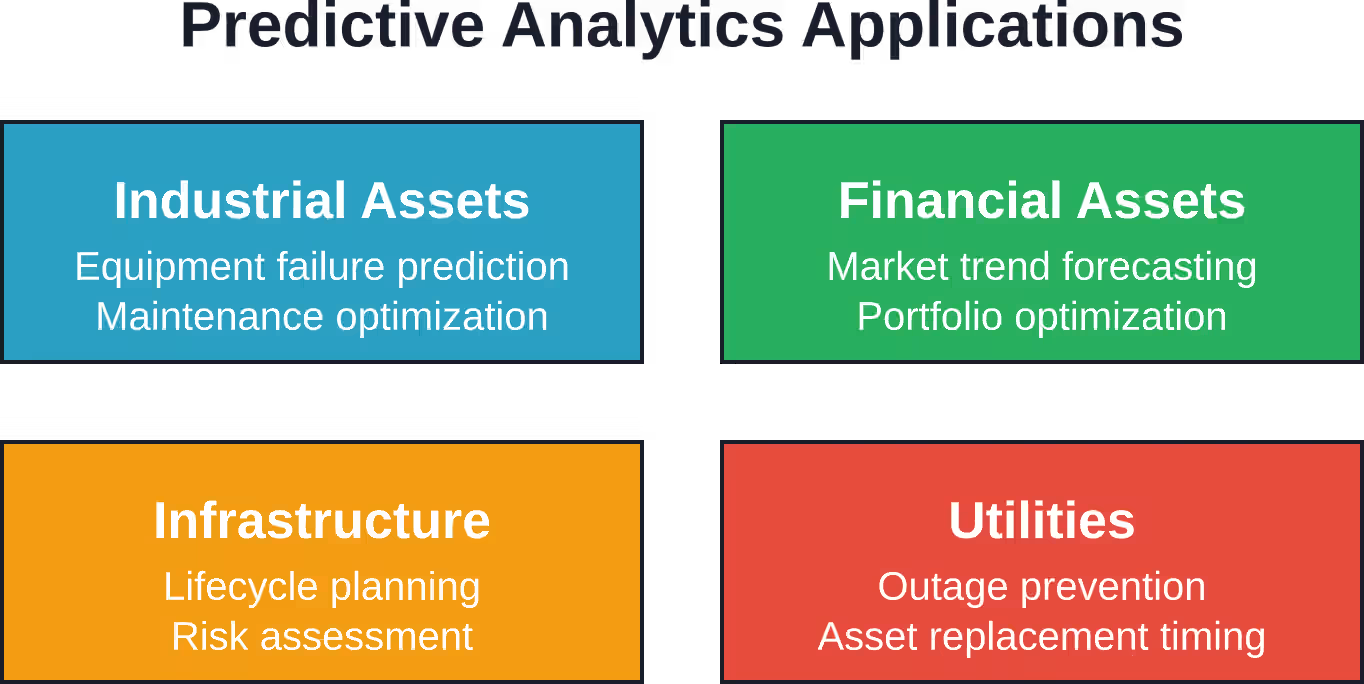
Implementation Considerations and Best Practices
Successful predictive analytics implementation requires more than technical capability. Organizations need clear objectives, executive sponsorship, and cross-functional collaboration between operations, IT, and analytics teams. Start with high-impact use cases. Don’t attempt to predict everything simultaneously. Identify critical assets where failures cause significant disruption or cost. Prove value there before expanding scope. Data infrastructure comes first. Without reliable data collection, storage, and processing capabilities, predictive models have nothing to work with. Investing in sensors, databases, and integration platforms precedes analytical work. Model validation matters enormously. A prediction algorithm might perform beautifully on historical data but fail miserably in production. Rigorous backtesting, out-of-sample validation, and continuous monitoring ensure models remain accurate as conditions change.
Common Implementation Challenges
Organizations encounter predictable obstacles when deploying predictive analytics. Data silos prevent comprehensive analysis—maintenance records live in one system, operational data in another, financial information elsewhere. Breaking down these barriers requires organizational change, not just technical fixes. Skill gaps pose another hurdle. Effective predictive analytics needs data scientists who understand both statistical methods and domain expertise. Finding people who can translate business problems into analytical models and interpret results for non-technical stakeholders remains difficult. Change management can’t be ignored. Predictive analytics challenges existing workflows and decision-making processes. Maintenance teams accustomed to scheduled routines must adapt to dynamic, data-driven priorities. That cultural shift takes time and leadership commitment. 
Bring Predictive Analytics Into Asset Lifecycle Planning
Assets don’t lose value at once – it happens gradually, often unnoticed until it affects performance or costs. The real issue is not tracking assets, but understanding when their behavior starts to shift. AI Superior builds custom AI software that includes predictive analytics, combining operational and historical data to reveal patterns in asset usage and condition. This allows organizations to work with asset changes as they emerge, instead of reacting after issues become visible.
Put Predictive Analytics at the Center of Asset Decisions
AI Superior stands out for:
- Building custom AI software tailored to specific data and business requirements
- Applying predictive analytics using both historical and current data
- Working with multiple data sources to identify patterns and support decisions
If you’re evaluating how predictive analytics could fit into your asset management setup, (/contact/) and review your current approach together.
Measuring Predictive Analytics Impact
Quantifying the return on predictive analytics investments matters for sustaining organizational support. Multiple metrics capture different dimensions of value. MTBF improvements demonstrate enhanced reliability. Tracking how prediction-driven maintenance extends time between failures provides concrete evidence of effectiveness. Reductions in unplanned downtime translate directly to operational and financial benefits. Cost metrics tell another part of the story. Comparing maintenance spending before and after predictive analytics implementation reveals efficiency gains. Organizations typically see lower emergency repair costs and better inventory management as they shift from reactive to proactive approaches. Asset lifecycle extension delivers long-term value. Equipment managed with predictive analytics often operates longer before requiring replacement, deferring capital expenditures and maximizing return on existing assets.
| Performance Metric | Measurement Approach | Expected Improvement Range |
|---|---|---|
| Mean Time Between Failure | Average operating hours between unplanned failures | moderate to substantial increase |
| Maintenance Cost Efficiency | Cost per unit of asset value maintained | meaningful reduction |
| Unplanned Downtime | Hours of unexpected asset unavailability | significant reduction |
| Asset Utilization | Productive operating time as percentage of availability | meaningful improvement |
Future Trends Shaping Predictive Asset Management
Predictive analytics continues evolving rapidly. Edge computing moves analytical processing closer to data sources, enabling real-time predictions without cloud latency. This becomes critical for applications where milliseconds matter. Digital twin technology creates virtual replicas of physical assets, allowing organizations to test scenarios and optimize performance without risking actual equipment. Predictive models run continuously against digital twins, identifying optimal operating parameters and maintenance strategies. Artificial intelligence advances push beyond prediction into autonomous decision-making. Prescriptive analytics systems don’t just forecast problems—they automatically schedule maintenance, order parts, and allocate resources without human intervention. Integration with enterprise systems deepens. Predictive analytics platforms increasingly connect with ERP, CMMS, and financial systems, creating closed-loop workflows where insights automatically trigger business processes.
Frequently Asked Questions
What’s the difference between predictive and preventive maintenance?
Preventive maintenance follows fixed schedules, servicing equipment at regular intervals regardless of actual condition. Predictive maintenance uses real-time data and analytics to schedule maintenance precisely when condition indicators suggest it’s needed. This approach reduces unnecessary maintenance while catching problems before they cause failures.
How much data is needed to start predictive analytics?
Minimum requirements vary by application, but generally organizations need several months to a few years of historical data covering normal operations and failure events. More data improves model accuracy, but modern machine learning techniques can extract value from relatively small datasets when traditional statistical methods would struggle.
Can small organizations implement predictive analytics effectively?
Absolutely. Cloud-based analytics platforms and sensor technologies have become affordable for organizations of all sizes. Small operations should focus on narrow, high-impact applications rather than enterprise-wide deployments. Starting with one critical asset or process proves value before expanding scope.
What technical skills are required for predictive analytics implementation?
Teams need data engineering capabilities to collect and integrate information, statistical and machine learning expertise to build models, and domain knowledge to interpret results correctly. Many organizations partner with specialized consultants initially while building internal capabilities over time.
How accurate are predictive maintenance models?
Accuracy depends on data quality, model sophistication, and application complexity. Well-implemented systems can achieve strong accuracy levels for equipment failure prediction within specified time windows. Continuous model refinement improves performance as more operational data accumulates.
What industries benefit most from predictive asset analytics?
Manufacturing, energy utilities, transportation, and infrastructure management see substantial benefits because they manage high-value physical assets where failures create significant costs. Financial services apply similar techniques to investment portfolios and risk management. Any industry managing valuable assets with measurable performance can leverage predictive analytics effectively.
How does predictive analytics impact regulatory compliance?
Predictive systems help organizations maintain compliance by forecasting when assets might fall below regulatory standards, allowing proactive intervention. Documentation trails from predictive analytics platforms also simplify audit processes. However, organizations must ensure analytical methods themselves comply with industry-specific regulations, particularly in financial services where the SEC has scrutinized conflicts of interest related to predictive data use.
Conclusion: Making Predictive Analytics Work
Predictive analytics transforms asset management from reactive firefighting to proactive optimization. Organizations that implement these capabilities effectively see measurable improvements in reliability, cost efficiency, and decision quality. Success requires more than adopting technology. Quality data infrastructure, analytical expertise, and organizational commitment to acting on insights all play essential roles. Start focused, prove value quickly, then expand systematically. The competitive advantage goes to organizations that can anticipate problems before they occur and optimize asset performance continuously. Whether managing industrial equipment, financial portfolios, or infrastructure networks, predictive analytics provides the foresight to make better decisions faster. Ready to transform your asset management approach? Begin by identifying your most critical assets, assessing current data availability, and defining clear objectives for predictive analytics implementation. The investment pays dividends through reduced downtime, lower costs, and extended asset lifecycles.