Quick Summary: Predictive analytics in CRM uses historical customer data, machine learning algorithms, and statistical models to forecast future customer behavior, sales outcomes, and churn risk. This technology helps sales and marketing teams identify high-value opportunities, personalize engagement strategies, and make data-driven decisions that improve conversion rates and customer retention. What if your sales team knew which leads would convert before picking up the phone? Or which customers were about to churn weeks before they cancelled? That’s not science fiction. It’s predictive analytics in CRM, and it’s reshaping how businesses approach customer relationships. Traditional CRM systems track what already happened—emails sent, calls logged, deals closed. But CRM predictive analytics flips that script. It analyzes historical patterns and forecasts what’s likely to happen next, giving teams the foresight to act proactively rather than reactively. Despite the measurable impact, adoption remains uneven. Recent research indicates that just 65% of U.S. businesses currently use predictive analytics. Yet among those who’ve implemented it, studies indicate that executives using predictive analytics report improved business outcomes. The gap between potential and practice represents a massive opportunity. Here’s how predictive analytics actually works in CRM systems, why it matters, and how teams can start leveraging it today.
What Is CRM Predictive Analytics?
CRM predictive analytics combines historical customer data with statistical algorithms and machine learning to forecast future behaviors and outcomes. Instead of just storing customer information, modern CRM platforms analyze interaction patterns, purchase history, engagement signals, and demographic data to generate predictions about what customers will do next. The technology relies on several core components working together:
- Historical data from your CRM (emails, calls, meetings, purchases, support tickets)
- External data sources (market trends, social signals, third-party enrichment)
- Machine learning models trained to recognize patterns
- Statistical algorithms that calculate probability scores
When these pieces connect, the system can answer questions like: Which deals in the pipeline will actually close? Who’s likely to renew their contract? Which marketing message will resonate with this segment? The output isn’t a crystal ball. It’s probability-based guidance that helps teams prioritize efforts and personalize approaches. 
Use Predictive Analytics in CRM with AI Superior
AI Superior works with customer data to build predictive models that support segmentation, retention, and forecasting. The focus is on integrating models into CRM systems so insights can be used directly in daily operations.
Looking to Apply Predictive Analytics in CRM?
AI Superior can help with:
- evaluating customer data
- building predictive models
- integrating models into CRM systems
- refining performance based on usage
👉 Contact AI Superior to discuss your project, data, and implementation approach
How Predictive Analytics Works in CRM Systems
The mechanics behind predictive analytics might sound complex, but the workflow follows a logical sequence. First, the system ingests massive amounts of historical data. Every customer interaction, transaction, and engagement metric becomes a data point. The more quality data available, the more accurate the predictions. Next, machine learning algorithms identify patterns humans might miss. For example, the system might discover that prospects showing multiple engagement signals such as webinar attendance and content downloads demonstrate higher conversion likelihood. Or that customers showing declining email engagement demonstrate elevated churn risk patterns. These patterns form the basis of predictive models. Common models include:
- Lead scoring models that rank prospects by conversion likelihood
- Churn prediction models that flag at-risk customers
- Next-best-action models that recommend optimal engagement steps
- Revenue forecasting models that project pipeline outcomes
- Customer lifetime value models that estimate long-term account worth
Once trained, these models run continuously in the background, updating predictions as new data flows in. A prospect’s score might jump after they visit your pricing page three times in one day. A customer’s churn risk might spike when their support ticket volume doubles. The CRM surfaces these insights directly in the interface—often as scores, alerts, or recommended actions—so reps don’t need to be data scientists to benefit.
Why Sales Teams Need CRM Predictive Analytics
Sales teams operate in a constant state of prioritization. Too many leads, not enough hours, and every deal feels urgent. Predictive analytics cuts through that noise by answering the most critical question: where should reps spend their time? Instead of treating every opportunity equally, predictive lead scoring ranks prospects based on historical win patterns. Analysis of deal patterns shows that deals with multiple logged activities and substantial deal sizes demonstrate higher win rates. The system identifies those high-probability deals automatically. That means reps focus energy on conversations that actually close, not on tire-kickers who’ll ghost after the demo.
Pipeline Forecasting Gets Real
Sales forecasting typically relies on gut feel and rep optimism. Predictive analytics replaces that with data. By analyzing closed-won and closed-lost patterns, the system assigns each pipeline deal a probability score. Managers see which opportunities are genuinely solid and which are stalled or at risk. This visibility allows teams to adjust schedules, reallocate resources, and pursue hot opportunities before competitors do. No more surprise shortfalls at month-end.
Churn Prevention Becomes Proactive
Losing a customer costs more than finding a new one. But most teams don’t spot churn signals until it’s too late. Predictive models flag at-risk accounts weeks or months in advance. Declining engagement, reduced product usage, fewer support interactions, delayed payments—patterns that individually mean little but collectively signal trouble. When the CRM alerts account managers early, they can intervene with targeted outreach, special offers, or executive check-ins. Retention improves because teams act before customers mentally check out.
Marketing Benefits: Personalization at Scale
Marketing teams face a similar challenge: too many contacts, too many channels, finite budgets. Predictive analytics helps marketers segment audiences based on behavior predictions rather than static demographics. Instead of blasting the same email to 10,000 contacts, the system identifies who’s most likely to engage and what message will resonate. Campaign performance improves because resources flow to high-intent segments. Email open rates climb when subject lines match predicted preferences. Conversion rates jump when offers align with forecasted needs.
Next-Best-Action Recommendations
Some CRM platforms now recommend the next best action for each contact. Should you send a case study or schedule a call? Offer a discount or introduce them to a product specialist? The system analyzes what worked for similar customers at similar journey stages and surfaces the statistically optimal move. Marketers still make the final call, but they’re guided by data instead of hunches.
Predictive Models Used in CRM
Different business goals require different predictive models. Here are the most common types deployed in CRM systems:
| Model Type | What It Predicts | Primary Use Case |
|---|---|---|
| Lead Scoring | Probability a prospect will convert | Prioritize sales outreach |
| Churn Prediction | Risk that a customer will leave | Retention campaigns and interventions |
| Lifetime Value (LTV) | Total revenue a customer will generate | Account prioritization and resource allocation |
| Cross-Sell/Upsell | Which products a customer is likely to buy next | Targeted product recommendations |
| Revenue Forecasting | Expected pipeline conversion and deal size | Sales planning and quota setting |
| Engagement Prediction | Best channel, time, and message for contact | Marketing campaign optimization |
Most platforms don’t run just one model. They layer multiple models to provide a holistic view of each customer relationship.
Real Use Cases Across Industries
Predictive analytics isn’t theoretical. Companies across sectors are deploying it with measurable results.
- Retail and e-commerce: Online retailers use purchase history and browsing behavior to predict which products customers will buy next. Recommendation engines powered by predictive models drive a significant share of revenue for major platforms.
- Financial services: Banks and insurance companies predict customer lifetime value to prioritize high-value relationships. They also forecast churn risk to retain profitable accounts.
- SaaS and tech: Software companies score leads based on product usage signals, firmographic data, and engagement patterns. They predict expansion revenue by identifying accounts ready for upsells.
- Healthcare: Medical practices use predictive analytics to identify patients at risk of missing appointments or discontinuing care. Outreach campaigns improve adherence and outcomes.
Research on surgical outcomes has demonstrated how predictive analytics can forecast not just immediate outcomes but broader health results over extended periods. The prediction models allowed doctors to forecast not just weight loss, but broader health outcomes. While that example sits outside CRM, it illustrates how predictive analytics transforms decision-making when applied to historical patterns and outcomes. 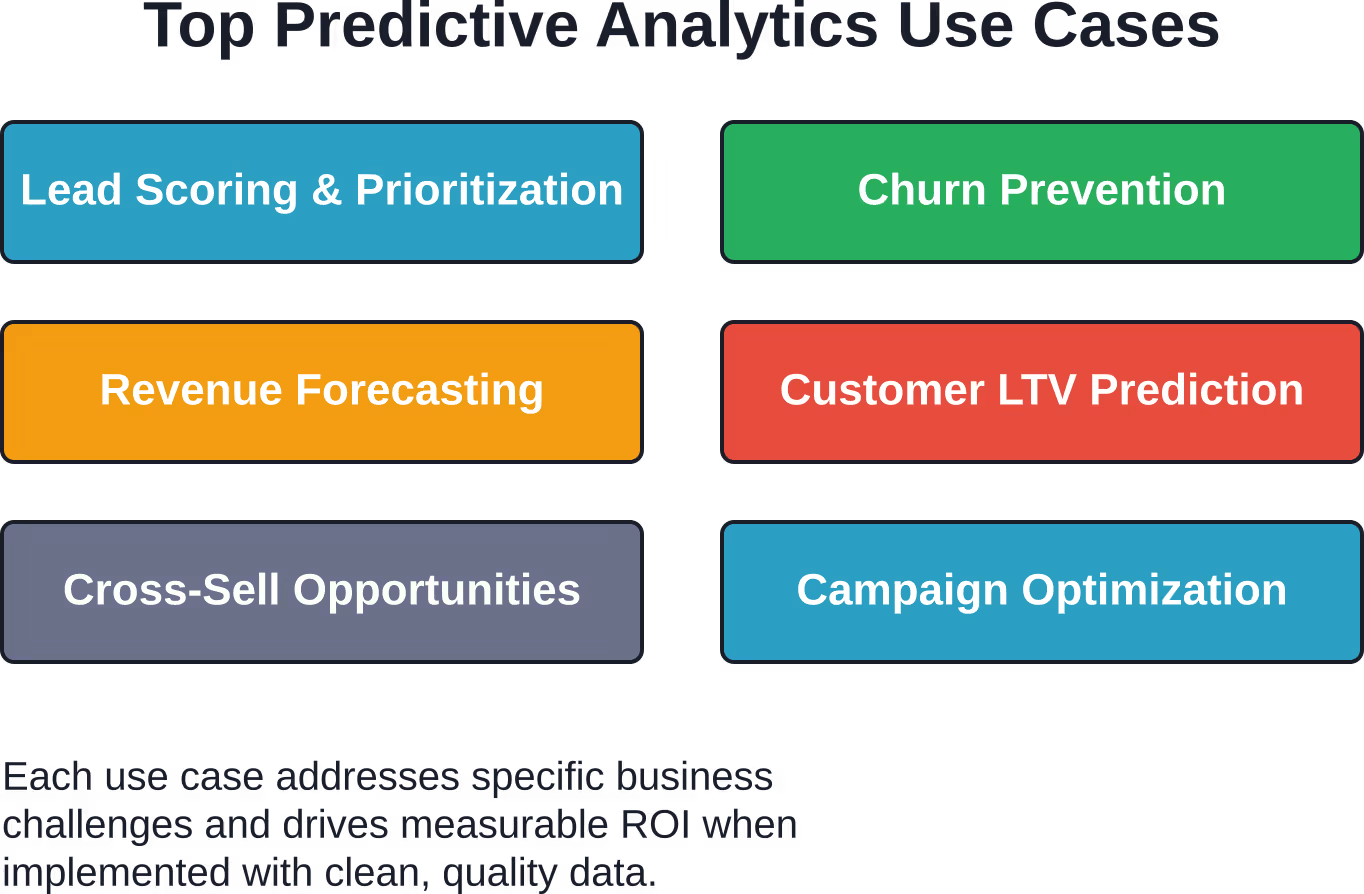
Getting Started: Implementation Essentials
Implementing predictive analytics in your CRM doesn’t require a data science PhD. But it does demand attention to fundamentals.
Data Quality Comes First
Garbage in, garbage out. Predictive models are only as good as the data they train on. Before deploying analytics, audit your CRM data for completeness, accuracy, and consistency. Missing fields, duplicate records, and outdated information will skew predictions and erode trust in the system. Establish data hygiene practices: required fields for new records, regular deduplication, validation rules, and team training on proper data entry.
Start With One High-Impact Model
Don’t try to implement every predictive model at once. Pick the use case that addresses your biggest pain point. If pipeline visibility is the issue, start with opportunity scoring. If retention is bleeding revenue, begin with churn prediction. If lead quality is inconsistent, deploy lead scoring first. Get one model working, prove ROI, then expand.
Choose the Right Platform
Many modern CRM platforms now include built-in predictive analytics. Salesforce Einstein, Microsoft Dynamics 365 AI, and other enterprise systems offer native prediction capabilities. According to research comparing these platforms, each brings different strengths. Salesforce Einstein excels at sales forecasting and lead scoring. Microsoft Dynamics 365 AI integrates tightly with the broader Microsoft ecosystem. The right choice depends on your existing tech stack and specific needs. Smaller businesses might explore standalone predictive tools that integrate with their CRM via API, offering flexibility without platform lock-in.
Train Your Team
Technology alone won’t drive adoption. Sales and marketing teams need to understand what the predictions mean and how to act on them. Run training sessions that explain model outputs in plain language. A lead score of 85 means what, exactly? How should a rep approach a high-score prospect differently than a low-score one? Make predictions visible and actionable. If the system flags a churn risk, provide a recommended playbook: call the customer, offer a check-in, escalate to management.
Common Challenges and How to Overcome Them
Predictive analytics offers huge upside, but implementation isn’t always smooth.
Challenge: Insufficient Historical Data
Machine learning models need volume to learn patterns. If your CRM has limited historical records, predictions may lack accuracy. Solution: Start collecting quality data now. In the meantime, use simpler rule-based scoring while the data matures. Over 6-12 months, transition to full predictive models.
Challenge: Low User Adoption
Research examining AI-CRM integration reveals that while many companies adopt these tools, translating technology investments into measurable business performance requires strong organizational capabilities alongside the technology itself. Solution: Involve end users early in the process. Sales reps and marketers need to see clear value, not just another metric to track. Show them how predictions save time, improve win rates, and make their jobs easier.
Challenge: Model Drift Over Time
Customer behavior changes. Market conditions shift. Models trained on 2024 data might not predict 2026 patterns accurately. Solution: Continuously retrain models with fresh data. Monitor prediction accuracy and recalibrate when performance dips. Most platforms handle this automatically, but human oversight ensures the models stay relevant.
The Future: Where Predictive Analytics Is Heading
Predictive analytics in CRM continues to evolve rapidly. Several trends are reshaping the landscape.
- Integration with generative AI: Platforms are beginning to combine predictive analytics with generative AI to not just forecast outcomes but also draft personalized messages, create dynamic content, and automate complex workflows.
- Real-time predictions: Latency is shrinking. Instead of batch processing overnight, systems now update predictions in real time as customers interact. A rep can see a lead score change during a live conversation.
- Explainable AI: Black-box predictions create trust issues. Newer models provide transparency, showing which factors drove a particular score or forecast. This explainability helps teams understand and act on insights.
- Embedded analytics everywhere: Predictive insights are moving beyond dashboards into the flow of work—surfacing in email clients, chat tools, mobile apps, wherever teams operate.
The Federal Trade Commission has held multiple workshops on algorithms, artificial intelligence, and predictive analytics, highlighting both the opportunities and the regulatory scrutiny these technologies face. Privacy, fairness, and transparency will remain critical considerations as adoption accelerates.
Measuring ROI: Does Predictive Analytics Pay Off?
Implementation requires investment—in software, data infrastructure, and training. Does it deliver returns? The evidence suggests yes, when done right. Companies using predictive analytics report higher conversion rates, improved customer retention, and more accurate revenue forecasting. Specific metrics to track:
- Lead-to-opportunity conversion rate (should increase as scoring improves)
- Sales cycle length (should decrease as reps focus on high-probability deals)
- Customer churn rate (should decline as at-risk accounts receive intervention)
- Forecast accuracy (should improve as predictive models refine estimates)
- Revenue per rep (should climb as time shifts to high-value activities)
Calculate ROI by comparing these metrics before and after implementation. Factor in the cost of the platform, data cleanup, and training, then measure the revenue impact. Most organizations see positive ROI within 12-18 months, often sooner for high-volume sales environments.
FAQ
What is predictive analytics in CRM?
Predictive analytics in CRM uses historical customer data, machine learning, and statistical models to forecast future behaviors such as purchase likelihood, churn risk, and revenue potential. It helps sales and marketing teams prioritize efforts and personalize engagement.
How accurate are CRM predictive models?
Accuracy varies based on data quality, model sophistication, and use case. Well-trained models on clean data typically achieve 70-90% accuracy for lead scoring and churn prediction. Continuous retraining improves performance over time.
Do I need a data scientist to use predictive analytics in my CRM?
Not necessarily. Many modern CRM platforms include built-in predictive analytics that run automatically. However, optimizing models, interpreting results, and acting on insights benefits from analytical expertise, even if not full data science skills.
What’s the difference between CRM analytics and predictive analytics?
CRM analytics typically refers to reporting and dashboards that describe what already happened—sales closed, emails sent, revenue generated. Predictive analytics forecasts what will happen next based on patterns in that historical data.
Can small businesses benefit from predictive analytics in CRM?
Absolutely. While enterprise platforms offer advanced features, many affordable CRM tools now include basic predictive capabilities like lead scoring and churn alerts. Even simple models can improve conversion rates and retention for small teams.
How much historical data do I need for predictive analytics to work?
Generally, models perform better with at least 6-12 months of clean historical data and hundreds to thousands of records. Some platforms can work with less, but accuracy improves significantly with volume and variety of data.
What are the biggest risks of using predictive analytics in CRM?
Key risks include over-reliance on predictions without human judgment, bias in historical data perpetuating unfair patterns, privacy concerns with customer data usage, and model drift as market conditions change. Transparency, oversight, and regular audits mitigate these risks.
Conclusion
Predictive analytics transforms CRM from a record-keeping system into a strategic forecasting tool. Sales teams close more deals by focusing on high-probability opportunities. Marketing campaigns convert better by targeting high-intent segments. Customer success teams retain accounts by intervening before churn happens. The technology isn’t perfect. It requires clean data, thoughtful implementation, and ongoing refinement. But the companies investing in it today are building a competitive advantage that compounds over time. If your CRM is still just tracking the past, it’s time to start predicting the future. Start small, prove value, and scale what works. The insights are waiting in your data—you just need the right models to surface them. Ready to explore predictive analytics for your CRM? Audit your data quality, identify your highest-impact use case, and begin the conversation with your platform provider today.