
Quick Summary: Predictive analytics in HR uses historical and current workforce data combined with statistical models and machine learning to forecast future outcomes like employee turnover, hiring needs, and performance trends. Organizations leverage these insights to make proactive, data-driven decisions about talent acquisition, retention strategies, succession planning, and workforce optimization. According to authoritative data, 83% of employers now use automated systems in recruiting, while 99% of Fortune 500 companies deploy some form of automated screening tools. The employment landscape has shifted dramatically. HR professionals no longer rely solely on intuition and past experience when making workforce decisions. Instead, they’re turning to predictive analytics—a powerful approach that transforms historical data into actionable forecasts about future talent needs, retention risks, and performance outcomes. This isn’t just a trend among tech giants anymore. According to official EEOC data, 83% of employers now use some form of automated system for recruiting, interviewing, and hiring. Among Fortune 500 companies, that number climbs to 99%. The global economic impact? Projections suggest AI will contribute $16 trillion to the worldwide economy by 2030. But here’s the thing: adoption and effective implementation are two different challenges entirely.
What Predictive Analytics in HR Actually Means
Predictive HR analytics—also called predictive people analytics or workforce analytics—applies statistical modeling and machine learning algorithms to workforce data. The goal is straightforward: forecast future outcomes so HR teams can act proactively rather than reactively. Unlike descriptive analytics, which tells HR what happened (“turnover increased 12% last quarter”), predictive analytics explains what’s likely to happen next (“these 47 employees show a 78% probability of leaving within six months”). The process works through several stages. First, organizations collect historical data—performance reviews, engagement surveys, attendance records, compensation history, hiring metrics, and more. Then data scientists or HR analysts apply algorithms that identify patterns and correlations within that data. These models learn which combinations of factors historically preceded specific outcomes. Finally, the system applies those learned patterns to current employee data, generating probability scores for future events. The distinction matters because many organizations measure analytics activity but miss the strategic impact. According to a recent SHRM analysis from April 2026, five common mistakes keep HR teams from becoming true “Talent Optimizers”—and most involve collecting data without the predictive framework to generate foresight.
Core Use Cases Where Predictive Analytics Delivers Impact
Real talk: not every HR function benefits equally from predictive modeling. Some applications have matured considerably, with proven track records across industries. Others remain experimental or require substantial data infrastructure most organizations don’t yet possess.
Employee Attrition and Retention Forecasting
This is the most widely adopted predictive analytics application in HR. Organizations build models that assign each employee a flight-risk score based on factors correlated with past departures. Common predictive variables include tenure, compensation relative to market rates, time since last promotion, manager relationship scores from engagement surveys, commute distance, recent life events, and performance trajectory. When the model flags high-risk employees, HR can intervene with targeted retention strategies—mentorship programs, development opportunities, compensation adjustments, or role modifications. The business case is compelling. Early predictive systems help organizations get ahead of voluntary attrition before it impacts operations. One limitation deserves mention: predictive models work best when organizations have sufficient historical data. A startup with 30 employees and minimal turnover history won’t generate reliable predictions. But enterprises with thousands of employees and years of data can achieve meaningful accuracy.
Quality of Attrition Analysis
Not all turnover carries equal weight. Losing a struggling performer differs fundamentally from losing a high-potential leader. Quality-of-attrition metrics help organizations distinguish between beneficial and harmful departures. Quality-of-attrition metrics remain underutilized, with only a small percentage of organizations measuring this dimension using specific metrics—a significant gap considering the strategic value. Predictive analytics enhances this by forecasting not just who might leave, but also the organizational impact of that departure. Models incorporate performance ratings, succession readiness, skill scarcity, project involvement, and knowledge transfer risk. The output prioritizes retention efforts toward employees whose departure would create the greatest operational or strategic disruption. This targeted approach prevents wasting resources trying to retain every employee equally. Instead, HR focuses intervention efforts where they’ll generate maximum return.
Talent Acquisition and Hiring Optimization
Predictive models increasingly shape recruitment decisions by forecasting which candidates will succeed in specific roles. These systems analyze historical hiring data to identify characteristics that correlate with strong job performance and long tenure. Variables might include educational background, previous role progression, assessment scores, interview performance, skills test results, and even linguistic patterns in application materials. The model learns which combinations historically preceded successful hires versus early departures or performance issues. Automation in hiring processes has become increasingly common across organizations—a number that continues climbing. However, SHRM analysis from March 2023 emphasizes that effectiveness depends entirely on asking the right questions. Predictive tools that optimize for the wrong outcomes—like simply minimizing time-to-hire—can miss crucial quality factors. Organizations must also navigate regulatory considerations. EEOC guidelines make clear that selection procedures, including predictive algorithms, cannot produce discriminatory outcomes. In one documented case, Ford Motor Company paid $8.55 million to settle claims that a selection procedure created adverse impact, ultimately replacing it with a jointly-designed alternative that reduced disparate outcomes while still predicting job success.
Workforce Planning and Demand Forecasting
Strategic workforce planning requires understanding future talent needs before gaps become operational problems. Predictive analytics supports this by forecasting hiring requirements based on business growth projections, historical attrition patterns, seasonal fluctuations, and skill evolution. For example, if business projections indicate 15% revenue growth next year, predictive models can estimate the corresponding headcount needs by function, account for expected attrition during that period, and flag skill gaps that require external hiring versus internal development. The approach shifts HR from reactive scrambling (“we suddenly need 12 engineers”) to proactive pipeline development (“models indicate we’ll need 12 additional engineers by Q3 next year based on product roadmap and expected attrition”). 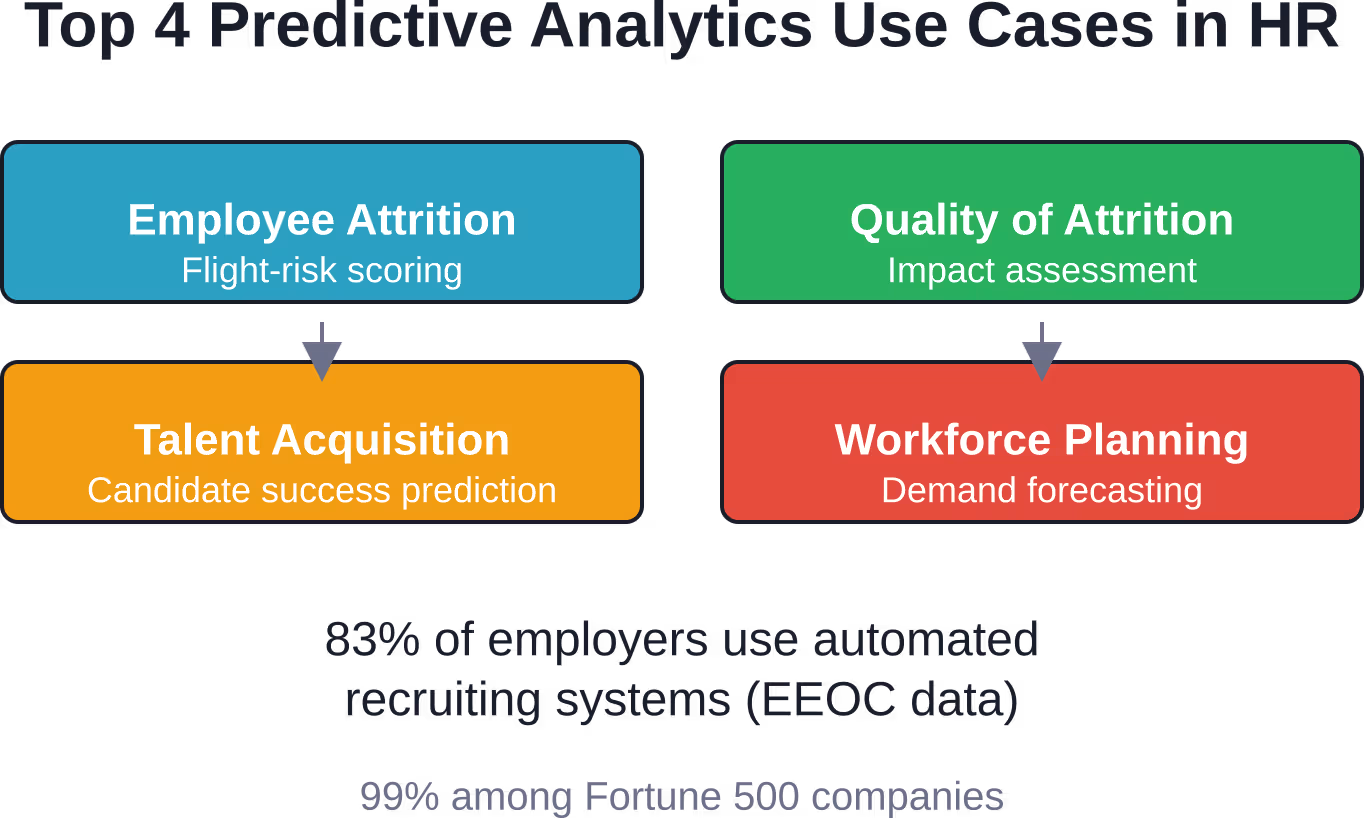
Performance Management and High-Potential Identification
Traditional performance reviews often rely on manager judgment and annual ratings—subjective measures prone to recency bias and inconsistent calibration. Predictive analytics introduces more objective forecasting by analyzing which employee characteristics and behaviors correlate with sustained high performance. Models might incorporate project completion rates, peer feedback patterns, skill acquisition velocity, cross-functional collaboration metrics, and goal achievement trajectories. The system identifies employees exhibiting patterns historically associated with top performers, even if their current role doesn’t provide visibility to senior leadership. This supports succession planning by flagging high-potential employees earlier in their tenure. Organizations can then invest development resources strategically, preparing promising talent for expanded responsibilities before critical leadership gaps emerge. The approach also helps identify performance improvement opportunities. When models predict declining performance trajectories, managers can intervene with coaching, training, or workload adjustments before formal performance issues develop.
Real-World Implementation Examples
Abstractly discussing predictive analytics means little without concrete examples showing how organizations actually apply these concepts.
Turnover Prediction in High-Attrition Environments
Industry reports indicate organizations in certain sectors experience turnover rates around 20% annually—creating constant recruitment pressure and institutional knowledge loss. One company facing this challenge built a predictive model incorporating tenure, compensation percentile, manager relationship scores, remote work patterns, and promotion history. The model achieved 71% accuracy in predicting departures within a six-month window—substantially better than the 50% baseline of random guessing. HR used these predictions to trigger targeted retention conversations, resulting in measurable improvement in retention among flagged high-value employees. The decision tree algorithm, using the C4.5 method, achieved 71% accuracy in predictions. For instance, employees with moderate performance ratings but strong peer relationships showed lower flight risk than their ratings alone would suggest, while high performers with declining engagement scores represented elevated risk despite strong recent reviews.
Hiring Success Prediction at Scale
A large organization processing thousands of applications annually built a predictive hiring model to identify candidates most likely to succeed in customer-facing roles. Historical data included pre-hire assessments, interview scores, educational background, and previous employment duration. The model correlated these inputs with post-hire outcomes—90-day retention, six-month performance ratings, customer satisfaction scores, and manager evaluations. Candidates scoring in the top quartile of the predictive model showed significantly higher success rates than those in lower quartiles. Critically, the organization continuously monitored the model for adverse impact across demographic groups, consistent with EEOC guidelines on employment testing and selection procedures. When initial versions showed disparate outcomes, data scientists adjusted variable weighting and introduced alternative predictors that maintained predictive power while reducing bias.
Implementation Challenges and Realistic Expectations
Predictive analytics delivers measurable value, but implementation isn’t trivial. Organizations encounter several recurring obstacles.
Data Quality and Availability
Predictive models require substantial historical data to generate reliable forecasts. Organizations with fragmented HR systems, inconsistent record-keeping, or recent technology migrations often lack the data foundation necessary for accurate modeling. Even when data exists, quality issues undermine predictions. Incomplete records, inconsistent coding (one manager rates performance on a curve while another inflates scores), and missing variables reduce model accuracy. Data scientists spend significant time cleaning and standardizing information before modeling can even begin. Smaller organizations face additional constraints. A company with 200 employees and 8% annual turnover generates only 16 departure events per year—insufficient data volume for robust predictive models without several years of historical accumulation.
Technical Skill Gaps
Building and maintaining predictive models requires capabilities most HR teams don’t traditionally possess. Data science expertise, statistical modeling knowledge, programming skills (Python, R, SQL), and machine learning understanding are necessary—yet these competencies remain scarce within HR functions. Organizations address this gap through various approaches: hiring dedicated people analytics specialists, partnering with IT or data science teams, engaging external consultants, or adopting vendor platforms with pre-built models. Each approach involves trade-offs between cost, customization, and internal capability development.
Change Management and Adoption
Predictive analytics only creates value when HR professionals and business leaders actually use the insights to inform decisions. Technical implementation represents just half the challenge—cultural adoption completes the equation. Managers sometimes resist data-driven recommendations that contradict their intuition. HR teams comfortable with traditional approaches may view predictive analytics skeptically. Employees raise privacy concerns about algorithmic evaluation. Successfully navigating these dynamics requires thoughtful change management, transparency about how models work, and demonstrating value through pilot programs before organization-wide rollout.
Regulatory and Ethical Considerations
As EEOC documentation makes clear, predictive algorithms used in employment decisions must comply with anti-discrimination laws. Models that inadvertently produce disparate impact across protected groups create legal liability, even without intentional bias. Organizations must validate that predictive tools actually measure job-related capabilities and business necessity. Regular adverse impact analysis is essential. When disparities emerge, companies need processes to investigate root causes and adjust models accordingly—exactly what happened in the Ford case where $8.55 million in settlements prompted redesign of the selection procedure. Beyond legal compliance, ethical questions arise around transparency, employee privacy, and algorithmic fairness. Should employees know they’re being scored for flight risk? How should organizations balance predictive efficiency against individual dignity? These questions lack universal answers but require thoughtful organizational policies.
Best Practices for Successful Deployment
Organizations that successfully implement predictive HR analytics follow several common practices.
Start with Clear Business Questions
As SHRM analysis emphasizes, predictive analytics only helps when organizations ask the right questions. Beginning with vague objectives like “use data better” leads nowhere productive. Instead, start with specific business problems: “Which factors predict voluntary departures among our top sales performers?” or “What candidate characteristics correlate with success in our technical support roles?” Clear questions drive focused data collection, appropriate model selection, and actionable insights.
Build Incrementally Through Pilot Programs
Attempting organization-wide predictive analytics deployment as a first step invites failure. Successful implementations begin with narrow pilot programs—one business unit, one specific use case, one geography. Pilots allow teams to learn, refine approaches, demonstrate value, and build credibility before scaling. Early wins create momentum and stakeholder buy-in that supports broader rollout. Failures in pilot programs create learning opportunities without enterprise-wide disruption.
Invest in Data Infrastructure First
Predictive models are only as reliable as the data feeding them. Organizations must establish solid data foundations before expecting analytical value. This means integrating disparate HR systems, standardizing data definitions across the organization, implementing consistent data collection processes, establishing data governance policies, and ensuring sufficient historical depth. These infrastructure investments seem tedious but prove essential for sustainable analytics capabilities.
Combine Predictive Insights with Human Judgment
Predictive analytics augments decision-making; it doesn’t replace human judgment entirely. The most effective implementations position models as decision-support tools rather than autonomous systems. When a model flags an employee as high flight-risk, HR and managers should investigate context before acting. Perhaps the employee recently got married and shows signals the model interprets as departure indicators, but actually plans to stay long-term. Human judgment adds essential context that raw data patterns might miss.
Monitor Models Continuously for Drift and Bias
Predictive models don’t remain accurate indefinitely. Workforce composition changes, business strategies shift, economic conditions evolve, and relationships between variables drift over time. Models built on 2020 data may perform poorly in 2026 environments. Organizations need processes to monitor model accuracy continuously, retrain algorithms with fresh data regularly, test for adverse impact across demographic groups, and sunset models that no longer provide value. This ongoing maintenance represents a permanent capability requirement, not a one-time implementation project. 
Use Reliable Predictive Analytics to Reduce Employee Turnover
HR decisions are often made based on experience and limited signals, even though employee data already shows patterns in performance, turnover, and engagement long before issues become visible. AI Superior develops custom AI software with predictive analytics to help HR teams analyze workforce data, identify early signs of employee churn, and improve hiring decisions based on real behavioral and historical patterns.
Turn HR Data Into Early Signals for Better Decisions
AI Superior focuses on:
- Analyzing HR and workforce data to detect early signs of turnover risk
- Building predictive models for hiring quality and employee retention
- Combining structured HR data with behavioral and performance indicators
Contact AI Superior to discuss how predictive analytics can be applied to your HR processes and workforce data.
Tools and Platforms Enabling Predictive HR Analytics
Organizations implement predictive analytics through various technology approaches, each with different trade-offs.
Enterprise HR Platforms with Built-in Analytics
Major HRIS platforms increasingly incorporate predictive analytics features. These integrated solutions analyze data already residing in the core HR system, eliminating integration complexity. The advantage lies in convenience and immediate data access. Limitations include less customization than purpose-built tools and analytics depth that may lag specialized platforms. For organizations wanting turnkey predictive capabilities without heavy technical investment, embedded HRIS analytics often provide sufficient starting points.
Specialized People Analytics Platforms
Dedicated workforce analytics vendors offer sophisticated predictive modeling capabilities, pre-built algorithms for common use cases, and advanced visualization tools. These platforms typically integrate with existing HR systems to pull data for analysis. Organizations gain more powerful analytics than HRIS-embedded tools provide, along with vendor expertise in people analytics best practices. The trade-off involves additional cost, integration complexity, and potential vendor dependency. The HR analytics market is estimated at $4.87 billion in 2025 and is expected to reach $8.92 billion by 2030, indicating robust vendor ecosystem growth.
Business Intelligence and Visualization Tools
Platforms like Tableau and Power BI serve general business analytics but increasingly support HR predictive analytics. For instance, Power BI dashboards can display employee attrition predictions and churn analysis. These tools excel at data visualization and dashboard creation, making predictive insights accessible to non-technical users. However, they require separate development of the underlying predictive models—either through internal data science teams or external development.
Custom-Built Solutions
Some organizations, particularly large enterprises with substantial data science capabilities, build proprietary predictive analytics platforms tailored to their specific needs and data environments. Custom development enables maximum flexibility and competitive differentiation through unique analytical capabilities. It also demands significant ongoing investment in technical talent, infrastructure, and maintenance—resources many organizations struggle to sustain.
| Platform Type | Best For | Key Advantage | Primary Limitation |
|---|---|---|---|
| Embedded HRIS Analytics | Quick starts, small-to-medium organizations | Zero integration complexity | Limited customization depth |
| Specialized HR Analytics | Dedicated analytics teams, mature programs | Purpose-built capabilities | Additional cost and integration |
| BI/Visualization Tools | Organizations with data science teams | Flexible reporting and dashboards | Requires separate model development |
| Custom Solutions | Large enterprises, unique requirements | Maximum control and differentiation | High development and maintenance cost |
The Future Trajectory of Predictive HR Analytics
Predictive analytics capabilities continue evolving rapidly. Several emerging trends shape the next wave of workforce forecasting. Machine learning models are becoming more sophisticated, incorporating natural language processing to analyze employee communications, sentiment analysis of engagement surveys, and network analysis of collaboration patterns. These richer data sources promise more nuanced predictions than traditional structured data alone. Real-time prediction represents another frontier. Rather than batch processing that updates predictions monthly or quarterly, emerging systems continuously refresh forecasts as new data streams in—flagging sudden retention risks or performance concerns within days of triggering events. External data integration is expanding. Organizations increasingly combine internal workforce data with external signals like labor market conditions, competitor hiring patterns, economic indicators, and industry trends. This broader context improves forecast accuracy, particularly for workforce planning and talent acquisition. Explainable AI gains importance as regulatory scrutiny increases. Black-box algorithms that generate predictions without transparent logic create compliance and trust issues. Next-generation tools prioritize interpretability—explaining why a particular prediction was made and which factors contributed most heavily. But wait. Increased capability brings intensified responsibility. As predictive analytics becomes more powerful and pervasive, organizations must establish stronger governance frameworks, clearer ethical guidelines, and more robust bias detection mechanisms. The technology enables better decisions only when deployed with appropriate safeguards and human oversight.
Measuring ROI and Business Impact
Implementing predictive analytics requires investment—technology costs, personnel time, consulting fees, and organizational change effort. Stakeholders rightfully demand evidence that these investments generate meaningful returns. According to SHRM analysis from April 2026, people insights must prove financial ROI to secure sustained support and resources. Organizations measure predictive analytics impact through several approaches. Direct cost avoidance represents the most tangible metric. When attrition prediction enables retention of high-value employees who would otherwise leave, organizations avoid replacement costs—recruiting expenses, onboarding time, productivity ramp, and institutional knowledge loss. Conservative estimates place replacement costs at 50-200% of annual salary depending on role complexity. Quality-of-hire improvements generate measurable value. When predictive hiring models increase the proportion of successful new hires, organizations see faster productivity ramps, better performance outcomes, and reduced early turnover. These benefits translate to revenue impact in customer-facing roles and efficiency gains in operational positions. Workforce planning efficiency reduces costly scrambles. Organizations that accurately forecast talent needs avoid emergency hiring with inflated costs, excessive contractor usage, or project delays due to understaffing. The value appears in smoother operations and avoided premium costs. Some benefits prove harder to quantify but remain strategically important. Better succession planning reduces leadership transition risk. Improved diversity outcomes support inclusion objectives and reduce compliance exposure. Enhanced employee experience through personalized development drives engagement even without immediate financial metrics.
Common Mistakes That Undermine Success
Organizations pursuing predictive analytics encounter predictable pitfalls that reduce effectiveness. Technology-first thinking represents a frequent misstep. Teams acquire sophisticated analytics platforms before clarifying what questions they’re trying to answer or whether they have adequate data. The result: expensive underutilized tools that fail to deliver value because foundational strategy and data infrastructure were skipped. Analysis paralysis hampers other implementations. Teams endlessly refine models seeking perfect accuracy rather than deploying “good enough” predictions that inform better decisions today. Predictive analytics delivers value through improved decisions, not flawless forecasts. A model with 70% accuracy used to guide interventions beats a 95% accurate model that never leaves the data science team. Ignoring data quality creates garbage-in-garbage-out outcomes. Organizations sometimes rush to build predictive models on fundamentally flawed data—incomplete records, inconsistent definitions, unvalidated inputs. No amount of algorithmic sophistication compensates for poor underlying data. Investments in data quality always precede investments in advanced analytics. Failing to close the loop between prediction and action wastes analytical efforts. Some organizations generate impressive predictions but never establish processes to act on insights. Flight-risk scores sit unused in dashboards while high-value employees depart. Predictive analytics requires operational integration—workflows that translate insights into interventions. According to the SHRM April 2026 analysis, five specific analytics mistakes keep HR from becoming effective “Talent Optimizers.” The overarching theme emphasizes that collecting data and running analyses means nothing without strategic application that influences talent decisions and business outcomes.
Frequently Asked Questions
What is predictive analytics in HR?
Predictive analytics in HR applies statistical models and machine learning algorithms to historical and current workforce data to forecast future outcomes. This includes predicting employee turnover, identifying flight risks, forecasting hiring needs, anticipating performance trajectories, and estimating the impact of HR interventions. The goal is enabling proactive, data-driven decisions rather than reactive responses to talent challenges.
How accurate are predictive HR analytics models?
Accuracy varies significantly based on data quality, model sophistication, and the specific outcome being predicted. Well-implemented models typically achieve 65-75% accuracy for turnover prediction—substantially better than random guessing at 50%. Some organizations report higher accuracy for specific use cases with extensive historical data. However, predictions should be viewed as probability indicators that inform decisions, not deterministic forecasts. Models require continuous monitoring and retraining as workforce conditions evolve.
What data is needed for predictive HR analytics?
Effective predictive models require substantial historical data across multiple dimensions. Common data sources include performance review history, compensation and promotion records, tenure and employment dates, engagement survey responses, attendance and time-off patterns, demographic information, skills and certifications, training completion, manager relationship scores, and organizational changes. The specific data requirements depend on what outcomes the organization wants to predict. Generally, more historical depth and broader variable coverage improve model reliability.
Are there legal or ethical concerns with predictive HR analytics?
Yes, significant regulatory and ethical considerations apply. EEOC guidelines require that selection procedures, including predictive algorithms, cannot create discriminatory outcomes across protected groups. Organizations must validate that models measure job-related factors and business necessity. Regular adverse impact analysis is essential. Beyond legal compliance, ethical questions arise around employee privacy, algorithmic transparency, and individual dignity. Best practices include continuous bias monitoring, human oversight of algorithmic decisions, transparency about how predictions influence decisions, and strong data governance frameworks.
Can small organizations implement predictive HR analytics?
Small organizations face data volume challenges that limit sophisticated predictive modeling. A company with 100 employees and low turnover generates insufficient historical events for reliable statistical models. However, small organizations can still benefit from simpler analytical approaches—descriptive analytics identifying patterns, benchmark comparisons, and adopting vendor platforms with pre-built models trained on broader datasets. As small organizations grow and accumulate data history, more advanced predictive capabilities become viable. Starting with solid data infrastructure and basic analytics creates foundations for future predictive work.
What’s the difference between predictive and descriptive HR analytics?
Descriptive analytics examines historical data to understand what happened—turnover rates last quarter, average time-to-hire, performance rating distributions. It provides valuable insight into past patterns but doesn’t forecast future outcomes. Predictive analytics uses historical patterns to forecast what will likely happen next—which employees might leave, which candidates will succeed, and how many hires will be needed next year. Descriptive analytics answers “what happened and why?” while predictive analytics answers “what will happen and when?” Most organizations progress through descriptive analytics before advancing to predictive capabilities.
How much does predictive HR analytics cost to implement?
Implementation costs vary enormously based on approach. Organizations using embedded analytics within existing HRIS platforms might add predictive capabilities for minimal incremental cost. Specialized people analytics platforms typically range from tens of thousands to hundreds of thousands annually depending on organization size and feature requirements. Custom-built solutions at large enterprises can require millions in development and ongoing maintenance. Beyond technology costs, organizations must account for personnel—data scientists, HR analysts, change management resources—and consulting support during implementation. Check specific vendor websites for current pricing, as costs and packaging change frequently.
Moving Forward with Predictive HR Analytics
The evidence is clear: predictive analytics transforms HR from reactive administration to strategic workforce optimization. With 83% of employers using automated recruiting systems and 99% of Fortune 500 companies deploying candidate screening tools, the technology has moved from experimental to mainstream. But adoption alone doesn’t guarantee value. Success requires asking the right business questions, building solid data foundations, developing analytical capabilities, implementing thoughtful governance, and integrating insights into actual talent decisions. Organizations don’t need to master every predictive analytics application simultaneously. Starting with focused use cases—turnover prediction, quality-of-hire improvement, or workforce demand forecasting—allows teams to learn, demonstrate value, and build momentum for broader deployment. The predictive analytics journey isn’t a destination but an ongoing capability evolution. Models require continuous refinement, new use cases emerge as capabilities mature, and the technology itself advances rapidly. Organizations that view predictive HR analytics as a long-term strategic investment rather than a one-time project position themselves for sustained competitive advantage in talent management. Ready to move beyond descriptive reporting and start forecasting workforce outcomes? Begin with the business problem that matters most to organizational success, assess current data readiness, and build incrementally toward predictive capabilities that transform talent strategy from reactive to proactive.