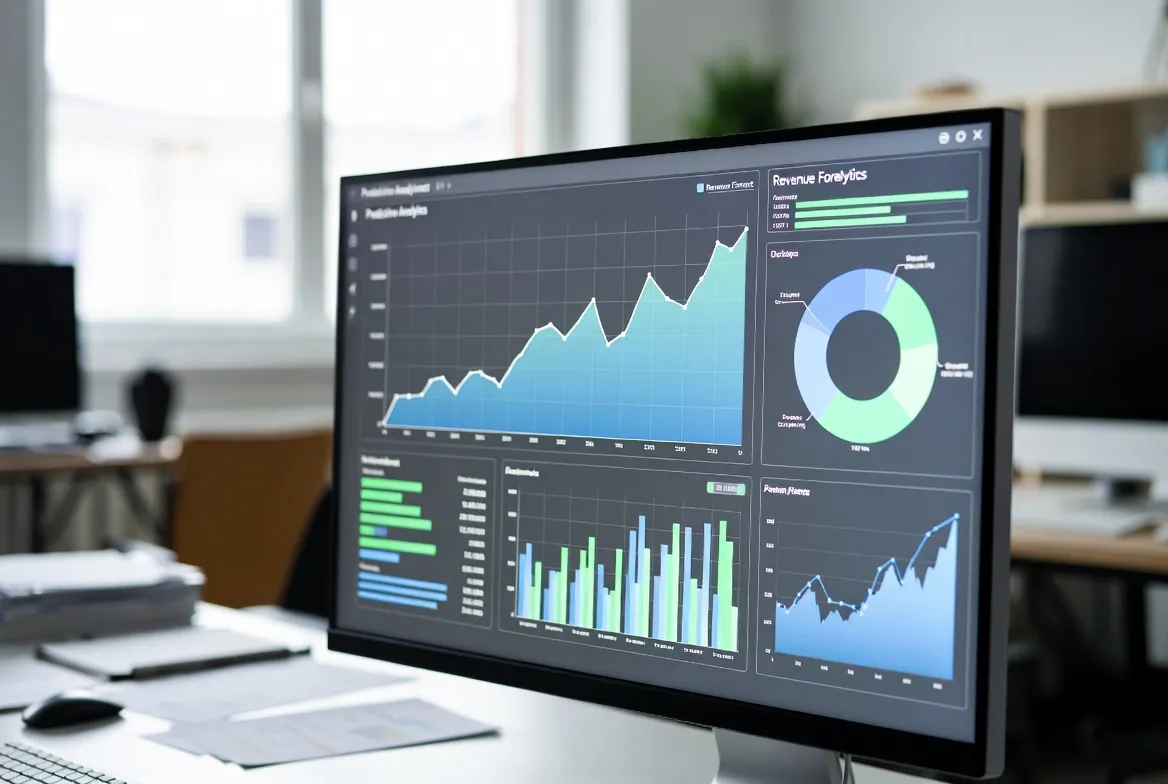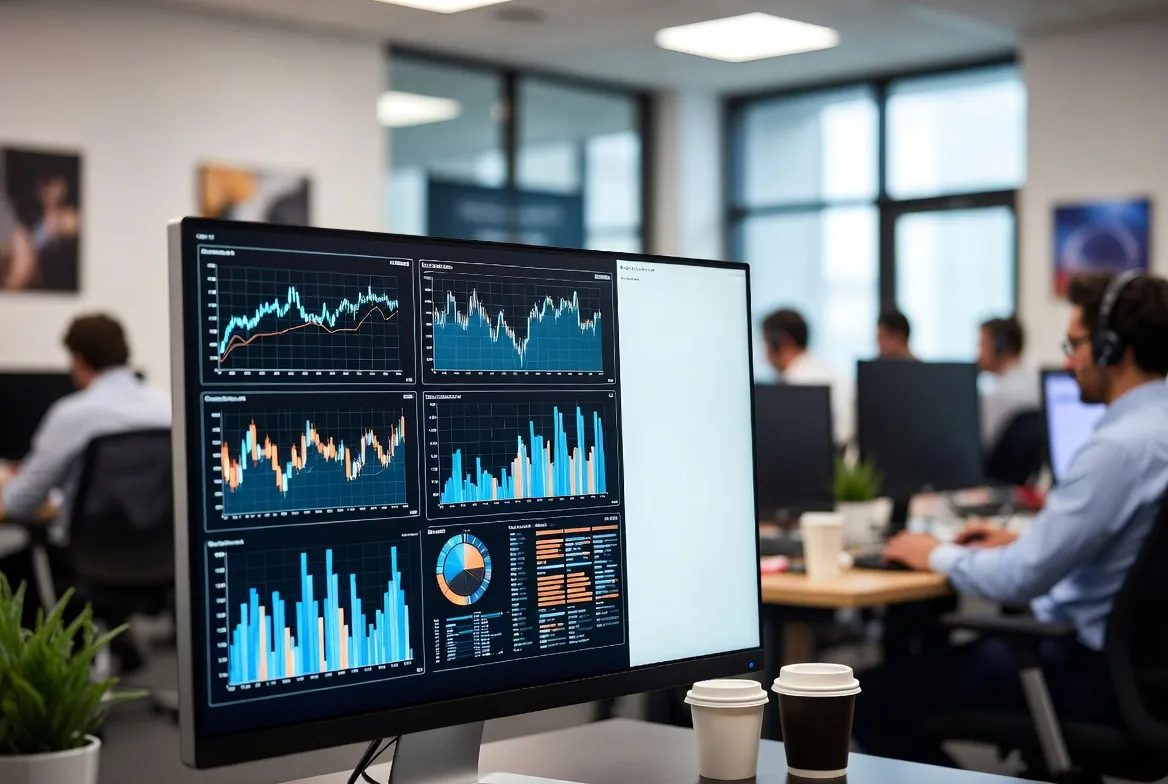
Quick Summary: Predictive analytics in IT uses historical data, machine learning, and statistical modeling to forecast future events, enabling proactive decision-making across infrastructure management, cybersecurity, and operations. Organizations leverage predictive models to anticipate system failures, detect security threats, and optimize resource allocation before issues occur. According to Deloitte research (2026), 67% of large banks and 52% of small banks are already using AI and predictive analytics, while 62% of small financial institutions have specifically adopted Generative AI as of 2025. IT departments face constant pressure. Systems fail at the worst possible moments. Security threats emerge from nowhere. Capacity planning feels like educated guessing. But what if IT teams could see problems coming before they actually happen? That’s exactly what predictive analytics delivers. By analyzing patterns in historical data, IT operations can shift from reactive firefighting to proactive problem prevention. The difference is transformative. According to Stanford HAI, predictive analytics uses data, statistical methods, and machine learning models to forecast future outcomes or trends. In IT contexts, these techniques estimate the likelihood of events such as equipment failures, security incidents, or capacity bottlenecks.
What Predictive Analytics Actually Means for IT
Predictive analytics is a branch of advanced analytics that makes predictions about future outcomes by using historical data combined with statistical modeling, data mining techniques, and machine learning. Here’s the thing though—predictive analytics doesn’t create anything out of thin air. As Deloitte points out, algorithmic forecasting doesn’t deliver 100% precision. What it does provide is a transparent way to improve forecasting processes while relieving IT professionals of tedious, repetitive work. The result? More accurate and timely predictions, leading to more informed decisions. In IT environments, predictive analytics transforms how teams manage:
- Infrastructure performance and capacity planning
- Security threat detection and response
- System maintenance and failure prevention
- Resource allocation and optimization
- Service quality and user experience
Real talk: the maturity of predictive analytics tools is already advanced and ready to scale.
How Predictive Analytics Works in IT Operations
The predictive analytics process follows a structured workflow that transforms raw data into actionable forecasts.
Data Collection and Integration
Everything starts with data. IT environments generate massive amounts of information every second—system logs, performance metrics, network traffic, user behavior, security events, and application telemetry. The challenge isn’t getting data. It’s getting the right data and making it usable. Successful predictive analytics implementations collect data from multiple sources: infrastructure monitoring tools, application performance management systems, security information and event management (SIEM) platforms, and service desk ticketing systems.
Statistical Modeling and Machine Learning
Once historical data is prepared, the real work begins. Predictive models use various techniques to identify patterns and relationships that indicate future outcomes. Common modeling approaches in IT include:
- Regression analysis: Predicting continuous values like server load or response times
- Classification models: Categorizing events as normal or anomalous
- Time series forecasting: Projecting trends in resource utilization
- Clustering algorithms: Grouping similar incidents or behaviors
- Decision trees: Mapping relationships between variables and outcomes
Machine learning enhances these techniques by automatically improving model accuracy as new data arrives. The algorithms learn which patterns actually predict future events and which are just noise. 
Apply Predictive Analytics in IT with AI Superior
AI Superior builds predictive models on system and operational data to support monitoring, planning, and performance management. They focus on integrating models into existing infrastructure, starting with data assessment and a working prototype before scaling.
Looking to Use Predictive Analytics in IT?
AI Superior can help with:
- evaluating system and operational data
- building predictive models
- integrating models into existing systems
- refining outputs based on results
👉 Contact AI Superior to discuss your project, data, and implementation approach
Key Predictive Analytics Techniques for IT
Different IT challenges require different analytical approaches. Understanding which techniques apply to specific use cases is essential.
| Technique | Primary Use in IT | Key Benefit |
|---|---|---|
| Anomaly Detection | Security threat identification, system health monitoring | Identifies unusual patterns that indicate problems |
| Predictive Maintenance | Hardware failure prevention, capacity planning | Prevents downtime through proactive intervention |
| Forecasting Models | Resource demand, network traffic, storage growth | Enables proactive capacity management |
| Classification | Incident categorization, risk assessment | Automates decision-making and prioritization |
| Pattern Recognition | User behavior analysis, attack detection | Reveals hidden relationships in complex data |
Predictive Maintenance in IoT and Industrial Systems
According to IEEE research on AI-enabled predictive analytics for IoT systems, sensor data-driven approaches are enhancing industrial machinery reliability through remaining useful life estimation. This matters enormously for IT infrastructure. Instead of following fixed maintenance schedules or waiting for failures, predictive models analyze sensor data to forecast when specific components will likely fail. The approach works particularly well for:
- Data center cooling systems
- Storage arrays and disk drives
- Network equipment and switches
- Power distribution units
- Server hardware components
According to Deloitte’s research, several factors are driving predictive analytics adoption including advancements in AI and ML capabilities, reduced costs of data storage and computing, and growing IoT technology deployment.
Cybersecurity Risk Analytics
NIST’s Cyber Risk Analytics and Measurement program develops cybersecurity risk analytics methods, tools, and guides to improve understanding of cybersecurity risks and inform management practices. Predictive analytics transforms cybersecurity from reactive to proactive. Rather than only responding to known threats, predictive models identify patterns that indicate emerging attacks. Security teams use predictive analytics to:
- Detect zero-day exploits before widespread damage
- Identify compromised accounts through behavior analysis
- Predict which systems are most vulnerable to specific attacks
- Forecast threat actor tactics based on historical patterns
- Prioritize patch management based on risk probability
The NIST Cyber Risk Predictive Analytics Project Report provides comprehensive frameworks for implementing these approaches in enterprise environments.
Implementation Framework for IT Teams
So how do IT organizations actually implement predictive analytics? The process requires more than just buying tools.
Define Clear Objectives
Start with specific problems to solve. Vague goals like “use AI” or “be more data-driven” won’t work. Effective objectives look like:
- Reduce unplanned downtime by 40% in the next quarter
- Detect security incidents 60 minutes earlier on average
- Improve capacity planning accuracy to within 5%
- Decrease mean time to resolution for critical incidents by 30%
Specific, measurable objectives enable teams to evaluate whether predictive analytics actually delivers value.
Assess Data Readiness
Predictive analytics requires quality data. Period. Before investing in advanced analytics tools, evaluate:
- What data currently exists and where it’s stored
- Data completeness and accuracy levels
- Integration capabilities across systems
- Historical data depth (most models need months or years)
- Data governance and access policies
Organizations with fragmented, inconsistent data need to address those foundation issues first. Sophisticated algorithms can’t compensate for poor data quality.
Start Small and Prove Value
The most successful implementations start with focused pilot projects rather than enterprise-wide transformations. Pick one high-impact use case—maybe predicting storage capacity needs or forecasting network congestion. Build a model, test predictions against actual outcomes, and refine the approach. Once a pilot demonstrates clear value, expand to additional use cases and scale across more systems.
Build Cross-Functional Collaboration
Here’s where many predictive analytics initiatives stumble: treating them as purely technical projects. Effective implementation requires collaboration between IT operations, data science teams, business stakeholders, and executive sponsors. Each brings essential perspectives:
- IT ops teams understand operational context and constraints
- Data scientists develop and validate predictive models
- Business stakeholders define success criteria and priorities
- Executives ensure alignment with strategic objectives
Deloitte emphasizes this symbiotic relationship makes algorithmic forecasting effective—especially when humans are organized to support and share findings across the enterprise.
Common Predictive Analytics Use Cases in IT
Different IT domains benefit from predictive analytics in distinct ways.
Infrastructure and Operations
Predicting system failures before they occur is perhaps the most mature predictive analytics application in IT. Models analyze metrics like CPU utilization, memory consumption, disk I/O patterns, and error rates to identify degradation trends that precede failures. When specific patterns emerge, automated systems can trigger maintenance or failover before users experience impact. IEEE research on smart ports demonstrates how AI-driven predictive analytics and simulation achieve operational excellence—principles that apply equally to IT infrastructure management.
Service Management and Support
Predictive analytics transforms how IT service desks operate. Instead of waiting for users to report issues, predictive models identify problems proactively. Applications include:
- Predicting which incidents will escalate based on initial symptoms
- Forecasting support ticket volume to optimize staffing
- Identifying users likely to experience specific issues
- Recommending resolutions based on similar historical incidents
This shifts service management from reactive ticket processing to proactive issue prevention.
Capacity Planning and Resource Optimization
Traditional capacity planning relies on linear extrapolation or educated guessing. Predictive analytics enables far more sophisticated forecasting. Models account for:
- Seasonal usage patterns
- Business cycle impacts
- Application-specific growth rates
- Infrastructure interdependencies
- Workload variability
The result is more accurate resource planning with less over-provisioning waste.
Security Threat Detection
Cybersecurity is an arms race. Attackers constantly evolve tactics, making signature-based detection insufficient. Predictive analytics identifies threats through behavioral analysis. Models learn what normal user and system behavior looks like, then flag deviations that indicate potential compromises. This approach detects:
- Insider threats based on unusual data access patterns
- Compromised credentials through atypical login behaviors
- Malware communication via abnormal network traffic
- Data exfiltration attempts before significant damage occurs
Challenges and Considerations
Predictive analytics isn’t a magic solution. Implementation comes with real challenges that organizations need to address.
Data Quality and Availability
The most sophisticated algorithms produce garbage predictions when fed poor-quality data. Incomplete logs, inconsistent metrics, and data silos undermine model accuracy. Organizations need robust data collection, validation, and integration processes before predictive analytics can succeed.
Model Maintenance and Drift
IT environments constantly change. Infrastructure gets upgraded. Applications evolve. User behaviors shift. Predictive models trained on historical data gradually lose accuracy as the environment changes—a phenomenon called model drift. Continuous monitoring and retraining are essential to maintain prediction quality.
Skill Requirements
Building and maintaining predictive analytics capabilities requires specialized skills that many IT organizations lack. Teams need data scientists who understand statistical modeling, IT professionals who know operational context, and engineers who can deploy and maintain analytics infrastructure. The skills gap is real. Organizations face choices: build internal capabilities through hiring and training, partner with external experts, or leverage managed analytics services.
Explainability and Trust
Complex machine learning models sometimes operate as “black boxes”—producing accurate predictions without clear explanations of why. For IT operations, explainability matters. Teams need to understand why a model predicts a server will fail or flags a security event. Without that understanding, adoption suffers. Selecting models that balance accuracy with interpretability is crucial for building trust and driving action on predictions.
The Future of Predictive Analytics in IT
Predictive analytics capabilities continue advancing rapidly. Several trends are shaping where the technology heads next.
Autonomous Operations
According to Google Cloud, modern predictive analytics allows organizations to transition toward autonomous data to AI platforms. Predictive analytics is becoming the foundation for automating the entire data lifecycle—from ingestion to actionable intelligence. Data analytics agents allow organizations to go beyond simple forecasting to create intelligent agents that can act on predictions. By using predictive insights to prompt generative models, businesses can automate complex decision-making processes, moving from “What will happen?” to “What should we do?”
Edge Analytics and Real-Time Prediction
As IoT devices proliferate and latency requirements tighten, predictive analytics is moving closer to data sources. Edge computing enables real-time predictions without round-trips to centralized data centers. This matters particularly for:
- Industrial IoT and smart manufacturing
- Autonomous vehicles and robotics
- Network security and threat response
- Smart building management
Integration with AIOps Platforms
Artificial Intelligence for IT Operations (AIOps) platforms incorporate predictive analytics as a core capability, alongside log analysis, event correlation, and automated remediation. These integrated platforms provide end-to-end workflows: predicting issues, diagnosing root causes, and automatically implementing fixes—all without human intervention for routine problems.
Getting Started: Practical First Steps
Ready to implement predictive analytics in your IT environment? Here’s a practical roadmap.
Inventory Current Data Assets
Document what data you’re already collecting, where it lives, and what format it’s in. Look at monitoring tools, log aggregation systems, ticketing platforms, and configuration management databases. Identify gaps where additional data collection would enable valuable predictions.
Identify High-Impact Use Cases
Not all predictive analytics applications deliver equal value. Prioritize use cases based on:
- Business impact of the problem being solved
- Availability of quality historical data
- Feasibility with current skills and tools
- Stakeholder support and sponsorship
The best starting points typically have clear success metrics, sufficient data, and strong executive backing.
Run Controlled Pilots
Launch small-scale pilots before enterprise rollouts. Test predictions against actual outcomes. Measure accuracy. Gather user feedback. Use pilot results to refine models, adjust thresholds, and improve integration with operational workflows.
Plan for Operationalization
Moving from proof of concept to production requires planning for:
- Model deployment and version control
- Performance monitoring and alerting
- Retraining schedules and triggers
- Integration with existing tools and processes
- Documentation and knowledge transfer
Successful predictive analytics becomes part of routine IT operations, not a separate science project.
Frequently Asked Questions
What’s the difference between predictive analytics and traditional monitoring?
Traditional monitoring tells you what’s happening right now or what already happened. Predictive analytics forecasts what will likely happen in the future based on patterns in historical data. It’s the difference between seeing that CPU usage is currently high versus predicting that a server will run out of capacity in three weeks.
How much historical data do I need for effective predictive analytics?
It depends on the use case and data variability. Generally, models need enough data to capture patterns across different scenarios—typically months to years of historical records. For seasonal patterns, at least two full cycles helps. More data usually improves accuracy, but quality matters more than quantity. Six months of clean, complete data often beats three years of inconsistent, fragmented logs.
Can small IT organizations benefit from predictive analytics?
Absolutely. While large enterprises have more data and resources, small organizations can start with focused applications. Many modern tools provide pre-built models for common IT use cases, reducing the need for in-house data science expertise. Cloud-based analytics platforms also make sophisticated capabilities accessible without major infrastructure investments. Start with one high-impact use case rather than trying to predict everything.
How accurate do predictive models need to be?
It depends on the consequences of false positives versus false negatives. For server failure prediction, catching 70% of failures with few false alarms might deliver tremendous value. For security threat detection, higher sensitivity with more false positives may be acceptable. Focus on whether predictions improve decisions compared to current approaches, not whether they achieve perfect accuracy.
What happens when IT environments change significantly?
Major changes—infrastructure upgrades, application migrations, architectural redesigns—can invalidate predictive models trained on pre-change data. Organizations need to retrain models using post-change data and monitor prediction accuracy during transitions. Some teams maintain separate models for different environment configurations or use adaptive algorithms that adjust to changes automatically.
How do I measure ROI from predictive analytics?
Track metrics tied to specific business outcomes: reduced downtime hours, prevented security incidents, avoided capacity purchases, improved mean time to resolution, or decreased support tickets. Compare these metrics before and after implementation. For financial ROI, quantify the cost of problems prevented (downtime losses, emergency fixes, over-provisioning waste) versus the cost of predictive analytics tools and resources.
Should we build predictive analytics capabilities in-house or use external solutions?
Most organizations benefit from a hybrid approach. Leverage vendor solutions for common use cases where pre-built models exist—infrastructure monitoring, security analytics, service desk automation. Build custom models for organization-specific needs where commercial tools don’t fit. Partner with specialists for complex implementations while developing internal skills over time. The right balance depends on your resources, timeline, and strategic importance of analytics capabilities.
Conclusion: From Reactive to Proactive IT
Predictive analytics fundamentally changes how IT operates. Instead of constantly firefighting, teams can anticipate problems and prevent them. The technology has matured beyond experimental pilots. As Deloitte’s research shows, predictive analytics tools are advanced and ready to scale, with 22% of companies already using them and 62% planning implementation. But success requires more than just buying tools. Organizations need quality data, clear objectives, appropriate skills, and commitment to operationalizing insights. Companies achieving strong results through predictive analytics didn’t just implement technology. They built cultures and processes that turn predictions into action. Start focused. Pick one high-impact use case. Prove value. Then expand. The shift from reactive to proactive IT operations isn’t coming someday in the distant future. It’s happening now. Organizations that embrace predictive analytics gain competitive advantages through better uptime, stronger security, optimized resources, and superior user experiences. The question isn’t whether predictive analytics matters for IT. It’s whether you’ll lead the transition or scramble to catch up.