
Quick Summary: AI will not completely replace copywriters, but it is fundamentally transforming the profession. While AI tools can generate basic content quickly, they lack strategic thinking, brand understanding, emotional intelligence, and creative nuance that professional copywriters provide. The future belongs to copywriters who adapt by using AI as a tool while focusing on high-value skills like strategy, audience insight, and persuasive storytelling.
The question keeps surfacing in copywriting communities, LinkedIn threads, and professional forums: will AI replace copywriters?
It’s not just anxiety talking. Real copywriters have been laid off. Entire content teams downsized. Freelancers watching their client rosters shrink as businesses experiment with ChatGPT and other AI writing tools.
But here’s the thing—the conversation is more nuanced than the doomsday headlines suggest.
Some copywriters are thriving in 2026. Others are struggling to find work. The difference isn’t luck. It’s understanding what AI can actually do, what it can’t, and where human copywriters remain irreplaceable.
The Current State of AI in Copywriting
AI writing tools have come a long way since their early days. ChatGPT, Jasper, Copy.ai, and similar platforms can now generate blog posts, social media captions, email sequences, and even ad copy in seconds.
According to the World Economic Forum’s Future of Jobs Report 2025, about 170 million new jobs will be created this decade, with 92 million roles displaced, resulting in a net gain of 78 million jobs, but employers expect 39% of key skills required in the job market will change by 2030. Writing and content creation are among the roles experiencing significant transformation.
The technology is impressive. Feed an AI tool a decent prompt, and it’ll produce grammatically correct, structurally sound content that passes plagiarism checkers.
For businesses churning out massive volumes of basic content—product descriptions, simple blog posts, social media updates—AI presents an obvious cost advantage. Why pay a copywriter $75-100 per hour when an AI subscription costs $20 per month?
That’s the calculation many companies are making.
Real Stories From the Trenches
Community discussions reveal the real impact. One copywriter described watching their agency replace the entire freelance roster with AI-generated content.
A business owner reported going from a staff of eight people generating $600,000 annually to making less than $10,000 after switching to AI. Another freelancer saw their hours cut from nearly full-time to 4-5 per month.
These aren’t isolated incidents. They’re patterns emerging across the industry.
But they don’t tell the whole story.

From AI Idea to Working System With AI Superior
AI Superior focuses on moving AI projects beyond concepts. Work typically begins with defining the problem and expected outcome, followed by model development, testing, and integration into business environments.
Need Help Turning AI Concepts Into Systems?
AI Superior can help with:
- development of AI-driven tools and applications
- defining technical approach and project structure
- connecting AI models to real business processes
👉 Contact AI Superior to discuss your project, data, and implementation approach
What AI Can Actually Do (And Where It Falls Short)
To understand whether AI will replace copywriters, we need to be honest about what AI actually delivers.
AI’s Genuine Strengths
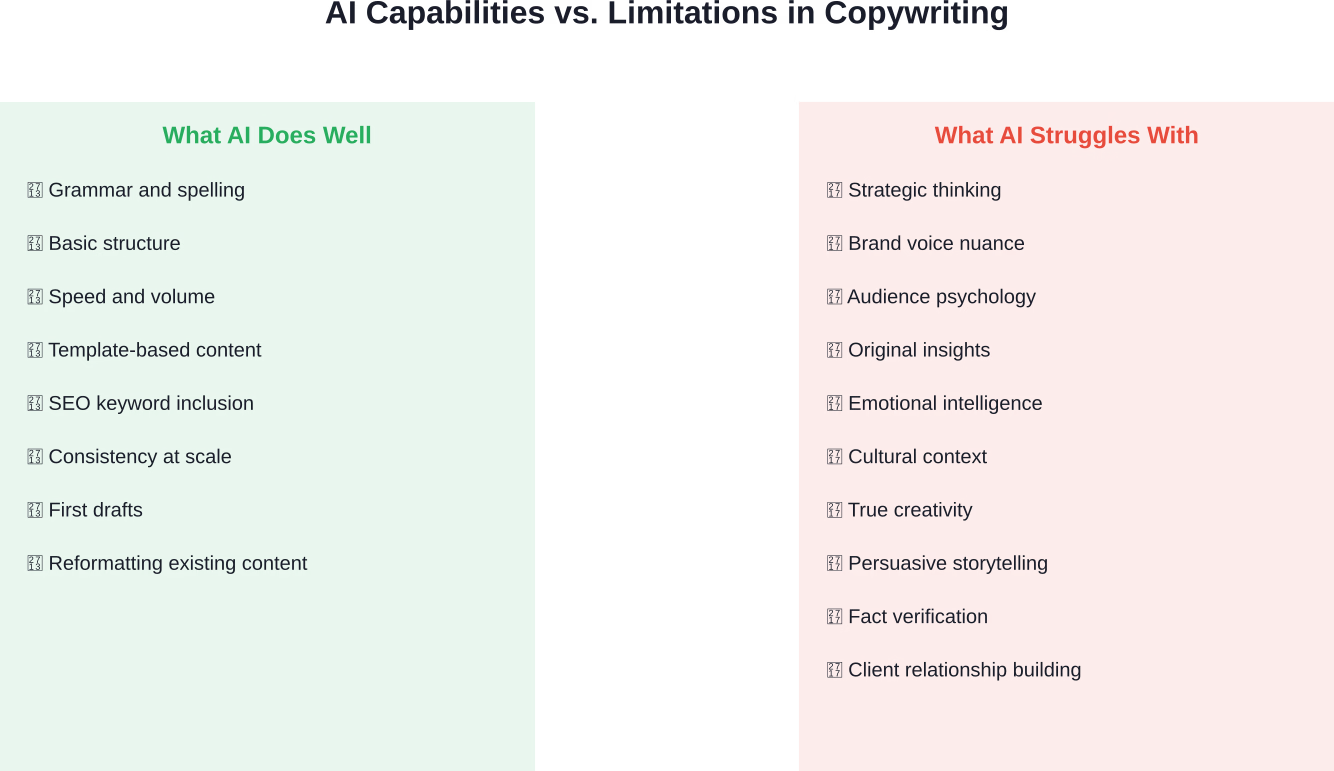
AI excels at pattern recognition and reproduction. It’s processed millions of articles, ad campaigns, and marketing materials. When asked to create similar content, it performs remarkably well.
Research examining generative AI models found that 85% of GPT text outputs were rated highly creative by human reviewers, particularly for open-ended or abstract prompts, but the model occasionally struggled with fact-based or detail-centric prompts. That sounds impressive.
But here’s what that statistic doesn’t capture: creativity in execution versus creativity in strategy.
AI can write a grammatically perfect blog post about “10 Tips for Better Sleep.” It’ll structure it logically, include relevant keywords, and produce something readable.
What it won’t do is understand why that particular client needs that content, how it fits into their broader marketing funnel, or whether that angle will actually resonate with their specific audience.
The Critical Gaps
AI copywriting tools are only as good as what humans feed them. Without strategic direction, AI produces generic content that sounds like everything else on the internet.
Because that’s literally what it is—a synthesis of existing content patterns.
Real copywriting involves understanding business objectives, audience pain points, competitive positioning, and conversion psychology. It requires asking questions AI doesn’t know to ask.
A client might say, “I want an Instagram ad for this $5,000 product.”
An AI tool will happily generate that ad.
A skilled copywriter knows that driving cold traffic directly to a $5,000 product typically doesn’t work. They’ll recommend a lead magnet, a nurture sequence, a webinar funnel. They’ll understand the customer journey.
That’s not writing. That’s strategy. And Current AI tools typically lack the strategic and contextual reasoning required for marketing strategy.
Which Copywriting Jobs Are Most at Risk
Not all copywriting work faces equal threat from AI. The impact varies dramatically based on the type of work and skill level required.
| Copywriting Type | Risk Level | Why |
|---|---|---|
| Basic blog content | High | AI handles informational content efficiently; lower skill barrier |
| Product descriptions | High | Template-driven, repetitive, easily automated |
| Social media captions | Medium-High | Simple posts are AI-friendly; brand voice still matters |
| Email newsletters | Medium | Basic emails at risk; strategic sequences still need humans |
| Sales copy and landing pages | Low-Medium | Conversion psychology and persuasion require human insight |
| Brand messaging and positioning | Low | Requires deep strategic thinking and market understanding |
| Direct response copywriting | Low | Highly specialized skill requiring audience psychology mastery |
| Creative campaigns | Very Low | Original concepts and cultural relevance are human strengths |
The Unskilled Copywriter Problem
Here’s the uncomfortable truth: AI will replace unskilled copywriters.
If the primary value someone offers is stringing together grammatically correct sentences about topics they researched on Google, AI can do that cheaper and faster.
The copywriters struggling most in 2026 are those who treated writing as a commodity service—charging by the word, accepting any topic, focusing on volume over value.
According to the U.S. Bureau of Labor Statistics, the median annual wage for writers and authors was $72,270 in May 2024. But that figure masks enormous variation. Top-tier copywriters commanding premium rates remain in high demand. Entry-level content writers are finding fewer opportunities.
The middle is hollowing out.
The Copywriters Who Are Thriving
While some copywriters are losing work to AI, others are booking months in advance and raising their rates.
What’s the difference?
Research from the University of Washington examining how creative writers integrate AI into their practice found that creative writers are intentional about incorporating AI, making deliberate decisions based on their core values such as authenticity and craftsmanship. They maintain control over strategy, voice, and creative direction while leveraging AI for efficiency.
Specialization Matters More Than Ever
Generalist copywriters face the most pressure. Specialists are thriving.
AI can write about anything. But it writes about everything the same way—competently generic.
A copywriter who deeply understands an industry like SaaS marketing, healthcare compliance, luxury real estate, or financial services brings domain expertise AI cannot easily replicate.
They know the industry jargon, the customer objections, the regulatory constraints, the competitive landscape. That knowledge informs every word they write.
AI typically lacks that context without specialized training data and prompt engineering.
Strategic Thinkers, Not Just Writers
The copywriters commanding premium rates in 2026 aren’t selling writing. They’re selling outcomes.
They position themselves as marketing strategists who happen to write copy, not writers who happen to know some marketing.
They consult on messaging architecture, customer journey mapping, funnel optimization, and conversion strategy. The copy they produce emerges from that strategic foundation.
AI can’t do that work. It doesn’t understand business strategy, market positioning, or competitive differentiation at a level that drives real results.
How AI Is Actually Being Used in Copywriting
The either-or framing—human versus AI—misses what’s actually happening in many successful copywriting practices.
AI isn’t replacing skilled copywriters. It’s becoming part of their toolkit.
Research and Ideation
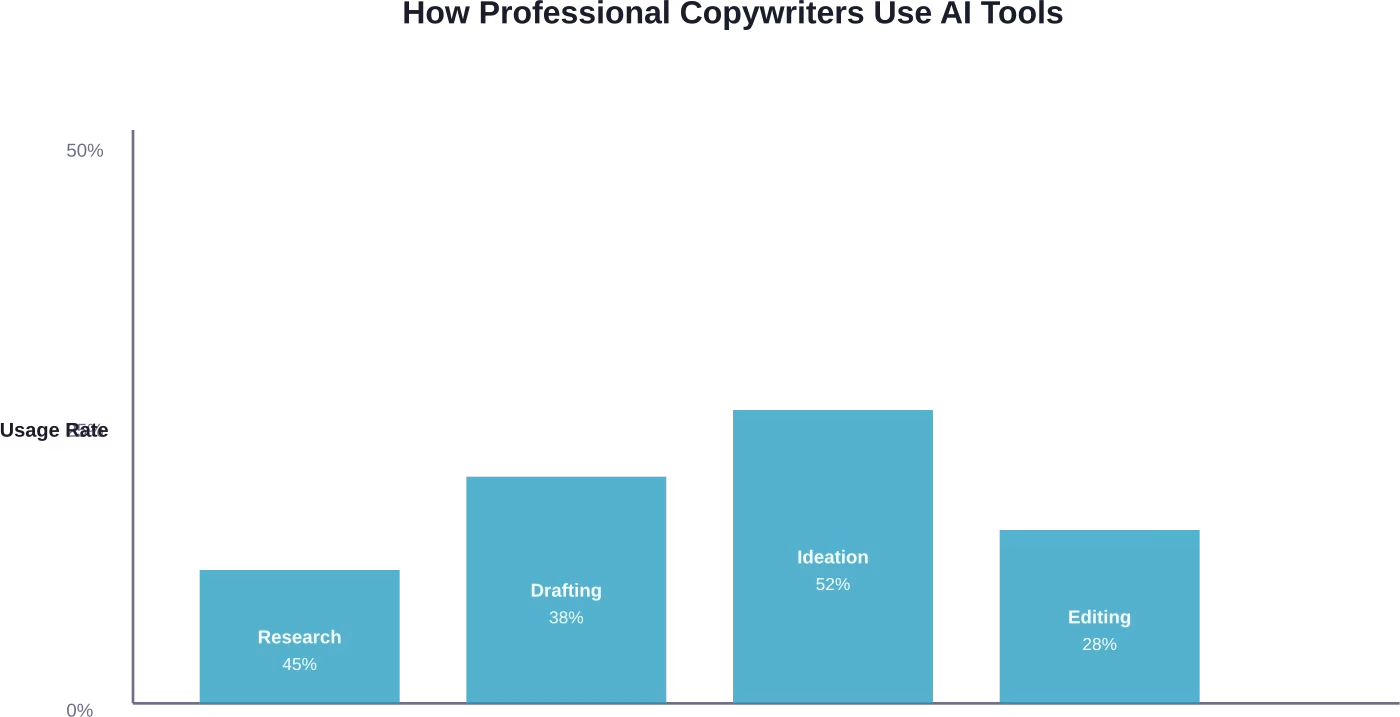
Many copywriters use AI to accelerate research. Instead of spending hours reading industry reports, they ask AI to summarize key trends, compile statistics, or explain technical concepts.
For ideation, AI serves as a brainstorming partner. Generate 20 headline variations. Explore different angles on a topic. Identify potential objections a target audience might have.
The copywriter still evaluates, selects, and refines. AI just speeds up the divergent thinking phase.
First Drafts and Outlines
Some copywriters let AI create rough first drafts or detailed outlines. This provides structure to work from rather than starting with a blank page.
The final copy might retain 20-30% of the AI-generated text. The rest gets rewritten, reorganized, and infused with strategic thinking and brand voice.
This approach can cut project time significantly without sacrificing quality—if the copywriter maintains editorial control and adds genuine value in the revision.
Variation and Optimization
Testing multiple versions of ad copy, email subject lines, or headlines becomes easier with AI assistance. Generate 50 variations, identify the most promising ones, then refine them manually.
AI handles the volume. The copywriter handles the judgment.
What This Means for Copywriting Careers
The copywriting profession isn’t disappearing. It’s bifurcating.
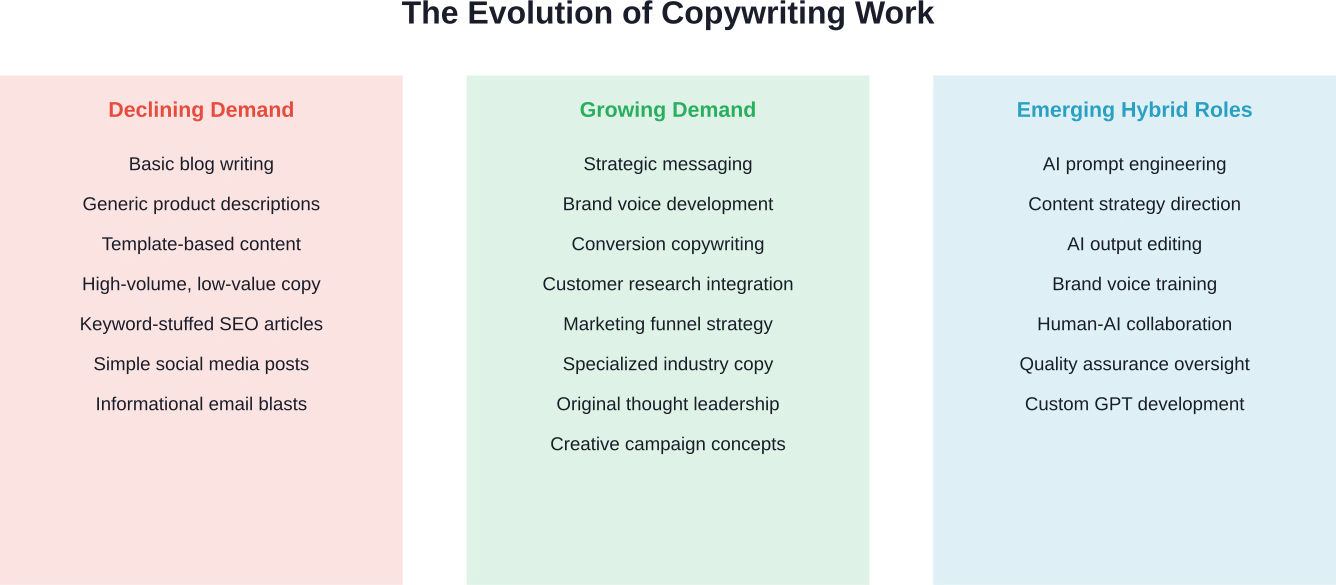
Low-skill, high-volume content work is increasingly automated. High-skill, strategic copywriting remains in demand and commands premium pricing.
According to the Bureau of Labor Statistics, technical writers—who require specialized knowledge—earned a median wage of $91,670 in May 2024, notably higher than general writers. Specialization and expertise correlate with job security and compensation.
The Skills That Matter Most
In 2026, the copywriters succeeding focus on skills AI can’t replicate:
- Strategic thinking: Understanding business objectives, market positioning, and how copy fits into broader marketing systems
- Audience psychology: Deep knowledge of what motivates, persuades, and converts specific target markets
- Brand voice mastery: Creating distinctive, consistent voice that reflects brand personality and values
- Research and interviews: Extracting insights from customer conversations, case studies, and original research
- Storytelling: Crafting narratives that engage emotionally and build connection
- Conversion optimization: Understanding testing methodologies and what drives measurable results
- Industry expertise: Deep knowledge in specific verticals or specializations
These are human skills. They require judgment, experience, emotional intelligence, and contextual understanding.
AI currently lacks these capabilities, though technology continues to evolve.
The Adaptation Imperative
That said, copywriters who refuse to engage with AI tools are making a strategic mistake.
The competition isn’t AI versus human copywriters. It’s AI-enhanced copywriters versus those who work entirely manually.
A copywriter who leverages AI for research, ideation, and efficiency can deliver faster, offer more iterations, and serve more clients without sacrificing quality.
One refusing to use AI tools can’t compete on speed or volume. They’re limited to competing purely on quality—which matters, but isn’t always enough when clients want both quality and efficiency.
The Client Perspective: Why Businesses Still Need Human Copywriters
From a business perspective, AI copywriting tools seem like an obvious win. Lower costs, faster turnaround, unlimited revisions.
So why are many businesses still hiring human copywriters?
Because they’ve discovered what AI-generated content actually delivers—and more importantly, what it doesn’t.
The Generic Content Problem
AI produces content that reads like everything else in the category. It synthesizes common patterns from existing content.
That creates a problem: everyone using AI for the same topic gets similar output. The internet becomes increasingly homogeneous.
Businesses competing in crowded markets can’t afford generic content. They need distinctive positioning, unique angles, and differentiated messaging.
That requires human creativity and strategic thinking.
Brand Voice Consistency
Establishing and maintaining a consistent brand voice across hundreds of pieces of content requires editorial judgment AI struggles with.
AI can mimic a voice if given extensive examples and detailed prompts. But it doesn’t internalize brand values, personality, or positioning the way a human copywriter embedded in a brand does.
The result is content that’s technically on-brand but lacks the authenticity and consistency that builds audience connection over time.
Strategic Integration
Content doesn’t exist in isolation. It’s part of marketing funnels, customer journeys, and integrated campaigns.
A human copywriter understands how a blog post supports a webinar, which feeds into an email sequence, which drives to a sales page. They see the system.
AI generates individual pieces. It doesn’t architect systems.
Businesses investing in sophisticated marketing need copywriters who think systematically, not just tactically.
Real-World Examples: AI Success and Failure in Copywriting
The theoretical debate matters less than what’s actually happening in the market.
When AI Works
E-commerce businesses with thousands of product descriptions have successfully used AI to generate baseline copy that human editors then refine. This hybrid approach reduces costs while maintaining quality.
Content marketing teams use AI to produce first drafts of informational blog posts, which subject matter experts then edit and enhance with original insights and proprietary data.
Social media managers use AI to generate multiple caption variations for testing, selecting and refining the most promising options.
These applications share a pattern: AI handles volume and speed; humans provide strategy, judgment, and quality control.
When AI Fails
Community discussions reveal numerous failures. Businesses that replaced entire copywriting teams with AI reported declining conversion rates, loss of brand voice, and content that failed to rank or engage.
According to industry discussions, some businesses experienced significant revenue impacts after switching heavily to AI-generated content, with reported cases of revenue declines.
These failures typically stem from viewing AI as a complete replacement rather than a tool requiring human oversight and strategic direction.
The Future: Collaboration, Not Replacement
The evidence from 2026 suggests a clear pattern: AI isn’t replacing skilled copywriters. It’s changing what copywriting work looks like.
The World Economic Forum’s analysis of AI and talent strategies emphasizes that organizations maximizing AI value are those that transform their workforce rather than simply replacing it. This means upskilling, redefining roles, and creating human-AI collaboration models.
New Hybrid Roles Emerging
The copywriting landscape is creating new specializations that didn’t exist three years ago:
- AI Content Strategists: Professionals who design AI content systems, create custom GPTs, and establish quality control frameworks for AI-generated copy.
- Prompt Engineers: Specialists who craft sophisticated prompts that consistently generate on-brand, strategic content from AI tools.
- Copy Editors for AI Output: Editors who specialize in refining AI-generated drafts, adding strategic elements, and ensuring brand consistency.
These roles combine copywriting expertise with AI tool proficiency. They’re commanding strong rates because they deliver efficiency without sacrificing quality.
The Premium on Human Insight
As AI handles more commodity content, the market increasingly values distinctly human contributions: original research, proprietary insights, authentic voice, and strategic thinking.
Copywriters who conduct customer interviews, analyze behavioral data, develop original frameworks, and create genuinely new ideas are more valuable than ever.
AI currently cannot effectively interview customers, deeply analyze market trends with original insight, or build professional relationships in the way human copywriters do.
Those capabilities are becoming the differentiators.
Practical Advice for Copywriters Navigating the AI Era
What should copywriters actually do with this information?
Embrace AI Tools, But Maintain Control
Learn to use AI tools effectively. Experiment with ChatGPT, Claude, Jasper, Copy.ai, and other platforms. Understand their strengths and limitations through hands-on experience.
But position AI as a tool in the service of human strategy, not a replacement for human judgment.
The copywriters thriving in 2026 are those who view AI as an assistant that handles research and generates options while they provide the strategic direction and creative refinement.
Develop Specialized Expertise
Generalists face the most competition from AI. Specialists remain in demand.
Choose an industry, audience, or copywriting discipline to master deeply. Become the person who understands that niche better than any AI tool possibly could.
Financial services. Healthcare technology. E-commerce conversion. Direct response fundraising. B2B SaaS. Whatever the focus, go deep.
Focus on Strategy Over Execution
Position services around outcomes and strategy rather than deliverables and word count.
Instead of “blog posts at $200 each,” offer “content strategy and creation that drives qualified leads.” Instead of “email copy,” sell “nurture sequence strategy and optimization.”
This reframing emphasizes the strategic value AI can’t provide while acknowledging that AI might assist in execution.
Build a Personal Brand
AI-generated content is anonymous. Human copywriters with distinctive voices, perspectives, and reputations have an inherent advantage.
Invest in thought leadership, case studies, and demonstrating expertise publicly. Build a reputation that attracts clients who value human insight and strategic thinking.
Learn the Business Side
Understanding marketing strategy, funnel architecture, conversion optimization, and business metrics makes copywriters exponentially more valuable than those who only write.
The copywriter who can consult on what to create, why, and how it fits into the broader marketing system is solving problems AI doesn’t even know exist.
Frequently Asked Questions
Can AI completely replace human copywriters?
No, AI cannot completely replace human copywriters, though it is displacing some low-skill content work. AI lacks strategic thinking, emotional intelligence, brand understanding, and creative nuance. It excels at generating grammatically correct content quickly but struggles with persuasion psychology, audience insight, and original strategic thinking. Skilled copywriters who focus on strategy, specialization, and high-value work remain in strong demand.
What types of copywriting jobs are most at risk from AI?
Basic blog content, generic product descriptions, template-based social media posts, and high-volume informational articles face the highest risk. These tasks are repetitive, follow predictable patterns, and don’t require deep strategic thinking—areas where AI performs adequately. Conversely, strategic work like brand messaging, direct response copywriting, creative campaigns, and specialized industry content remain relatively safe because they require human expertise and judgment.
How are successful copywriters using AI tools?
Professional copywriters use AI for research acceleration, brainstorming and ideation, generating first drafts or outlines, creating variations for testing, and handling routine tasks. They maintain strategic control while leveraging AI for efficiency. The pattern that works: AI handles volume and speed while humans provide strategy, judgment, brand voice refinement, and quality control. This hybrid approach delivers faster turnaround without sacrificing quality.
Will copywriting salaries decrease because of AI?
The impact on salaries varies by skill level and specialization. Entry-level and generalist copywriters are experiencing downward pressure on rates as AI handles basic content. However, strategic copywriters with specialized expertise are maintaining or increasing their rates. According to Bureau of Labor Statistics data, technical writers with specialized knowledge earned $91,670 median annual wages in May 2024, significantly above general writers. The profession is bifurcating: commodity work pays less, strategic expertise commands premium pricing.
Should aspiring copywriters still enter the field in 2026?
Yes, but with a strategic approach. Focus on developing skills AI cannot replicate: strategic thinking, audience psychology, specialized industry knowledge, persuasion expertise, and relationship building. Avoid competing on commodity content creation. Position yourself as a marketing strategist who writes rather than a writer who knows some marketing. Learn to use AI tools effectively while emphasizing the human value you provide. The copywriters entering the field successfully are those treating it as a strategic profession, not just a writing job.
What skills should copywriters develop to remain competitive?
The most valuable skills are strategic thinking and understanding how copy fits into marketing systems, audience psychology and persuasion expertise, deep industry or niche specialization, brand voice development and consistency, customer research and insight extraction, conversion optimization and testing methodologies, and storytelling that creates emotional connection. Additionally, learning to work effectively with AI tools as collaborators rather than viewing them as threats provides a competitive advantage.
How can copywriters differentiate themselves from AI-generated content?
Differentiation comes from providing what AI cannot: original insights from customer research and interviews, strategic recommendations based on business objectives and market positioning, distinctive brand voice that reflects authentic personality, cultural context and nuanced understanding of audience values, fact verification and authoritative sourcing, and relationship building with clients. Create content that demonstrates genuine expertise, original thinking, and strategic value rather than just grammatically correct sentences.
The Bottom Line: AI as Tool, Not Replacement
So will AI replace copywriters?
The answer is both yes and no.
AI is replacing copywriters who provide commodity writing services without strategic value. Those treating copywriting as simply stringing together sentences about topics they don’t deeply understand are finding fewer opportunities.
But AI is not replacing copywriters who provide strategic thinking, specialized expertise, persuasion psychology, brand voice mastery, and creative insight. These professionals are busier than ever, often commanding higher rates as the market increasingly values genuinely human contributions.
The profession is transforming, not disappearing.
The copywriters who understand this distinction—who position themselves as strategic partners rather than content producers, who develop genuine expertise rather than generalist competence, who use AI as a tool rather than viewing it as a threat—are thriving.
The future of copywriting isn’t human versus AI. It’s skilled humans leveraging AI to deliver better results faster while focusing on the high-value work only humans can do.
That future is already here. The question isn’t whether AI will replace copywriters. The question is what kind of copywriter someone chooses to be.
Make that choice strategically. Develop irreplaceable skills. Focus on value over volume. And use every tool available—including AI—to deliver exceptional results for clients.
That’s how copywriters not only survive but thrive in the AI era.
 English
  German
  Arabic
  French
  Dutch
Dutch  Spanish