
Quick Summary: Predictive analytics in supply chain uses historical data, machine learning, and statistical models to forecast demand, optimize inventory, and mitigate risks before disruptions occur. Organizations implementing these capabilities report 20–50% reductions in forecasting errors, up to 25% annual cost savings, and significant improvements in inventory efficiency and logistics performance.
Supply chain professionals face a structural reality: volatility isn’t temporary anymore. Geopolitical tensions, climate disruptions, and shifting consumer behavior create conditions where traditional planning methods fall short.
Predictive analytics changes the equation. Instead of reacting to stockouts or demand spikes after they happen, teams can forecast problems weeks or months ahead and adjust accordingly.
But here’s the thing—predictive analytics isn’t just another forecasting technique. It’s a fundamental shift from asking “what happened?” to “what will happen?” and then acting on that foresight.
What Is Predictive Analytics in Supply Chain Management?
Predictive analytics applies statistical models and machine learning algorithms to historical data to forecast future outcomes. In supply chains, this means anticipating demand fluctuations, inventory needs, supplier risks, and logistics bottlenecks before they impact operations.
The approach sits between two other analytics types. Descriptive analytics tells you what already happened—last quarter’s stockout rate was 12%. Prescriptive analytics recommends specific actions. Predictive analytics bridges the gap by forecasting what’s coming.
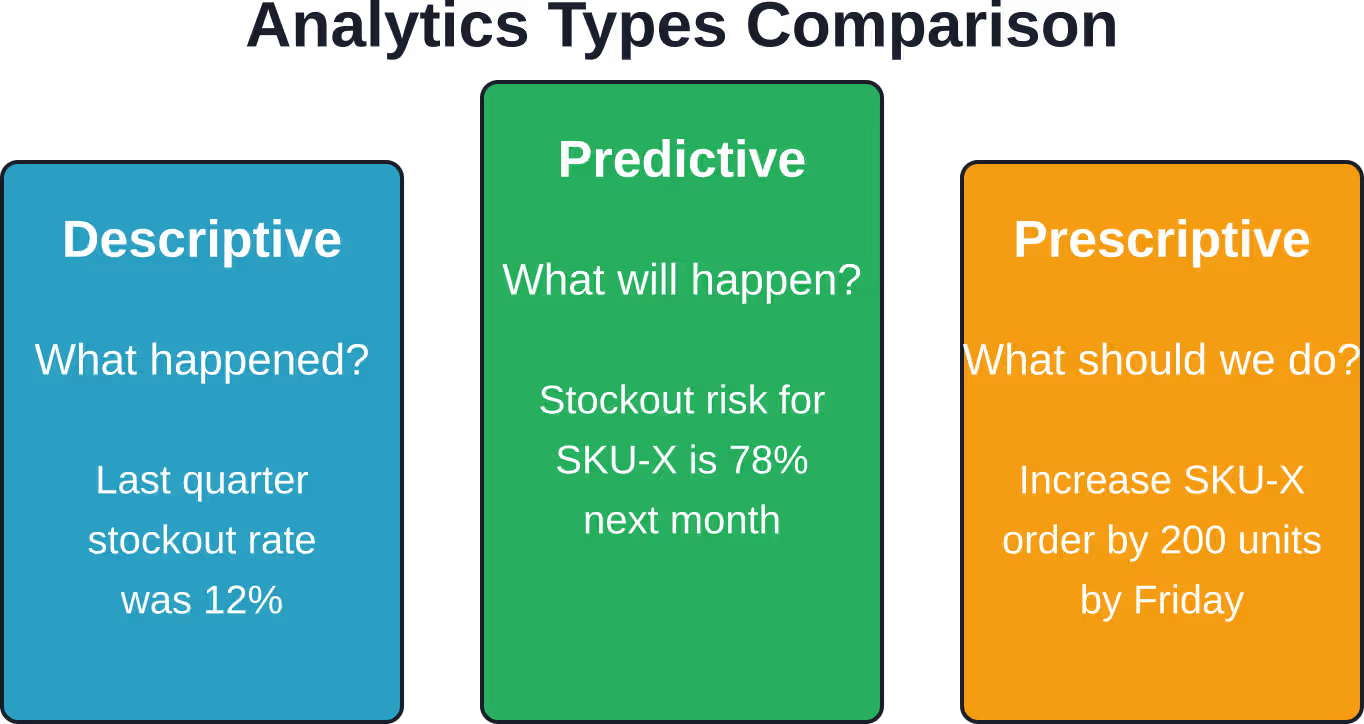
Most organizations already generate descriptive reports. Predictive analytics builds on that foundation by incorporating external variables—weather patterns, economic indicators, social media sentiment, supplier performance history—into forecasting models that continuously learn and improve.
Why Predictive Supply Chain Analytics Matters Now
The World Economic Forum’s 2026 report makes it clear: competitive advantage belongs to organizations that prioritize foresight and ecosystem coordination. Volatility is a structural condition, not a temporary disruption.
Research from EY shows 55% of supply chain leaders admit their organizations aren’t prepared for geopolitical tensions. Another 34% struggle with absent upstream or downstream data, leaving blind spots in supplier or customer dynamics.
Real talk: manual planning can’t keep pace anymore.
Traditional forecasting methods rely on historical averages and linear assumptions. They work fine in stable environments. But when demand patterns shift rapidly—due to viral trends, supply shocks, or regulatory changes—static models fail.
AI-driven predictive analytics adapts dynamically. Academic research and McKinsey studies show AI-driven supply chain management can reduce forecasting errors by 20–50%.
Key Benefits of Predictive Analytics in Supply Chains
Organizations implementing predictive capabilities report measurable improvements across multiple dimensions. These aren’t marginal gains—they’re fundamental performance shifts.
Demand Forecasting Accuracy
Forecasting accuracy directly impacts inventory costs and customer satisfaction. Academic studies show AI-driven approaches reduce days-in-inventory by 5-15% while maintaining service levels.
Inventory Optimization
Healthcare supply chain research from Marshall University documented stockout reductions of up to 20% and inventory level reductions of 30% through vendor-managed inventory systems, with annual cost savings reaching 25%.
Inventory represents one of the largest capital commitments in supply chains. Predictive models optimize stock levels by forecasting demand variability, lead time fluctuations, and seasonal patterns simultaneously.
Risk Management and Resilience
Supplier disruptions, port delays, and quality issues create cascading impacts. Predictive analytics identifies risk patterns before they materialize.
Machine learning models analyze supplier performance history, financial health indicators, geopolitical factors, and weather data to score supplier reliability. Academic research on sustainable supplier classification using Random Forest algorithms has achieved high prediction accuracy for supplier risk assessment.
Logistics Cost Reduction
Route optimization, carrier selection, and warehouse placement become data-driven decisions. Academic research shows predictive analytics reduces logistics cost per order by 10-20%.
Transportation represents a significant portion of total supply chain network costs in many industries. Even modest efficiency gains translate to substantial savings.
Overall ROI
Organizations implementing AI-driven supply chain optimization have reported approximately 20% ROI when implementation includes proper change management and workforce training.
Core Technologies and Methods
Different analytical approaches suit different supply chain challenges. No single method solves everything.
Time-Series Forecasting
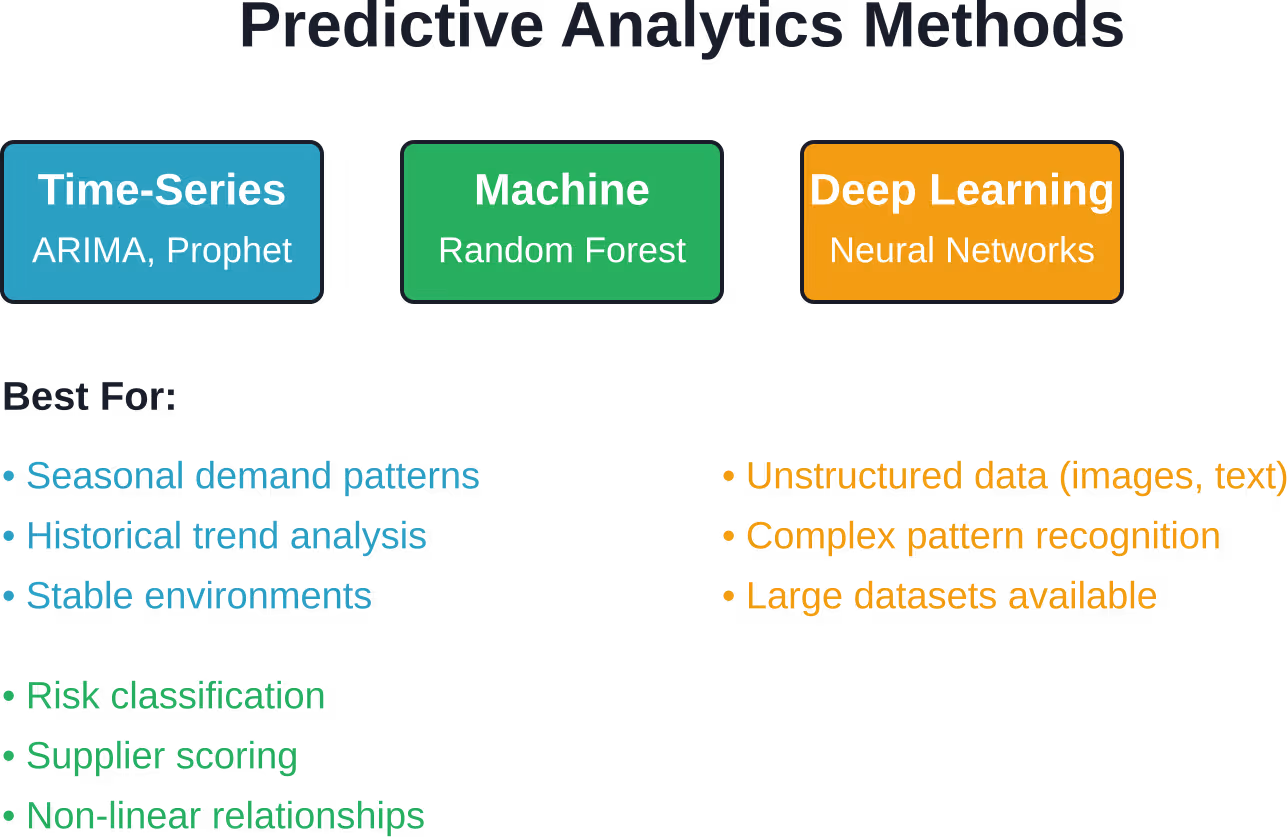
Traditional time-series models (ARIMA, exponential smoothing) work well for stable demand patterns with clear seasonality. They’re computationally efficient and interpretable.
Newer approaches like Prophet and LSTM neural networks handle multiple seasonality patterns and external regressors. FMCG demand forecasting research indicates that integrating exogenous variables into AI/ML models can yield 5-10% reductions in forecasting error compared to internal-data-only methods.
Machine Learning Algorithms
Random Forest, Gradient Boosting, and Support Vector Machines excel at classification problems—will this shipment arrive late? Is this supplier at risk?
These algorithms handle non-linear relationships and interactions between variables that traditional statistics miss.
Deep Learning
Neural networks process unstructured data—images, text, sensor streams. In supply chains, they analyze satellite imagery for crop yields, sentiment from customer reviews, or equipment sensor data for predictive maintenance.
Deep learning requires substantial training data and computational resources. It’s overkill for simple forecasting but powerful for complex pattern recognition.
Reinforcement Learning
Reinforcement learning optimizes sequential decisions—inventory replenishment policies, dynamic pricing, warehouse robot coordination.
The algorithm learns optimal strategies through trial and error in simulated environments, then deploys to production systems.
Real-World Use Cases
Predictive analytics applications span the entire supply chain, from raw material sourcing to final delivery. Here’s where organizations see the biggest impact.
Demand Planning
Consumer goods companies integrate point-of-sale data, weather forecasts, promotional calendars, and social media trends into unified forecasting models. This produces 15% reductions in inventory value while maintaining fill rates.
The models detect demand shifts weeks before they show up in aggregate sales reports, allowing proactive production adjustments.
Inventory Management
Retailers optimize stock levels across hundreds of locations by forecasting local demand variations. Predictive models account for demographic differences, nearby events, competitor actions, and micro-weather patterns.
Healthcare supply chain research documented stockout reductions of up to 20% and inventory level reductions of 30% through vendor-managed inventory systems, with annual cost savings reaching 25%.
Supplier Risk Assessment
Procurement teams score suppliers on multiple dimensions: financial stability, delivery performance, quality metrics, geographic risk, and compliance history. Machine learning models weight these factors and flag high-risk relationships before disruptions occur.
Academic research on sustainable supplier classification using Random Forest algorithms has achieved high prediction accuracy for supplier risk assessment.
Transportation Optimization
Logistics providers forecast transit times by analyzing historical routes, weather conditions, traffic patterns, port congestion, and carrier performance. Real-time adjustments reroute shipments around developing delays.
Academic research documents 10-20% reductions in logistics cost per order through these optimization approaches.
Predictive Maintenance
Warehouse equipment, delivery vehicles, and production machinery generate sensor data. Predictive models identify failure patterns and schedule maintenance before breakdowns disrupt operations.
This shifts maintenance from reactive (fix what breaks) to proactive (prevent failures), reducing downtime and extending asset life.
Implementation Challenges
Predictive analytics delivers results, but implementation isn’t trivial. Organizations face several common obstacles.
Data Quality and Integration
Models are only as good as their inputs. Supply chain data often lives in disconnected systems—ERPs, warehouse management systems, transportation platforms, supplier portals.
Integrating these sources requires technical effort and organizational coordination. Data cleaning consumes significant time in most projects.
Skill Gaps
Effective predictive analytics demands expertise in statistics, programming, domain knowledge, and communication. Finding professionals who combine these skills is challenging.
Organizations often need to upskill existing teams rather than hiring externally. Healthcare supply chain research identified workforce education as a key implementation barrier.
Change Management
Shifting from experience-based decisions to data-driven forecasts threatens existing workflows and power structures. Planners who’ve relied on intuition for decades may resist algorithmic recommendations.
Success requires demonstrating model value through pilot projects and involving stakeholders in model development.
Technology Investment
Advanced analytics platforms, cloud computing resources, and integration middleware represent substantial capital commitments. Healthcare studies cite capital requirements as a limiting factor for smaller organizations.
ROI timelines vary. Some benefits (improved forecast accuracy) appear quickly. Others (cultural transformation, ecosystem coordination) take years.
Model Maintenance
Predictive models degrade over time as market conditions change. Performance monitoring and periodic retraining are essential but often overlooked during initial implementation planning.
Organizations need processes for detecting model drift, collecting feedback, and updating algorithms.
Best Practices for Success
Organizations that successfully implement predictive analytics follow several common patterns.
Start Small, Scale Gradually
Don’t attempt to transform the entire supply chain at once. Identify one high-value use case—demand forecasting for a product category, risk scoring for critical suppliers—and prove the concept.
Early wins in focused use cases build credibility and momentum for broader adoption.
Prioritize Data Infrastructure
Before building sophisticated models, ensure data flows reliably from source systems. Establish data governance, quality standards, and integration pipelines.
Healthcare research emphasized how ERP systems like Infor enabled better data access and improved forecasting through consistent information architecture.
Combine Human Judgment and Algorithms
Models should augment, not replace, human expertise. Build systems where algorithms generate forecasts and flag exceptions, but domain experts validate and adjust based on context the model can’t capture.
This hybrid approach produces better results than either humans or algorithms alone.
Measure and Communicate Impact
Track metrics that matter to business stakeholders—forecast accuracy, inventory turns, stockout rates, cost per order. Translate technical model performance into business outcomes.
Regular reporting maintains executive support and secures ongoing investment.
Invest in Training
Develop analytics literacy across the organization. Planners need to understand what models can and can’t do. Executives need to interpret probabilistic forecasts. IT teams need to maintain production systems.
Training budgets should be 15-20% of total implementation costs.
| Implementation Phase | Key Activities | Typical Duration | Success Metrics |
|---|---|---|---|
| Assessment | Evaluate data readiness, identify use cases, define business objectives | 1-2 months | Use case prioritization, stakeholder alignment |
| Pilot | Build initial models, validate with historical data, test in controlled environment | 3-4 months | Model accuracy, business impact in pilot scope |
| Production | Deploy to operations, integrate with existing systems, train users | 2-3 months | User adoption, operational performance |
| Scale | Expand to additional products/regions, refine models, automate workflows | 6-12 months | Coverage expansion, sustained accuracy |
| Optimization | Continuous improvement, model retraining, capability development | Ongoing | Long-term ROI, competitive advantage |

Build Predictive Supply Chain Models That Actually Work
Predictive analytics sounds simple in theory, but most teams get stuck at data quality, model accuracy, or integration. AI Superior develops custom AI-powered software and works with machine learning models in real business environments. Their focus is on building solutions that align with existing processes and data, not isolated tools. They also follow a structured approach – from validating ideas to integrating models into operations.
Turn Your Supply Chain Data Into Decisions, Not Reports
If your forecasts are inconsistent or hard to use, this is where AI Superior steps in:
- Build custom AI and machine learning solutions based on your data
- Validate use cases through MVP before scaling
- Integrate AI models into existing systems and workflows
- Ensure transparency and interpretability of model outputs
- Support ongoing evaluation and improvement of models
Talk to AI Superior and see how predictive analytics can work inside your supply chain.
The Future of Supply Chain Analytics
Predictive analytics is evolving rapidly. Several trends are reshaping what’s possible.
Real-Time Prediction
Traditional forecasting runs on daily or weekly cycles. Emerging systems process streaming data—IoT sensors, social media, transaction logs—and update predictions continuously.
This enables dynamic responses to developing situations rather than waiting for the next planning cycle.
Prescriptive Integration
Organizations are moving beyond “what will happen?” to “what should we do about it?” Prescriptive systems automatically generate recommended actions—reorder triggers, price adjustments, route changes—based on predictive insights.
This closes the loop from forecast to execution without manual intervention.
Ecosystem Collaboration
Supply chains span multiple organizations. Predictive accuracy improves when manufacturers, distributors, and retailers share data and align forecasts.
Blockchain and secure data-sharing platforms enable this collaboration while protecting competitive information.
Explainable AI
Complex models often operate as black boxes. Stakeholders struggle to trust recommendations they can’t understand.
Explainable AI techniques make model logic transparent—showing which factors drove a prediction and how confident the model is. This builds trust and enables better human-algorithm collaboration.
Autonomous Supply Chains
The long-term vision: supply chains that sense, predict, and respond with minimal human intervention. Autonomous vehicles, robotic warehouses, and AI planning systems coordinate end-to-end flows.
We’re years away from full autonomy, but incremental progress continues.
Who Uses Predictive Analytics?
Different supply chain roles interact with predictive systems in distinct ways.
Demand Planners
Demand planners consume forecast outputs and adjust for promotional events, new product launches, or market intelligence the model doesn’t capture. They validate algorithmic predictions against field feedback.
Procurement Managers
Procurement teams use supplier risk scores to inform sourcing decisions, negotiate contracts, and develop contingency plans. Predictive insights about material availability or price fluctuations guide timing and volumes.
Logistics Coordinators
Transportation and warehouse teams optimize routes, carrier selection, and inventory placement based on predicted demand patterns and service time forecasts.
Supply Chain Executives
Leadership monitors aggregate metrics—forecast accuracy trends, inventory performance, cost evolution—to assess strategy effectiveness and allocate resources.
Predictive analytics shifts their focus from reactive problem-solving to proactive opportunity identification.
Frequently Asked Questions
What data sources do predictive supply chain models use?
Models integrate internal data (ERP transactions, warehouse management systems, transportation records) with external sources (weather forecasts, economic indicators, social media sentiment, supplier financial data, market trends). The specific sources depend on the use case, but most successful implementations combine 5-10 distinct data streams.
How accurate are supply chain predictive models?
Accuracy varies by application and implementation quality. Academic research and McKinsey studies show AI-driven supply chain management can reduce forecasting errors by 20–50%. Inventory predictions typically achieve 20% stockout reductions and 30% inventory level reductions when properly implemented.
What’s the typical ROI timeline for predictive analytics?
Organizations implementing AI-driven supply chain optimization have reported approximately 20% ROI when implementation includes proper change management and workforce training. Initial benefits appear within 3-6 months of production deployment—improved forecast accuracy shows up immediately. Full financial impact emerges over 12-18 months as inventory levels adjust, processes stabilize, and organizational learning accumulates. Long-term strategic benefits like ecosystem coordination take 2-3 years.
Do small companies benefit from predictive analytics?
Absolutely, though implementation approaches differ. Small organizations can’t justify building custom platforms but can leverage cloud-based analytics services with usage-based pricing. The key is starting with focused use cases that deliver quick wins—demand forecasting for top SKUs, risk monitoring for critical suppliers—rather than attempting comprehensive transformation.
What skills are needed to implement predictive analytics?
Successful teams combine data science expertise (statistics, machine learning, programming), supply chain domain knowledge (inventory management, logistics, procurement), and business acumen (ROI analysis, stakeholder management). Most organizations upskill existing supply chain professionals in analytics rather than hiring pure data scientists, since domain knowledge is harder to teach than technical skills.
How do predictive models handle unexpected disruptions?
Models trained only on historical data struggle with unprecedented events. Best practice includes scenario planning (training models on simulated disruptions), ensemble approaches (combining multiple model types), and human-in-the-loop systems where algorithms flag anomalies for expert review. Real-time learning systems can adapt quickly as new data arrives, but initial responses to novel disruptions still rely on human judgment.
What’s the difference between predictive and prescriptive analytics?
Predictive analytics forecasts future states—demand will increase 15% next month, this supplier has 23% late delivery risk. Prescriptive analytics recommends specific actions—increase purchase order by 500 units, diversify to backup suppliers. Predictive answers “what will happen?” while prescriptive answers “what should we do?” Most organizations implement predictive first, then layer on prescriptive capabilities as systems mature.
Conclusion
Predictive analytics transforms supply chain management from reactive firefighting to proactive orchestration. Organizations implementing these capabilities report substantial improvements—20-50% better forecasting accuracy, 20-25% cost reductions, and significantly improved resilience against disruptions.
But technology alone doesn’t deliver results. Success requires clean data infrastructure, skilled teams, organizational commitment to data-driven decisions, and patience through the learning curve.
The good news? You don’t need to transform everything at once. Start with one high-value use case, prove the concept, build organizational capability, and expand systematically.
The competitive gap between organizations that master predictive analytics and those that don’t will only widen. Supply chains operating on intuition and historical averages can’t compete with those forecasting demand shifts, identifying risks early, and optimizing continuously.
Ready to start? Assess your current data readiness, identify one critical forecasting challenge, and build a pilot project. The investment in predictive capabilities pays dividends for years.
 English
  German
  Arabic
  French
  Dutch
Dutch  Spanish