
Quick Summary: Predictive analytics transforms chemical manufacturing by enabling proactive maintenance, optimizing production processes, and ensuring consistent quality. Organizations implementing cloud-based predictive maintenance report 25% reduction in costs and 10-20% increases in uptime, while advanced AI models can predict yields within 2-10% accuracy.
Chemical manufacturing operates at the intersection of precision, safety, and efficiency. A single unexpected equipment failure can cascade into production losses worth hundreds of thousands of dollars. Inconsistent product quality can damage customer relationships built over decades.
But here’s the thing—most chemical plants still rely on reactive or time-based maintenance schedules. Equipment gets serviced on a calendar, not based on actual condition. Process parameters are monitored, but patterns that signal trouble hours or days in advance go unnoticed.
Predictive analytics changes this equation entirely.
By analyzing real-time sensor data, historical performance patterns, and operational variables, predictive models identify problems before they become failures. Process parameters get optimized continuously, not just during quarterly reviews. Quality issues surface early, when corrections cost pennies instead of thousands.
The chemical industry invests heavily in infrastructure—reactors, distillation columns, centrifuges, filtration systems. Getting maximum value from these assets while maintaining safety standards requires a fundamentally different approach to operations. That’s where predictive analytics delivers measurable impact.
Understanding Predictive Analytics in Chemical Operations
Predictive analytics uses statistical algorithms, machine learning, and data mining to forecast future events based on historical and real-time data. In chemical manufacturing, this translates to specific, practical capabilities.
Sensors throughout the plant capture temperature, pressure, flow rates, vibration, chemical composition, and dozens of other variables. Predictive models process this data to identify patterns that precede equipment degradation, quality deviations, or process inefficiencies.
The distinction matters. Descriptive analytics tells what happened—production output dropped 8% last Tuesday. Diagnostic analytics explains why it happened—a heat exchanger fouled gradually over three weeks. Predictive analytics forecasts what will happen—based on current fouling rates, that heat exchanger will fail within 72 hours if conditions don’t change.
For chemical plants, this forecasting capability creates fundamentally new operational possibilities. Maintenance crews can schedule interventions during planned downtime windows. Process engineers can adjust parameters before an off-spec product gets produced. Supply chain teams can anticipate production shortfalls and communicate with customers proactively.
According to industry analyses, artificial intelligence and predictive analytics adoption in chemical software is poised to grow by $248.94 million during 2021-2025, driven by demand for novel technologies and predictive insight.
Predictive Maintenance: Preventing Failures Before They Happen
Unplanned equipment downtime represents one of the largest controllable costs in chemical operations. A critical pump failure doesn’t just stop production—it triggers safety protocols, requires emergency repairs at premium rates, and often results in off-spec products that must be reworked or scrapped.
Predictive maintenance flips this model. Instead of waiting for failure or servicing equipment on arbitrary schedules, maintenance occurs based on actual equipment condition.
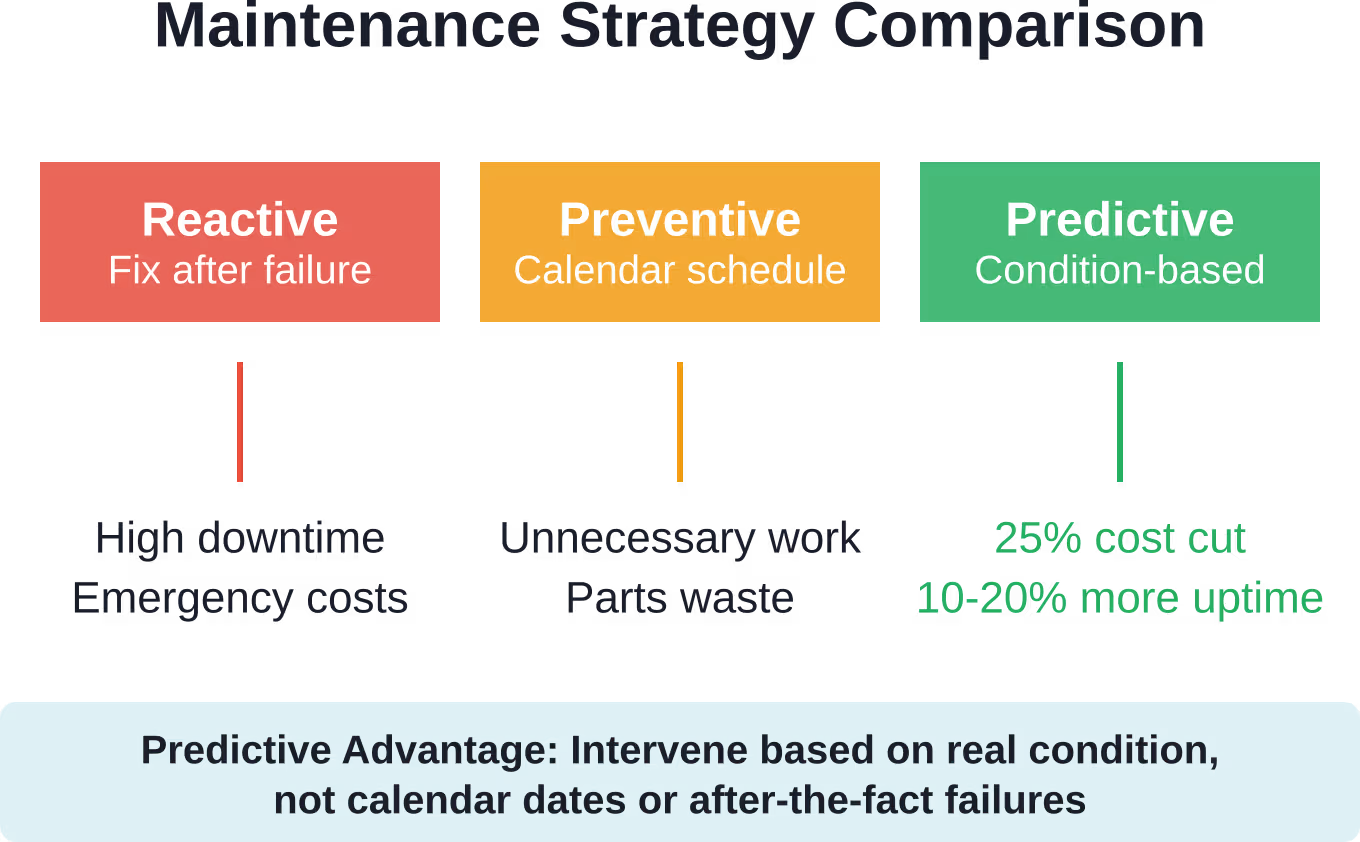
Cloud-based predictive maintenance systems combine IoT sensors, edge computing, and machine learning models. Vibration sensors on rotating equipment detect bearing wear patterns. Temperature sensors identify heat exchanger fouling. Pressure differential measurements flag filter degradation.
Organizations implementing cloud-based predictive maintenance report 25% reduction in maintenance costs and a 10-20% increase in uptime. These aren’t marginal improvements—they represent fundamental shifts in operational economics.
The implementation typically follows this pattern: instruments already installed provide baseline data. Engineers label historical events (bearing failures, pump cavitation, seal leaks). Machine learning models train on this labeled data, learning to recognize the signatures that precede each failure mode.
Once deployed, the models run continuously, scoring equipment health and flagging anomalies. Maintenance teams receive alerts when conditions warrant intervention, along with estimated time-to-failure windows that enable intelligent scheduling.
Process Optimization Through Real-Time Analytics
Chemical processes involve complex interactions between temperature, pressure, feedstock quality, catalyst activity, and residence time. Small variations in any parameter can shift yields, change selectivity, or affect downstream separation efficiency.
Traditional process control maintains parameters within specified ranges. Predictive analytics goes further—it continuously optimizes the process to maximize desired outcomes while respecting all constraints.
Consider a polymerization reactor. Feedstock composition varies batch to batch. Catalyst activity degrades gradually over time. Cooling system efficiency changes with ambient temperature. A predictive model learns how these variables interact and recommends parameter adjustments that maintain product specifications while maximizing throughput.
Research from the University of Missouri demonstrated AI models predicting chemical reaction yields with remarkable accuracy. When tested on drug-like molecules, the REPACT model’s predictions were usually within 2-10% of actual lab results—impressive performance for models trained on limited data.
Real talk: chemical plants generate massive amounts of process data, but most of it sits unused. Historians record every sensor, every minute, creating datasets spanning years. Predictive analytics transforms this dormant data into operational intelligence.
Quality Control and Defect Prevention
Product quality in chemical manufacturing depends on maintaining precise conditions throughout multi-step processes. By the time traditional quality control identifies an issue through lab analysis, entire batches may already be off-spec.
Predictive quality models analyze process parameters in real-time, forecasting quality attributes before final product testing occurs. This early warning enables corrective action while material is still in process, dramatically reducing waste and rework.
The approach works especially well for properties that are difficult or expensive to measure continuously. Instead of waiting hours for lab results, process engineers get predictions updated every minute based on easily measured parameters like temperature profiles, reagent addition rates, and mixing intensity.
For batch operations, predictive models can recommend whether to continue processing, adjust parameters, or divert material based on trajectory forecasts. For continuous operations, they enable dynamic setpoint optimization that adapts to gradual changes in feedstock or equipment condition.
Case Application: Sustainable Chemical Dosing
The chemical company EnviroChemie faced efficiency challenges in wastewater treatment chemical dosing. Traditional methods required manual sampling and laboratory analysis at each process stage—time-consuming, labor-intensive work that provided only retrospective information.
Predictive analytics enabled real-time monitoring and control. Sensors tracked water quality parameters continuously. Machine learning models learned optimal dosing patterns for varying input conditions. The system adjusted chemical addition rates automatically, minimizing usage while maintaining treatment effectiveness.
This type of application extends beyond wastewater treatment. Chemical dosing occurs throughout manufacturing—pH control, corrosion inhibitors, polymer additives, catalyst feeds. Predictive optimization of these systems reduces costs, improves consistency, and minimizes environmental impact.
Implementation Framework for Chemical Manufacturers
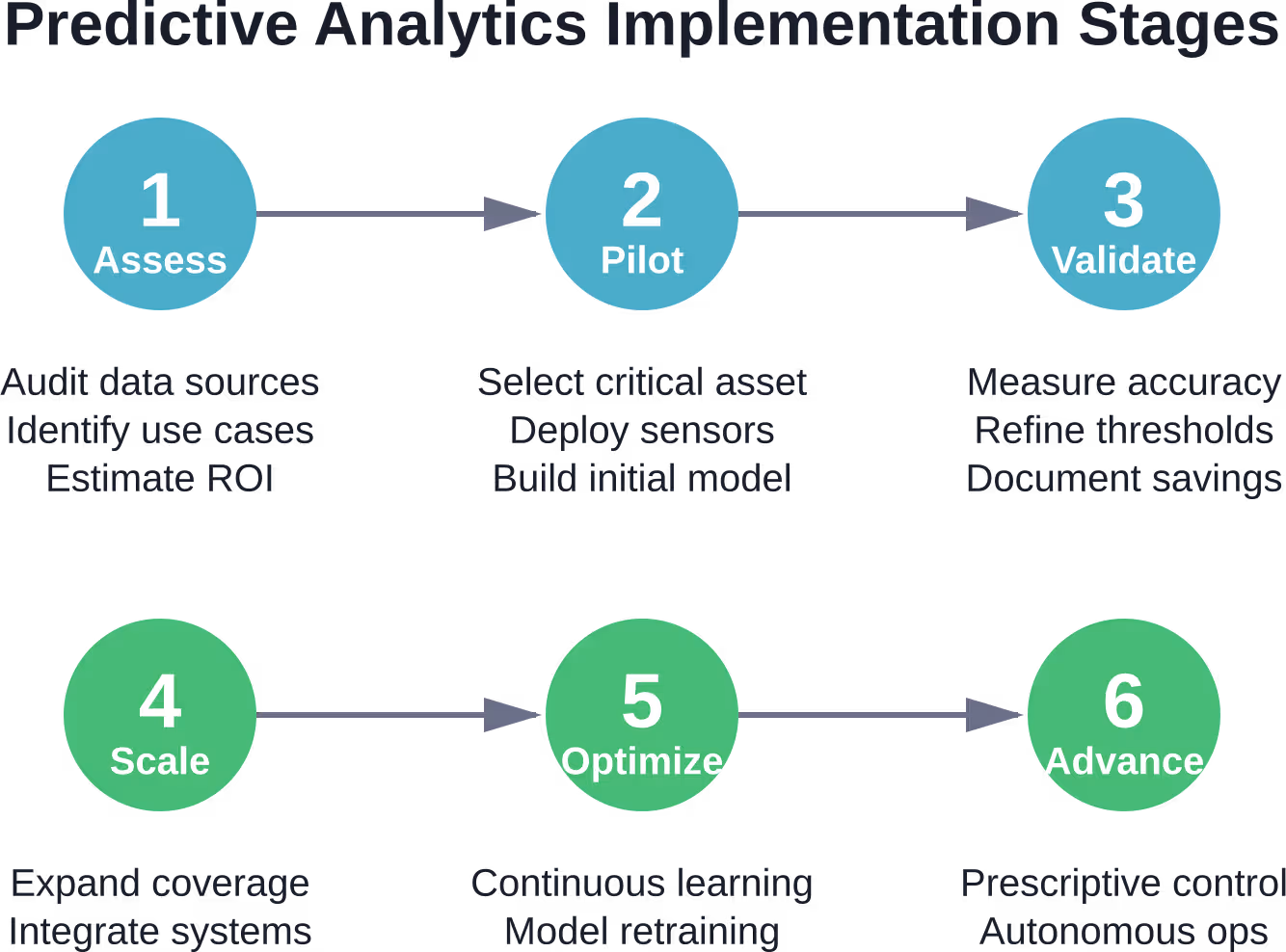
Adopting predictive analytics isn’t a software purchase—it’s an operational transformation. Successful implementations follow a structured approach that builds capability progressively.
Assessment and Use Case Selection
Start by auditing existing data infrastructure. What sensors are installed? What parameters get recorded? How long is historical data retained? Where are the gaps?
Identify use cases with the highest potential impact. Critical equipment with frequent failures. Process bottlenecks that limit throughput. Quality issues causing rework or customer complaints. Safety hazards requiring constant vigilance.
Estimate ROI for each use case. Compare potential savings against implementation costs and timeline. Prioritize opportunities where success is measurable and valuable.
Pilot Projects and Validation
Select one critical asset or process for initial deployment. Install additional sensors if needed. Collect baseline data for model training.
Work with domain experts to label historical events. What did sensor readings look like six hours before that pump failed? What parameter combinations preceded off-spec batches?
Build initial models and deploy them in monitoring mode—generating alerts but not triggering actions. Compare model predictions against actual outcomes. Refine thresholds to balance sensitivity and false positive rates.
Document everything. Maintenance interventions prevented. Quality issues caught early. Production gains from optimization. This documentation becomes critical for justifying broader deployment.
Scaling and Integration
Once pilot results demonstrate value, expand coverage systematically. Add equipment types. Extend to additional process units. Integrate predictive insights into existing maintenance management systems.
NIST programs support product compliance testing and standard test methods for industrial commodities, including chemical manufacturing operations. Predictive analytics builds on this foundation, using standardized measurements to generate actionable predictions.
Integration matters more than individual tools. Predictive maintenance alerts should create work orders automatically. Process optimization recommendations should flow to distributed control systems. Quality forecasts should trigger sampling protocols.

Get Predictive Analytics for Chemical Production Stability
Chemical production depends on stable operating conditions. Small deviations in process parameters can quickly lead to quality issues or operational risks if they are not detected in time. AI Superior develops custom AI software with predictive analytics to help chemical companies monitor production conditions, detect deviations early, and support safer and more stable operations based on real process data.
Build Predictive Systems for Chemical Processes
AI Superior provides:
- Predictive models for monitoring production parameters and process stability
- AI software built on sensor, operational, and historical production data
- Solutions for early detection of process deviations and risk indicators
Contact AI Superior to discuss how predictive analytics can be applied to your chemical production environment.
Key Use Cases Delivering Measurable Results
Different predictive analytics applications address distinct operational challenges. Chemical manufacturers typically see the strongest returns from these use cases:
| Use Case | Primary Benefit | Typical Impact |
|---|---|---|
| Predictive maintenance | Reduce unplanned downtime | 25% lower maintenance costs, 10-20% more uptime |
| Process optimization | Maximize yield and throughput | 2-5% yield improvement, reduced energy use |
| Quality prediction | Prevent off-spec production | 30-50% reduction in quality incidents |
| Reactor scaling prevention | Extend run lengths | Fewer shutdowns, longer campaigns |
| Energy optimization | Reduce utility consumption | 5-15% energy cost reduction |
| Inventory optimization | Balance stock levels | Lower working capital, fewer stockouts |
Reactor Scaling and Fouling Prediction
Chemical reactors operating at elevated temperatures and pressures gradually develop scale deposits or catalyst fouling. These buildups reduce heat transfer efficiency, increase pressure drop, and eventually force shutdowns for cleaning.
Predictive models track subtle changes in temperature profiles, pressure differentials, and conversion rates that indicate scaling progression. This enables planned cleanings during scheduled maintenance windows rather than emergency shutdowns.
A case study of a German chemical manufacturer implementing predictive maintenance for reactor scaling used real-time data to forecast buildup rates, reportedly eliminating surprise shutdowns and optimizing maintenance scheduling.
Supply Chain and Inventory Optimization
Chemical manufacturing requires careful balancing of raw material inventory, production scheduling, and customer demand. Too much inventory ties up capital. Too little risk of production interruptions or missed deliveries.
Predictive analytics forecasts demand patterns, production yields, and lead time variability. This enables dynamic inventory policies that adapt to changing conditions rather than static safety stock rules.
The models also predict equipment reliability and process yields, helping planners anticipate production capacity more accurately. When a critical pump shows early signs of degradation, scheduling systems can adjust production plans before failure occurs.
Overcoming Implementation Challenges
Predictive analytics adoption faces common obstacles. Understanding these challenges enables proactive solutions.
Data Quality and Availability
Machine learning models require substantial training data. Historical records may have gaps, errors, or insufficient detail. Sensor calibration drift can introduce systematic errors.
Address this through systematic data quality programs. Establish sensor calibration schedules. Implement automated validation checks that flag suspicious readings. Fill instrumentation gaps in critical areas.
When high-quality data is limited, AI can learn patterns that aren’t obvious to humans, as noted by researchers at the University of Missouri. Even with constrained datasets, modern machine learning techniques can extract valuable predictive signals.
Organizational Change Management
Predictive analytics changes how decisions get made. Maintenance technicians accustomed to time-based schedules must adapt to condition-based interventions. Process engineers need to trust model recommendations that may conflict with conventional wisdom.
Successful implementations address the people’s side systematically. Involve operators and technicians early. Demonstrate model accuracy through pilot projects. Provide training on interpreting predictions. Create feedback loops where front-line staff can flag model errors or unexpected behaviors.
Integration with Legacy Systems
Chemical plants typically operate distributed control systems, maintenance management software, laboratory information systems, and enterprise resource planning platforms—often from different vendors spanning different decades.
Predictive analytics needs data from all these sources. Modern cloud platforms provide connectors for common industrial protocols, but custom integration work is often necessary. Plan for this complexity in project timelines and budgets.
Measuring ROI and Business Impact
Quantifying predictive analytics value requires tracking specific metrics before and after implementation:
- Maintenance costs: Labor hours, spare parts consumption, contractor expenses
- Uptime: Scheduled vs. unscheduled downtime, mean time between failures
- Quality metrics: First-pass yield, rework rates, customer complaints
- Production efficiency: Throughput, yield, energy consumption per unit
- Safety indicators: Near-miss incidents, safety system activations
- Inventory levels: Raw material and finished goods turns, obsolescence
IChemE webinars have addressed putting models online for simulation operations, including applications to predictive maintenance and manufacturing optimization. Organizations that measure systematically can demonstrate clear financial returns.
Beyond direct cost savings, predictive analytics enables strategic advantages. Improved reliability strengthens customer relationships. Consistent quality supports premium positioning. Faster responses to market changes improve competitiveness.
The Path Forward: From Predictive to Prescriptive
Current predictive analytics implementations forecast what will happen. The next evolution—prescriptive analytics—recommends what actions to take.
Instead of alerting that a bearing will fail in 48 hours, prescriptive systems automatically schedule maintenance, order the replacement part, and adjust production plans to minimize impact. Instead of predicting that current conditions will produce off-spec products, they calculate and implement parameter adjustments that bring the process back on target.
This transition requires higher confidence in model accuracy, deeper system integration, and organizational readiness for increasingly autonomous operations. Chemical manufacturers are moving toward this vision progressively, expanding automation as results build trust.
Smart manufacturing represents the convergence of AI-enabled machinery, connected equipment, and advanced analytics. The chemical and pharmaceutical sectors are evolving toward intelligent, adaptive production systems where data flows seamlessly from sensors to models to control actions.
Frequently Asked Questions
What is predictive analytics in the chemical industry?
Predictive analytics in chemical manufacturing uses machine learning and statistical models to forecast equipment failures, process performance, and product quality based on real-time and historical data. It enables proactive interventions that prevent problems rather than reacting after they occur, delivering measurable improvements in uptime, costs, and quality.
How much does predictive maintenance reduce costs in chemical plants?
Organizations implementing cloud-based predictive maintenance report 25% reduction in maintenance costs and 10-20% increases in uptime according to industry analyses. Actual results vary by plant complexity, equipment age, and current maintenance practices, but financial benefits are typically substantial enough to justify implementation within 12-18 months.
What data is needed to implement predictive analytics?
Effective predictive models require historical sensor data (temperature, pressure, flow, vibration), maintenance records documenting equipment failures and interventions, production data showing yields and quality metrics, and process parameters from distributed control systems. Most plants already collect much of this data—implementation focuses on consolidating, cleaning, and applying advanced analytics to existing information.
Can predictive analytics work with limited historical data?
Modern AI techniques can extract patterns even from constrained datasets. Research has shown that when high-quality data is limited, AI can learn patterns that aren’t obvious to humans. Models trained on drug-like molecules achieved yield predictions within 2-10% of actual lab results. Starting with focused pilot projects allows models to learn from new data quickly, improving accuracy as operational history accumulates.
How long does it take to implement predictive analytics in a chemical plant?
Pilot projects targeting specific equipment or processes typically deliver initial results within 3-6 months, including data collection, model development, and validation. Full-scale deployment across major process units usually requires 12-24 months, depending on system complexity, integration requirements, and organizational readiness. Phased implementations that expand progressively manage risk while delivering incremental value.
What skills are needed to manage predictive analytics systems?
Successful implementations combine domain expertise in chemical processes with data science capabilities. Process engineers who understand equipment behavior and failure modes work alongside data scientists who build and validate models. Most organizations develop these capabilities through combinations of staff training, hiring specialists, and partnering with technology providers who understand chemical industry requirements.
Does predictive analytics replace human decision-making?
Predictive analytics augments rather than replaces human expertise. Models generate forecasts and recommendations, but experienced operators and engineers make final decisions, particularly for complex situations. Over time, as confidence in model accuracy grows, organizations typically automate routine decisions while reserving human judgment for unusual conditions or high-stakes scenarios.
Taking Action on Predictive Analytics
Chemical manufacturers face intensifying pressure to improve efficiency, reduce costs, and maintain safety while meeting stricter environmental standards. Predictive analytics delivers tangible progress on all these dimensions simultaneously.
The technology has matured beyond the experimental stage. Cloud platforms, machine learning tools, and industrial IoT sensors provide accessible building blocks. Industry case studies demonstrate clear ROI across maintenance, quality, and process optimization use cases.
Organizations that implement predictive analytics systematically—starting with focused pilots, measuring results rigorously, and scaling based on demonstrated value—consistently achieve measurable operational improvements. The competitive advantage from better asset utilization, higher quality, and lower costs compounds over time.
The question for chemical industry leaders isn’t whether predictive analytics delivers value. Industry data and practical implementations have settled that question affirmatively. The real question is how quickly to move, where to focus initial efforts, and how to build organizational capabilities that sustain continuous improvement.
Plants that begin this journey now position themselves advantageously as smart manufacturing adoption accelerates across the sector. Those that delay risk falling behind competitors who leverage data more effectively to optimize every aspect of operations.
 English
  German
  Arabic
  French
  Dutch
Dutch  Spanish