
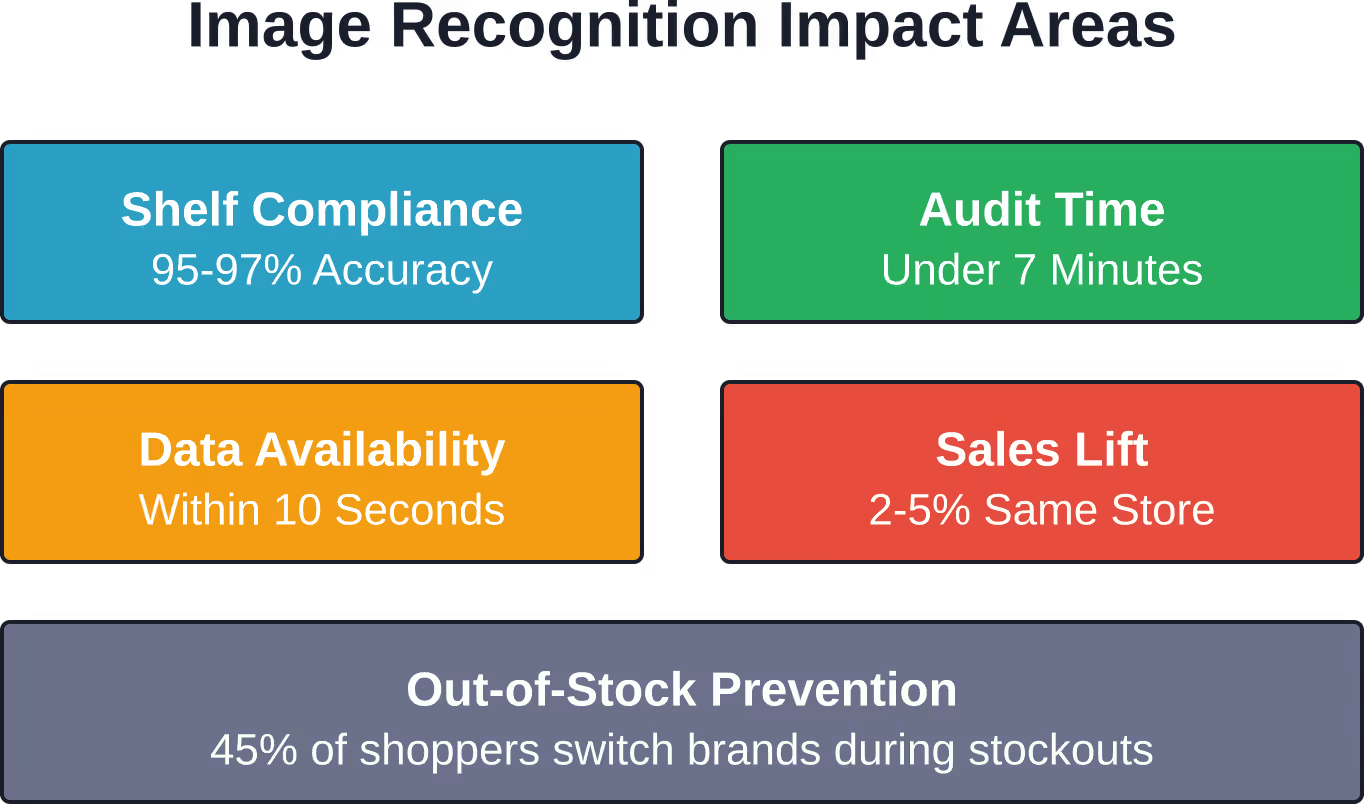
Quick Summary: Image recognition technology uses AI and machine learning to automate retail shelf audits for FMCG brands, delivering 95% recognition accuracy and reducing audit time to under 7 minutes (compared to 30-90 minutes manual). The solution provides real-time data on shelf compliance, product placement, pricing, and out-of-stocks within seconds of image capture, replacing error-prone manual counting and enabling data-driven retail execution strategies.
Walk into any supermarket and you’ll see thousands of products fighting for attention. But here’s the thing—knowing what’s actually on the shelf has been a nightmare for FMCG companies for decades.
Manual store audits eat up hours. Field reps count products by hand, scribble notes on clipboards, and by the time that data reaches headquarters, it’s already outdated. Meanwhile, out-of-stocks cost sales, competitors grab your shelf space, and planogram compliance remains a mystery.
Image recognition technology flips this entire model. Point a smartphone at a shelf, snap a photo, and get actionable data within 10 seconds. Recognition accuracy hits 98.5–99.2% consistently, and audit times drop to under 2 minutes per store thanks to instantaneous edge-processing.
Real talk: this isn’t futuristic speculation. Leading FMCG brands are already using AI-powered shelf recognition to monitor thousands of stores daily, and the results prove it works.
What Is Image Recognition for FMCG?
Image recognition applies computer vision and machine learning to retail shelf photos. The technology identifies products, reads labels, detects pricing, measures shelf space, and checks compliance against planograms—all automatically.
The workflow looks like this: field teams capture shelf images using mobile apps. Those images upload to cloud servers where neural networks analyze them. Within seconds, structured data appears in dashboards showing SKU presence, facings, share of shelf, pricing accuracy, and compliance scores.
It’s the same core technology that powers facial recognition and autonomous vehicles, adapted specifically for CPG retail environments. And it handles the complexity—overlapping products, varied lighting, different angles, partially visible labels.
How the Technology Actually Works
Neural networks need training data. FMCG image recognition systems start with pre-labeled datasets containing thousands of product images from multiple angles, lighting conditions, and shelf configurations.
These labeled images train the model to recognize and categorize products. The network learns distinctive features—package shapes, logo placement, color patterns, text elements—that identify each SKU reliably even when viewing conditions vary.
Once trained, the system processes new shelf photos through several stages. Object detection algorithms locate individual products within the frame. Classification models identify each product by SKU. Measurement algorithms calculate facings, shelf height, and horizontal space occupied.

Develop Computer Vision Software With AI Superior
AI Superior builds AI-based applications and custom software products using machine learning and AI models. Their work includes computer vision, image processing, predictive analytics, NLP, BI, and big data solutions.
For FMCG teams, this can support product recognition, packaging checks, shelf monitoring, promo compliance, and other image-based workflows.
Need a Better Way to Use Image Data?
AI Superior can help with:
- creating image recognition systems
- recognizing products and packaging in images
- building custom AI models for image analysis
- connecting AI tools with existing workflows
👉 Contact AI Superior to discuss your project.
Business Problems Image Recognition Solves
Manual shelf audits create three massive headaches that drain FMCG profitability.
Data Reliability Issues
Manually gathered shelf data is inconsistent and inaccurate, with different field reps counting differently. Fatigue introduces errors. Subjective judgment affects compliance assessments.
Image recognition eliminates human variability. The algorithm applies identical criteria to every shelf, every time. Recognition accuracy holds steady at 98.5–99.2% across thousands of audits.
Speed and Scale Limitations
Traditional manual audits take 30-90 minutes per store. A field rep might cover 6-8 stores daily at best. For brands monitoring hundreds or thousands of retail locations, comprehensive coverage becomes mathematically impossible.
With image recognition, audit time drops to under 7 minutes per store. That’s not an estimate—that’s measured performance from deployed systems. The technology processes thousands of images per minute, turning what used to be a week-long regional audit into a same-day snapshot.
Delayed Insights
Manual data collection creates lag. Field teams visit stores, gather information, upload reports, and someone back at headquarters compiles and analyzes everything. By the time insights reach decision-makers, the shelf situation has already changed.
Image recognition delivers data instantly (sub-second latency) via on-device edge computing. Regional managers see shelf conditions in near real-time. Out-of-stock alerts trigger immediately. Competitive encroachment gets flagged the day it happens, not two weeks later.
Core Use Cases That Drive ROI
Image recognition technology enables several high-value applications that directly impact FMCG bottom lines.
Share of Shelf Optimization
Space to sales analysis compares a brand’s shelf space percentage against its category sales percentage to identify expansion opportunities. For instance, if a sparkling water brand accounts for 40% of category sales in a region but only occupies 25% of shelf space in stores, that 15-point gap represents lost revenue.
Image recognition quantifies these gaps automatically across entire retail networks. Brands negotiate shelf space expansions armed with precise data showing the sales lift opportunity.
Planogram Compliance Monitoring
Perfect store execution requires products placed exactly per planogram specifications—right products, right locations, right facings. Compliance directly correlates with sales performance, yet maintaining it manually across thousands of stores proves nearly impossible.
Automated compliance checks flag deviations instantly. The system compares actual shelf photos against planogram specifications and generates compliance scores by store, region, and SKU. Field teams receive prioritized correction tasks based on the violations with highest sales impact.
Out-of-Stock Detection and Prevention
Out-of-stocks kill revenue. Research from TELUS Agriculture & Consumer Goods shows 45% of shoppers switch brands when their preferred product is unavailable. Every empty shelf space hands sales directly to competitors.
Image recognition spots out-of-stocks the moment shelf photos capture them. Automated alerts notify relevant teams—field reps, distributors, category managers—enabling same-day response instead of discovering stockouts weeks later during the next scheduled audit.
Pricing Verification
Pricing errors cost FMCG companies millions annually. Products priced too high lose sales to competitors. Products priced too low sacrifice margin. Promotional prices that aren’t implemented waste trade spend.
Optical character recognition extracts shelf tag prices from images and compares them against intended pricing strategies. Discrepancies get flagged for immediate correction, protecting both revenue and margin.
Implementation Challenges and Solutions
Deploying image recognition isn’t plug-and-play. FMCG companies face several technical and organizational hurdles.
Recognition Accuracy Variability
Not all image recognition results perform equally. Some implementations achieve 98.5–99.2% accuracy while others struggle to break 80%. The difference comes down to training data quality and environmental factors.
Poor lighting conditions, shelf clutter, damaged packaging, and unusual camera angles all degrade recognition performance. Solutions include augmented training datasets that include varied conditions, real-time image quality feedback that prompts field reps to recapture poor photos, and continuous model retraining as new products and packaging variants enter the market.
Change Management Resistance
Field teams sometimes resist image recognition adoption, viewing it as surveillance rather than support. According to implementation experience documented by FMCG technology providers, teams must understand that recognition systems don’t punish—they help by eliminating unnecessary bureaucracy and providing accurate performance data.
Successful rollouts involve field teams early in the process. Pilot programs demonstrate value before full deployment. Training emphasizes how the technology reduces tedious manual counting and lets reps focus on value-added activities like retailer relationship building and merchandising optimization.
Integration With Existing Systems
Image recognition data only creates value when it flows into systems where decisions happen—CRM platforms, trade promotion management tools, supply chain systems, and business intelligence dashboards.
Modern recognition platforms provide APIs and pre-built connectors for common enterprise systems. The architecture typically places recognition capabilities in a dedicated platform that feeds structured data to downstream systems rather than trying to bolt recognition onto existing legacy applications.
Technology Selection Criteria
Choosing an image recognition solution requires evaluating several technical and business dimensions.
| Evaluation Criteria | What to Look For | Why It Matters |
|---|---|---|
| Recognition Accuracy | 95%+ SKU detection rate, validated with your product catalog | Below 95% accuracy creates too many false positives and missed products |
| Processing Speed | Delivers data Instantly (sub-second latency) via on-device edge computing | Delayed data reduces field team productivity and insight timeliness |
| Mobile App Quality | Intuitive interface, offline capability, real-time image quality feedback | Poor mobile UX kills field team adoption regardless of backend accuracy |
| Catalog Management | Easy product onboarding, bulk upload, automated updates | FMCG product catalogs change constantly—rigid systems become outdated fast |
| Analytics Depth | Configurable dashboards, drill-down capabilities, export options | Raw recognition data needs flexible analysis tools to drive decisions |
| Integration Support | REST APIs, webhooks, pre-built connectors for major platforms | Isolated recognition data stays isolated—integration unlocks value |
Proof-of-concept testing with your actual products in your actual retail environments matters more than vendor promises. Run pilots in 10-20 representative stores before committing to enterprise-wide deployment.
Real-World Performance Data
Several documented implementations provide performance benchmarks that set realistic expectations.
A Nielsen deployment increased data extraction speed by 93%, processing thousands of images per minute compared to manual methods. The solution transformed in-store FMCG data into actionable retail insights while cutting analysis time by 90%.
Research on multi-modal content interest modeling deployed on Taobao demonstrated a +14.14% increase in CTR and +4.12% increase in RPM.
Research on multimodal forecasting for fashion products demonstrated that adding exogenous knowledge (Google Trends) boosts forecasting accuracy by 1.5% in Weighted Absolute Percentage Error (WAPE).
Typical Implementation Timeline
Based on successful FMCG deployments, expect this timeline:
- Months 1-2: Product catalog preparation, training data collection, initial model training, pilot store selection
- Month 3: Pilot launch with 10-25 stores, field team training, initial accuracy validation
- Month 4: Model refinement based on pilot learnings, integration development, dashboard configuration
- Months 5-6: Phased rollout to full store network, ongoing accuracy monitoring, process optimization
Within just a few months of deployment, most FMCG clients report measurable improvements in compliance scores, faster issue resolution, and better visibility into retail execution performance.
Cost Considerations and ROI
Image recognition pricing varies widely based on deployment scale, feature requirements, and vendor positioning.
ROI calculation should factor in several cost reductions and revenue gains:
- Direct cost savings: Reduced field team time on manual audits (30% time reduction translates to significant labor savings at scale), eliminated manual data entry and processing overhead, and decreased compliance-related waste from misplaced inventory.
- Revenue protection: Faster out-of-stock detection prevents lost sales (remember, 45% of shoppers switch brands during stockouts), improved shelf share captures incremental category growth, and pricing accuracy protects margin on every unit sold.
- Strategic value: Real-time visibility enables faster response to competitive threats, data-driven negotiations with retailers create better shelf placement, and objective performance measurement improves field team effectiveness.
Industry reports suggest same-store sales lifts of 2-5% are achievable with proper perfect store execution powered by image recognition insights. For a mid-size FMCG brand, that revenue impact easily justifies six-figure annual platform investments.
Future Trends Shaping the Technology
Image recognition for FMCG continues evolving rapidly. Several emerging trends will shape the next generation of retail execution technology.
Edge Computing and On-Device Processing
Current systems upload images to cloud servers for processing. Next-generation solutions will perform recognition directly on mobile devices using edge AI capabilities. This enables instant results without network connectivity, critical for stores with poor cellular coverage.
Video-Based Continuous Monitoring
Static shelf photos capture moments in time. Video monitoring provides continuous shelf intelligence, tracking shopper interactions, product depletion rates, and restocking patterns throughout the day. This granular data reveals purchase behavior insights impossible to extract from periodic audits.
Augmented Reality Guidance
AR overlays will guide field teams through optimal merchandising execution in real time. Point your phone at a shelf and see highlighted products that are out of compliance, suggested planogram layouts, and step-by-step correction instructions—all overlaid on the live camera view.
Predictive Analytics Integration
Combining image recognition data with demand forecasting creates predictive shelf management. The system learns which products deplete fastest under what conditions, predicts out-of-stocks before they happen, and automatically triggers replenishment—moving from reactive detection to proactive prevention.
Frequently Asked Questions
How accurate is image recognition for FMCG shelf monitoring?
Modern FMCG image recognition systems achieve 98.5–99.2% SKU recognition accuracy when properly implemented with quality training data. Accuracy depends on factors including image quality, lighting conditions, product catalog completeness, and model training depth. Systems require continuous refinement as new products launch and packaging changes.
What’s the typical return on investment timeline?
Most FMCG brands see positive ROI within 6-12 months of full deployment. Quick wins come from reduced audit labor costs and faster out-of-stock detection. Longer-term value builds through improved compliance driving sustained sales lifts. Brands monitoring hundreds of stores typically achieve ROI faster than smaller deployments due to better economies of scale.
Can image recognition work in small independent retail stores?
Yes, the technology works regardless of store size or format. Small stores often have simpler shelf configurations that can actually improve recognition accuracy. The business case depends on store visit frequency and strategic importance rather than store size. Brands with significant independent retail presence find image recognition especially valuable for gaining visibility into channels that traditionally lacked structured data.
How does image recognition handle new product launches?
New products require adding to the recognition model’s training data. Modern platforms provide streamlined onboarding workflows where you upload product images from multiple angles, define key attributes, and the system incorporates them into the recognition model within days. Some advanced systems use few-shot learning to recognize new products from minimal training examples.
Does image recognition replace field teams?
No, it enhances their effectiveness. Image recognition eliminates tedious manual counting and data entry, freeing field reps to focus on high-value activities like retailer relationship management, merchandising optimization, and issue resolution. Teams spend less time collecting data and more time acting on insights. Successful implementations reposition field roles toward strategic execution rather than data gathering.
How do you measure image recognition success?
Track both technical and business KPIs. Technical metrics include recognition accuracy percentage, image capture quality rates, processing speed, and system uptime. Business metrics include audit time reduction, compliance score improvements, out-of-stock incident reduction, shelf share gains, and ultimately same-store sales performance. The most successful deployments establish baseline metrics before implementation and track improvement over 6-12 month periods.
Getting Started With Image Recognition
FMCG brands ready to explore image recognition should follow a structured evaluation approach.
Start by defining specific business problems you’re trying to solve. Don’t pursue technology for technology’s sake. Focus on concrete challenges—out-of-stocks costing X% revenue, compliance gaps in Y region, competitive encroachment in Z category.
Next, audit your current retail execution data landscape. What information do you collect today? How long does it take to reach decision-makers? What’s the accuracy level? Quantify these baselines so you can measure improvement accurately.
Then evaluate 2-3 vendors through proof-of-concept pilots. Insist on testing with your actual products in your actual retail environments. Generic accuracy claims mean nothing—what matters is performance with your SKUs on your shelves.
Build a cross-functional implementation team including IT, field operations, sales, and category management. Image recognition succeeds or fails based on organizational adoption as much as technical capability.
And set realistic expectations. Perfect store execution improves incrementally, not overnight. The technology provides visibility and insights—humans still need to act on them. View image recognition as an enabler of better decision-making, not an autopilot replacement for retail execution strategy.
The FMCG brands winning at retail in 2026 aren’t the ones with the best products alone—they’re the ones with the best visibility into how those products actually perform on shelves. Image recognition delivers that visibility at scale, speed, and accuracy impossible through manual methods.
Ready to move beyond clipboards and spreadsheets? The technology is proven, the ROI is measurable, and your competitors are probably already testing it.
 English
  German
  Arabic
  French
  Dutch
Dutch  Spanish