
Quick Summary: Machine learning is transforming the automotive industry through autonomous driving systems, predictive maintenance, quality control in manufacturing, and supply chain optimization. Deep learning algorithms enable vehicles to recognize objects, make real-time decisions, and learn from experience. From production lines to driver assistance features, ML applications are improving safety, efficiency, and the overall driving experience while reshaping how vehicles are designed and manufactured.
The automotive industry has embraced machine learning technology at an unprecedented pace. What started as a futuristic concept has become the backbone of modern vehicle development and manufacturing.
Deep learning algorithms now power everything from autonomous driving systems to factory floor quality checks. The technology isn’t just about self-driving cars anymore—it’s fundamentally changing how vehicles are built, tested, and maintained.
Understanding Machine Learning in Automotive Context
Machine learning in automotive refers to systems that improve automatically through experience. Instead of following rigid programming rules, these systems analyze data patterns and make decisions based on what they’ve learned.
The technology relies on artificial neural networks that mimic human brain function. These networks process vast amounts of sensor data, camera feeds, and historical information to recognize patterns and predict outcomes.
Here’s the thing though—automotive machine learning requires massive computational power. Modern vehicles generate terabytes of data daily, and processing that information in real-time demands specialized hardware and optimized algorithms.
The Core Technologies at Work
Deep learning sits at the heart of automotive AI applications. This subset of machine learning uses multiple neural network layers to extract increasingly complex features from raw data.
Computer vision algorithms enable vehicles to understand their environment. They identify pedestrians, read traffic signs, detect lane markings, and recognize potential obstacles—all in milliseconds.
Reinforcement learning allows systems to improve through trial and error. According to Cornell University research led by Kilian Weinberger, autonomous vehicles can now create “memories” of previous experiences and use them in future navigation, learning optimal routes through repeated traversals.

Drive Automotive Innovation with Machine Learning Solutions
The automotive industry is rapidly evolving with the need for smarter systems, from autonomous vehicles to predictive maintenance and supply chain optimization. AI Superior develops machine learning solutions that help automotive companies improve safety, optimize production, and enhance vehicle performance through data-driven technologies.
Transform Your Automotive Operations with AI-Driven Insights
AI Superior provides:
- Predictive models for vehicle performance and maintenance forecasting
- Custom machine learning solutions for automotive data analysis
- AI-powered tools for optimizing manufacturing and supply chain processes
👉Contact AI Superior to discuss how machine learning can enhance your automotive business, improve operational efficiency, and support innovation.
Autonomous Driving and Advanced Driver Assistance Systems
Autonomous driving represents the most visible application of automotive machine learning. SAE International defines automation levels from 0 to 5, with current production vehicles reaching Level 2+ capabilities.
Advanced Driver Assistance Systems (ADAS) use machine learning for critical safety features. Adaptive cruise control, automatic emergency braking, and lane-keeping assistance all depend on trained neural networks.
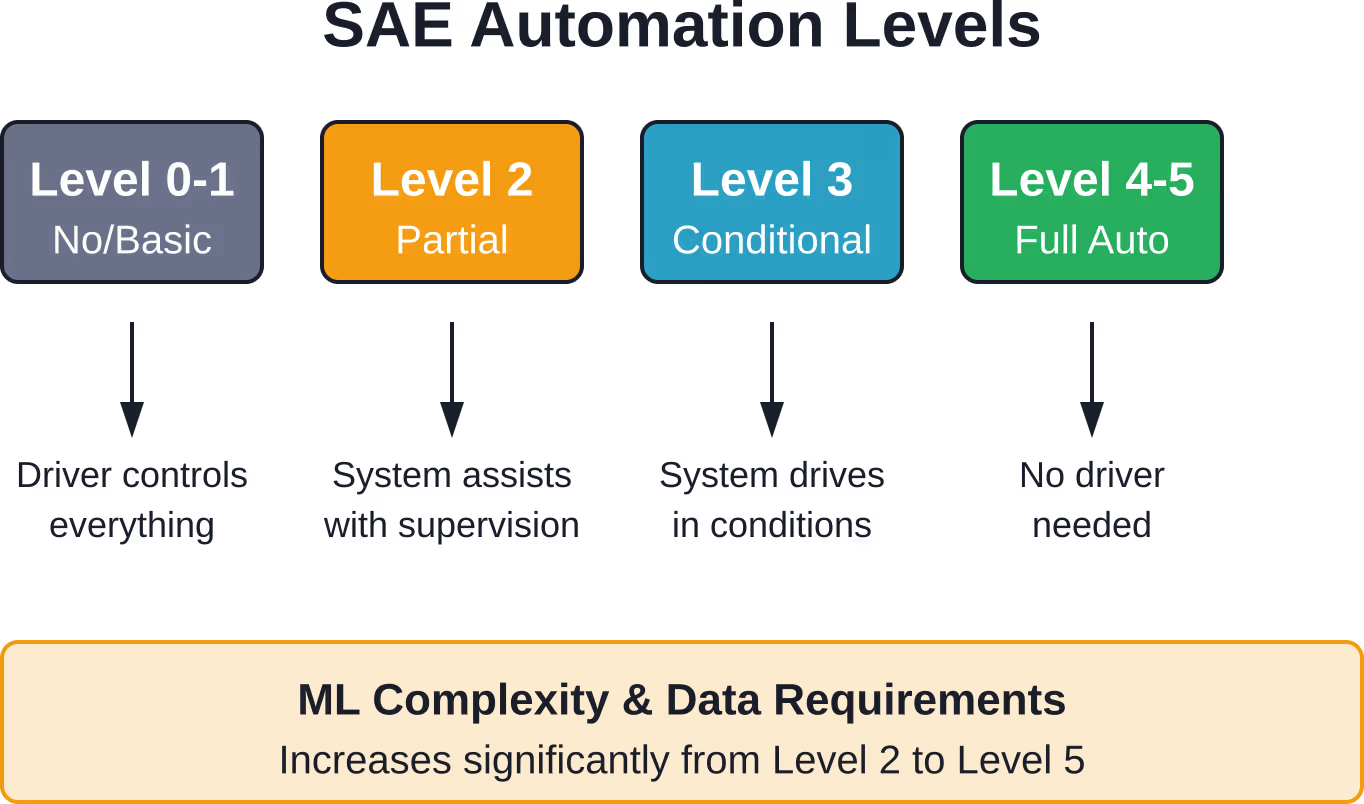
But does that actually work in practice? SAE International J3018 guideline for on-road testing of Level 3-5 automated driving systems emphasizes the need for rigorous in-vehicle fallback test driver training and systematic safety protocols.
Real talk: fully autonomous vehicles still face significant challenges. Edge cases—unusual situations the system hasn’t encountered before—remain problematic. Weather conditions, construction zones, and unpredictable human behavior complicate the learning process.
Machine Learning in Manufacturing and Quality Control
Manufacturing represents another critical application area. Machine learning algorithms monitor production lines, detecting defects that human inspectors might miss.
Computer vision systems inspect paint finishes, weld quality, and component alignment at speeds impossible for manual inspection. These systems learn what “good” looks like by analyzing thousands of acceptable parts, then flag anything that deviates from learned patterns.
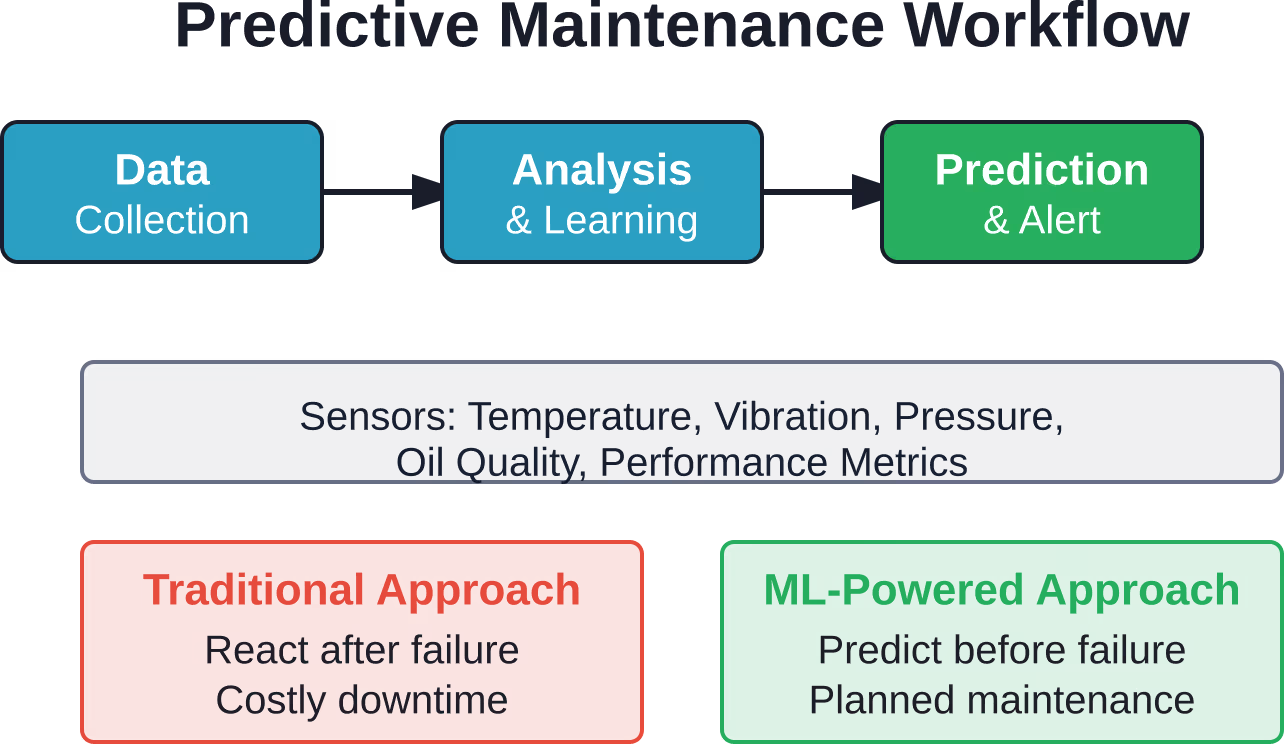
Predictive maintenance uses machine learning to anticipate equipment failures before they occur. Sensors monitor vibration, temperature, and performance metrics, with algorithms identifying patterns that precede breakdowns.
Quality Control Applications
Automotive quality control has been revolutionized by deep learning. Neural networks trained on defect images can classify issues faster and more consistently than traditional methods.
The technology catches microscopic cracks, surface imperfections, and assembly errors early in the production process. This reduces waste, lowers costs, and ensures higher quality standards.
| Application Area | ML Technology Used | Primary Benefit |
|---|---|---|
| Surface Inspection | Computer Vision | Defect Detection |
| Assembly Verification | Image Recognition | Error Prevention |
| Equipment Monitoring | Predictive Analytics | Downtime Reduction |
| Process Optimization | Reinforcement Learning | Efficiency Gains |
Predictive Maintenance and Vehicle Diagnostics
Modern vehicles generate continuous streams of diagnostic data. Machine learning algorithms analyze this information to predict component failures before they leave drivers stranded.
Sensor data from engines, transmissions, brakes, and electrical systems feeds into predictive models. These models learn normal operating patterns and flag anomalies that suggest impending problems.
The short answer? This approach shifts maintenance from reactive to proactive. Instead of waiting for breakdowns, service can be scheduled based on actual component condition.
Supply Chain Optimization
Supply chain optimization benefits significantly from machine learning algorithms. Demand forecasting models analyze historical sales data, market trends, and external factors to predict future needs.
Inventory management systems use these predictions to optimize stock levels. Too much inventory ties up capital; too little causes production delays. Machine learning finds the balance.
Logistics optimization reduces transportation costs. Algorithms determine optimal routing, load distribution, and delivery schedules while adapting to real-time conditions like traffic and weather.
Challenges and Limitations
Now, this is where it gets interesting. Despite impressive capabilities, automotive machine learning faces substantial challenges.
Data quality remains crucial. Models trained on biased or incomplete datasets produce unreliable results. Collecting diverse, representative training data requires significant effort and resources.
Security concerns loom large. Machine learning systems can be vulnerable to adversarial attacks—carefully crafted inputs designed to fool the algorithm. A modified stop sign that humans recognize but an autonomous vehicle misclassifies could have catastrophic consequences.
IEEE research highlights that explainable artificial intelligence represents an ongoing challenge. Understanding why a neural network made a particular decision isn’t always straightforward, complicating debugging and regulatory compliance.
Technical Complexity
Model retraining presents practical difficulties. As vehicles encounter new scenarios, algorithms need updates. But deploying updated models to vehicles already on the road requires robust over-the-air update systems and thorough testing.
Computational requirements strain existing hardware. Real-time processing of multiple camera feeds, radar, and lidar data demands specialized processors that consume significant power and generate heat.
The Future of Automotive Machine Learning
Looking ahead, machine learning in automotive will continue evolving rapidly. Edge computing—processing data locally in the vehicle rather than sending it to cloud servers—will reduce latency and improve reliability.
Federated learning allows vehicles to train models collaboratively without sharing raw data. Each vehicle learns from its experiences, then shares model improvements with the fleet while preserving privacy.
Integration with smart city infrastructure will enhance capabilities. Vehicles communicating with traffic systems, other vehicles, and IoT devices create richer data environments for machine learning algorithms.
Generally speaking, the technology will become more sophisticated at handling edge cases. As training datasets grow and algorithms improve, autonomous systems will handle increasingly complex scenarios.
Frequently Asked Questions
What is machine learning in the automotive industry?
Machine learning in automotive refers to artificial intelligence systems that improve through experience rather than explicit programming. These systems analyze sensor data, camera feeds, and operational information to recognize patterns, make predictions, and control vehicle functions. Applications range from autonomous driving and ADAS to manufacturing quality control and predictive maintenance.
How does deep learning differ from traditional machine learning in vehicles?
Deep learning uses multi-layered artificial neural networks to extract increasingly complex features from data. Traditional machine learning requires manual feature engineering—humans specify what the algorithm should look for. Deep learning discovers relevant features automatically, making it particularly effective for computer vision tasks like object recognition and scene understanding in autonomous vehicles.
What are the main challenges facing automotive machine learning?
Key challenges include ensuring data quality and diversity for training, addressing security vulnerabilities to adversarial attacks, managing computational requirements for real-time processing, handling edge cases the system hasn’t encountered, and explaining how neural networks reach specific decisions for regulatory compliance and debugging purposes.
How does machine learning improve vehicle safety?
Machine learning enhances safety through multiple mechanisms: ADAS features like automatic emergency braking and lane-keeping assistance, predictive maintenance that identifies potential component failures before they occur, quality control systems that catch manufacturing defects, and collision avoidance systems that process environmental data faster than human reaction times allow.
What data do automotive machine learning systems use?
Automotive ML systems process diverse data sources including camera images for object recognition, radar and lidar for distance measurement, GPS for positioning, vehicle sensor data (speed, acceleration, steering angle), diagnostic information from onboard computers, historical maintenance records, and environmental data like weather conditions and road surfaces.
Can machine learning systems in vehicles be hacked?
Yes, automotive machine learning systems face security risks. Adversarial attacks can fool algorithms with carefully crafted inputs. Wireless communication channels might be intercepted. Over-the-air update systems could be compromised. The automotive industry addresses these risks through encryption, secure boot processes, intrusion detection systems, and rigorous cybersecurity testing protocols.
How will automotive machine learning evolve in the next few years?
Expected developments include increased edge computing for faster local processing, federated learning for privacy-preserving collaborative training, better integration with smart city infrastructure, improved handling of edge cases through larger training datasets, more explainable AI systems for regulatory compliance, and enhanced security measures against adversarial attacks and cyber threats.
Conclusion
Machine learning has become indispensable in the automotive industry. From factory floors to public roads, these intelligent systems are improving safety, efficiency, and capability across every aspect of vehicle development and operation.
The technology continues maturing rapidly. Autonomous driving advances, manufacturing becomes smarter, maintenance grows more predictive, and supply chains operate more efficiently—all powered by machine learning algorithms.
But wait. Challenges remain. Data quality, security, computational demands, and explainability require ongoing attention. The industry must address these concerns while pushing capabilities forward.
As vehicles generate more data and algorithms grow more sophisticated, the automotive industry stands at the threshold of transformation more profound than any since the assembly line. Machine learning isn’t just changing cars—it’s redefining what vehicles can be.
 English
  German
  Arabic
  French
  Dutch
Dutch  Spanish