
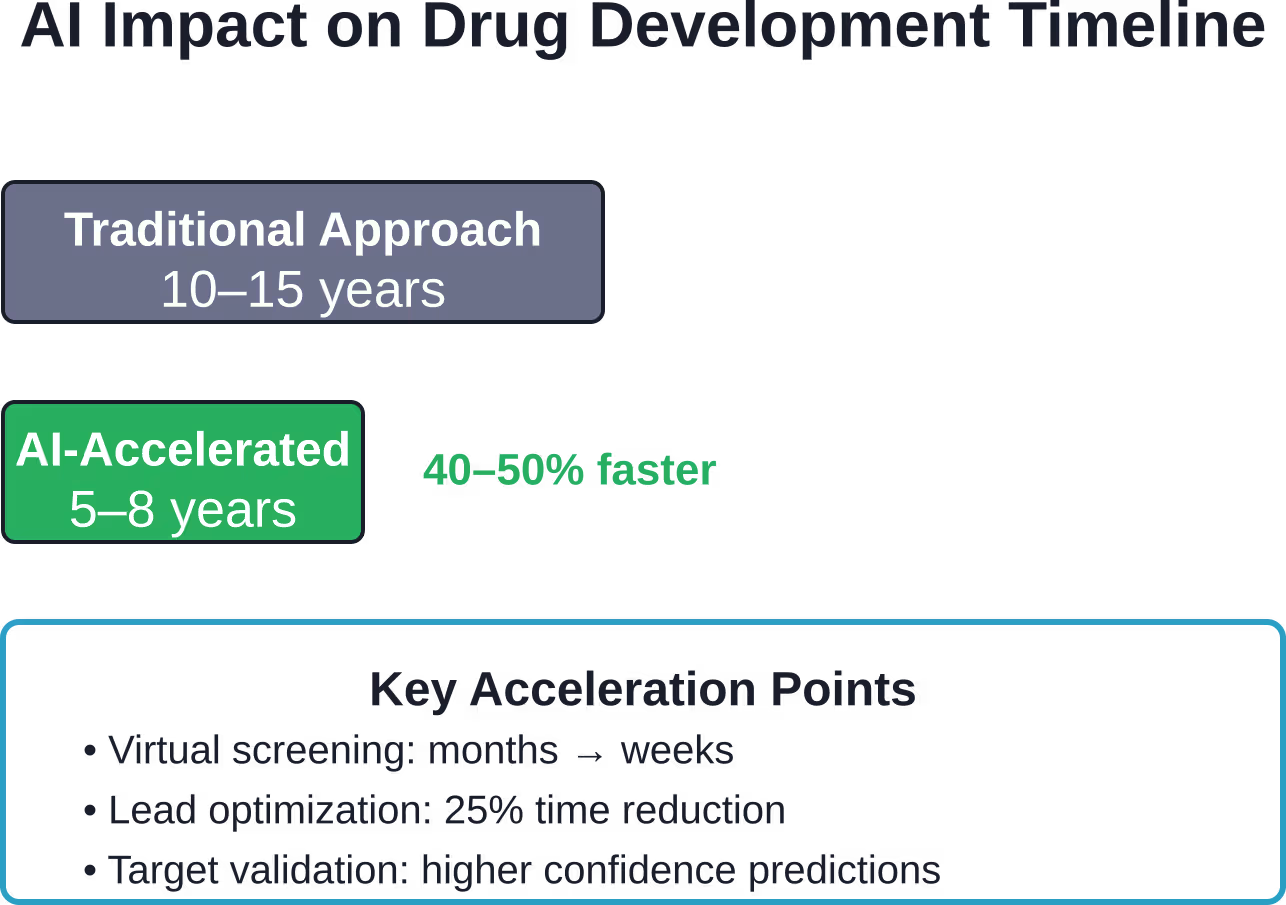
Quick Summary: Machine learning is revolutionizing biotechnology by accelerating drug discovery, enabling precision medicine, and optimizing therapeutic development. AI-driven platforms now achieve >75% hit validation in virtual screening and reduce early-stage development timelines by 40-50%, transforming how researchers design molecules, engineer antibodies, and predict clinical outcomes.
Biotechnology faces a fundamental challenge that’s persisted for decades: traditional drug development takes 10–15 years and costs approximately $2.6 billion per approved therapeutic. High attrition rates, complex biological systems, and massive datasets have created bottlenecks that slow progress and limit innovation.
Machine learning is dismantling these barriers.
Artificial intelligence now enables researchers to screen millions of molecular candidates in days, predict protein structures with unprecedented accuracy, and identify therapeutic targets that would’ve remained hidden in traditional research workflows. The technology isn’t replacing human scientists—it’s amplifying their capabilities and opening doors to discoveries that weren’t possible five years ago.
Here’s the thing though—machine learning applications in biotech aren’t just theoretical anymore. Academic institutions and pharmaceutical companies are deploying these systems in production, with validated results appearing in peer-reviewed publications from authoritative sources like the NIH and Nature journals.
This guide examines how machine learning is transforming biotechnology across drug discovery, protein engineering, diagnostics, and precision medicine, with emphasis on verified applications and quantifiable outcomes.
Understanding Machine Learning’s Role in Biotechnology
Machine learning refers to computational systems that identify patterns in data, make predictions, and improve performance without explicit programming for every scenario. In biotechnology, these algorithms process massive datasets—genomic sequences, protein structures, clinical records, molecular interactions—to extract insights that inform research decisions.
Why has biological data proven so challenging for traditional computational approaches?
Biological systems exhibit complexity that defies simple rules-based analysis. A single human cell contains approximately 20,000 protein-coding genes, each potentially producing multiple protein variants through alternative splicing. These proteins interact in networks involving hundreds of thousands of connections, with context-dependent behaviors that change based on cellular conditions, tissue types, and environmental factors.
Traditional computational methods struggled because they required researchers to manually define every relevant variable and relationship. Machine learning sidesteps this limitation by discovering patterns directly from data, identifying correlations and predictive features that human researchers might never hypothesize.
The FDA recognizes this transformative potential, noting that AI and machine learning technologies “have the potential to transform health care by deriving new and important insights from the vast amount of data generated during the delivery of health care every day.” Medical device manufacturers are already using these technologies to innovate products that assist healthcare providers and improve patient care.
The Data Foundation Driving ML in Biotech
Machine learning requires data—and biotechnology is generating it at an unprecedented scale. Genomic sequencing costs have decreased significantly over the past two decades, enabling population-scale genomic studies. This exponential cost reduction has created datasets that capture genetic variation across diverse populations.
But genomics represents just one data stream. Proteomics platforms now measure thousands of protein abundances simultaneously. Metabolomics tracks small-molecule metabolites. High-content imaging generates terabytes of cellular imagery. Electronic health records document clinical outcomes across millions of patients.
These diverse data types create opportunities for integrated analysis. Machine learning excels at multimodal data integration—combining genomic, proteomic, clinical, and imaging data to build comprehensive models of disease mechanisms or treatment responses.

Unlock Advanced AI Solutions for Biotech with Proven Expertise
AI technologies are transforming the biotech industry, offering innovative solutions to accelerate research and optimize outcomes. AI Superior helps biotech companies accelerate research and optimize results with advanced AI technologies.
Discover How AI Can Transform Your Biotech Projects
AI Superior offers AI solutions for biotech through:
- Advanced machine learning models for drug discovery
- Tailored AI applications for diagnostics and research
- Seamless integration with existing biotech systems
👉Contact AI Superior today to explore how their solutions can drive innovation in your biotech projects.
Drug Discovery: From Molecules to Medicines
Drug discovery represents machine learning’s most mature application in biotechnology. The traditional screening process tested compounds one by one against biological targets—a slow, expensive approach that left vast chemical space unexplored.
Machine learning algorithms now predict which molecular structures will bind to specific protein targets, possess drug-like properties, and avoid toxicity issues—before synthesis or testing.
According to research published in authoritative medical journals, AI-enabled breakthroughs in small-molecule drug design demonstrate the technology’s ability to achieve greater than 75% hit validation rates in virtual screening. This represents a dramatic improvement over traditional high-throughput screening, where hit rates often fall below 1%.
Virtual Screening and Molecular Design
Virtual screening uses machine learning models trained on millions of known molecule-protein interactions to predict binding affinity for new candidates. Instead of physically testing every compound, researchers computationally evaluate vast libraries—sometimes billions of molecules—to identify the most promising candidates for synthesis and experimental validation.
The impact on timelines is substantial. Industry analyses indicate that AI tools can cut early-stage screening time by 40–50%, reducing what traditionally required years to mere months or weeks. Generative models further accelerate molecular design by 25%, creating novel chemical structures optimized for specific therapeutic criteria.
Real talk: these aren’t incremental improvements. Drug candidates are reaching clinical trials in timeframes that would’ve been impossible with traditional methods.
Multi-Target Optimization
Modern therapeutics often require simultaneous optimization of multiple properties: target binding, selectivity, metabolic stability, blood-brain barrier penetration, and lack of toxicity. Traditional medicinal chemistry optimized these properties sequentially, leading to long iteration cycles.
Machine learning enables simultaneous multi-objective optimization. Models can predict all relevant properties for a candidate molecule, allowing researchers to navigate trade-offs and identify compounds that satisfy multiple criteria.
Published research demonstrates this capability with dual-target inhibitors. In oncology applications, conditional variational autoencoders generated 3,040 candidate molecules targeting both CDK2 and PPARγ, identifying 15 compounds with dual activity—an achievement that would’ve required extensive traditional screening campaigns.
Protein Engineering: Designing Biology’s Building Blocks
Proteins perform virtually every function in living systems, making them both therapeutic targets and therapeutic agents. Machine learning is transforming how researchers design novel proteins with desired functions.
Recent breakthroughs in AI, coupled with rapid accumulation of protein sequence and structure data, have radically transformed computational protein design. New methods promise to escape the constraints of natural and laboratory evolution, accelerating the generation of proteins for applications in medicine, biotechnology, and materials science.
Antibody Engineering and Optimization
Antibodies represent a cornerstone of modern medicine, with applications spanning cancer immunotherapy, autoimmune diseases, and infectious diseases. Traditional antibody discovery relied on immunizing animals or screening large display libraries—processes requiring months and yielding variable results.
Machine learning now guides antibody engineering from epitope mapping through affinity maturation. Models predict which antibody sequences will bind specific antigens, forecast stability and manufacturability, and suggest mutations that enhance binding affinity or reduce immunogenicity.
The technology enables rational design of antibody variants with improved properties. Instead of testing thousands of random mutations, researchers use ML predictions to focus on the most promising sequence changes, dramatically reducing experimental workload.
De Novo Protein Design
Perhaps most remarkably, machine learning enables design of entirely novel proteins—molecules with no natural counterpart. Generative models learn the rules governing protein structure from databases of known proteins, then apply those rules to create new sequences predicted to fold into desired shapes.
This capability opens possibilities for proteins with functions not found in nature: enzymes that catalyze novel reactions, binding proteins that recognize synthetic compounds, or structural proteins with enhanced mechanical properties.
| Protein Engineering Application | ML Approach | Key Advantage | Validation Status |
|---|---|---|---|
| Antibody affinity maturation | Deep learning sequence models | Reduced screening requirements | Clinical stage candidates |
| Enzyme stability enhancement | Structure-based predictions | Improved manufacturability | Experimental validation |
| Novel protein binders | Generative design models | Non-natural scaffolds | Proof-of-concept studies |
| Therapeutic protein optimization | Multi-property prediction | Simultaneous criteria satisfaction | Preclinical development |
Precision Medicine: Tailoring Treatment to Individual Patients
Precision medicine recognizes that patients with the same diagnosis often respond differently to treatment. Genetic variation, environmental factors, lifestyle differences, and disease subtypes all influence therapeutic outcomes.
Machine learning enables precision medicine by integrating diverse patient data—genomics, medical history, biomarkers, imaging—to predict which treatments will work for which patients.
Authoritative research on precision medicine and AI highlights how these technologies enable personalized health care by identifying patient subgroups, predicting treatment responses, and matching individuals to optimal therapeutic strategies.
Biomarker Discovery and Patient Stratification
Biomarkers serve as measurable indicators of disease state or treatment response. Identifying robust biomarkers traditionally required extensive clinical studies comparing outcomes across patient populations.
Machine learning accelerates biomarker discovery by analyzing high-dimensional patient data to identify features that correlate with outcomes. These algorithms can detect subtle patterns across thousands of variables—genomic variants, protein levels, metabolite concentrations—that distinguish responders from non-responders or predict disease progression.
In cardiovascular medicine, for example, machine learning models analyzing lipid profiles have identified previously overlooked drug candidates with therapeutic potential. Research published in Nature demonstrated how ML screening revealed FDA-approved drugs with unexpected lipid-lowering effects, validated through both retrospective clinical data analysis and prospective animal studies.
Clinical Decision Support
Machine learning models are increasingly supporting clinical decision-making by predicting patient outcomes, recommending treatment options, and flagging high-risk cases requiring intervention.
These systems don’t replace physician judgment—they augment it by processing information at scale and speed impossible for humans. A model can simultaneously consider hundreds of patient characteristics, compare them against thousands of similar historical cases, and identify patterns that inform treatment selection.
The FDA has issued guidance on using AI to support regulatory decision-making for drug and biological products, recognizing both the technology’s potential and the need for rigorous validation of AI-driven recommendations.
Diagnostics and Disease Detection
Early disease detection dramatically improves treatment outcomes across most conditions. Machine learning enhances diagnostic capabilities by identifying disease signatures in medical imaging, genomic data, and clinical measurements.
Medical Imaging Analysis
Deep learning models excel at image analysis, making them natural tools for medical imaging interpretation. Convolutional neural networks trained on thousands of labeled images can detect tumors, classify tissue types, and identify subtle abnormalities that human radiologists might miss.
These models don’t just replicate human performance—they often exceed it, particularly for tasks requiring analysis of fine details across large image volumes. In pathology, AI systems analyze entire tissue slides, quantifying cellular features and identifying patterns associated with disease subtypes or treatment responses.
Liquid Biopsy and Early Cancer Detection
Liquid biopsies analyze circulating tumor DNA, proteins, or other biomarkers in blood samples to detect cancer at early stages. The challenge lies in distinguishing rare cancer signals from normal biological variation—a task suited to machine learning’s pattern recognition capabilities.
Research published by authoritative medical sources demonstrates how hybrid physics-informed machine learning approaches are enhancing nanobiosensing technologies for early disease detection. These systems combine mechanistic understanding of biological processes with data-driven pattern recognition to improve diagnostic sensitivity and specificity.
Genomics and Metagenomics Applications
Genomic medicine relies on interpreting sequence variation—identifying which genetic variants contribute to disease, predict treatment response, or influence traits. The human genome contains approximately three billion base pairs, with millions of variants across individuals.
Machine learning helps decode this complexity by predicting variant effects, identifying disease-associated mutations, and linking genetic profiles to phenotypes.
Variant Effect Prediction
Not all genetic variants affect biology equally. Some mutations profoundly disrupt protein function, while others have no detectable impact. Traditional approaches to variant interpretation relied on evolutionary conservation and known functional domains.
Modern machine learning models integrate dozens of features—conservation, structural context, regulatory annotations, population frequencies—to predict whether a variant will affect function. These predictions guide clinical interpretation of genetic test results and prioritize variants for experimental characterization.
Microbial Community Analysis
Metagenomics studies complex microbial communities—the gut microbiome, environmental samples, or clinical specimens. These datasets contain genomic material from hundreds or thousands of species, creating analytical challenges that machine learning addresses through automated species identification, functional annotation, and pattern detection.
Authoritative research from the NIH highlights how AI enables high-resolution analyses of metagenomic and clinical data for monitoring infectious disease and antimicrobial resistance. Advancements in deep learning and transformer-based sequence models have dramatically improved the accuracy of microbial identification and resistance gene detection.
Challenges and Validation Requirements
Machine learning in biotechnology faces significant challenges that temper enthusiasm about its transformative potential. Understanding these limitations is crucial for realistic assessment of what the technology can—and can’t—deliver.
Data Quality and Representativeness
Machine learning models learn from training data. If that data contains biases, errors, or gaps, models will inherit those flaws. Biological datasets often exhibit systematic biases: clinical studies may underrepresent certain populations, protein structure databases contain more extensively studied families, and high-throughput screening data includes measurement artifacts.
A study analyzing 250 machine learning applications in biology and medicine between 2011 and 2016 found concerning patterns. Only half of the articles shared software, 64% shared data, and 81% applied any evaluation methodology. More rigorous validation was actually more common in lower-ranked journals—suggesting that high-impact publications sometimes sacrifice reproducibility for novelty.
The research highlighted that 73% of ML applications resulted from interdisciplinary collaborations between computational scientists and experimental biologists. These collaborations generated more scientifically sound work, combining computational rigor with biological validity.
Reproducibility and Validation Standards
The DOME recommendations, published in Nature, provide community-wide standards for reporting supervised machine learning analyses in biological studies. These guidelines address persistent reproducibility challenges by specifying what information researchers must document: data characteristics, model architectures, training procedures, validation approaches, and performance metrics.
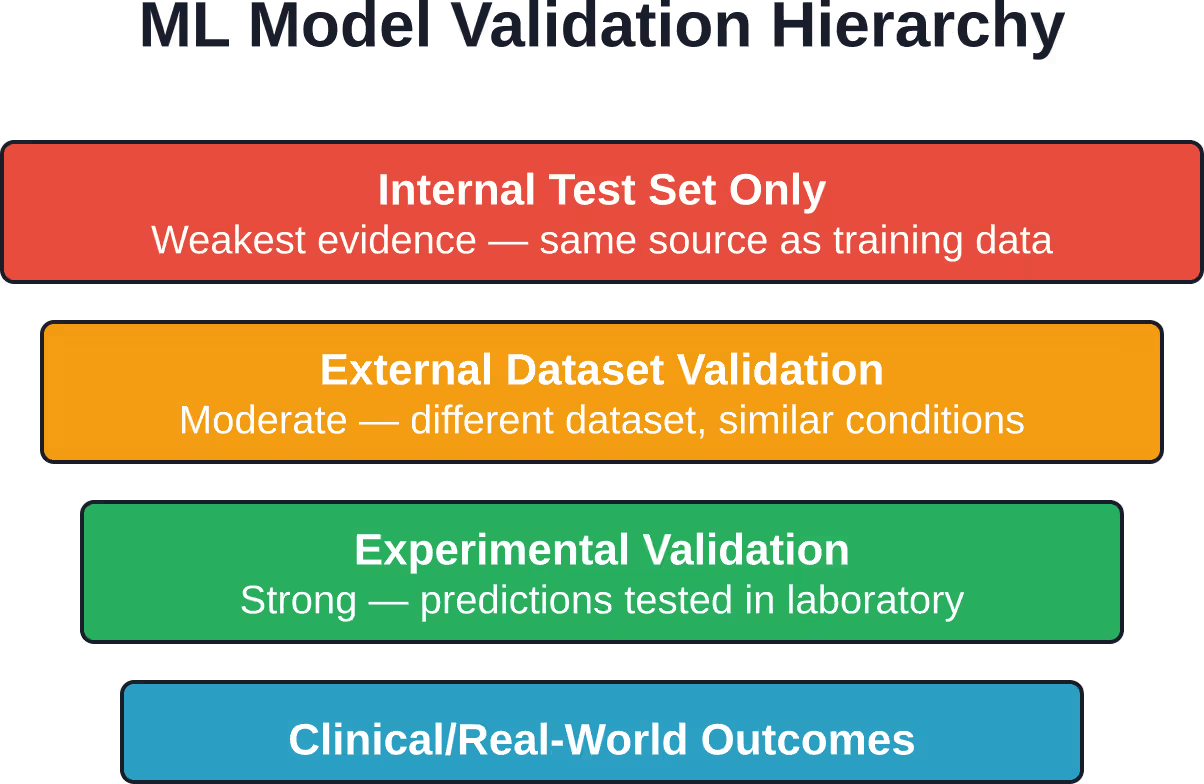
But documentation alone doesn’t ensure validity. Models must be tested on truly independent datasets—not just held-out portions of the same dataset used for development. External validation using data from different laboratories, instruments, or patient populations provides stronger evidence of generalizability.
Experimental Validation Remains Essential
Computational predictions must be verified experimentally. No matter how sophisticated the algorithm, biological reality determines what actually works. Machine learning accelerates hypothesis generation and prioritization—it doesn’t replace empirical testing.
Interdisciplinary collaboration is critical for achieving optimal outcomes. Computational scientists provide methodological expertise in model development and validation. Experimental biologists design rigorous tests of predictions and interpret results in biological context. Both domains contribute essential perspectives.
Future Directions and Emerging Applications
Machine learning applications in biotechnology continue evolving rapidly. Several emerging directions promise to expand the technology’s impact beyond current capabilities.
Foundation Models for Biology
Large language models transformed natural language processing by training massive neural networks on vast text corpora, creating general-purpose models that could be fine-tuned for specific tasks. Similar approaches are now being applied to biological sequences.
Protein language models trained on millions of sequences learn representations that capture functional and structural properties without explicit annotation. These models can be adapted for diverse tasks: predicting mutation effects, designing variants with desired properties, or identifying functional sites—all from the same pre-trained foundation.
Automated Laboratory Systems
Closing the loop between computational prediction and experimental validation requires integration with automated laboratory systems. Robotic platforms can synthesize predicted molecules, test their properties, and feed results back to machine learning models—creating iterative design-build-test cycles.
These systems enable active learning approaches where models guide experimental design to maximize information gain. Instead of testing compounds randomly, the system selects experiments that will most improve model performance, accelerating learning and reducing experimental costs.
Multi-Omic Integration
Individual data types provide partial views of biological systems. Genomics reveals genetic potential, transcriptomics shows which genes are active, proteomics measures functional molecules, and metabolomics tracks biochemical states. Integrating these layers creates comprehensive system-level understanding.
Machine learning excels at multi-omic integration, identifying patterns that span molecular layers. These integrated analyses can reveal disease mechanisms missed by single-omic studies and predict phenotypes more accurately by incorporating multiple information sources.
Practical Considerations for Implementation
Organizations implementing machine learning in biotechnology face practical challenges beyond algorithmic development. Success requires attention to infrastructure, expertise, and workflow integration.
Computational Infrastructure
Training sophisticated machine learning models demands substantial computational resources. Deep learning approaches particularly require GPU-accelerated hardware and significant memory capacity. Cloud computing platforms provide accessible alternatives to on-premises infrastructure, offering elastic scaling and pay-per-use pricing.
Data storage and management represent equally important considerations. Biological datasets—particularly imaging, sequencing, and multi-omic studies—generate terabytes of data requiring organized storage, version control, and metadata tracking.
Interdisciplinary Team Building
Effective ML applications require collaboration between computational and biological experts. Computational scientists understand model architectures, training procedures, and validation approaches. Biologists provide domain expertise, interpret results in biological context, and design meaningful experimental tests.
Research analyzing ML publications found that computational co-authors increased focus on reproducibility and rigorous evaluation methods, while experimental scientist involvement strengthened biological validity and experimental proof. Both perspectives are essential for impactful work.
Regulatory Pathways
AI-enabled therapeutic products face regulatory scrutiny from agencies like the FDA. The agency has established frameworks for evaluating AI in medical devices and software as a medical device, recognizing the unique challenges these technologies present.
Key considerations include transparency of decision-making processes, validation on representative patient populations, monitoring for performance drift as data distributions shift, and updating models as new data becomes available while maintaining safety and efficacy.
| Implementation Aspect | Key Requirements | Common Challenges |
|---|---|---|
| Data infrastructure | Storage, version control, metadata | Scale, heterogeneity, privacy |
| Computational resources | GPU hardware, cloud platforms | Cost, expertise, optimization |
| Team expertise | Computational + biological skills | Recruitment, communication, integration |
| Validation frameworks | Independent datasets, experiments | Availability, cost, reproducibility |
| Regulatory compliance | FDA frameworks, documentation | Evolving standards, transparency |
Real-World Success Stories
Beyond theoretical potential, machine learning has produced tangible results in biotechnology applications.
Drug repurposing efforts demonstrate practical impact. Research published in Nature described how machine learning models screened FDA-approved drugs for unexpected therapeutic effects. The study compiled training sets of 176 lipid-lowering drugs and 3,254 non-lipid-lowering drugs, developed multiple ML models, and identified 29 approved drugs with predicted lipid-lowering potential.
Multi-tiered validation followed: retrospective clinical data analysis confirmed effects for four candidate drugs, with Argatroban as a representative example. Standardized animal studies demonstrated significant improvements in multiple blood lipid parameters. Molecular docking simulations and dynamics analyses elucidated binding patterns and stability.
This exemplifies the comprehensive validation approach needed for biological ML applications: computational screening, clinical data verification, experimental animal studies, and mechanistic investigation.
In protein design, AI-generated binders have shown remarkable specificity. Some applications achieved greater than 95% entry inhibition in viral pseudovirus assays—demonstrating that computationally designed proteins can match or exceed natural antibody performance for specific tasks.
Getting Started: Educational Resources and Courses
Professionals seeking to build machine learning capabilities for biotechnology have access to growing educational resources.
MIT Sloan Executive Education offers an “Artificial Intelligence in Pharma and Biotech” course. The self-paced online format is 6 weeks with 6–8 hours per week commitment at $3,250 tuition. Sessions are available throughout 2026.
The course focuses on AI applications specific to pharmaceutical and biotechnology contexts rather than generic machine learning fundamentals—addressing the unique challenges, data types, and regulatory considerations relevant to life sciences.
Academic programs increasingly incorporate computational biology and AI coursework into biotech curricula. Many universities now offer specialized master’s programs in computational biology, bioinformatics, or health data science that combine biological knowledge with machine learning expertise.
Frequently Asked Questions
How does machine learning differ from traditional computational biology approaches?
Traditional computational biology relies on explicitly programmed rules and mechanistic models based on known biological principles. Researchers define specific algorithms to solve particular problems—sequence alignment tools, phylogenetic tree builders, or metabolic pathway simulators. Machine learning instead discovers patterns directly from data without explicit programming of every relationship. The algorithms learn which features predict outcomes by analyzing training examples, enabling them to identify complex patterns that human researchers might not hypothesize. Both approaches have value: mechanistic models provide interpretable insights into biological mechanisms, while ML excels at handling high-dimensional data and making predictions when mechanistic understanding is incomplete.
What types of biotech problems are best suited for machine learning?
Machine learning performs best when large datasets are available, patterns are complex but consistent, and the prediction task is well-defined. Drug discovery virtual screening exemplifies ideal conditions: millions of molecule-protein binding measurements create substantial training data, the relationship between structure and binding involves complex chemistry, and the goal—predicting whether a molecule binds—is clearly specified. Conversely, ML struggles with small datasets, highly variable systems, or poorly defined objectives. Problems requiring mechanistic understanding rather than prediction may be better addressed through traditional modeling approaches. The technology augments rather than replaces domain expertise and experimental validation.
How much data is needed to train effective biotech ML models?
Data requirements vary dramatically based on problem complexity and model architecture. Simple linear models might train on hundreds of examples, while deep neural networks typically require thousands to millions of training instances. Transfer learning approaches reduce data needs by starting with models pre-trained on large general datasets, then fine-tuning on smaller task-specific datasets. For novel biological problems with limited data, researchers often employ data augmentation techniques, use simpler model architectures, or incorporate mechanistic knowledge as inductive biases. Generally speaking, more data enables more complex models and better generalization, but clever methodology can extract value from modest datasets when biological knowledge guides model design.
What skills do biotech professionals need to work with machine learning?
Effective ML work in biotechnology requires hybrid expertise spanning computational methods and biological domain knowledge. On the computational side: programming skills (particularly Python or R), understanding of statistical concepts, familiarity with ML algorithms and frameworks, and knowledge of data preprocessing and validation methodologies. On the biological side: deep understanding of the specific domain (genomics, proteomics, drug discovery), ability to formulate biologically meaningful questions, and experimental design skills for validation studies. Few individuals master both domains deeply. Successful projects typically involve interdisciplinary teams where computational experts and biologists collaborate closely, each contributing their specialized knowledge while learning enough of the other discipline to communicate effectively.
How are ML models in biotech validated to ensure reliability?
Rigorous validation follows a multi-tier approach. First, computational validation splits data into training (typically 70%) and testing (30%) sets, with models evaluated on held-out test data they haven’t seen during training. More rigorous approaches use external validation datasets from different sources, instruments, or patient populations to assess generalizability. Cross-validation techniques partition data multiple ways to ensure performance isn’t dependent on specific train-test splits. Beyond computational validation, experimental verification remains essential: predictions are tested through laboratory experiments or clinical studies to confirm they hold in biological reality. The strongest evidence comes from prospective validation where models make predictions before experiments are conducted, rather than retrospective analysis of existing data. Published research emphasizes that documentation of data characteristics, model architectures, training procedures, and validation approaches is crucial for reproducibility.
What regulatory considerations apply to AI-enabled biotech products?
The FDA has established frameworks for evaluating AI and machine learning in medical devices, drugs, and biologics. Key requirements include transparency about how models make decisions, validation on representative populations that reflect intended use cases, monitoring for performance drift as real-world data distributions change over time, and processes for updating models while maintaining safety and efficacy. Software as a Medical Device (SaMD) using AI faces particular scrutiny regarding validation datasets, performance metrics, and updating procedures. The FDA has issued guidance on using AI to support regulatory decision-making for drug and biological products, recognizing both the technology’s potential and the need for rigorous validation. Regulatory pathways continue evolving as agencies gain experience with AI-enabled products, requiring ongoing attention to updated guidance and standards.
Can machine learning replace experimental research in biotechnology?
No. Machine learning accelerates hypothesis generation, prioritizes experiments, and predicts outcomes—but experimental validation remains indispensable. Computational predictions, regardless of algorithmic sophistication, are only as reliable as their training data and underlying assumptions. Biological systems exhibit complexity, context-dependence, and emergent properties that models may not fully capture. Experimental research verifies predictions, discovers unexpected phenomena, and generates the data that trains future models. The relationship is synergistic: ML guides experiments toward promising candidates and conditions, while experiments validate predictions and generate data that improves models. The most effective biotechnology research combines computational prediction with rigorous experimental testing, leveraging the strengths of both approaches rather than viewing them as alternatives.
Conclusion
Machine learning has moved from theoretical promise to practical reality in biotechnology. The technology now drives drug discovery programs, guides protein engineering projects, enables precision medicine applications, and enhances diagnostic capabilities—with validated results appearing in peer-reviewed literature from authoritative sources.
But perspective matters.
Machine learning isn’t replacing biological research—it’s becoming an integral tool that amplifies researcher capabilities and accelerates discovery. The algorithms don’t possess biological understanding; they identify patterns in data. Experimental validation remains essential. Domain expertise guides problem formulation, interprets results, and designs meaningful tests of predictions.
The organizations seeing greatest success combine computational expertise with deep biological knowledge through interdisciplinary collaboration. They invest in data infrastructure, validation frameworks, and team building. They approach ML as one powerful tool in a broader research toolkit rather than a complete solution.
Looking forward, the technology will continue evolving. Foundation models trained on comprehensive biological datasets may enable more general-purpose tools. Integration with automated laboratory systems could create closed-loop discovery platforms. Regulatory frameworks will mature as agencies gain experience evaluating AI-enabled products.
For biotech professionals, the imperative is clear: understanding machine learning fundamentals, recognizing appropriate applications, and fostering collaborations that combine computational and experimental expertise. The technology won’t replace domain knowledge—it will make that knowledge more powerful.
Ready to implement machine learning in your biotech research? Start by identifying specific problems where large datasets, complex patterns, and well-defined prediction tasks align. Build interdisciplinary teams that combine computational and biological expertise. Prioritize rigorous validation through both computational testing and experimental verification. And maintain focus on biological relevance—the goal isn’t algorithmic sophistication for its own sake, but discoveries that advance understanding and improve human health.
 English
  German
  Arabic
  French
  Dutch
Dutch  Spanish