
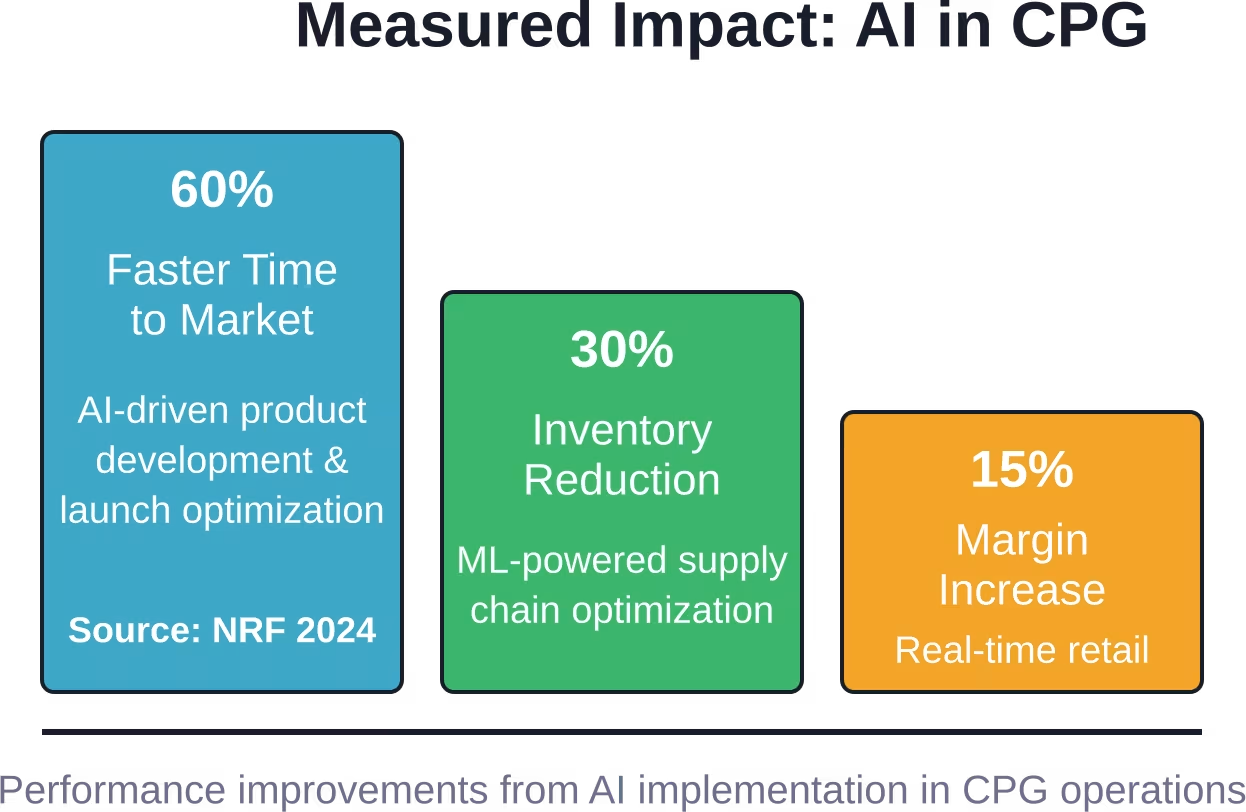
Quick Summary: Machine learning is revolutionizing the consumer packaged goods industry by enabling predictive analytics for demand forecasting, personalized marketing at scale, supply chain optimization, and real-time revenue growth management. According to industry data, companies implementing AI and machine learning technologies report improvements including margin increases, inventory reduction, and faster time to market.
The consumer packaged goods industry has reached an inflection point. Traditional approaches to demand planning, pricing strategy, and product development no longer keep pace with market volatility and shifting consumer preferences.
Machine learning changes that equation entirely.
CPG companies now deploy sophisticated algorithms that analyze millions of data points—syndicated retail data, social sentiment, weather patterns, promotional calendars—to make decisions that were impossible just five years ago. And the results speak for themselves.
Why Machine Learning Matters for Consumer Packaged Goods
The CPG sector operates under razor-thin margins and intense competition. Grocery shelves carry thousands of SKUs, each fighting for consumer attention. A single miscalculation in demand forecasting can mean millions in wasted inventory or lost sales.
Machine learning addresses these challenges head-on. The technology excels at pattern recognition across massive datasets—exactly what CPG brands need when navigating complex retail environments.
AI-driven retail optimization solutions deliver measurable impact. According to industry data, companies implementing AI and machine learning technologies report improvements including margin increases, inventory reduction, and faster time to market.
Those aren’t incremental improvements. They’re transformational.

Build Machine Learning Software With AI Superior
AI Superior develops custom AI software, including machine learning models, predictive analytics tools, and AI-based web and mobile applications. Their team supports projects from discovery and data review to MVP development, integration, and result evaluation.
For CPG teams, this can support demand forecasting, sales analysis, product performance tracking, customer behavior insights, or image-based workflows when needed.
Need Machine Learning Built Around Your Data?
AI Superior can help with:
- building custom machine learning solutions
- developing predictive analytics tools
- testing ideas through PoC or MVP development
- integrating AI into existing systems
👉 Contact AI Superior to discuss your project.
Core Machine Learning Applications in CPG
Several use cases have emerged as particularly valuable for consumer packaged goods manufacturers and retailers. Here’s where the technology delivers the most impact.
Demand Forecasting and Predictive Analytics
Traditional demand planning relies on historical sales data and seasonal trends. Machine learning models incorporate hundreds of additional variables—competitor promotions, social media buzz, local events, even weather forecasts.
The result? Predictions that adapt to real-time market conditions rather than static historical patterns.
CPG companies utilizing predictive analytics can better anticipate demand patterns, helping to adjust production schedules and distribution planning. This capability becomes especially critical during promotional periods when traditional forecasting methods often miss the mark.
Revenue Growth Management and Dynamic Pricing
Revenue growth management represents one of the most sophisticated applications of machine learning in CPG. Pricing decisions involve balancing competitive positioning, promotional effectiveness, category management, and margin optimization simultaneously.
Machine learning algorithms can process retailer point-of-sale data, pricing elasticity curves, and competitive intelligence to recommend optimal pricing strategies. Some platforms enable personalized dynamic pricing that adjusts recommendations based on individual consumer behavior and purchase history.
The challenge? Implementation requires clean, accurate data. Research from the University of Arkansas highlights how CatBoost algorithms help CPG retailers predict true attribution values and identify false data points that would otherwise compromise model accuracy.
Supply Chain Optimization
Supply chains in consumer packaged goods involve complex networks—raw material suppliers, manufacturing facilities, distribution centers, retail locations. Small inefficiencies compound quickly.
Machine learning models optimize routing, inventory positioning, and production scheduling. They identify patterns human analysts miss, like subtle correlations between manufacturing defects and specific raw material batches or optimal inventory levels that balance carrying costs against stockout risk.
The 30% inventory reduction achieved through AI-powered solutions stems largely from these optimization capabilities. Less inventory doesn’t mean more stockouts—it means smarter positioning of the right products in the right locations.
Personalized Marketing and Product Recommendations
Consumer expectations have shifted. Generic mass marketing no longer drives conversion rates that justify the investment. Personalization works—but only when it’s genuinely relevant.
Machine learning enables CPG brands to analyze individual purchase patterns, browsing behavior, and engagement data to deliver targeted product recommendations. According to updated 2026 AWS for Industries benchmarks, implementation of Amazon Connect with advanced AI routing in CPG and QSR sectors has demonstrated a reduction in average handle time (AHT) by up to 25%.
But personalization extends beyond customer service. Email campaigns, digital advertising, and even in-store promotions can be tailored using machine learning insights about consumer preferences and likely next purchases.
Real-World Implementation: What’s Required
Machine learning applications sound compelling in theory. Implementation reveals the real challenges.
Data Infrastructure
Machine learning models are only as good as the data they consume. CPG companies need robust data collection and integration capabilities—point-of-sale systems, loyalty programs, e-commerce platforms, social listening tools.
More importantly, that data must be clean and standardized. Inconsistent product hierarchies, duplicate customer records, or gaps in historical data all degrade model performance.
Technical Capabilities
Building and maintaining machine learning systems requires specialized expertise. Data scientists, machine learning engineers, and domain experts who understand CPG business dynamics all play essential roles.
Many companies start with pre-built platforms rather than custom development. AWS, for instance, offers CPG-specific solutions that integrate with existing systems and provide industry-trained models out of the box.
Organizational Readiness
Here’s the thing though—technology alone doesn’t drive results. Organizations must be willing to act on machine learning insights, even when they contradict conventional wisdom or established practices.
That cultural shift often proves more difficult than the technical implementation.
Emerging Trends and Future Applications
The machine learning landscape in CPG continues evolving. Several emerging applications deserve attention.
Natural language processing enables CPG brands to analyze consumer feedback at scale—product reviews, social media comments, customer service transcripts. These insights feed directly into product development cycles, shortening the time from consumer need identification to market launch.
Computer vision applications help with quality control in manufacturing, shelf compliance monitoring in retail environments, and even consumer behavior analysis through in-store cameras (with appropriate privacy considerations).
The AI in CPG market reflects this growth trajectory. Industry analyses indicate the AI in Consumer Packaged Goods market was valued at USD 2.46 billion in 2023 and is projected to reach approximately USD 86.7 billion by 2033.
Challenges and Considerations
Machine learning implementation isn’t without obstacles. Data privacy regulations like GDPR and CCPA constrain what consumer information can be collected and how it can be used. CPG companies must build privacy-first approaches into their machine learning strategies.
Model bias represents another concern. If training data reflects historical patterns that include discriminatory practices or unrepresentative samples, the resulting algorithms will perpetuate those issues. Ongoing monitoring and bias testing are essential.
Real talk: many CPG companies still struggle with basic data quality issues. Implementing sophisticated machine learning before establishing solid data governance is building on a shaky foundation.
Getting Started: Practical Steps
For CPG companies exploring machine learning applications, a phased approach works best.
Start with a clearly defined business problem—not a technology solution looking for a problem. Demand forecasting for high-volume SKUs or promotional optimization for a specific channel both make excellent pilot projects.
Assess current data capabilities honestly. What’s available? What’s accurate? What gaps exist? Address foundational data quality issues before attempting advanced analytics.
Consider partnering with technology providers who specialize in CPG applications rather than building everything in-house. These platforms offer industry-specific models and integrations that significantly accelerate implementation.
Finally, plan for change management. Technical teams need training on new tools and processes. Business leaders need education on interpreting machine learning outputs and incorporating them into decision workflows.
| Machine Learning Application | Primary Benefit | Implementation Complexity | Time to Value |
|---|---|---|---|
| Demand Forecasting | Inventory optimization, reduced waste | Medium | 3-6 months |
| Dynamic Pricing | Margin improvement, competitive positioning | High | 6-12 months |
| Personalization | Increased conversion, customer loyalty | Medium-High | 4-8 months |
| Supply Chain Optimization | Cost reduction, efficiency gains | High | 8-15 months |
| Quality Control | Defect reduction, consistency | Medium | 3-5 months |
Frequently Asked Questions
What’s the difference between AI and machine learning in CPG contexts?
Artificial intelligence is the broader concept of machines performing tasks that typically require human intelligence. Machine learning is a specific subset of AI that uses algorithms to learn from data and improve performance over time without explicit programming. In CPG applications, machine learning handles most practical use cases—demand forecasting, pricing optimization, and personalization.
How much data do CPG companies need to start using machine learning?
The minimum viable dataset depends on the specific application. Demand forecasting typically requires at least 18-24 months of historical sales data across multiple SKUs and locations. Personalization engines need purchase history from thousands of consumers. That said, modern algorithms like CatBoost perform well even with smaller datasets compared to traditional methods. Starting with a pilot project on high-volume products allows companies to demonstrate value before scaling.
Can small and mid-sized CPG companies benefit from machine learning?
Absolutely. Cloud-based platforms and pre-built solutions have democratized access to machine learning capabilities. Small brands can leverage tools that previously required massive internal teams. The key is focusing on specific, high-impact use cases rather than attempting comprehensive transformation. Promotional optimization for a regional brand or inventory management for a specialty manufacturer both deliver measurable ROI without requiring enterprise-scale resources.
How long does machine learning implementation take in CPG environments?
Timeline varies significantly based on scope and organizational readiness. A focused pilot project—demand forecasting for select products or promotional optimization for a single channel—can show results in 3-6 months. Comprehensive implementations spanning multiple business functions typically require 12-18 months. Data quality often determines timeline more than technical complexity; companies with clean, accessible data move much faster.
What skills do CPG companies need internally for machine learning?
Successful implementations require a blend of technical and domain expertise. Data scientists who understand statistical modeling and algorithm development are essential. But equally important are CPG professionals who can translate business problems into technical requirements and interpret model outputs in business contexts. Many companies hire for these hybrid roles or build cross-functional teams that combine deep technical skills with category management, revenue growth management, or supply chain expertise.
How do privacy regulations affect machine learning in CPG?
Regulations like GDPR, CCPA, and similar laws constrain what consumer data can be collected and how it can be used. CPG companies must implement privacy-by-design approaches—anonymizing data where possible, obtaining proper consent, and maintaining transparency about data usage. These constraints don’t prevent effective machine learning, but they do require careful governance. Many successful applications use aggregated or synthetic data that preserves analytical value while protecting individual privacy.
Moving Forward with Machine Learning in CPG
Machine learning has moved from experimental technology to strategic necessity in consumer packaged goods. The competitive advantages—faster product launches, optimized inventory, smarter pricing, personalized customer experiences—are too significant to ignore.
But success requires more than deploying algorithms. It demands clean data, technical capabilities, organizational willingness to act on insights, and patience through the learning curve.
The CPG companies seeing the strongest results treat machine learning as a long-term capability investment rather than a one-time project. They start with focused pilots, learn from both successes and failures, and gradually expand applications as expertise develops.
The question isn’t whether machine learning will transform CPG operations. It already has. The question is whether individual companies will lead that transformation or struggle to catch up as competitors pull ahead.
Start with one high-impact use case. Build the foundational data infrastructure. Develop internal expertise or partner with specialists. Then scale what works.
The market won’t wait for perfect conditions. Neither should forward-thinking CPG leaders.
 English
  German
  Arabic
  French
  Dutch
Dutch  Spanish