
Quick Summary: Machine learning is revolutionizing medical diagnosis by analyzing vast datasets to detect diseases earlier and more accurately than traditional methods. The FDA has authorized more than 1,000 AI-enabled devices through established premarket pathways, with 76% designed for radiology applications. These systems achieve over 90% accuracy in many diagnostic tasks, though clinical validation, regulatory compliance, and integration challenges remain critical barriers to widespread adoption.
The landscape of medical diagnosis is undergoing a fundamental transformation. Healthcare generates massive amounts of data every single day—patient records, imaging scans, lab results, genomic sequences—and traditional analysis methods simply can’t keep pace.
Machine learning changes that equation. By identifying patterns in millions of data points that human clinicians might overlook, these algorithms can detect diseases earlier, predict outcomes more accurately, and help doctors make better-informed decisions.
But here’s the thing: not all machine learning applications deliver on their promises. Some achieve remarkable accuracy in controlled studies but falter in real clinical settings. Others receive regulatory clearance yet face adoption barriers that prevent widespread use.
This comprehensive guide examines how machine learning actually works in medical diagnosis today, which applications show genuine clinical value, what the regulatory landscape looks like, and where the technology still falls short.
Understanding Machine Learning in Clinical Diagnostics
Machine learning represents a subset of artificial intelligence where algorithms learn from data rather than following explicit programming rules. In medical diagnosis, these systems analyze patient information to identify disease patterns, predict outcomes, or recommend diagnostic pathways.
According to the FDA, artificial intelligence and machine learning technologies have the potential to transform healthcare by deriving new and important insights from the vast amount of data generated during healthcare delivery. Medical device manufacturers are using these technologies to innovate their products to better assist healthcare providers and improve patient care.
The distinction between traditional diagnostic software and machine learning-enabled systems is crucial. Traditional systems apply fixed rules created by programmers. Machine learning systems, on the other hand, discover patterns through training on large datasets and can improve their performance as they encounter more data.
Core Machine Learning Approaches in Diagnosis
Several machine learning methodologies power diagnostic applications, each with distinct strengths:
- Supervised learning trains algorithms on labeled datasets where the correct diagnosis is already known. The system learns to map patient characteristics to specific conditions. This approach dominates current clinical applications because it produces interpretable results that clinicians can validate against established medical knowledge.
- Deep learning uses neural networks with multiple layers to automatically extract features from raw data. This technique excels at analyzing medical images—X-rays, MRIs, CT scans, pathology slides—where relevant diagnostic features may be subtle or complex. Research shows that advances in deep learning have enabled machine learning-based disease diagnosis accuracy above 90% in many applications.
- Ensemble methods combine predictions from multiple algorithms to improve overall accuracy. A data scientist tested and trained 20 machine learning algorithms on a diabetes dataset to evaluate diagnostic accuracy, finding that some algorithms perform better for particular diseases and datasets than others.
The Shift Toward Causal Reasoning
Most existing machine learning approaches to diagnosis are purely associative—they identify diseases strongly correlated with patient symptoms without understanding the underlying causal relationships. This limitation can produce suboptimal or dangerous diagnoses.
Researchers have begun reformulating diagnosis as a counterfactual inference task, asking: “What would happen if this disease were present versus absent?” rather than simply: “Which diseases correlate with these symptoms?” Studies comparing counterfactual diagnostic algorithms to standard associative approaches show significant improvements. While associative algorithms achieve accuracy placing in the top 48% of doctor cohorts, counterfactual algorithms place in the top 25%, achieving expert clinical accuracy.
This research demonstrates that causal reasoning represents a vital missing ingredient for applying machine learning to medical diagnosis effectively.
FDA-Cleared AI-Enabled Medical Devices
The regulatory landscape for machine learning diagnostic tools has matured significantly. The FDA maintains an AI-Enabled Medical Device List as a resource to identify devices authorized for marketing in the United States. This list helps digital health innovators gain insights into the current device landscape and regulatory expectations.
As of 2025, 76 percent of AI-enabled medical devices approved by the FDA are intended for radiological use, making medical imaging the largest target for artificial intelligence among medical applications. This concentration reflects both the natural fit between image analysis and deep learning capabilities and the relative ease of obtaining large labeled training datasets.
Recent FDA Clearances
The pace of regulatory approvals has accelerated dramatically. Recent FDA clearances demonstrate the breadth of applications. Examples include systems for radiology applications, imaging reconstruction, gastroenterology and urology diagnostics, cardiovascular diagnosis, and Alzheimer’s disease detection.
These clearances span multiple specialties beyond radiology, indicating growing confidence in machine learning applications across diverse diagnostic domains.
Good Machine Learning Practice Guidelines
In January 2025, the FDA issued comprehensive draft guidance for developers of AI-enabled devices throughout the Total Product Life Cycle. This represents the first guidance providing recommendations for AI-enabled devices across their entire lifecycle, giving developers an accessible set of considerations.
The FDA emphasizes that artificial intelligence and machine learning technologies present unique considerations due to their complexity and the iterative, data-driven nature of their development. The identified guiding principles inform the development of good machine learning practices to promote safe, effective, and high-quality medical devices.
Key regulatory expectations include:
- Robust clinical validation with appropriate sample sizes
- Transparent documentation of training data sources and characteristics
- Ongoing monitoring of real-world performance
- Plans for addressing algorithm drift as patient populations change
- Clear labeling of intended use and limitations
| Medical Specialty | Common Applications | Regulatory Status |
|---|---|---|
| Radiology | Image analysis, lesion detection, automated measurements | Majority of FDA clearances (76%) |
| Cardiovascular | ECG interpretation, heart murmur detection, CVD risk prediction | Growing number of clearances |
| Pathology | Tissue slide analysis, cancer cell detection, biomarker identification | Established pathway, increasing approvals |
| Gastroenterology | Polyp detection, inflammatory disease assessment | Recent clearances emerging |
| Neurology | Alzheimer’s detection, stroke analysis, brain imaging | Specialized applications gaining approval |
Clinical Applications Across Medical Specialties
Machine learning diagnostic tools have demonstrated clinical value across numerous medical domains. The technology excels particularly in situations where pattern recognition in large datasets provides advantages over traditional analysis methods.
Medical Imaging and Radiology
Radiological applications dominate the machine learning diagnostic landscape for good reason. Using machine learning, locating malignant cells in a microscopic image is frequently simpler compared to visual inspection alone. Deep learning algorithms can detect subtle patterns that indicate early-stage disease before symptoms become apparent.
The ability of AI to analyze medical imaging spans multiple modalities:
- Computed tomography (CT) scans benefit from algorithms that identify lung nodules, assess stroke damage, detect internal bleeding, and measure organ volumes with precision exceeding manual measurements.
- Magnetic resonance imaging (MRI) applications include brain tumor segmentation, multiple sclerosis lesion tracking, cardiac function assessment, and musculoskeletal injury evaluation. Clearances like the AIR Recon DL system enhance image reconstruction quality while reducing scan times.
- X-ray interpretation systems detect pneumonia, tuberculosis, fractures, and cardiac abnormalities. These tools prove particularly valuable in settings with limited access to specialist radiologists.
- Ultrasound enhancement technologies like the Lumify Diagnostic Ultrasound System incorporate machine learning to improve image quality and assist with measurements, expanding diagnostic ultrasound capabilities in point-of-care settings.
Pathology and Laboratory Diagnostics
Digital pathology has emerged as a major application area. Algorithms analyze whole-slide images of tissue samples to detect cancerous cells, grade tumor aggressiveness, identify biomarkers, and predict treatment responses.
The technology addresses a critical workforce shortage—pathologists face increasing workloads as cancer screening expands while the number of practicing pathologists remains constrained. Machine learning systems can perform initial screening, flagging slides that require detailed human review while clearing obviously normal samples.
Laboratory testing applications extend beyond imaging. Algorithms analyze blood test results, genetic sequences, and metabolomic profiles to predict disease risk, diagnose conditions, and guide treatment selection.
Cardiovascular Disease Detection
Cardiovascular applications have proliferated rapidly, with multiple systems receiving FDA clearance. The eMurmur Heart AI system analyzes heart sounds to detect abnormal murmurs. The AI-CVD platform assesses cardiovascular disease risk from multiple data sources.
Machine learning has demonstrated effectiveness in predicting all-cause mortality in patients with suspected coronary artery disease through 5-year multicentre prospective registry studies. These predictive capabilities enable earlier intervention for high-risk patients.
Electrocardiogram (ECG) interpretation represents another active area. Algorithms detect arrhythmias, identify myocardial infarction patterns, and flag abnormalities that warrant specialist review—often with accuracy matching or exceeding general practitioners.
Chronic Disease Management
AI models demonstrate potential for early detection of chronic diseases by integrating laboratory, clinical, and imaging-based multimodal data. Hybrid approaches that combine multiple data types show particular promise.
Diabetes diagnosis and management have received substantial attention. Testing of 20 machine learning algorithms on diabetes-related datasets shows that optimal algorithm selection significantly impacts diagnostic accuracy, with some approaches substantially outperforming others for this specific condition.
However, heterogeneity in datasets, retrospective study designs, limited external validation, and inconsistent reporting continue to pose challenges for clinical translation of chronic disease detection algorithms.
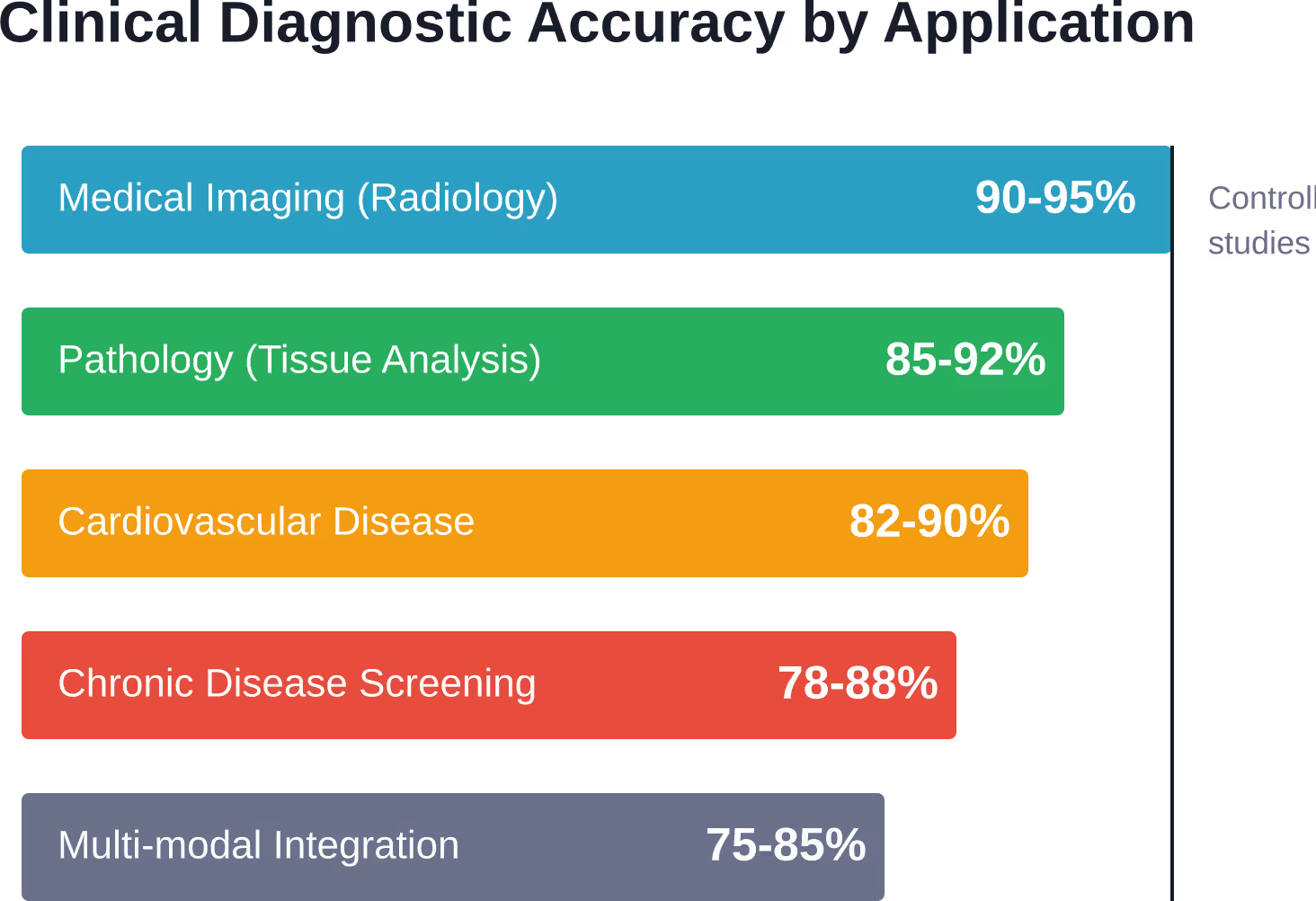
Diagnostic Accuracy and Clinical Validation
Claims about machine learning diagnostic accuracy require careful scrutiny. Performance metrics from controlled research studies often don’t translate directly to real-world clinical settings.
Understanding Performance Metrics
Machine learning diagnostic systems are typically evaluated using several standard metrics:
- Sensitivity (true positive rate) measures the proportion of actual disease cases that the algorithm correctly identifies. High sensitivity is critical for screening applications where missing a diagnosis carries serious consequences.
- Specificity (true negative rate) measures the proportion of disease-free cases correctly identified as negative. High specificity reduces false alarms that lead to unnecessary follow-up testing and patient anxiety.
- Positive predictive value indicates the probability that a patient with a positive test result actually has the disease. This metric depends heavily on disease prevalence in the tested population.
- Area under the receiver operating characteristic curve (AUC-ROC) provides an overall measure of discriminatory ability across different threshold settings. Values above 0.90 generally indicate excellent performance.
Research shows machine learning-based disease diagnosis accuracy above 90% in many controlled studies. But this headline figure requires context.
The Validation Gap
Diagnostic frameworks emphasize the need for rigorous validation before clinical deployment. Sample size analysis for machine learning clinical validation studies must account for the specific characteristics of the disease, population, and algorithm.
Key validation challenges include:
- Dataset bias occurs when training data doesn’t represent the full diversity of patients who will use the system. Algorithms trained predominantly on data from one demographic group may perform poorly on others.
- Retrospective design limitations mean many studies evaluate algorithms on historical data rather than prospective real-world use. Retrospective studies can overestimate performance because they don’t capture the full complexity of clinical decision-making.
- Limited external validation represents a persistent problem. Algorithms may perform well on data from the institution where they were developed but show reduced accuracy when deployed elsewhere due to differences in patient populations, imaging equipment, or clinical protocols.
- Inconsistent reporting makes it difficult to compare systems or assess true clinical utility. Studies may emphasize favorable metrics while downplaying limitations.
Real-World Performance Considerations
Assessment of diagnostic performance and clinical impact reveals that AI demonstrates remarkable potential but clinical translation remains limited by performance variability, retrospective designs, lack of external validation, and practical barriers such as data privacy and workflow integration issues.
One critical factor is the human-AI interaction dynamic. Research examining whether AI helps or hurts human radiologists’ performance found that outcomes depend on how the technology is deployed and how clinicians interact with algorithmic recommendations.
Algorithms can improve diagnostic accuracy when they provide complementary information that helps clinicians identify cases they might otherwise miss. However, they can also degrade performance if clinicians over-rely on algorithmic suggestions or if the AI system makes systematic errors that go unrecognized.
| Validation Type | Strengths | Limitations |
|---|---|---|
| Retrospective | Large datasets available, faster completion, lower cost | Selection bias, doesn’t capture real workflow, may overestimate performance |
| Prospective Observational | Real-world conditions, captures workflow impact | Longer timeline, more expensive, potential confounding factors |
| Randomized Controlled Trial | Gold standard evidence, causal inference possible, minimal bias | Expensive, slow, recruitment challenges, ethical considerations |
| External Validation | Tests generalizability, identifies deployment issues | Requires data sharing agreements, may reveal site-specific performance variations |

Create Medical Diagnosis ML Models With AI Superior
Medical diagnosis projects often require accurate data analysis, custom ML models, and reliable software integration. AI Superior works with organizations on AI software development, machine learning solutions, and computer vision applications across healthcare-related projects.
Need Technical Support for a Medical Diagnosis AI Solution?
AI Superior offers:
- Custom ML and AI development
- AI consulting and MVP development
- Integration of AI into existing workflows
👉Contact AI Superior to discuss your medical diagnosis machine learning project.
Implementation Challenges in Healthcare Settings
Regulatory clearance represents only the first step toward clinical adoption. Healthcare institutions face substantial obstacles when integrating machine learning diagnostic tools into existing workflows.
Technical Integration Barriers
Health information technology infrastructure varies dramatically across institutions. Deploying machine learning systems requires:
- Data interoperability to ensure algorithms can access patient information from electronic health records, imaging systems, and laboratory databases. Lack of standardized data formats creates integration complexity.
- Computational infrastructure capable of running resource-intensive algorithms, particularly deep learning models that may require specialized hardware. Institutions must weigh cloud-based versus on-premises deployment.
- Workflow integration that fits seamlessly into existing clinical processes rather than creating additional steps that slow diagnosis and frustrate users.
Data Privacy and Security
Machine learning systems require access to sensitive patient information, raising significant privacy concerns. Healthcare organizations must ensure:
- HIPAA compliance throughout the data lifecycle
- Secure data transmission between systems
- Patient consent for algorithm-assisted diagnosis
- Clear policies on data retention and use
Data privacy concerns represent a major practical barrier limiting clinical translation of AI diagnostic systems.
Clinical Adoption and Trust
Physician acceptance of machine learning recommendations varies widely. Factors influencing adoption include:
- Explainability of algorithmic recommendations. Deep learning systems often function as “black boxes” that provide diagnoses without clear reasoning. Randomized explainable machine learning models attempt to address this by providing transparent decision pathways, but balancing accuracy with interpretability remains challenging.
- Liability concerns about who bears responsibility when algorithm-assisted diagnoses prove incorrect. Legal frameworks haven’t fully adapted to AI-enabled medical decision-making.
- Training requirements for clinical staff who must learn to interpret algorithmic outputs and understand system limitations.
- Workflow disruption during implementation phases when systems may slow rather than accelerate diagnosis.
Economic Considerations
Cost-effectiveness analysis must account for:
- Licensing fees for commercial algorithms
- Infrastructure and integration expenses
- Ongoing maintenance and updates
- Training costs
- Potential savings from earlier diagnosis and improved outcomes
The business case for adoption depends heavily on reimbursement policies, which are still evolving as payers determine how to cover AI-assisted diagnostics.
Disease-Specific Applications and Outcomes
Examining machine learning applications for specific conditions reveals both successes and limitations in translating technology into clinical impact.
Cancer Detection and Diagnosis
Oncological applications span screening, diagnosis, and treatment planning. Machine learning AI architectures have been extensively evaluated for lung cancer detection, with diagnostic accuracy varying based on algorithm architecture, training data quality, and validation methodology.
Breast cancer screening using mammography benefits from algorithms that detect suspicious lesions, potentially reducing false negatives that delay diagnosis and false positives that lead to unnecessary biopsies. Performance in controlled studies is promising, though real-world implementation faces challenges around radiologist workflow integration.
Skin cancer detection from dermoscopic images has achieved accuracy comparable to dermatologists in some studies, raising possibilities for telemedicine applications and expanded screening access. However, performance across different skin types and lesion presentations requires ongoing validation.
Infectious Disease Diagnosis
The complexity of infectious disease mechanisms and diverse symptom presentations make diagnosis challenging. Machine learning approaches show promise for:
- Tuberculosis detection from chest X-rays in resource-limited settings where specialist radiologists are scarce. Algorithms can prioritize cases requiring urgent attention.
- Sepsis prediction from electronic health record data, identifying patients at risk before clinical deterioration becomes obvious. Early identification enables timely intervention that can be lifesaving.
- Antimicrobial resistance prediction based on genomic sequencing and patient history, helping clinicians select effective antibiotics more quickly than traditional culture-based testing.
Neurological Conditions
Brain imaging applications include:
- Alzheimer’s disease detection from structural MRI, PET scans, and cognitive assessments. Recent FDA clearances for systems like Alzevita reflect growing confidence in these applications, though distinguishing early Alzheimer’s from normal aging remains challenging.
- Stroke analysis to rapidly identify stroke type, locate occlusions, and predict tissue at risk. Time-critical decisions benefit from automated analysis that accelerates treatment.
- Epilepsy monitoring using algorithms that analyze EEG patterns to detect seizures and predict seizure risk, potentially improving management for patients with drug-resistant epilepsy.
Rare Disease Identification
Rare diseases pose particular diagnostic challenges—physicians may encounter a specific rare condition only once or twice in their careers, making pattern recognition difficult. Machine learning systems trained on accumulated cases from multiple institutions can recognize characteristic presentations that individual clinicians might miss.
Genetic testing analysis benefits from algorithms that interpret complex genomic data to identify disease-causing variants, accelerating diagnosis for patients who have undergone lengthy diagnostic odysseys.
The Future of Machine Learning Diagnostics
Several trends will shape the next generation of machine learning diagnostic systems.
Multi-Modal Integration
Current systems typically analyze single data types—imaging, laboratory results, or clinical notes. Future approaches will increasingly integrate multiple data modalities to replicate how physicians synthesize diverse information sources.
Hybrid models that combine imaging, genomics, clinical history, and laboratory data show enhanced diagnostic accuracy compared to single-modality approaches. However, the technical complexity of multi-modal systems and the data infrastructure requirements present significant development challenges.
Continuous Learning Systems
Most deployed algorithms use static models that don’t update after initial training. The FDA’s total product lifecycle approach recognizes that machine learning systems may use real-world data to improve performance over time.
Continuous learning raises new regulatory questions: How should performance monitoring occur? What triggers should require re-validation? How can systems adapt to changing patient populations while maintaining safety?
Good machine learning practice guidelines will need to evolve to address these dynamic systems while ensuring patient safety.
Federated Learning Approaches
Data privacy concerns limit the large-scale data sharing that machine learning requires. Federated learning enables algorithm training across multiple institutions without centralizing patient data. Models learn from distributed datasets while data remains at originating institutions.
This approach could accelerate algorithm development while addressing privacy concerns, though technical implementation challenges and the need for institutional collaboration slow adoption.
Explainable AI
The “black box” nature of deep learning algorithms creates adoption barriers. Research into explainable machine learning aims to provide transparent reasoning that clinicians can evaluate.
Techniques include attention maps showing which image regions influenced decisions, counterfactual explanations indicating what changes would alter predictions, and rule extraction that translates neural networks into interpretable decision trees.
Balancing accuracy with explainability remains an active research challenge—sometimes the most accurate models are least interpretable.
Point-of-Care Diagnostics
Portable ultrasound devices with embedded AI, smartphone-connected diagnostic tools, and wearable sensors that continuously monitor health parameters will expand diagnostic capabilities beyond traditional healthcare settings.
These technologies could improve access in resource-limited settings and enable earlier disease detection through continuous monitoring. However, ensuring accuracy with lower-quality data from portable devices requires continued algorithm development.
Ethical and Social Considerations
Machine learning diagnostic systems raise important ethical questions that extend beyond technical performance.
Algorithmic Bias and Health Equity
Algorithms trained on non-representative datasets may perpetuate or amplify healthcare disparities. If training data predominantly includes certain demographic groups, algorithm performance may be reduced for underrepresented populations.
Addressing bias requires:
- Diverse training datasets that represent patient population diversity
- Explicit testing for performance differences across demographic groups
- Ongoing monitoring for disparate impact in deployment
- Transparency about known performance limitations
Access and Cost
Will machine learning diagnostics reduce or exacerbate healthcare access gaps? Optimistically, these tools could extend specialist expertise to underserved areas through telemedicine. Pessimistically, high costs might concentrate benefits in wealthy institutions while resource-limited facilities fall further behind.
Deliberate policy choices around pricing, reimbursement, and technology dissemination will shape which scenario prevails.
Clinical Autonomy and Responsibility
As algorithms become more accurate, pressure may increase for clinicians to follow algorithmic recommendations. But medicine requires consideration of individual patient circumstances that algorithms may not capture.
Preserving appropriate clinical judgment while leveraging algorithmic insights requires clear frameworks for human-AI collaboration. Clinicians must understand when to trust, question, or override algorithmic suggestions.
Patient Consent and Transparency
Should patients be informed when algorithms contribute to their diagnosis? What happens when algorithms and clinicians disagree? How much explanation of algorithmic reasoning do patients need to provide meaningful consent?
These questions lack universal answers but require thoughtful institutional policies that balance transparency with practical constraints.
Practical Guidance for Healthcare Organizations
Institutions considering machine learning diagnostic implementations should take a systematic approach.
Needs Assessment
Start by identifying specific clinical problems where machine learning might provide value:
- High-volume tasks where efficiency gains matter
- Conditions with high misdiagnosis rates
- Areas with specialist shortages
- Situations where earlier detection improves outcomes
Not every diagnostic challenge requires machine learning. Traditional approaches may prove more effective for some applications.
Vendor Evaluation
When assessing commercial algorithms, examine:
- Evidence quality supporting performance claims
- Validation in populations similar to your patient demographics
- Regulatory clearance status
- Integration requirements and technical support
- Ongoing monitoring and update plans
- Transparency about limitations
Beware of vendors emphasizing accuracy metrics from small studies without external validation.
Pilot Implementation
Begin with limited pilots that:
- Test technical integration with existing systems
- Assess workflow impact
- Gather clinician feedback
- Monitor performance on local patient populations
- Identify unanticipated issues before broad deployment
Plan for iteration based on pilot learnings rather than expecting immediate perfection.
Clinician Training
Successful adoption requires preparing clinical staff through:
- Education about how algorithms work and their limitations
- Clear protocols for interpreting algorithmic outputs
- Guidance on when to question recommendations
- Feedback mechanisms to report problems
Performance Monitoring
Ongoing surveillance should track:
- Diagnostic accuracy metrics
- Performance differences across patient subgroups
- Time-to-diagnosis changes
- User satisfaction
- Adverse events related to algorithm use
Establish clear thresholds that trigger re-evaluation if performance degrades.
Frequently Asked Questions
How accurate are machine learning diagnostic systems compared to human doctors?
Accuracy varies significantly by application and clinical context. Research shows machine learning-based disease diagnosis accuracy above 90% for many imaging applications in controlled studies, with some systems achieving accuracy in the top 25% of physician cohorts. However, real-world performance often falls below controlled study results due to differences in patient populations, data quality, and clinical workflows. Machine learning systems excel at specific pattern recognition tasks but lack the broader clinical reasoning and patient interaction skills physicians provide. The most effective approach combines algorithmic strengths with human judgment rather than viewing them as competitors.
Are AI diagnostic tools approved by regulatory agencies?
Yes, the FDA maintains an AI-Enabled Medical Device List identifying more than 1,000 devices authorized for marketing in the United States. In January 2025, the FDA issued comprehensive draft guidance for AI-enabled device developers covering the total product lifecycle. As of 2025, 76 percent of FDA-cleared AI devices are intended for radiological use. Recent clearances span cardiovascular, gastroenterology, neurology, and other specialties. Regulatory approval confirms safety and effectiveness for specific intended uses but doesn’t guarantee clinical utility in all settings. Healthcare organizations should verify that approved devices have been validated on populations similar to their patients.
What diseases can machine learning diagnose most effectively?
Machine learning shows strongest performance for conditions with characteristic imaging or data patterns. Cancer detection from radiology images and pathology slides achieves 85-95% accuracy in many studies. Cardiovascular disease prediction, diabetic retinopathy screening, and lung disease detection demonstrate clinical value. Infectious disease applications like tuberculosis detection from chest X-rays work well in resource-limited settings. Rare disease identification benefits from algorithms trained on accumulated multi-institutional data. Applications requiring complex clinical reasoning, integration of subtle findings, or consideration of social and behavioral factors remain more challenging. The technology complements rather than replaces comprehensive clinical assessment.
What are the biggest challenges preventing widespread adoption?
Implementation barriers include technical integration complexity with existing healthcare IT systems, data privacy and security concerns, limited external validation of algorithm performance, lack of clear reimbursement pathways, clinician trust issues related to “black box” decision-making, liability questions when algorithms contribute to diagnoses, workflow disruption during implementation, and insufficient training for clinical staff. Economic factors also matter—upfront costs and ongoing fees may not be justified by measurable improvements in patient outcomes or efficiency. Assessment of diagnostic performance and clinical impact shows that despite AI’s potential, clinical translation remains limited by these practical barriers alongside performance variability and lack of external validation.
How do machine learning diagnostic systems handle rare or unusual cases?
Performance on rare or unusual cases represents a significant limitation. Algorithms learn patterns from training data, so conditions underrepresented in training datasets may not be recognized accurately. Unusual presentations of common diseases can also confuse systems trained on typical cases. Some approaches specifically target rare disease diagnosis by aggregating cases from multiple institutions to build sufficient training examples. However, algorithms may confidently provide incorrect diagnoses for cases outside their training distribution. This vulnerability highlights why human oversight remains essential—clinicians must recognize when cases fall outside the algorithm’s competency and when additional evaluation is needed beyond algorithmic suggestions.
Can machine learning reduce healthcare costs while improving diagnosis?
The economic case depends on specific applications and implementation contexts. Potential cost savings include reduced time-to-diagnosis, fewer unnecessary tests through more accurate initial assessment, earlier detection enabling less expensive treatment, and extended specialist expertise through telemedicine. However, initial implementation costs, licensing fees, infrastructure requirements, and training expenses can be substantial. Cost-effectiveness improves when algorithms address high-volume tasks or conditions where early diagnosis significantly impacts treatment costs. Reimbursement policies haven’t fully adapted to AI-assisted diagnostics, creating uncertainty about financial sustainability. Community discussions and early adopter experiences suggest that measurable cost reduction requires careful vendor selection, workflow optimization, and realistic expectations about which applications provide genuine value versus those that add expense without proportional benefit.
How is patient data privacy protected in machine learning diagnostic systems?
Healthcare organizations must ensure HIPAA compliance throughout the data lifecycle when implementing machine learning diagnostics. Protections include data encryption during transmission and storage, access controls limiting who can view patient information, de-identification techniques removing identifying information from training datasets, secure cloud infrastructure or on-premises deployment depending on institutional policies, and clear data governance policies specifying retention periods and acceptable uses. Federated learning approaches enable algorithm training across institutions without centralizing sensitive data, potentially addressing some privacy concerns. However, data privacy and security remain major practical barriers limiting clinical translation. Patients should understand when algorithms access their information and have clear consent processes, though regulatory frameworks for AI-specific consent continue evolving.
Conclusion
Machine learning is fundamentally transforming medical diagnosis, but the transformation is uneven, complex, and still unfolding.
The technology has demonstrated genuine clinical value in specific applications. Medical imaging analysis, particularly in radiology, has achieved accuracy levels that match or exceed human performance in controlled settings. The FDA has cleared hundreds of devices, and the regulatory framework continues maturing to address the unique characteristics of machine learning systems.
Yet substantial challenges remain. Algorithms validated in research settings often underperform in real-world deployment. Integration with existing healthcare infrastructure proves more difficult than anticipated. Data privacy concerns, liability questions, and clinician trust issues slow adoption even for technically successful systems.
The path forward requires realistic expectations. Machine learning won’t replace physicians—it will augment their capabilities in specific tasks while introducing new complexities that require thoughtful management. The most successful implementations carefully match algorithm capabilities to genuine clinical needs, invest in proper validation and integration, train users effectively, and maintain ongoing performance monitoring.
For healthcare organizations, the question isn’t whether to engage with machine learning diagnostics but how to do so strategically. Start with clear clinical needs, evaluate evidence critically, implement thoughtfully, and remain committed to continuous improvement. The technology will continue advancing rapidly—institutions that develop expertise now will be better positioned to leverage future innovations.
For patients, machine learning-assisted diagnosis represents both opportunity and uncertainty. These tools promise earlier disease detection, improved accuracy, and extended access to specialist expertise. Realizing that promise requires continued research, thoughtful regulation, equitable deployment, and vigilant attention to the ethical implications of algorithmic medicine.
The transformation of medical diagnosis through machine learning has begun. Shaping that transformation to genuinely improve patient care rather than simply deploy impressive technology will determine whether this moment represents a true revolution in healthcare or simply another overhyped innovation that underdelivers on its promises.
Ready to implement machine learning diagnostics in your healthcare organization? Start by identifying specific clinical challenges where algorithmic assistance could provide measurable value, then evaluate vendor solutions with rigorous attention to validation evidence, integration requirements, and long-term sustainability. The technology is ready—the question is whether your organization is prepared to deploy it effectively.
 English
  German
  Arabic
  French
  Dutch
Dutch  Spanish