
Quick Summary: Machine learning is transforming project management by automating scheduling, predicting delays, optimizing resource allocation, and surfacing risks before they escalate. Real implementations show 35% reductions in administrative overhead and profit margin increases of 8 percentage points, while predictive analytics engines deliver six-figure revenue gains. The technology enables data-driven decision-making at scale, turning historical project data into actionable forecasts that improve outcomes across construction, architecture, engineering, and software development.
Project management has always been about prediction. Teams estimate timelines, forecast budgets, and anticipate risks—but traditional methods rely heavily on intuition, spreadsheets, and historical averages that miss critical patterns.
Machine learning changes the equation. Instead of guessing which projects will overrun or which resources will bottleneck, algorithms analyze thousands of data points from past work to surface relationships humans can’t detect at scale.
The results speak for themselves. A 15-person architecture studio cut administrative hours by 35% after implementing automation, directly contributing to an 8 percentage point increase in profit margins. A 40-person MEP consultancy saw utilization rise by 6% through predictive resource engines, translating to $420K in additional annual net revenue.
These aren’t edge cases. Firms using modern project management platforms with embedded machine learning reported 21% revenue increases in year one, according to sources including North Carolina State University’s engineering program.
But here’s the thing—machine learning in project management isn’t one monolithic technology. It encompasses automated schedule creation, delay prediction, resource optimization, risk detection, and pattern recognition across portfolios. Each application solves different pain points.
What Machine Learning Actually Does in Project Management
Machine learning algorithms learn from data without explicit programming for every scenario. Feed the system historical project records—task durations, dependencies, resource assignments, change orders, delay causes—and it identifies patterns that predict future outcomes.
Traditional project management software stores data. Machine learning systems analyze that data to make decisions.
The distinction matters. A standard tool might show that 40% of past projects finished late. A machine learning system predicts which current projects will finish late and why, flagging specific risks weeks before human managers notice the signals.
Three categories dominate practical applications: predictive analytics, optimization engines, and pattern recognition systems. Each handles different aspects of the project lifecycle.
Predictive Analytics for Delay and Risk Detection
Delays cascade. A two-day slip in foundation work pushes framing, which delays electrical rough-in, which impacts inspection scheduling. By the time managers notice, recovery options narrow.
Machine learning models trained on completed projects learn which early indicators correlate with eventual delays. Late vendor confirmations, weather pattern shifts, permit processing times, subcontractor workload—individually these might not trigger concern, but specific combinations predict trouble.
Research has documented systems capable of predicting project delays before they occur, giving teams time to adjust resource allocation or renegotiate timelines before cascading effects locked in.
Risk detection works similarly. Algorithms flag projects exhibiting patterns associated with budget overruns, scope creep, or stakeholder conflicts. Not because the system understands project politics, but because it recognizes data signatures that preceded similar issues in historical records.
Automated Schedule Creation and Optimization
Building project schedules manually takes hours. List tasks, estimate durations, map dependencies, assign resources, check for conflicts, adjust, repeat. Human schedulers balance competing constraints—resource availability, task sequencing, deadline pressure—while trying to create realistic timelines.
Machine learning accelerates this process by learning from past schedules. Given a project scope and available resources, algorithms generate initial schedules in minutes, incorporating patterns from hundreds of similar historical projects.
More importantly, these systems optimize schedules against multiple objectives simultaneously. Minimize project duration while maximizing resource utilization while staying within budget constraints. Humans struggle with multi-objective optimization at scale; algorithms handle it natively.
Systematic literature reviews of machine learning in project schedule creation identify techniques ranging from neural networks to reinforcement learning approaches. Researchers focus particularly on construction project scheduling, where complexity and data availability make the problem tractable.
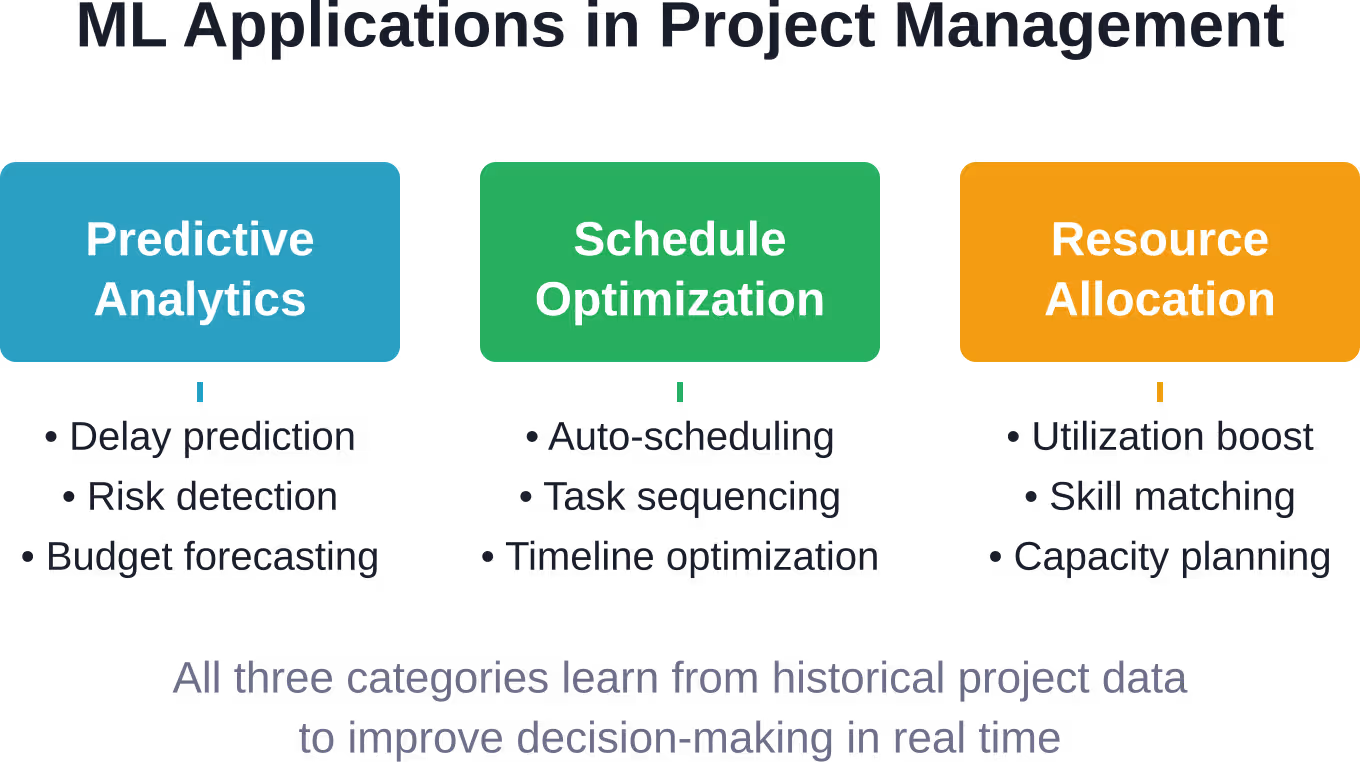
Resource Allocation and Utilization
Resource conflicts kill schedules. Two projects need the same engineer during the same week. A critical piece of equipment sits idle for three days, then becomes a bottleneck. Teams get assigned work outside their expertise while specialists sit underutilized.
Machine learning systems optimize resource allocation by modeling complex constraints humans struggle to juggle mentally. The algorithms consider skill requirements, availability calendars, travel time between project sites, learning curves, and historical performance patterns.
The 6% utilization improvement in the MEP consultancy came from predictive resource engines that identified upcoming capacity gaps and suggested project start date adjustments before resources became constrained. Small shifts—starting one project two weeks earlier, delaying another by a week—compound into significant utilization gains across portfolios.
For organizations managing dozens of simultaneous projects, manual resource optimization becomes practically impossible. Machine learning scales where human planning hits cognitive limits.

Build Smarter Project Tools With AI Superior
AI Superior helps companies assess AI use cases and turn them into working software. Their services cover AI consulting, AI software development, R&D, training, and integration into existing workflows.
For project management teams, this can support workload forecasting, task prioritization, resource planning, delay prediction, reporting automation, or internal decision-support tools.
Need Machine Learning for Project Workflows?
AI Superior can help with:
- assessing machine learning use cases
- building custom AI and ML tools
- developing forecasting and analytics models
- integrating AI into daily workflows
👉 Contact AI Superior to discuss your project.
Real-World Implementation Results
Abstract capabilities matter less than measurable outcomes. Organizations implementing machine learning in project management track specific metrics: administrative time savings, revenue per employee, project margin improvement, schedule adherence, and forecast accuracy.
The data from architecture and engineering firms provides useful benchmarks. These industries face complex project management challenges—client change requests, regulatory approvals, multidisciplinary coordination—making them good test cases for ML applications.
Administrative Overhead Reduction
Administrative work—timesheet processing, status report compilation, schedule updates, invoice reconciliation—consumes hours that could go toward billable work. The 35% reduction in admin hours achieved by the 15-person architecture studio translated directly to increased capacity for client work.
Machine learning systems automate repetitive data processing tasks. Time entries get automatically categorized and flagged for anomalies. Project status updates pull from actual task completion data rather than manual reports. Budget tracking happens continuously rather than in monthly reconciliation sessions.
The 8 percentage point profit margin increase stemmed partly from reduced overhead and partly from better project selection. Machine learning models helped the firm identify which project types and client profiles correlated with profitability, allowing more strategic bidding decisions.
Utilization and Revenue Impact
Utilization—the percentage of employee time spent on billable work—directly impacts professional services firm profitability. A 6% utilization increase might sound modest, but for a 40-person consultancy, it represents substantial additional capacity.
The $420K annual net revenue gain in the MEP firm came from predictive analytics that improved resource allocation across projects. Instead of scrambling to fill gaps or having specialists sit idle between assignments, the system forecasted capacity needs weeks in advance and suggested optimal project scheduling.
Project management platforms with integrated analytics capabilities have been associated with revenue improvements in year one of implementation. While not all gains came from machine learning specifically, the platform’s predictive features contributed by improving forecast accuracy and reducing revenue leakage from scope creep and budget overruns.
How Machine Learning Models Learn From Project Data
Machine learning systems need three things: historical data, training processes, and validation mechanisms. The quality of each determines whether the system produces useful predictions or garbage outputs.
Project data exists in most organizations, but it’s often fragmented. Task lists in one system, time tracking in another, budgets in spreadsheets, communication in email threads. Machine learning works best with integrated datasets where tasks, resources, communications, and outcomes connect.
Data Requirements and Quality Issues
Training effective models requires substantial historical data—ideally hundreds of completed projects with detailed records. Small firms with limited project histories face challenges here.
Data quality matters more than quantity. Records with missing task durations, inconsistent categorization, or incomplete outcome documentation degrade model accuracy. Garbage in, garbage out applies ruthlessly to machine learning.
Organizations serious about implementing machine learning often spend months cleaning historical data before training models. Standardizing task naming conventions, filling data gaps, validating completion dates, and categorizing delay causes consistently across projects.
Training and Validation Processes
Training involves feeding historical project data into algorithms that identify patterns correlating inputs with outcomes. Which task dependencies predict schedule delays? Which resource combinations correlate with budget overruns? Which client characteristics associate with scope creep?
Validation tests whether trained models accurately predict outcomes for projects they haven’t seen before. Split historical data into training and test sets—use 80% to train the model, then check predictions against the remaining 20% of actual outcomes.
Models that perform well on training data but poorly on test data are “overfitting”—memorizing specifics of training examples rather than learning generalizable patterns. Validation processes catch this before deployment.
Common Applications Across Project Types
While implementation details vary by industry, several machine learning applications work across construction, software development, architecture, engineering, and other project-intensive fields.
Schedule Prediction and Baseline Adjustment
Initial project schedules rarely survive contact with reality. Unforeseen issues emerge, requirements clarify, resources become constrained. The question isn’t whether schedules will change, but how to adjust them intelligently when they do.
Machine learning models trained on schedule variance patterns suggest realistic adjusted timelines when projects deviate from baseline. Instead of arbitrary padding or wishful thinking, the system recommends adjustments based on how similar projects recovered (or didn’t) from comparable delays.
This matters for stakeholder communication. Telling clients or executives that a deadline will slip by two weeks carries different implications than accurately forecasting a four-week delay. Machine learning improves forecast accuracy, even when the news isn’t good.
Budget Forecasting and Cost Control
Projects overrun budgets for predictable reasons—scope creep, rework from quality issues, resource inefficiency, vendor cost increases, underestimated complexity. Machine learning systems identify early warning signs before overruns become irreversible.
Cost forecasting models analyze spending patterns and project progress to predict final costs. If a project is 40% complete but has consumed 55% of budget, is that normal variation or a sign of trouble? Depends on project type, team composition, and historical patterns—exactly the kind of multi-factor analysis machine learning handles well.
Risk Scoring and Mitigation Prioritization
Project managers maintain risk registers listing potential issues, but which risks deserve immediate attention versus monitoring? Machine learning assigns probability scores based on current project conditions and historical risk materialization patterns.
High-scoring risks trigger mitigation plans automatically. Medium risks get flagged for team discussion. Low-probability risks stay on watch lists without consuming limited attention. The system helps managers focus effort where impact matters most.
Implementation Challenges and Practical Considerations
Real talk: most organizations struggle with machine learning implementation. Not because the technology doesn’t work, but because organizational readiness, data infrastructure, and change management challenges slow adoption.
Data Infrastructure Requirements
Machine learning needs integrated, clean, structured data. Many organizations lack this foundation. Project data lives in disparate systems. Historical records exist in inconsistent formats. Critical context remains trapped in email threads and informal communications.
Building the data infrastructure to support machine learning often represents the majority of implementation effort. Selecting integrated project management platforms, standardizing data entry processes, cleaning historical records, establishing data governance policies.
Organizations should assess data readiness before investing heavily in machine learning initiatives. Without adequate data foundations, even sophisticated algorithms produce unreliable outputs.
Team Skill Gaps and Training Needs
Project managers need to understand machine learning outputs well enough to make informed decisions. What does an 85% delay probability actually mean? How was it calculated? When should the prediction override human judgment?
Building this organizational capability requires training. Not turning project managers into data scientists, but developing sufficient ML literacy to use tools effectively and interpret results critically.
Successful implementations pair machine learning systems with comprehensive training programs covering interpretation, limitations, and appropriate use cases.
Change Management and Adoption Barriers
People resist tools that threaten existing workflows or autonomy. Project managers who’ve built careers on experience-based judgment sometimes view machine learning predictions as threats rather than aids.
Effective change management frames ML tools as decision support, not replacement. The system surfaces patterns and generates recommendations, but humans retain final authority. Emphasize how automation eliminates tedious administrative work, freeing time for strategic thinking.
Start with pilot projects in areas where manual processes cause obvious pain points. Demonstrate value through quick wins before rolling out comprehensively.
| Implementation Challenge | Primary Impact | Mitigation Strategy |
|---|---|---|
| Fragmented data systems | Poor model accuracy | Implement integrated PM platform before ML tools |
| Historical data gaps | Insufficient training data | Supplement with industry benchmarks, external datasets |
| Team skill gaps | Poor tool adoption | Comprehensive training on interpretation and use cases |
| Resistance to change | Underutilization of capabilities | Start with pilot projects, demonstrate quick wins |
| Integration complexity | Implementation delays | Prioritize platforms with native ML features over custom builds |
Choosing Tools and Platforms
The machine learning project management tool landscape splits into three categories: platforms with embedded ML features, standalone analytics tools that integrate with existing PM systems, and custom-built solutions.
Integrated Platforms Versus Standalone Tools
Integrated platforms like Oracle Primavera Risk Analysis and Microsoft Project with AI features embed machine learning directly into project management workflows. Teams use one system for planning, tracking, and benefiting from predictive analytics.
Standalone tools like Forecast, Resource Guru with predictive features, or custom Tableau/Power BI dashboards connect to existing project management systems to provide analytics layers. More flexible for organizations with established PM tools they don’t want to replace.
Custom solutions built in-house offer maximum control but require substantial data science expertise and ongoing maintenance. Most organizations lack resources for this approach.
Evaluation Criteria for Selection
When evaluating tools, consider data integration capabilities first. Can the tool access all relevant project data sources? Does it require manual data exports, or does it connect natively?
Model transparency matters. Black-box systems that generate predictions without explaining reasoning create trust issues. Look for tools that surface which factors drove specific predictions.
Scalability determines whether the tool grows with organizational needs. Can it handle increasing project volumes and complexity without performance degradation?
Finally, check vendor track record. Are they actively improving ML features? Do they provide adequate training and support? Are other organizations in the same industry successfully using the platform?
The Future of Machine Learning in Project Management
Current machine learning applications in project management focus primarily on prediction and optimization—forecasting delays, suggesting resource allocations, identifying risks. Next-generation capabilities will extend into autonomous decision-making and adaptive learning systems.
Autonomous Project Adjustments
Today’s systems generate recommendations that humans approve or reject. Future systems will make certain routine adjustments automatically—shifting low-priority task start dates when higher-priority work arrives, reallocating internal resources to prevent predicted bottlenecks, triggering procurement processes when lead time risks emerge.
Humans will set boundaries and policies, but systems will handle tactical execution within those guardrails. This mirrors how autonomous vehicles work—drivers set destinations and preferences, but systems handle moment-to-moment navigation.
Cross-Project Portfolio Intelligence
Current implementations primarily analyze individual projects or small project groups. Portfolio-scale machine learning will optimize across dozens or hundreds of simultaneous projects, identifying interactions and opportunities invisible at project level.
Which project should get priority access to a constrained resource? How should new work get distributed to maximize organization-wide outcomes? What portfolio composition balances risk, revenue, and strategic objectives? These portfolio-level questions require analyzing relationships across projects—exactly where machine learning delivers value at scale.
Integration With Adjacent Technologies
Machine learning in project management won’t exist in isolation. Integration with IoT sensors on construction sites, BIM models in architecture, DevOps pipelines in software development, and financial systems will create richer datasets and enable more sophisticated predictions.
Real-time sensor data revealing actual construction progress. Design models containing embedded schedule and resource information. Deployment pipelines feeding actual delivery velocity into project plans. Connected systems create feedback loops that continuously improve ML model accuracy.
Getting Started With Machine Learning in Project Management
Organizations don’t need to implement everything simultaneously. A phased approach reduces risk while building organizational capability progressively.
Assessment Phase
Start by evaluating data readiness. Review existing project data for completeness, consistency, and accessibility. Identify gaps that need filling before machine learning tools can work effectively.
Assess team capabilities and training needs. Who understands basic analytics concepts? Who will resist new tools? Where does the organization need external expertise?
Define specific problems worth solving. Don’t implement machine learning because it’s trendy. Target concrete pain points—schedule overruns, resource conflicts, budget variance—where better predictions deliver measurable value.
Pilot Implementation
Choose one high-value, contained problem for initial implementation. Delay prediction for a specific project type. Resource optimization for one department. Risk scoring for capital projects.
Run the pilot alongside existing processes. Compare machine learning predictions against traditional approaches. Track accuracy, user adoption, and actual impact on outcomes.
Document lessons learned. What data quality issues emerged? What training proved most valuable? Which stakeholder concerns needed addressing?
Scaling and Expansion
After successful pilots demonstrate value, expand scope progressively. Add project types, extend to new teams, integrate additional data sources.
Establish ongoing model maintenance processes. Machine learning models degrade over time as project conditions change. Schedule regular retraining cycles using recent project data.
Build internal expertise through training, hiring, or partnerships. Organizations serious about machine learning need people who understand both project management domain knowledge and analytics capabilities.
FAQ
What’s the difference between machine learning and artificial intelligence in project management?
Artificial intelligence is the broader concept of machines performing tasks that typically require human intelligence. Machine learning is a specific subset of AI focused on systems that learn from data without explicit programming. In project management, machine learning primarily handles predictive analytics—forecasting delays, optimizing schedules, identifying risks—while AI more broadly might include natural language processing for documentation or computer vision for progress monitoring. Most practical project management applications today use machine learning rather than general AI.
How much historical project data is needed to implement machine learning effectively?
Industry research suggests minimum datasets of 100-200 completed projects for basic predictive models, though more complex applications may require 500+ projects. Data quality matters more than quantity—100 projects with complete, consistent records outperform 500 projects with missing information and inconsistent categorization. Small organizations can supplement limited internal data with industry benchmarks or partner with vendors offering pre-trained models based on aggregated data from multiple clients.
Can machine learning predict which projects will fail before they start?
Machine learning identifies risk factors associated with project failure based on historical patterns, but it doesn’t provide absolute predictions. Models assess characteristics like project complexity, team composition, client history, scope clarity, and resource availability to generate probability scores. A project flagged as high-risk might succeed with proper mitigation, while low-risk projects can still fail due to unprecedented circumstances. The value lies in directing management attention toward elevated-risk situations before problems escalate.
Do project managers need data science skills to use machine learning tools?
Modern project management platforms with embedded machine learning require no data science expertise to use—teams interact with predictions and recommendations through normal project management interfaces. Understanding basic concepts—what predictions mean, how confidence intervals work, when to override automated suggestions—helps managers use tools effectively, but platforms handle technical complexity behind the scenes. Organizations building custom solutions or deeply customizing platforms do need data science capabilities on staff or through partnerships.
What happens when machine learning predictions are wrong?
All predictive models make errors—the goal is improving average accuracy, not perfection. When predictions miss, teams review contributing factors and update training data to help models learn from mistakes. Well-designed systems provide confidence scores alongside predictions, flagging lower-certainty forecasts so managers apply appropriate skepticism. Organizations should maintain human oversight of critical decisions, treating machine learning as decision support rather than autopilot. Over time, as models train on more data including their own prediction errors, accuracy improves.
How does machine learning handle unique or unprecedented project situations?
Machine learning models perform best on situations similar to their training data. Truly unprecedented project characteristics—new technologies, novel delivery methods, unfamiliar client industries—fall outside model experience, potentially generating unreliable predictions. Quality tools flag low-confidence predictions when project characteristics differ significantly from training data. For unusual projects, managers should rely more heavily on human judgment while still using machine learning for components that do match historical patterns, like general resource allocation or standard task sequencing.
What’s the typical ROI timeline for machine learning project management implementations?
Organizations implementing integrated platforms with native machine learning features typically see measurable improvements within 6-12 months, though ROI depends heavily on implementation quality and organizational readiness. The 15-person architecture studio achieved 35% admin time reduction and 8 percentage point margin improvement within one year of implementation. Larger, more complex organizations with extensive change management needs may require 18-24 months for full ROI realization. Quick wins from automation often appear within weeks, while sophisticated predictive capabilities deliver value as models train on sufficient data.
Conclusion
Machine learning transforms project management from reactive firefighting to proactive optimization. Real implementations deliver measurable results—35% admin time reductions, 8 percentage point margin improvements, six-figure revenue gains—by automating repetitive work and surfacing patterns invisible to manual analysis.
The technology works best when organizations approach implementation strategically. Clean, integrated data foundations matter more than sophisticated algorithms. Team training and change management determine whether capabilities translate to outcomes. Phased rollouts starting with high-value pilot projects reduce risk while building organizational capability.
Project management has always required balancing competing constraints under uncertainty. Machine learning doesn’t eliminate uncertainty, but it does narrow prediction ranges and improve decision quality at scale. As datasets grow and models improve, the gap between organizations leveraging these capabilities and those relying solely on manual processes will widen.
Start by assessing current project data quality and identifying specific pain points where better predictions deliver value. Choose tools aligned with organizational scale and technical capabilities. Invest in training so teams understand both capabilities and limitations. The organizations seeing results didn’t wait for perfect conditions—they started with available data and improved iteratively.
The future of project management isn’t choosing between human expertise and machine intelligence. It’s combining both—algorithms handling pattern recognition and optimization at scale, humans providing context, judgment, and strategic direction. That combination already outperforms either approach alone.
 English
  German
  Arabic
  French
  Dutch
Dutch  Spanish