
Quick Summary: Machine learning in medical devices leverages AI algorithms to analyze healthcare data, improve diagnostic accuracy, and enhance patient outcomes. The FDA authorized 168 ML-enabled Class II devices in 2024, with 74.4% in radiology, following comprehensive regulatory frameworks including Good Machine Learning Practice (GMLP) principles. Manufacturers must navigate rigorous validation requirements, transparency standards, and predetermined change control plans while ensuring safety and effectiveness throughout the device lifecycle. Artificial intelligence and machine learning technologies are transforming healthcare at an unprecedented pace. These software algorithms learn from real-world use and improve device performance over time, deriving critical insights from the vast amounts of data generated during healthcare delivery every day. But they also present unique challenges. The complexity and iterative, data-driven nature of ML development requires new regulatory approaches and best practices that traditional medical device frameworks weren’t designed to handle. The stakes are high. Medical device manufacturers are racing to innovate their products with AI capabilities that better assist healthcare providers and improve patient care. The FDA authorized 168 ML-enabled Class II devices in 2024 alone, with radiology dominating the field at 74.4% of approvals.
The Current State of ML-Enabled Medical Devices
The medical device landscape has shifted dramatically toward machine learning integration. According to FDA data, the regulatory agency authorized 168 ML-enabled Class II devices in 2024, adding to the over 1,000 AI-enabled devices authorized through established premarket pathways. Here’s what the 2024 approval data reveals about the current market:
| Metric | Percentage/Value |
|---|---|
| 510(k) premarket notification pathway | 94.6% |
| De Novo classification pathway | 5.4% |
| Radiology specialty devices | 74.4% |
| Cardiovascular specialty devices | 6.5% |
| Neurology specialty devices | 6.0% |
| Non-US sponsors | 57.7% |
| Median FDA review time | 162 days |
The dominance of radiology applications isn’t surprising. Medical imaging generates enormous datasets perfect for machine learning algorithms to analyze, detect patterns, and identify abnormalities that might escape human observation. But cardiovascular and neurology applications are gaining ground, representing 6.5% and 6.0% of 2024 approvals respectively. These specialties leverage ML for tasks like ECG interpretation, stroke detection, and seizure prediction. The regulatory pathway data shows that 94.6% of ML-enabled devices cleared via the 510(k) premarket notification process, demonstrating substantial equivalence to existing predicate devices. Only 5.4% required the De Novo classification pathway for novel devices without suitable predicates.
International Development Trends
Non-US sponsors accounted for 57.7% of ML-enabled device clearances in 2024, reflecting the global nature of medical device innovation. Companies worldwide are investing heavily in AI healthcare solutions, competing to bring advanced diagnostic and therapeutic tools to market. The median FDA review time for ML-enabled devices was reported as 162 days overall for 2024 provides manufacturers with reasonable timelines for market entry, though the De Novo pathway requires significantly more time for novel device evaluation.
Understanding Machine Learning in Medical Device Applications
Machine learning in medical devices differs fundamentally from traditional software. These systems use algorithms that learn from data, adapt based on new information, and in some cases improve their performance without explicit reprogramming. The software algorithms analyze patterns in vast datasets generated during healthcare delivery. They identify correlations, make predictions, and support clinical decision-making in ways that static rule-based systems cannot match. Real talk: this adaptability creates both opportunities and regulatory challenges. A device that changes its behavior based on post-market data requires different oversight than a static device with fixed functionality.
Common ML Device Applications
Medical device manufacturers deploy machine learning across diverse healthcare domains:
- Diagnostic imaging analysis: Detecting tumors, fractures, or other abnormalities in X-rays, MRIs, CT scans, and ultrasounds
- Clinical decision support: Recommending treatment options based on patient data, medical history, and outcomes research
- Patient monitoring: Identifying early warning signs of deterioration in ICU settings or remote monitoring scenarios
- Risk stratification: Predicting which patients face higher risks for specific conditions or complications
- Treatment personalization: Tailoring therapy parameters to individual patient characteristics and responses
- Workflow optimization: Streamlining clinical processes, reducing wait times, and improving resource allocation
Each application requires careful validation to ensure the ML algorithm performs safely and effectively across diverse patient populations and clinical settings. 
Support Medical Device Development With AI Superior ML
Machine learning is playing an increasing role in medical device development by enhancing data interpretation, quality checks, and predictive insights. AI Superior provides custom AI and ML solutions that help companies address complex data challenges and improve analytical workflows.
Apply AI to Your Medical Device Projects
AI Superior supports machine learning applications, such as:
- Advanced data analysis and pattern recognition
- Predictive modeling for trends and performance insights
- Automation of data workflows and quality control processes
👉Contact AI Superior today to explore how their AI expertise can support your medical device initiatives.
FDA Regulatory Framework for ML Medical Devices
The FDA has developed a comprehensive regulatory approach specifically for AI and machine learning technologies in medical devices. This framework recognizes that ML-enabled devices require different oversight than traditional static software. On January 7, 2025, the FDA published the Draft Guidance: Artificial Intelligence-Enabled Device Software Functions: Lifecycle Management and Marketing Submission Recommendations. This represents the first comprehensive guidance covering the entire lifecycle from development through post-market monitoring.
Good Machine Learning Practice (GMLP) Principles
In October 2021, Health Canada, the U.S. Food and Drug Administration, and the United Kingdom’s Medicines and Healthcare products Regulatory Agency jointly identified 10 guiding principles for good machine learning practice. These GMLP principles support the development of safe, effective, and high-quality AI/ML technologies that can learn from real-world use and improve device performance. The principles address the unique considerations presented by ML’s complexity and data-driven development nature. The guiding principles inform best practices across the device lifecycle, from initial design through post-market surveillance and continuous improvement.
Regulatory Pathways
ML-enabled medical devices enter the US market through established regulatory pathways, with modifications to accommodate their unique characteristics:
- 510(k) Premarket Notification: The dominant pathway for ML devices, accounting for 94.6% of 2024 approvals. Manufacturers demonstrate substantial equivalence to a legally marketed predicate device. The median review time was 151 days in 2024. Among 510(k) ML-enabled devices in 2024, 97.5% cited identifiable predicates, with a median predicate age of 2.2 years. Notably, 64.5% of cited predicates were themselves ML-enabled devices, reflecting the maturing ecosystem of AI medical devices.
- De Novo Classification: For novel ML devices without suitable predicates, the De Novo pathway provides market access for low-to-moderate risk devices. This pathway represented 5.4% of 2024 ML device clearances, with a median review time of 372 days.
- Premarket Approval (PMA): High-risk ML-enabled devices requiring the most rigorous review process undergo PMA evaluation, though this pathway represents a small fraction of ML device authorizations.
Predetermined Change Control Plans (PCCPs)
One of the most significant recent developments in ML device regulation is the introduction of Predetermined Change Control Plans. These plans allow manufacturers to implement specific, pre-authorized modifications to their ML algorithms without requiring new regulatory submissions. PCCPs address a critical challenge: ML algorithms often improve through retraining on new data or algorithmic refinements. Traditional regulatory frameworks required a new submission for each modification, creating bottlenecks that slowed innovation. In 2024, 16.7% of ML-enabled devices included PCCPs in their summaries, reflecting early adoption of this new regulatory tool. As manufacturers gain experience with PCCPs and regulators refine expectations, this percentage will likely increase.
Development Best Practices for ML Medical Devices
Developing safe and effective ML-enabled medical devices requires rigorous engineering practices tailored to the unique characteristics of machine learning systems.
Data Management and Quality
Machine learning algorithms are only as good as the data they learn from. Data quality, representativeness, and diversity directly impact device performance and potential biases. Best practices include:
- Collecting training data that represents the intended use population across demographics, disease presentations, and clinical settings
- Documenting data sources, collection methods, labeling procedures, and quality control processes
- Implementing rigorous data cleaning and preprocessing protocols
- Validating data annotations through multiple expert reviewers
- Addressing class imbalances and rare conditions in training datasets
- Maintaining data provenance and version control throughout development
The FDA emphasizes that demographic diversity in training data is essential for ensuring device performance across patient populations. Yet only 15.5% of ML-enabled devices provided demographic data in their 2024 clearance documentation, revealing a significant transparency gap.
Algorithm Development and Validation
ML algorithm development follows iterative cycles of training, testing, refinement, and validation. Each cycle must be carefully documented to support regulatory submissions and post-market monitoring. Key considerations include:
- Selecting appropriate ML architectures for the clinical task (supervised learning, unsupervised learning, deep learning, ensemble methods)
- Defining clinically meaningful performance metrics beyond raw accuracy
- Implementing separate training, validation, and test datasets with no overlap
- Conducting external validation on data from different institutions or patient populations
- Analyzing algorithm performance across demographic subgroups
- Identifying and mitigating potential biases in algorithm predictions
- Documenting all hyperparameters, training procedures, and model versions
Clinical validation must demonstrate that the ML device performs safely and effectively in its intended use environment with its intended users. Laboratory performance alone isn’t sufficient.
Performance Metrics and Transparency
Defining appropriate performance metrics for ML medical devices requires clinical expertise and statistical rigor. Accuracy alone rarely captures the full picture of clinical utility. Relevant metrics often include sensitivity, specificity, positive predictive value, negative predictive value, area under the ROC curve, and F1 scores. The appropriate metrics depend on the clinical application and the relative costs of false positives versus false negatives. However, transparency in performance reporting remains inconsistent. According to 2024 FDA data, only 29.2% of ML-enabled devices reported both sensitivity and specificity in their clearance documentation. This reporting gap complicates clinician assessment of device capabilities and appropriate use cases.
Transparency and Reporting Requirements
Transparency ensures that information affecting patient risks and outcomes is communicated to everyone interacting with ML-enabled medical devices — clinicians, patients, healthcare systems, and regulators. Effective transparency for ML medical devices includes disclosing algorithm limitations, performance characteristics across different populations, appropriate use cases, and contraindications.
Current Transparency Gaps
Despite regulatory emphasis on transparency, significant reporting gaps persist in FDA clearance documentation for ML devices:
| Transparency Element | Reporting Rate (2024) |
|---|---|
| Both sensitivity and specificity | 29.2% |
| Demographic data | 15.5% |
| Predetermined Change Control Plans | 16.7% |
| Cybersecurity considerations | 54.2% |
These gaps complicate clinical decision-making. How can a radiologist assess whether an ML algorithm performs adequately for their patient population without demographic performance data? How can a hospital evaluate cybersecurity risks without clear security disclosures?
Best Practices for Transparency
Leading ML medical device manufacturers implement comprehensive transparency practices:
- Publishing detailed technical documentation describing algorithm architecture, training data characteristics, and validation methods
- Providing clinician-facing materials explaining appropriate use cases, performance metrics, and limitations
- Disclosing demographic subgroup performance to identify potential biases
- Maintaining updated product labeling reflecting algorithm changes under PCCPs
- Implementing user interfaces that communicate algorithm confidence levels and uncertainty
- Offering training programs to ensure proper device use and interpretation
Transparency isn’t just a regulatory checkbox. It’s essential for building clinician trust and ensuring appropriate device use in clinical practice.
Post-Market Surveillance and Real-World Performance
ML-enabled medical devices require ongoing monitoring after market approval. Real-world performance may differ from controlled validation studies due to population differences, workflow variations, or data drift. Data drift occurs when the statistical properties of input data change over time, potentially degrading algorithm performance. Medical imaging protocols evolve, patient populations shift, and disease presentations vary across settings.
Monitoring Strategies
Effective post-market surveillance for ML devices includes:
- Continuous performance monitoring using real-world data
- Tracking adverse events and device malfunctions
- Analyzing performance across demographic subgroups and clinical settings
- Detecting data drift through statistical monitoring
- Validating algorithm performance on new data distributions
- Collecting user feedback on device usability and clinical utility
Manufacturers should establish clear thresholds for performance degradation that trigger investigation and potential algorithm retraining or modification.
Continuous Improvement Cycles
PCCPs enable manufacturers to implement predetermined modifications based on post-market data without new regulatory submissions. This creates a continuous improvement cycle where real-world evidence drives algorithm refinement. But continuous improvement requires careful governance. Manufacturers must document all modifications, validate performance improvements, and communicate changes to users through updated labeling and training materials. The balance between innovation speed and safety oversight remains a central challenge in ML device regulation. PCCPs represent an evolving regulatory approach to managing this balance.
Cybersecurity Considerations
ML-enabled medical devices face unique cybersecurity risks. These devices often connect to hospital networks, transmit sensitive patient data, and may receive algorithm updates remotely. Adversarial attacks represent a particular concern for ML systems. Carefully crafted input data can cause algorithms to produce incorrect predictions, potentially compromising patient safety.
Security Best Practices
According to 2024 data, 54.2% of ML-enabled devices addressed cybersecurity considerations in their clearance documentation — better than transparency in some other areas, but still leaving nearly half of devices with unclear security postures. Robust cybersecurity for ML medical devices includes:
- Encrypting data in transit and at rest
- Implementing secure authentication and authorization
- Maintaining audit trails of algorithm modifications and user access
- Validating algorithm updates through secure channels
- Testing algorithms against adversarial attacks
- Implementing intrusion detection and monitoring
- Maintaining vulnerability management and patching processes
Cybersecurity isn’t a one-time implementation. It requires ongoing vigilance, updates to address emerging threats, and coordination with healthcare IT systems.
International Regulatory Landscape
ML medical device regulation extends beyond FDA jurisdiction. Manufacturers seeking global markets must navigate multiple regulatory frameworks with varying requirements.
European Union
The EU Medical Device Regulation (MDR) and In Vitro Diagnostic Regulation (IVDR) govern medical devices in European markets. ML-enabled devices fall under these frameworks, with classification based on intended use and risk level. The EU emphasizes clinical evidence, post-market surveillance, and transparency. Some requirements exceed FDA expectations, particularly for clinical validation documentation.
International Harmonization Efforts
The 2021 joint publication of Good Machine Learning Practice principles by Health Canada, the FDA, and the UK’s MHRA represents significant progress toward international harmonization. The International Medical Device Regulators Forum (IMDRF) works to align regulatory approaches across jurisdictions, reducing duplicative requirements and accelerating safe innovation. ISO standards for ML in medical devices are under development, including ISO/DTS 24971-2.2 providing guidance on applying risk management to ML-enabled medical devices. That said, meaningful differences persist across jurisdictions in approval timelines, clinical evidence requirements, and post-market obligations. 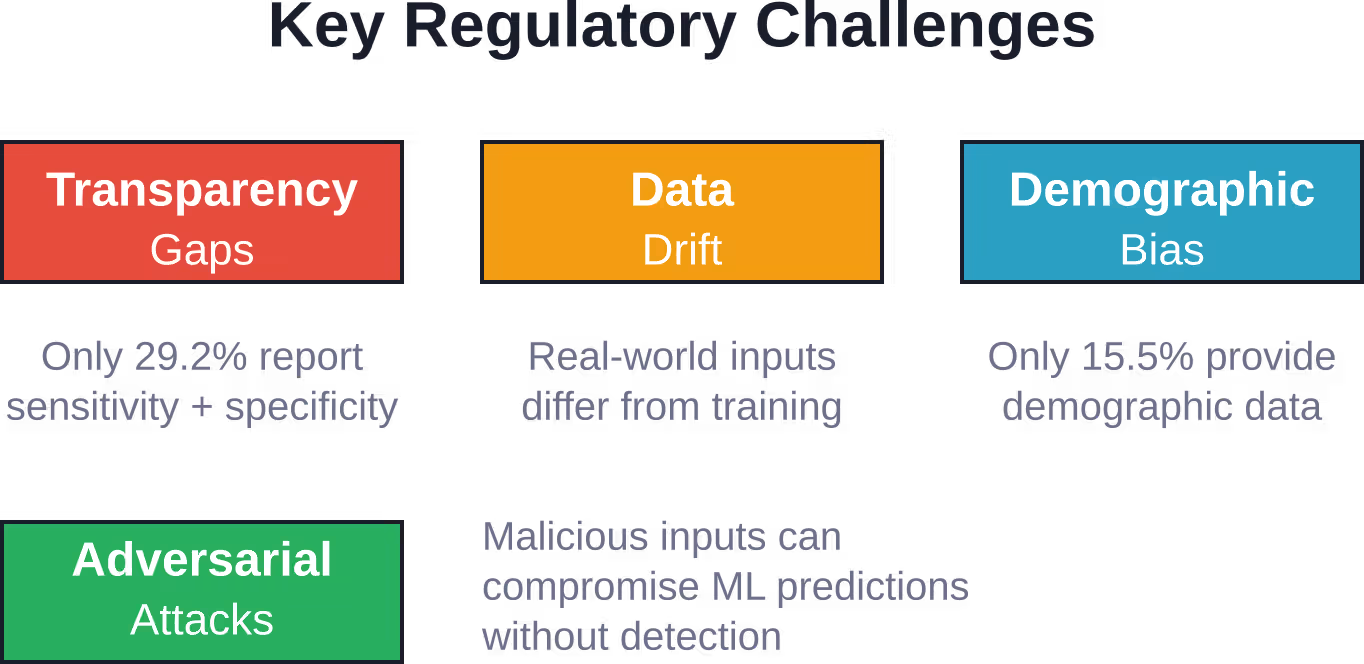
Clinical Validation and Evidence Requirements
Clinical validation demonstrates that an ML medical device performs safely and effectively in its intended use environment. Laboratory performance metrics alone don’t capture real-world clinical utility. Validation requirements vary based on device risk classification, intended use, and regulatory pathway. Higher-risk devices face more stringent evidence requirements.
Study Design Considerations
Strong clinical validation studies for ML devices share common characteristics:
- Prospective data collection when possible to avoid retrospective biases
- Multiple study sites representing diverse clinical settings
- Appropriate sample sizes with statistical power calculations
- Relevant clinical endpoints beyond technical performance metrics
- Comparison to current standard of care or clinical practice
- Analysis of algorithm performance across demographic subgroups
- Independent validation datasets separate from development data
- Blinded evaluation when feasible to reduce bias
External validation using data from institutions not involved in algorithm development provides stronger evidence of generalizability than internal validation alone.
Real-World Evidence
Randomized controlled trials represent the gold standard for clinical evidence, but real-world evidence increasingly supplements traditional trial data for ML devices. Real-world evidence comes from routine clinical practice, electronic health records, registries, and post-market surveillance. It demonstrates device performance in diverse, uncontrolled settings that better reflect actual use conditions. The challenge with real-world evidence is ensuring data quality and controlling for confounding factors. Observational data lacks the rigor of controlled trials, requiring careful analysis to draw valid conclusions.
Risk Management for ML Medical Devices
ISO 14971 provides the international standard for medical device risk management. Applying this framework to ML-enabled devices requires addressing unique risks associated with adaptive algorithms.
ML-Specific Risks
Beyond traditional device risks, ML systems face distinctive challenges:
- Data quality risks: Incorrect, biased, or unrepresentative training data leading to flawed algorithms
- Overfitting: Algorithms that perform well on training data but poorly on new data
- Data drift: Changing input data distributions degrading algorithm performance over time
- Algorithmic bias: Systematic errors affecting specific demographic groups or clinical presentations
- Adversarial attacks: Malicious inputs designed to cause incorrect predictions
- Integration failures: Problems arising from device interaction with clinical workflows or IT systems
- User misunderstanding: Clinicians misinterpreting algorithm outputs or applying devices inappropriately
Risk mitigation strategies must address these ML-specific concerns through careful design, validation, monitoring, and user training.
Benefit-Risk Assessment
FDA clearance decisions balance device benefits against potential risks. For ML medical devices, this assessment considers both technical performance and clinical utility. A highly accurate algorithm that disrupts clinical workflow or generates alert fatigue may provide less net benefit than a moderately accurate algorithm well-integrated into care processes. Benefit-risk profiles may differ across clinical settings, patient populations, and use cases. A device appropriate for specialist use in academic medical centers might pose unacceptable risks in resource-limited community settings.
The Future of ML in Medical Devices
Machine learning in medical devices continues evolving rapidly. Several trends will shape the field over the coming years.
Federated Learning
Federated learning enables algorithm training on distributed datasets without centralizing patient data. Hospitals collaborate on algorithm development while maintaining data privacy and security. This approach addresses data access barriers and enables training on larger, more diverse datasets than single institutions could provide. Regulatory frameworks are adapting to accommodate federated learning approaches.
Explainable AI
Black-box algorithms that provide predictions without explanation raise concerns for clinical adoption. Explainable AI methods aim to make algorithm reasoning transparent and interpretable. Techniques like attention mechanisms, saliency maps, and feature importance analysis help clinicians understand what factors drive algorithm predictions. This transparency builds trust and enables clinicians to identify potential errors.
Multimodal Learning
Future ML medical devices will increasingly integrate multiple data types — imaging, lab results, clinical notes, physiologic monitoring, genomics — to generate more comprehensive insights than single-modality algorithms. Multimodal learning presents both opportunities and challenges for validation, as the complexity of integrated systems exceeds simple imaging or monitoring applications.
Edge Computing
Running ML algorithms on edge devices rather than centralized servers reduces latency, improves privacy, and enables real-time decision support. Edge deployment requires optimization of algorithms for resource-constrained environments. Regulatory frameworks must adapt to edge deployment models where algorithm updates occur through distributed mechanisms rather than centralized control.
Practical Recommendations for Manufacturers
Organizations developing ML-enabled medical devices should prioritize several key practices: Start with clear clinical needs. The most successful ML devices solve real clinical problems with demonstrable impact on patient outcomes, workflow efficiency, or care quality. Invest in high-quality, representative training data. Data quality determines algorithm performance more than architectural sophistication. Diverse data prevents demographic biases. Implement rigorous validation processes. External validation on independent datasets provides stronger evidence than internal testing alone. Analyze performance across demographic subgroups. Document everything. Regulatory submissions require detailed documentation of data sources, training procedures, validation methods, and performance metrics. Establish documentation practices early. Plan for post-market monitoring. Real-world performance monitoring and continuous improvement cycles are essential for ML device success. Engage with regulators early. Pre-submission meetings with FDA or other regulatory bodies clarify expectations and reduce approval timeline risks. Prioritize transparency. Comprehensive disclosure of algorithm characteristics, limitations, and performance builds clinician trust and supports appropriate device use. Consider PCCPs. Predetermined Change Control Plans enable faster algorithm improvements based on post-market data. Develop PCCP strategies early in device development.
Frequently Asked Questions
What percentage of FDA-approved ML medical devices use the 510(k) pathway?
According to FDA data, 94.6% of ML-enabled Class II devices cleared in 2024 used the 510(k) premarket notification pathway. Only 5.4% required the De Novo classification pathway for novel devices without suitable predicates. The 510(k) pathway allows manufacturers to demonstrate substantial equivalence to existing predicate devices, streamlining approval for devices similar to already-marketed ML products.
How long does FDA review take for ML-enabled medical devices?
The median FDA review time for ML-enabled devices in 2024 was 162 days overall. Breaking this down by pathway: 510(k) devices had a median review time of 151 days, while De Novo devices required substantially longer at 372 days median. Review times vary based on device complexity, novelty, risk classification, and the completeness of initial submissions.
What are Predetermined Change Control Plans (PCCPs) for ML devices?
PCCPs allow manufacturers to implement specific, pre-authorized modifications to ML algorithms without submitting new regulatory applications for each change. This addresses a key challenge with adaptive ML systems that improve through retraining or algorithmic refinements. In 2024, 16.7% of ML-enabled devices included PCCPs in their clearance documentation. Manufacturers specify the types of modifications planned, acceptance criteria for changes, and monitoring processes in their PCCPs.
Which medical specialty has the most ML-enabled devices approved?
Radiology dominates ML medical device applications, accounting for 74.4% of FDA-cleared ML devices in 2024. Medical imaging generates enormous datasets ideal for machine learning analysis. Cardiovascular applications represented 6.5% of 2024 approvals, followed by neurology at 6.0%. The concentration in radiology reflects both the data-intensive nature of imaging and the relatively straightforward validation of image analysis algorithms.
What are the Good Machine Learning Practice (GMLP) principles?
GMLP principles are 10 guiding principles jointly identified in 2021 by Health Canada, the FDA, and the UK’s MHRA to support development of safe, effective, and high-quality ML medical devices. These principles address the unique considerations of ML’s complexity and data-driven development. They inform best practices across the device lifecycle, from design through post-market surveillance, and serve as a foundation for international regulatory harmonization.
How common is transparency reporting for ML device performance?
Transparency reporting for ML medical devices shows significant gaps. In 2024, only 29.2% of cleared devices reported both sensitivity and specificity. Only 15.5% provided demographic data about training or validation populations. These gaps complicate clinical assessment of device capabilities and appropriate use cases. Regulators and the research community increasingly emphasize the importance of comprehensive transparency to support safe and effective device deployment.
What is data drift and why does it matter for ML medical devices?
Data drift occurs when the statistical properties of input data change over time, potentially degrading ML algorithm performance. Medical imaging protocols evolve, patient populations shift, disease presentations vary across settings, and equipment characteristics differ. An algorithm trained on one data distribution may perform poorly when real-world inputs drift from training data characteristics. Post-market monitoring must detect data drift through statistical analysis, and manufacturers may need to retrain algorithms on updated data to maintain performance.
Conclusion
Machine learning in medical devices represents one of healthcare’s most promising technological frontiers. The FDA authorized 168 ML-enabled devices in 2024 alone, adding to hundreds of existing AI-powered diagnostic and therapeutic tools already in clinical use. But promise brings responsibility. These adaptive algorithms require rigorous development practices, comprehensive validation, transparency in performance reporting, and ongoing post-market monitoring to ensure patient safety and clinical effectiveness. The regulatory landscape continues maturing, with frameworks like Good Machine Learning Practice principles, Predetermined Change Control Plans, and Total Product Lifecycle guidance providing manufacturers with clearer pathways to market approval while maintaining appropriate oversight. Transparency gaps persist, particularly in performance reporting across demographic subgroups and disclosure of training data characteristics. The field must address these shortcomings to build clinician trust and ensure equitable device performance across diverse patient populations. For manufacturers, success requires more than algorithmic sophistication. High-quality representative data, rigorous validation, comprehensive documentation, and commitment to continuous improvement separate devices that meaningfully advance patient care from those that struggle with real-world deployment. The next generation of ML medical devices will likely incorporate federated learning, explainable AI, multimodal data integration, and edge computing — pushing regulatory frameworks to adapt once again to technological advancement. For healthcare providers, understanding ML device capabilities, limitations, and appropriate use cases becomes essential. These tools augment rather than replace clinical judgment, and effective deployment requires thoughtful integration into clinical workflows. The transformation of healthcare through machine learning is underway. Success depends on collaboration among manufacturers, regulators, clinicians, and patients to ensure these powerful technologies deliver on their potential while maintaining the safety and effectiveness that medical practice demands. Ready to develop your ML-enabled medical device? Start by reviewing FDA guidance documents, assembling high-quality diverse training data, and engaging with regulatory experts early in your development process.