
Korte samenvatting: Machine learning zorgt voor een revolutie in hernieuwbare energie door de voorspelling van de energieproductie te optimaliseren, de uitvaltijd van apparatuur te verminderen dankzij voorspellend onderhoud en slimmer netwerkbeheer mogelijk te maken. Van het verbeteren van voorspellingen voor zonne- en windenergie tot het versnellen van batterijonderzoek en het balanceren van complexe microgrids: ML-algoritmen helpen bij de integratie van intermitterende hernieuwbare energiebronnen in betrouwbare en kosteneffectieve energiesystemen.
Hernieuwbare energiebronnen staan voor een fundamentele uitdaging: de zon schijnt niet altijd en de wind waait niet altijd. Decennialang hebben deze onvoorspelbare bronnen netbeheerders nerveus gemaakt. Traditionele energiecentrales konden op commando op- of afschakelen. Zonnepanelen en windturbines? Dat is een ander verhaal.
Dat is waar machine learning om de hoek komt kijken. Door enorme hoeveelheden weergegevens, historische opwekkingspatronen en realtime netomstandigheden te analyseren, maken ML-algoritmen systemen voor hernieuwbare energie slimmer, betrouwbaarder en economisch haalbaar op grote schaal.
Volgens het Internationale Energieagentschap kunnen energiebesparende maatregelen – waarvan vele gebaseerd zijn op machine learning-optimalisatie – verantwoordelijk zijn voor meer dan 401 TP3T van de broeikasgasemissiereducties die nodig zijn om de doelstellingen van het Akkoord van Parijs te halen. De belangen zijn groot en de technologie levert nu al resultaten op in diverse sectoren van de hernieuwbare energie.
Waarom machine learning belangrijk is voor systemen voor hernieuwbare energie
Elektriciteitsnetten zijn ontworpen voor voorspelbare, gecentraliseerde energieopwekking door kolen-, gas- en kerncentrales. Hernieuwbare energiebronnen gooien dat model volledig om. De zonne-energieproductie varieert van minuut tot minuut, afhankelijk van de passerende wolken. Windenergie kent pieken en dalen met de weersfronten. Opslagsystemen moeten op de optimale momenten laden en ontladen om hun waarde te maximaliseren.
Machine learning blinkt uit in het vinden van patronen in complexe, niet-lineaire data – precies wat hernieuwbare energiesystemen produceren. Traditionele statistische modellen hebben moeite met de hoge dimensionaliteit en snelle variabiliteit. ML-algoritmen, met name deep learning-architecturen, kunnen satellietbeelden, numerieke weersvoorspellingen, historische gegevens over energieopwekking en metingen van sensoren in het elektriciteitsnet verwerken om nauwkeurige voorspellingen en operationele beslissingen te genereren.
Naar verwachting zal elektriciteit in 2050 521 TP3T van al het energieverbruik wereldwijd uitmaken. Digitale oplossingen zijn niet langer optioneel, maar essentieel om de energievoorziening betrouwbaar en betaalbaar te houden naarmate het aandeel hernieuwbare energiebronnen toeneemt.

Verbeter de voorspellingen voor hernieuwbare energie met superieure AI.
Hernieuwbare energiebronnen genereren continu gegevens over productie, weer, infrastructuur en bedrijfsvoering. AI Superieur Ze kunnen teams ondersteunen die werken aan machine learning-projecten met betrekking tot voorspellingen, monitoring en optimalisatie van systemen voor hernieuwbare energie. Hun expertise omvat AI-consultancy, datawetenschap, machine learning-engineering, ontwikkeling van proof-of-concepts en implementatie van AI-software.
AI Superior kan projecten op het gebied van hernieuwbare energie ondersteunen door:
- Analyse van operationele en milieugegevens
- Ontwikkeling van prognose- en voorspellingsmodellen
- Het bouwen van AI-workflows voor monitoringsystemen
- Anomalieën in de productie-infrastructuur opsporen
- Het evalueren van de betrouwbaarheid en schaalbaarheid van het model.
- Ondersteuning van integratie in rapportage- en analyseplatformen
Praat met AI Superior over de analytische doelstellingen en de technische opzet.
Voorspellingen voor zonne- en windenergie
Het voorspellen van de hoeveelheid stroom die een zonne-energiepark of windmolenpark in het komende uur, de komende dag of de komende week zal opwekken, is cruciaal voor de werking van het elektriciteitsnet. Energiebedrijven moeten vraag en aanbod voortdurend in evenwicht houden. Te weinig opwekking leidt tot stroomuitval. Te veel opwekking kan het net destabiliseren.
Machine learning-modellen presteren nu beter dan traditionele voorspellingsmethoden voor de opwekking van hernieuwbare energie. Deep learning-benaderingen – met name terugkerende neurale netwerken zoals LSTM en GRU – leggen temporele afhankelijkheden in weerpatronen vast die conventionele modellen over het hoofd zien.
Het Solar Energy Technologies Office van het Amerikaanse ministerie van Energie organiseerde in oktober-november 2023 een speciale workshop over toepassingen van kunstmatige intelligentie en machinaal leren in de zonne-energiesector. Onderzoekers en experts uit de industrie kwamen hier samen om voorspellingstechnieken te verbeteren.
Praktische toepassingen tonen de impact aan. Door machine learning verbeterde voorspellingen verminderen voorspellingsfouten, wat direct leidt tot lagere balanceringskosten en minder behoefte aan reserve-energie op basis van fossiele brandstoffen. Wanneer netbeheerders kunnen vertrouwen op hun voorspellingen voor hernieuwbare energie, kunnen ze conventionele centrales efficiënter inplannen en de totale systeemkosten verlagen.
Netbeheer en stabiliteitsbeoordeling
Naarmate het aandeel hernieuwbare energie toeneemt, wordt de stabiliteit van het elektriciteitsnet complexer. Intermitterende energieopwekking introduceert frequentieafwijkingen, spanningsschommelingen en harmonische vervorming. Traditionele beoordelingsmethoden stuiten op rekenkundige knelpunten bij het analyseren van deze snel veranderende omstandigheden.
Recent onderzoek toont aan dat machine learning-modellen de stabiliteit van het elektriciteitsnet in realtime kunnen beoordelen. In één onderzoek, waarbij gebruik werd gemaakt van een benchmarkdataset met 2000 samples en 15 kenmerken, werden tien classificatiemodellen vergeleken, variërend van traditionele machine learning- tot deep learning-architecturen.
Gradient boosting behaalde een nauwkeurigheid van 84,5% met een ROC AUC van 0,904, waarmee het op deze kleinschalige tabulaire dataset beter presteerde dan deep learning-architecturen. De belangrijkste conclusie? Traditionele methoden blijven concurrerend voor realtime rasteranalyse wanneer de trainingsdata beperkt zijn. Deep learning kan superieure prestaties laten zien met aanzienlijk grotere trainingssets van meer dan 10.000 samples.
Interpretatievermogen is cruciaal in energiesystemen. Netbeheerders moeten begrijpen waarom een model instabiliteit signaleert. Een vierstappen LIME-interpretatiekader identificeert FreqDeviation en HarmonicTHD als de meest kritische factoren, met bijdragen van meer dan 10. Frequentieafwijking weerspiegelt een onbalans in het actieve vermogen – een fundamenteel natuurkundig principe. Harmonische vervorming beïnvloedt de demping van het systeem.
Het probleem is echter dat ML-modellen valse correlaties kunnen identificeren. In één voorbeeld bleek dat lage harmonischen paradoxaal genoeg instabiliteit bevorderden. Daarom is validatie door experts essentieel voordat ze in veiligheidskritische systemen worden ingezet.
Dynamische lijnclassificatietechnologie
Hoogspanningsleidingen werken van oudsher met statische capaciteitslimieten. Maar die limieten zijn conservatief en gebaseerd op de meest ongunstige weersomstandigheden. In werkelijkheid varieert de capaciteit van een hoogspanningsleiding met de windsnelheid en de omgevingstemperatuur.
Dynamische lijnclassificatie maakt gebruik van machine learning om realtime weersomstandigheden te monitoren en de werkelijke lijncapaciteit te berekenen. De resultaten zijn opvallend. Sinds 2010 heeft onderzoek van het Idaho National Laboratory van het Amerikaanse Ministerie van Energie aangetoond dat dynamische lijnclassificatie de energieoverdrachtscapaciteit met 10 tot 401 TP3T kan verhogen.
PPL Electric Utilities in Pennsylvania heeft dankzij de implementatie van DLR een project ter waarde van 1 TP4 T12 miljoen vermeden om nieuwe geleiders aan te leggen. Ze hebben ook de congestiekosten op 31 mijl aan transmissielijnen met 1 TP4 T64 miljoen verlaagd. Oncor Electric in Texas heeft de lijncapaciteit tijdens de operationele fase met 6 tot 141 TP3 T verhoogd. Het pilotprogramma van Duquesne Light in Pennsylvania behaalde een gemiddelde capaciteitsverhoging van 251 TP3 T.
In Maleisië verhoogt dynamische lijnclassificatie de transmissiecapaciteit met 10–501 TP3T door middel van realtime weersmonitoring. Regionale energiepools in West-Afrika stellen 15 landen in staat om grensoverschrijdend hernieuwbare energiebronnen te delen met behulp van vergelijkbare optimalisatietechnieken.
| Nutsvoorziening | Locatie | Capaciteitsvergroting | Kostenbesparingen |
|---|---|---|---|
| PPL Electric Utilities | Pennsylvania | Variabele | Substantiële (DLR-implementatie) |
| Oncor Electric | Texas | 6–14% | Niet bekendgemaakt |
| Duquesne Light | Pennsylvania | 25% | Niet bekendgemaakt |
| Maleisië-raster | Maleisië | 10–50% | Niet bekendgemaakt |
Batterijprestaties en optimalisatie van energieopslag
Energieopslag is de spil van systemen voor hernieuwbare energie. Batterijen egaliseren de schommelingen in de energieproductie, leveren diensten aan het elektriciteitsnet en maken toepassingen buiten het net mogelijk. Maar de prestaties van batterijen zijn notoir moeilijk te voorspellen en te optimaliseren.
Het National Renewable Energy Laboratory (NREL) gebruikt machine learning om de prestaties, levensduur en veiligheid van batterijen te karakteriseren. Samen met NREL's uitgebreide multischalige modellering versnelt machine learning het begrip van nieuwe materialen, chemische processen en celontwerpen.
Eerlijk gezegd: het voorspellen van batterijveroudering is lastig. Degradatiemechanismen zijn complex en omvatten elektrochemische reacties, mechanische spanning en thermische effecten. Traditionele, op natuurkunde gebaseerde modellen vereisen uitgebreide kalibratie en veel rekenkracht.
Machine learning biedt een andere aanpak. De ML-modellen van NREL voor batterijveroudering maken gebruik van gereduceerde-ordemodellen die traditionele methoden verbeteren door automatisch relevante fysische vergelijkingen te identificeren met behulp van ML-algoritmen die worden toegepast op testgegevens van batterijen. De algoritmen worden gebruikt om degradatiemechanismen te diagnosticeren, de nauwkeurigheid van levensduurvoorspellingen te verhogen en het experimentontwerp te ondersteunen voor het Behind-the-Meter Storage Consortium en diverse batterijonderzoeksprogramma's. Door vroegtijdige waarschuwingssignalen van degradatie te identificeren, maakt ML proactief onderhoud en een veiligere werking mogelijk.
Microgrid-orkestratie en gedistribueerde energiebronnen
Microgrids zijn kleine elektriciteitsnetten die kunnen functioneren zonder aangesloten te zijn op het hoofdnet. Ze zijn essentieel voor de weerbaarheid van energiebronnen, met name in rampgevoelige gebieden of afgelegen gemeenschappen. Het coördineren van meerdere microgrids met zonne-energie en energieopslag is echter complex.
In 2020 kende het Amerikaanse ministerie van Energie, via het Solar Energy Technologies Office, bijna 1,4 miljard dollar toe aan het Oak Ridge National Laboratory voor de ontwikkeling van een geoptimaliseerde oplossing voor het beheer van de elektriciteitsdistributie binnen netwerken van op zonne-energie werkende microgrids.
Het team ontwikkelde een microgrid-orkestrator die gebruikmaakt van machine learning om de opwekking, opslag en vraag naar energie over meerdere verbonden microgrids in evenwicht te brengen. Wanneer een microgrid een overschot aan energie produceert, stuurt het systeem stroom door naar naburige microgrids met een tekort. Bij dreigende stormen laadt de orkestrator de batterijen voor en past de prioriteiten voor de belasting aan.
De veerkracht van gemeenschappen verbetert aanzienlijk. Tijdens stroomuitval houden microgrids, die met elkaar verbonden zijn, essentiële diensten – zoals ziekenhuizen, waterzuivering en noodopvang – veel langer in stand dan geïsoleerde systemen. Machine learning optimaliseert het delen van beperkte middelen op basis van realtime omstandigheden en voorspelde behoeften.
Voorspellend onderhoud voor wind- en zonne-energie-installaties
Windturbines en zonne-installaties werken in zware omstandigheden. Onderdelen kunnen defect raken. De prestaties nemen af. Traditionele onderhoudsschema's zijn ofwel te frequent – wat leidt tot onnodige kosten – ofwel te infrequent, met onverwachte storingen en kostbare stilstand tot gevolg.
Machine learning maakt voorspellend onderhoud mogelijk. Sensoren op windturbines monitoren trillingen, temperatuur, akoestische signalen en vermogen. ML-algoritmen leren normale werkingspatronen en signaleren afwijkingen die voorafgaan aan componentuitval.
De voordelen zijn aanzienlijk. Voorspellend onderhoud vermindert stilstandtijd, verlengt de levensduur van apparatuur en verlaagt de operationele kosten. Technici kunnen reparaties inplannen tijdens geplande onderhoudsbeurten in plaats van te moeten reageren op noodsituaties. Onderdelen kunnen van tevoren worden besteld, waardoor de voorraadkosten dalen.
Bij zonne-installaties detecteren ML-modellen panelen met ondermaatse prestaties door productiegegevens op stringniveau te analyseren. Vervuiling, schaduw en degradatiepatronen worden zichtbaar. Reinigings- en vervangingsschema's kunnen worden geoptimaliseerd op basis van de werkelijke prestaties in plaats van vaste intervallen.
Optimalisatie van de biogasproductie
Anaërobe vergisting zet organisch afval om in biogas, een hernieuwbare brandstof. Dit biologische proces is echter gevoelig voor de samenstelling van de grondstof, de temperatuur, de pH-waarde en de verblijftijd. Het optimaliseren van de biogasproductie berustte van oudsher op experimenten met vallen en opstaan.
Machine learning-modellen voorspellen nu de biogasproductie op basis van invoerparameters. Studies naar de optimalisatie van biogasproductie hebben een hoge voorspellingsnauwkeurigheid aangetoond met specifieke grondstofmengsels, met gerapporteerde R²-waarden van meer dan 0,99 onder gecontroleerde omstandigheden. Feature-engineered meerlaagse perceptronmodellen hebben gemiddelde absolute procentuele fouten laten zien in het bereik van 10-15% voor het voorspellen van biogasproductie.
ML-softsensorsurrogaten zijn toegepast op SCADA-biogasproductiegegevens met een frequentie van één minuut. De gerapporteerde aangepaste R²-waarden tonen een significant voorspellend vermogen aan, waardoor realtime procesoptimalisatie mogelijk is. Operators kunnen de verhoudingen van de grondstoffen, de temperatuur en de verblijftijd aanpassen om de biogasopbrengst te maximaliseren en tegelijkertijd de processtabiliteit te behouden.
| Sollicitatie | ML-aanpak | Prestatie-indicator |
|---|---|---|
| Optimalisatie van de biogasgrondstof | Regressiemodel | R² hoger dan 0,99 |
| Productieprognose | Feature-engineered MLP | MAPE 10-15% |
| Realtime optimalisatie | SCADA softsensor | Aanzienlijk voorspellend vermogen |
Natuurbescherming en milieumonitoring
Hernieuwbare energieprojecten moeten samengaan met de natuur. Windturbines vormen een bijzonder risico voor roofvogels zoals steenarenden en zeearenden, die op dezelfde hoogte als de turbinebladen meeliften op de opwaartse luchtstromen.
NREL heeft een simulator ontwikkeld die gebruikmaakt van machine learning om de bewegingen van roofvogels te modelleren en interacties met windturbines te voorspellen. Met deze tool kunnen projectontwikkelaars de risico's op botsingen vóór de bouw inschatten en de plaatsing van turbines optimaliseren om de impact op wilde dieren te minimaliseren.
Machine learning monitort ook de milieuomstandigheden rondom installaties voor hernieuwbare energie. Computervisie-algoritmen analyseren camerabeelden om beschermde diersoorten te detecteren. Akoestische machine learning-modellen identificeren vleermuisgeluiden in de buurt van windmolenparken, wat leidt tot tijdelijke uitschakelingen tijdens perioden met hoge activiteit.
Uitdagingen en beperkingen van machine learning in hernieuwbare energie
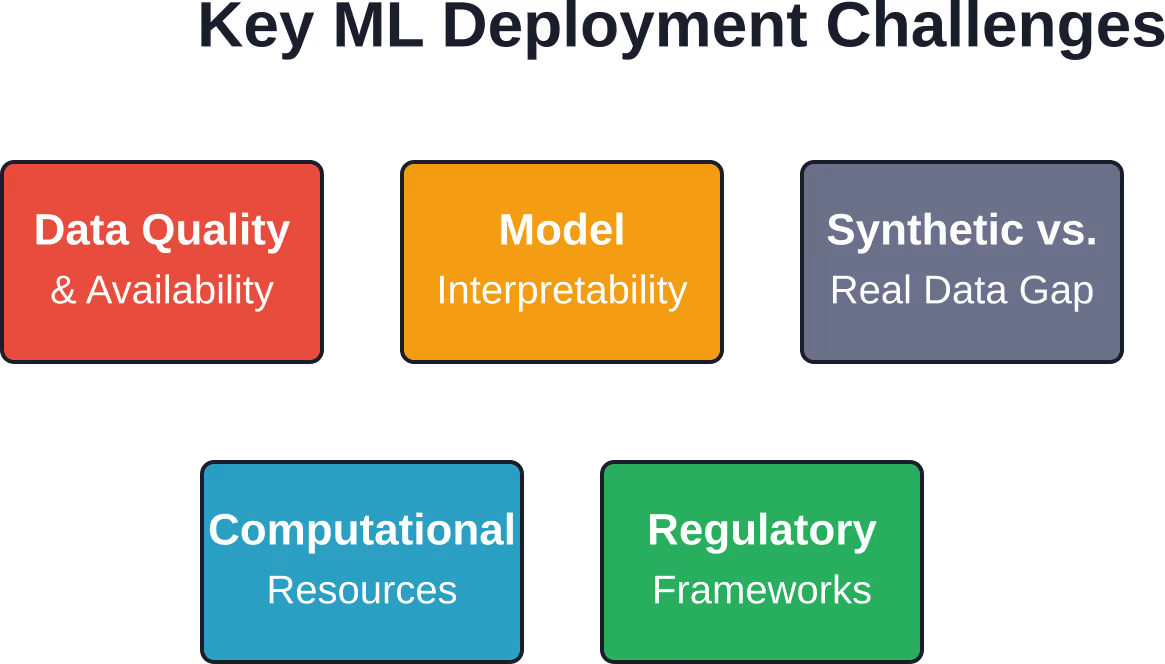
Machine learning is geen wondermiddel. Er blijven verschillende uitdagingen bestaan:
- Gegevenskwaliteit en beschikbaarheid: Machine learning-modellen presteren slechts zo goed als hun trainingsdata. Installaties voor hernieuwbare energie in nieuwe regio's beschikken mogelijk niet over historische data. Sensorstoringen en communicatieproblemen leiden tot ontbrekende data, wat de prestaties van het model negatief beïnvloedt.
- Interpreteerbaarheid van het model: Deep learning-modellen zijn vaak black boxes. Netbeheerders moeten begrijpen waarom een model specifieke voorspellingen doet, vooral bij veiligheidskritische beslissingen. Frameworks voor verklaarbare AI, zoals LIME, helpen hierbij, maar interpreteerbaarheid blijft een actief onderzoeksgebied.
- Synthetische versus reële data: Veel ML-onderzoeken maken gebruik van synthetische datasets die mogelijk niet alle complexiteiten uit de praktijk weergeven, zoals zeldzame storingen, cascadefouten en stochastische weerpatronen. Onderzoek wijst uit dat modellen die getraind zijn op synthetische data prestatievermindering kunnen ondervinden bij gebruik van echte SCADA- en PMU-data, waarbij sommige studies variaties rapporteren in de orde van 5 tot 151 TP3T zonder domeinadaptatie.
- Computervereisten: Sommige machine learning-methoden, met name deep learning, vereisen aanzienlijke rekenkracht voor training en inferentie. Edge computing en modelcompressietechnieken bieden hierbij uitkomst, maar resourcebeperkingen blijven relevant voor installaties op afstand.
- Tekortkomingen op het gebied van regelgeving en bestuur: Energiesystemen zijn streng gereguleerd. De integratie van machine learning-gestuurde controlesystemen vereist een actualisering van normen, aansprakelijkheidskaders en goedkeuringsprocessen. Veel toezichthouders beschikken niet over de interne expertise op het gebied van machine learning, wat de adoptie vertraagt.
Toekomstige richtingen en opkomende toepassingen
De wisselwerking tussen machine learning en hernieuwbare energie blijft zich ontwikkelen. Verschillende opkomende trends zijn bijzonder veelbelovend:
- Federated learning maakt het mogelijk dat meerdere installaties voor hernieuwbare energiebronnen gezamenlijk machine learning-modellen trainen zonder ruwe data te delen. Windparken die door verschillende bedrijven worden beheerd, kunnen gezamenlijk voorspellingsmodellen verbeteren en tegelijkertijd bedrijfseigen informatie behouden.
- Edge computing verplaatst machine learning-inferentie van gecentraliseerde servers naar lokale controllers bij installaties voor hernieuwbare energie. Dit vermindert de latentie, verbetert de weerbaarheid tegen communicatiestoringen en maakt een snellere reactie op veranderende omstandigheden mogelijk.
- Hybride natuurkunde-ML-modellen combineren fundamentele natuurkunde met datagestuurd leren. Deze modellen respecteren natuurkundige beperkingen, zoals energiebehoud en thermodynamische wetten, terwijl ze tegelijkertijd gebruikmaken van de patroonherkenningsmogelijkheden van machine learning. Het resultaat is een betere generalisatie en betrouwbaardere voorspellingen.
- Multiobjectieve optimalisatie brengt tegenstrijdige doelen in evenwicht: het maximaliseren van het gebruik van hernieuwbare energie, het minimaliseren van kosten, het verminderen van emissies, het waarborgen van de stabiliteit van het elektriciteitsnet en het beschermen van de natuur. Evolutionaire algoritmen en reinforcement learning pakken deze complexe afwegingen aan.
- Participatief bestuur betrekt gemeenschappen bij door machine learning gestuurde besluitvorming over energiesystemen. Naarmate AI-systemen meer invloed krijgen op de stroomdistributie en -prijzen, worden transparantie en democratisch toezicht essentieel voor maatschappelijke acceptatie en rechtvaardige resultaten.
Veelgestelde vragen
Hoe verbetert machine learning de voorspelling van zonne-energie?
Machine learning-modellen analyseren historische weergegevens, satellietbeelden en realtime omstandigheden om de zonne-energieproductie nauwkeuriger te voorspellen dan traditionele statistische methoden. Deep learning-architecturen zoals LSTM-netwerken leggen temporele patronen en complexe verbanden tussen weervariabelen vast, waardoor voorspellingsfouten worden verminderd in vergelijking met conventionele benaderingen.
Wat is het verschil tussen AI en machine learning in toepassingen voor hernieuwbare energie?
Kunstmatige intelligentie (AI) is het bredere concept van machines die taken uitvoeren die normaal gesproken menselijke intelligentie vereisen. Machine learning is een specifieke subcategorie van AI waarbij systemen leren van data zonder expliciete programmering. In de sector van hernieuwbare energie zijn ML-algoritmen de belangrijkste AI-techniek die wordt gebruikt: ze analyseren patronen in productiegegevens, weersvoorspellingen en netcondities om de prestaties te optimaliseren.
Kan machinaal leren de kosten van hernieuwbare energie verlagen?
Ja, aanzienlijk. Machine learning-gestuurd voorspellend onderhoud vermindert onverwachte uitval en verlengt de levensduur van apparatuur. Betere voorspellingen verlagen de balanceringskosten en verminderen de afhankelijkheid van dure noodstroomopwekking. Dynamische lijncapaciteitstechnologie verhoogt de transmissiecapaciteit zonder kostbare infrastructuurupgrades. PPL Electric Utilities implementeerde dynamische lijncapaciteitstechnologie en rapporteerde aanzienlijke kostenbesparingen door transmissieoptimalisatie. Er zijn operationele kostenbesparingen gerapporteerd door de implementatie van machine learning in diverse toepassingen voor hernieuwbare energie, waarbij de specifieke verbeteringen per implementatie verschillen.
Hoe nauwkeurig zijn ML-modellen voor het voorspellen van de batterijduur?
ML-modellen voor batterijveroudering maken gebruik van gereduceerde-ordemodellen die traditionele benaderingen verbeteren door automatisch relevante fysische vergelijkingen te identificeren met behulp van ML-algoritmen die worden toegepast op testgegevens van batterijen. De nauwkeurigheid verbetert naarmate er meer diverse verouderingsgegevens beschikbaar komen, en ML-modellen identificeren degradatiepatronen die traditionele benaderingen missen.
Wat zijn de grootste uitdagingen bij het gebruik van machine learning in elektriciteitsnetten?
Datakwaliteit staat bovenaan de lijst: ontbrekende of beschadigde sensorgegevens verminderen de prestaties van het model. Interpretatie is belangrijk voor veiligheidskritische beslissingen; netbeheerders moeten begrijpen waarom ML-modellen specifieke aanbevelingen doen. Regelgeving loopt nog achter op de mogelijkheden van ML, wat de adoptie vertraagt. Onderzoek wijst uit dat modellen die getraind zijn op synthetische data, zonder domeinaanpassing, prestatievermindering kunnen ondervinden op echte SCADA-systemen.
Hoe helpt machine learning bij de integratie van wind- en zonne-energie in bestaande elektriciteitsnetten?
Machine learning-algoritmen brengen vraag en aanbod in realtime in evenwicht, rekening houdend met schommelingen in de opwekking van hernieuwbare energie. Ze voorspellen wanneer de wind- en zonne-energieproductie zal veranderen, waardoor netbeheerders proactief kunnen inspelen op de inzet van conventionele energieopwekking of opslag. Stabiliteitsbeoordelingsmodellen detecteren frequentieafwijkingen en spanningsproblemen voordat deze leiden tot stroomuitval. Dynamische lijncapaciteit vergroot de transmissiecapaciteit om hernieuwbare energie van opwekkingslocaties naar afnamecentra te transporteren.
Welke rol speelt machine learning bij de optimalisatie van de opslag van hernieuwbare energie?
Machine learning (ML) bepaalt optimale laad- en ontlaadschema's voor batterijen op basis van elektriciteitsprijzen, prognoses voor de opwekking van hernieuwbare energie en de behoeften van het elektriciteitsnet. Het voorspelt de degradatie van batterijen om de levensduur te verlengen en veiligheidsproblemen te voorkomen. Voor pompwaterkrachtcentrales en andere opslagsystemen optimaliseert ML de operationele parameters rekening houdend met efficiëntieverliezen, slijtage en marktomstandigheden. Realtime ML-optimalisatie van de opslag van hernieuwbare energie kan de operationele waarde verhogen in vergelijking met conventionele besturingsmethoden.
Conclusie: Machine learning als katalysator voor de energietransitie
Machine learning vervangt geen ingenieurs in de duurzame energiesector en netbeheerders, maar versterkt juist hun mogelijkheden. De technologie verwerkt de enorme hoeveelheid data – weerpatronen, sensorwaarden, marktsignalen en telemetriegegevens van apparatuur – sneller en grondiger dan mensen dat kunnen.
Van het verbeteren van voorspellingen die de balanceringskosten verlagen tot het verlengen van de levensduur van batterijen door slimmere laadalgoritmes: ML-toepassingen maken hernieuwbare energie betrouwbaarder en economisch concurrerender met fossiele brandstoffen. Alleen al dynamische lijncapaciteitsaanpassing verhoogt de transmissiecapaciteit met 10–401 TP3T zonder dat er nieuwe leidingen hoeven te worden aangelegd.
Maar er blijven uitdagingen bestaan. De kwaliteit van de gegevens, de interpreteerbaarheid van de modellen en de aanpassing aan de regelgeving vereisen voortdurende aandacht. De meest succesvolle implementaties combineren machine learning-mogelijkheden met domeinexpertise – energienetingenieurs die zowel de natuurkundige principes van het elektriciteitsnet als de beperkingen van algoritmen begrijpen.
Naarmate het aandeel hernieuwbare energiebronnen in veel regio's de 501 ton elektriciteitsproductie nadert, overstijgt de complexiteit het menselijk denkvermogen voor realtime optimalisatie. Machine learning wordt essentiële infrastructuur, geen optionele verbetering. De energietransitie is afhankelijk van digitale innovatie die hand in hand gaat met schone energieopwekkingstechnologie.
Wil je meer weten over de implementatie van machine learning in systemen voor hernieuwbare energie? Verken academisch onderzoek van instellingen zoals NREL, volg de ontwikkelingen op het gebied van regelgeving van het Amerikaanse Ministerie van Energie en kom in contact met professionals die deze oplossingen in de praktijk toepassen in elektriciteitsnetten.
 Dutch
Dutch  English
  German
  Arabic
  French
  Spanish