Korte samenvatting: Machine learning in bedrijfsanalyse stelt organisaties in staat om enorme datasets te verwerken, verborgen patronen te ontdekken en op grote schaal voorspellende beslissingen te nemen. Door data-analyse te automatiseren, leveren ML-algoritmen snellere en nauwkeurigere inzichten op die traditionele analysemethoden niet kunnen evenaren. Bedrijven die ML in hun analyses inzetten, behalen concurrentievoordelen door verbeterde prognoses, een beter klantinzicht en een hogere operationele efficiëntie.
De zakenwereld genereert data in een ongekend tempo. Traditionele analysemethoden hebben moeite om het volume, de snelheid en de complexiteit van de informatie die dagelijks organisaties binnenstroomt bij te houden. Dat is waar machine learning alles verandert.
Machine learning-algoritmen analyseren niet alleen historische gegevens, ze leren er ook van. Ze herkennen patronen die menselijke analisten mogelijk over het hoofd zien, doen voorspellingen over toekomstige uitkomsten en verbeteren hun nauwkeurigheid voortdurend. Onderzoek van arXiv toont aan dat AI-gestuurde besluitvorming onmisbaar is geworden in de huidige, uiterst competitieve markt.
Maar het zit zo: machine learning is geen magie. Het is een verzameling technieken die, mits correct toegepast, ruwe data omzetten in strategische bedrijfsmiddelen. Organisaties die begrijpen hoe ze machine learning in hun analyseprocessen moeten inzetten, behalen meetbare voordelen.
Wat machine learning bijdraagt aan bedrijfsanalyse
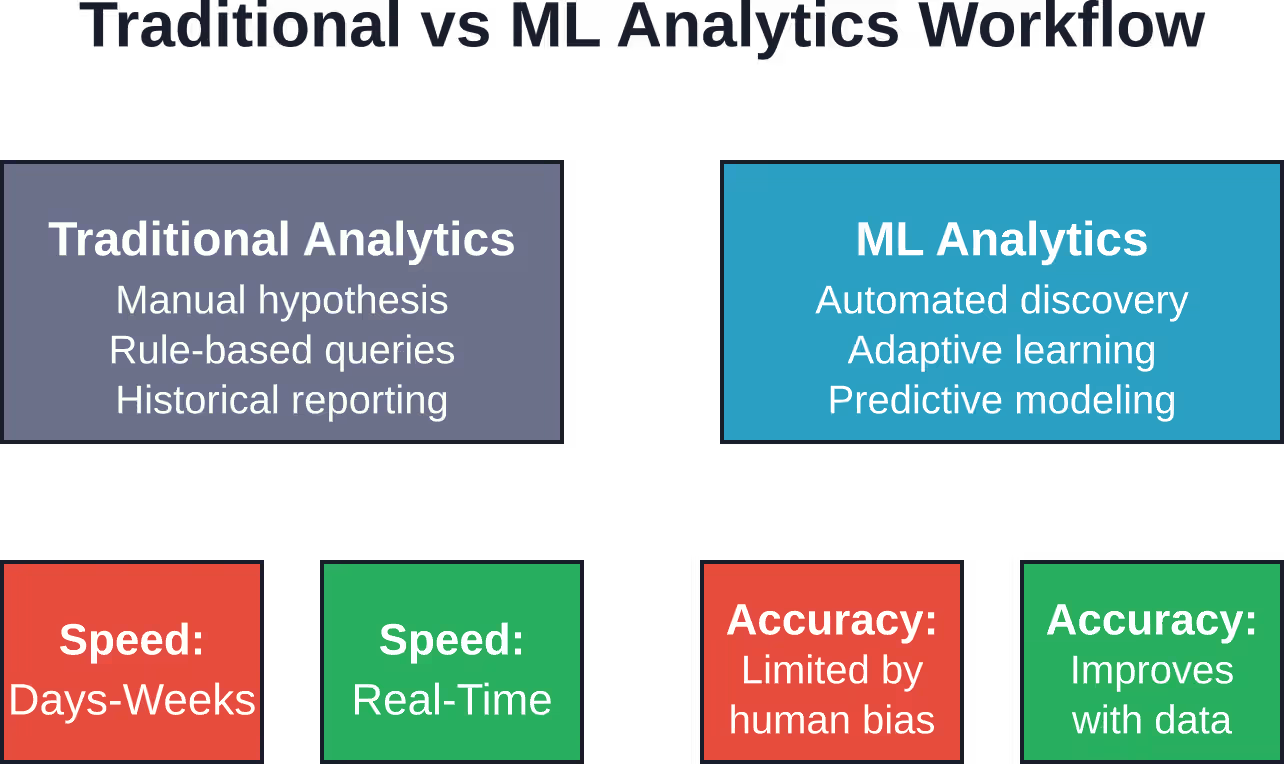
Machine learning verandert fundamenteel de manier waarop organisaties waarde uit data halen. Waar traditionele analyses vereisen dat analisten handmatig specificeren waarnaar ze moeten zoeken, ontdekken ML-algoritmen inzichten autonoom.
Het onderscheid is belangrijk. Traditionele methoden analyseren wat er is gebeurd. Machine learning voorspelt wat er gaat gebeuren en schrijft voor wat er vervolgens moet gebeuren.
Kernfunctionaliteiten die machine learning toevoegt
ML-algoritmen verwerken data op een schaal en met een snelheid die voor handmatige analyse onmogelijk is. Ze verwerken miljoenen datapunten over tientallen variabelen tegelijk en detecteren subtiele correlaties die traditionele statistische methoden over het hoofd zien.
Patroonherkenning is een andere cruciale vaardigheid. Machine learning blinkt uit in het identificeren van complexe, niet-lineaire verbanden in data. Een e-commercebedrijf zou bijvoorbeeld kunnen ontdekken dat het moment van aankoop door klanten samenhangt met weerpatronen, sentiment op sociale media en lokale gebeurtenissen – een verband dat te complex is voor op regels gebaseerde analyses.
Automatisering schaalt expertise. Eenmaal getraind, passen ML-modellen geavanceerde analysetechnieken consistent toe op alle data, waardoor geavanceerde analyses in feite gedemocratiseerd worden binnen een organisatie.

Ontwikkel slimmere zakelijke tools met superieure AI.
AI Superior Ze ontwikkelen AI- en machine learning-oplossingen voor voorspellende analyses, business intelligence (BI), big data-analyse, natuurlijke taalverwerking (NLP) en maatwerksoftware. Hun werk kan helpen om ruwe of verspreide data om te zetten in systemen die een duidelijkere analyse en betere besluitvorming mogelijk maken.
Voor bedrijfsanalyses kan dit ondersteuning bieden bij het bijhouden van prestaties, prognoses, analyse van klantgedrag, procesinzichten of dashboards die worden aangedreven door machine learning.
Heeft u behoefte aan AI gekoppeld aan bedrijfsanalyses?
AI Superior kan u helpen met:
- het creëren van machine learning-modellen
- tools voor het bouwen van analyses en BI
- het analyseren van operationele en klantgegevens
- AI-tools koppelen aan bestaande platforms
👉 Neem contact op met AI Superior om uw project te bespreken.
Soorten machine learning-technieken in analyses
Machine learning omvat verschillende, uiteenlopende benaderingen, elk geschikt voor verschillende analytische uitdagingen. Inzicht in welke techniek het beste past bij welk bedrijfsprobleem, bepaalt het succes.
Begeleid leren voor voorspellingen
Bij supervised learning worden modellen getraind op gelabelde historische data. Het algoritme leert de verbanden tussen inputkenmerken en bekende uitkomsten, en past die patronen vervolgens toe om uitkomsten voor nieuwe data te voorspellen.
Classificatieproblemen beantwoorden ja/nee-vragen: Zal deze klant afhaken? Is deze transactie frauduleus? Moeten we deze leningaanvraag goedkeuren? Regressieproblemen voorspellen continue waarden: Welke omzet zal dit product genereren? Hoeveel eenheden zullen er in het volgende kwartaal worden verkocht?
Begeleid leren domineert bedrijfsanalyse omdat de meeste organisaties beschikken over historische gegevens die als trainingsdata kunnen worden gebruikt. Verkoopvoorspellingen, klantsegmentatie en risicobeoordeling maken allemaal gebruik van begeleide technieken.
Onbegeleid leren voor ontdekking
Ongecontroleerd leren vindt structuur in ongelabelde data. Zonder vooraf gedefinieerde categorieën groeperen algoritmen vergelijkbare waarnemingen of reduceren ze de dimensionaliteit van de data om onderliggende patronen te onthullen.
Klantsegmentatie maakt vaak gebruik van ongesuperviseerde clustering. In plaats van klanten in vooraf bepaalde groepen te dwingen, ontdekken algoritmen natuurlijke segmenten op basis van gedrag, voorkeuren en kenmerken.
Anomaliedetectie is een andere krachtige toepassing. Door te leren hoe normale patronen eruitzien, signaleren onbegeleide modellen ongebruikelijke activiteiten – cruciaal voor fraudedetectie en kwaliteitscontrole.
Reinforcement Learning voor optimalisatie
Reinforcement learning traint algoritmen door middel van vallen en opstaan, waarbij acties die tot de gewenste resultaten leiden, worden beloond. Hoewel het minder gebruikelijk is in traditionele bedrijfsanalyses, wint het aan populariteit voor dynamische optimalisatieproblemen.
Prijsoptimalisatie, voorraadbeheer en resourceallocatie maken steeds vaker gebruik van reinforcement learning. Het algoritme experimenteert met verschillende strategieën, leert welke benaderingen de doelstellingen maximaliseren en past zich aan veranderende omstandigheden aan.
| ML-techniek | Belangrijkste gebruiksscenario's | Gegevensvereisten | Zakelijke toepassingen |
|---|---|---|---|
| Begeleid leren | Voorspelling, classificatie | Historische gegevens met labels | Verkoopprognoses, klantverloopvoorspellingen, risicoscores |
| Onbegeleid leren | Ontdekking, segmentatie | Niet-gelabelde gegevens | Klantclustering, anomaliedetectie, marktmandanalyse |
| Versterkend leren | Optimalisatie, Controle | Interactieomgeving | Dynamische prijsstelling, toewijzing van middelen, aanbevelingssystemen |
| Diep leren | Complexe patronen | Grote datasets | Beeldherkenning, natuurlijke taalverwerking, sentimentanalyse |
Praktische toepassingen transformeren het bedrijfsleven.
Machine learning is niet theoretisch, het verandert de manier waarop organisaties in alle sectoren opereren. Eerlijk gezegd: sommige toepassingen leveren direct rendement op, terwijl andere een investering op lange termijn vereisen.
E-commerce en klantanalyses
De wereldwijde online retailomzet bereikte in 2023 naar schatting $5,8 biljoen en overtrof in 2024 de $6,3 biljoen, met een stijgende trend richting 2026. Deze enorme schaal genereert gigantische hoeveelheden data die alleen met machine learning effectief geanalyseerd kunnen worden.
Aanbevelingssystemen genereren omzet voor grote platformen. Door browsegeschiedenis, aankoopgedrag en vergelijkbaar klantgedrag te analyseren, suggereren machine learning-algoritmes producten die klanten daadwerkelijk willen. Deze systemen zijn verantwoordelijk voor een aanzienlijk deel van de omzet van toonaangevende e-commercebedrijven.
Sentimentanalyse analyseert klantbeoordelingen, berichten op sociale media en interacties met de klantenservice om de merkperceptie in realtime te meten. Analyses tonen aan dat de inzet van machine learning-sentimentanalysesystemen correleert met aanzienlijke verbeteringen in klanttevredenheid en een snellere reactie op problemen.
Financiële dienstverlening en risicomanagement
Banken en financiële instellingen zetten machine learning in voor al hun activiteiten. Kredietscoremodellen bevatten nu honderden variabelen die verder gaan dan de traditionele kredietgeschiedenis, waardoor risico's nauwkeuriger worden ingeschat en krediet wordt verstrekt aan voorheen achtergestelde bevolkingsgroepen.
Fraudedetectiesystemen monitoren miljoenen transacties per seconde en signaleren verdachte activiteiten voordat er schade ontstaat. Machine learning identificeert subtiele patronen die op regels gebaseerde systemen over het hoofd zien – een kleine afwijking in de bestedingslocatie in combinatie met het tijdstip van de transactie die wijst op een accountcompromis.
Algoritmische handel maakt gebruik van machine learning om marktkansen te identificeren en transacties sneller uit te voeren dan menselijke handelaren. Portfolio-optimalisatiealgoritmen balanceren risico en rendement over duizenden effecten.
Operationele processen en toeleveringsketen
Vraagvoorspellingen bepalen de productieplanning, voorraadniveaus en logistieke planning. Machine learning-modellen integreren weergegevens, economische indicatoren, maatschappelijke trends en seizoenspatronen om de vraag nauwkeuriger te voorspellen dan traditionele tijdreeksmethoden.
Voorspellend onderhoud monitort sensorgegevens van apparatuur om storingen te voorspellen voordat ze zich voordoen. Door subtiele veranderingen in trillingen, temperatuur of prestatieparameters te detecteren, plannen algoritmes proactief onderhoud in, waardoor de stilstandtijd wordt verminderd en de levensduur van de apparatuur wordt verlengd.
Routeoptimalisatie maakt gebruik van machine learning om de logistiek van leveringen te plannen, rekening houdend met verkeerspatronen, weersomstandigheden, levertijden en voertuigcapaciteit. De rekenkundige complexiteit van het optimaliseren van routes voor duizenden leveringen maakt dit een natuurlijke toepassing voor machine learning.
Uitdagingen en oplossingen bij de implementatie
Het inzetten van machine learning in bedrijfsanalyses is geen kwestie van simpelweg aansluiten en gebruiken. Organisaties stuiten op concrete obstakels die bepalen of ML-initiatieven slagen of vastlopen.
Kwaliteit en beschikbaarheid van gegevens
Machine learning-algoritmen leren van data. Slechte datakwaliteit leidt tot slechte modellen – het principe 'garbage in, garbage out' blijft een waar gegeven.
Onderzoek naar specificaties voor de probleemruimte van machine learning heeft aangetoond dat minder dan de helft van de benaderingen de data-eigenschappen adequaat modelleert als expliciete input-artefacten. Deze lacune leidt tot problemen. Organisaties ontdekken data-problemen vaak pas nadat ze hebben geïnvesteerd in modelontwikkeling.
Datasilo's versnipperen informatie over verschillende afdelingen, systemen en formaten. Klantgegevens bevinden zich in CRM-systemen, transactiegegevens in databases en gedragsgegevens in analyseplatformen. Machine learning-modellen hebben geïntegreerde weergaven nodig.
De oplossing begint met databeheer. Stel kwaliteitsnormen vast, implementeer validatieprocessen en creëer uniforme datapijplijnen. Investeer in data-infrastructuur voordat u in algoritmen investeert.
Tekorten aan vaardigheden en expertise
Machine learning vereist specialistische vaardigheden, zoals datawetenschap, statistische modellering, softwareontwikkeling en domeinexpertise. De meeste organisaties beschikken niet over voldoende talent op dit gebied in eigen huis.
Het opbouwen van interne capaciteiten kost tijd. Trainingsprogramma's, samenwerkingen met universiteiten en strategische werving helpen daarbij, maar de concurrentie om talent blijft hevig. Data scientists verdienen topsalarissen en hebben volop keuze.
Geautomatiseerde machine learning-platformen (AutoML) vullen deze lacune gedeeltelijk op. Deze tools automatiseren modelselectie, feature engineering en hyperparameter-tuning, waardoor analisten met minder specialistische training effectieve modellen kunnen bouwen. Onderzoek gepubliceerd op arXiv laat zien hoe AutoML AI-gestuurde besluitvorming democratiseert.
Het vertalen van bedrijfsproblemen naar ML-oplossingen
De vertaling van een bedrijfsprobleem naar een machine learning-oplossing is een van de minst ondersteunde stappen in bestaande methodologieën, volgens onderzoek naar 18 benaderingen op het gebied van requirements engineering en ML engineering.
Zakelijke belanghebbenden denken in termen van resultaten: hogere omzet, lagere kosten, betere klanttevredenheid. Datawetenschappers denken in termen van voorspellingstaken, verliesfuncties en evaluatiemaatstaven. Om die kloof te overbruggen is een duidelijke probleemdefinitie essentieel.
Volgens hetzelfde onderzoek bleek dat 67% de strategische doelstellingen niet volledig dekte en dat er aanzienlijke lacunes waren in de modellering van de eisen van belanghebbenden. Deze mismatch zorgt ervoor dat projecten het verkeerde probleem oplossen of technisch correcte modellen opleveren die niet aansluiten op de zakelijke behoeften.
Crossfunctionele teams zijn nuttig. Door datawetenschappers te koppelen aan domeinexperts worden modellen afgestemd op echte zakelijke vraagstukken. Iteratieve ontwikkeling met frequente evaluatie door belanghebbenden signaleert eventuele discrepanties in een vroeg stadium.
Modelinterpretatie en vertrouwen
Complexe machine learning-modellen functioneren vaak als black boxes. Wanneer een model een leningaanvraag afwijst of het ontslag van een werknemer aanbeveelt, willen belanghebbenden begrijpen waarom.
Interpretatievermogen is voor verschillende toepassingen van belang. Als een model voorspelt dat de productverkoop met 3% zal stijgen, kunnen analisten de verkooprapporten bekijken en de factoren achter die voorspelling begrijpen. Maar neurale netwerken die kredietbeslissingen nemen, bieden mogelijk geen duidelijke verklaringen.
Technieken zoals SHAP-waarden en LIME helpen individuele voorspellingen te verklaren. Analyse van de feature-belangrijkheid laat zien welke variabelen de modelbeslissingen het meest beïnvloeden. Eenvoudigere modellen – beslissingsbomen, lineaire modellen – offeren wat nauwkeurigheid op voor transparantie.
Organisaties moeten een evenwicht vinden tussen nauwkeurigheid en interpreteerbaarheid, afhankelijk van de toepassingscontext. Belangrijke beslissingen die individuen raken, vereisen meer transparantie dan interne operationele prognoses.
| Uitdaging | Impact op projecten | Oplossingsaanpak |
|---|---|---|
| Slechte datakwaliteit | Onnauwkeurige modellen, mislukte projecten | Gegevensbeheer, validatieprocessen, kwaliteitsindicatoren |
| Vaardigheidskloof | Trage ontwikkeling, hoge kosten | Trainingsprogramma's, AutoML-tools, strategische werving |
| Probleem definitie | Modellen die niet aan de zakelijke behoeften voldoen | Crossfunctionele teams, iteratieve ontwikkeling |
| Interpreteerbaarheid | Lage acceptatiegraad, problemen met naleving | Verklaarbare AI-technieken, eenvoudigere modellen waar nodig. |
| Integratie | Modellen die geen invloed hebben op de bedrijfsvoering | MLOps-praktijken, API-implementatie, monitoringsystemen |
Beste werkwijzen voor succesvolle ML-analyse
Organisaties die machine learning succesvol inzetten, volgen gemeenschappelijke patronen. Deze werkwijzen onderscheiden succesvolle initiatieven van mislukte experimenten.
Begin met duidelijke bedrijfsdoelstellingen.
Implementeer machine learning niet omdat het een trend is. Identificeer specifieke bedrijfsproblemen waar voorspellende inzichten waarde creëren. Kan een betere vraagvoorspelling de voorraadkosten verlagen? Zou het voorspellen van klantverloop proactieve klantretentie mogelijk maken?
Kwantificeer de verwachte voordelen. Als een model de nauwkeurigheid van de voorspellingen met 10% verbetert, wat is dat dan financieel waard? Een duidelijke onderbouwing van het rendement op investering (ROI) zorgt ervoor dat projecten de benodigde middelen krijgen en dat belanghebbenden zich ervoor inzetten.
Bouw voort op een sterke datafundament
Controleer de beschikbaarheid en kwaliteit van de gegevens voordat u aan ML-projecten begint. Zijn er historische gegevens beschikbaar? Zijn ze betrouwbaar? Kunnen verschillende gegevensbronnen worden geïntegreerd?
Investeer in data-infrastructuur. Cloud-datawarehouses, ETL-pipelines en governanceprocessen zijn misschien niet de meest aantrekkelijke, maar ze maken machine learning op grote schaal mogelijk. Modellen zijn immers maar zo goed als de data waarmee ze gevoed worden.
Omarm iteratieve ontwikkeling.
Begin met eenvoudige modellen. Een basisregressiemodel of beslissingsboom levert vaak 80% aan waarde op met 20% aan complexiteit. Stel de basisprestaties vast voordat u investeert in geavanceerde deep learning-modellen.
Implementeer snel minimaal werkbare modellen en itereer vervolgens. Prestaties in de praktijk brengen problemen aan het licht die in laboratoriumtests over het hoofd worden gezien. Continue verbetering is beter dan maanden wachten op het perfecte model.
Geef prioriteit aan modelbewaking en -onderhoud.
Machine learning-modellen presteren na verloop van tijd minder goed naarmate de bedrijfsomstandigheden veranderen. Een klantverloopmodel dat is getraind op gegevens uit 2024, presteert mogelijk slecht in 2026 als gevolg van veranderende marktdynamiek.
Implementeer monitoringsystemen die de prestaties van het model in productie bijhouden. Geef een waarschuwing wanneer de nauwkeurigheid afneemt. Plan regelmatige hertraining met nieuwe gegevens. De implementatie van het model is niet het einde, maar het begin van een doorlopende onderhoudscyclus.
Stimuleer samenwerking tussen verschillende afdelingen.
Datawetenschappers kunnen niet in isolement werken. Effectieve machine learning-analyses vereisen samenwerking tussen technische teams, domeinexperts en zakelijke belanghebbenden.
Zorg voor duidelijke communicatiekanalen. Regelmatige evaluatievergaderingen garanderen dat modellen meegroeien met de bedrijfsbehoeften. Domeinexperts bieden context die de feature engineering verbetert. Zakelijke stakeholders valideren dat de resultaten leiden tot daadwerkelijke beslissingen.
De toekomst van machine learning in bedrijfsanalyse
Machine learning in bedrijfsanalyse blijft zich snel ontwikkelen. Verschillende trends zullen bepalen hoe organisaties deze technologieën in de toekomst gaan inzetten.
Uitbreiding van geautomatiseerde machine learning
AutoML-platformen maken geavanceerde analyses toegankelijk voor een breder publiek. Naarmate deze tools zich verder ontwikkelen, zullen bedrijfsanalisten zonder diepgaande datawetenschappelijke achtergrond effectieve modellen kunnen bouwen.
Automatisering maakt expertise echter niet overbodig; het verlegt de focus. In plaats van tijd te besteden aan technische implementatiedetails, concentreren experts zich op probleemdefinitie, datastrategie en het interpreteren van resultaten in een zakelijke context.
Causaal machinaal leren wint aan populariteit.
Traditionele machine learning blinkt uit in voorspellingen, maar heeft moeite met contrafeitelijke scenario's. Recent onderzoek, onder de aandacht gebracht door MIT Sloan Management Review, toont aan dat causale machine learning managers in staat stelt de potentiële uitkomsten van verschillende opties te onderzoeken – waardoor ze 'wat als'-vragen kunnen beantwoorden in plaats van alleen maar te voorspellen wat er zal gebeuren.
Dit is belangrijk voor de besluitvorming. Weten dat de verkoop met 5% zal stijgen is nuttig. Begrijpen welke acties die stijging teweegbrengen, is echter van doorslaggevende betekenis. Causale benaderingen overbruggen de kloof tussen voorspelling en aanbeveling.
Edge-analyse en realtimeverwerking
Analyses vinden steeds vaker plaats waar de data vandaan komt, in plaats van in gecentraliseerde datacenters. Edge computing maakt realtime machine learning-inferentie mogelijk: productieapparatuur detecteert direct defecten, retailsystemen passen prijzen dynamisch aan en voertuigen nemen in een fractie van een seconde autonome beslissingen.
Deze verschuiving vereist nieuwe architecturen. Modellen moeten compact genoeg zijn om te draaien op apparaten met beperkte resources. Training vindt centraal plaats, maar inferentie verschuift naar de edge.
Verantwoorde AI en governance
Omdat machine learning-analyses cruciale beslissingen beïnvloeden, is een verantwoorde implementatie ervan essentieel. Het NIST AI Risk Management Framework biedt richtlijnen voor het opbouwen van vertrouwen en het bevorderen van innovatie.
Organisaties hebben governancekaders nodig die inspelen op vooroordelen, eerlijkheid, privacy en transparantie. Regelmatige audits zorgen ervoor dat modellen niet discrimineren. Documentatie zorgt voor verantwoording. Menselijk toezicht blijft cruciaal bij belangrijke beslissingen.
De regelgeving zal waarschijnlijk uitbreiden. Organisaties die proactief verantwoorde AI-praktijken ontwikkelen, positioneren zich anticiperend op wettelijke verplichtingen en bouwen tegelijkertijd vertrouwen op bij belanghebbenden.
Veelgestelde vragen
Wat is het verschil tussen machine learning en traditionele bedrijfsanalyse?
Traditionele bedrijfsanalyse maakt gebruik van vooraf gedefinieerde regels en query's om historische gegevens te analyseren en rapporten te genereren. Machine learning-algoritmen identificeren autonoom patronen in data, leren van die patronen en doen voorspellingen over toekomstige uitkomsten zonder expliciete programmering. ML past zich aan en verbetert naarmate het meer data verwerkt, terwijl traditionele analyses handmatige updates vereisen om nieuwe inzichten te integreren.
Hoeveel data heeft een bedrijf nodig om machine learning-analyses te implementeren?
De benodigde data varieert per techniek en complexiteit van het probleem. Eenvoudige modellen voor supervised learning kunnen werken met honderden tot duizenden voorbeelden. Deep learning vereist doorgaans tienduizenden of meer voorbeelden. Maar datakwaliteit is belangrijker dan kwantiteit: schone, relevante data is veel waardevoller dan enorme hoeveelheden ruisende informatie. Veel organisaties beginnen met de beschikbare data, implementeren basismodellen en breiden deze vervolgens uit naarmate ze meer informatie verzamelen.
Kan machine learning menselijke bedrijfsanalisten vervangen?
Machine learning vult menselijke analisten aan in plaats van ze te vervangen. Algoritmen blinken uit in het verwerken van grote datasets en het identificeren van patronen, maar mensen bieden context, domeinexpertise en oordeelsvermogen. Analisten definiëren bedrijfsproblemen, interpreteren modeluitkomsten en nemen strategische beslissingen. Succesvolle analyseteams combineren ML-mogelijkheden met menselijk inzicht, waarbij ze elkaar versterken.
Welke sectoren profiteren het meest van machine learning in bedrijfsanalyse?
Industrieën die grote hoeveelheden data verwerken en voorspellende inzichten nodig hebben, profiteren hier aanzienlijk van. De financiële sector gebruikt machine learning (ML) op grote schaal voor fraudedetectie en risicobeoordeling. E-commerce maakt gebruik van ML voor aanbevelingen en vraagvoorspelling. De gezondheidszorg past ML toe ter ondersteuning van diagnoses en optimalisatie van behandelingen. De maakindustrie gebruikt voorspellend onderhoud. In principe kan elke industrie met substantiële data en beslissingen die door die data worden beïnvloed, hiervan profiteren.
Hoe lang duurt het om een machine learning-analyseproject te implementeren?
De tijdlijn varieert sterk, afhankelijk van de omvang, de beschikbaarheid van data en de volwassenheid van de organisatie. Een gerichte proof-of-concept kan 6 tot 12 weken duren. Een implementatie in een productieomgeving met de juiste datapipelines, monitoring en integratie duurt doorgaans 3 tot 6 maanden. Een bedrijfsbrede transformatie naar machine learning-analyses duurt jaren. Beginnen met kleine pilotprojecten, de waarde aantonen en vervolgens opschalen, blijkt effectiever dan direct een grootschalige uitrol te proberen.
Wat zijn de grootste risico's bij het inzetten van machine learning voor bedrijfsanalyses?
De belangrijkste risico's zijn onder andere slechte datakwaliteit die leidt tot onbetrouwbare modellen, onvoldoende validatie die resulteert in overmoedige voorspellingen, modeldrift als gevolg van veranderende bedrijfsomstandigheden en black-box-algoritmen die onverklaarbare beslissingen nemen. Organisatorische risico's omvatten tekorten aan vaardigheden, ontoereikende infrastructuur en een gebrek aan afstemming tussen technische oplossingen en bedrijfsbehoeften. Goed bestuur, testen, monitoring en samenwerking tussen verschillende afdelingen beperken deze risico's.
Hoe meten bedrijven het rendement op investeringen in machine learning-analyses?
ROI-meting koppelt de output van machine learning aan bedrijfsresultaten. Voor voorspellend onderhoud meet je de vermindering van downtime en onderhoudskosten. Voor klantverloopvoorspelling meet je de verbetering van klantretentie en de impact op de klantlevenswaarde. Voor vraagvoorspelling kwantificeer je de verlaging van voorraadkosten en het voorkomen van voorraadtekorten. Stel basisstatistieken vast vóór de implementatie en volg vervolgens de verbeteringen. Sommige voordelen – snellere besluitvorming, verbeterde klantervaring – zijn moeilijker te kwantificeren, maar even belangrijk.
Actie ondernemen met machine learning-analyses
Machine learning transformeert bedrijfsanalyses fundamenteel doordat organisaties enorme datasets kunnen verwerken, verborgen patronen kunnen ontdekken en nauwkeurige voorspellingen kunnen doen op een ongekende schaal en snelheid.
Organisaties die verder gaan dan experimenteren en overgaan tot systematische implementatie, behalen een concurrentievoordeel. Dat vereist investeringen in data-infrastructuur, de ontwikkeling van interne capaciteiten en de toewijding aan continu onderhoud en verbetering van het model.
Begin met het identificeren van waardevolle use cases waar voorspellende inzichten meetbare bedrijfsresultaten opleveren. Bouw een sterke datafundament op voordat u fors investeert in geavanceerde algoritmen. Implementeer iteratief, beginnend met eenvoudige modellen die de basiswaarde vaststellen.
Stimuleer samenwerking tussen technische teams en zakelijke belanghebbenden – succesvolle ML-analyses vereisen zowel technische expertise als domeinkennis. Implementeer governancekaders die een verantwoorde en betrouwbare AI-implementatie garanderen.
Organisaties die machine learning in bedrijfsanalyse beheersen, zullen niet alleen effectiever concurreren, maar ook hun branche herdefiniëren. De vraag is niet of je machine learning-analyse moet implementeren, maar hoe snel je de capaciteiten opbouwt die de komende jaren een concurrentievoordeel zullen opleveren.