Korte samenvatting: Machine learning in beeldverwerking stelt computers in staat om automatisch visuele data te analyseren, interpreteren en er betekenisvolle informatie uit te halen. Door algoritmen te trainen op grote datasets met afbeeldingen, kunnen systemen taken uitvoeren zoals objectdetectie, gezichtsherkenning en medische diagnoses met een nauwkeurigheid die vaak die van mensen overtreft. Belangrijke technieken zijn onder andere convolutionele neurale netwerken (CNN's), deep learning-architecturen en gespecialiseerde modellen die ruwe pixeldata omzetten in bruikbare inzichten in de gezondheidszorg, autonome voertuigen, beveiliging en talloze andere domeinen.
De combinatie van machinaal leren en beeldverwerking heeft de manier waarop computers visuele informatie begrijpen fundamenteel veranderd. Wat voorheen expliciete programmering vereiste voor elke afzonderlijke rand, hoek en patroon, gebeurt nu via algoritmen die leren van voorbeelden.
En hoe ziet de groei eruit? Volgens brancheanalyses zal de wereldwijde markt voor beeldverwerking en -analyse naar verwachting groeien met een samengesteld jaarlijks groeipercentage (CAGR) van ongeveer 15% tot 2033, mogelijk van circa 1 TP4T15 miljard in 2025 tot 1 TP4T50 miljard in 2033.
Maar afgezien van de cijfers heeft machine learning mogelijkheden ontsloten die traditionele beeldverwerking nooit had kunnen bereiken. Systemen detecteren nu tumoren op medische scans, leiden autonome voertuigen door complexe omgevingen en herkennen gezichten in drukke ruimtes – allemaal door patronen uit data te leren in plaats van rigide regels te volgen.
Inzicht in machinaal leren in beeldverwerking
In essentie betekent machinaal leren in beeldverwerking het gebruik van algoritmen die zelfstandig leren van pixelgegevens. In plaats van expliciet geprogrammeerd te worden voor elke afzonderlijke taak, identificeren deze systemen patronen, kenmerken en relaties binnen afbeeldingen door te trainen op grote datasets.
Traditionele beeldverwerking was gebaseerd op handmatig opgestelde regels en wiskundige bewerkingen. Randen detecteren? Pas een Sobel-filter toe. Cirkels vinden? Gebruik de Hough-transformatie. Deze technieken werkten, maar vereisten menselijke expertise om elke stap te definiëren.
De paradigmaverschuiving in het leren
Machine learning draaide deze aanpak om. Voer een neuraal netwerk duizenden kattenafbeeldingen en het leert wat een kat tot een kat maakt – snorharen, puntige oren, vachtpatronen – zonder dat iemand die kenmerken expliciet hoeft te programmeren.
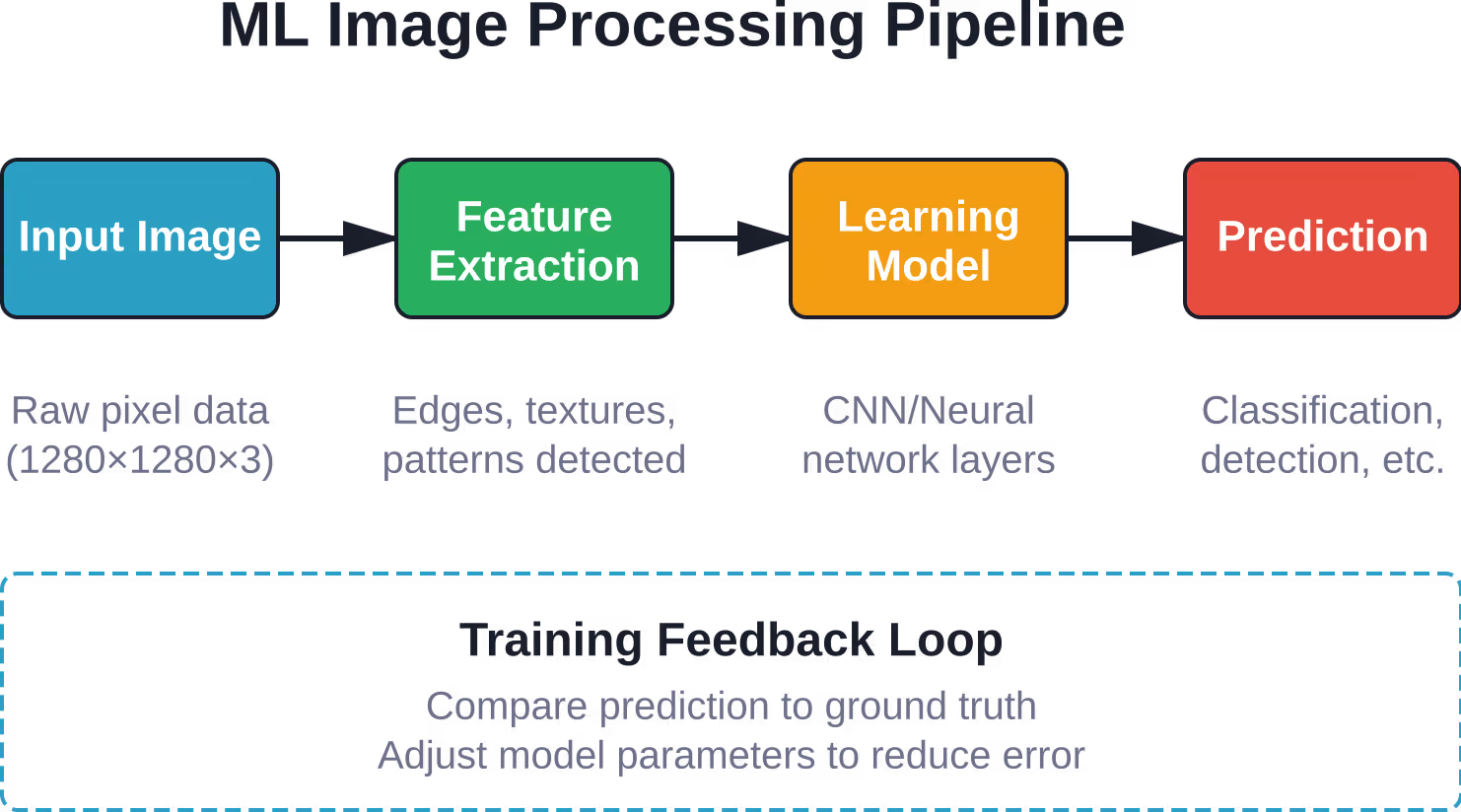
De algoritmen ontdekken deze patronen door middel van iteratieve training. Laat het model een afbeelding zien, laat het een voorspelling doen, meet hoe fout die voorspelling was en pas vervolgens de interne parameters aan om het de volgende keer beter te doen. Herhaal dit miljoenen keren.
Deze paradigmaverschuiving maakte doorbraken mogelijk in taken waarvoor het onmogelijk was om expliciete regels te definiëren. Hoe schrijf je code om een glimlach te herkennen? Een dreigend gebaar? De subtiele textuurverschillen tussen goedaardig en kwaadaardig weefsel? Machine learning pakt deze uitdagingen aan door te leren van voorbeelden.
Van pixels naar voorspellingen
Voor een computer zijn afbeeldingen niets meer dan reeksen getallen: pixelwaarden die de kleurintensiteit weergeven. Een kleurenfoto van 1280×1280 pixels bevat meer dan 4,9 miljoen afzonderlijke getallen.
Machine learning-modellen verwerken deze enorme numerieke arrays door middel van lagen van wiskundige transformaties. Vroege lagen detecteren mogelijk eenvoudige randen en texturen. Middelste lagen combineren deze tot onderdelen – wielen, ramen, deuren. Laatste lagen assembleren deze onderdelen tot concepten op hoog niveau, zoals 'auto' of 'vrachtwagen'.“
De magie zit hem in de manier waarop deze lagen hun transformaties leren. Elke laag bevat parameters – gewichten en biaswaarden – die bepalen hoe de invoergegevens worden getransformeerd. Tijdens de training worden deze parameters aangepast op basis van feedback van fouten.
Convolutionele neurale netwerken: de ruggengraattechnologie
Convolutionele neurale netwerken hebben de beeldverwerking getransformeerd door een architectuur te introduceren die specifiek is ontworpen voor visuele data. Traditionele neurale netwerken behandelden afbeeldingen als platte lijsten van pixels, waardoor ruimtelijke relaties verloren gingen. CNN's behouden en benutten deze ruimtelijke patronen.
De convolutionele laag – het kenmerkende onderdeel – past kleine filters toe op een afbeelding. Deze filters schuiven over de invoer en detecteren specifieke patronen waar ze ook verschijnen. Een filter voor verticale randen wordt sterk geactiveerd wanneer het verticale helderheidsveranderingen tegenkomt. Een hoekdetector reageert op L-vormige patronen.
Hoe CNN's visuele hiërarchieën leren
Wat CNN's zo krachtig maakt, is hun hiërarchische structuur. De eerste lagen leren eenvoudige kenmerken zoals randen en kleuren. Deze worden vervolgens doorgegeven aan de middelste lagen, die de eenvoudige kenmerken combineren tot complexere kenmerken, zoals texturen, simpele vormen en herhalende patronen.
Diepere lagen combineren deze tussenliggende representaties tot concepten op hoog niveau. Een gezichtsdetector kan bijvoorbeeld oogdetectoren, neusdetectoren en monddetectoren uit eerdere lagen combineren. Elke laag bouwt voort op de abstracties die door voorgaande lagen zijn geleerd.
Recente architecturen tillen deze mogelijkheden naar een nog hoger niveau. Volgens onderzoek op arXiv behaalde KAConvNet concurrerende prestaties bij ImageNet-1K-classificatie met efficiënt parametergebruik, wat een nauwkeurigheidswinst van 1,5% opleverde ten opzichte van vergelijkbare architecturen, terwijl de rekenkundige efficiëntie behouden bleef.
Moderne CNN-architecturen
Het vakgebied is veel verder geëvolueerd dan de oorspronkelijke CNN-ontwerpen. ResNet introduceerde skip-verbindingen die gradiënten door zeer diepe netwerken laten stromen. DenseNet verbond elke laag met elke volgende laag, wat hergebruik van kenmerken aanmoedigde.
Vision Transformers daagden de dominantie van CNN's uit door transformer-architecturen – oorspronkelijk ontwikkeld voor taal – toe te passen op afbeeldingen. Volgens onderzoek op arXiv naar Vision-TTT behaalde Vision-TTT-B een Top-1-nauwkeurigheid van 82,5% op ImageNet-classificatie met behoud van lineaire complexiteit. Bij een resolutie van 1280×1280 bespaart Vision-TTT-T 79,4% FLOPs en draait het 4,38 keer sneller met 88,9% minder geheugen dan DeiT-T.
Maar CNN's zijn niet verdwenen. Hybride architecturen combineren convolutionele lagen voor het extraheren van lokale kenmerken met transformerlagen voor een globale context. Dit biedt het beste van twee werelden: CNN's blinken uit in het vinden van lokale patronen, terwijl transformerlagen afhankelijkheden over lange afstanden vastleggen.
| Architectuurtype | Belangrijkste sterkte | Typisch gebruiksscenario | Rekenkosten |
|---|---|---|---|
| Standaard CNN | Lokale kenmerkextractie | Objectclassificatie | Gematigd |
| ResNet/DenseNet | Zeer diepe netwerken | Complexe herkenningstaken | Hoog |
| Visie Transformer | Globale contextmodellering | Grootschalige classificatie | Zeer hoog |
| Hybride CNN-Transformer | Lokale + wereldwijde functies | Medische beeldvorming, detectie | Hoog |
| Efficiënte CNN's | Snelheid en laag resourcegebruik | Mobiele apparaten, edge-apparaten | Laag |
Kerntechnieken van machinaal leren voor beeldverwerking
Verschillende taken vereisen verschillende machine learning-benaderingen. Beeldclassificatie kent een label toe aan een hele afbeelding: "dit is een kat". Objectdetectie vindt en lokaliseert meerdere objecten: "er is een kat op coördinaten (120, 340) en een hond op (450, 200)". Segmentatie labelt elke pixel: "pixels 1-5000 zijn kat, pixels 5001-8000 zijn achtergrond".”
Beeldclassificatie en -herkenning
Classificatie was de baanbrekende toepassing die de kracht van deep learning bewees. Tijdens de ImageNet-competitie van 2012 versloeg AlexNet – een diep convolutioneel neuraal netwerk – traditionele computervisiemethoden met een enorme marge. Sindsdien is de nauwkeurigheid gestaag toegenomen.
Classificatiesystemen voor de praktijk benaderen of overtreffen tegenwoordig de menselijke prestaties bij specifieke taken. Een onderzoek naar bloemherkenning met behulp van CNN's toonde aan dat DenseNet-121 met SGD-optimalisatie een nauwkeurigheid van 95,84%, een precisie van 96,00%, een recall van 96,00% en een F1-score van 96,00% behaalde op de testdataset.
Classificatiemodellen leren door te trainen op gelabelde voorbeelden. Laat het netwerk duizenden afbeeldingen van bloemen zien met soortlabels, en het leert onderscheidende kenmerken. Tijdens de inferentie verwerkt het nieuwe afbeeldingen en voorspelt het de meest waarschijnlijke soort op basis van de geleerde patronen.
Objectdetectie en -lokalisatie
Detectie is een uitbreiding van classificatie, omdat het bepaalt waar objecten in afbeeldingen voorkomen. Dit vereist zowel herkenning ("wat is het?") als lokalisatie ("waar bevindt het zich?").
Tweestapsdetectoren zoals Faster R-CNN stellen eerst gebieden voor die objecten zouden kunnen bevatten en classificeren die gebieden vervolgens. Eenstapsdetectoren zoals YOLO en RetinaNet voorspellen begrenzingskaders en klassen in één doorgang, waarbij ze iets aan nauwkeurigheid inleveren voor een veel snellere inferentie.
Volgens onderzoek naar afvaldetectie met behulp van een verbeterd YOLOv9s-model (LD-YOLOv9s) heeft het systeem een betere detectie van kleine objecten bereikt onder verschillende omgevingsomstandigheden. De verbeteringen hebben met name geholpen bij het detecteren van kleine objecten zoals flesdoppen, die eerdere modellen vaak over het hoofd zagen.
Beeldsegmentatietechnieken
Segmentatie biedt inzicht op pixelniveau. Semantische segmentatie labelt elke pixel met een klasse ("lucht", "weg", "auto"), maar maakt geen onderscheid tussen individuele objecten. Instantiesegmentatie gaat verder en identificeert afzonderlijke instanties ("auto #1", "auto #2").
Medische beeldvorming is sterk afhankelijk van segmentatie. Artsen moeten niet alleen weten dat er een tumor aanwezig is, maar ook de exacte grenzen ervan voor een goede behandelplanning. Volgens onderzoek van MIT naar hun MultiverSeg-tool annoteert het interactieve AI-systeem medische beelden razendsnel. Gebruikers hebben bij de negende afbeelding slechts twee klikken nodig om een segmentatienauwkeurigheid te bereiken die die van taakspecifieke modellen overtreft, waardoor de annotatielast aanzienlijk wordt verminderd in vergelijking met eerdere systemen.
De efficiëntie van de tool verbetert naarmate gebruikers meer afbeeldingen uit een dataset annoteren. Bij de negende afbeelding waren er slechts twee klikken van de gebruiker nodig om een segmentatie te genereren die nauwkeuriger was dan modellen die specifiek voor deze taak waren ontworpen.

Verbeter je workflows voor beeldverwerking met superieure AI.
Beeldverwerkingsprojecten omvatten vaak grote datasets, complexe visuele patronen en prestatie-eisen die verder gaan dan eenvoudige automatisering. AI Superior Helpt teams bij het toepassen van machine learning op beeldverwerkingstaken waarbij modellen voor analyse, classificatie, verbetering of detectie nodig zijn.
AI Superior kan beeldverwerkingsprojecten ondersteunen met:
- Het beoordelen van beeldgegevenssets en verwerkingsvereisten.
- Het definiëren van de ML-toepassing en de technische reikwijdte
- Het bouwen van proof-of-concept-modellen
- Het ontwikkelen van beeldclassificatie- of detectiesystemen
- Testen van de nauwkeurigheid van het model en de betrouwbaarheid van de verwerking
- Integratie in bestaande software of workflows plannen
- Ondersteuning bij de implementatie en continue verbetering van het model
Voor beeldverwerking kan dit van toepassing zijn op beeldverbetering, objectdetectie, segmentatie, OCR, industriële inspectie, medische beeldanalyse en geautomatiseerde visuele analysesystemen.
Praat met AI Superior over de projectvereisten.
Essentiële instrumenten en raamwerken
Het bouwen van machine learning-systemen voor beeldverwerking vereist de juiste tools. Het ecosysteem is aanzienlijk volwassener geworden, met frameworks die alles afhandelen, van data-voorverwerking tot modelimplementatie.
Deep Learning-frameworks
TensorFlow en PyTorch domineren het landschap van deep learning. TensorFlow, ontwikkeld door Google, biedt krachtige tools voor productieomgevingen en een volwassen ecosysteem. PyTorch, van Meta, biedt een meer intuïtieve, Python-achtige syntaxis en is de voorkeurskeuze geworden in onderzoek.
Volgens onderzoek op arXiv werden KAConvNet-experimenten uitgevoerd in PyTorch en getraind op acht NVIDIA A100 GPU's met elk 80 GB geheugen, met een batchgrootte van 64. Deze configuratie is inmiddels vrij standaard geworden voor grootschalig onderzoek naar beeldclassificatie.
Beide frameworks bieden API's op hoog niveau die veel implementatiedetails abstraheren. Keras – nu geïntegreerd in TensorFlow – stelt ontwikkelaars in staat om modellen te bouwen met slechts een paar regels code. PyTorch Lightning vereenvoudigt op vergelijkbare wijze trainingsloops en experimentbeheer.
Beeldverwerkingsbibliotheken
OpenCV blijft de ruggengraat van traditionele computervisie-bewerkingen. Het biedt geoptimaliseerde implementaties voor filtering, transformaties, objectdetectie en talloze andere bewerkingen. De meeste machine learning-pipelines gebruiken OpenCV voor voorbewerking – het aanpassen van de afmetingen van afbeeldingen, het corrigeren van kleuren en het uitbreiden van trainingsdata.
Pillow (PIL) verzorgt de basisbewerkingen voor beeldinvoer/uitvoer en -transformaties in Python. Scikit-image biedt een uitgebreidere verzameling algoritmen die volledig in Python zijn geïmplementeerd, waardoor het gemakkelijker te begrijpen en aan te passen is.
Voor machine learning zijn er bibliotheken zoals Albumentations die gespecialiseerd zijn in data-augmentatie: het automatisch creëren van variaties op trainingsafbeeldingen door middel van rotaties, bijsnijden, kleuraanpassingen en andere transformaties. Dit vergroot de datasets kunstmatig en verbetert de generalisatie van het model.
Gespecialiseerde raamwerken
Medische beeldvorming beschikt over gespecialiseerde tools zoals SimpleITK en NiBabel die formaten als DICOM en NIfTI verwerken. Deze domeinen vereisen specifieke voorbewerking en werken vaak met 3D-volumes in plaats van 2D-afbeeldingen.
Detectron2—van Meta AI Research—biedt geavanceerde objectdetectie- en segmentatiemodellen die direct te gebruiken zijn. MMDetection biedt vergelijkbare mogelijkheden met nog meer modelimplementaties.
Voor implementatie in een productieomgeving verzorgen TensorFlow Serving en TorchServe het hosten, versiebeheer en schalen van modellen. ONNX zorgt voor interoperabiliteit, waardoor modellen die in het ene framework zijn getraind, in de inferentie-engine van een ander framework kunnen worden uitgevoerd.
| Gereedschapscategorie | Populaire opties | Primaire kracht | Het beste voor |
|---|---|---|---|
| Diep leren | PyTorch, TensorFlow | Modeltraining en onderzoek | Architectuur op maat bouwen |
| Computer visie | OpenCV, scikit-image | Traditionele CV-operaties | Voorbewerking, klassieke methoden |
| Gegevensaugmentatie | Albumentaties, imgaug | Uitbreiding van trainingsgegevens | Verbetering van de generalisatie |
| Objectdetectie | Detectron2, MMDetection | Voorgebouwde detectiemodellen | Snelle inzet van detectoren |
| Medische beeldvorming | SimpleITK, NiBabel | Domeinspecifieke formaten | Toepassingen in de gezondheidszorg |
Praktische toepassingen in diverse sectoren
Machine learning in beeldverwerking is allang niet meer beperkt tot academische demonstraties. Systemen die in productie worden ingezet, verwerken dagelijks miljoenen afbeeldingen en lossen concrete problemen op met meetbare resultaten.
Gezondheidszorg en medische beeldvorming
Medische beeldvorming is een van de meest impactvolle toepassingsgebieden. Machine learning helpt radiologen bij het opsporen van ziekten, het meten van anatomische structuren en het volgen van het ziekteverloop in de loop van de tijd.
Volgens onderzoek van IEEE is de detectie van hersenaandoeningen met behulp van beeldverwerking en machinaal leren een belangrijk onderzoeksgebied geworden. Op vergelijkbare wijze kunnen systemen voor de detectie van huidkanker met behulp van machinaal leren dermatologische beelden analyseren om potentiële melanomen en andere aandoeningen te identificeren.
De technologie vervangt artsen niet, maar versterkt hun mogelijkheden. Een AI-systeem kan bijvoorbeeld verdachte gebieden in een mammogram markeren voor nader onderzoek, of tumorvolumes meten over meerdere scans om de respons op de behandeling te kwantificeren. Volgens onderzoek op arXiv waarin Vision Transformers en CNN's worden vergeleken voor de classificatie van medische beelden, zijn beide architecturen veelbelovend voor klinische toepassingen. De keuze hangt af van de kenmerken van de dataset en de rekenkracht.
Autonome voertuigen en robotica
Zelfrijdende auto's vertrouwen volledig op machinaal leren voor visuele waarneming. Meerdere camera's leggen de omgeving van het voertuig vast en neurale netwerken verwerken deze beelden om voetgangers, andere voertuigen, rijstrookmarkeringen, verkeersborden en talloze andere elementen te detecteren.
Dit vereist realtime verwerking: beslissingen moeten binnen milliseconden genomen worden. Daarom is efficiëntie zo belangrijk. Modellen moeten zeer nauwkeurig zijn zonder enorme rekenkracht te vereisen. De 4,38-voudige snelheidsverbetering en de besparing van 79,4% FLOPs die Vision-TTT-architecturen bij hoge resoluties laten zien, vertalen zich direct naar een meer haalbare implementatie in voertuigen met beperkte rekenkracht aan boord.
Robotica staat voor vergelijkbare uitdagingen. Magazijnrobots navigeren en identificeren objecten die ze moeten oppakken. Landbouwrobots detecteren en classificeren planten voor gerichte behandeling. Industriële robots inspecteren geproduceerde onderdelen op defecten. Al deze toepassingen vereisen een snelle en nauwkeurige visuele waarneming.
Beveiliging en bewaking
Gezichtsherkenningssystemen op luchthavens en grensovergangen verwerken miljoenen gezichten. Deze systemen vergelijken reizigers in realtime met lijsten van personen die op de zwarte lijst staan en signaleren potentiële veiligheidsrisico's die vervolgens door mensen worden beoordeeld.
Gedragsanalysesystemen detecteren ongebruikelijke activiteiten in bewakingsbeelden, zoals iemand die zich ophoudt in een verboden gebied of onbeheerde pakketten. Dit vermindert de werkdruk voor operators die tientallen camerabeelden tegelijk in de gaten moeten houden.
Privacybezwaren spelen terecht een rol bij deze toepassingen. De technologie zelf is neutraal; de impact ervan hangt af van de context waarin deze wordt ingezet, de regelgeving en de waarborgen. Veel rechtsgebieden reguleren tegenwoordig het gebruik van gezichtsherkenning, vereisen transparantie en beperken de toepassingen.
Milieumonitoring en landbouw
Satelliet- en dronebeelden in combinatie met machinaal leren maken grootschalige milieumonitoring mogelijk. Systemen volgen ontbossing, bewaken de gezondheid van gewassen, detecteren illegale visserij of mijnbouw en beoordelen de schade door rampen.
Volgens onderzoek van de Universiteit van Florida kan computervisie beelden analyseren voor agrarische toepassingen, zoals het detecteren van paddenstoelen, met behulp van cirkelvergelijkingstechnieken met een drempelwaarde van 95% voor de overeenkomstscore. Hoewel eenvoudig, laten dergelijke methoden zien hoe AI kan helpen bij het automatiseren van taken voor milieuanalyse.
Precisielandbouw maakt gebruik van luchtfoto's om planten te identificeren die onder stress staan en water of een behandeling nodig hebben. Deze gerichte aanpak vermindert het gebruik van chemicaliën en houdt tegelijkertijd de opbrengst op peil – beter voor het milieu en de kosten voor de boeren.
Het bouwen van een machine learning-systeem voor beeldclassificatie.
Het ontwikkelen van een beeldclassificatiesysteem omvat verschillende afzonderlijke fasen, elk met zijn eigen aandachtspunten en uitdagingen. Inzicht in dit proces helpt om te begrijpen hoe deze systemen in de praktijk werken.
Gegevensverzameling en -voorbereiding
Alles begint met data. Machine learning-modellen leren van voorbeelden, dus de kwaliteit en kwantiteit van de trainingsdata bepalen direct de prestaties. Over het algemeen geldt: hoe diverser en kwalitatief beter de data, hoe beter de modellen.
De strategieën voor gegevensverzameling variëren. Openbare datasets zoals ImageNet, COCO en CIFAR bieden een goed uitgangspunt voor veelvoorkomende objectcategorieën. Domeinspecifieke toepassingen vereisen aangepaste datasets: ziekenhuizen verzamelen medische beelden, fabrikanten verzamelen voorbeelden van defecten en detailhandelaren fotograferen producten.
Volgens onderzoek van UF/IFAS naar AI-beeldanalyse omvat het proces het verzamelen van afbeeldingen, het onderzoeken van pixels, het vinden van randen en het herkennen van vormen en patronen. Goede annotatie is cruciaal: iemand moet labelen wat elke afbeelding bevat, of objectgrenzen markeren voor detectie- en segmentatietaken.
Voorbewerking en augmentatie
Onbewerkte afbeeldingen werken zelden direct met modellen. Voorbewerking standaardiseert de invoer: het formaat aanpassen naar consistente afmetingen, pixelwaarden normaliseren en kleurruimtes converteren. Deze stappen zorgen ervoor dat het model gegevens ontvangt in het formaat dat het verwacht.
Data-augmentatie vergroot trainingssets kunstmatig door variaties op bestaande afbeeldingen te creëren. Spiegel een afbeelding horizontaal en het model leert dat objecten er van beide kanten hetzelfde uitzien. Draai de afbeelding een beetje en het model leert oriëntatie-invariantie. Pas de helderheid aan en het model kan verschillende lichtomstandigheden aan.
Onderzoek toont aan dat beeldaugmentatie de generalisatie van modellen aanzienlijk verbetert – het vermogen om nieuwe afbeeldingen te verwerken die verschillen van de trainingsvoorbeelden. Veelvoorkomende augmentatietechnieken zijn onder andere roteren, bijsnijden, spiegelen, kleurvariatie, ruis toevoegen en elastische vervormingen.
Modelselectie en training
De keuze voor een architectuur hangt af van de taak, de grootte van de dataset en de rekenkundige beperkingen. Voor kleine datasets volstaan mogelijk eenvoudigere modellen of transfer learning – waarbij een model wordt gebruikt dat is getraind op een grote dataset zoals ImageNet en vervolgens wordt verfijnd voor de specifieke taak.
Training omvat het invoeren van afbeeldingen in het model, het berekenen van voorspellingsfouten en het aanpassen van gewichten om die fouten te verminderen. Dit gebeurt over vele epochs – volledige doorloop van de trainingsgegevens. Volgens onderzoek op arXiv worden modellen doorgaans getraind met batchgroottes van bijvoorbeeld 64, waarbij meerdere afbeeldingen tegelijk worden verwerkt voor efficiëntie.
Hyperparameters—leersnelheid, batchgrootte, keuze van de optimizer, regularisatiestärke—hebben een aanzienlijke invloed op de resultaten. Onderzoek naar bloemherkenning toonde aan dat DenseNet-121 met stochastische gradiëntdaling (SGD)-optimalisatie een nauwkeurigheid van 95,84%, een precisie van 96,00%, een recall van 96,00% en een F1-score van 96,00% behaalde.
Evaluatie en implementatie
Getrainde modellen moeten grondig worden geëvalueerd op testdata die niet aan het model zijn toegewezen – afbeeldingen die het model tijdens de training nooit heeft gezien. Gangbare meetwaarden zijn onder andere nauwkeurigheid (percentage correcte voorspellingen), precisie (van de positieve voorspellingen, hoeveel daarvan juist waren), recall (van de daadwerkelijk gevonden positieve voorspellingen, hoeveel daarvan werden gevonden) en de F1-score (harmonisch gemiddelde van precisie en recall).
Implementatie brengt nieuwe uitdagingen met zich mee. Modellen die getraind zijn op krachtige GPU's moeten draaien op apparaten met beperkte resources, zoals mobiele telefoons, edge-apparaten en embedded systemen. Dit vereist vaak optimalisatie: kwantisering vermindert de precisie, snoeien verwijdert onnodige gewichten en kennisdestillatie draagt kennis over van grote modellen naar kleinere modellen.
Productiesystemen moeten worden gemonitord. De prestaties van modellen kunnen in de loop der tijd afnemen naarmate de werkelijke data afwijken van de trainingsdata. Actief leren helpt hierbij: het systeem markeert onzekere voorspellingen voor menselijke beoordeling, en deze voorbeelden worden toegevoegd aan de trainingsdata voor modelupdates.
Uitdagingen en beperkingen
Ondanks de opmerkelijke vooruitgang staat machinaal leren in beeldverwerking nog steeds voor aanzienlijke uitdagingen. Inzicht in deze beperkingen helpt bij het stellen van realistische verwachtingen en het bepalen van de onderzoeksrichting.
Gegevensvereisten en -kwaliteit
Deep learning-modellen staan erom bekend dat ze enorm veel data nodig hebben. Om een hoge nauwkeurigheid te bereiken, zijn vaak duizenden of miljoenen gelabelde voorbeelden nodig. Het verzamelen en annoteren van deze data is duur en tijdrovend.
Volgens onderzoek van MIT verminderde hun MultiverSeg-tool de annotatielast en bereikte een nauwkeurigheid van 90 procent met ongeveer tweederde van het aantal krabbels en driekwart van het aantal muisklikken. Maar annotatie vereist nog steeds de tijd van experts – radiologen die medische beelden labelen, ecologen die soorten identificeren, kwaliteitsinspecteurs die gebreken markeren.
De kwaliteit van de data is net zo belangrijk als de kwantiteit. Foutief gelabelde voorbeelden verstoren de training. Vertekende datasets leiden tot vertekende modellen: als trainingsafbeeldingen voornamelijk één demografische groep laten zien, kan het model slecht presteren op andere groepen. Volgens onderzoek naar beeldanalyse op sociale media is het essentieel om ruis in de data van platforms zoals Instagram, Facebook en Flickr te verwijderen voordat classificatiemodellen worden getraind.
Vereisten voor computerbronnen
Het trainen van grote modellen vereist aanzienlijke rekenkracht. Volgens onderzoek op arXiv worden experimenten vaak uitgevoerd op acht NVIDIA A100 GPU's met elk 80 GB geheugen – hardware die tienduizenden dollars kost en kilowatts aan elektriciteit verbruikt.
Dit creëert toetredingsdrempels. Academische onderzoekers en kleine bedrijven kunnen zich dergelijke middelen niet altijd veroorloven. Cloudcomputing biedt uitkomst, maar brengt wel doorlopende kosten met zich mee. Ook inferentie vereist aandacht: het implementeren van modellen op edge-apparaten met beperkte rekenkracht en geheugen beperkt de architectuurkeuzes.
De inspanningen om de efficiëntie te verbeteren gaan door. Modellen zoals Vision-TTT behaalden aanzienlijke snelheidsverbeteringen: 4,38 keer sneller met een geheugenreductie van 88,9% vergeleken met standaard transformers. Onderzoek naar efficiënte architecturen zoals KAConvNet toonde aan dat KAConvNet-S een Top-1 nauwkeurigheid van 73,7% behaalde op ImageNet met slechts 5,0 miljoen parameters en 0,7 G FLOPs, een verbetering van 1,5% ten opzichte van vergelijkbare modellen.
Interpreteerbaarheid en betrouwbaarheid
Neurale netwerken zijn vaak "black boxes". Ze doen voorspellingen, maar het blijft lastig te begrijpen waarom. Een model kan bijvoorbeeld een ziekte correct identificeren op een medische afbeelding, maar als het niet kan uitleggen welke kenmerken tot die conclusie hebben geleid, hebben artsen er weinig vertrouwen in.
Vijandige voorbeelden ondermijnen het vertrouwen verder. Onderzoekers hebben aangetoond dat minuscule, onmerkbare veranderingen aan afbeeldingen classificatiesystemen volledig kunnen misleiden. Een stopbord met zorgvuldig aangebrachte stickers kan bijvoorbeeld verkeerd worden geïnterpreteerd als een snelheidslimietbord – potentieel gevaarlijk voor zelfrijdende voertuigen.
Verklaarbaarheidsmethoden zoals GradCAM laten zien welke beeldregio's de voorspellingen beïnvloedden. Aandachtsmechanismen in transformermodellen geven enig inzicht in waar het model zich op richt. Maar alomvattende interpreteerbaarheid blijft een actuele onderzoeksuitdaging.
Generalisatie en domeinverschuiving
Modellen die op één dataset zijn getraind, presteren vaak minder goed wanneer ze in verschillende contexten worden ingezet. Een systeem dat is getraind op duidelijke, goed belichte productfoto's, kan bijvoorbeeld falen bij afbeeldingen van andere camera's, met andere belichting of vanuit andere hoeken. Medische modellen die zijn getraind op afbeeldingen van apparatuur van het ene ziekenhuis, generaliseren mogelijk niet naar de scanners van een ander ziekenhuis.
Domeinadaptatietechnieken helpen modellen om leerervaringen over te dragen naar andere domeinen. Few-shot en zero-shot learning proberen objecten te herkennen met minimale of geen trainingsvoorbeelden. Maar robuustheid ten opzichte van domeinverschuiving blijft een fundamentele uitdaging die de toepassing in de praktijk beperkt.
Opkomende trends en toekomstige richtingen
Het vakgebied blijft zich snel ontwikkelen. Verschillende trends bepalen de volgende generatie beeldverwerkingssystemen.
Zelfgestuurd en onbegeleid leren
Het verminderen van de afhankelijkheid van gelabelde data is een belangrijk onderzoeksgebied. Zelflerend leren creëert kunstmatige supervisie op basis van ongelabelde data – bijvoorbeeld door rotaties op afbeeldingen te voorspellen, gemaskeerde beeldregio's te reconstrueren of te leren onderscheiden tussen echte en willekeurige paren.
Modellen die vooraf getraind zijn met zelfsupervisie kunnen vervolgens verfijnd worden op kleine gelabelde datasets voor specifieke taken. Dit vermindert de annotatievereisten aanzienlijk, terwijl de hoge prestaties behouden blijven. Contrastieve leermethoden zoals SimCLR en MoCo hebben indrukwekkende resultaten laten zien.
Visie-taalmodellen
Door beeld en taal te combineren, ontstaan nieuwe mogelijkheden. Modellen zoals CLIP leren afbeeldingen te associëren met tekstuele beschrijvingen, waardoor zero-shot classificatie mogelijk wordt: beschrijf een nieuwe objectcategorie in tekst en het model herkent deze zonder voorbeelden te zien.
Deze multimodale modellen vormen de basis voor toepassingen zoals het toevoegen van bijschriften aan afbeeldingen, het visueel beantwoorden van vragen en het omzetten van tekst naar afbeeldingen. Ze vertegenwoordigen een verschuiving naar een meer algemeen visueel begrip in plaats van smalle, taakspecifieke modellen.
Edge AI en efficiënte architecturen
Het verplaatsen van berekeningen van cloudservers naar edge-apparaten verbetert de latentie, vermindert de bandbreedte en verbetert de privacy. Dit vereist uiterst efficiënte modellen die hun nauwkeurigheid behouden en tegelijkertijd rekening houden met de beschikbare resources.
Het zoeken naar neurale architecturen automatiseert het vinden van optimale architecturen voor specifieke hardware. Kwantisatiebewuste training bereidt modellen voor op een lagere precisie. Dynamische neurale netwerken passen de berekening aan op basis van de complexiteit van de invoer: eenvoudige afbeeldingen gebruiken kortere routes, complexe afbeeldingen benutten de volledige capaciteit.
3D-zicht en video-inzicht
De meeste beeldverwerking richt zich op statische 2D-afbeeldingen. Maar de echte wereld is 3D en dynamisch. Door machine learning uit te breiden naar 3D-puntenwolken, volumetrische data en videosequenties ontstaan nieuwe toepassingsgebieden.
Medische beeldvorming maakt steeds vaker gebruik van 3D-scans. Autonome systemen moeten dynamische scènes begrijpen, bewegende objecten volgen en toekomstige trajecten voorspellen. Modellen voor videoanalyse analyseren naast ruimtelijke kenmerken ook temporele patronen.
Volgens NIST-documentatie zijn termen zoals CNN inmiddels standaard in computerwetenschappelijke woordenlijsten, wat aangeeft hoe fundamenteel deze technieken voor het vakgebied zijn geworden. De technologie blijft zich ontwikkelen van een nieuw onderzoeksgebied tot een gevestigde infrastructuur.
Beste praktijken voor implementatie
Het succesvol implementeren van machine learning voor beeldverwerking vereist meer dan alleen technische kennis. Deze werkwijzen helpen veelvoorkomende valkuilen te vermijden en betrouwbare systemen te leveren.
Begin met een sterke basis.
Voordat je zelf oplossingen ontwikkelt, probeer eerst bestaande, vooraf getrainde modellen. Transfer learning van modellen die getraind zijn op ImageNet levert vaak verrassend goede resultaten op met minimale inspanning. Bibliotheken zoals Hugging Face Transformers en TensorFlow Hub bieden honderden kant-en-klare modellen.
Deze basislijn bepaalt of machine learning geschikt is voor het probleem en hoeveel verbetering maatwerkontwikkeling kan opleveren. Soms presteert een voorgegetraind model dat in een paar uur is verfijnd beter dan maatwerkarchitecturen die wekenlang vanaf nul zijn getraind.
Investeer in datakwaliteit.
Datakwaliteit is belangrijker dan modelarchitectuur. Een eenvoudig model, getraind op schone, diverse en representatieve data, presteert beter dan een geavanceerd model dat is getraind op slechte data. Besteed tijd en middelen aan het verzamelen, opschonen en valideren van data.
Stel duidelijke richtlijnen op voor annotatie. Meerdere annotatoren moeten dezelfde voorbeelden labelen om de overeenstemming te meten en onduidelijke gevallen op te sporen. Volgens onderzoek naar interactieve segmentatietools kunnen systemen die leren van gebruikerscorrecties tijdens de annotatie de algehele werklast verminderen en tegelijkertijd de kwaliteit behouden.
Ontwerp voor vroege productie
Onderzoeksprototypes en productiesystemen stellen verschillende eisen. Productiesystemen vereisen monitoring, versiebeheer, terugdraaimogelijkheden, A/B-testen en een soepele afhandeling van fouten. Door hier vanaf het begin rekening mee te houden, worden kostbare herstructureringen later voorkomen.
Houd rekening met de vereisten voor inferentielatentie. Realtime-toepassingen hebben modellen nodig die binnen milliseconden werken. Volgens onderzoek naar afvaldetectie maakt een inferentietijd van 6,7 ms een praktische implementatie in milieumonitoringssystemen mogelijk. Batchverwerkingstoepassingen tolereren langzamere modellen als de nauwkeurigheid daardoor verbetert.
Continue evaluatie en verbetering
Het implementeren van een model is niet het einde, maar het begin van een iteratieve verbeteringscyclus. Monitor de prestaties met echte invoergegevens. Verzamel foutgevallen voor analyse. Train het model periodiek opnieuw met nieuwe gegevens naarmate deze beschikbaar komen.
Gebruikersfeedback levert waardevolle signalen op. Als gebruikers bepaalde voorspellingen consequent tegenspreken, verdienen die voorbeelden nader onderzoek. Misschien heeft het model een blinde vlek, of waren de oorspronkelijke labels onjuist. Hoe dan ook, de feedback leidt tot verbetering.
Veelgestelde vragen
Wat is het verschil tussen machine learning en deep learning in beeldverwerking?
Machine learning is het bredere vakgebied van algoritmen die leren van data. Deep learning is een subset die gebruikmaakt van neurale netwerken met meerdere lagen. In beeldverwerking gebruikt traditionele machine learning mogelijk handmatig ontworpen kenmerken (randdetectoren, kleurhistogrammen) die worden ingevoerd in classificatoren zoals support vector machines. Deep learning laat neurale netwerken automatisch kenmerken leren uit ruwe pixels. Deep learning behaalt over het algemeen een hogere nauwkeurigheid bij complexe taken, maar vereist meer data en rekenkracht.
Hoeveel trainingsdata heb ik nodig voor beeldclassificatie?
Het hangt af van de complexiteit van de taak en of er gebruik wordt gemaakt van transfer learning. Trainen vanaf nul vereist doorgaans duizenden tot miljoenen afbeeldingen per categorie. Met transfer learning – waarbij wordt uitgegaan van een model dat is getraind op ImageNet – zijn honderden afbeeldingen per categorie vaak voldoende. Sommige few-shot learning-methoden werken zelfs met slechts 5-10 voorbeelden per klasse, hoewel de nauwkeurigheid dan lager is. De kwaliteit van de data is belangrijker dan de kwantiteit – diverse, representatieve voorbeelden presteren beter dan grotere, maar homogene datasets.
Kan machine learning werken met kleine datasets met afbeeldingen?
Ja, via verschillende technieken. Transfer learning past voorgegetrainde modellen aan nieuwe taken aan met beperkte data. Data-augmentatie vergroot datasets kunstmatig door middel van transformaties. Few-shot learning-methoden zijn specifiek ontworpen voor scenario's met minimale voorbeelden. Synthetische datageneratie kan echte afbeeldingen aanvullen. Over het algemeen geldt echter dat meer data betere resultaten oplevert, en dat kleine datasets (tientallen afbeeldingen) een uitdaging blijven zonder domeinspecifieke technieken.
Welke hardware is nodig voor het trainen van modellen voor beeldverwerking?
Moderne GPU's versnellen de training aanzienlijk – vaak 10 tot 100 keer sneller dan CPU's. Instapmodellen zoals de NVIDIA RTX 3060 kunnen kleinere modellen en datasets aan. Serieus onderzoek maakt doorgaans gebruik van high-end GPU's zoals de A100, waarbij training op 8 GPU's gebruikelijk is voor grootschalige experimenten, volgens onderzoek op arXiv. Cloudplatforms zoals AWS, Google Cloud en Azure bieden toegang tot GPU's zonder voorafgaande hardware-investering. Voor inferentie hangen de vereisten af van de latency – edge-apparaten kunnen mobiel-geoptimaliseerde modellen gebruiken of gespecialiseerde hardware zoals Google's Edge TPU.
Hoe nauwkeurig kan beeldclassificatie met machine learning worden?
De nauwkeurigheid varieert afhankelijk van de complexiteit van de taak en de kwaliteit van de data. Bij goed gedefinieerde taken met voldoende trainingsdata behalen modellen vaak een nauwkeurigheid van meer dan 95%. Volgens onderzoek behaalde DenseNet-121 voor bloemclassificatie een nauwkeurigheid van 95,84% met SGD-optimalisatie. De ImageNet-benchmark laat zien dat topmodellen een nauwkeurigheid van ongeveer 82-85% behalen in 1000 diverse categorieën. Toepassingen in de praktijk met ambigue gevallen, uiteenlopende omstandigheden of zeldzame voorbeelden laten doorgaans een lagere nauwkeurigheid zien. De cruciale vraag is of de behaalde nauwkeurigheid voldoet aan de eisen van de toepassing.
Wat zijn de grootste uitdagingen bij het implementeren van ML-beeldmodellen in een productieomgeving?
Bij de implementatie in een productieomgeving doen zich verschillende uitdagingen voor. De inferentiesnelheid moet voldoen aan realtime-vereisten; het optimaliseren van modellen gaat vaak ten koste van de nauwkeurigheid ten gunste van de snelheid. De modelgrootte heeft gevolgen voor de geheugen- en opslagcapaciteit van edge-apparaten. Er treedt een verschuiving in de datadistributie op wanneer productie-images afwijken van trainingsdata, wat de prestaties in de loop van de tijd kan verslechteren. Het monitoren en bijwerken van geïmplementeerde modellen vereist infrastructuur voor versiebeheer, A/B-testen en terugdraaien. Ten slotte ontstaan er zorgen over de robuustheid tegen aanvallen in beveiligingskritieke applicaties, waar kwaadwillende actoren mogelijk proberen het model te misleiden.
Moet ik een expert in wiskunde zijn om beeldverwerkingssystemen te implementeren?
Niet per se voor implementatie. Moderne frameworks zoals TensorFlow en PyTorch abstraheren wiskundige details, en API's op hoog niveau zoals Keras maken het bouwen van modellen toegankelijk voor mensen met basiskennis van Python. Transfer learning en voorgegetrainde modellen stellen gebruikers in staat resultaten te behalen zonder diepgaande wiskundige kennis. Het verder ontwikkelen van de stand van de techniek, het debuggen van subtiele problemen of het ontwikkelen van nieuwe architecturen vereist echter wel een sterkere basis in lineaire algebra, calculus, optimalisatie en statistiek. Het vakgebied biedt ruimte aan zowel gebruikers die bestaande tools gebruiken als onderzoekers die nieuwe methoden ontwikkelen.
Conclusie: De toekomst van visuele intelligentie
Machine learning heeft de beeldverwerking fundamenteel veranderd, waardoor computers niet langer strikt regels volgen, maar flexibel patronen leren. Systemen presteren nu beter dan mensen bij specifieke visuele taken, terwijl ze snelheden bereiken die voor handmatige analyse onmogelijk zijn.
De marktprognoses – met een samengestelde jaarlijkse groei van 15% tot 1 TP4 50 miljard in 2033 – weerspiegelen de daadwerkelijke waardecreatie in diverse sectoren. Gezondheidszorgsystemen sporen ziekten eerder op. Autonome voertuigen navigeren veilig. Beveiligingssystemen identificeren bedreigingen. Milieumonitoring volgt veranderingen op aarde. Productieprocessen sporen defecten op. Elke toepassing maakt processen sneller, goedkoper of nauwkeuriger.
Maar er blijven uitdagingen bestaan. Datavereisten, rekenkosten, problemen met interpreteerbaarheid en beperkingen op het gebied van robuustheid beperken wat er vandaag de dag praktisch haalbaar is. De technologie werkt het best wanneer ze menselijke expertise aanvult in plaats van vervangt – bijvoorbeeld door gevallen te markeren voor beoordeling door experts, repetitieve taken te automatiseren en volumes te verwerken die handmatig onmogelijk te verwerken zijn.
Vooruitkijkend beloven trends zoals zelflerend leren, beeld-taalmodellen, efficiënte edge-architecturen en 3D-begrip de mogelijkheden uit te breiden en tegelijkertijd de drempels te verlagen. Naarmate tools volwassener worden en best practices zich consolideren, wordt de implementatie van machine learning in beeldverwerking steeds toegankelijker.
De sleutel is het afstemmen van de techniek op de taak. Niet elk beeldprobleem vereist deep learning. Traditionele computervisie blinkt nog steeds uit in bepaalde bewerkingen. Maar voor patroonherkenning in complexe, variabele visuele data is machine learning de dominante aanpak geworden – en blijft zich snel ontwikkelen.
Of het nu gaat om het ontwikkelen van medische diagnostische hulpmiddelen, autonome systemen, landbouwmonitoren of beveiligingsapplicaties, de principes blijven consistent: verzamel kwalitatieve data, kies de juiste architecturen, valideer grondig, implementeer doordacht en blijf continu verbeteren. Volg deze werkwijzen en machine learning kan inzichten onthullen die verborgen liggen in visuele informatie.