Korte samenvatting: Machine learning zorgt voor een revolutie in de cyberbeveiliging van satellieten door realtime dreigingsdetectie, anomalievoorspelling en autonome respons op cyberaanvallen gericht op orbitale infrastructuur mogelijk te maken. Geavanceerde neurale netwerken behalen detectiesnelheden van meer dan 99% voor DoS-aanvallen en jamming, terwijl ze het aantal valse positieven verminderen door middel van dimensionaliteitsreductietechnieken. Hiermee worden kritieke kwetsbaarheden in LEO-, GEO- en CubeSat-netwerken aangepakt die traditionele beveiligingsinstrumenten niet aankunnen.
Satellietnetwerken vormen de ruggengraat van cruciale infrastructuur wereldwijd – van GPS-navigatie en weersvoorspellingen tot militaire communicatie en IoT-connectiviteit. Maar er is een probleem: deze systemen in een baan om de aarde worden geconfronteerd met steeds geavanceerdere cyberdreigingen die traditionele beveiligingsinstrumenten simpelweg niet kunnen tegengaan.
Het aanvalsoppervlak breidt zich snel uit. Naarmate commerciële ruimtevaartprojecten toenemen en CubeSats de toegang tot de ruimte democratiseren, exploiteren tegenstanders kwetsbaarheden in satellietbesturingssystemen, communicatieverbindingen en verwerkingseenheden aan boord. Storingsaanvallen verstoren de verbindingen tussen geostationaire satellieten. DDoS-aanvallen overbelasten satellietconstellaties in een lage baan om de aarde. Datavergiftiging corrumpeert AI-modellen die draaien op autonome ruimtevaartuigen.
Machine learning biedt een fundamenteel andere benadering van cyberbeveiliging voor satellieten: een benadering die leert van patronen, zich aanpast aan nieuwe bedreigingen en autonoom opereert in de latency-beperkte omgeving van ruimteoperaties.
Waarom traditionele cyberbeveiliging tekortschiet in de ruimtevaart
Beveiligingssystemen op de grond zijn niet ontworpen voor de unieke beperkingen van satellietoperaties. Alleen al de latentie zorgt voor enorme problemen: een retourcommunicatie met een geostationaire satelliet duurt ongeveer 500 milliseconden, en die vertraging maakt realtime interventie tijdens snel bewegende aanvallen onmogelijk.
Bandbreedtebeperkingen verergeren het probleem. Satellietverbindingen kunnen de constante updates van virusdefinities, waarop aardse inbraakdetectiesystemen vertrouwen, niet aan. Wanneer een nieuwe malwarevariant opduikt, kunnen grondcontrollers niet tegelijkertijd patches naar duizenden satellieten sturen zonder de netwerkcapaciteit te overbelasten.
Daarnaast is er de fysieke kwetsbaarheid. Satellieten kunnen niet zomaar offline gehaald worden voor onderhoud of forensisch onderzoek. Eenmaal gecompromitteerd, blijft een satelliet in een baan om de aarde – en kan potentieel ingezet worden tegen andere ruimtevaartuigen of infrastructuur op de grond. De risico's zijn fundamenteel hoger dan bij conventionele IT-beveiliging.
Volgens onderzoek van arXiv delen veel satellietsystemen kwetsbaarheden met IoT-infrastructuur, waarbij analyses aangeven dat 57% aan verbonden apparaten blootgesteld zijn aan ernstige aanvallen. Ruimtesystemen erven deze zwakheden en voegen daar nog orbitale specifieke aanvalsvectoren aan toe.
Hoe machine learning de detectie van satellietdreigingen transformeert
Machine learning-modellen blinken uit in het identificeren van anomalieën in hoogdimensionale datastromen – precies de uitdaging die satelliettelemetrie met zich meebrengt. In plaats van bekende aanvalspatronen te matchen, stellen ML-algoritmen basisgedragsprofielen vast voor normale satellietoperaties en signaleren ze afwijkingen die op een inbreuk kunnen duiden.
Deep learning-architecturen verwerken enorme hoeveelheden telemetriegegevens in realtime en analyseren tegelijkertijd pakkettijdstempels, CAN-busverkeer, commandoreeksen en RF-signaalkarakteristieken. Deze parallelle verwerkingsmogelijkheid maakt de detectie mogelijk van complexe, meerfasige aanvallen die op zichzelf onschuldig lijken.
Maar wat is nu het echte voordeel? Aanpassingsvermogen. Machine learning-modellen verfijnen hun dreigingsdetectie voortdurend naarmate ze nieuwe aanvalspatronen tegenkomen. Dit leervermogen pakt het fundamentele probleem van cyberbeveiliging in de ruimte aan: tegenstanders ontwikkelen hun tactieken sneller dan menselijke analisten statische regels kunnen bijwerken.
Neurale netwerkarchitecturen voor orbitale verdediging
Verschillende neurale netwerkontwerpen richten zich op specifieke dreigingscategorieën. Recurrente neurale netwerken (RNN's) en Long Short-Term Memory (LSTM)-architecturen blinken uit in het detecteren van temporele anomalieën in commandosequenties – ze signaleren wanneer een onbevoegde actor zich voordoet als legitieme grondcontrole.
Convolutionele neurale netwerken (CNN's) verwerken spectrale data om RF-storingsaanvallen te identificeren. Door de frequentiedomeinkarakteristieken van satellietdownlinks te analyseren, onderscheiden CNN's met opmerkelijke precisie natuurlijke interferentie, defecten aan apparatuur en opzettelijke storingen.
Onderzoek gepubliceerd op arXiv toont aan dat hybride architecturen die meerlaagse perceptrons (MLP) combineren met gated recurrent units (GRU) een vals-positief percentage van 3,72% behalen bij CubeSat-inbraakdetectie onder specifieke testscenario's. Dit is een cruciale waarde, aangezien valse alarmen onnodige baanmanoeuvres of serviceonderbrekingen kunnen veroorzaken.
Detectiepercentages in de praktijk: wat de gegevens aantonen
Academisch onderzoek levert concrete maatstaven voor de prestaties van machine learning in de cyberbeveiliging van satellieten. Studies die LEO-satellietnetwerken analyseren onder realistische operationele omstandigheden, onthullen indrukwekkende detectiemogelijkheden, maar met belangrijke kanttekeningen met betrekking tot implementatiescenario's.
Onder volledige netwerkbewaking behalen deep learning-modellen detectiesnelheden van 99,33% voor zowel binaire als meervoudige classificatietaken. Dit betekent dat het systeem met uitzonderlijke nauwkeurigheid correct vaststelt of verkeer kwaadaardig is (binair) en welk type aanval er plaatsvindt (meervoudig).
Maar de praktijk brengt beperkingen met zich mee. Wanneer de tests worden uitgevoerd in realistische scenario's – waarbij niet alle netwerksegmenten continu worden gemonitord en bandbreedtebeperkingen van toepassing zijn – dalen de detectiesnelheden naar 96,12% voor binaire classificatie en 94,35% voor multiclassificatie. Nog steeds indrukwekkend, maar het prestatieverschil benadrukt de uitdagingen bij de implementatie.
Analyse van aanvalsspecifieke prestaties
Niet alle bedreigingen zijn even goed detecteerbaar. Op tijd gebaseerde kunstmatige neurale netwerken blinken uit in het opsporen van denial-of-service-aanvallen en behalen een F1-score van 99,59%. Deze aanvallen creëren duidelijke tijdspatronen: plotselinge pieken in het verkeer, herhaalde verbindingspogingen en timingafwijkingen die duidelijk opvallen in de analyse van de pakkettijdstempels.
Fuzzy injection-aanvallen blijken iets lastiger te detecteren, waarbij tijdgebaseerde classificatoren een F1-score van 90,23% behalen. Datagebaseerde ANN-classificatoren detecteren replay-aanvallen – waarbij tegenstanders onderschepte legitieme commando's opnieuw verzenden – met een nauwkeurigheid van 87,66%.
De variatie is belangrijk. Beveiligingsarchitecten kunnen niet uitgaan van uniforme bescherming tegen alle dreigingsvectoren. Gelaagde verdedigingsstrategieën moeten rekening houden met deze prestatieverschillen en gespecialiseerde modellen inzetten voor verschillende aanvalscategorieën in plaats van te vertrouwen op één algemene classificatie.
| Aanvalstype | ML-architectuur | Detectiepercentage | Primaire uitdaging |
|---|---|---|---|
| DoS-aanvallen | Tijdgebaseerd ANN | 99.59% | Het verkeersvolume piekt |
| Vage injectie | Tijdgebaseerd ANN | 90.23% | Subtiele variaties in commando's |
| Herhalingsaanvallen | Op data gebaseerd ANN | 87.66% | Legitieme commando-nabootsing |
| RF-storing | Random Forest + PCA | 93.0% | Signaalinterferentiepatronen |
| Gecombineerde multi-klasse | Diep leren ensemble | 94.35% | Gelijktijdige aanvalsvectoren |
Dimensiereductie: Machine learning praktisch toepasbaar in de ruimtevaart
Satellietsystemen werken onder zware rekenkundige beperkingen. De processoren aan boord moeten een evenwicht vinden tussen het verzamelen van telemetriegegevens, de standregeling, de werking van de payload en het beheer van de communicatie – en dat alles met een minimaal energieverbruik om de batterijduur tijdens eclipsen te verlengen.
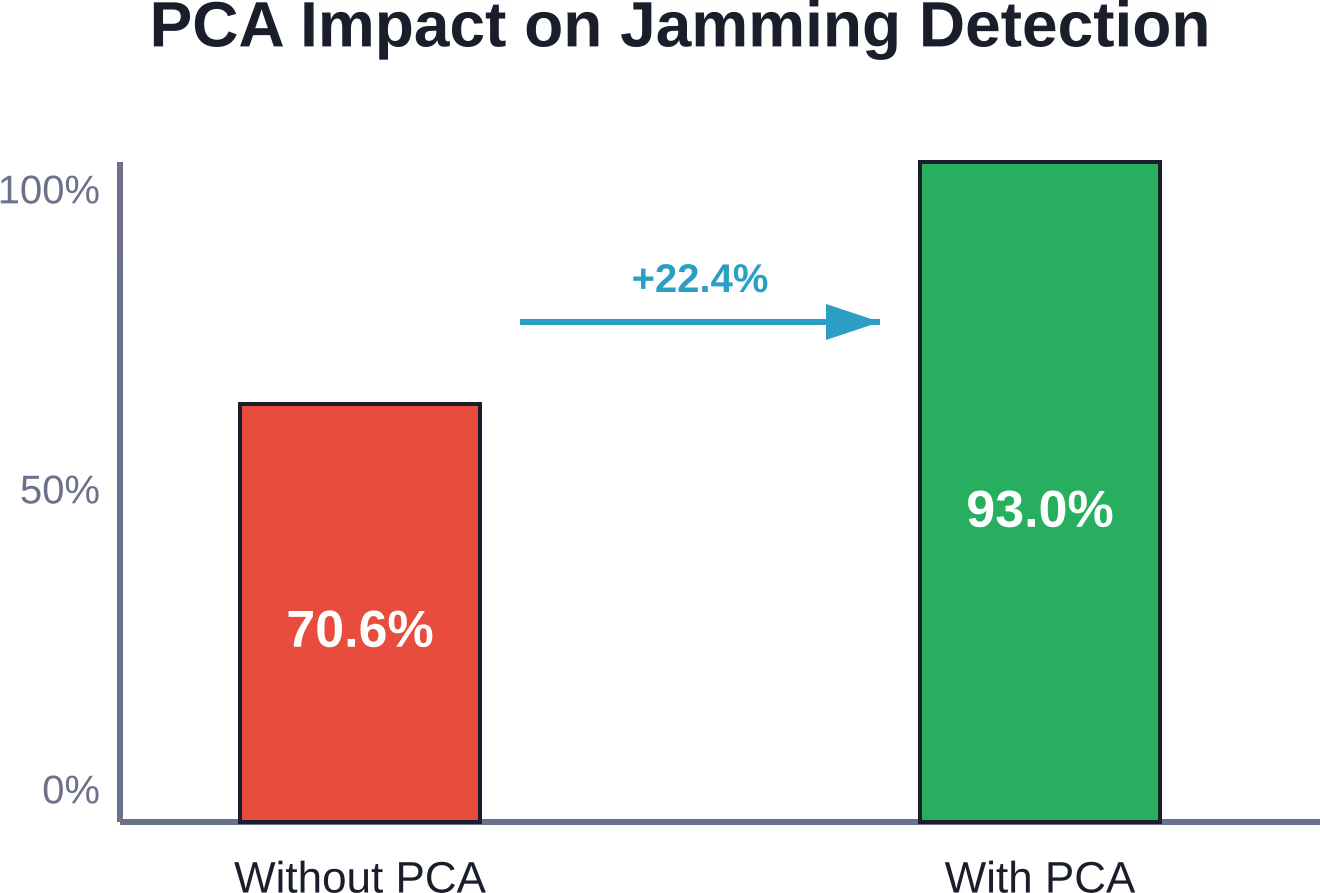
Het uitvoeren van complexe neurale netwerken op deze hardware lijkt onpraktisch. Daarom zijn technieken voor dimensionale reductie essentieel. Hoofdcomponentenanalyse (PCA) comprimeert hoogdimensionale kenmerkruimtes tot kleinere representaties die de meest variantierijke informatie vastleggen, terwijl redundante of waardeloze kenmerken worden verwijderd.
De impact is aanzienlijk. Onderzoek naar het detecteren van storingen voor GEO-satellieten toont aan dat random forest-modellen zonder PCA een nauwkeurigheid van 70,6% behalen, terwijl ze 110 valse positieven en 184 valse negatieven genereren in testscenario's. Met PCA toegepast en gereduceerd tot één dimensie, behaalt het model een nauwkeurigheid van 93,0%, waarbij het totale aantal foutieve classificaties daalt tot slechts 70 gevallen: 28 valse positieven en 42 valse negatieven.
Die prestatiewinst gaat gepaard met aanzienlijk lagere rekenvereisten. Minder invoerkenmerken betekenen snellere inferentietijden, een lager geheugenverbruik en een lager stroomverbruik. Voor CubeSats met een beperkte batterijcapaciteit bepaalt deze efficiëntiewinst of machine learning aan boord überhaupt haalbaar is.
Grote taalmodellen doen hun intrede in de satellietbeveiliging.
Voorgeprogrammeerde, grootschalige taalmodellen worden nu aangepast voor de detectie van cyberdreigingen in satellietnetwerken. Deze systemen maken gebruik van transfer learning: modellen die getraind zijn op enorme tekstcorpora worden verfijnd met behulp van satellietspecifieke telemetrie en dreigingsinformatie.
Het PLLM-CS-framework (Pre-trained LLM for Cyber Security) vertegenwoordigt deze opkomende aanpak. Door netwerklogs, commandoreeksen en telemetriestromen als taalkundige data te behandelen, passen LLM's technieken voor natuurlijke taalverwerking toe om afwijkende patronen te identificeren die traditionele classificatiemodellen over het hoofd zien.
Het PLLM-CS-framework behaalt een nauwkeurigheid van 100% op de UNSW_NB 15-dataset en demonstreert superieure prestaties in vergelijking met state-of-the-art technieken zoals BiLSTM, GRU en CNN – een ogenschijnlijk bescheiden winst die significant wordt wanneer het wordt toegepast op duizenden satellieten die miljoenen transacties per dag verwerken.
Het echte voordeel schuilt in het contextuele begrip. Logboekanalysesystemen (LLM's) leggen verbanden tussen verschillende logboekvermeldingen en herkennen wanneer een reeks op zichzelf onschuldige commando's samenkomen om kwaadaardige resultaten te creëren. Deze holistische analysemogelijkheid pakt geavanceerde, meerfasige aanvallen aan die traditionele op signaturen gebaseerde detectie omzeilen.
TinyML: Intelligentie naar CubeSats brengen
CubeSats – nanosatellieten opgebouwd uit gestandaardiseerde kubussen van 10 cm – kampen met extreme beperkingen qua middelen. Met processoren die vergelijkbaar zijn met die van smartphones van tien jaar geleden en een energiebudget dat in watt wordt gemeten, kunnen deze platforms geen volwaardige neurale netwerken uitvoeren.
TinyML lost dit op door middel van modelcompressie en kwantisatie. Onderzoek gepubliceerd in IEEE Aerospace and Electronic Systems Magazine in maart 2026 onderzoekt robuuste inbraakdetectie in CubeSats met behulp van TinyML-oplossingen die gebruikmaken van sterk geoptimaliseerde neurale netwerken die binnen kilobytes aan geheugen passen.
Deze aanpak vereist zorgvuldige afwegingen. Modellen moeten klein genoeg zijn om op embedded processors te draaien, maar tegelijkertijd geavanceerd genoeg om echte bedreigingen te detecteren. Tweetrapsarchitecturen blijken effectief: een lichtgewicht, op tijd gebaseerde classifier voert een snelle screening van pakketmetadata uit, terwijl een complexere, op data gebaseerde classifier alleen op gemarkeerd verkeer een diepgaande inspectie uitvoert.
Deze gelaagde aanpak bespaart rekenkracht en behoudt tegelijkertijd de effectiviteit van de detectie. Eerlijk gezegd is het de enige praktische manier om ML-beveiliging te implementeren op platforms met processorsnelheden die in megahertz in plaats van gigahertz worden gemeten.

Versterk de analyse van de cyberbeveiliging van satellieten met superieure AI.
Satellietsystemen werken via grote netwerken van communicatie-, telemetrie-, monitoring- en infrastructuurgegevens die continue analyse vereisen. AI Superior Werkt samen met organisaties die machine learning-benaderingen onderzoeken voor cybersecuritymonitoring en anomaliedetectie. Hun expertise omvat AI-consultancy, machine learning-engineering, data science, proof-of-concept-ontwikkeling en AI-software-implementatie.
AI Superior kan bijdragen aan projecten op het gebied van cyberbeveiliging van satellieten door:
- Het structureren van telemetrie- en operationele datasets
- Het ontwikkelen van modellen voor anomaliedetectie en -classificatie.
- Het bouwen van AI-prototypes voor het monitoren van werkprocessen.
- Het testen van de consistentie van het model onder operationele omstandigheden.
- Planningintegratie in interne beveiligingsomgevingen
Voor de cyberbeveiliging van satellieten kan dit ondersteuning bieden bij communicatiemonitoring, infrastructuurdiagnostiek, detectie van onregelmatige activiteiten en analytische beveiligingsworkflows.
Praat met AI Superior over de technische omgeving en projectprioriteiten.
Uitdagingen: datavergiftiging en vijandige machine learning
Machine learning introduceert nieuwe aanvalsoppervlakken, zelfs terwijl het de verdediging versterkt. Tegenstanders richten zich nu op de ML-modellen zelf en exploiteren kwetsbaarheden in trainingsdata en inferentieprocessen.
Bij datavergiftigingsaanvallen worden trainingsdatasets gecorrumpeerd door het injecteren van verkeerd gelabelde of kwaadaardig gemanipuleerde samples. Wanneer het machine learning-model van een satelliet opnieuw wordt getraind op deze vergiftigde data – waarbij nieuwe telemetriegegevens worden gebruikt om zich aan te passen aan veranderende omstandigheden – leert het onjuiste dreigingsclassificaties. Goedaardig verkeer wordt als kwaadaardig aangemerkt. Daadwerkelijke aanvallen blijven onopgemerkt.
De dreiging wordt ernstiger bij ruimtevaarttoepassingen, omdat satellietoperators vaak de integriteit van de trainingsdata niet kunnen garanderen. Telemetriegegevens van duizenden satellieten stromen naar gecentraliseerde machine learning-trainingspipelines. Zelfs het compromitteren van een klein percentage van deze data kan de modelprestaties van complete satellietconstellaties verslechteren.
Vijandige voorbeelden vormen een andere uitdaging. Aanvallers creëren invoer die specifiek is ontworpen om machine learning-classificatiesystemen te misleiden: netwerkverkeer dat legitiem lijkt voor het model, maar kwaadaardig gedrag uitlokt. Deze vijandige invoer maakt gebruik van de wiskundige grenzen waarbinnen neurale netwerken classificatiebeslissingen nemen.
Verdedigingsstrategieën tegen ML-aanvallen
Robuuste trainingstechnieken helpen datavergiftiging te beperken. Anomaliedetectie, toegepast op de trainingsdata zelf, kan verdacht verkeerd gelabelde voorbeelden identificeren voordat ze modellen kunnen verstoren. Ensemblemethoden – waarbij voorspellingen van meerdere onafhankelijke modellen worden gecombineerd – maken vergiftiging moeilijker, omdat tegenstanders meerdere trainingspipelines tegelijkertijd moeten compromitteren.
Vijandige training versterkt modellen tegen opzettelijk gecreëerde input. Door tijdens de training doelbewust vijandige voorbeelden te genereren en modellen te leren deze correct te classificeren, creëren ontwikkelaars neurale netwerken die inherent beter bestand zijn tegen manipulatie. Het is in feite een vorm van inenting: het model blootstellen aan verzwakte aanvallen zodat het immuniteit ontwikkelt.
Blockchain-integratie biedt een extra beveiligingslaag. Het SAT-IOTA-framework, gedemonstreerd door IEEE-onderzoek, combineert satelliettelemetrie met gedistribueerde ledgertechnologie om fraudebestendige auditsporen te creëren. Wanneer telemetriegegevens naar een blockchain worden geschreven vóór de machine learning-verwerking, wordt elke poging tot het wijzigen van historische gegevens cryptografisch detecteerbaar.
Autonome respons: de cirkel rondmaken
Detectie alleen is niet voldoende. De vertraging tussen satelliet en grondcontrole betekent dat menselijke operators niet snel genoeg kunnen reageren op snel bewegende aanvallen. Autonome responsystemen moeten in een fractie van een seconde beslissingen nemen over tegenmaatregelen.
Machine learning maakt deze autonomie mogelijk door niet alleen bedreigingen te identificeren, maar ook reacties aan te bevelen of uit te voeren. Wanneer een DoS-aanval het communicatiesysteem van een satelliet overspoelt, kunnen door machine learning aangestuurde controllers automatisch verdachte verbindingen beperken, overschakelen naar reservefrequenties of gecompromitteerde netwerksegmenten isoleren – allemaal zonder te wachten op commando's vanaf de grond.
Maar een autonome reactie roept lastige vragen op. Wat als het machine learning-model legitiem verkeer verkeerd classificeert en cruciale commando's blokkeert? Hoeveel zeg zeggenschap moeten boordsystemen hebben om het gedrag van de satelliet te beïnvloeden? Dit zijn niet alleen technische uitdagingen, maar ook operationele en ethische beslissingen over machineautonomie in veiligheidskritieke systemen.
De huidige implementaties maken gebruik van betrouwbaarheidsdrempels en beperkte reactiebevoegdheden. Wanneer de betrouwbaarheid van een dreigingsdetectie een zeer hoge drempel overschrijdt (doorgaans 95%+), kunnen autonome systemen vooraf gedefinieerde verdedigingsacties uitvoeren. Detecties met een gemiddelde betrouwbaarheid leiden tot waarschuwingen die door een mens moeten worden beoordeeld in plaats van automatische interventie. Deze hybride aanpak biedt een evenwicht tussen snelle reactie en menselijk toezicht.
Integratie met ruimte-infrastructuur
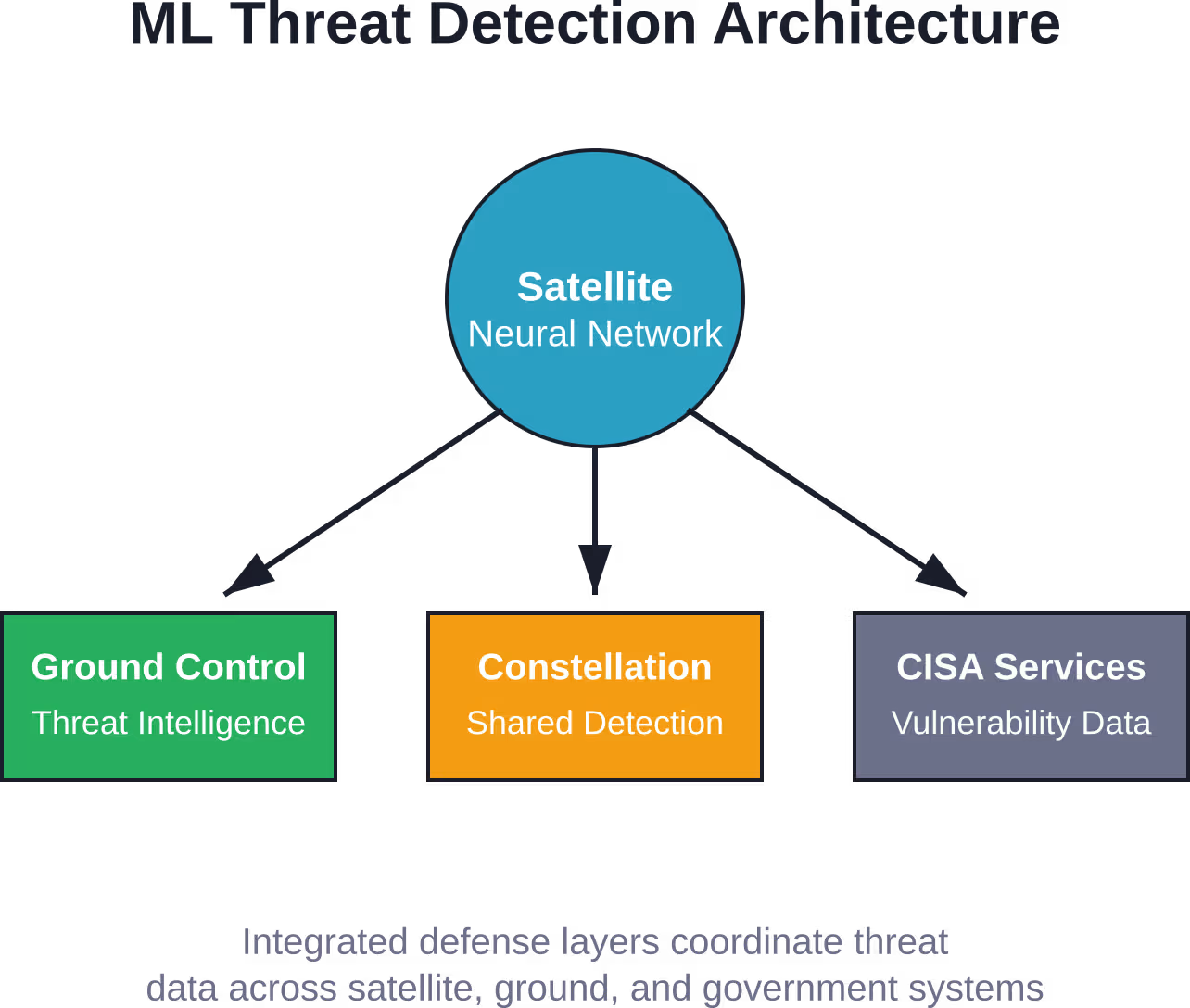
Op machine learning gebaseerde cyberbeveiliging van satellieten werkt niet op zichzelf. Effectieve verdediging vereist integratie van grondcontrolesystemen, verbindingen tussen satellieten en communicatienetwerken tussen de ruimte en de aarde.
De integratie van het grondsegment blijkt bijzonder complex. Satellietoperators beheren diverse netwerken van grondstations met verschillende communicatieprotocollen, beveiligingsmaatregelen en monitoringmogelijkheden. Machine learning-modellen moeten telemetriegegevens van deze heterogene infrastructuur verwerken en gebeurtenissen van meerdere verzamelpunten met elkaar in verband brengen.
Het CISA-raamwerk voor cyberbeveiligingsdiensten biedt richtlijnen voor de bescherming van kritieke infrastructuur die van toepassing zijn op commerciële satellietoperators. Hoewel het zich primair richt op aardse systemen, zijn de principes van gelaagde beveiliging, continue monitoring en het delen van dreigingsinformatie direct toepasbaar op ruimtevaartoperaties.
Beveiliging van verbindingen tussen satellieten biedt unieke mogelijkheden voor machine learning. Wanneer satellieten rechtstreeks met elkaar communiceren zonder tussenkomst van grondstations, kunnen ze in realtime informatie over bedreigingen delen. Als één satelliet pogingen tot jamming detecteert, kan hij andere satellieten in de constellatie waarschuwen, waardoor gecoördineerde verdedigingsreacties mogelijk zijn voordat aanvallen zich verspreiden.
Prestatiebenchmarks: Realistische verwachtingen stellen
Niet alle ML-implementaties behalen de hoge detectiepercentages die in onderzoeksartikelen worden genoemd. Implementaties in de praktijk stuiten op beperkingen die laboratoriumtests niet ondervangen, zoals beperkte trainingsdata, compromissen op het gebied van hardware en operationele beperkingen die optimale modelarchitecturen in de weg staan.
Sommige satellietoperators melden aanzienlijk lagere prestaties. Een onderpresterend model dat in onderzoek is beschreven, behaalde slechts een algehele nauwkeurigheid van 64,00% met een F1-score van 66,00% – nauwelijks beter dan willekeurig gokken bij binaire classificatie. Het falen was te wijten aan onvoldoende trainingsdata die het volledige scala aan normale operationele patronen vertegenwoordigden.
Deze prestatiekloof benadrukt het belang van contextspecifieke benchmarking. Operators die ML-cyberbeveiligingsoplossingen evalueren, zouden moeten eisen dat er getest wordt op datasets die hun specifieke satellietarchitectuur, operationeel profiel en dreigingsomgeving weerspiegelen. Een model dat getraind is op telemetriegegevens van een LEO-constellatie zal niet goed generaliseren naar GEO-communicatiesatellieten.
Uit brancherapporten blijkt dat typische implementaties detectiepercentages van 85-92% behalen met 5-8% vals-positieve percentages – lager dan de meest recente onderzoeksresultaten, maar nog steeds aanzienlijk beter dan systemen gebaseerd op signaturen. Deze realistische benchmarks helpen bij het vaststellen van haalbare doelen voor operationele implementaties.
De rol van menselijke expertise
Machine learning ondersteunt menselijke analisten in plaats van ze te vervangen. Beveiligingscentra hebben nog steeds ervaren personeel nodig dat verstand heeft van satellietoperaties, de tactieken van dreigingsactoren en de beperkingen van geautomatiseerde systemen.
Mensen blinken uit in contextueel redeneren, iets waar machine learning moeite mee heeft. Wanneer een model afwijkende telemetriegegevens signaleert, bepalen menselijke analisten of dit een echte bedreiging, een storing in de apparatuur of een onschuldige operationele verandering betreft. Deze beoordeling vereist inzicht in missiedoelstellingen, hardwarespecificaties en omgevingsfactoren die niet gemakkelijk in trainingsdata te coderen zijn.
De samenwerking werkt het beste wanneer de rollen duidelijk zijn afgebakend. ML-systemen verzorgen de continue monitoring van grote hoeveelheden telemetriegegevens, snelle patroonherkenning en initiële dreigingsclassificatie. Menselijke experts beheren de strategische dreigingsanalyse, de responsplanning, het toezicht op de modeltraining en de afhandeling van onduidelijke gevallen waarbij de betrouwbaarheid van de ML-systemen laag is.
Training wordt cruciaal. Volgens het NICE-raamwerk van CISA voor de ontwikkeling van cybersecuritypersoneel omvatten de taken op het gebied van cybersecurity-instructie het ontwikkelen en uitvoeren van trainingen en voorlichting over cybersecurity ter ondersteuning van een effectieve implementatie van beveiligingsinstrumenten. Operators moeten niet alleen begrijpen hoe ze moeten reageren op door machine learning gegenereerde waarschuwingen, maar ook hoe de onderliggende modellen werken, wat hun beperkingen zijn en wanneer ze geautomatiseerde aanbevelingen moeten negeren.
Toekomstige ontwikkelingen: Waar gaat ML-satellietbeveiliging naartoe?
Opkomende technologieën beloven de cyberbeveiliging van op machine learning gebaseerde satellieten verder te verbeteren. Kwantumresistente cryptografie in combinatie met kwantummachine learning zou detectiesystemen kunnen creëren die bestand zijn tegen zowel klassieke als kwantumcomputeraanvallen.
Hardware voor AI-acceleratie aan de rand van het netwerk, speciaal ontworpen voor ruimteomgevingen, maakt het mogelijk om geavanceerdere neurale netwerken op satellietprocessoren uit te voeren. De huidige CubeSats maken gebruik van algemene microcontrollers; de volgende generatie platforms zal beschikken over speciale tensorverwerkingseenheden die geoptimaliseerd zijn voor machine learning-inferentie.
Cross-domain learning vertegenwoordigt een nieuwe grens. Modellen die getraind zijn op beveiligingsgegevens van aardse netwerken kunnen kennis overdragen naar satelliettoepassingen, waardoor de benodigde trainingsdata voor ruimtesystemen worden verminderd. Deze transfer learning-aanpak pakt de fundamentele uitdaging aan dat satellietoperators beperkte aanvalsdata hebben om mee te trainen – juist omdat hun systemen nog niet op grote schaal zijn gecompromitteerd.
De OrbitWhisperer-technologie, ontwikkeld aan de Embry-Riddle Aeronautical University, illustreert deze toekomstgerichte aanpak. Professor Rosa Szurgot presenteerde OrbitWhisperer, een AI-gestuurd raamwerk voor de veerkracht van satellieten, op 18 februari 2026 aan het Wetenschaps- en Technologiebureau van de NAVO in Riga, Letland.
Implementatieoverwegingen voor satellietoperators
Organisaties die machine learning-cyberbeveiliging inzetten voor satellietsystemen staan voor diverse praktische beslissingen. Bij de architectuurkeuze moet een evenwicht worden gevonden tussen detectieprestaties, rekenkracht, kosten en operationele complexiteit.
Cloudgebaseerde verwerking biedt rekenkundige voordelen: geavanceerde modellen kunnen draaien op servers op de grond met ruime resources. Maar latentie en communicatiebandbreedte beperken deze aanpak voor realtime dreigingsdetectie. Hybride architecturen blijken het meest effectief: lichtgewicht modellen op satellieten voor onmiddellijke detectie, met gedetailleerde analyse in systemen op de grond.
Het verzamelen van trainingsgegevens brengt voortdurende uitdagingen met zich mee. Operators moeten uitgebreide telemetriegegevens verzamelen die de normale werking gedurende alle missiefasen vertegenwoordigen: lancering, inbedrijfstelling, nominale werking, eclipsperioden en baanonderhoudsmanoeuvres. Zonder uitgebreide basisgegevens genereren machine learning-modellen een overmatig aantal valse positieven.
CISA biedt gratis cybersecuritydiensten en -tools die satellietoperators kunnen gebruiken. Hoewel de focus primair ligt op aardse infrastructuur, helpen de kwetsbaarheidsinformatie en dreigingsindicatoren die CISA levert bij de implementatie van beveiligingsmaatregelen voor satellieten. De wekelijks gepubliceerde bulletins met een overzicht van kwetsbaarheden bevatten informatie over CVE-kwetsbaarheden die van invloed kunnen zijn op grondsystemen en softwarecomponenten van satellieten.
| Implementatiemodel | Detectievertraging | Computationele kracht | Het beste voor |
|---|---|---|---|
| Alleen aan boord | < 1 seconde | Beperkt | CubeSats, LEO-constellaties |
| Alleen op de grond | 0,5-2 seconden | Onbeperkt | GEO-satellieten, lage gegevensoverdrachtssnelheid |
| Hybrid | < 1 seconde | Medium | Commerciële LEO- en MEO-systemen |
| Verspreid | < 500 ms | Hoog | Grote constellaties, ISL-compatibel |
Kosten-batenanalyse: Is machine learning de investering waard?
Het implementeren van cyberbeveiliging voor machine learning vereist aanzienlijke investeringen vooraf – modelontwikkeling, trainingsinfrastructuur, gespecialiseerd personeel en aanpassingen aan de satellietapparatuur. Operators moeten deze kosten afwegen tegen de potentiële verliezen als gevolg van succesvolle cyberaanvallen.
Een gecompromitteerde satelliet brengt catastrofale financiële risico's met zich mee. De kosten voor het opnieuw lanceren van commerciële communicatiesatellieten kunnen aanzienlijk zijn, nog afgezien van de gederfde inkomsten tijdens de verstoring van de dienstverlening of de reputatieschade als gevolg van beveiligingslekken.
Het kwantificeren van de ROI van ML-beveiliging blijft echter een uitdaging. Hoe meet je de waarde van aanvallen die niet hebben plaatsgevonden? Risicogebaseerde raamwerken bieden uitkomst: schat de aanvalskans zonder ML-verdediging, vermenigvuldig dit met de potentiële omvang van het verlies en vergelijk dit met de implementatiekosten.
Op machine learning gebaseerde inbraakdetectiesystemen verlagen het aantal succesvolle aanvallen aanzienlijk in vergelijking met traditionele systemen op basis van signaturen, door nieuwe aanvalspatronen te identificeren. Voor waardevolle satellietconstellaties, waar een enkele inbreuk zich over meerdere ruimtevaartuigen kan verspreiden, rechtvaardigt deze risicoreductie een aanzienlijke investering.
Regelgeving en normenlandschap
De normen voor cyberbeveiliging in de ruimtevaart blijven gefragmenteerd over internationale en nationale instanties. Het Inter-Agency Space Debris Coordination Committee (IADC) behandelt fysieke veiligheid, maar beschikt niet over alomvattende richtlijnen voor cyberbeveiliging. Individuele ruimtevaartorganisaties en militaire organisaties hanteren hun eigen veiligheidseisen.
Het cybersecurity-raamwerk van het National Institute of Standards and Technology (NIST) biedt algemene richtlijnen die van toepassing zijn op grondsystemen voor satellieten. IEEE heeft technische standaarden gepubliceerd voor de beveiliging van satellietcommunicatie, waarin ML-gebaseerde dreigingsdetectie steeds vaker wordt genoemd als een opkomende beste praktijk.
Commerciële satellietoperators navigeren door dit lappendeken aan regelgeving door gelaagde verdedigingsstrategieën te implementeren die verder gaan dan de minimale wettelijke vereisten. Wanneer normen onduidelijk zijn met betrekking tot ML-beveiliging, nemen operators vaak aanbevelingen over uit wetenschappelijke literatuur en werkgroepen in de sector.
In de toekomst zullen standaardiseringsinspanningen waarschijnlijk leiden tot verplichte monitoring op basis van machine learning voor bepaalde satellietcategorieën, met name voor satellieten die kritieke infrastructuurdiensten leveren. Een precedent bestaat al in de aardse sector, waar regelgeving steeds vaker AI-gestuurde beveiligingsmonitoring vereist voor financiële dienstverlening en gezondheidszorgsystemen.
Veelgestelde vragen
Hoe nauwkeurig is machine learning bij het detecteren van cyberaanvallen op satellieten?
De detectienauwkeurigheid varieert per aanvalstype en implementatiescenario. Op tijd gebaseerde kunstmatige neurale netwerken behalen een F1-score van 99,59% voor DoS-aanvallen in CubeSat-systemen, terwijl op data gebaseerde classificatiesystemen een score van 87,66% behalen voor replay-aanvallen. Onder realistische operationele omstandigheden met gedeeltelijke netwerkdekking behouden deep learning-modellen een nauwkeurigheid van 94,35% voor de classificatie van meerdere bedreigingsklassen. Deze prestaties overtreffen aanzienlijk traditionele op signaturen gebaseerde detectiesystemen, die moeite hebben met nieuwe aanvalspatronen. Operators moeten echter rekening houden met detectiesnelheden van 85-92% in de praktijk, na aftrek van hardwarebeperkingen en beperkingen in de trainingsdata.
Wat zijn de belangrijkste cyberdreigingen voor satellietsystemen?
Satellieten worden geconfronteerd met jamming-aanvallen die RF-communicatieverbindingen verstoren, denial-of-service-aanvallen die de processors aan boord overbelasten, command-injectie-aanvallen die ongeautoriseerde instructies naar ruimtevaartuigen sturen, replay-aanvallen die onderschepte legitieme commando's opnieuw verzenden en datavergiftiging die trainingsdatasets voor machine learning corrumpeert. LEO-satellieten zijn met name kwetsbaar voor aanvallen op verbindingen tussen satellieten, terwijl GEO-systemen te maken hebben met jamming-aanvallen vanaf de grond. CubeSats met beperkte beveiliging vormen aantrekkelijke doelwitten voor aanvallers die technieken testen. Onderzoek wijst uit dat 57% aan IoT-apparaten – een categorie waartoe veel CubeSat-systemen behoren – blootgesteld zijn aan ernstige aanvallen als gevolg van onvoldoende beveiligingsmaatregelen.
Kan machine learning draaien op kleine satellieten met beperkte rekenkracht?
Ja, dankzij TinyML-technieken die neurale netwerken comprimeren en optimaliseren voor embedded processors. CubeSats implementeren met succes tweetrapsdetectiearchitecturen: lichtgewicht, op tijd gebaseerde classifiers screenen snel pakketmetadata, terwijl complexere, op data gebaseerde classifiers alleen diepgaande inspectie uitvoeren op gemarkeerd verkeer. Hoofdcomponentenanalyse reduceert de dimensies van kenmerken met 60-80%, waardoor modellen kunnen draaien op processors met kloksnelheden in de megahertz-range en kilobytes aan beschikbaar geheugen. De keerzijde is een iets lagere detectienauwkeurigheid in vergelijking met grootschalige modellen, maar de prestaties blijven aanzienlijk beter dan die van op signaturen gebaseerde alternatieven. Kwantiseringstechnieken die de numerieke precisie verlagen van 32-bit naar 8-bit verminderen de rekenkundige vereisten verder.
Hoe verbetert dimensionaliteitsreductie de beveiliging van machine learning bij satellieten?
Hoofdcomponentenanalyse (PCA) en andere technieken voor dimensionaliteitsreductie comprimeren hoogdimensionale telemetriegegevens tot kleinere feature-sets die de meest variantierijke informatie behouden. Voor het detecteren van jamming in GEO-satellieten verbetert PCA-voorverwerking de nauwkeurigheid van random forest-modellen van 70,6% naar 93,0%, terwijl tegelijkertijd de rekenlast wordt verminderd. Dit dubbele voordeel – betere prestaties en een lager resourceverbruik – maakt machine learning (ML) praktisch toepasbaar voor satellietsystemen met beperkte energiebronnen. Dimensionaliteitsreductie versnelt ook de trainingstijd, maakt snellere inferentie mogelijk voor realtime dreigingsdetectie en vermindert de geheugenvereisten voor het opslaan van modelparameters. De techniek verwijdert redundante of laagwaardige kenmerken die ruis in plaats van signaal toevoegen aan classificatiebeslissingen.
Wat is datavergiftiging en welke bedreiging vormt het voor machine learning-systemen op satellieten?
Bij datavergiftigingsaanvallen worden corrupte, verkeerd gelabelde of kwaadwillig gemanipuleerde samples in trainingsdatasets geïnjecteerd, waardoor machine learning-modellen onjuiste dreigingsclassificaties leren. Wanneer satellietoperators modellen opnieuw trainen met telemetrie die vergiftigde data bevat, kunnen de resulterende classificatoren legitiem verkeer als kwaadaardig aanmerken of daadwerkelijke aanvallen volledig missen. De dreiging is met name ernstig voor ruimtesystemen, omdat trainingspipelines telemetrie van duizenden satellieten verzamelen, waardoor het moeilijk is om de integriteit van elk datapunt te verifiëren. Verdedigingsmechanismen omvatten anomaliedetectie toegepast op de trainingsdata zelf, ensemblemethoden die het compromitteren van meerdere onafhankelijke modellen vereisen, en op blockchain gebaseerde audit trails die manipulatiebestendige records van alle telemetrie vastleggen vóór de machine learning-verwerking.
Hebben satellietoperators gespecialiseerd personeel nodig om cyberbeveiliging tegen machine learning te implementeren?
Implementatie vereist personeel met expertise op meerdere domeinen, zowel op het gebied van satellietoperaties als machine learning. Volgens het NICE-raamwerk van CISA omvat effectieve cybersecurity-instructie het evalueren van de volledigheid van trainingsprogramma's, het vaststellen van de operationele gevolgen van beveiligingslekken en het implementeren van organisatiebrede opleidingsbeleid. Voor satelliettoepassingen moet het personeel inzicht hebben in orbitale mechanica, ruimtevaarttechniek, RF-communicatieprotocollen, neurale netwerkarchitecturen, trainingsdatabeheer en dreigingsanalyse. Veel operators werken in eerste instantie samen met gespecialiseerde beveiligingsbedrijven en ontwikkelen vervolgens in de loop van 2-3 jaar interne capaciteiten. Het menselijke element blijft cruciaal: machine learning ondersteunt, in plaats van vervangt, menselijke analisten die contextueel oordeel leveren dat geautomatiseerde systemen missen.
Hoe delen ML-satellietbeveiligingssystemen dreigingsinformatie tussen verschillende satellietconstellaties?
Verbindingen tussen satellieten maken het mogelijk om in realtime dreigingsgegevens te delen zonder tussenkomst van grondstations. Wanneer een satelliet jamming, inbraakpogingen of afwijkende telemetriepatronen detecteert, zendt deze waarschuwingen uit naar andere satellieten binnen het netwerk met behulp van gestandaardiseerde dreigingsindicatoren. Ontvangende satellieten actualiseren de dreigingsprofielen in hun machine learning-modellen en passen de gevoeligheid van de monitoring hierop aan. Deze gedistribueerde detectiemethode verkort de 'dwell time' van een aanval – de periode tussen de eerste inbreuk en de detectie ervan – aanzienlijk. Blockchain-integratie creëert cryptografisch verifieerbare logboeken van gedeelde inlichtingen, waardoor tegenstanders geen valse dreigingsgegevens kunnen injecteren om defensieve reacties uit te lokken die legitieme operaties verstoren. Dreigingsinformatie van bronnen op de grond, zoals de CISA-kwetsbaarheidsbulletins, vult de interne uitwisseling binnen het netwerk aan.
Conclusie: Machine learning als essentiële infrastructuur voor ruimteveiligheid
Machine learning is geëvolueerd van experimentele technologie tot essentiële infrastructuur voor de cyberbeveiliging van satellieten. De prestatiegegevens zijn overtuigend: detectiepercentages van meer dan 99% voor bepaalde aanvalscategorieën, vals-positieve percentages onder de 4% en de mogelijkheid om nieuwe bedreigingen te identificeren die op signaturen gebaseerde systemen volledig missen.
Maar de implementatie vereist realistische verwachtingen en een zorgvuldige planning. Machine learning is geen wondermiddel dat alle veiligheidsrisico's elimineert. Modellen vereisen uitgebreide trainingsdata, voortdurende afstemming en integratie met bredere defensiestrategieën. Menselijke expertise blijft onmisbaar voor contextuele analyse en strategische besluitvorming.
Naarmate het aantal satellietconstellaties toeneemt en de ruimte-infrastructuur steeds crucialer wordt voor aardse diensten, zal de uitdaging op het gebied van cyberbeveiliging alleen maar groter worden. Tegenstanders ontwikkelen steeds geavanceerdere aanvalstechnieken. Het potentiële aanvalsoppervlak breidt zich uit door commerciële ruimtevaartprojecten en internationale concurrentie.
Op machine learning gebaseerde verdediging biedt de adaptieve, schaalbare beveiligingsarchitectuur die ruimtevaartoperaties vereisen. Organisaties die satellieten beheren – of het nu gaat om communicatie, aardobservatie, navigatie of defensietoepassingen – zouden investeringen in cybersecurity op basis van machine learning prioriteit moeten geven als essentieel risicobeheer, en niet als optionele verbetering.
Bent u klaar om uw satellietinfrastructuur te versterken tegen steeds veranderende cyberdreigingen? Evalueer op machine learning gebaseerde inbraakdetectiesystemen die aansluiten op uw satellietconstellatiearchitectuur, investeer in training voor operationeel personeel en zorg voor het delen van dreigingsinformatie met branchepartners en overheidsinstanties zoals CISA. De orbitale omgeving is vijandig; uw beveiligingsstrategie moet veerkrachtig zijn.