
Korte samenvatting: Machine learning vormt de basis van de meest essentiële functies van sociale mediaplatformen – van spamfiltering en contentaanbeveling tot sentimentanalyse en advertentietargeting. Door patronen in miljarden gebruikersinteracties te analyseren, bepalen ML-algoritmen wat gebruikers zien, hoe platforms schadelijke content bestrijden en hoe adverteerders hun doelgroepen bereiken. Tegelijkertijd roept dit belangrijke vragen op over vooringenomenheid, privacy en algoritmische transparantie.
Sociale mediaplatforms verwerken dagelijks petabytes aan data. Zonder machine learning zouden platforms zoals Facebook, Instagram, TikTok en LinkedIn bezwijken onder de enorme hoeveelheid spam, haatzaaiende berichten en irrelevante content die miljarden feeds overspoelt.
Maar het zit zo: machine learning zorgt er niet alleen voor dat platforms blijven functioneren. Het bepaalt de hele gebruikerservaring.
Telkens wanneer een platform besluit welk bericht bovenaan een feed verschijnt, een bericht als spam markeert of een nieuwe connectie voorstelt, nemen machine learning-algoritmes in een fractie van een seconde beslissingen op basis van patronen die in enorme datasets worden gedetecteerd. Deze algoritmes leren continu van gebruikersgedrag – klikken, likes, shares, bestede tijd – en passen hun voorspellingen daarop aan.
Wereldwijd blijkt uit enquêtes dat 391.000.000 mkb-bedrijven nu AI-toepassingen gebruiken, een stijging ten opzichte van 261.000.000 in 2024. De technologie is allang niet meer in handen van grote technologiebedrijven. Deze wijdverspreide toepassing brengt echter ook kritiek met zich mee: zorgen over vooringenomenheid, schendingen van de privacy en de maatschappelijke impact van algoritmische datafeeds hebben wereldwijd de aandacht getrokken van overheidsinstanties en academische instellingen.
Wat is machinaal leren?
Machine learning is een onderdeel van kunstmatige intelligentie waarmee computers kunnen leren van data zonder expliciet geprogrammeerd te hoeven worden voor elk scenario. In plaats van rigide regels te volgen, identificeren ML-algoritmen patronen, doen ze voorspellingen en verbeteren ze in de loop van de tijd naarmate ze meer informatie verwerken.
Denk bijvoorbeeld aan spamdetectie. Ingenieurs schrijven geen regels voor elk mogelijk spambericht. In plaats daarvan trainen ze een machine learning-model met duizenden voorbeelden – zowel spam als legitieme berichten – en het model leert de twee van elkaar te onderscheiden.
Drie primaire typen machine learning vormen de basis van sociale media-applicaties:
- Begeleid leren: Het algoritme wordt getraind op gelabelde data (bijvoorbeeld berichten die als spam of niet-spam zijn gemarkeerd) en leert labels voor nieuwe data te voorspellen.
- Onbegeleid leren: Het algoritme vindt verborgen patronen in niet-gelabelde gegevens, zoals het groeperen van gebruikers met vergelijkbare interesses.
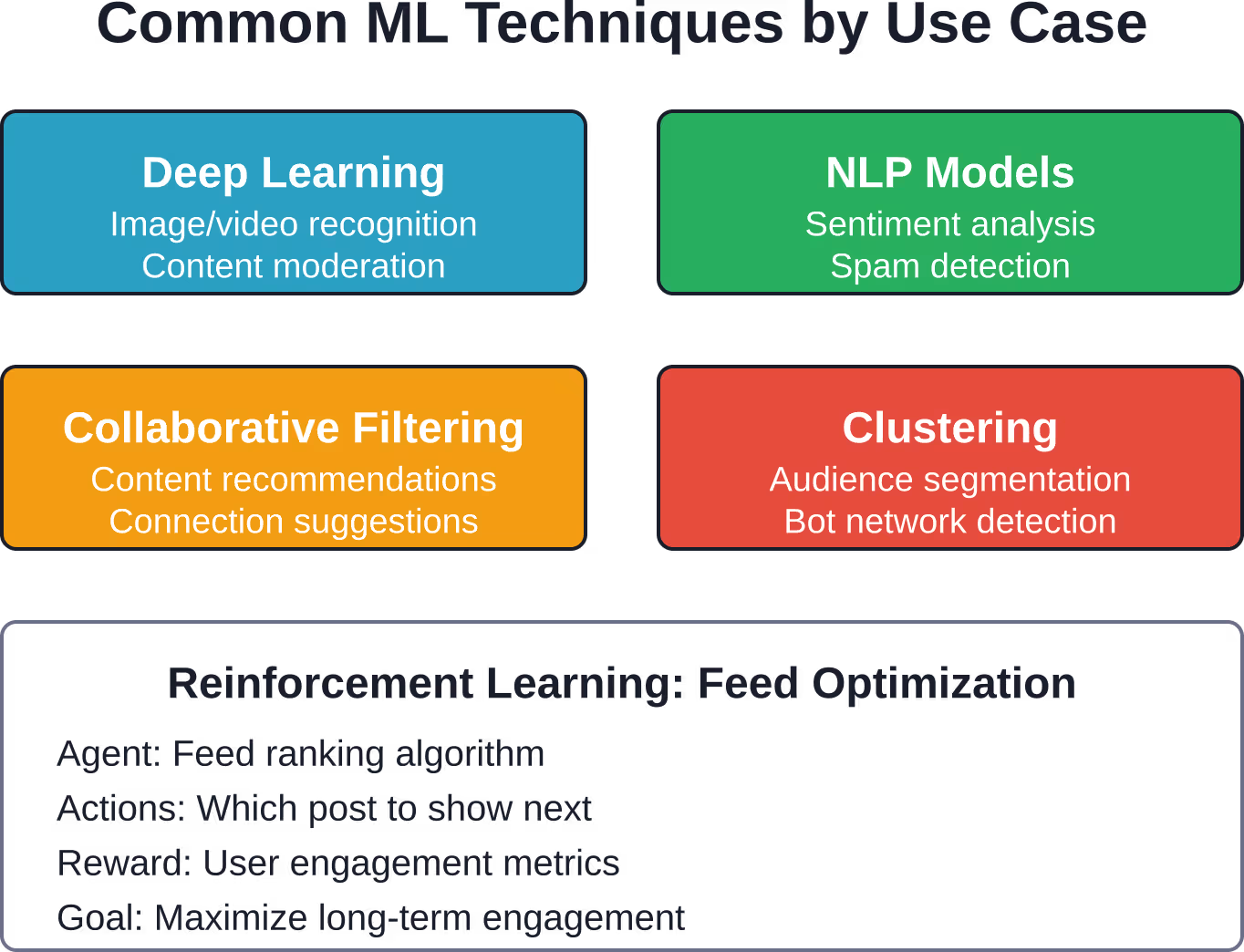
- Versterkingsleren: Het algoritme leert door vallen en opstaan en ontvangt beloningen voor gewenst gedrag. Deze beloningen worden gebruikt om de ranking in de feed te optimaliseren en zo de betrokkenheid te maximaliseren.
Deep learning, een geavanceerdere vorm van machine learning die gebruikmaakt van neurale netwerken met meerdere lagen, is vooral prominent geworden in beeldherkenning, videoanalyse en natuurlijke taalverwerking op sociale platforms.
Kernapplicaties van machine learning op sociale mediaplatformen
Socialemediabedrijven zetten machine learning in voor vrijwel elke functie waarmee gebruikers dagelijks in contact komen. Dit is waar deze algoritmes de grootste impact hebben.
Aanbeveling van content en rangschikking van feeds
De tijd van chronologische feeds is allang voorbij. Moderne platforms gebruiken geavanceerde rankingalgoritmes die voorspellen welke berichten, video's of advertenties gebruikers het langst geboeid zullen houden.
Deze aanbevelingssystemen analyseren honderden signalen: wie de content heeft geplaatst, wanneer deze is geplaatst, hoeveel interacties deze heeft ontvangen, hoe vergelijkbare gebruikers erop hebben gereageerd en hoe de gebruiker in het verleden met vergelijkbare content heeft gereageerd. Neurale netwerken verwerken deze informatie om een gepersonaliseerde feed voor elke gebruiker te genereren.
Onderzoek van Stanford heeft aangetoond dat het integreren van democratische waarden in algoritmes voor het rangschikken van nieuwsfeeds de partijpolitieke vijandigheid kan verminderen. De uitdaging is niet alleen technisch van aard, maar gaat erom maatschappelijke waarden te verankeren in systemen die geoptimaliseerd zijn voor engagementstatistieken.
Eerlijk gezegd: het optimaliseren van de betrokkenheid van gebruikers staat vaak haaks op hun welzijn. Algoritmes die de kijktijd maximaliseren, kunnen controversiële of sensationele content promoten omdat die sterkere reacties oproept.
Spamdetectie en contentmoderatie
Spamfiltering is een van de oudste en meest succesvolle toepassingen van machine learning in sociale media. Platforms trainen classificatiemodellen op miljoenen voorbeelden om automatisch spamberichten, nepaccounts en schadelijke links te identificeren en te verwijderen.
Modellen voor natuurlijke taalverwerking analyseren tekst op spamindicatoren, zoals verdachte URL's, herhalende zinnen en ongebruikelijke berichtpatronen. Modellen voor computervisie scannen afbeeldingen op verboden inhoud. Deze systemen werken in realtime en filteren miljarden berichten voordat ze de gebruikers bereiken.
Contentmoderatie is veel complexer geworden. Platforms gebruiken nu machine learning om haatzaaiende taal, desinformatie, zelfbeschadigende content en gecoördineerde manipulatiecampagnes te detecteren. Maar deze systemen zijn verre van perfect.
Context is van enorm belang bij contentmoderatie, en machine learning-modellen hebben moeite met nuances, sarcasme en culturele context. Volgens het rapport van de Federal Trade Commission uit 2024 (gepubliceerd op 19 september 2024) hielden grote sociale media- en videostreamingbedrijven zich bezig met grootschalige surveillance van gebruikers met ontoereikende waarborgen, met name voor jongere gebruikers.
Sentiment analyse
Socialemediaplatforms en merken gebruiken sentimentanalyse om de publieke opinie te peilen aan de hand van berichten, reacties en recensies. Machine learning-modellen classificeren tekst als positief, negatief of neutraal en detecteren steeds vaker specifieke emoties zoals woede, vreugde of frustratie.
Deze functionaliteit helpt platforms bij het identificeren van opkomende crises, het volgen van de merkreputatie en het begrijpen van de reacties van het publiek op content. Marketingteams monitoren het sentiment rond campagnes. Klantenserviceteams geven prioriteit aan negatieve feedback die onmiddellijke aandacht vereist.
De technologie is gebaseerd op natuurlijke taalverwerking en deep learning-modellen die getraind zijn op enorme hoeveelheden gelabelde tekst. Deze modellen moeten overweg kunnen met slang, emoji's, afkortingen en de voortdurend veranderende taal van online gemeenschappen.
Gerichte reclame
Machine learning maakt adverteren op sociale media buitengewoon nauwkeurig. Platforms bouwen gedetailleerde gebruikersprofielen op basis van demografische gegevens, interesses, surfgedrag en interactiepatronen. Adverteerders richten zich op specifieke doelgroepen en machine learning-algoritmes optimaliseren de advertentieweergave om conversies te maximaliseren.
Lookalike-modellering identificeert nieuwe potentiële klanten die lijken op bestaande klanten. Dynamische creatieve optimalisatie test automatisch verschillende advertentievarianten en toont de best presterende versie aan elk gebruikerssegment. Biedingsoptimalisatiealgoritmen bepalen de optimale prijs voor elke advertentievertoning.
De FTC heeft haar bezorgdheid geuit over prijsbeleid gebaseerd op surveillance, waarbij persoonlijke gegevens zoals precieze locatie of browsegeschiedenis kunnen worden gebruikt om individuele prijzen voor consumenten vast te stellen. Uit onderzoek van de FTC in 2024 bleek dat deze praktijken wijdverspreider zijn dan eerder werd aangenomen.
De EU-wetgeving inzake kunstmatige intelligentie (AI), die op 1 augustus 2024 van kracht is geworden, stelt strenge eisen aan risicovolle AI-systemen, waaronder systemen die worden gebruikt voor gerichte reclame. Niet-naleving kan leiden tot aanzienlijke boetes, waarbij de hoogte van de boetes verschilt afhankelijk van de ernst van de overtreding en de omvang van de organisatie.
Gezichtsherkenning en beeldtagging
Convolutionele neurale netwerken maken het mogelijk om automatisch personen in foto's te taggen, waardoor gebruikers hun content gemakkelijker kunnen organiseren en doorzoeken. Deze modellen detecteren gezichten, herkennen individuen en kunnen zelfs kenmerken zoals leeftijd of emotie afleiden.
De technologie heeft tot discussies over privacy geleid. Verschillende rechtsgebieden beperken nu gezichtsherkenning zonder expliciete toestemming. Platforms hebben hun functionaliteit hierop aangepast, waarbij sommige de automatische tagging standaard hebben uitgeschakeld.
Chatbots en klantenservice
Veel sociale platforms zetten machine learning-chatbots in om klantvragen af te handelen, geautomatiseerde antwoorden te geven en complexe problemen door te verwijzen naar menselijke medewerkers. Deze systemen gebruiken natuurlijke taalverwerking om gebruikersvragen te interpreteren en passende antwoorden te genereren.
De opkomst van grote taalmodellen heeft de mogelijkheden van chatbots aanzienlijk verbeterd. Moderne conversationele AI kan genuanceerde vragen beantwoorden, de context behouden gedurende meerdere beurten en zelfs persoonlijkheidskenmerken vertonen die aansluiten bij de merkidentiteit.

Bouw modellen voor sociale media-analyse met superieure AI.
Sociale mediaplatforms genereren continu data over gedrag, interactie en tekst, die gebruikt kunnen worden voor machine learning-analyses. AI Superior Helpt organisaties bij het structureren van AI-projecten gericht op monitoring, classificatie, voorspelling en sociale data-analyse. Hun diensten omvatten machine learning engineering, NLP, AI-consultancy, data science en AI-software-implementatie.
AI Superior kan machine learning-projecten voor sociale media ondersteunen door:
- Het verwerken van datasets over betrokkenheid en interactie.
- Het ontwikkelen van voorspellende en classificatiemodellen
- NLP-methoden toepassen op tekstuele inhoud
- Het bouwen van analytische proof-of-concept-systemen
- Evaluatie van de betrouwbaarheid van het model en de analytische kwaliteit
- Ondersteuning van integratie in rapportage- en monitoringworkflows
Voor toepassingen op sociale media kan dit betrekking hebben op sentimentanalyse, doelgroepsegmentatie, voorspelling van betrokkenheid, contentmonitoring en trendanalyse.
👉Neem contact op met AI Superior om de analytische vereisten en de projectomvang te beoordelen.
Machine learning-technieken als drijvende kracht achter sociale media
Verschillende machine learning-benaderingen lossen verschillende problemen op op sociale platforms. Hieronder vind je de belangrijkste technieken.
Neurale netwerken en diep leren
Diepe neurale netwerken blinken uit in taken die patroonherkenning vereisen in complexe, hoogdimensionale data. Convolutionele neurale netwerken verwerken afbeeldingen en video's. Recurrente neurale netwerken en transformernetwerken verwerken sequentiële data zoals tekst en tijdreeksinteracties.
Deze modellen vereisen enorme rekenkracht. Onderzoek naar schaalbare ML-datasystemen heeft efficiëntieproblemen bij het trainen van datasets aan het licht gebracht. Intelligente caching-systemen zoals Shift hebben aanzienlijke besparingen op opslagruimte gerealiseerd door de manier waarop gegevens tijdens de modeltraining worden verwerkt te optimaliseren.
Natuurlijke taalverwerking
NLP stelt machines in staat om menselijke taal te begrijpen, te interpreteren en te genereren. Sociale platforms gebruiken NLP voor sentimentanalyse, contentmoderatie, vertaling en conversatie-interfaces.
Transformer-modellen zoals BERT en GPT hebben een revolutie teweeggebracht in NLP door context en semantische betekenis veel beter vast te leggen dan eerdere benaderingen. Deze modellen vormen de basis voor alles, van geautomatiseerde samenvattingen van content tot geavanceerde spamdetectie.
Collaboratieve filtering
Collaboratieve filtering vormt de basis van aanbevelingssystemen door patronen te vinden in de interacties tussen gebruikers en items. Als gebruikers A en B allebei item 1, 2 en 3 leuk vonden, en gebruiker A ook item 4 leuk vond, dan beveelt het algoritme item 4 aan gebruiker B aan.
Deze aanpak leidt tot suggesties voor vrienden, aanbevelingen voor content en op interesses gebaseerde targeting. Maar het kan filterbubbels en privacyproblemen veroorzaken wanneer er via inferenties gevoelige kenmerken van gebruikers aan het licht komen.
Clusteringsalgoritmen
Ongecontroleerde clustering groepeert vergelijkbare gebruikers of content zonder vooraf gedefinieerde labels. K-means, hiërarchische clustering en op dichtheid gebaseerde methoden helpen platforms bij het segmenteren van doelgroepen, het detecteren van gecoördineerde botnetwerken en het identificeren van opkomende onderwerpen.
Onderzoek heeft aangetoond dat clustering inzicht kan geven in hoe desinformatie zich verspreidt binnen verschillende gemeenschappen, waardoor platforms interventies effectiever kunnen richten.
De vertrouwensuitdaging: vooroordelen, eerlijkheid en transparantie
Machine learning-systemen erven vooroordelen uit hun trainingsdata en ontwerpkeuzes. Wanneer sociale platforms op grote schaal vooringenomen algoritmes inzetten, kunnen de gevolgen ernstig zijn: discriminerende advertentietargeting, oneerlijke contentmoderatie en versterking van schadelijke stereotypen.
Onderzoekers van Penn State hebben FairGNN ontwikkeld, een raamwerk dat is ontworpen om vooringenomenheid in aanbevelingen voor sociale netwerkverbindingen te elimineren. Het D-Lab van MIT heeft richtlijnen gepubliceerd over eerlijkheid en het juiste gebruik van machine learning, waarbij wordt opgemerkt dat onjuiste implementatie kan leiden tot sterke vooringenomenheid of uitsluiting van bepaalde groepen.
Kalibratie is één benadering om eerlijkheid te waarborgen. Zoals onderzoek van Brookings aantoont, vereist kalibratie dat de voorspelde waarschijnlijkheden nauwkeurig zijn voor elke demografische groep – als een systeem een kans van 70% op een positieve uitkomst voorspelt voor een specifieke groep, dan zou 70% van de gevallen in die groep inderdaad een positieve uitkomst moeten hebben.
Maar wacht even. Verschillende definities van eerlijkheid staan vaak haaks op elkaar. Optimalisatie voor de ene eerlijkheidsmaatstaf kan een andere juist verslechteren. Er bestaat geen universele oplossing.
| Eerlijkheidsbenadering | Definitie | Afwegingen |
|---|---|---|
| Demografische pariteit | Gelijke uitkomstpercentages in alle groepen | Kan de nauwkeurigheid verminderen als groepen verschillende basispercentages hebben. |
| Gelijke kansen | Gelijke percentages van daadwerkelijk positieve resultaten in alle groepen | Gaat niet in op de verschillen in vals-positieve resultaten. |
| Kalibratie | De voorspelde waarschijnlijkheden komen overeen met de werkelijke uitkomsten. | Kunnen naast elkaar bestaan, maar met uiteenlopende gevolgen. |
| Individuele rechtvaardigheid | Personen met vergelijkbare kenmerken ontvangen vergelijkbare voorspellingen. | Vereist het definiëren van een betekenisvolle gelijkenis. |
Elham Tabassi, hoofdadviseur AI bij NIST en leider van het Trustworthy and Responsible AI-programma, benadrukt dat naarmate generatieve AI-tools gangbaarder worden, het essentieel is om de impact ervan op mens en maatschappij zorgvuldig te overwegen. In september 2023 werd ze door Time uitgeroepen tot een van de 100 meest invloedrijke personen in de kunstmatige intelligentie.
Transparantie blijft een grote uitdaging. De meeste algoritmes van sociale media werken als black boxes. Gebruikers weten niet waarom ze bepaalde content of advertenties te zien krijgen. Contentmakers hebben moeite om de rankingfactoren te begrijpen. Deze ondoorzichtigheid voedt wantrouwen en complottheorieën.
Sommige platforms hebben transparantietools geïntroduceerd die laten zien waarom bepaalde content werd aanbevolen. Maar zinvolle transparantie vereist meer dan het tonen van een paar signalen; het vereist verklaarbare AI-systemen die de logica achter besluitvorming in begrijpelijke taal kunnen uitleggen.
Zorgen over privacy en gegevensverzameling
Machine learning is afhankelijk van data – enorme hoeveelheden data. Sociale platforms verzamelen buitengewoon gedetailleerde informatie over gebruikersgedrag, relaties, voorkeuren en activiteiten, zowel binnen als buiten het platform.
Het rapport van de Federal Trade Commission uit 2024 (gepubliceerd op 19 september 2024) concludeerde dat grote socialemedia- en videostreamingbedrijven zich schuldig maakten aan grootschalige surveillance van gebruikers met gebrekkige privacymaatregelen. Het rapport adviseerde om de bewaring en het delen van gegevens te beperken, gerichte reclame aan banden te leggen en de bescherming van tieners te versterken.
Het minimaliseren van data staat lijnrecht tegenover de prestaties van machine learning. Meer data leidt doorgaans tot betere voorspellingen. Maar het verzamelen en bewaren van overmatige hoeveelheden data brengt privacyrisico's, beveiligingslekken en de mogelijkheid tot misbruik met zich mee.
Regelgeving is in snelle ontwikkeling. De EU AI-wetgeving categoriseert AI-systemen op basis van risiconiveau en legt strenge eisen op aan toepassingen met een hoog risico. De privacywetgeving van Californië geeft gebruikers het recht om te weten welke gegevens worden verzameld en om verwijdering ervan te vragen. Deze regelgeving dwingt platformen om hun gegevenspraktijken te herzien.
Differentiële privacy biedt één technische benadering: het toevoegen van zorgvuldig gekalibreerde ruis aan datasets om de privacy van individuen te beschermen en tegelijkertijd de statistische bruikbaarheid te behouden. Federated learning maakt modeltraining mogelijk zonder gebruikersgegevens te centraliseren. Deze technieken brengen echter afwegingen met zich mee op het gebied van nauwkeurigheid, die platforms zorgvuldig moeten afwegen.
Praktische voorbeelden op de belangrijkste platformen
Elk groot sociaal platform zet machine learning op een andere manier in, afhankelijk van de unieke kenmerken en doelstellingen:
- Facebook/Meta: Maakt gebruik van deep learning voor het rangschikken van nieuwsberichten, contentmoderatie, advertentietargeting en taalvertaling. Meer dan 961.000.300.000 kleine bedrijven gebruiken sociale media, wat de cruciale rol van deze platforms in de bedrijfsvoering en het bereik ervan weerspiegelt.
- Instagram: Maakt gebruik van computervisie voor beeldclassificatie, hashtag-suggesties en het detecteren van beleidsschendingen. Aanbevelingsalgoritmes sturen de ontdekking op de Explore-pagina en in Reels aan.
- Twitter/X: Past machine learning toe voor het detecteren van trending topics, het identificeren van bots en het rangschikken van berichten op basis van tijdlijnen. Sentimentanalyse helpt bij het identificeren van intimidatie en toxische gesprekken die moderatie vereisen.
- LinkedIn: Maakt gebruik van collaboratieve filtering voor connectieaanbevelingen en het matchen van vacatures. Suggesties voor vaardigheidsaanbevelingen en het rangschikken van berichten optimaliseren professioneel netwerken.
- TikTok: TikTok maakt wellicht het meest agressief gebruik van aanbevelingsalgoritmes. De 'Voor jou'-pagina van TikTok gebruikt reinforcement learning om de kijktijd te maximaliseren door middel van zeer gepersonaliseerde videoaanbevelingen op basis van gedetailleerde interactiesignalen.
- YouTube: Het combineert meerdere machine learning-systemen: een voor het genereren van kandidaten, een ander voor het rangschikken en een derde voor het filteren van verboden content. Beslissingen over demonetisering en aanbevelingen hebben een aanzienlijke impact op het inkomen van contentmakers.
Uitdagingen en beperkingen
Ondanks de opmerkelijke mogelijkheden kent machine learning in sociale media aanzienlijke beperkingen.
Schaal en rekenkosten
Het trainen van geavanceerde modellen vereist een datacenterinfrastructuur met duizenden gespecialiseerde accelerators. Het energieverbruik en de milieu-impact van het trainen van grote modellen staan steeds meer onder de loep.
Inferentiekosten spelen ook een rol. Het leveren van gepersonaliseerde voorspellingen aan miljarden gebruikers in realtime vereist enorme rekenkracht. Platforms optimaliseren modellen voortdurend voor efficiëntie zonder al te veel nauwkeurigheid op te offeren.
Vijandige aanvallen
Kwaadwillende personen testen voortdurend machine learning-systemen op kwetsbaarheden. Spammers maken berichten die ontworpen zijn om detectie te omzeilen. Gecoördineerde manipulatiecampagnes misbruiken aanbevelingsalgoritmen. Adversarial examples – invoer die specifiek is ontworpen om modellen te misleiden – vormen een veiligheidsrisico.
De wapenwedloop tussen platformverdediging en vijandelijke technieken houdt nooit op. Modellen moeten zich voortdurend aanpassen aan nieuwe bedreigingen.
Context en culturele nuances
Machine learning-modellen hebben moeite met contextafhankelijke betekenis. Sarcasme, ironie, culturele verwijzingen en lokaal jargon zorgen vaak voor verwarring bij geautomatiseerde systemen. Wat als haatspraak wordt beschouwd, verschilt per cultuur en context.
Fouten in contentmoderatie – zowel onterechte als onterechte meldingen – ondermijnen het vertrouwen. Te strenge filtering smoort legitieme uitingen. Onvoldoende filtering zorgt ervoor dat schadelijke inhoud zich kan verspreiden.
Filterbellen en echokamers
Aanbevelingsalgoritmes die gericht zijn op betrokkenheid kunnen onbedoeld filterbubbels creëren – omgevingen waarin gebruikers voornamelijk informatie tegenkomen die hun bestaande overtuigingen bevestigt. Dit kan de polarisatie vergroten en de blootstelling aan diverse perspectieven beperken.
Onderzoekers van Stanford hebben aangetoond dat het integreren van democratische waarden in rangschikkingsalgoritmes de partijpolitieke vijandigheid kan verminderen. De uitdaging ligt echter in het definiëren en op grote schaal implementeren van die waarden.
De toekomst van machinaal leren in sociale media
Verschillende trends zullen de volgende generatie ML-gestuurde sociale platformen vormgeven.
Multimodale AI
Toekomstige systemen zullen tekst, afbeeldingen, video, audio en andere gegevenstypen naadloos integreren. Modellen zullen de inhoud als geheel begrijpen in plaats van elke modaliteit afzonderlijk te verwerken. Dit maakt een rijker begrip van de inhoud en meer geavanceerde aanbevelingen mogelijk.
Generatieve AI-integratie
Generatieve modellen transformeren sociale media nu al door middel van AI-ondersteunde contentcreatie, geautomatiseerde reacties en verbeterde creatieve tools. Maar zoals NIST-adviseur Elham Tabassi benadrukt, moet bij de implementatie zorgvuldig rekening worden gehouden met de impact op mensen en de samenleving.
Deepfakes en synthetische media vormen een uitdaging voor de detectie ervan. Platforms hebben robuuste systemen nodig die authentieke content onderscheiden van door AI gegenereerde content, terwijl ze tegelijkertijd legitiem creatief gebruik ondersteunen.
Certificering voor ethische AI
De CertifAIED-certificering van IEEE biedt organisaties een praktische aanpak voor een verantwoorde implementatie van AI. Naarmate de regelgeving strenger wordt, moeten platforms mogelijk hun naleving aantonen via formele certificeringsprocessen.
De industrienormen voor eerlijkheid, transparantie en verantwoording in ML-systemen blijven zich ontwikkelen. Onderzoek van Brookings suggereert dat normen, naast regelgeving, een rol kunnen spelen bij het waarborgen van eerlijkheid in ML.
Gedecentraliseerde sociale netwerken
Opkomende gedecentraliseerde platforms vormen een uitdaging voor het gecentraliseerde model van gegevensverzameling. Federated learning en privacybeschermende technieken kunnen personalisatie mogelijk maken zonder grootschalige gegevensverzameling.
Gebruikerscontrole en transparantie
Druk van toezichthouders en gebruikers zal platforms ertoe aanzetten om algoritmes transparanter te maken en gebruikers meer controle te geven. Functies waarmee gebruikers rankingfactoren kunnen begrijpen en aanpassen, bepaalde gegevensgebruiken kunnen weigeren of alternatieve algoritmes kunnen selecteren, zullen mogelijk standaard worden.
Beste praktijken voor verantwoord machine learning op sociale media
Organisaties die machine learning in sociale contexten inzetten, moeten een aantal belangrijke principes volgen:
- Vooroordeel testen: Controleer modellen regelmatig op ongelijke effecten op verschillende demografische groepen. Test ze op diverse datasets die representatief zijn voor de daadwerkelijke gebruikerspopulatie.
- Menselijk toezicht: Betrek mensen bij belangrijke beslissingen. Geautomatiseerde systemen moeten het menselijk oordeel bij contentmoderatie aanvullen, niet vervangen.
- Transparante documentatie: Documenteer de trainingsgegevens, de modelarchitectuur, de bekende beperkingen en de beoogde gebruiksscenario's. Maak deze informatie toegankelijk voor belanghebbenden.
- Privacy door ontwerp: Beperk het verzamelen van gegevens tot het noodzakelijke. Implementeer strenge toegangscontroles. Integreer privacybescherming vanaf het begin in systemen in plaats van deze later toe te voegen.
- Continue monitoring: ML-systemen raken na verloop van tijd uitgedund doordat de dataverdeling verandert. Monitor de prestaties continu en train de modellen regelmatig opnieuw.
- Betrokkenheid van belanghebbenden: Betrek diverse belanghebbenden – waaronder de getroffen gemeenschappen – bij ontwerpbeslissingen die de algoritmesystemen vormgeven.
Veelgestelde vragen
Hoe gebruiken socialemediaplatforms machine learning?
Socialemediaplatforms gebruiken machine learning voor contentaanbevelingen, spamfiltering, sentimentanalyse, gerichte reclame, gezichtsherkenning, contentmoderatie en chatbots. Deze algoritmen analyseren gebruikersgedragspatronen om ervaringen te personaliseren, beleidsschendingen te detecteren en de betrokkenheid te optimaliseren.
Welke machine learning-algoritmes worden het meest gebruikt op sociale media?
Diepe neurale netwerken (met name convolutionele netwerken voor afbeeldingen en transformernetwerken voor tekst), collaboratieve filtering voor aanbevelingen, clusteringalgoritmen voor gebruikerssegmentatie, modellen voor natuurlijke taalverwerking voor tekstanalyse en reinforcement learning voor feedoptimalisatie zijn de meest voorkomende machine learning-technieken op sociale platforms.
Kunnen machine learning-algoritmen bevooroordeeld zijn?
Ja. Machine learning-algoritmen erven vooroordelen uit trainingsdata en ontwerpkeuzes. Vooringenomen systemen kunnen leiden tot discriminerende uitkomsten bij contentmoderatie, advertentietargeting en aanbevelingen. Onderzoekers hebben raamwerken voor eerlijkheid ontwikkeld, zoals FairGNN, om deze problemen aan te pakken, maar het volledig elimineren van vooroordelen blijft een voortdurende uitdaging.
Welke invloed heeft machine learning op de privacy op sociale media?
Machine learning-systemen vereisen enorme hoeveelheden gebruikersgegevens om effectief te functioneren, wat aanzienlijke privacyproblemen met zich meebrengt. De FTC concludeerde in 2024 dat grote sociale platforms zich bezighielden met uitgebreide gebruikersbewaking met ontoereikende waarborgen. Regelgeving zoals de EU AI-wetgeving stelt nu strenge eisen aan de verwerking van gegevens en risicovolle AI-toepassingen.
Wat is de rol van natuurlijke taalverwerking in sociale media?
Natuurlijke taalverwerking (NLP) stelt platforms in staat om menselijke taal te begrijpen en te genereren. NLP vormt de basis voor sentimentanalyse, contentmoderatie, spamdetectie, vertaaldiensten, geautomatiseerde antwoorden en conversationele interfaces. Transformer-modellen hebben de mogelijkheden van NLP de afgelopen jaren aanzienlijk verbeterd.
Hoe werken aanbevelingsalgoritmes op sociale media?
Aanbevelingssystemen analyseren honderden signalen, waaronder het type content, de interactiegeschiedenis van de gebruiker, de recentheid, betrokkenheidspatronen en de relatie met de plaatser. Neurale netwerken verwerken deze signalen om te voorspellen welke content elke gebruiker het langst geboeid zal houden en rangschikken de feeds vervolgens dienovereenkomstig. De systemen leren continu van het gedrag van de gebruiker.
Wat zijn de grootste uitdagingen van machine learning in sociale media?
De belangrijkste uitdagingen zijn onder meer de hoge rekenkosten op grote schaal, aanvallen van kwaadwillende actoren, de moeilijkheid om context en culturele nuances te begrijpen, het ontstaan van filterbubbels, privacyproblemen als gevolg van uitgebreide gegevensverzameling, algoritmische vooringenomenheid, gebrek aan transparantie en het vinden van een balans tussen het optimaliseren van de betrokkenheid en het welzijn van de gebruiker.
Conclusie
Machine learning is uitgegroeid tot de onzichtbare infrastructuur die sociale media aandrijft. Deze algoritmen bepalen wat miljarden mensen dagelijks zien, lezen en waarmee ze interageren. Ze stellen platforms in staat om op ongekende schaal te opereren en tegelijkertijd de ervaringen van individuele gebruikers te personaliseren.
Maar deze macht brengt ook verantwoordelijkheid met zich mee. Vooroordelen, schendingen van de privacy en gebrek aan transparantie ondermijnen het vertrouwen. Filterbubbels en optimalisatie van interactie kunnen het welzijn van individuen en de maatschappelijke cohesie schaden. Regelgeving is in ontwikkeling om deze problemen aan te pakken, met de EU AI-wet en handhaving door de FTC als voortrekkers.
De toekomst van machine learning op sociale media zal niet alleen worden bepaald door technische mogelijkheden, maar ook door hoe goed platforms innovatie en verantwoording in balans brengen. Eerlijkheid, transparantie en gebruikerscontrole moeten kernprincipes van het ontwerp worden, in plaats van een bijzaak.
De technologie zal zich in hoog tempo blijven ontwikkelen. De vraag is niet of machine learning de drijvende kracht achter sociale media zal worden – dat is het al. De vraag is of het dat zal doen op een manier die het publieke vertrouwen wint en behoudt.