
Quick Summary: Predictive analytics in contract management uses AI and machine learning to analyze historical contract data, forecast performance, identify risks, and optimize future outcomes. Organizations implementing these tools report 10-15% reductions in supply chain disruptions, 10% improvements in supplier performance, and can prevent up to 11% value leakage in procurement according to WorldCC research through smarter contracting decisions. Contract management has changed dramatically. What used to mean filing paperwork and chasing signatures now involves sophisticated data analysis and forecasting. The numbers tell the story. From 2023 to 2024, federal government AI use cases jumped from 710 to 1,757—a 148% increase in one year. Organizations that apply predictive analytics to their contracts report tangible improvements: 15% reduction in supply chain disruptions, 10% improvement in supplier performance, and $50 million in cost savings through optimized terms. But here’s the thing—predictive analytics isn’t just about preventing problems. It’s about transforming contracts from static documents into operational assets that drive decisions and unlock revenue.
What Is Predictive Analytics in Contract Management?
Predictive analytics applies machine learning and statistical algorithms to historical contract data to forecast future outcomes. Instead of reacting to contract issues after they surface, organizations can anticipate risks, performance gaps, and opportunities before they materialize. The core components include:
- Historical data analysis from past contract performance
- Pattern recognition across contractual terms and outcomes
- Risk modeling that quantifies potential compliance failures
- Performance forecasting for supplier relationships
- Optimization algorithms that suggest improved terms
Traditional contract analytics extracts information—who the parties are, when renewal dates occur, what obligations exist. Predictive contract modeling goes further. It asks: What will happen next? What’s the probability of renewal? Which clauses create the most risk exposure? 
Use Predictive Analytics with AI Superior
AI Superior works with document and operational data to build predictive models that support tracking, risk analysis, and decision workflows. The focus is on integrating models into existing systems to support ongoing operations.
Looking to Apply Predictive Analytics in Contract Management?
AI Superior can help with:
- evaluating contract and operational data
- building predictive models
- integrating models into existing systems
- refining outputs based on results
👉 Contact AI Superior to discuss your project, data, and implementation approach.
How Predictive Contract Modeling Works
The process starts with data. AI tools ingest contracts—PDFs, Word documents, scanned images—and use natural language processing to extract structured data from unstructured text. Then comes the intelligence layer. Machine learning models trained on thousands of contracts identify patterns. They learn which payment terms correlate with late payments. Which vendors historically meet delivery deadlines. What liability caps appear in successful versus problematic agreements. The algorithms generate forecasts. A contract up for renewal gets a probability score. A supplier relationship receives a performance rating. A new draft gets flagged for clauses that historically led to disputes. Real talk: this isn’t science fiction. Government agencies and industry contractors already use these systems. The technology exists and produces measurable results.
Key Applications of Predictive Analytics for Contracts
Risk Management and Compliance
Around 90% of a typical contract’s language assigns responsibility to those who will execute it. That’s a lot of potential for things to go wrong. Predictive models analyze contracts against regulatory requirements and historical compliance data. They answer questions like: What’s the risk of partial compliance with this regulation in this region? What’s the cost of 100% compliance versus the expected penalty for non-compliance? AI tools use semantic analysis to conduct multivariable searches. When regulations change, the system identifies every affected contract—far more efficient than manual review.
Performance Forecasting and Supplier Management
Historical performance data feeds predictive models that score suppliers. Organizations can see which vendors consistently meet deadlines, which ones submit late invoices, which relationships generate the most change orders. One manufacturing company using predictive contract analytics reported a 10% improvement in supplier performance—not through changing suppliers, but through data-driven decisions about contract terms, payment schedules, and service level agreements.
Revenue Optimization
Contracts shouldn’t just manage costs. They should unlock revenue. Predictive analytics identifies which contract terms correlate with higher renewal rates, longer customer relationships, and increased upsell opportunities. Organizations report up to a 25% increase in contract renewal rates after applying predictive modeling to their renewal processes. The analysis can reveal pricing patterns, discount structures that maintain margins, and clauses that increase customer lifetime value.
Lifecycle Management and Operational Efficiency
Contract lifecycle management becomes proactive rather than reactive. Instead of scrambling when a contract nears expiration, predictive systems alert teams months in advance with recommended actions. According to WorldCC, smarter contracting can prevent up to 11% value leakage in procurement. That’s significant money left on the table through missed deadlines, unfavorable auto-renewals, and unexercised options. 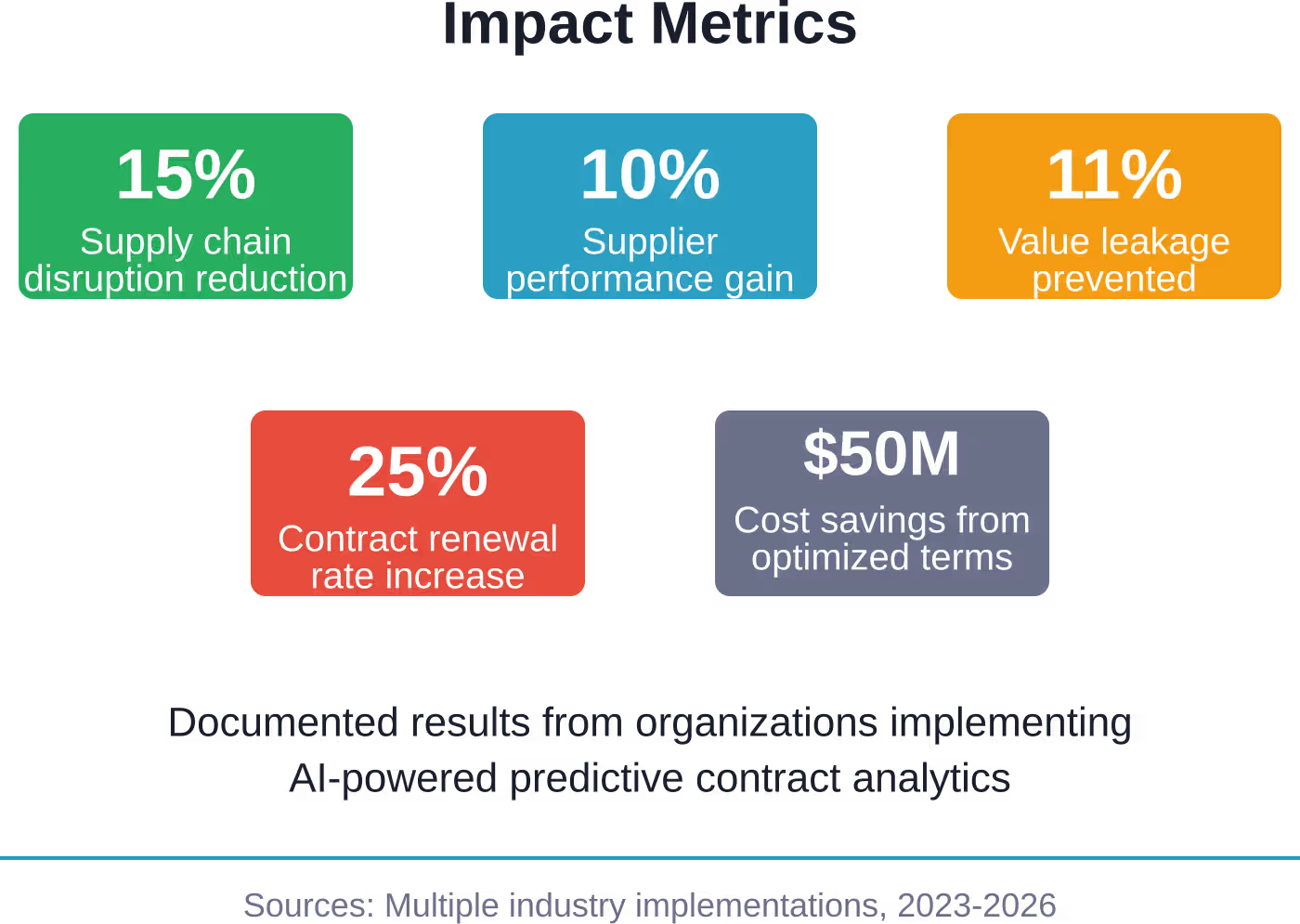
The Technology Stack Behind Predictive Contract Analytics
Several technical components work together to enable predictive contract analytics.
Natural Language Processing (NLP)
NLP engines parse contract language—identifying clauses, extracting dates, recognizing obligations. They handle legal terminology, industry-specific jargon, and complex sentence structures that trip up basic keyword searches.
Machine Learning Models
Supervised learning algorithms train on labeled contract data. The system learns what a high-risk indemnification clause looks like. What payment terms correlate with cash flow problems. Which renewal notice periods create operational headaches. Unsupervised learning finds patterns humans might miss—clustering similar contracts, identifying anomalies, surfacing unexpected correlations between terms and outcomes.
Data Integration Layers
Predictive systems connect to enterprise resource planning (ERP) systems, customer relationship management (CRM) platforms, financial databases, and compliance tracking tools. They pull performance data, payment histories, and operational metrics to enrich contract analysis.
Visualization and Reporting
Dashboards present forecasts, risk scores, and recommendations in formats procurement professionals and legal teams actually use. Color-coded alerts, trend charts, and what-if scenario modeling make complex predictions accessible.
Implementation Challenges and Considerations
Predictive analytics sounds great in theory. Implementation requires planning.
Data Quality and Volume
Machine learning models need training data. Organizations with years of digitized contracts and tracked performance metrics have an advantage. Those with paper archives or inconsistent data collection face steeper ramps. Garbage in, garbage out applies. Poor data quality—incomplete records, inconsistent formats, missing metadata—undermines prediction accuracy.
Change Management
Contract professionals accustomed to manual review may resist AI recommendations. Building trust requires transparency about how models reach conclusions and validation of predictions against actual outcomes. Training matters. Teams need to understand what the system can and can’t do, how to interpret scores, when to override algorithmic suggestions.
Ethical Considerations and Bias
AI models reflect the data they train on. Historical biases in contracting decisions—favoring certain suppliers, regions, or deal structures—can perpetuate through predictive systems unless actively addressed. Explainable AI becomes important. When a model flags a contract as high-risk or scores a supplier poorly, stakeholders need to understand why. Black-box predictions without rationale create compliance and fairness concerns.
Integration Complexity
Legacy systems weren’t built for AI integration. Connecting predictive analytics platforms to existing contract repositories, procurement software, and business intelligence tools requires technical expertise and often custom development.
| Challenge Area | Key Consideration | Mitigation Strategy |
|---|---|---|
| Data Quality | Inconsistent historical records | Data cleansing projects, standardized metadata schemas |
| User Adoption | Resistance to AI recommendations | Pilot programs, transparent reporting, validation tracking |
| Model Bias | Historical contracting patterns | Fairness audits, diverse training data, explainable AI |
| Technical Integration | Legacy system compatibility | API-first platforms, phased rollouts, middleware solutions |
| Cost Justification | ROI measurement | Baseline metrics, pilot KPIs, value leakage analysis |
Real-World Use Cases Across Industries
Government Contracting
Federal agencies dealing with thousands of contracts benefit significantly from predictive analytics. The 148% year-over-year increase in government AI use cases reflects this reality. Agencies can forecast which contracts will likely face delays, which vendors need closer oversight, which terms require renegotiation. They can model the cost impact of different compliance approaches before committing to contract language.
Manufacturing and Supply Chain
Manufacturers juggle complex supplier networks and volatile commodity markets. Predictive contract analytics helps them anticipate supply disruptions, optimize inventory commitments, and structure pricing mechanisms that share risk appropriately. The 15% reduction in supply chain disruptions comes from better visibility into contract interdependencies and early warning systems that flag at-risk suppliers before they miss deliveries.
Healthcare and Pharmaceuticals
Healthcare organizations manage payer contracts, vendor agreements, and research partnerships with strict regulatory requirements. Predictive models ensure compliance with constantly changing regulations and forecast reimbursement impacts from different contract structures.
Technology and SaaS
Software companies with subscription-based revenue models use predictive analytics to increase renewal rates and identify expansion opportunities. The 25% renewal rate improvement reflects better timing of renewal conversations and data-driven negotiation strategies.
The Future: Where Predictive Contract Analytics Is Headed
The technology continues evolving rapidly. Blockchain-enabled smart contracts combine predictive analytics with automated execution. When conditions forecast in the model occur, contract terms adjust automatically or trigger predefined actions. Generative AI moves beyond prediction to drafting. Systems analyze successful past contracts and generate new drafts optimized for desired outcomes—higher renewal probability, lower dispute risk, better payment terms. Industry-specific models emerge. Generic contract analytics gives way to specialized systems trained on healthcare contracting, government procurement, real estate transactions, or intellectual property licensing—each with domain expertise baked in. Real-time monitoring becomes standard. Instead of periodic contract reviews, continuous analysis tracks performance against predictions, updates risk scores as conditions change, and alerts teams to emerging issues immediately. 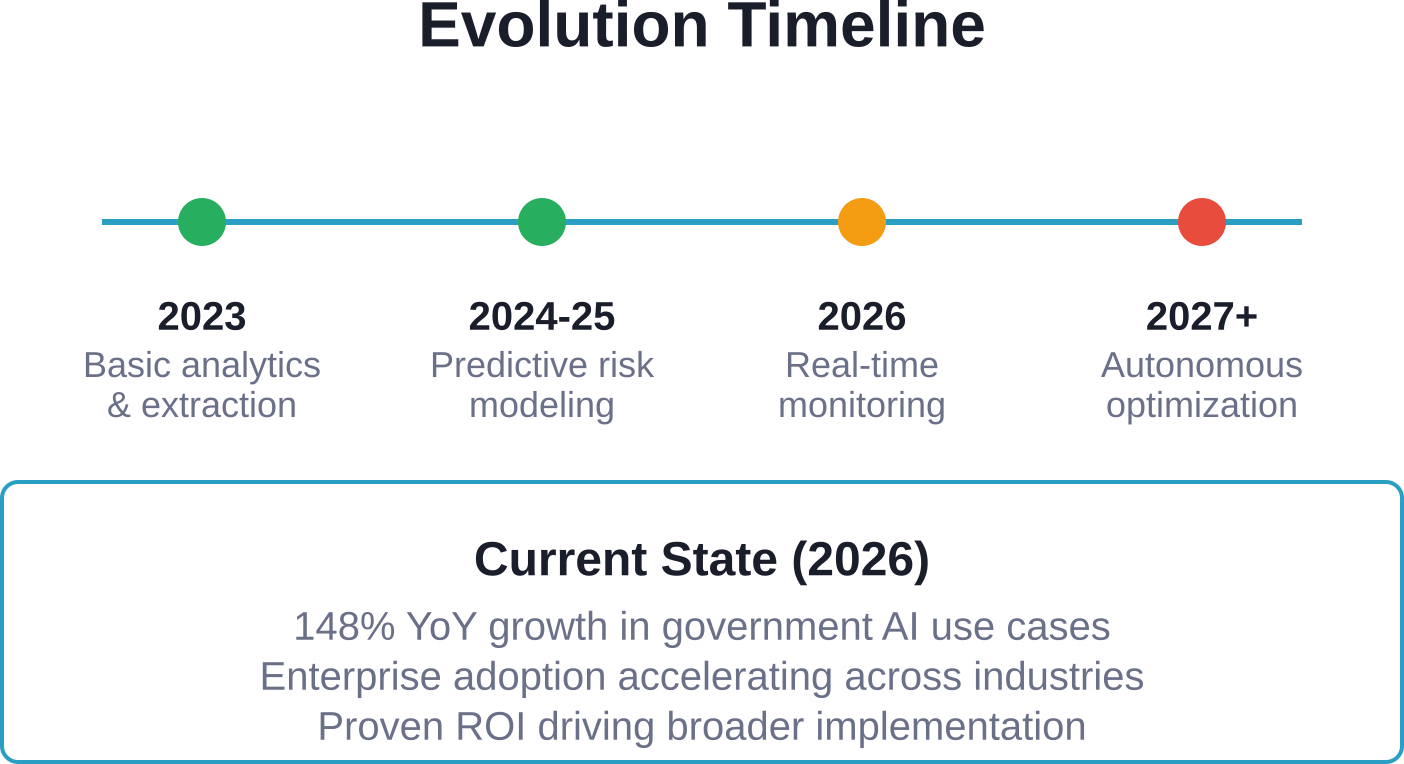
Getting Started with Predictive Contract Analytics
Organizations don’t need to implement everything at once. Start with a pilot. Choose one contract category—supplier agreements, customer contracts, real estate leases—and apply predictive analytics there. Measure results. Learn what works before expanding. Assess data readiness. Catalog existing contract repositories, evaluate data quality, identify gaps. Sometimes the highest-ROI first step is digitization and standardization rather than deploying AI. Define success metrics upfront. What does improvement look like? Faster cycle times? Lower dispute rates? Higher renewal percentages? Establish baselines before implementation so gains are quantifiable. Choose platforms carefully. Some contract lifecycle management systems include predictive analytics modules. Others integrate with third-party AI tools. Evaluate based on your technical environment, user needs, and budget constraints. Invest in training. The technology only delivers value when people use it correctly. Contract professionals need to understand both capabilities and limitations.
Frequently Asked Questions
What’s the difference between contract analytics and predictive contract analytics?
Contract analytics extracts and organizes information from contracts—dates, parties, terms, obligations. Predictive contract analytics uses that data plus historical outcomes to forecast future performance, risks, and opportunities. The difference is descriptive versus predictive—what is versus what will be.
How accurate are predictive models for contract management?
Accuracy varies based on data quality and model sophistication. Organizations with extensive historical data and well-trained models report 80-90% accuracy for renewal predictions and risk assessments. Lower accuracy occurs with limited training data or rapidly changing business conditions. Models improve over time as they learn from actual outcomes.
What contract types benefit most from predictive analytics?
High-volume, recurring contracts show the clearest ROI—supplier agreements, customer subscriptions, service contracts, leasing arrangements. These generate enough data for pattern recognition and frequent enough cycles to validate predictions. Complex, one-off deals benefit less unless the organization has substantial similar transactions to learn from.
Can small organizations implement predictive contract analytics?
Budget and data volume create barriers. Cloud-based platforms lower entry costs, but effective prediction requires historical data—typically hundreds of contracts minimum. Smaller organizations might start with analytics-as-a-service offerings or focus on specific high-value contract categories rather than enterprise-wide deployment.
How do predictive systems handle contract language variations?
Natural language processing engines trained on legal text recognize semantic meaning rather than exact phrasing. They understand that “indemnify and hold harmless” and “defend against claims” serve similar functions. The systems normalize variations and identify functionally equivalent clauses across different drafting styles.
What data privacy concerns arise with contract analytics?
Contracts contain sensitive commercial information, personally identifiable information, and confidential terms. Predictive analytics platforms must implement encryption, access controls, and data governance policies. Cloud deployments require careful vendor evaluation around security certifications, data residency, and breach notification procedures.
How long does implementation typically take?
Pilot projects often launch in 2-3 months—selecting a contract category, ingesting data, configuring models, training users. Enterprise-wide rollouts take 6-18 months depending on system integration complexity, change management needs, and data preparation requirements. Organizations with clean, digitized contract repositories move faster than those digitizing paper archives.
Conclusion: From Reactive to Proactive Contract Management
Predictive analytics transforms how organizations approach contracts. Instead of managing documents, they optimize business relationships. Instead of reacting to problems, they anticipate and prevent them. The measurable benefits—15% reduction in supply chain disruptions, 10% improvement in supplier performance, 11% less value leakage, 25% higher renewals—demonstrate real business impact. These aren’t marginal improvements. They’re competitive advantages. But the technology is only part of the equation. Success requires quality data, skilled teams, thoughtful implementation, and commitment to continuous improvement. Organizations that treat predictive contract analytics as a strategic capability rather than a software purchase see the best results. Sound overwhelming? Start small. Pick one contract process causing headaches. Apply predictive analytics there. Measure the improvement. Then expand. The future of contract management is predictive. The question isn’t whether to adopt these capabilities—it’s how quickly organizations can build them before competitors gain insurmountable advantages.