Quick Summary: Predictive analytics in the food industry uses historical data, machine learning, and AI to forecast demand, optimize inventory, reduce waste, and improve supply chain efficiency. By analyzing patterns in sales, weather, consumer behavior, and operational data, food manufacturers and restaurants can make data-driven decisions that cut costs and boost profitability. Industry analyses indicate AI-driven analytics can achieve up to 95% optimization in supply chain efficiency and increase sales by 15% compared to traditional approaches. The food and beverage sector faces a unique challenge: products have expiration dates. You can’t stockpile inventory like electronics or clothing. Too much stock means waste. Too little means lost revenue and frustrated customers. That’s where predictive analytics comes in. Instead of guessing what tomorrow’s demand will look like, food companies now use data to see patterns invisible to the human eye. Weather shifts, local events, seasonal trends, even social media buzz—all of it feeds into models that tell you what to produce, when to produce it, and how much to order. This isn’t some distant future technology. It’s happening right now, and the companies using it are pulling ahead fast.
What Predictive Analytics Actually Means for Food Companies
Predictive analytics takes historical data—sales records, inventory levels, customer behavior, supplier performance—and uses statistical algorithms and machine learning to forecast what’s coming next. Think of it as a weather forecast, but for your business operations. For restaurants, that might mean predicting Friday night dinner rush volume based on weather, local events, and historical patterns. For food manufacturers, it’s forecasting retailer demand weeks in advance so production schedules align perfectly with orders. The technology relies on machine learning models that improve over time. The more data you feed them, the smarter they get. And in an industry where margins are thin and waste is expensive, even small improvements in accuracy translate to significant profit gains. 
Use Predictive Analytics with AI Superior
AI Superior works with production, supply, and sales data to build models that support forecasting and process control. The focus is on integrating predictions into existing workflows so they can be used in day-to-day operations.
Looking to Apply Predictive Analytics in the Food Industry?
AI Superior can help with:
- assessing production and supply data
- building predictive models
- integrating models into existing systems
- improving results based on usage
👉 Contact AI Superior to discuss your project, data, and implementation approach
Demand Forecasting: Getting the Numbers Right
Demand forecasting sits at the heart of predictive analytics in food. Getting it right means ordering the correct amount of raw ingredients, scheduling the right production volume, and stocking appropriate inventory levels. Traditional forecasting methods relied on simple historical averages. If you sold 500 units last Tuesday, you’d order for 500 this Tuesday. But that approach ignores context. Was last Tuesday sunny or rainy? Was there a local festival? Did a competitor close down? Predictive models factor in dozens of variables simultaneously. They recognize that rainy days boost delivery orders but reduce foot traffic. They catch that summer heatwaves spike ice cream sales but tank soup demand. They notice that social media trends can shift purchasing patterns overnight. According to research on demand prediction for perishable products, machine learning regression techniques can identify complex patterns that traditional forecasting misses entirely. The result? More accurate predictions that keep shelves stocked without overordering.
Inventory Optimization and Waste Reduction
Food waste represents one of the industry’s biggest financial drains. Products expire, trends shift, and suddenly that overstock becomes a total loss. Predictive analytics attacks this problem from multiple angles. First, better demand forecasting means ordering closer to actual need. When you know you’ll sell 480 units instead of guessing somewhere between 400 and 600, you order 480. Less excess inventory sitting around waiting to spoil. Second, predictive models can forecast product-level demand. Not just “we’ll sell X pizzas” but “we’ll sell Y pepperoni, Z margherita, and W vegetarian pizzas.” That granularity lets kitchens prep the right mix of ingredients instead of running out of one while another goes to waste. Third, shelf-life tracking becomes predictive. Instead of manually checking expiration dates, systems can forecast which items will expire when and automatically prioritize them in sales or production schedules. The numbers tell the story. Industry analyses indicate that AI-driven analytics can achieve up to 95% optimization in supply chain efficiency, much of which comes from reducing waste and improving inventory turnover.
Real-Time Adjustments and Dynamic Pricing
Here’s where predictive analytics gets interesting. The models don’t just forecast—they adapt. Say a sudden rainstorm hits during lunch rush. Foot traffic drops, but delivery orders spike. A predictive system notices the pattern in real-time and adjusts staffing recommendations, shifting more workers to delivery prep and fewer to front-of-house. Or consider dynamic pricing. When the model forecasts low demand for a perishable item approaching expiration, it can trigger automatic discounts to move inventory before it becomes waste. When demand surges unexpectedly, pricing can adjust to maximize revenue while maintaining customer satisfaction. Restaurants using predictive sales analytics can adjust menu pricing, promotional timing, and even ingredient sourcing based on real-time forecasts. The system learns what works and what doesn’t, constantly refining its recommendations.
Supply Chain Efficiency Gains
The food supply chain involves countless moving parts—farmers, processors, distributors, retailers, restaurants. Delays anywhere create ripple effects. Predictive analytics helps synchronize this complex network. Manufacturers can share demand forecasts with suppliers weeks in advance, letting them plan harvests and production schedules more efficiently. That coordination reduces rush orders, minimizes spoilage during transport, and smooths out the boom-bust cycles that plague perishable goods. Transportation logistics benefit too. Predictive models optimize delivery routes based on traffic patterns, weather, and order timing. They forecast maintenance needs for refrigerated trucks before breakdowns happen. They even predict which distribution centers will need restocking and when. Research on AI-driven food supply chain management demonstrates how machine learning models can forecast demand across multiple distribution points simultaneously, ensuring products arrive where they’re needed, when they’re needed, without excess safety stock tying up capital.
| Supply Chain Area | Traditional Approach | Predictive Analytics Approach |
|---|---|---|
| Order Planning | Fixed schedules, safety stock | Dynamic forecasting, demand-driven |
| Inventory Levels | Manual monitoring, periodic checks | Real-time tracking, predictive alerts |
| Waste Management | Reactive disposal | Proactive redistribution, dynamic pricing |
| Supplier Coordination | Historical averages, buffer time | Shared forecasts, synchronized production |
Menu Optimization and Product Development
Restaurants face a constant question: what should be on the menu? Predictive analytics transforms that guesswork into data-driven decisions. By analyzing sales patterns, customer preferences, seasonal trends, and profitability per dish, predictive models can recommend which items to feature, which to remove, and which to test. They identify underperforming dishes that tie up ingredient inventory without generating proportional revenue. They also spot opportunities. Maybe customers who order a specific appetizer almost always add a particular drink. The model flags that correlation, and the restaurant can create a combo deal that boosts sales of both items. For product development, predictive analytics can forecast market reception before launch. By analyzing trends in customer reviews, social media sentiment, and purchasing patterns in similar products, companies can estimate demand for new offerings and adjust formulations or positioning accordingly. Research indicates that with AI and ML, sales can be increased by 15% compared to traditional approaches, much of which stems from better menu optimization and targeted product development.
Food Safety and Quality Control
Predictive analytics isn’t just about money—it’s about safety. Foodborne illness outbreaks devastate brands and endanger consumers. Predictive models help prevent them. The USDA Agricultural Research Service has developed predictive growth models for pathogens like Staphylococcus aureus during temperature abuse conditions. These models forecast bacterial growth based on time-temperature profiles, letting food safety managers identify risky scenarios before contamination occurs. In production facilities, predictive maintenance monitors equipment health. Sensors track vibration, temperature, and performance metrics, feeding data into models that forecast when machinery will likely fail. Scheduled maintenance prevents unexpected breakdowns that could compromise food safety or halt production. Quality control benefits similarly. AI vision systems, combined with machine learning, can classify fresh versus spoiled products with remarkable accuracy. Academic research on AI vision and machine learning for food automation demonstrates that AI and ML technologies can achieve over 99% accuracy through automation, compared to older approaches which achieve 80-90% accuracy, far exceeding human inspector consistency. 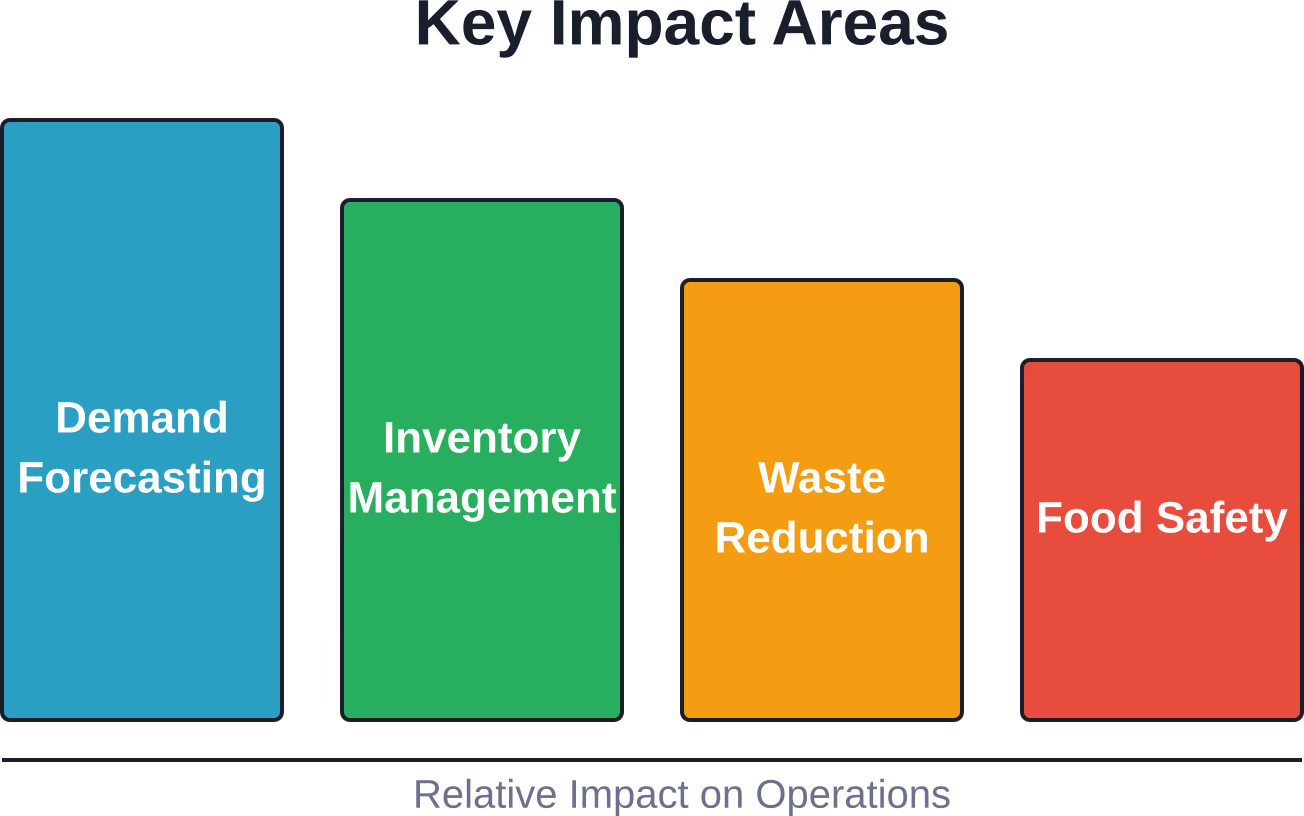
Challenges and Implementation Considerations
Predictive analytics isn’t plug-and-play. Implementation comes with real challenges.
- Data quality matters most. Garbage in, garbage out. If sales records are incomplete, inventory counts are inaccurate, or external data sources are unreliable, the models will produce bad forecasts. Food companies need clean, consistent data collection processes before predictive analytics can deliver value.
- Integration with existing systems poses another hurdle. Many food businesses run on legacy software—point-of-sale systems, inventory management tools, supplier portals—that weren’t built to share data. Getting everything connected and talking to each other requires technical expertise and sometimes significant infrastructure investment.
- Staff training can’t be overlooked either. The best predictive model is worthless if managers don’t trust it or don’t know how to interpret its recommendations. Building organizational buy-in means demonstrating value, explaining how the models work, and training teams to use insights effectively.
- Cost represents a barrier for smaller operations. While large chains and manufacturers can justify the investment in predictive analytics platforms, independent restaurants or small food producers may struggle with upfront costs and ongoing maintenance.
The Competitive Advantage Is Real
But here’s the thing—companies that overcome these challenges are seeing measurable results. Better forecasting means less waste, which directly improves margins. Food and agriculture represents 10% of global GDP per World Bank estimates, and even small efficiency gains translate to billions in saved resources. Improved inventory management frees up cash that was previously tied up in excess stock. That capital can fund expansion, equipment upgrades, or marketing instead of sitting in a warehouse waiting to expire. Enhanced customer satisfaction comes from consistently having products in stock and maintaining quality. When the model ensures popular items don’t sell out and slow-moving items get discounted before spoiling, customers get what they want when they want it. Operational efficiency gains from predictive analytics compound over time. As models learn and improve, forecasts get more accurate, waste decreases further, and the competitive gap between analytics-driven companies and those relying on intuition widens.
Looking Ahead: The Future of Predictive Analytics in Food
The technology continues to evolve rapidly. Several trends are worth watching. Edge computing is bringing predictive analytics closer to the point of action. Instead of sending data to cloud servers for processing, edge devices can run models locally, enabling real-time decisions at individual restaurant locations or production lines. Computer vision integration is expanding quality control capabilities. Cameras can now assess ripeness, detect defects, and grade products with superhuman consistency, feeding that data into predictive models that optimize sorting and pricing. Blockchain integration is improving supply chain transparency. When every transaction from farm to table is recorded immutably, predictive models can trace contamination sources faster and forecast supply disruptions with greater accuracy. Sustainability analytics is gaining traction too. Consumers increasingly care about environmental impact, and predictive models can optimize for carbon footprint, water usage, and packaging waste alongside traditional metrics like cost and profit.
Frequently Asked Questions
How accurate are predictive analytics models for food demand forecasting?
Accuracy varies based on data quality, model sophistication, and business context. Well-implemented systems typically achieve 85-95% accuracy for short-term forecasts. Machine learning models improve over time as they process more data, so accuracy tends to increase with continued use. External factors like sudden weather changes or unexpected events can still cause deviations, but predictive models generally outperform traditional forecasting methods significantly.
What data does a food company need to start using predictive analytics?
At minimum, you need historical sales data, inventory records, and basic operational information. More sophisticated models benefit from external data like weather patterns, local events, social media trends, and supplier performance metrics. The key is consistent, accurate data collection. Many companies start with whatever data they have and gradually expand their data sources as they see results and build confidence in the system.
Can small restaurants afford predictive analytics tools?
Cost has decreased significantly as cloud-based solutions and subscription models have emerged. While enterprise-level systems remain expensive, smaller restaurants can access basic predictive analytics through affordable point-of-sale systems and inventory management platforms that include forecasting features. Some solutions start at a few hundred dollars monthly. The return on investment from reduced waste and better inventory management often justifies the expense even for smaller operations.
How long does it take to see results from predictive analytics?
Initial improvements often appear within weeks as basic forecasting reduces obvious waste and stockouts. However, meaningful ROI typically emerges over 3-6 months as models accumulate enough data to identify patterns and as staff learn to trust and act on recommendations. Full optimization can take a year or more as the system refines its algorithms and as the organization adjusts processes to leverage insights effectively.
Does predictive analytics work for all types of food businesses?
Predictive analytics delivers value across the food industry—restaurants, manufacturers, distributors, retailers—but the specific applications vary. Restaurants focus on demand forecasting and menu optimization. Manufacturers emphasize production scheduling and quality control. Distributors prioritize route optimization and inventory placement. The underlying technology is flexible enough to adapt to different business models, though implementation complexity and ROI vary by context.
What happens if the predictive model makes a wrong forecast?
No model is perfect, and occasional errors are inevitable. Good implementations include human oversight and the ability to override predictions when managers have information the model doesn’t. Over time, wrong forecasts actually improve the system—the model learns from mistakes and adjusts its algorithms. The goal isn’t perfection but rather consistent improvement over traditional methods. Even imperfect predictive analytics typically outperforms gut-feel decision-making.
How does predictive analytics help with food safety?
Predictive models forecast pathogen growth under various storage conditions, helping managers prevent contamination before it occurs. The USDA has developed predictive models for common foodborne pathogens that forecast growth based on time-temperature profiles. Additionally, predictive maintenance systems monitor equipment health and forecast failures that could compromise food safety. AI vision systems can identify spoilage or contamination with greater consistency than human inspectors, improving quality control throughout the supply chain.
Start Making Data-Driven Decisions Today
Predictive analytics has moved from experimental to essential in the food industry. Companies leveraging these tools are reducing waste, improving margins, and delivering better customer experiences. Those that don’t are falling behind. The technology is more accessible than ever. Cloud platforms, subscription pricing, and integration with existing systems have lowered barriers to entry. The question isn’t whether predictive analytics will transform food operations—it’s already happening. The question is whether your business will lead that transformation or scramble to catch up. Start with your data. Clean it up, organize it, and look for patterns. Then explore tools that fit your budget and business model. Even basic forecasting beats guesswork, and the improvements compound as the system learns. The future of food is predictive. Time to get on board.