
Quick Summary: Predictive analytics in warehousing uses historical data, machine learning, and AI to forecast demand, optimize inventory, improve labor planning, and enhance operational efficiency. Companies like PepsiCo and Walmart have achieved measurable results, including a 12% increase in inventory movement and significant cost savings. This technology transforms reactive warehouses into proactive, data-driven operations. Warehouses generate massive amounts of data every single day. Every transaction, movement, shipment, and interaction creates a digital footprint. But here’s the thing—most facilities barely scratch the surface of what that data can do. Predictive analytics changes the game entirely. Instead of reacting to problems after they happen, warehouses can now anticipate bottlenecks, forecast demand spikes, and optimize labor before issues arise. The results speak for themselves. According to research from the University of Texas at Permian Basin (UTPB), PepsiCo used AI-driven predictive systems to increase hourly warehouse inventory movement by 12%. Walmart’s predictive analytics implementation is reported to have delivered significant inventory cost savings, while cutting out-of-stock incidents and reducing excess inventory. So how does this technology actually work in practice? And what does it take to implement it successfully?
What Predictive Analytics Actually Means for Warehousing
Predictive analytics isn’t just another buzzword. At its core, it’s about applying statistical algorithms, machine learning models, and artificial intelligence to historical warehouse data—then using those insights to forecast future scenarios. The technology examines patterns in order volumes, seasonal fluctuations, labor productivity, equipment performance, and inventory turnover. It identifies correlations that human analysts might miss. Then it generates actionable predictions. Think about demand forecasting. Traditional methods rely on simple averages or gut instinct. Predictive models analyze years of transaction data, external factors like weather or economic indicators, even social media trends. The forecast becomes exponentially more accurate. That accuracy translates directly into operational decisions. How many workers should be scheduled next Tuesday? Which products need restocking before the weekend rush? When will conveyor belt maintenance be required? Predictive analytics answers these questions before they become urgent. 
Use Predictive Analytics in Warehousing with AI Superior
AI Superior works with inventory, logistics, and operational data to build predictive models for planning and optimization. The focus is on integrating models into existing workflows so predictions can be used in daily operations.
Looking to Apply Predictive Analytics in Warehousing?
AI Superior can help with:
- evaluating warehouse and inventory data
- building predictive models
- integrating models into existing systems
- improving results based on usage
👉 Contact AI Superior to discuss your project, data, and implementation approach.
The Core Technologies Driving Warehouse Analytics
Several technologies work together to enable predictive analytics in modern warehouses.
Machine Learning Algorithms
Machine learning sits at the heart of most predictive systems. These algorithms improve automatically through experience, recognizing patterns in warehouse data that would take humans months or years to identify. Supervised learning models train on historical data with known outcomes. They learn which factors predict high-demand periods, equipment failures, or labor inefficiencies. Unsupervised learning finds hidden patterns—customer segments, product affinities, or unusual operational anomalies.
Big Data Analytics Frameworks
Warehouses produce data at volumes that traditional databases can’t handle efficiently. Big data platforms process millions of transactions, sensor readings, and operational metrics simultaneously. According to academic research on big data analytics adoption in warehouse management, these frameworks provide the architectural foundation for extracting meaningful insights from massive datasets while decreasing costs.
IoT Sensors and Real-Time Data Capture
Internet of Things devices create the data streams that feed predictive models. RFID tags track inventory movement. Environmental sensors monitor temperature and humidity. Wearable devices measure worker productivity and safety metrics. This real-time data capture enables predictive systems to adjust forecasts dynamically as conditions change throughout the day.
Real-World Applications Transforming Warehouse Operations
Theory matters, but results matter more. Here’s where predictive analytics delivers measurable impact.
Demand Forecasting and Inventory Optimization
Walmart’s predictive analytics system represents one of the most successful implementations in the retail sector. The technology analyzes historical sales data, seasonal trends, local events, and even weather patterns to forecast demand at the SKU level for individual stores. The system reduced excess inventory while simultaneously cutting out-of-stock incidents. That balance—having exactly what customers want, exactly when they want it, without tying up capital in surplus stock—delivered significant financial benefits. The system works by continuously learning from actual sales versus predictions, refining its models with every transaction.
Labor Management and Workforce Planning
PepsiCo implemented AI-driven predictive systems across its warehouse network to optimize labor scheduling and productivity. The technology syncs labor allocation with inventory movement, equipment availability, and dock schedules in real time. The result? A 12% increase in hourly warehouse inventory movement, according to research from the University of Texas at Permian Basin (UTPB). The system also automated scheduling decisions, freeing warehouse managers to focus on exception handling rather than routine planning. Predictive labor analytics forecast staffing needs days or weeks in advance, accounting for expected order volumes, historical productivity rates, and even anticipated absenteeism patterns.
Predictive Maintenance and Equipment Uptime
Equipment failures create expensive bottlenecks. A broken conveyor belt or malfunctioning forklift can halt operations for hours or days. Predictive maintenance models analyze sensor data from warehouse equipment—vibration patterns, temperature fluctuations, usage cycles, and performance metrics. Machine learning algorithms detect anomalies that signal impending failure, often weeks before breakdown occurs. Maintenance teams can schedule repairs during planned downtime rather than scrambling to fix emergency breakdowns during peak operational periods.
Route Optimization and Last-Mile Delivery
Predictive analytics extends beyond warehouse walls into transportation and delivery operations. Models optimize routing based on traffic patterns, delivery windows, vehicle capacity, and fuel efficiency. Transportation-related greenhouse gas emissions account for approximately 27% of all U.S. emissions. Route optimization not only cuts costs but also reduces environmental impact by minimizing unnecessary mileage and fuel consumption.
| Application Area | Key Metrics Improved | Typical Impact |
|---|---|---|
| Demand Forecasting | Inventory accuracy, stock-outs | 25-30% reduction in excess inventory |
| Labor Management | Productivity, scheduling efficiency | 10-15% improvement in throughput |
| Predictive Maintenance | Equipment uptime, repair costs | 20-40% reduction in unplanned downtime |
| Route Optimization | Delivery time, fuel costs | 15-25% decrease in transportation costs |
Implementation Challenges and How to Overcome Them
Predictive analytics delivers impressive results, but implementation isn’t trivial. Several common obstacles trip up warehouse operations.
Data Quality and Integration Issues
Predictive models are only as good as the data they consume. Many warehouses struggle with inconsistent data formats, incomplete records, or siloed systems that don’t communicate effectively. The solution starts with data governance. Establish clear standards for data capture, storage, and validation. Implement warehouse management systems that centralize operational data and ensure consistency across touchpoints. Clean, integrated data is the foundation. Without it, even sophisticated algorithms produce unreliable predictions.
Technology Infrastructure Gaps
Legacy systems often lack the computational power or architectural flexibility to support advanced analytics. Retrofitting predictive capabilities onto outdated infrastructure creates technical debt. Cloud-based analytics platforms offer a path forward. They provide scalable processing power and pre-built machine learning frameworks without requiring massive capital investment in on-premises hardware.
Skills and Change Management
Implementing predictive analytics requires new skills—data science, statistical analysis, and machine learning expertise. Many warehouse operations lack in-house talent in these areas. But beyond technical skills, organizational change management matters just as much. Warehouse teams need to trust the predictions and adjust workflows accordingly. That requires training, clear communication about how models work, and evidence of tangible benefits. Start with pilot projects that demonstrate quick wins. Build confidence gradually rather than attempting wholesale transformation overnight. 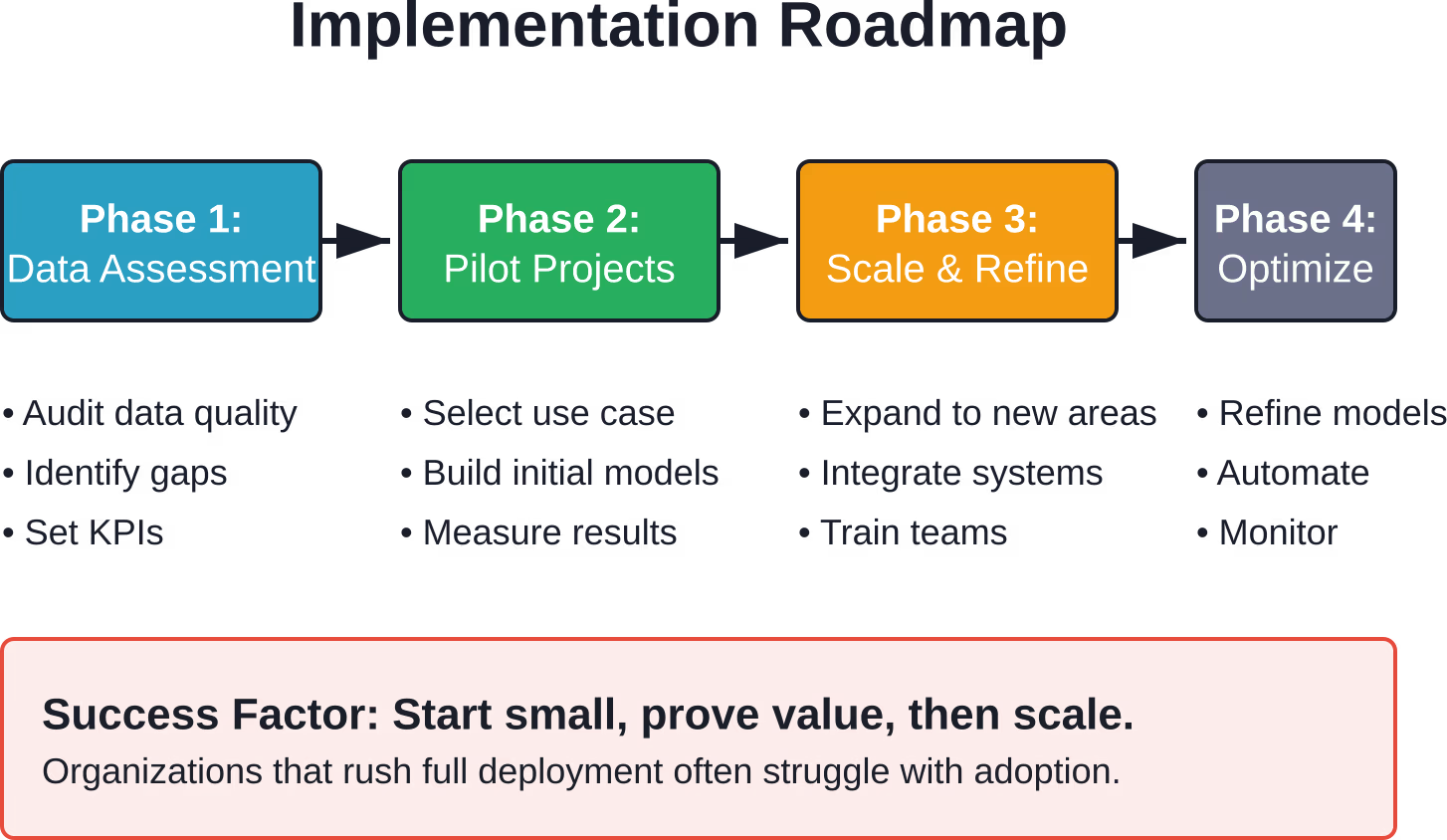
Choosing the Right Analytics Platform
Not all predictive analytics solutions are created equal. Warehouse operations need to evaluate platforms based on several criteria.
- First, integration capabilities matter enormously. The platform must connect seamlessly with existing warehouse management systems, enterprise resource planning software, and transportation management tools. Data silos kill predictive accuracy.
- Second, look for platforms that offer pre-built models for common warehouse use cases—demand forecasting, labor optimization, maintenance prediction. Building custom models from scratch requires significant data science expertise and time.
- Third, scalability determines long-term viability. The platform should handle growing data volumes and expanded use cases without performance degradation or architectural overhauls.
- Fourth, consider the user interface and accessibility. Warehouse managers and frontline supervisors need to access predictions and insights without requiring advanced technical skills. Dashboards should be intuitive, visual, and actionable.
- Finally, evaluate vendor support and training resources. Successful implementation depends on effective onboarding, ongoing optimization assistance, and responsive troubleshooting.
The Future of Predictive Analytics in Warehousing
Predictive analytics continues to evolve rapidly. Several emerging trends will shape the next generation of warehouse operations. Autonomous systems represent one frontier. Predictive models already guide human decision-making around inventory placement, labor allocation, and maintenance scheduling. The next step involves autonomous robots and vehicles that act on predictions without human intervention—repositioning inventory proactively, adjusting picking routes dynamically, and coordinating multi-robot workflows. Edge computing pushes analytics closer to data sources. Instead of sending all sensor data to centralized cloud platforms for processing, edge devices perform initial analysis locally. This reduces latency, enables real-time responses, and conserves bandwidth. Prescriptive analytics takes prediction one step further. Rather than simply forecasting what will happen, prescriptive systems recommend specific actions and even automate execution. The system doesn’t just predict next week’s labor needs—it automatically generates optimized shift schedules and sends them to workers. Digital twins create virtual replicas of physical warehouse environments. Predictive models run simulations on the digital twin, testing different scenarios and configurations before implementing changes in the real facility. This reduces risk and accelerates optimization.
Making Predictive Analytics Work for Your Operation
Implementation success depends on approaching predictive analytics strategically rather than tactically. Start by identifying pain points where better predictions would deliver immediate value. Is inventory accuracy the biggest problem? Labor productivity? Equipment downtime? Focus initial efforts where impact will be most visible and measurable. Secure executive buy-in by framing predictive analytics as a business initiative rather than a technology project. Connect predictions directly to financial outcomes—cost savings, revenue growth, efficiency gains. Quantify expected ROI before launching implementation. Invest in data infrastructure first. Clean, consistent, integrated data enables accurate predictions. Rushing to deploy fancy algorithms on dirty data wastes time and money. Build cross-functional teams that combine operational expertise with technical capabilities. Warehouse managers understand the business context and constraints. Data scientists understand modeling techniques. Both perspectives are essential. Measure everything. Track prediction accuracy against actual outcomes. Monitor the business metrics predictive analytics is supposed to improve. Use those measurements to refine models continuously and demonstrate ongoing value. And remember—predictive analytics is a journey, not a destination. The technology keeps improving. Business conditions keep changing. Successful operations treat analytics as an ongoing capability that evolves over time rather than a one-time implementation project.
Frequently Asked Questions
What’s the difference between predictive and prescriptive analytics in warehousing?
Predictive analytics forecasts what will happen—demand levels, equipment failures, labor needs. Prescriptive analytics goes further by recommending specific actions or automatically implementing optimal decisions based on those predictions. Think of predictive as answering “what will happen?” and prescriptive as answering “what should we do about it?”
How much data do you need to start using predictive analytics effectively?
Generally speaking, meaningful predictive models require at least 12-24 months of historical data for seasonal patterns and trend analysis. However, simpler models can produce useful predictions with less data, especially when combined with external data sources or industry benchmarks. Starting small with focused use cases allows models to improve as more data accumulates.
Can small and medium-sized warehouses benefit from predictive analytics?
Absolutely. Cloud-based analytics platforms have democratized access to sophisticated predictive capabilities that were once available only to large enterprises. Many solutions offer subscription pricing that scales with usage, making them accessible to operations of all sizes. The key is selecting use cases where predictions deliver clear value relative to implementation costs.
How accurate are predictive analytics models for warehouse demand forecasting?
Accuracy varies based on data quality, model sophistication, and the predictability of the specific warehouse environment. Industry analyses indicate well-implemented systems typically achieve 80-95% forecast accuracy for established product lines, significantly outperforming traditional forecasting methods. Accuracy improves continuously as models learn from new data.
What role does AI play in warehouse predictive analytics?
AI, particularly machine learning, powers the pattern recognition and continuous improvement that make predictive analytics effective. Machine learning algorithms identify complex relationships in warehouse data that traditional statistical methods miss. They also adapt automatically as conditions change, maintaining accuracy without constant manual retuning. Companies like PepsiCo have used AI-driven systems to achieve measurable improvements like the 12% increase in hourly inventory movement.
How long does it take to implement predictive analytics in a warehouse?
Implementation timelines vary widely based on scope, existing infrastructure, and organizational readiness. Pilot projects focused on a single use case can deliver initial predictions within 2-4 months. Comprehensive implementations that integrate predictive capabilities across multiple warehouse functions typically require 6-12 months. The phased approach—starting with quick wins and expanding gradually—usually delivers the best results.
What are the biggest risks when implementing predictive analytics?
The most common pitfalls include poor data quality leading to inaccurate predictions, lack of integration with existing systems creating operational friction, insufficient change management causing user resistance, and unrealistic expectations about immediate results. Successful implementations address these risks through proper data governance, thorough system integration planning, stakeholder engagement, and clearly defined success metrics.
Taking the Next Step
Predictive analytics has moved from experimental technology to operational necessity for competitive warehouse operations. The data is clear—organizations that leverage historical information to forecast future needs achieve measurable improvements in efficiency, cost control, and service quality. The question isn’t whether predictive analytics delivers value. Companies like Walmart and PepsiCo have proven that conclusively with significant gains in efficiency and operational performance. The real question is how quickly an operation can implement these capabilities and start capturing similar benefits. Every day spent relying on reactive management and gut-instinct planning is a day of lost opportunity. Start by assessing current data quality and identifying the highest-impact use case for the specific operation. Then build a roadmap that balances quick wins with long-term transformation. The warehouses that master predictive analytics today will define competitive standards for the next decade.