
Quick Summary: AI will not replace pharmacists but will transform their role by automating routine tasks like pill counting and prescription verification. The human elements of pharmacy—patient counseling, clinical judgment, complex medication management, and empathetic care—remain irreplaceable. According to Bureau of Labor Statistics projections, pharmacy jobs will continue to grow through 2034 as AI becomes a collaborative tool that enhances rather than eliminates the profession. The headlines seem relentless. AI passes medical board exams. Robots dispense medications with perfect accuracy. Automation predicts drug shortages before they happen. And pharmacists everywhere are asking the same question: Will my job exist in ten years? Here’s the thing though—the conversation around AI replacing pharmacists misses a fundamental truth about what pharmacists actually do. The pill-counting portion? Sure, that’s automatable. But pharmacy practice extends far beyond counting tablets into a bottle. This article examines the data, the research, and the real-world implementation of AI in pharmacy to answer whether pharmacists face genuine replacement risk or something entirely different.
Understanding the Automation Risk: What the Data Actually Says
When evaluating whether AI will replace any profession, concrete data matters more than speculation. According to research on automation risk across professions, pharmacists face a calculated automation risk of approximately 31%, categorized as low risk. However, polling data from 2,035 pharmacists and pharmacy professionals suggests a perceived risk of 78%, creating a substantial gap between actual vulnerability and professional anxiety. That disconnect tells us something important. The fear exceeds the reality.
Labor Market Projections Through 2034
The Bureau of Labor Statistics tracks occupational utilization and projects employment growth across healthcare professions. For pharmacists specifically, the data shows a growth rate of 5% through 2034. Growth. Not decline. If AI were genuinely poised to replace pharmacists, we’d expect contraction in projected employment. Instead, the labor market data suggests expansion, albeit modest. According to available data, pharmacist wages are $137,480 annually, or $66.09 per hour. These compensation levels reflect the specialized knowledge, clinical judgment, and regulatory responsibility inherent to the profession—elements that resist straightforward automation.
What Makes Pharmacy Resistant to Full Automation
Certain job qualities resist automation more effectively than others. For pharmacists, several core competencies fall into categories that current AI cannot replicate:
- Assisting and Caring for Others: Patient counseling requires empathy, cultural sensitivity, and the ability to read nonverbal cues
- Social Perceptiveness: Identifying when patients don’t understand instructions or are experiencing medication-related distress
- Finger Dexterity and Manual Dexterity: Compounding medications, administering vaccines, and handling specialized preparations
- Clinical Judgment: Evaluating drug interactions in complex polypharmacy situations where guidelines conflict
These aren’t minor aspects of pharmacy practice. They’re fundamental to what makes a pharmacist irreplaceable. 
AI Systems Integration With AI Superior
AI Superior works with companies that need AI to function as part of a larger system. The focus is on connecting models to real infrastructure, starting from validation and moving through development and deployment.
Need Help Connecting AI to Your Existing Systems?
AI Superior can help with:
- full-cycle AI development and deployment
- feasibility assessment and technical planning
- integration of AI into operational environments
👉 Contact AI Superior to discuss your project, data, and implementation approach
How AI and Automation Are Actually Being Used in Pharmacy
So if AI isn’t replacing pharmacists, what exactly is it doing? The reality is far more nuanced than replacement. AI serves as an augmentation tool that handles specific, well-defined tasks while pharmacists focus on clinical decision-making and patient care.
Prescription Verification and Accuracy
AI-powered verification systems can cross-reference prescriptions against patient records, flag potential drug interactions, and identify dosing errors with exceptional speed and consistency. These systems don’t get tired during a twelve-hour shift. They don’t experience decision fatigue. But here’s what they can’t do: Exercise clinical judgment when a prescription seems technically correct but contextually inappropriate for a specific patient’s situation. According to an analysis from December 2025 posted by Ben Michaels on ASHP Connect, AI pharmacist verification is fundamentally “a data problem, not an AI problem.” The limitation isn’t computational power—it’s the availability of complete, structured, interoperable patient data. Without comprehensive information about a patient’s full medication history, comorbidities, genetic factors, and social determinants of health, even the most sophisticated AI makes decisions based on incomplete information. Pharmacists integrate fragmentary data sources, patient interviews, and clinical intuition. That integration remains distinctly human.
Inventory Management and Supply Chain Optimization
AI excels at predicting medication demand, optimizing inventory levels, and identifying potential drug shortages before they impact patient care. Machine learning algorithms analyze prescription patterns, seasonal trends, and supply chain disruptions to maintain optimal stock levels. This automation eliminates tedious manual tracking and reduces medication waste. Pharmacists spend less time counting inventory and more time providing clinical services. The technology improves efficiency. It doesn’t replace the professional.
Automated Dispensing Systems
Robot dispensing systems count pills with perfect accuracy, package medications for delivery, and manage high-volume prescription fulfillment. Major pharmacy chains and hospital systems have implemented these technologies extensively. And yes, these systems do replace manual pill counting. That specific task—repetitive, rule-based, and requiring precision over judgment—fits the automation profile perfectly. But pharmacy technicians haven’t disappeared. Their roles have evolved toward patient services, insurance navigation, medication therapy management support, and clinical documentation. The human capacity for problem-solving moved to areas where it delivers greater value. 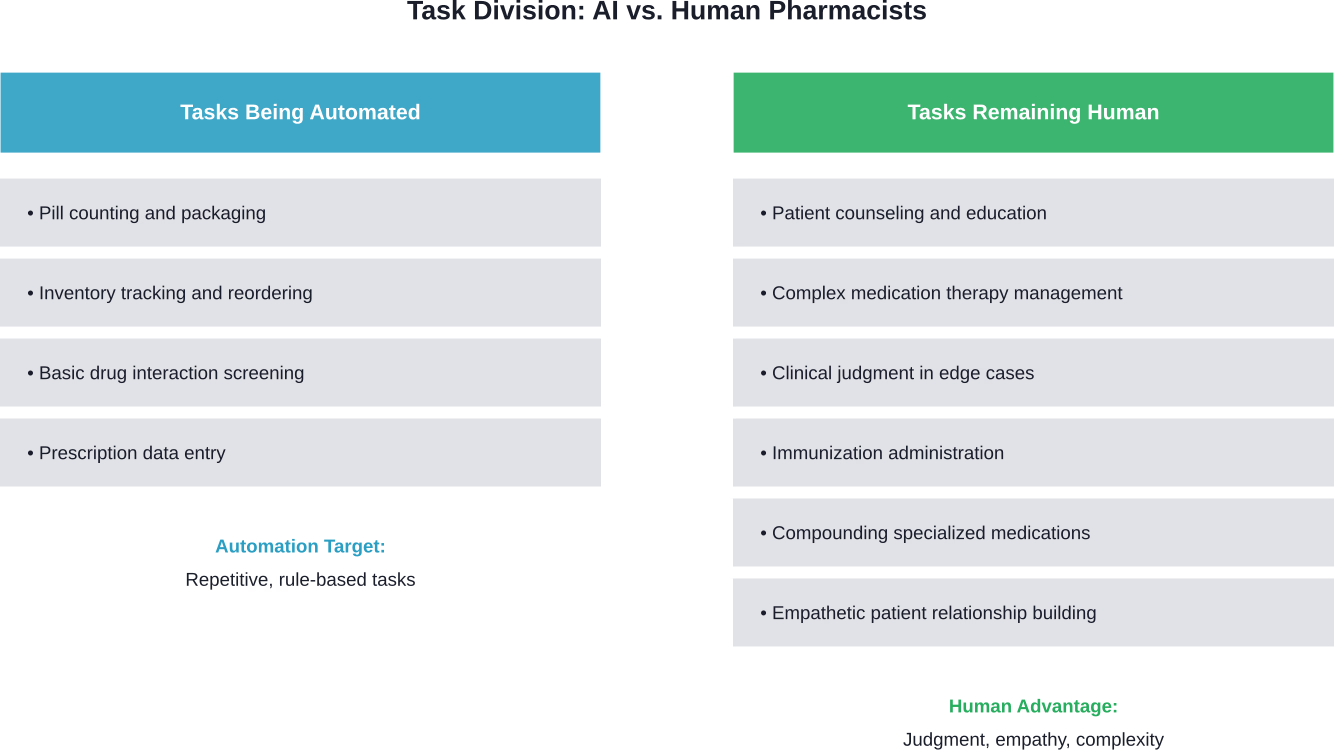
Research Insights: What Pharmacists Think About AI
Understanding how the profession itself views AI adoption provides critical context. Recent research published in medical journals examined pharmacist perceptions, willingness to adopt AI, and barriers to implementation.
Positive Perceptions Meet Implementation Barriers
Despite concerns about replacement, pharmacists generally hold positive perceptions of AI technology. They recognize its potential to reduce medication errors, improve workflow efficiency, and free up time for patient-facing activities. The willingness to utilize AI exists. But actual implementation faces substantial obstacles:
- Resource Limitations: AI systems require significant capital investment that many community pharmacies cannot afford
- Training Gaps: Pharmacy education hasn’t consistently integrated AI literacy into curricula
- Skill Constraints: Working with AI-augmented systems demands new competencies that current practitioners may lack
- Infrastructure Issues: Outdated pharmacy management systems often can’t integrate with modern AI tools
That gap between awareness and utilization suggests the integration curve remains in its early stages.
The Knowledge and Attitude Factor
Research examining the impact of artificial intelligence on the knowledge, attitude, and practice of pharmacists reveals a profession in transition. Pharmacists recognize they need to adapt, but many feel underprepared for the technological transformation. This creates an interesting dynamic. The fear isn’t really about robots taking jobs. It’s about the profession changing faster than practitioners can adapt their skills. Sound familiar? It should. Every major technological shift in healthcare has triggered similar anxieties—from electronic health records to telepharmacy. The professionals who thrived were those who embraced the tools as practice enhancers rather than viewing them as threats.
Why AI Adoption in Healthcare Lags Behind Other Industries
Here’s something worth considering: If AI were such an obvious replacement for healthcare professionals, why hasn’t adoption accelerated faster? Research from the Brookings Institution examining AI adoption in healthcare identifies several factors that slow implementation compared to other sectors.
Regulatory and Liability Concerns
Healthcare operates under stringent regulatory frameworks that rightly prioritize patient safety over innovation speed. Any AI system involved in medication dispensing, dosing recommendations, or clinical decision support must meet rigorous validation standards. Who bears liability when an AI system makes an error that harms a patient? Current legal frameworks weren’t designed to address algorithmic decision-making. Until those questions resolve, healthcare institutions proceed cautiously.
Data Complexity and Interoperability Challenges
Healthcare data remains fragmented across incompatible systems. AI performs best with large, clean, structured datasets. Healthcare offers messy, incomplete, siloed information spread across multiple vendors’ proprietary platforms. The data problem constrains AI effectiveness in ways that don’t affect industries with better information infrastructure.
The High Cost of Errors
In healthcare, mistakes can be fatal. A recommendation algorithm that suggests the wrong movie wastes two hours. An AI system that misses a critical drug interaction can kill someone. That asymmetry in consequence severity necessitates human oversight that other industries can skip. Pharmacists won’t be removed from the decision loop precisely because the stakes are too high to rely exclusively on algorithmic judgment.
| Factor | Impact on AI Adoption | Pharmacy-Specific Consideration |
|---|---|---|
| Regulatory Requirements | Slows implementation timeline | FDA oversight, state pharmacy boards, DEA regulations |
| Liability Frameworks | Creates adoption hesitancy | Professional liability remains with licensed pharmacist |
| Data Interoperability | Limits AI effectiveness | Fragmented patient records across providers and systems |
| Error Consequences | Mandates human oversight | Medication errors can cause serious harm or death |
| Professional Licensing | Creates regulatory barriers | State laws require pharmacist verification of prescriptions |
The Evolution of Pharmacy Practice: Clinical Services Expansion
While automation handles dispensing tasks, pharmacy practice has simultaneously expanded into clinical services that demand advanced human judgment.
Medication Therapy Management
Comprehensive medication reviews for patients with multiple chronic conditions require pharmacists to evaluate the entire medication regimen, identify therapeutic duplications, assess adherence barriers, and make evidence-based recommendations to prescribers. This clinical work generates better patient outcomes and reduces healthcare costs. It also happens to be exactly the kind of complex, individualized problem-solving that AI cannot replicate.
Immunization Services
Pharmacists have become frontline immunization providers, particularly evident during the COVID-19 vaccination campaigns. Administering vaccines, counseling patients about side effects, managing adverse reactions, and maintaining cold chain integrity requires hands-on clinical skills. An AI can schedule appointments and send reminders. It can’t administer an injection or recognize an anaphylactic reaction.
Point-of-Care Testing
Many pharmacies now offer testing services for flu, strep throat, COVID-19, and chronic disease monitoring. Pharmacists interpret results, provide treatment recommendations, and refer patients to physicians when appropriate. These services didn’t exist widely two decades ago. They represent pharmacy’s evolution toward a more clinical, patient-centered model—enabled in part by automation freeing up time from dispensing tasks.
Real-World Implementation: What’s Actually Happening
Theory matters less than practice. What are pharmacy organizations actually doing with AI?
Hospital Pharmacy Systems
Large hospital systems have implemented AI-powered clinical decision support that alerts pharmacists to potential drug interactions, dosing errors based on renal function, and therapeutic duplications. These systems integrate with electronic health records to provide real-time guidance. But the final decision remains with the pharmacist. The AI suggests; the human decides. According to presentations at pharmacy leadership conferences, the question among hospital administrators isn’t “if” AI verification products will exist, but “when” they’ll become standard. Yet even proponents acknowledge that implementation depends on solving data infrastructure problems—not technological capability.
Community Pharmacy Automation
Chain pharmacies have invested heavily in automated dispensing cabinets, robotic pill counters, and prescription processing software. These technologies demonstrably improve accuracy and throughput. They’ve also coincided with expanded clinical services. Major chains now offer comprehensive medication reviews, diabetes education, smoking cessation programs, and chronic disease management—services that generate revenue while leveraging pharmacist expertise in ways automation cannot replicate.
Telepharmacy and Remote Services
AI-enabled telepharmacy platforms allow pharmacists to provide consultations remotely, expanding access in rural or underserved areas. The technology facilitates the service delivery; it doesn’t replace the pharmacist providing the service. This distinction matters. Technology that extends professional capability differs fundamentally from technology that eliminates professional necessity.
The Skills Pharmacists Need for an AI-Augmented Future
If the profession isn’t disappearing but is transforming, what competencies become essential?
Data Literacy and Informatics
Understanding how AI systems generate recommendations, recognizing their limitations, and interpreting their outputs requires data literacy that traditional pharmacy education hasn’t emphasized. Future pharmacists need to think like clinical informaticists, not just medication experts.
Enhanced Communication Skills
As routine tasks automate, patient-facing interactions become proportionally more important. Pharmacists must excel at explaining complex medication regimens, motivating behavior change, and building therapeutic relationships. The soft skills become hard requirements.
Continuous Learning and Adaptability
Technology evolves faster than degree programs update. Pharmacists who commit to ongoing education—learning new AI tools, understanding emerging therapies, and adapting to changing practice models—will thrive. Those who resist change will struggle. But that’s true in any profession facing technological transformation.
Interdisciplinary Collaboration
AI implementation requires pharmacists to work closely with IT specialists, data scientists, and software developers. The ability to translate clinical needs into technical requirements becomes valuable. Pharmacy practice increasingly demands collaborative skills across traditional professional boundaries. 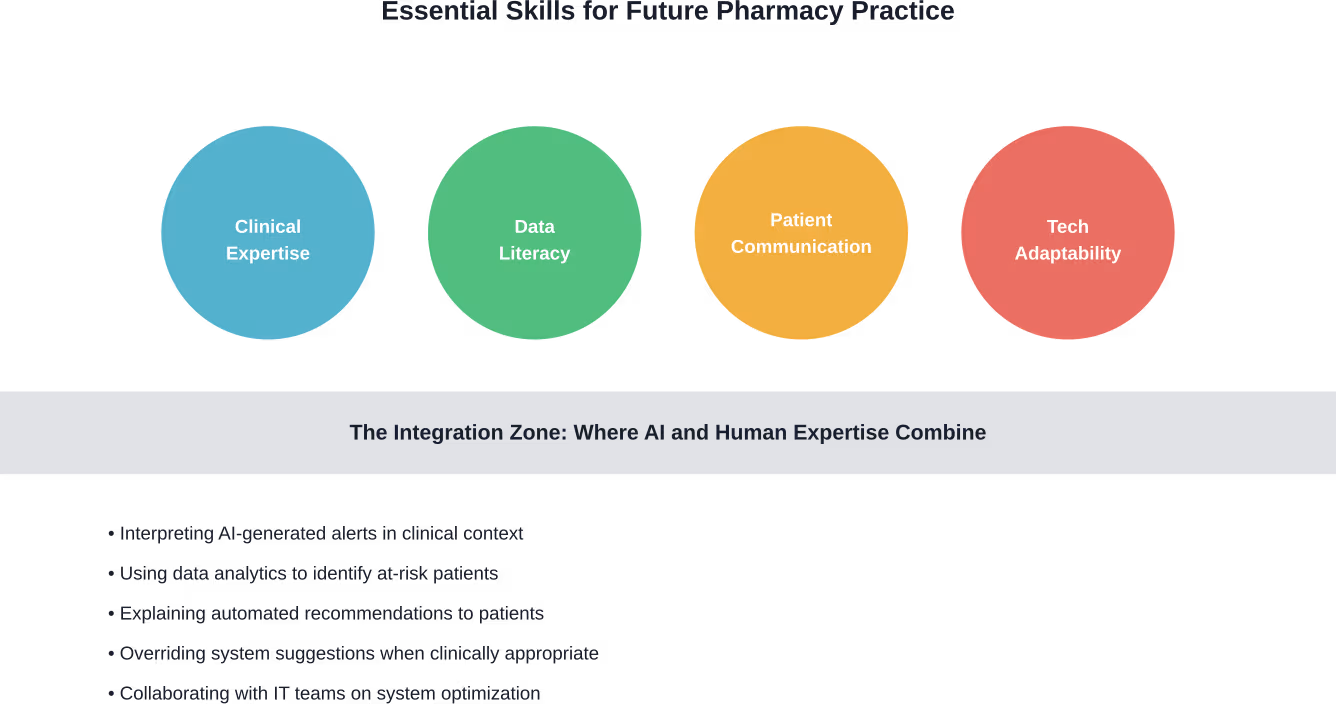
Addressing Common Fears and Misconceptions
Community discussions reveal recurring anxieties about AI in pharmacy. Let’s address them directly.
“Robots Are More Accurate Than Humans”
True for specific tasks. Robots don’t miscount pills. They don’t transpose digits when entering prescription numbers. But accuracy in one narrow domain doesn’t equal competence across the full scope of pharmacy practice. A robot achieves 100% accuracy counting pills because counting pills is a completely defined task with clear parameters. Evaluating whether a prescription is clinically appropriate for a specific patient isn’t a completely defined task. It requires judgment, context, and the integration of information that may not exist in structured data fields.
“AI Will Make Pharmacy School Pointless”
Pharmacy education will need to evolve—it already is. Programs increasingly incorporate informatics, data analysis, and advanced clinical training. But the fundamental knowledge base—pharmacology, pathophysiology, pharmacokinetics, therapeutics—remains essential. AI tools augment that knowledge; they don’t replace the need to possess it. Physicians didn’t become obsolete when diagnostic AI emerged. Their education shifted to emphasize interpretation and clinical reasoning. Pharmacy will follow a similar trajectory.
“Corporate Pharmacies Will Eliminate Pharmacist Positions to Cut Costs”
This concern has some validity, but it misunderstands the constraint. State pharmacy laws require pharmacist oversight of prescription dispensing. Corporations can’t legally eliminate pharmacists from the prescription verification process without changing those regulations. And changing those regulations faces opposition from professional organizations, patient advocacy groups, and liability insurers who recognize that removing professional oversight increases patient risk. Staffing levels may fluctuate based on prescription volume and service models, but the fundamental requirement for licensed pharmacist involvement isn’t disappearing.
The Broader Context: Automation Across Healthcare
Pharmacy doesn’t exist in isolation. Examining automation patterns across healthcare professions provides useful perspective. Radiologists faced similar anxieties when AI diagnostic imaging systems demonstrated accuracy matching or exceeding human performance in specific tasks like detecting lung nodules or identifying diabetic retinopathy. The prediction was clear: Radiology as a profession would shrink dramatically. It didn’t happen. Radiology residency positions remain competitive. The profession evolved to emphasize complex case interpretation, interventional procedures, and integration of imaging findings with clinical context—exactly the tasks AI handles poorly. Nurses confronted automation predictions around electronic charting, automated medication dispensing, and remote patient monitoring. Nursing employment has grown consistently despite these technologies. The pattern across healthcare suggests that automation eliminates specific tasks while the profession adapts by emphasizing irreplaceable human elements. Pharmacy appears to be following this established pattern rather than representing an exception to it.
What Pharmacy Organizations and Educators Are Doing
Professional organizations recognize the need to guide the profession through technological transformation.
Curriculum Evolution
Pharmacy schools are integrating informatics training, data analytics courses, and AI literacy into Doctor of Pharmacy programs. According to materials from the University of Wisconsin–Madison School of Pharmacy, alumni and faculty are examining how technology reshapes pharmacy practice. This educational shift prepares graduates to work alongside AI rather than compete against it.
Professional Development Initiatives
Organizations like ASHP (American Society of Health-System Pharmacists) host conferences addressing AI implementation, with sessions focused on practical questions like “when will there be an AI pharmacist verification product?” The conversation has shifted from “if” to “when” and “how to prepare.” That’s a healthy evolution. Denial would be counterproductive. Proactive preparation positions the profession to shape how technology integrates rather than having integration imposed upon them.
Advocacy for Scope of Practice Expansion
As automation handles dispensing tasks, professional organizations advocate for expanded clinical roles—prescriptive authority in certain contexts, reimbursement for medication therapy management services, and recognition as primary care providers. This strategic positioning transforms automation from a threat into an opportunity. If robots count pills, pharmacists justify their value through irreplaceable clinical services.
The Patient Perspective: What Gets Lost Without Human Pharmacists
Healthcare isn’t just about technical accuracy. Patient experience matters. Real talk: Patients often find their pharmacist more accessible than their physician. Pharmacies don’t require appointments. Patients can ask questions without waiting weeks for an office visit. That accessibility creates opportunities for intervention that purely technical systems can’t replicate. A pharmacist notices that a patient seems confused about their new medication regimen. They spend fifteen minutes explaining, using plain language, checking understanding. An AI chatbot can provide the same information. But can it recognize subtle cues that a patient is struggling to admit they can’t afford the medication? Can it navigate the complex social dynamics of health literacy differences? The empathetic, relationship-based aspects of pharmacy practice remain stubbornly human. And patients value them.
Looking Forward: What the Next Decade Likely Holds
Predicting the future is hazardous. But based on current trends, several developments seem probable.
Increased AI Integration in Routine Tasks
Prescription verification, inventory management, and basic drug interaction screening will become increasingly automated. This is already happening and will accelerate. Pharmacists will spend less time on these activities and more time on clinical consultations, chronic disease management, and patient education.
Expansion of Clinical Pharmacy Services
As healthcare systems seek to reduce costs and improve outcomes, pharmacist-led interventions—medication reconciliation, adherence programs, anticoagulation management—will expand. These services generate documented value and leverage exactly the skills AI cannot replicate.
Hybrid Practice Models
The future probably isn’t “pharmacists or AI.” It’s pharmacists using AI tools to enhance their practice. Clinical decision support that highlights potential issues. Predictive analytics identifying patients at risk for medication-related problems. Automated follow-up systems that free pharmacists to focus on complex cases. The technology becomes invisible infrastructure supporting human expertise.
Regulatory Evolution
Pharmacy practice regulations will need to adapt to technological capabilities. Some states may allow greater automation under pharmacist supervision. Others may expand pharmacist scope of practice in recognition of their clinical training. These changes will be gradual and vary by jurisdiction, but the regulatory landscape will evolve.
Preparing for the Transformation: Practical Steps
For pharmacists and pharmacy students concerned about the future, several actions make sense.
Develop Technical Literacy
Understanding how AI systems work—their capabilities and limitations—provides the foundation for working effectively alongside these tools. This doesn’t require becoming a programmer, but it does mean moving beyond viewing AI as a black box.
Pursue Advanced Clinical Training
Residencies, board certification, and specialized training in areas like ambulatory care, oncology, or infectious diseases position pharmacists for roles that automation cannot eliminate.
Embrace Lifelong Learning
The pharmacists who thrive will be those who view education as ongoing rather than something that ended with graduation. New drugs, new technologies, new practice models—all demand continuous skill development.
Focus on Patient Relationships
Developing strong communication skills, cultural competence, and the ability to build therapeutic relationships creates value that technology cannot replicate.
Engage with Technology Implementation
When organizations introduce new AI tools, volunteer to participate in pilot programs. Understanding these systems from the inside provides career advantages and positions individuals as technology champions rather than resisters.
Frequently Asked Questions
Will AI completely replace pharmacists in the next 10 years?
No. While AI will automate specific tasks like pill counting and basic prescription verification, the clinical judgment, patient counseling, and complex decision-making that pharmacists provide cannot be replicated by current or foreseeable AI technology. Bureau of Labor Statistics projections show pharmacy employment growing, not shrinking, through 2034.
What pharmacy tasks are most likely to be automated?
Repetitive, rule-based tasks face the highest automation risk: pill counting and packaging, inventory management, prescription data entry, and basic drug interaction screening. These tasks require precision and consistency but minimal judgment—exactly what AI and robotics handle well.
How can pharmacists prepare for increased AI in the workplace?
Focus on developing skills that complement rather than compete with AI: advanced clinical knowledge, patient communication expertise, data literacy, and adaptability to new technologies. Pursuing residency training or board certification in clinical specialties provides additional career security.
Are pharmacy jobs declining because of automation?
Overall pharmacy employment is projected to grow by 5% through 2034 according to Bureau of Labor Statistics data. While some retail positions may consolidate due to prescription volume changes and efficiency improvements, clinical pharmacy roles in hospitals, ambulatory care, and specialized services are expanding.
What’s the difference between AI augmentation and AI replacement?
AI augmentation means technology assists pharmacists by handling routine tasks, providing decision support, and improving efficiency—the pharmacist remains central to patient care. AI replacement would mean technology fully substitutes for pharmacist judgment and presence. Current evidence strongly supports augmentation, not replacement, as the actual trajectory.
Will pharmacy school still be worth it with AI advancement?
Yes, though the nature of pharmacy practice will continue evolving. The clinical knowledge, critical thinking, and patient care skills developed in pharmacy programs remain essential—AI tools require trained professionals to interpret their outputs and apply them appropriately. The profession is transforming, not disappearing.
What do pharmacists think about AI in their profession?
Most pharmacists hold positive views about AI’s potential to reduce errors and improve efficiency. However, many express concerns about adequate training, implementation costs, and the pace of change. The key is that positive perceptions exist alongside recognition that significant work remains to turn awareness into effective implementation.
The Bottom Line: Transformation, Not Elimination
Will AI replace pharmacists? The data says no. Will AI transform pharmacy practice? Absolutely. It already has. The distinction matters. Transformation means the profession evolves—some tasks disappear, others become more prominent, new skills become necessary. Replacement means the profession becomes obsolete. Every indicator—labor market projections, automation risk assessments, real-world implementation patterns, and historical precedent from other healthcare professions—points toward transformation rather than elimination. Pharmacists who adapt, who embrace clinical roles, who develop technological literacy, and who focus on the irreplaceable human elements of patient care will thrive. Those who resist change and cling to task-based definitions of the profession will struggle. But that’s not unique to pharmacy. It’s the reality of professional life in an era of rapid technological advancement. The robots are coming for the pill bottles. They’re not coming for the pharmacists. The future of pharmacy involves humans and AI working in partnership—technology handling the routine while pharmacists focus on the complex, the nuanced, and the deeply human aspects of medication management and patient care. That future is already arriving. The question isn’t whether to accept it, but how to shape it in ways that serve patients while preserving the professional expertise that only human pharmacists provide. Ready to future-proof your pharmacy career? Stay informed about emerging technologies, pursue advanced clinical training, and develop the skills that complement rather than compete with automation. The pharmacists who view AI as a tool rather than a threat will define the next generation of pharmacy practice.