
Quick Summary: Predictive analytics in fleet management leverages machine learning algorithms and real-time telematics data to forecast maintenance needs, optimize routes, and prevent costly breakdowns before they occur. By analyzing historical patterns and sensor data, fleet operators can shift from reactive repairs to proactive strategies that reduce downtime by significant margins while improving safety and operational efficiency.
Fleet operations have hit a turning point. Traditional reactive maintenance—waiting until something breaks—costs more than just repair bills. Downtime, missed deliveries, and safety incidents stack up fast.
That’s where predictive analytics steps in. Instead of guessing when a vehicle needs service, modern fleet management systems analyze data patterns to forecast issues before they escalate. The result? Fewer breakdowns, lower costs, and operations that actually run smoothly.
But here’s the thing: not all predictive approaches deliver equal results. Understanding what works—and what doesn’t—matters for any fleet operator looking to stay competitive in 2026.
What Makes Predictive Analytics Different from Traditional Fleet Management
Traditional fleet management relies on scheduled maintenance intervals. Change oil every 5,000 miles. Inspect brakes quarterly. Simple rules that ignore actual vehicle conditions.
Predictive analytics flips that model. Machine learning algorithms process data from telematics devices, onboard sensors, and historical records. They spot patterns humans miss—subtle vibrations indicating bearing wear, temperature fluctuations signaling cooling system stress, fuel consumption anomalies pointing to engine inefficiency.
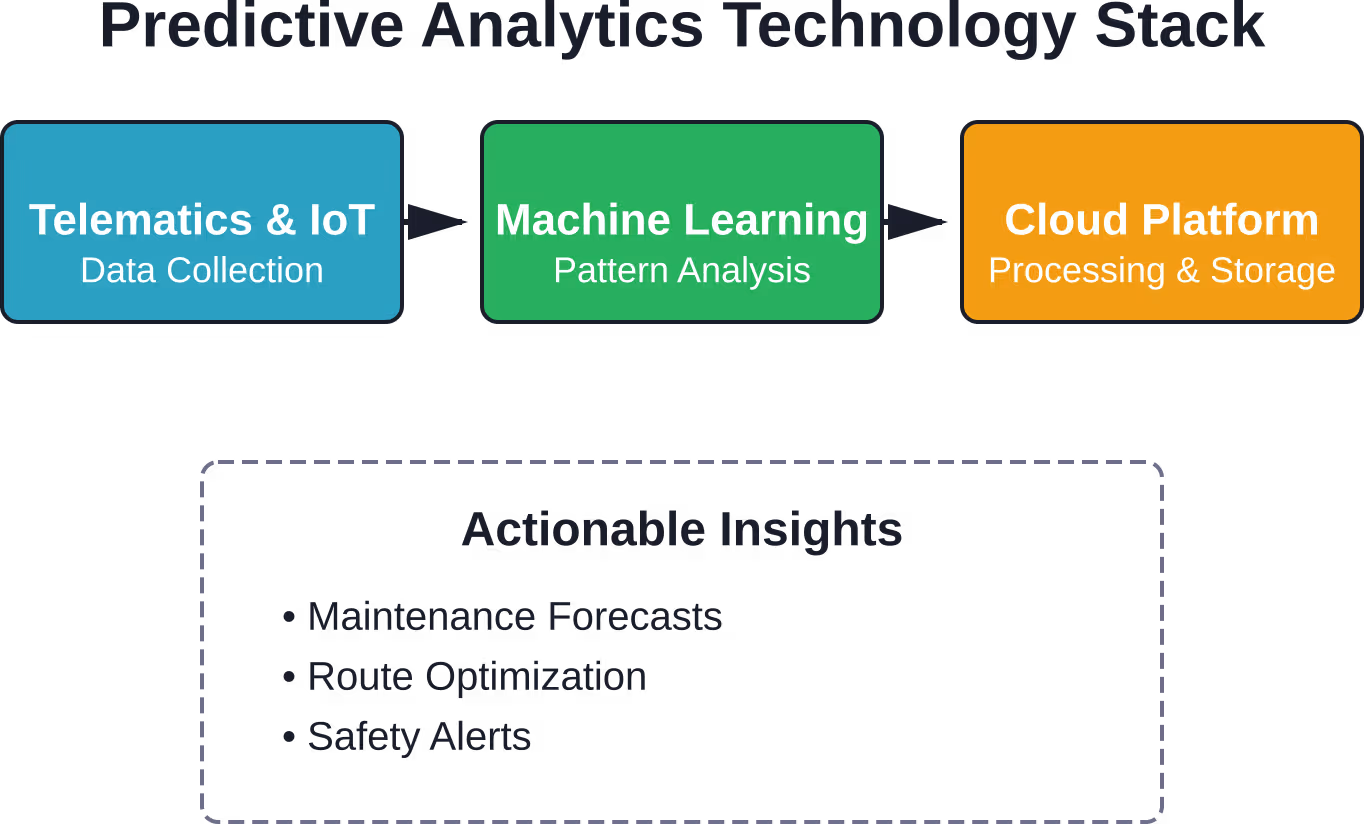
According to academic research, IoT-based predictive maintenance systems for fleet management utilize three distinct layers: perception (data collection from sensors), middleware (data processing and analysis), and application (actionable insights for operators). This architecture enables continuous monitoring at scale.
Real-time data collection generates substantial volumes. J1939 data collection from fleet operations generates substantial volumes requiring sophisticated data handling and compression techniques. Processing that volume requires sophisticated algorithms, not spreadsheets.
Core Technologies Powering Predictive Fleet Analytics
Several technologies converge to make predictive analytics practical for fleet operations today.
Telematics and IoT Sensors
Telematics devices track GPS location, speed, idle time, and harsh braking events. But modern systems go deeper—monitoring engine diagnostics, tire pressure, fuel efficiency, and driver behavior in real time.
IEEE research on enhancing smart logistics through Internet of Things emphasizes that sensor networks enable continuous data streams. Every vehicle becomes a mobile data generator feeding centralized analytics platforms.
Machine Learning Algorithms
Machine learning models identify failure patterns by analyzing thousands of data points across entire fleets. These algorithms detect correlations between sensor readings and subsequent breakdowns.
The approach improves over time. As models ingest more data, predictions become sharper. Early systems suffered from high false positive rates—flagging maintenance that wasn’t needed. Recent consensus self-organized models (COSMO) approaches address this by reducing non-fault findings and adapting to changing data distributions, based on academic work published in 2025.
Cloud Computing Infrastructure
Processing terabytes of fleet data requires cloud platforms. Scalable computing resources handle analytics workloads that would overwhelm local servers.
Cloud systems also enable integration. Predictive maintenance platforms connect with inventory management, parts ordering, and scheduling systems to automate workflows.
Key Benefits Fleet Operators Actually See
Theory sounds great. What happens in practice?
Reduced Maintenance Costs
Proactive maintenance costs less than emergency repairs. Catching a failing water pump during scheduled service beats replacing an overheated engine on the roadside.
Implementation of performance scorecards tied to predictive insights can help reduce fuel expenses, with some platforms showing potential reductions of approximately 10%. Driver behavior corrections alone—reducing harsh braking, excessive idling, and aggressive acceleration—generate measurable savings.
Lower Downtime and Higher Utilization
Every hour a vehicle sits in the shop represents lost revenue. Predictive systems schedule maintenance during natural downtime—evenings, weekends, periods of low demand.
That planning keeps vehicles available when needed most. Route optimization algorithms further boost utilization by identifying efficient assignments based on vehicle condition, location, and capacity.
Improved Safety Outcomes
Safety and maintenance connect directly. Worn brakes, bald tires, and failing steering components cause accidents. Predictive alerts flag these issues before they create hazards.
Driver behavior monitoring also contributes. Systems track speeding, distracted driving indicators, and fatigue patterns. Fleet managers receive alerts enabling coaching interventions before incidents occur.
Extended Asset Lifespan
Vehicles maintained according to actual condition last longer. Predictive analytics prevents both under-maintenance (leading to premature failure) and over-maintenance (wasting resources on unnecessary service).
Extending average vehicle life by even one year delivers substantial ROI across large fleets.
| Benefit Category | Impact Area | Typical Outcome |
|---|---|---|
| Cost Reduction | Maintenance spending | Lower emergency repair costs |
| Operational Efficiency | Vehicle availability | Reduced unplanned downtime |
| Safety | Accident prevention | Early warning of critical issues |
| Asset Management | Vehicle lifespan | Extended operational life |
| Fuel Efficiency | Consumption patterns | Optimized driver behavior |
Implementation Challenges Fleet Managers Face
Predictive analytics isn’t plug-and-play. Several obstacles complicate adoption.
Data Quality and Integration Issues
Garbage in, garbage out. Predictive models depend on clean, consistent data. Mixed vehicle types, inconsistent sensor installations, and legacy systems create integration headaches.
Many fleets run heterogeneous equipment—different makes, models, and years. Standardizing data collection across that variety requires careful planning.
Upfront Investment Requirements
Telematics hardware, software licenses, cloud infrastructure, and training represent significant costs. Smaller fleets may struggle to justify the expense without clear ROI projections.
That said, the cost curve has improved. Industry reports suggest cloud-based platforms with subscription pricing models lower barriers compared to earlier on-premise solutions requiring heavy capital expenditure.
Change Management and Training
Technicians accustomed to reactive repairs need training on proactive workflows. Dispatchers must learn to incorporate predictive alerts into scheduling. Drivers require education on how telematics monitoring works.
Organizational resistance shouldn’t be underestimated. Some staff view monitoring as surveillance rather than support.
Selecting the Right Predictive Analytics Platform
Dozens of vendors offer predictive fleet solutions. How do operators choose?
Compatibility with Existing Systems
Does the platform integrate with current dispatch, accounting, and maintenance software? API availability matters for seamless data flow.
Scalability
A solution that works for 50 vehicles may struggle at 500. Cloud-based platforms generally scale better than on-premise installations.
Algorithm Transparency
Black-box systems that provide alerts without explanation frustrate technicians. Better platforms explain why they flagged an issue—which sensor readings triggered the alert, what failure mode they predict.
Support and Training
Technical support quality varies widely. Implementation assistance, ongoing training, and responsive troubleshooting separate good vendors from mediocre ones.
Check references from similar fleet operations. A platform optimized for long-haul trucking may not suit last-mile delivery, and vice versa.

Build Predictive Fleet Models That Actually Reduce Downtime
Predictive analytics in fleet management only works when models are built around real operational data, not assumptions. AI Superior builds custom AI systems that help fleet operators use machine learning to identify patterns, forecast issues, and improve maintenance planning. Their approach starts with data validation and MVP development, so you can test accuracy before committing to full-scale implementation.
Get Predictive Analytics That Fits Your Fleet Operations
If you want predictive analytics that works in real conditions, AI Superior focuses on practical implementation aligned with your data and workflows:
- Custom models trained on your operational data
- Detection of potential failures based on data patterns
- Integration with existing data sources and systems
- MVP-first approach to validate results early
- Continuous model improvement based on real-world feedback
If you’re planning to implement predictive analytics in your fleet, contact AI Superior and discuss how your data can be turned into working models.
Future Directions in Fleet Predictive Analytics
The field continues evolving rapidly. Several trends look promising for 2026 and beyond.
Edge Computing for Faster Insights
Processing data locally on vehicles—rather than uploading everything to the cloud—enables real-time decision making. Edge computing reduces latency and bandwidth requirements while supporting immediate safety interventions.
Enhanced Driver Assistance Integration
Predictive systems increasingly feed data to advanced driver assistance systems (ADAS). When analytics detect brake wear, ADAS can compensate by adjusting following distances automatically.
Autonomous Fleet Considerations
Standards bodies like ISO have begun addressing autonomous system and fleet management requirements (ISO 23725). Predictive analytics will play central roles in maintaining autonomous vehicle fleets where traditional human inspections don’t apply.
Sustainability Metrics
Environmental concerns drive interest in carbon footprint tracking. Predictive platforms now incorporate emissions monitoring, helping fleets optimize for both cost and environmental impact.
Frequently Asked Questions
How accurate are predictive maintenance forecasts?
Accuracy depends on data quality and algorithm maturity. Established predictive systems aim for high accuracy on critical component failures. Newer deployments with limited historical data perform worse initially but improve as models learn from actual outcomes.
What’s the typical ROI timeline for predictive analytics?
Many fleets report achieving positive returns on predictive analytics investments within a reasonable timeframe. Larger operations with higher maintenance volumes often break even faster. Savings come from reduced emergency repairs, better parts inventory management, and improved vehicle availability.
Do smaller fleets benefit from predictive analytics?
Yes, though the cost-benefit calculation differs. Cloud-based platforms with flexible pricing make entry easier for smaller operators. Even modest fleets gain value from basic predictive capabilities like battery failure warnings and tire pressure monitoring.
Can predictive systems work with mixed vehicle types?
Modern platforms support heterogeneous fleets, but setup requires more effort. Each vehicle type needs appropriate sensor configurations and model training. Some vendors specialize in specific segments—commercial trucks, delivery vans, service vehicles—while others offer broader coverage.
What data security concerns apply to fleet telematics?
Connected vehicles generate sensitive operational data. Strong platforms employ encryption for data transmission and storage, role-based access controls, and regular security audits. Operators should verify vendor compliance with relevant standards and regulations.
How does predictive analytics handle rare failure modes?
Algorithms struggle with infrequent events lacking training examples. Some platforms pool anonymized data across multiple fleets to improve rare-event detection. Others combine physics-based models with machine learning to predict failures even without extensive historical examples.
What happens when predictions are wrong?
False positives waste time on unnecessary maintenance. False negatives allow failures. Good platforms track prediction accuracy and allow feedback—technicians report whether flagged issues were real. That feedback loop improves model performance over time and helps tune alert thresholds.
Moving Forward with Predictive Fleet Analytics
Predictive analytics represents more than incremental improvement—it’s a fundamental shift in how fleet operations work. Reactive approaches leave money on the table and vehicles on the roadside.
But successful implementation requires more than buying software. Data infrastructure, staff training, and process redesign all matter. Start with clear goals: What problems need solving? Where does unplanned downtime hurt most? Which maintenance issues recur frequently?
Pilot programs reduce risk. Test predictive approaches on a vehicle subset before committing entire fleets. Measure results rigorously. Document savings, track prediction accuracy, and gather feedback from technicians and drivers.
The technology will continue improving. Machine learning algorithms get smarter. Sensors become cheaper and more capable. Integration gets easier. Fleets that build predictive capabilities now position themselves for long-term competitive advantage.
Ready to transform fleet operations with predictive analytics? Assess current data collection capabilities, identify key pain points, and explore platforms suited to specific operational needs. The shift from reactive to predictive isn’t optional anymore—it’s how successful fleet management works in 2026.
 English
  German
  Arabic
  French
  Dutch
Dutch  Spanish