
Resumen rápido: El aprendizaje automático en visión artificial permite a las computadoras aprender automáticamente patrones a partir de datos visuales sin necesidad de programación explícita. Mediante arquitecturas de aprendizaje profundo, como las redes neuronales convolucionales, los sistemas ahora pueden clasificar imágenes, detectar objetos, segmentar escenas y reconocer rostros con una precisión que iguala o supera el rendimiento humano en tareas específicas.
La visión artificial ha evolucionado desde algoritmos basados en reglas hasta convertirse en sistemas inteligentes que aprenden de los datos. El aprendizaje automático proporciona el motor que impulsa esta transformación, permitiendo a las computadoras reconocer gatos en fotografías, detectar tumores en escáneres médicos y guiar vehículos autónomos por las calles de la ciudad.
La relación entre estos campos es simbiótica. La visión artificial define lo que queremos que las máquinas vean y comprendan. El aprendizaje automático proporciona los algoritmos que hacen posible esa comprensión.
Pero aquí está la clave: el aprendizaje automático no solo ha mejorado la visión artificial, sino que ha cambiado radicalmente nuestra forma de abordar los problemas de comprensión visual.
Comprensión de la visión artificial y el aprendizaje automático
La visión por computadora es un subcampo de la inteligencia artificial que dota a las máquinas de la capacidad de procesar, analizar e interpretar información visual, como imágenes y videos. Se trata de enseñar a las computadoras a extraer información relevante de los datos visuales, tal como lo hacen los humanos sin esfuerzo.
El aprendizaje automático adopta un enfoque diferente. En lugar de programar reglas explícitas para cada escenario, los algoritmos de aprendizaje automático aprenden patrones a partir de ejemplos. Si se le proporcionan miles de imágenes de gatos a un sistema, este aprende qué define a un gato sin necesidad de que nadie escriba reglas sobre bigotes u orejas puntiagudas.
Combinadas, crean sistemas capaces de abordar tareas visuales que parecían imposibles hace una década.
La diferencia fundamental
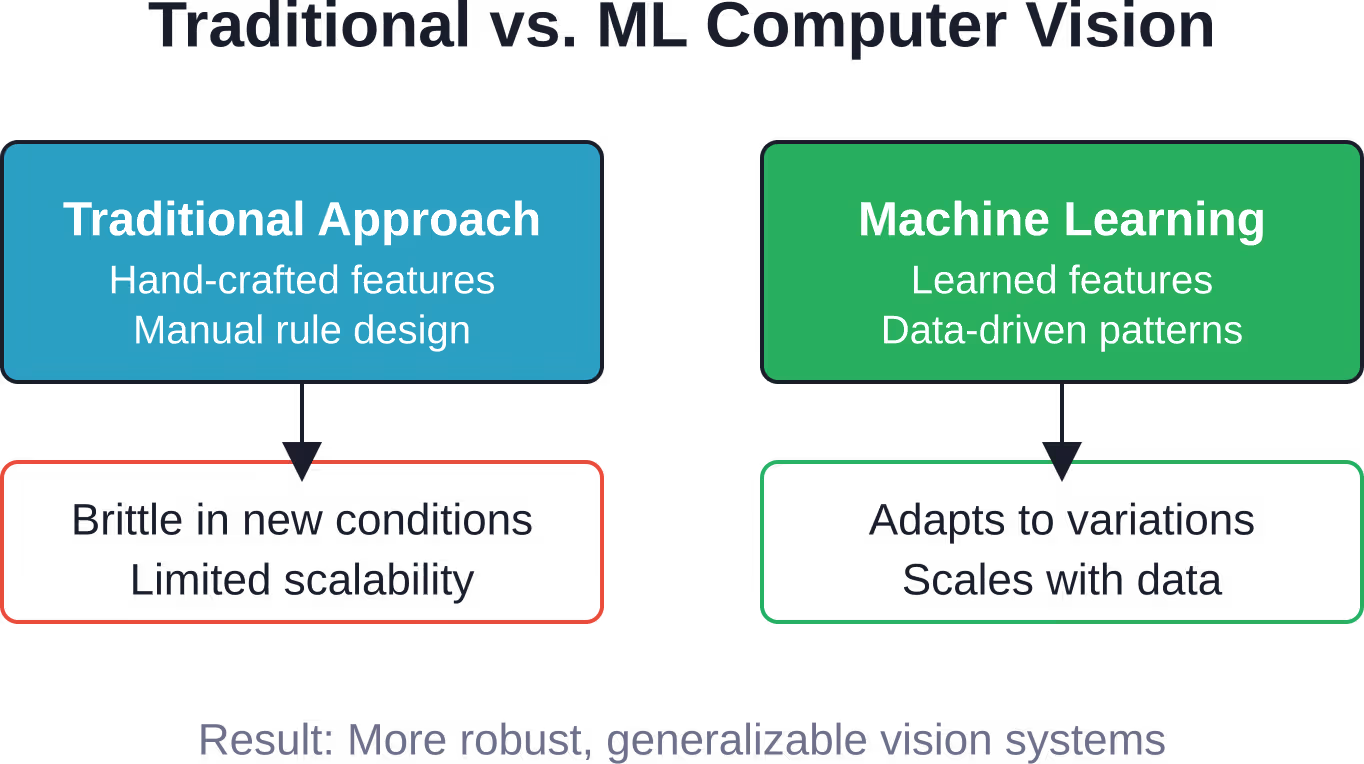
La visión artificial tradicional se basaba en características diseñadas manualmente. Los ingenieros diseñaban manualmente filtros y reglas para detectar bordes, esquinas o patrones específicos. Esto funcionaba en entornos controlados, pero resultaba ineficaz cuando las condiciones cambiaban.
El aprendizaje automático revolucionó este enfoque. En lugar de diseñar características, los algoritmos ahora las aprenden automáticamente a partir de datos de entrenamiento. Esto hace que los sistemas sean más robustos y adaptables a nuevos escenarios.
Aprendizaje profundo: un cambio radical
El aprendizaje profundo lo cambió todo para la visión artificial. En concreto, las redes neuronales convolucionales revolucionaron la forma en que las máquinas procesan la información visual.
Las redes neuronales convolucionales (CNN) imitan el funcionamiento de la corteza visual humana. Las primeras capas detectan características simples como bordes y texturas. Las capas más profundas las combinan para formar patrones más complejos: formas, objetos y escenas completas.
Según las investigaciones sobre redes neuronales convolucionales, estas arquitecturas surgieron como el enfoque dominante porque aprenden automáticamente representaciones jerárquicas de características directamente a partir de los datos de píxeles.
Cómo funcionan las redes neuronales convolucionales
Una red neuronal convolucional (CNN) procesa imágenes mediante múltiples capas. Las capas convolucionales aplican filtros que recorren la imagen, detectando patrones. Las capas de agrupación reducen la dimensionalidad conservando la información importante. Finalmente, las capas totalmente conectadas realizan las clasificaciones o predicciones finales.
La magia ocurre durante el entrenamiento. La red ajusta millones de parámetros para minimizar los errores en los ejemplos de entrenamiento. Este proceso, llamado retropropagación, permite que la red descubra qué características son más importantes para una tarea determinada.
Seamos realistas: entrenar redes neuronales profundas requiere conjuntos de datos enormes y una gran capacidad de cálculo. Pero los resultados justifican la inversión.
Más allá de las redes neuronales convolucionales básicas
Las arquitecturas han evolucionado significativamente. ResNet introdujo conexiones de salto que permiten entrenar redes mucho más profundas. YOLO (You Only Look Once) procesa imágenes completas en una sola pasada para la detección de objetos en tiempo real. Los transformadores de visión aplican mecanismos de atención desarrollados originalmente para el lenguaje a tareas visuales.
Las investigaciones de 2024 sobre convoluciones en el aprendizaje profundo documentan estas innovaciones arquitectónicas y su impacto en el rendimiento en diferentes tareas de visión.
Tareas básicas de visión artificial
El aprendizaje automático aborda varios problemas fundamentales de visión. Cada uno requiere arquitecturas y enfoques de entrenamiento diferentes.
Clasificación de imágenes
La clasificación asigna una etiqueta a toda la imagen. ¿Es esta una foto de un perro o de un gato? ¿Esta radiografía muestra neumonía?
Los clasificadores modernos alcanzan una precisión comparable a la humana en muchos parámetros de referencia. Se utilizan en todo tipo de aplicaciones, desde programas de organización de fotos hasta herramientas de diagnóstico médico.
Detección de objetos
La detección va más allá: localiza y clasifica múltiples objetos dentro de una imagen. Los vehículos autónomos la utilizan para identificar peatones, vehículos y obstáculos. Los sistemas de venta minorista la utilizan para controlar el inventario.
Los detectores de última generación pueden identificar docenas de clases de objetos en transmisiones de video en tiempo real. La arquitectura YOLO representa las mejores prácticas actuales, prediciendo con precisión los recuadros delimitadores alrededor de los objetos en las imágenes.
Segmentación de imágenes
La segmentación divide las imágenes en regiones significativas. La segmentación semántica etiqueta cada píxel con una clase. La segmentación de instancias separa los objetos individuales de la misma clase.
Según las especificaciones del conjunto de datos de 2024, los puntos de referencia de análisis de escenas integrales contienen 150 categorías de objetos: 35 clases de elementos (pared, cielo, carretera) y 115 objetos discretos (coche, persona, mesa), con píxeles anotados que cubren el 92,75% de todos los píxeles del conjunto de datos.
Los mismos datos muestran que las clases de objetos ocupan 60,92% de píxeles anotados, mientras que los objetos discretos representan 31,83%.

Reconocimiento facial
El reconocimiento facial identifica a las personas a partir de sus rasgos faciales. Los sistemas de seguridad, la autenticación telefónica y el etiquetado de fotos se basan en algoritmos de reconocimiento facial.
Estos sistemas codifican rostros en vectores de alta dimensión donde los rostros similares se agrupan. Comparar nuevos rostros con bases de datos se convierte en un problema de búsqueda geométrica.
Reconocimiento óptico de caracteres
El reconocimiento óptico de caracteres (OCR) extrae texto de las imágenes. Los sistemas OCR modernos manejan diversas fuentes, idiomas y condiciones difíciles como la escritura a mano o el texto distorsionado.
Los sistemas OCR basados en aprendizaje profundo combinan la detección (encontrar regiones de texto) con el reconocimiento (leer los caracteres).
Entrenamiento de modelos de visión de aprendizaje automático
La creación de modelos de visión eficaces requiere una atención meticulosa a los datos, la selección de la arquitectura y los procedimientos de entrenamiento.
Requisitos del conjunto de datos
La calidad de los datos es fundamental para el éxito o el fracaso de los sistemas de visión. Los modelos necesitan miles o millones de ejemplos etiquetados para aprender representaciones sólidas.
La calidad de los datos es tan importante como la cantidad. Según la documentación del conjunto de datos MIT Scene Parsing Benchmark, en promedio, 82,41 TP3T píxeles en las imágenes anotadas tienen etiquetas consistentes en todo el conjunto de datos.
El aumento de datos resulta útil. Técnicas como la rotación, el escalado, el ajuste de color y el recorte amplían artificialmente los conjuntos de entrenamiento, al tiempo que enseñan a los modelos a manejar variaciones.
Aprendizaje por transferencia
Entrenar grandes redes neuronales desde cero es costoso y requiere una gran cantidad de datos. El aprendizaje por transferencia ofrece una solución más sencilla.
Los modelos preentrenados aprenden características visuales generales en conjuntos de datos masivos. Ajustar estos modelos para tareas específicas requiere muchos menos datos y tiempo de entrenamiento. Un modelo preentrenado con millones de imágenes naturales puede adaptarse a imágenes médicas especializadas con tan solo miles de ejemplos.
Selección de arquitectura
Las distintas tareas requieren arquitecturas diferentes. La clasificación puede utilizar ResNet o EfficientNet. La detección de objetos prefiere YOLO o Faster R-CNN. La segmentación suele emplear U-Net o DeepLab.
La elección depende de los requisitos de precisión, las limitaciones de velocidad y los recursos computacionales disponibles. Las aplicaciones en tiempo real priorizan la eficiencia. El análisis fuera de línea puede utilizar modelos más grandes y precisos.
| Tipo de arquitectura | Mejor para | Punto fuerte clave | Compensación |
|---|---|---|---|
| ResNet | Clasificación de imágenes | Redes muy profundas, alta precisión | Costo computacional |
| YOLO | Detección en tiempo real | Velocidad, procesamiento de una sola pasada | Precisión de objetos pequeños |
| U-Net | Segmentación médica | Funciona con conjuntos de datos pequeños. | Diseño específico del dominio |
| Vision Transformer | Tareas a gran escala | Mecanismos de atención, escalabilidad | Requiere datos masivos |

Construye modelos de visión artificial con IA superior
Los proyectos de visión artificial suelen requerir más que solo el entrenamiento del modelo. La calidad de los datos, la anotación, las pruebas y la implementación influyen en si el sistema funcionará de forma fiable en la práctica. IA superior Ayuda a los equipos a estructurar proyectos de visión artificial, desde la planificación inicial hasta el desarrollo y la validación del modelo.
Su equipo trabaja en consultoría de IA, aprendizaje automático, aprendizaje profundo, desarrollo de visión artificial, ingeniería de software de IA, desarrollo de pruebas de concepto y evaluación de modelos.
AI Superior puede brindar soporte a proyectos de visión artificial con:
- Revisión de conjuntos de datos de imágenes o vídeos
- Definición del caso de uso de la visión artificial y el alcance técnico.
- Creación de modelos de prueba de concepto
- Desarrollo de sistemas de aprendizaje profundo y visión artificial.
- Prueba de precisión y fiabilidad del modelo
- Planificación de la implementación en software o flujos de trabajo existentes
- Apoyo al desarrollo e integración de productos de IA
En el ámbito de la visión artificial, esto puede incluir la detección de objetos, la clasificación de imágenes, la inspección visual, el análisis de imágenes médicas, el análisis de vídeo, el reconocimiento óptico de caracteres (OCR) y los sistemas automatizados de control de calidad.
Contacta con IA Superior para discutir el proyecto.
Aplicaciones en el mundo real
La visión artificial basada en el aprendizaje automático ha pasado de los laboratorios de investigación a los productos y servicios cotidianos.
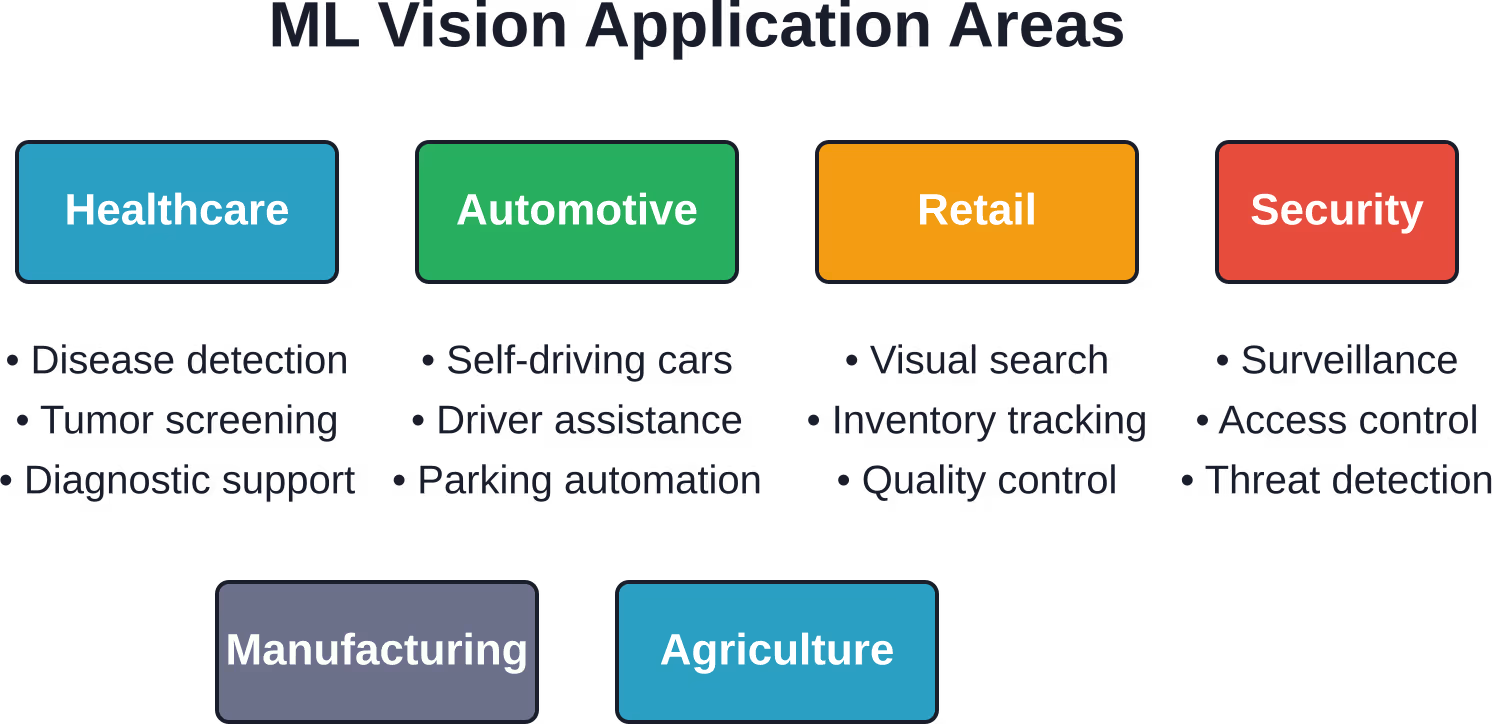
Atención sanitaria e imagen médica
Las imágenes médicas representan una de las aplicaciones más impactantes. Las redes neuronales convolucionales (CNN) pueden detectar enfermedades en radiografías, resonancias magnéticas y tomografías computarizadas con precisión diagnóstica.
Estudios recientes a gran escala (por ejemplo, McKinney et al., Nature) demostraron que los sistemas de IA redujeron los falsos positivos en 5,7% (EE. UU.) y 1,2% (Reino Unido) y los falsos negativos en 9,4% (EE. UU.) y 2,7% (Reino Unido) en comparación con los radiólogos.
Los sistemas de apoyo al diagnóstico ayudan a los radiólogos a revisar las tomografías de forma más rápida y precisa. No sustituyen la experiencia humana, sino que la complementan.
Vehículos autónomos
Los coches autónomos dependen por completo de la visión artificial. Múltiples señales de cámara se procesan mediante redes neuronales que detectan carriles, vehículos, peatones, señales de tráfico y obstáculos.
Estos sistemas combinan la visión con otros sensores como el lidar y el radar. Pero la visión proporciona la rica comprensión semántica necesaria para navegar por entornos urbanos complejos.
Comercio minorista y comercio electrónico
La búsqueda visual permite a los compradores encontrar productos subiendo fotos. Los sistemas de gestión de inventario controlan automáticamente los niveles de existencias. Las tiendas sin cajas utilizan visión artificial para identificar qué productos cogen los clientes de las estanterías.
Los sistemas de recomendación de productos analizan las imágenes que ven los clientes para sugerir artículos similares. Los sistemas de control de calidad inspeccionan los productos manufacturados en busca de defectos a una velocidad imposible para los inspectores humanos.
Seguridad y Vigilancia
El análisis de vídeo detecta actividades inusuales, rastrea a personas a través de redes de cámaras e identifica amenazas a la seguridad. Los sistemas de control de acceso utilizan el reconocimiento facial para la autenticación.
El análisis de multitudes estima los niveles de ocupación e identifica patrones de congestión. Estas capacidades mejoran la seguridad, pero plantean importantes consideraciones sobre la privacidad.
Agricultura
La agricultura de precisión utiliza imágenes de drones y aprendizaje automático para monitorear la salud de los cultivos, detectar enfermedades y optimizar el riego. El reconocimiento de plantas ayuda a identificar malezas para un tratamiento específico.
Los sistemas de cosecha automatizados identifican los productos maduros para su recolección robótica. El monitoreo del ganado realiza un seguimiento de la salud y el comportamiento de los animales.
Desafíos y limitaciones
A pesar de los impresionantes avances, el aprendizaje automático en visión artificial se enfrenta a constantes desafíos.
Dependencia de datos
El aprendizaje profundo requiere grandes cantidades de datos. Los modelos necesitan conjuntos de datos etiquetados extensos para alcanzar una alta precisión. Recopilar y etiquetar los datos de entrenamiento es costoso y consume mucho tiempo.
En ámbitos especializados, a menudo no se dispone de datos suficientes. Las imágenes médicas, el análisis satelital y las aplicaciones industriales se enfrentan a la escasez de datos.
Problemas de generalización
Los modelos entrenados con un conjunto de datos suelen tener un rendimiento deficiente con datos de fuentes diferentes. Un sistema de reconocimiento facial entrenado con fotografías de alta calidad podría fallar con grabaciones de vigilancia.
Las técnicas de adaptación de dominio ayudan, pero no resuelven completamente el problema. Los modelos pueden volverse frágiles al encontrarse con escenarios fuera de su distribución de entrenamiento.
Requisitos computacionales
Los modelos de última generación requieren importantes recursos computacionales. El entrenamiento puede tardar días o semanas en costosos clústeres de GPU. La inferencia en dispositivos periféricos exige compresión y optimización del modelo.
Esto crea obstáculos para las organizaciones más pequeñas y limita la implementación en entornos con recursos limitados.
Interpretabilidad
Las redes neuronales son cajas negras. Entender por qué un modelo hace predicciones específicas sigue siendo difícil. Para aplicaciones críticas como el diagnóstico médico o la conducción autónoma, esta falta de transparencia genera preocupación.
La investigación en IA explicable tiene como objetivo hacer que los modelos de visión sean más interpretables, pero aún persisten importantes desafíos.
Prejuicios y equidad
Los modelos de visión pueden heredar y amplificar los sesgos presentes en los datos de entrenamiento. Los sistemas de reconocimiento facial han mostrado diferencias en su precisión entre distintos grupos demográficos. Los detectores de objetos podrían tener un rendimiento diferente en imágenes de distintas regiones geográficas.
Para abordar los sesgos se requieren datos de capacitación diversos, una evaluación cuidadosa en diferentes poblaciones y un seguimiento continuo durante la implementación.
El futuro del aprendizaje automático en la visión por computadora.
Varias tendencias están marcando el rumbo que tomará la visión por computadora.
Modelos de visión-lenguaje
Los sistemas que combinan visión y comprensión del lenguaje están ganando terreno. Modelos como CLIP aprenden conceptos visuales a partir de descripciones en lenguaje natural, lo que permite el reconocimiento instantáneo de objetos que nunca han visto etiquetados.
Estos enfoques multimodales prometen sistemas más flexibles que comprendan el contenido visual en contexto con texto, voz y otras modalidades.
Aprendizaje autosupervisado
Los métodos de aprendizaje autosupervisado aprenden de datos sin etiquetar resolviendo tareas de pretexto. Pueden predecir rotaciones de imágenes, rellenar regiones enmascaradas o emparejar versiones aumentadas de la misma imagen.
Esto reduce la dependencia de datos etiquetados costosos, al tiempo que permite aprender representaciones ricas que resultan útiles para tareas posteriores.
IA de vanguardia
La ejecución de modelos de visión directamente en cámaras, teléfonos y dispositivos IoT elimina la latencia de la nube y mejora la privacidad. Las técnicas de compresión de modelos permiten crear redes potentes incluso en hardware con recursos limitados.
El despliegue en el borde de la red permite el procesamiento en tiempo real para robótica, realidad aumentada y sistemas autónomos.
Comprensión 3D
Más allá del análisis de imágenes en 2D, los modelos están aprendiendo a razonar sobre la estructura, la profundidad y las relaciones espaciales en 3D. Esto beneficia a la robótica, la realidad aumentada y la navegación autónoma.
Técnicas como los campos de radiación neuronal crean representaciones detalladas de escenas en 3D a partir de imágenes en 2D.
| Tendencia emergente | Innovación clave | Área de impacto |
|---|---|---|
| Modelos de visión-lenguaje | Comprensión multimodal | Reconocimiento sin necesidad de realizar ningún disparo, razonamiento visual |
| Aprendizaje autosupervisado | Aprendizaje sin etiquetas | Costes de anotación reducidos, mejores características |
| IA de vanguardia | Procesamiento en el dispositivo | Privacidad, latencia, funcionamiento sin conexión |
| Visión 3D | Comprensión espacial | Robótica, realidad aumentada/realidad virtual, sistemas autónomos |
| Aprendizaje con pocos ejemplos | Aprender de los ejemplos | Dominios especializados, rápida adaptación |
Introducción a la visión artificial
Las organizaciones que deseen implementar la visión artificial deben tener en cuenta varios factores.
Definir objetivos claros
Comience con problemas específicos. "Mejorar el control de calidad" es vago. "Detectar arañazos de más de 2 mm en la superficie del producto" proporciona criterios de éxito claros.
La comprensión de los requisitos influye en la selección de la arquitectura, la recopilación de datos y las métricas de evaluación.
Evaluar la disponibilidad de datos
¿Cuántos datos relevantes existen? ¿Qué se necesitaría para recopilar más? ¿Es factible el etiquetado?
Las limitaciones de datos suelen determinar si tienen sentido utilizar modelos personalizados, aprendizaje por transferencia o soluciones prefabricadas.
Aprovechar las herramientas existentes
Los frameworks de código abierto como TensorFlow y PyTorch proporcionan los componentes básicos. Los modelos preentrenados ofrecen puntos de partida. Las plataformas en la nube suministran la infraestructura.
Aprovechar los cimientos existentes acelera el desarrollo y reduce los costos.
Empieza por lo sencillo
Comience con enfoques básicos antes de pasar a arquitecturas complejas. A veces, los modelos más sencillos funcionan bastante bien y, además, son más fáciles de implementar y mantener.
Iterar basándose en datos de rendimiento reales en lugar de perseguir los parámetros de referencia más avanzados.
Plan de despliegue
Los modelos que funcionan en entornos de prueba deben pasar a producción. Considere la velocidad de inferencia, los requisitos de recursos, la monitorización y las actualizaciones del modelo.
Los desafíos de la implementación suelen superar los desafíos de la capacitación.
Preguntas frecuentes
¿Cuál es la diferencia entre visión artificial y aprendizaje automático?
La visión artificial se centra en capacitar a las máquinas para interpretar y comprender la información visual de imágenes y vídeos. El aprendizaje automático proporciona los algoritmos que permiten a los sistemas aprender patrones a partir de los datos. El aprendizaje automático es la metodología; la visión artificial es el ámbito de aplicación. Los sistemas modernos de visión artificial dependen en gran medida de las técnicas de aprendizaje automático, en particular del aprendizaje profundo, para lograr una alta precisión.
¿Todos los sistemas de visión artificial utilizan aprendizaje profundo?
No, aunque el aprendizaje profundo domina las aplicaciones modernas. Las técnicas tradicionales de visión artificial que utilizan características diseñadas manualmente aún funcionan para problemas específicos con restricciones. Algunas aplicaciones combinan métodos clásicos con aprendizaje automático. La elección depende de la disponibilidad de datos, los recursos computacionales y los requisitos de rendimiento. Sin embargo, el aprendizaje profundo se ha convertido en el enfoque predeterminado para tareas de visión complejas del mundo real.
¿Cuántos datos se necesitan para entrenar un modelo de visión artificial?
Varía drásticamente según la complejidad de la tarea y el enfoque. El entrenamiento desde cero puede requerir de miles a millones de imágenes etiquetadas. El aprendizaje por transferencia puede funcionar con cientos de ejemplos ajustando modelos preentrenados. Las técnicas de aprendizaje con pocos ejemplos van aún más allá, aprendiendo a partir de tan solo un puñado de ejemplos. La calidad de los datos es tan importante como la cantidad: los datos limpios y representativos son mejores que los conjuntos de datos masivos pero ruidosos.
¿Pueden los sistemas de visión por aprendizaje automático funcionar en tiempo real?
Sí, muchos sistemas procesan vídeo a más de 30 fotogramas por segundo. La arquitectura es clave: los detectores YOLO y similares están diseñados específicamente para la velocidad. La aceleración por hardware mediante GPU o chips especializados permite un rendimiento en tiempo real. Los dispositivos periféricos pueden ejecutar modelos optimizados con una latencia aceptable para muchas aplicaciones. El equilibrio entre precisión y velocidad se puede ajustar según los requisitos.
¿Cuáles son los principales desafíos en la implementación de modelos de visión artificial?
El cambio de dominio plantea problemas importantes: los modelos entrenados con un tipo de datos suelen tener dificultades con condiciones diferentes. Los requisitos computacionales pueden ser prohibitivos para la implementación en el borde de la red. Mantener el rendimiento del modelo a medida que cambian las distribuciones de datos con el tiempo requiere monitorización y reentrenamiento. Gestionar adecuadamente los casos límite y los errores es crucial para las aplicaciones críticas para la seguridad. La privacidad y la seguridad de los datos añaden complejidad, especialmente para los sistemas que procesan información visual sensible.
¿Qué tan precisos son los sistemas de visión artificial en comparación con los humanos?
En tareas específicas y bien definidas, los sistemas de visión modernos suelen igualar o superar la precisión humana. La clasificación de imágenes en pruebas estandarizadas alcanzó un rendimiento similar al humano hace años. Estudios recientes a gran escala (por ejemplo, McKinney et al., Nature) demostraron que los sistemas de IA redujeron los falsos positivos en 5,71 TP3T (EE. UU.) y 1,21 TP3T (Reino Unido), y los falsos negativos en 9,41 TP3T (EE. UU.) y 2,71 TP3T (Reino Unido) en comparación con los radiólogos. Sin embargo, los humanos siguen siendo superiores en la comprensión visual general, el razonamiento sobre situaciones novedosas y las tareas que requieren sentido común.
¿Qué lenguajes de programación y herramientas son los mejores para la visión artificial?
Python domina el desarrollo de aprendizaje automático y visión artificial. TensorFlow y PyTorch son los principales frameworks de aprendizaje profundo. OpenCV proporciona algoritmos y utilidades clásicas de visión artificial. Keras ofrece API de alto nivel que simplifican la creación de modelos. Para la implementación en producción, C++ y frameworks especializados optimizan el rendimiento. Las plataformas en la nube de los principales proveedores ofrecen servicios e infraestructura gestionados para visión artificial.
Conclusión
El aprendizaje automático transformó la visión artificial, pasando de un campo de algoritmos diseñados manualmente a sistemas adaptativos que aprenden de los datos. Las arquitecturas de aprendizaje profundo, en particular las redes neuronales convolucionales, permitieron avances significativos en tareas de clasificación de imágenes, detección de objetos, segmentación y reconocimiento.
Estos avances impulsan aplicaciones prácticas en sectores como la salud, la automoción, el comercio minorista, la seguridad y la agricultura. Los sistemas de visión detectan enfermedades en exploraciones médicas, permiten que los vehículos autónomos circulen por las carreteras y ayudan a los agricultores a optimizar el rendimiento de sus cultivos.
Persisten los desafíos. Los requisitos de datos, los costos computacionales, los problemas de generalización y las dificultades de interpretabilidad exigen investigación y desarrollo continuos. Sin embargo, la tendencia es clara: las capacidades de visión artificial siguen mejorando a la vez que se vuelven más accesibles.
La fusión del aprendizaje automático y la visión artificial representa una de las aplicaciones más prácticas e impactantes de la inteligencia artificial. Las organizaciones que aprovechan estas tecnologías de manera efectiva obtienen ventajas competitivas mediante la automatización, una mejor toma de decisiones y nuevas capacidades antes imposibles.
Ya sea que se opte por soluciones estándar o por modelos personalizados, el éxito radica en objetivos claramente definidos, datos de calidad, una arquitectura adecuada y una atención minuciosa a las realidades de la implementación. Las herramientas y el conocimiento existen; ahora se trata de aplicarlos de forma reflexiva a problemas relevantes.
 Spanish
  English
  German
  Arabic
  French
  Dutch
Dutch