Resumen rápido: El aprendizaje automático en el análisis deportivo utiliza algoritmos y ciencia de datos para transformar el rendimiento de los atletas, la prevención de lesiones, la estrategia táctica y la identificación de talentos. Desde sistemas de seguimiento en tiempo real hasta modelos predictivos de lesiones, el aprendizaje automático permite a los equipos tomar decisiones más rápidas y objetivas basadas en patrones ocultos en los datos de rendimiento. La investigación académica muestra que este campo ha generado más de 3700 citas, con aplicaciones en baloncesto, fútbol, voleibol y otros deportes.
El deporte ha evolucionado más allá de las corazonadas y la intuición. Los equipos actuales confían en el aprendizaje automático para sacar el máximo provecho de sus datos.
Y las cifras lo confirman. La investigación en aprendizaje automático aplicada al análisis deportivo ha acumulado un número considerable de citas, con un crecimiento significativo desde 2021. Esta aceleración deja claro algo: no se trata de una moda pasajera.
Pero, ¿qué aporta realmente el aprendizaje automático al deporte? ¿Cómo funciona en la práctica y dónde está teniendo mayor impacto?
Esta guía desglosa las principales aplicaciones, técnicas e implementaciones prácticas que definen el aprendizaje automático en el análisis deportivo actual.
Comprender el aprendizaje automático en el análisis deportivo
El aprendizaje automático en el análisis deportivo se refiere al uso de algoritmos que aprenden patrones a partir de datos deportivos históricos y aplican esos patrones para predecir resultados futuros u optimizar decisiones.
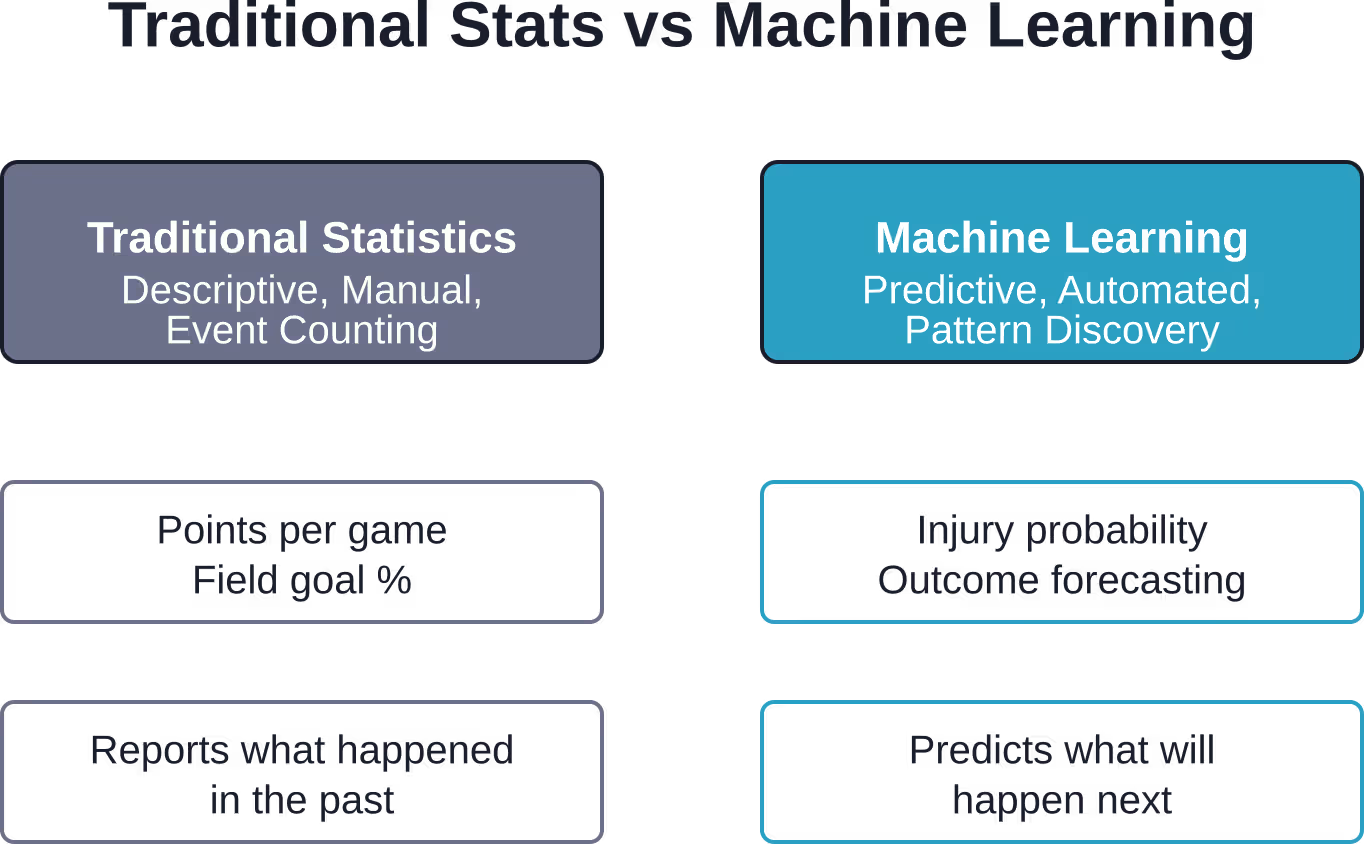
A diferencia de la estadística tradicional, donde los analistas definen manualmente qué medir, los algoritmos de aprendizaje automático descubren relaciones por sí mismos. Procesan conjuntos de datos masivos (seguimiento de jugadores, sensores biométricos, grabaciones de vídeo) y revelan información que los humanos podrían pasar por alto.
El flujo de trabajo generalmente sigue estas etapas:
- Recopilación de datos de sensores, cámaras y sistemas de seguimiento.
- Ingeniería de características para estructurar datos brutos en variables utilizables
- Entrenamiento del modelo utilizando datos históricos con resultados conocidos.
- Validación y pruebas para garantizar la precisión.
- Implementación para soporte de decisiones en tiempo real o casi en tiempo real.
Así, cuando la NBA se asocia con empresas como Second Spectrum para rastrear datos de "malla" (posiciones de los jugadores, movimiento del balón, espaciado defensivo), están alimentando sistemas de aprendizaje automático que pueden predecir los resultados de las jugadas antes de que ocurran.
En qué se diferencia de las estadísticas deportivas tradicionales
Las estadísticas deportivas tradicionales contabilizan eventos discretos: puntos anotados, pases completados, yardas ganadas. El aprendizaje automático va más allá.
Analiza las relaciones espaciales, las secuencias temporales y las respuestas biométricas bajo fatiga. Detecta combinaciones de factores que se correlacionan con el riesgo de lesiones o la disminución del rendimiento, combinaciones demasiado complejas para el análisis manual.
Mientras que un analista tradicional podría hacer un seguimiento del porcentaje de tiros, un modelo de aprendizaje automático realiza un seguimiento simultáneo de la selección de tiros bajo presión defensiva, los índices de fatiga del jugador, los grupos de posiciones en la cancha y las tendencias del oponente.
¿El resultado? Predicciones, no solo resúmenes.

Cree software de aprendizaje automático con AI Superior
AI Superior Desarrollan software de IA a medida, incluyendo modelos de aprendizaje automático, herramientas de análisis predictivo, aplicaciones basadas en IA y sistemas de análisis de datos. Su equipo brinda soporte a proyectos desde la fase de descubrimiento y revisión de datos hasta el desarrollo del producto mínimo viable (MVP), la integración y la evaluación de resultados.
En el ámbito del análisis deportivo, esto puede servir de apoyo para el análisis del rendimiento, las estadísticas de jugadores o equipos, las señales de riesgo de lesiones, la previsión, las herramientas de elaboración de informes u otros flujos de trabajo que impliquen un gran volumen de datos.
¿Necesitas un sistema de aprendizaje automático basado en tus datos?
AI Superior puede ayudar con:
- Creación de soluciones personalizadas de aprendizaje automático
- desarrollo de herramientas de análisis predictivo
- Probar ideas mediante el desarrollo de PoC o MVP.
- Integración de la IA en los sistemas existentes
👉 Contacta con AI Superior para hablar sobre su proyecto.
Aplicaciones principales en los deportes profesionales
El aprendizaje automático influye en casi todos los aspectos de las operaciones deportivas modernas. Aquí es donde marca la diferencia más tangible.
Optimización del rendimiento y formación
Los programas de entrenamiento han pasado de modelos de periodización genéricos a planes individualizados basados en algoritmos de aprendizaje automático que analizan los patrones de respuesta de cada atleta.
En la Universidad de Santa Clara (SCU), estudiantes de ciencia de datos colaboraron con el departamento de atletismo para desarrollar herramientas de análisis de datos biométricos de los estudiantes deportistas. El proyecto utilizó técnicas analíticas avanzadas para extraer información valiosa de las mediciones fisiológicas recopiladas durante el entrenamiento.
Estos sistemas registran parámetros como la variabilidad de la frecuencia cardíaca, la eficiencia del movimiento, la potencia y los indicadores de recuperación. El algoritmo aprende qué cargas de entrenamiento producen una adaptación óptima frente al sobreentrenamiento en cada individuo.
¿El resultado? Un entrenamiento personalizado que tiene en cuenta las diferencias genéticas, el historial de lesiones y el estado de fatiga actual.
Predicción y prevención de lesiones
Esta podría ser la aplicación de mayor impacto del aprendizaje automático en el deporte. Las lesiones cuestan millones a los equipos y arruinan temporadas. Los modelos predictivos no pueden eliminar las lesiones, pero sí pueden detectar un riesgo elevado antes de que se produzca una lesión grave.
Las investigaciones indican que los modelos de aprendizaje automático pueden predecir lesiones con una precisión aproximada del 70 %. Esto es significativo si se tiene en cuenta el coste de las lesiones graves en los deportes profesionales.
Los modelos procesan datos históricos: métricas de carga de trabajo, evaluaciones biomecánicas, lesiones previas, indicadores de fatiga y factores ambientales. Cuando se detectan patrones que precedieron a lesiones en atletas similares, el sistema activa una alerta.
Posteriormente, los equipos ajustan la carga de entrenamiento, prescriben una recuperación adicional o modifican la técnica para reducir el riesgo.
Estrategia táctica y planificación de juego
Ahora, los entrenadores reciben informes previos al partido generados por modelos de aprendizaje automático que analizan las tendencias del oponente, predicen las formaciones probables y sugieren contraestrategias.
El uso del aprendizaje automático por parte de la NFL para el análisis de equipos especiales es un claro ejemplo. Utilizando datos de las temporadas 2018-2020, los modelos predijeron las intenciones de patada corta con una precisión notable: los modelos de aprendizaje automático de la NFL demostraron una alta precisión al predecir las intenciones de patada corta basándose en el posicionamiento del jugador en la zona de preparación.
Ese tipo de reconocimiento de patrones ayuda a los equipos a tomar decisiones en fracciones de segundo sobre el personal y su posicionamiento.
Identificación y reclutamiento de talento
El proceso de captación de talentos se basa cada vez más en los datos. Los modelos de aprendizaje automático evalúan a los posibles candidatos comparando sus perfiles de rendimiento con datos históricos de atletas profesionales exitosos.
Estos sistemas van más allá de las métricas tradicionales de evaluación combinada. Analizan los patrones de movimiento, la toma de decisiones bajo presión, las curvas de aprendizaje año tras año y los datos de evaluación psicológica.
El objetivo no es sustituir a los ojeadores humanos, sino descubrir promesas que han pasado desapercibidas e identificar posibles fracasos que la evaluación tradicional podría pasar por alto.
Técnicas de aprendizaje automático utilizadas en el deporte
No todos los algoritmos de aprendizaje automático tienen el mismo propósito. Los equipos de análisis deportivo seleccionan las técnicas en función del problema específico que están resolviendo.
Modelos de clasificación
La clasificación responde a preguntas de sí o no: ¿Se lesionará este jugador? ¿Ganaremos este partido? ¿Vale la pena seleccionar a este jugador en el draft?
Los algoritmos de clasificación comunes en los deportes incluyen:
- Regresión logística para resultados binarios
- Bosques aleatorios para manejar relaciones complejas y no lineales
- Máquinas de vectores de soporte para diferenciar perfiles de rendimiento exitosos y no exitosos.
- Redes neuronales para el reconocimiento de imágenes (análisis de secuencias de videojuegos)
Una investigación del IEEE sobre la predicción del resultado de partidos de voleibol demuestra la eficacia de la clasificación. El modelo procesó estadísticas de jugadores, clasificaciones de equipos y datos históricos de partidos para pronosticar a los ganadores antes de que comenzaran los encuentros.
Modelos de regresión
La regresión predice valores numéricos: ¿Cuántos puntos anotará este jugador? ¿Cuál es la carga de entrenamiento óptima? ¿Cuántos partidos ganaremos esta temporada?
Las técnicas de regresión incluyen:
- Regresión lineal para relaciones sencillas
- Regresión polinómica cuando las relaciones curvas
- Máquinas de potenciación de gradiente para predicciones multivariables complejas
Estos modelos impulsan los sistemas de valoración de jugadores, las negociaciones salariales y los modelos de proyección de la temporada.
Sistemas de visión artificial y seguimiento
La visión artificial permite que las máquinas “observen” los partidos y extraigan datos automáticamente. No se requiere la introducción manual de datos.
La colaboración de la NBA con Second Spectrum para desarrollar la tecnología "Dragon" representa la vanguardia tecnológica. El sistema rastrea los datos de la red —las relaciones espaciales continuas entre todos los jugadores y el balón— durante todo el partido.
Los sistemas de visión artificial identifican:
- Posiciones y movimientos de los jugadores
- Trayectoria y posesión del balón
- Formaciones defensivas y espaciamiento
- Acciones de jugadores sin balón
Estos datos se incorporan a modelos posteriores para el análisis táctico y la evaluación del rendimiento.
Análisis de series temporales
El rendimiento deportivo se desarrolla con el tiempo. Los modelos de aprendizaje automático que procesan datos de series temporales pueden detectar tendencias, ciclos y anomalías que indican fatiga, adaptación o problemas emergentes.
Técnicas de series temporales:
- Trayectorias de rendimiento a lo largo de una temporada
- Patrones de recuperación tras partidos o lesiones
- Curvas de envejecimiento para predecir la longevidad profesional.
- Acumulación de carga y aparición de fatiga
Estos modelos ayudan a optimizar los programas de descanso e identificar cuándo los jugadores tienen una tendencia hacia las lesiones o una disminución del rendimiento.
Ejemplos de implementación en el mundo real
La teoría importa, pero la implementación revela cómo se desempeña realmente el aprendizaje automático en entornos competitivos.
Plataformas de análisis de la NBA
En marzo de 2023, la NBA anunció la ampliación de su acuerdo de colaboración plurianual con Second Spectrum, nombrando a la compañía Proveedor Oficial de Mejora de la NBA League Pass y Proveedor Oficial de Análisis de Baloncesto para Equipos de la NBA.
La colaboración se centra en el desarrollo de Dragon, una plataforma de última generación para el seguimiento de datos de cobertura. Este sistema proporciona a los equipos información detallada sobre el espaciado, la eficiencia del movimiento de los jugadores y las coberturas defensivas.
Los equipos utilizan estos análisis para optimizar las jugadas ofensivas, identificar vulnerabilidades defensivas y evaluar el valor de los jugadores más allá de las estadísticas tradicionales del marcador.
Análisis de equipos especiales de la NFL
El equipo de análisis de operaciones de fútbol americano de la NFL publica actualizaciones periódicas sobre las tendencias de toda la liga. Su trabajo sobre las devoluciones de patadas de salida demuestra el valor práctico del aprendizaje automático.
Las pruebas realizadas durante la pretemporada con las nuevas reglas de saque inicial mostraron un aumento significativo en las tasas de retorno en comparación con años anteriores. Los modelos de aprendizaje automático ayudaron a predecir cómo afectarían los cambios en las reglas al comportamiento de los equipos antes de su implementación en toda la liga.
En las últimas temporadas regulares se observaron cambios en las tasas de devolución de patadas iniciales y en las posiciones de inicio de las carreras tras las modificaciones en las reglas. Los modelos predictivos permiten a la liga ajustar las reglas para lograr los resultados deseados: más devoluciones, menos touchbacks y mayor variedad estratégica.
Pronóstico del rendimiento olímpico
El IEEE publicó una investigación sobre análisis predictivo para los Juegos Olímpicos de Verano de 2024, donde los modelos de aprendizaje automático pronostican los resultados y las tendencias del medallero en las distintas pruebas.
Los modelos predictivos para los Juegos Olímpicos de Verano de 2024 incorporaron datos históricos de rendimiento y diversos datos analíticos para pronosticar los resultados.
Si bien ningún modelo alcanza una precisión perfecta en competiciones atléticas de alta variabilidad, este ejercicio demuestra cómo el aprendizaje automático aborda los problemas de predicción multidimensionales.
Aplicaciones de investigación académica
La investigación sobre el aprendizaje automático en el análisis deportivo continúa expandiéndose rápidamente. Los investigadores clave en este campo tienen una influencia académica sustancial, y los académicos más destacados presentan altos índices de citas.
Los estudios se centran en diversos deportes: la investigación del IEEE abarca la elaboración de perfiles de atletas de bádminton, la predicción de partidos de voleibol y la optimización de la gestión de equipos en múltiples disciplinas.
Estas investigaciones no se limitan a publicarse en revistas especializadas: los equipos de profesionales colaboran cada vez más con las universidades para implementar técnicas de vanguardia.
Desafíos y limitaciones
El aprendizaje automático no es magia. Se enfrenta a limitaciones reales en las aplicaciones deportivas que los profesionales deben comprender.
Calidad y disponibilidad de los datos
Si introduces datos erróneos, obtendrás resultados erróneos. Los modelos de aprendizaje automático solo funcionan cuando los datos de entrenamiento representan con precisión el problema.
Los deportes minoritarios y las competiciones de menor nivel suelen carecer de sistemas de seguimiento completos. La recopilación manual de datos introduce errores e inconsistencias. Es posible que no existan datos históricos para las métricas más recientes.
Incluso cuando existen datos, es posible que no capturen las variables correctas. Un modelo no puede predecir lesiones si nunca recibe datos biomecánicos o de carga de trabajo, por muy sofisticado que sea el algoritmo.
Sobreajuste y generalización de modelos
El sobreajuste se produce cuando un modelo aprende el ruido de los datos de entrenamiento en lugar de los patrones subyacentes reales. Funciona de maravilla con datos históricos, pero falla en situaciones nuevas.
En el deporte, esto se manifiesta cuando los modelos entrenados con datos de una temporada fallan al año siguiente debido a cambios en la composición de los equipos, modificaciones en las reglas o adaptaciones de los oponentes.
La validación cruzada y las pruebas de retención son útiles, pero los datos deportivos son inherentemente volátiles. El desarrollo de los jugadores, las lesiones y la evolución estratégica crean entornos no estacionarios que ponen a prueba la estabilidad del modelo.
El elemento humano
Los atletas no son máquinas. La psicología, la motivación, la química del equipo y el rendimiento decisivo bajo presión no siempre se reflejan en los datos biométricos o de seguimiento.
Un modelo podría predecir correctamente que un jugador fatigado corre un mayor riesgo de lesionarse, pero si ese jugador está compitiendo en un partido de campeonato para el que se ha entrenado toda su vida, los factores humanos prevalecen sobre las recomendaciones algorítmicas.
Para una implementación exitosa se requiere la colaboración entre científicos de datos, entrenadores y atletas. Los modelos informan las decisiones, pero no las toman.
Requisitos computacionales
Los sistemas de visión artificial que procesan vídeo a gran escala requieren una infraestructura computacional considerable. El seguimiento en tiempo real durante los partidos en directo exige un procesamiento de baja latencia.
No todos los equipos pueden permitirse acuerdos de colaboración tecnológica del nivel de la NBA. La brecha de recursos entre las organizaciones de élite y los programas más pequeños sigue ampliándose a medida que el aprendizaje automático se vuelve más sofisticado.
El futuro del aprendizaje automático en el análisis deportivo
¿Hacia dónde se dirige este campo? Varias tendencias apuntan a la siguiente fase de desarrollo.
Integración de tecnología portátil
Los sensores portátiles siguen mejorando en precisión, miniaturización y duración de la batería. Los sistemas futuros recopilarán datos biométricos más completos durante la competición real, no solo durante el entrenamiento.
Los modelos de aprendizaje automático procesarán estos datos fisiológicos en tiempo real para proporcionar información durante el juego sobre el estado de fatiga, la hidratación y el riesgo de lesiones a medida que se desarrolla el juego.
Herramientas de entrenamiento con realidad aumentada
Los sistemas de realidad aumentada que superponen información de aprendizaje automático directamente en el campo de visión de los entrenadores representan la próxima evolución de la interfaz. En lugar de consultar tabletas, los entrenadores verán análisis predictivos superpuestos al juego en sí.
Las recomendaciones de sustitución de jugadores, los ajustes tácticos y las alertas sobre las tendencias del rival aparecerán de forma contextual cuando sea pertinente.
Aprendizaje federado entre organizaciones
Actualmente, cada equipo entrena modelos con sus propios datos. El aprendizaje federado permite que varias organizaciones entrenen modelos de forma colaborativa sin compartir los datos brutos.
Esto podría acelerar la investigación sobre la predicción de lesiones, donde conjuntos de datos más grandes mejoran la precisión, pero los equipos protegen celosamente la información confidencial.
IA explicable
Los modelos de caja negra que generan predicciones precisas sin explicar su razonamiento presentan dificultades para su adopción. Entrenadores y atletas desean comprender por qué un modelo recomienda una decisión en particular.
Las técnicas de IA explicables que proporcionan un razonamiento transparente aumentarán la confianza y la adopción, especialmente para decisiones de gran importancia en materia de salud y seguridad.
| Área de aplicación | Adopción actual | Beneficio principal | Desafío principal |
|---|---|---|---|
| Optimización del rendimiento | Alto | Programas de formación personalizados | Variabilidad de la respuesta individual |
| Predicción de lesiones | Moderado | Precisión del 70% en la identificación de riesgos | Calidad e integridad de los datos |
| Análisis táctico | Alto | Predicción de la tendencia del oponente | Adaptación estratégica por parte de los oponentes |
| Identificación de talentos | Moderado | Perspectivas superficiales pasadas por alto | Plazos de desarrollo prolongados |
| Participación de los fans | Emergente | Experiencia de visualización mejorada | Comprensión del aficionado casual |
Consideraciones prácticas para la implementación
Las organizaciones que consideran el aprendizaje automático en el análisis deportivo se enfrentan a varias decisiones clave.
Construir o comprar
¿Deberían los equipos desarrollar capacidades internas de aprendizaje automático o asociarse con proveedores especializados?
El desarrollo interno ofrece control y personalización, pero requiere la contratación de científicos de datos, ingenieros y la adquisición de infraestructura. Para equipos profesionales de élite con presupuestos acordes, esta opción tiene sentido.
Las organizaciones más pequeñas se benefician de las alianzas con proveedores que ofrecen plataformas listas para usar y soporte continuo. La alianza de la NBA con Second Spectrum ilustra este modelo a gran escala.
Requisitos de infraestructura de datos
El aprendizaje automático depende de flujos de datos que recopilen, almacenen y procesen la información de forma fiable. Antes de implementar modelos, las organizaciones necesitan:
- Sistemas de seguimiento (cámaras, dispositivos portátiles, sensores)
- Infraestructura de almacenamiento de datos
- Pipelines ETL (extracción, transformación, carga)
- Procesos de control de calidad y validación
Sin una infraestructura de datos sólida, incluso los modelos más sofisticados fracasan.
Integración con flujos de trabajo existentes
El mejor modelo es inútil si los entrenadores y los atletas no lo utilizan. Para una implementación exitosa se requiere:
- Interfaces fáciles de usar, adaptadas a usuarios no técnicos.
- Programas de capacitación para el personal
- Procesos claros para actuar en función de los resultados del modelo.
- Bucles de retroalimentación para mejorar los modelos en función de la experiencia del usuario.
La tecnología está al servicio de los seres humanos que toman las decisiones, y no al revés.
Preguntas frecuentes
¿Qué tan preciso es el aprendizaje automático para predecir lesiones deportivas?
Las investigaciones indican que los modelos de aprendizaje automático bien diseñados predicen las lesiones con una precisión aproximada del 70%. Esto representa una mejora significativa con respecto a los métodos tradicionales, pero no es perfecto. La tasa de error del 30% implica que los equipos deben usar las predicciones como un dato más entre muchos, no como una profecía definitiva. La precisión del modelo depende en gran medida de la calidad de los datos: el seguimiento exhaustivo de la carga de trabajo, las evaluaciones biomecánicas y los registros históricos de lesiones mejoran sustancialmente el rendimiento.
¿Qué deportes utilizan más ampliamente el análisis de datos mediante aprendizaje automático?
El baloncesto, el fútbol americano y el fútbol lideran la adopción del aprendizaje automático debido a su escala comercial y la disponibilidad de datos. La colaboración de la NBA con Second Spectrum para el seguimiento de datos de redes de malla y el análisis de equipos especiales de la NFL representan referentes en la industria. Sin embargo, las investigaciones muestran que las aplicaciones del aprendizaje automático se están expandiendo al bádminton, el voleibol y los deportes olímpicos. Incluso los deportes minoritarios se benefician a medida que la tecnología de sensores se vuelve más asequible y accesible.
¿Puede el aprendizaje automático reemplazar a los entrenadores y ojeadores humanos?
No. El aprendizaje automático complementa la toma de decisiones humanas, no la reemplaza. Los entrenadores aportan conocimiento contextual, relaciones con los jugadores y perspicacia psicológica que los algoritmos no pueden replicar. Las implementaciones más exitosas combinan las capacidades de reconocimiento de patrones del aprendizaje automático con la experiencia humana. Los ojeadores utilizan modelos para descubrir talentos que han pasado desapercibidos, pero las evaluaciones finales requieren observar a los jugadores en su contexto y valorar cualidades intangibles que los datos no capturan.
¿Qué datos suelen requerir los modelos de aprendizaje automático en el ámbito deportivo?
Los requisitos varían según la aplicación. Los modelos de rendimiento necesitan datos de seguimiento (posiciones, movimientos y velocidad del jugador), datos biométricos (frecuencia cardíaca, potencia, indicadores de recuperación) e información contextual (fuerza del oponente, condiciones ambientales). Los modelos de predicción de lesiones requieren métricas de carga de trabajo, evaluaciones biomecánicas, historial de lesiones y datos de carga de entrenamiento. Los modelos tácticos procesan grabaciones de partidos, datos jugada a jugada y estadísticas históricas de rendimiento. Cuanto más completos y precisos sean los datos, mejor será el rendimiento del modelo.
¿Cómo garantizan las ligas deportivas profesionales un acceso equitativo a la tecnología de aprendizaje automático?
Este sigue siendo un desafío constante. Los equipos más ricos pueden permitirse sistemas más sofisticados, lo que genera desequilibrios competitivos. Algunas ligas abordan este problema mediante alianzas centralizadas: el acuerdo de la NBA con Second Spectrum proporciona análisis a todos los equipos, no solo a aquellos que pueden costear sistemas propios. Sin embargo, su cumplimiento es difícil y persisten las carencias de recursos. Las alianzas académicas ayudan a las organizaciones más pequeñas a acceder a investigaciones de vanguardia sin una gran inversión financiera.
¿Qué algoritmos de aprendizaje automático funcionan mejor para el análisis deportivo?
Ningún algoritmo es dominante. Los problemas de clasificación (¿ganaremos este juego?) suelen utilizar bosques aleatorios o regresión logística. Las tareas de regresión (¿cuántos puntos anotará este jugador?) pueden emplear potenciación de gradiente o redes neuronales. Las aplicaciones de visión artificial para el seguimiento se basan en redes neuronales convolucionales. La predicción de series temporales utiliza modelos ARIMA o redes neuronales recurrentes. Los profesionales seleccionan los algoritmos en función del problema específico, los datos disponibles y los requisitos de interpretabilidad.
¿Cuánto tiempo se tarda en implementar el aprendizaje automático en una organización deportiva?
Los plazos de implementación varían considerablemente. Un pequeño proyecto piloto que utilice datos existentes podría ponerse en marcha en cuestión de semanas. Los sistemas integrales que requieren nueva infraestructura de seguimiento, flujos de datos y el desarrollo de modelos personalizados pueden tardar entre 12 y 18 meses. El desarrollo de la plataforma Dragon de la NBA con Second Spectrum representa una colaboración de varios años. Las organizaciones deben prever implementaciones iterativas: comenzar con aplicaciones sencillas, demostrar su valor y, posteriormente, expandirse a casos de uso más complejos con el tiempo.
Conclusión
El aprendizaje automático en el análisis deportivo ha pasado de ser una curiosidad experimental a una necesidad operativa para las organizaciones competitivas. El rápido crecimiento de este campo, demostrado por el importante aumento de la investigación desde 2021, refleja tanto su madurez tecnológica como su valor práctico.
Desde modelos de predicción de lesiones con una precisión de 70% hasta los sistemas de seguimiento de la NBA y el análisis de equipos especiales de la NFL, el aprendizaje automático ofrece ventajas cuantificables. Personaliza el entrenamiento, descubre talentos ocultos, optimiza las tácticas y protege la salud de los atletas.
Pero la tecnología por sí sola no gana campeonatos. Las implementaciones más exitosas combinan la inteligencia algorítmica con la experiencia humana, tratando los modelos como herramientas de apoyo a la toma de decisiones en lugar de autoridades autónomas.
A medida que mejoran los sistemas de seguimiento, disminuyen los costos computacionales y avanza la investigación, el papel del aprendizaje automático en el deporte seguirá expandiéndose. Las organizaciones que invierten en infraestructura de datos, cultivan el talento analítico e integran los conocimientos en sus operaciones diarias obtienen ventajas que se multiplican con el tiempo.
La cuestión no es si el aprendizaje automático tiene cabida en el análisis deportivo. Ese debate terminó hace años. La pregunta ahora es con qué rapidez las organizaciones pueden implementarlo eficazmente y cómo logran equilibrar la capacidad tecnológica con los elementos humanos insustituibles que hacen que el deporte sea tan atractivo.