
Quick Summary: Machine learning transforms content marketing by automating personalization, predicting audience behavior, and optimizing campaigns in real-time. ML algorithms analyze vast datasets to deliver tailored content, improve engagement rates, and maximize ROI—turning marketing from guesswork into data-driven precision. Marketing professionals face mounting pressure to deliver personalized experiences at scale while juggling tighter budgets and rising customer expectations. Machine learning offers a practical solution—algorithms that learn from data, adapt in real-time, and optimize content delivery without constant manual intervention. The shift isn’t theoretical anymore. Between 2024 and 2025, SAP measured a 168% growth in traffic from large language models, with LLM-referred visitors demonstrating more valuable behavior than traditional search traffic. Structured content improves how AI-driven engines process and understand brand information compared to unstructured alternatives. But here’s the thing—machine learning in content marketing isn’t just about chatbots and automated emails. It’s reshaping how brands understand audiences, generate creative assets, and measure campaign effectiveness across channels.
What Machine Learning Brings to Content Marketing
Machine learning represents a subset of artificial intelligence focused on algorithms that improve through experience. Rather than following rigid rules, these systems identify patterns in data and adjust their behavior accordingly. In content marketing contexts, ML algorithms analyze user interactions, demographic information, engagement metrics, and behavioral signals to predict what content will resonate with specific audience segments. This goes beyond basic segmentation—algorithms can process millions of data points to surface insights humans would miss. The practical value shows up in three core areas: personalization at scale, predictive intelligence, and operational efficiency.
Types of Machine Learning Applied in Marketing
Supervised learning trains algorithms on labeled datasets where outcomes are known. For instance, feeding the system historical email campaign data labeled with open rates teaches it to predict which subject lines will perform well. Research demonstrates that supervised learning models typically use a 70/10/20% data split—70% for training, 10% for validation, and 20% for testing. Unsupervised learning finds hidden patterns in unlabeled data. Customer segmentation often relies on unsupervised algorithms that cluster users based on behavioral similarities without predetermined categories. Reinforcement learning optimizes decisions through trial and error. Ad placement algorithms use this approach—testing different bid strategies, learning from results, and adjusting tactics to maximize conversion rates within budget constraints.
Personalization That Actually Scales
Generic content no longer cuts through the noise. Modern audiences expect experiences tailored to their interests, behaviors, and stage in the customer journey. Machine learning makes this feasible without requiring manual customization for each user. Dynamic content generation stands out as one of the most impactful applications. Algorithms analyze user data—browsing history, past purchases, demographic details, engagement patterns—then automatically generate content variants matched to different audience segments. According to industry data, dynamic content approaches increase email open rates by 26%. The mechanism is straightforward: rather than sending identical messages to entire lists, algorithms determine optimal subject lines, body copy, and calls-to-action for each recipient based on predicted preferences.
Real-Time Behavioral Adaptation
Static personalization rules become outdated quickly. Machine learning systems adjust content delivery based on user actions as they happen. When a visitor lands on a website, algorithms process their referral source, time of day, device type, and previous interactions to serve the most relevant homepage layout, featured content, and product recommendations. This creates feedback loops where content experiences improve continuously. Email marketing benefits substantially from behavioral learning. By analyzing when individual users typically open emails, what content they click, and how often they engage, algorithms optimize send times, tailor subject lines, and adapt message frequency automatically.
| Metric | Improvement | Context |
|---|---|---|
| User Sessions | 21% increase | Average session count |
| Conversions | 31% increase | Overall conversion rate |
| Revenue per User | 24% uplift | Per-user monetization |
| Repeat Purchases | 13% improvement | Customer retention |
Predictive Analytics for Smarter Strategy
Predictive analytics flips traditional marketing planning on its head. Instead of launching campaigns and waiting to see what works, algorithms forecast outcomes before resources are committed. Lead scoring represents one of the most mature applications. Machine learning models analyze historical data on which leads are converted, identifying patterns that indicate purchase intent. New leads receive scores based on how closely they match those patterns—allowing teams to prioritize outreach efforts on prospects most likely to close. Content performance prediction takes this further. Before publishing an article, video, or social post, algorithms estimate engagement levels based on topic, format, length, and timing.
Churn Prevention Through Behavioral Signals
Retention often matters more than acquisition, particularly for subscription businesses. Machine learning identifies users at risk of churning before they leave. Algorithms monitor engagement patterns—declining login frequency, reduced content consumption, support ticket history—and flag accounts showing warning signs. Marketing automation then triggers targeted retention campaigns: special offers, personalized check-ins, or educational content addressing common pain points. The key advantage is timing. Reactive approaches wait until customers cancel. Predictive models intervene weeks or months earlier when intervention still changes outcomes.
Automation That Frees Creative Capacity
Repetitive marketing tasks consume hours that could go toward strategy and creative development. Machine learning automates mechanical work while humans focus on high-value activities. Content curation provides a straightforward example. Algorithms scan thousands of articles, videos, and social posts to surface content relevant to brand audiences. Rather than manually reviewing sources, marketers approve algorithmically-curated selections and add commentary. Ad campaign management benefits from similar automation. Machine learning systems test multiple ad variations simultaneously, allocating budget to top performers and pausing underperforming creative. Bid adjustments happen in real-time based on conversion probability and competitive dynamics.
Natural Language Generation for First Drafts
Generative AI models now produce coherent first drafts of marketing copy, product descriptions, email variants, and social media posts. The output quality varies—these tools work best for formulaic content types with clear structure and purpose. Product descriptions for e-commerce catalogs represent an ideal use case. Given specifications, features, and brand voice guidelines, language models generate descriptions that follow template structures while varying word choice to avoid repetition across thousands of SKUs. That said—limitations exist. Generative models sometimes produce factually incorrect statements, miss nuanced brand voice, and struggle with complex strategic messaging. These tools augment human writers rather than replacing them.
Implementation Roadmap for Marketing Teams
Adopting machine learning doesn’t require replacing entire marketing stacks overnight. Successful implementations start small, prove value, then expand. Begin with clearly defined use cases where ML addresses specific pain points. Email send time optimization, for instance, offers measurable impact without requiring massive infrastructure changes.
Assessing Current Data Infrastructure
Machine learning quality depends on training data quality. Before implementing ML solutions, audit existing data assets:
- Is customer data unified across systems or siloed in separate platforms?
- How complete are records—do significant gaps exist?
- What data quality issues need addressing?
- Does the organization have sufficient historical data to train models effectively?
Poor data quality undermines even sophisticated algorithms. Investing in data infrastructure often delivers better returns than jumping directly to advanced ML implementations.
Build vs. Buy Decisions
Marketing teams face choices between building custom ML solutions, buying specialized platforms, or leveraging capabilities embedded in existing marketing tools. Custom development offers maximum flexibility but requires data science expertise and ongoing maintenance. Specialized ML platforms provide pre-built models for common marketing use cases. Many marketing automation platforms now include ML capabilities—email platforms predict optimal send times, ad platforms automate bid optimization. Starting with embedded features often makes sense before investing in standalone ML infrastructure. 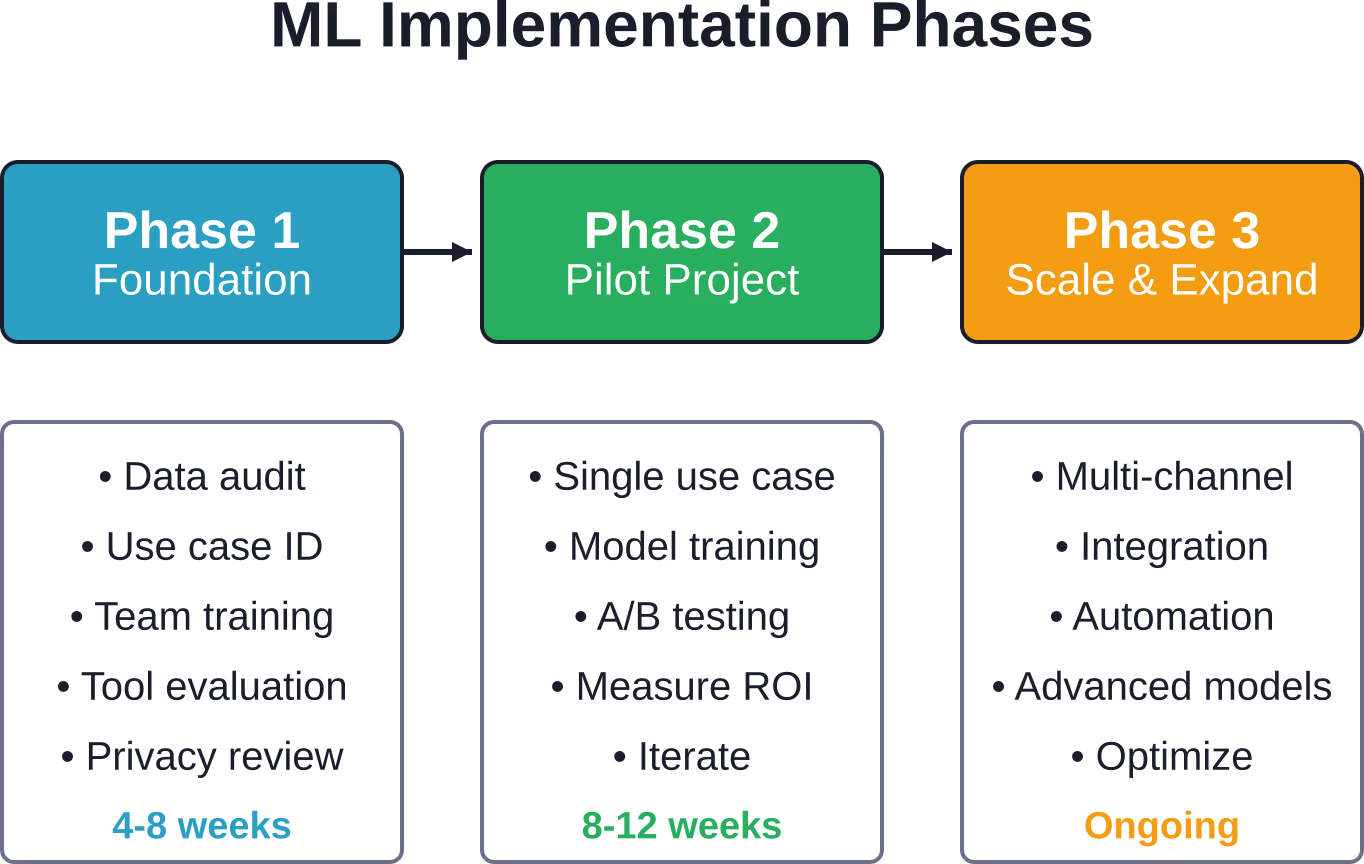

Build a Content Intelligence Tool With AI Superior
Content marketing machine learning usually depends on text data, user behavior, search patterns, and performance signals. AI Superior can support teams that want to build AI tools for content analysis, recommendation, classification, or workflow automation. Their work includes AI consulting, machine learning, data science, NLP, AI software development, proof of concept development, and model evaluation. That makes them relevant for content projects where natural language processing and structured data analysis need to work together. AI Superior can support content teams with:
- Mapping the content problem into a clear AI use case
- Reviewing article, keyword, traffic, and engagement data
- Building NLP-based proof of concept tools
- Developing models for content tagging, clustering, or recommendations
- Testing model outputs before wider use
- Planning integration with editorial tools or internal platforms
- Turning a validated concept into a working AI solution
For content marketing, this may apply to topic clustering, content performance analysis, automated tagging, content recommendation systems, audience insights, or internal tools for editorial planning. Contact AI Superior to discuss the project.
Data Privacy Considerations in ML Marketing
Machine learning depends on data—often large volumes of personal information about user behavior, preferences, and characteristics. This creates substantial privacy responsibilities that marketing teams cannot ignore. Research indicates that a significant percentage of online consumers decide not to register for services due to incomprehensible privacy policies. Privacy policies often fail to adequately disclose third-party data practices. The FTC has increased enforcement in this area through various actions. The FTC has taken enforcement actions against companies for improper data sharing practices and has enforced COPPA regulations protecting children’s online privacy.
Building Trust Through Transparency
Brands implementing machine learning must communicate clearly about data practices. Users deserve to understand what information is collected, how algorithms use it, and what control they have. Opt-in consent mechanisms work better than pre-checked boxes or buried disclosures. Providing genuine choice builds trust that pays dividends in customer loyalty. Data minimization principles suggest collecting only information necessary for specific purposes. Just because machine learning can ingest vast datasets doesn’t mean every possible data point should be captured.
Challenges and Realistic Expectations
Machine learning delivers substantial benefits, but implementations face obstacles that marketing teams should anticipate. Data quality issues surface quickly when training models. Algorithms amplify problems in source data—if customer records contain duplicates or missing values, model predictions suffer. Cleaning and standardizing data requires significant effort upfront. Model accuracy improves with more training data, but acquiring sufficient data takes time. Organizations with limited historical records may struggle to train effective models initially.
Avoiding Bias in Algorithmic Decisions
Machine learning models learn from historical data—if that data reflects biased past decisions, algorithms perpetuate those biases. This creates legal, ethical, and business risks. Regular bias audits and diverse testing datasets help identify and mitigate these issues. Building diverse teams that develop and oversee ML systems reduces blind spots.
Frequently Asked Questions
How much data do you need to start using machine learning in marketing?
Minimum data requirements vary by use case and model complexity. Simple applications like email send time optimization might work with a few thousand records, while sophisticated recommendation engines typically need hundreds of thousands of interactions. Start with available data and simpler models, then increase complexity as data accumulates.
Can small marketing teams without data scientists implement machine learning?
Absolutely. Many marketing platforms now embed ML capabilities that require no coding or data science expertise. Email tools predict optimal send times, ad platforms automate bidding, and CRM systems score leads—all using algorithms that work out-of-the-box. Focus on mastering these built-in features before considering custom development.
What’s the difference between machine learning and artificial intelligence in marketing?
Artificial intelligence is the broader concept—systems that perform tasks requiring human-like intelligence. Machine learning is a specific AI technique where algorithms learn from data rather than following explicit programming. In marketing contexts, the terms often overlap. Most AI marketing tools actually use machine learning algorithms under the hood.
How long does it take to see results from machine learning marketing initiatives?
Timeline depends on implementation scope and existing infrastructure. Deploying pre-built ML features in existing platforms can show results within weeks. Custom model development takes longer: 4-8 weeks for data preparation and initial training, then several weeks of testing. Most organizations see measurable impact within 3-6 months of starting focused ML initiatives.
What are the biggest risks of using machine learning for content marketing?
Privacy violations represent the most serious risk—algorithms that process customer data improperly can trigger regulatory penalties and destroy customer trust. Data quality issues come next: models trained on flawed data produce unreliable predictions. Bias in training data can lead algorithms to discriminate against certain audience segments. Over-reliance on automation without human oversight sometimes results in tone-deaf content. Proper governance, regular audits, and maintaining human judgment in the loop mitigate these risks.
Should machine learning replace human marketers or just assist them?
Machine learning excels at processing large datasets, identifying patterns, and automating repetitive tasks. Humans excel at creative strategy, emotional intelligence, ethical judgment, and understanding nuanced context. The most effective approach combines algorithmic efficiency with human creativity and oversight. Let algorithms handle data analysis and mechanical optimizations—freeing marketers to focus on strategy, storytelling, and creative work that machines can’t replicate.
Conclusion: Practical Next Steps
Machine learning isn’t futuristic speculation anymore—it’s operational technology delivering measurable marketing improvements today. The competitive advantage goes to organizations that implement strategically rather than waiting for perfect conditions. Start by auditing current marketing workflows to identify high-impact opportunities: where does manual work consume disproportionate time? Where do decisions rely on guesswork rather than data? These pain points become ML implementation targets. Invest in data infrastructure before sophisticated algorithms. Clean, unified, accessible data enables every subsequent ML initiative. Organizations that skip foundation work struggle regardless of how advanced their models become. Choose initial projects with clear success metrics and manageable scope. Prove value incrementally rather than betting everything on complex transformational initiatives. Build organizational confidence through wins that demonstrate tangible return. Most importantly, maintain focus on customer value. Machine learning should enhance experiences and solve real problems—not just showcase technical capability. The brands that win with ML technology are those that deploy it in service of genuine customer needs. Ready to integrate machine learning into your content marketing strategy? Start with one use case, measure results rigorously, and expand what works. The technology has matured to the point where thoughtful implementation delivers reliable returns—no cutting-edge data science required.