
Quick Summary: Machine learning transforms email marketing by automating personalization, optimizing send times, predicting customer behavior, and continuously improving campaign performance through data analysis. Research shows LLM-generated subject lines can boost email item tap rates by 23.63%, while open rates increased by 0.46%. These algorithms analyze millions of data points to deliver the right message to the right person at exactly the right moment. Email remains the preferred channel for customers to interact with brands, even as marketing channels multiply. But sending generic blast campaigns to everyone doesn’t cut it anymore. Machine learning changes the game entirely. Instead of guessing what subscribers want, algorithms analyze behavior patterns, predict engagement, and automatically optimize every campaign element. The results speak for themselves. Brands using machine learning in their email strategy see conversion lifts between 15–25% and engagement improvements of 20–30%. Some see even more dramatic gains—like the e-commerce company that achieved a 23.63% boost in email item tap rates by implementing LLM-generated subject lines. Here’s how machine learning actually works in email marketing and what changes when algorithms take over optimization.
What Machine Learning Brings to Email Marketing
Machine learning refers to algorithms that improve automatically through experience. Instead of following rigid rules, these systems analyze data, identify patterns, and make predictions that get more accurate over time. In email marketing, that translates to systems that learn from every send, open, click, and conversion. The algorithm observes what works for different subscriber segments and adjusts future campaigns accordingly. Traditional email marketing operates on broad assumptions. Send newsletters on Tuesday mornings because an article said that’s optimal. Use the same subject line formula because it worked once. Segment by demographics and hope for the best. Machine learning flips that approach. The system discovers that Sarah engages most at 7 PM on Thursdays, while Michael never opens emails after 9 AM. It learns which product categories each subscriber cares about. It identifies which subject line patterns drive opens for different personality types. And it does this for thousands or millions of subscribers simultaneously, making individualized decisions at scale that no human team could manage.
The Three Core Machine Learning Approaches
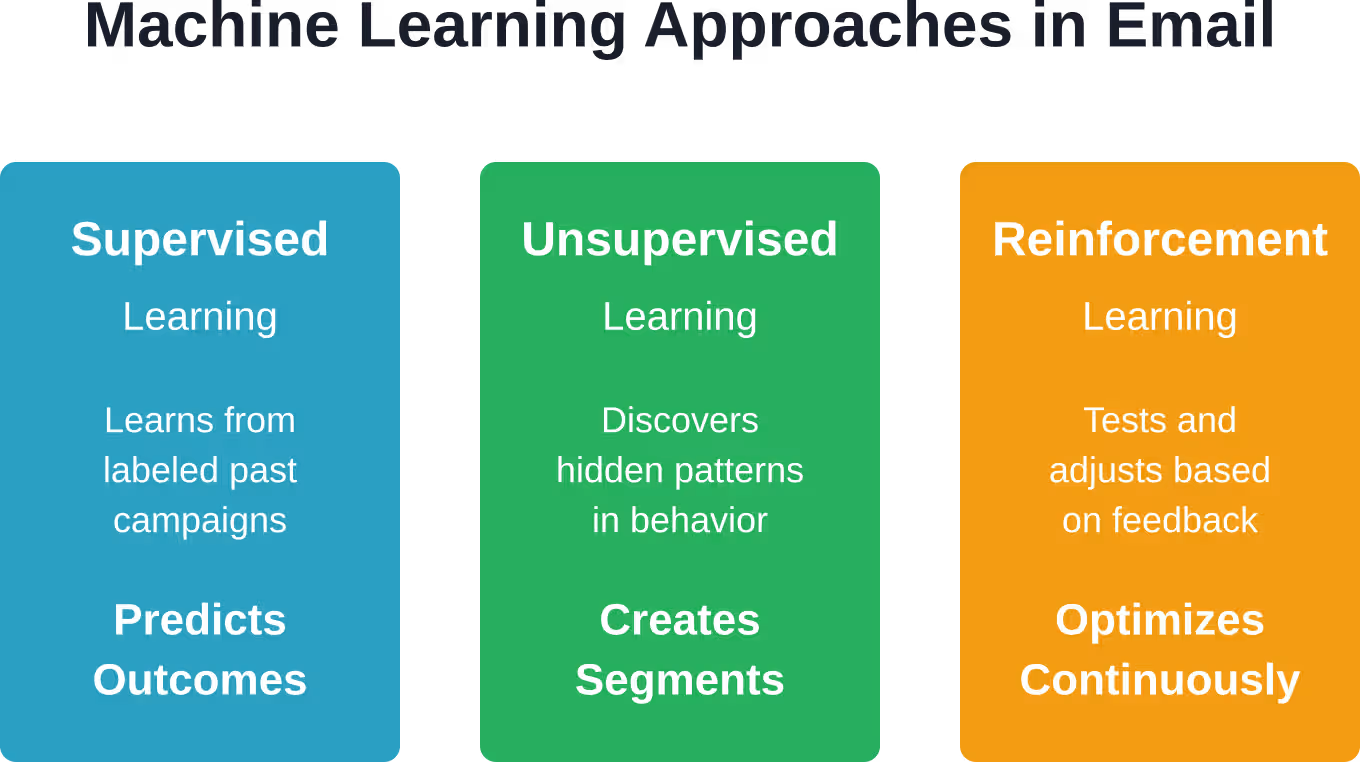
Email marketing platforms typically employ three types of machine learning:
- Supervised learning trains on labeled historical data: Feed the algorithm past campaigns with known outcomes—this email got a 45% open rate, that one converted at 8%—and it learns which features predict success. Next time, it applies those lessons to optimize new campaigns.
- Unsupervised learning finds hidden patterns in data without predefined labels: The algorithm might discover that subscribers cluster into five distinct engagement groups based on behavior patterns humans never noticed. These discovered segments often outperform traditional demographic segmentation.
- Reinforcement learning optimizes through trial and feedback: The system tries different approaches, measures results, and adjusts its strategy. Over time, it develops sophisticated policies for maximizing specific goals like revenue per email or long-term subscriber value.
Send Time Optimization That Actually Works
One of the most immediate applications of machine learning is send time optimization. Traditional approaches pick a single “best” time based on aggregate data—maybe 10 AM performs well on average, so every subscriber gets emails at 10 AM. Machine learning algorithms analyze individual engagement patterns instead. They track when each subscriber typically opens emails, clicks links, and converts. Then they schedule sends to match those personal patterns. The system considers dozens of variables: time of day, day of week, device usage patterns, email category preferences, and past behavior with similar content. For promotional emails versus transactional messages. For newsletters versus product announcements. Research analyzing 4,847 emails collected over 361 days from 111 of 150 major online services found that promotional emails and other email categories were analyzed for volume patterns. Each category has different optimal timing patterns that algorithms learn to exploit. But here’s what makes this powerful: the algorithm doesn’t just find the optimal time once. It continuously adjusts as behavior changes. When a subscriber’s work schedule shifts, the algorithm notices declining morning engagement and starts testing afternoon sends instead.
Beyond Simple Timing
Advanced systems optimize frequency alongside timing. Some subscribers want daily emails; others prefer weekly digests. Send too often to the wrong people and engagement crashes. Send too rarely and revenue opportunities slip away. Machine learning finds the sweet spot for each person. It monitors engagement signals—opens, clicks, time spent reading, deletions, spam complaints—and adjusts sending cadence accordingly.
Personalization at Scale Through Predictive Analytics
Generic content gets generic results. But personalizing emails for thousands of subscribers manually is impossible. Machine learning solves this through predictive models that forecast what each subscriber wants to see. The algorithms analyze browsing history, purchase patterns, email engagement, and dozens of other signals to predict preferences. Then they automatically customize multiple elements:
- Product recommendations based on predicted interest and purchase probability
- Content modules arranged by relevance to each subscriber
- Images and visual styles matched to demonstrated preferences
- Offers and promotions aligned with price sensitivity and deal responsiveness
- Copy tone and length adjusted for engagement patterns
Predictive analytics in email marketing can improve campaign performance through data-driven decision-making and subscriber segmentation. This approach stands in contrast to traditional segmentation, which groups subscribers by shared characteristics without treating each person as an individual with unique preferences that evolve over time.
Dynamic Content Selection
Some platforms use multi-armed bandit algorithms—a reinforcement learning technique—to dynamically select content. The system maintains probability estimates for how well different content options will perform for each subscriber. When generating an email, it selects content with the highest predicted success rate while occasionally testing alternatives to gather more data. This balances exploitation (using known winners) with exploration (discovering new opportunities). The result: emails that continuously improve without manual intervention. The algorithm identifies winning content automatically and shifts more traffic toward high performers.
Subject Line and Copy Optimization
Subject lines make or break email campaigns. But testing variations manually takes weeks and requires significant volume to reach statistical significance. Machine learning accelerates this dramatically. Recent research demonstrated that using large language models to generate marketing email titles produced a 23.63% lift in email item tap rate. The system analyzed past high-performing subject lines, learned patterns that drive engagement, and generated new variations optimized for each campaign. The same study showed a 0.46% increase in email open rate when algorithms handled subject line creation. That might sound modest, but across millions of sends, it represents thousands of additional openings and substantial revenue impact. But machine learning does more than generate subject lines. Natural language processing algorithms analyze email copy to predict performance before sending. They evaluate:
- Sentiment and emotional tone
- Reading complexity and clarity
- Urgency and action-orientation
- Length and information density
- Personal pronouns and engagement language
Systems provide recommendations to improve copy or automatically adjust text to match subscriber preferences. Some subscribers respond to detailed product descriptions; others prefer brief, benefit-focused bullets. The algorithm learns these patterns and adapts accordingly. 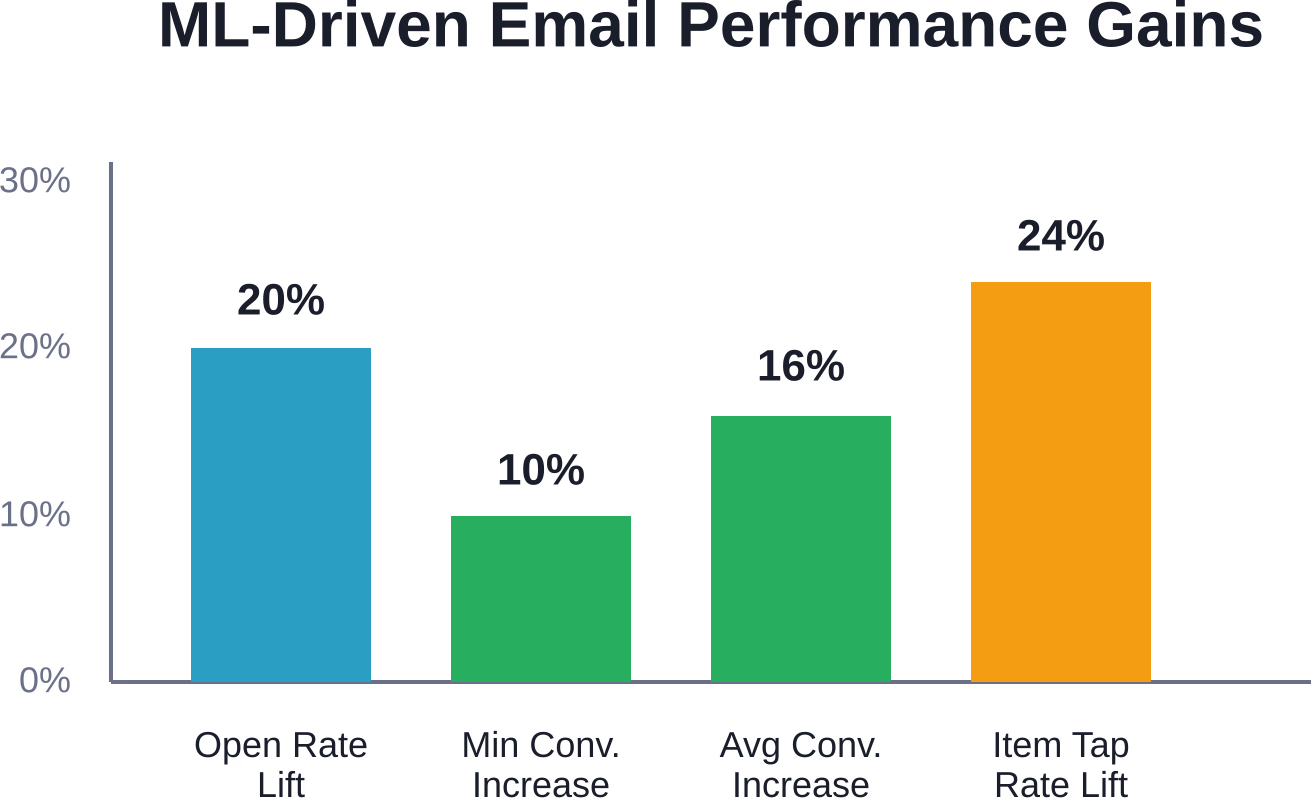
Churn Prediction and Re-engagement
Subscriber lists decay naturally. People lose interest, change addresses, or simply ignore emails until they eventually unsubscribe. Machine learning predicts churn before it happens. Algorithms analyze engagement patterns to identify subscribers at risk of becoming inactive. Declining open rates, longer gaps between interactions, reduced time spent reading—these signals forecast disengagement. Once the system identifies at-risk subscribers, it can trigger targeted re-engagement campaigns. Maybe a special offer. Perhaps different content types. Or reduced frequency to avoid fatigue. The algorithm tests different interventions and learns which approaches work for different subscriber types. Some people respond to “we miss you” messages. Others need concrete value—a discount or exclusive content—to re-engage. This predictive approach catches problems early, when subscribers are still salvageable. Waiting until someone hasn’t opened an email in six months makes recovery much harder.
Lifecycle Stage Modeling
Advanced systems model subscriber lifecycle stages: new subscriber, active user, power user, declining engagement, at-risk, inactive. Machine learning automatically classifies each person and adjusts email strategy for their current stage. New subscribers get onboarding sequences designed to build habits. Active users receive content optimized for ongoing engagement. At-risk subscribers trigger retention campaigns. Each stage has different goals and appropriate tactics. The algorithm continuously updates classifications as behavior changes, ensuring strategy stays aligned with actual engagement levels.
Revenue Impact and ROI Optimization
Open rates and click rates matter, but revenue matters more. Machine learning optimizes for business outcomes, not just engagement metrics. Predictive models estimate the revenue potential of different actions. Should this subscriber receive a discount code or is regular pricing fine? Will upselling work or should the focus stay on the original category? Which product recommendations will drive the highest order value? Research analyzing direct mail campaigns found revenue growing at approximately 1.27% for each 1% increase in mailing volume, demonstrating the elasticity between targeted outreach and sales outcomes. In digital channels with lower costs and faster feedback loops, machine learning exploits this relationship even more aggressively. The algorithms balance short-term revenue with long-term subscriber value. Hammering everyone with daily promotions might boost this week’s numbers but damages the list over time. Machine learning finds optimal strategies that maximize lifetime value rather than immediate conversions.
Multi-Channel Attribution
Email doesn’t exist in isolation. Subscribers see ads, visit websites, interact on social media, and receive emails—all before converting. Machine learning attribution models untangle these complex paths. They determine email’s true contribution to conversions, accounting for its role in the broader customer journey. This matters for optimization. If emails primarily serve an awareness function early in the funnel, the algorithm adjusts content and success metrics accordingly. If they mainly drive final conversion, strategy shifts toward direct response tactics. Better attribution also improves budget allocation. When email’s contribution is measured accurately, investment decisions reflect actual impact rather than flawed last-click attribution. 
Improve Email Marketing Models With AI Superior
Email marketing machine learning is usually tied to customer behavior, campaign history, engagement signals, and timing. AI Superior can help teams turn that data into a clear ML project, especially when the goal is to move beyond basic rules and test predictive or automated approaches. Their work includes AI consulting, machine learning, data science, NLP, AI software development, proof of concept development, and model evaluation. This can be useful for companies that want to check an idea first, build a test model, and understand what is realistic before full development. AI Superior can help with:
- Defining the email marketing ML use case
- Reviewing subscriber, campaign, CRM, and engagement data
- Building proof of concept models for testing
- Developing models for send-time prediction or audience segmentation
- Testing model performance before wider rollout
- Planning integration with email platforms or internal tools
- Supporting the project from early concept to deployment
For email marketing, this may apply to churn prediction, lead nurturing, subject line analysis, personalization, campaign scoring, and customer lifecycle automation. Contact AI Superior to discuss the project.
Implementation Considerations
Machine learning delivers results, but implementation requires more than flipping a switch. Several factors determine success.
Data Quality and Volume
Machine learning algorithms need data to learn from. Small lists with limited interaction history don’t provide enough signal for sophisticated optimization. Generally speaking, effective machine learning requires thousands of subscribers with meaningful engagement history. The more data available, the better the algorithms perform. Data quality matters as much as quantity. Incomplete records, tracking gaps, and dirty data corrupt model training. Clean, comprehensive data collection is foundational.
Privacy and Compliance
Machine learning personalization relies on collecting and analyzing subscriber data. That raises privacy considerations and regulatory requirements. Systems must comply with GDPR, CCPA, and other privacy regulations. That means proper consent, transparent data usage, and respecting opt-outs and preferences. The UK Information Commissioner’s Office guidance emphasizes that AI systems processing personal data must ensure lawfulness, fairness, and transparency. Email marketers deploying machine learning need clear legal bases for data processing and should conduct data protection impact assessments for high-risk processing. Research on email authentication found that 99.96% of emails passed SPF checks and 81.64% passed DKIM checks over a 361-day collection period from major online services. Proper technical implementation matters for deliverability and security alongside the machine learning optimizations.
Continuous Monitoring and Refinement
Machine learning systems aren’t set-and-forget solutions. They require ongoing monitoring to ensure they’re working as intended. Algorithms can drift over time as market conditions change. What worked last quarter might not work today. Regular performance reviews catch these issues. Models also need periodic retraining with fresh data to stay current. Most platforms handle this automatically, but understanding the refresh cycle matters for troubleshooting performance changes.
| Implementation Factor | Minimum Requirement | Optimal State |
|---|---|---|
| List Size | 5,000+ active subscribers | 50,000+ with segment diversity |
| Engagement History | 3-6 months of data | 12+ months with consistent tracking |
| Data Points per Subscriber | Basic demographics and email behavior | Multi-channel behavior, purchase history, preferences |
| Technical Infrastructure | ESP with API access and webhooks | Unified CDP with real-time event streaming |
| Team Resources | 1 person managing platform | Dedicated data analyst plus marketing team |
Common Pitfalls and How to Avoid Them
Machine learning promises a lot, but implementation can go wrong. Here’s what typically causes problems.
Over-Relying on Automation
Algorithms handle optimization, but humans still need to set strategy. Machine learning optimizes for the goals provided—if those goals are misaligned with business objectives, optimization won’t help. Marketing teams should define clear success metrics, test algorithm performance against benchmarks, and maintain strategic oversight even as tactical execution becomes automated.
Ignoring Statistical Significance
Machine learning systems run continuous tests, but not all results are meaningful. Small sample sizes and random variance can produce misleading signals. Platforms should incorporate statistical rigor into their optimization logic. Changes should only be adopted when evidence reaches significance thresholds, avoiding false positives that waste resources or harm performance.
Neglecting Creative Quality
Optimization improves campaign performance, but it can’t fix fundamentally weak creative. Machine learning adjusts subject lines, timing, and personalization—it doesn’t write compelling copy or design beautiful emails from scratch. Strong creativity remains essential. Algorithms amplify good content but can’t salvage bad content. Teams should maintain focus on quality while letting machine learning handle distribution and optimization.
The Future of Machine Learning in Email Marketing
Current machine learning applications represent just the beginning. Several emerging capabilities will reshape email marketing in coming years.
Generative AI for Content Creation
Large language models are moving beyond subject line optimization to full email copy generation. Systems will soon draft complete emails tailored to individual subscribers—personalized not just in data fields but in messaging, tone, and structure. Research submitted August 27, 2025 and revised September 21, 2025 explored using item recommendations and LLMs in marketing email titles, demonstrating practical applications for e-commerce. That work will expand to entire email bodies, with algorithms generating fully custom content for each recipient. The technology exists; refinement focuses on maintaining brand voice consistency and avoiding generic AI-generated feel.
Real-Time Personalization
Current systems optimize at send time based on historical data. Next-generation platforms will personalize content in real-time as subscribers open emails. The email loads the latest product availability, current pricing, and live inventory. Content updates based on very recent behavior—what the subscriber viewed on the website five minutes before opening. Recommendations reflect real-time context rather than day-old predictions. This requires technical infrastructure beyond standard email platforms, but the capability is emerging.
Cross-Channel Orchestration
Machine learning will increasingly orchestrate entire customer journeys across channels. Email becomes one touchpoint in an automated flow that adapts based on subscriber behavior across all channels. The system might start with an email, follow up with a targeted ad if the email isn’t opened, send an SMS after a website visit, and trigger another email if the shopping cart is abandoned. All automatically, all optimized through reinforcement learning. Marketing automation exists today, but machine learning makes it adaptive rather than rule-based. The system learns which channel sequences work for different subscriber types and adjusts journeys accordingly. 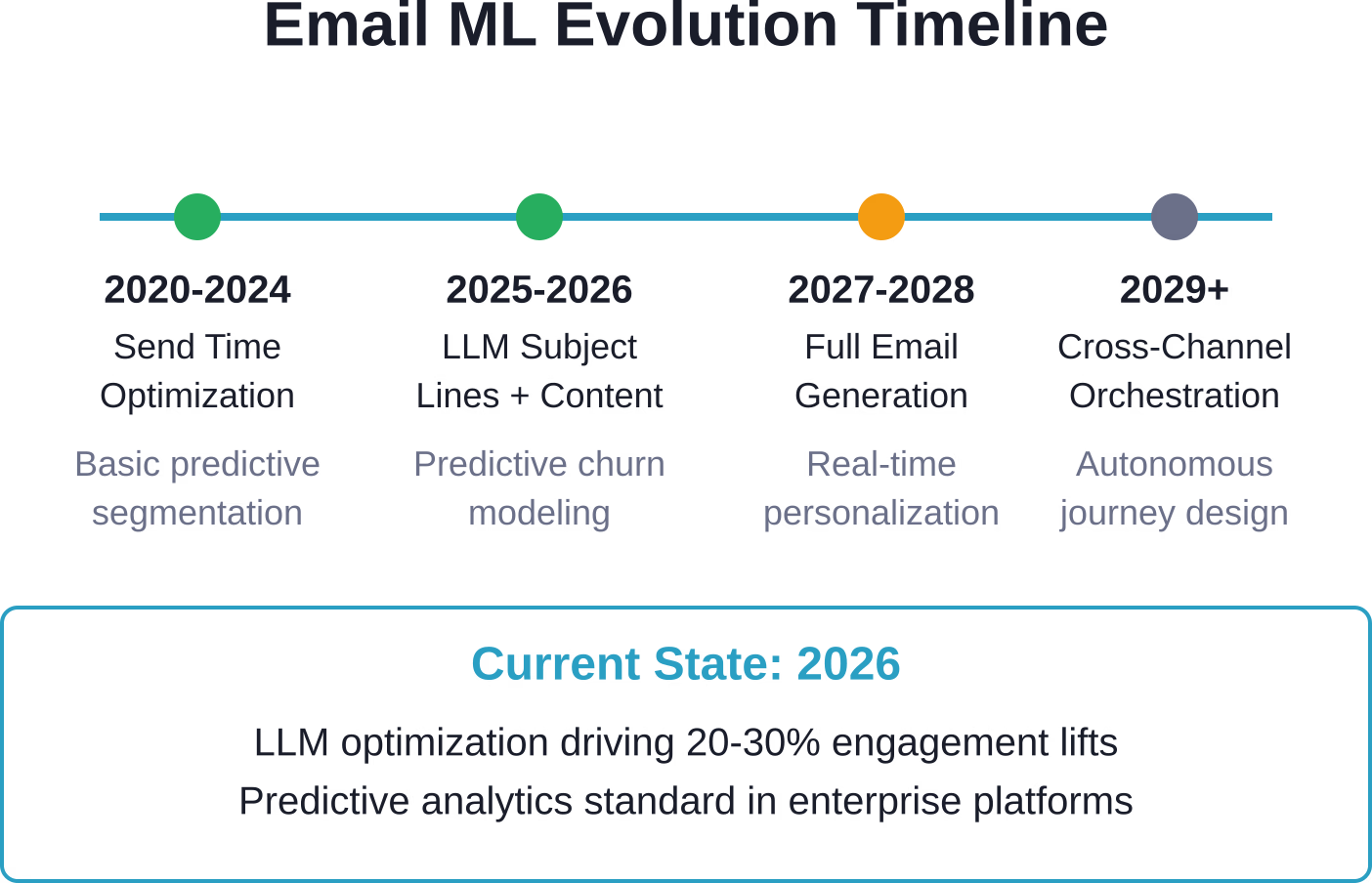
Choosing the Right Machine Learning Tools
Most major email platforms now incorporate machine learning, but capabilities vary significantly. Evaluating options requires understanding what’s actually happening under the hood.
Questions to Ask Vendors
When evaluating platforms, dig into specifics:
- Which machine learning algorithms are used for different optimization tasks?
- How much data is required for models to perform effectively?
- How frequently are models retrained with fresh data?
- Can algorithms optimize for custom business metrics beyond standard engagement?
- What control do marketers retain over automated decisions?
- How does the system handle cold start problems with new subscribers?
- What transparency and explainability features help understand algorithm decisions?
Vague marketing claims about “AI-powered” features don’t provide enough information. Specific answers about methodology and performance matter more.
Platform Categories
Machine learning email tools fall into several categories based on their primary focus:
- Enterprise ESPs like Salesforce and Oracle integrate machine learning into comprehensive marketing clouds. They handle large volumes and complex use cases but require significant investment and implementation effort.
- Mid-market platforms balance advanced features with easier implementation. They offer solid machine learning capabilities without enterprise complexity or cost.
- Specialized optimization tools focus specifically on machine learning enhancement. They integrate with existing ESPs to add predictive capabilities without replacing the entire stack.
- Email builders with AI features primarily handle design and content creation, with machine learning as an add-on. These work for basic optimization but lack sophisticated predictive capabilities.
The right choice depends on list size, technical resources, budget, and specific optimization priorities.
| Machine Learning Feature | Business Impact | Implementation Complexity |
|---|---|---|
| Send Time Optimization | 5-15% open rate lift | Low - usually automatic |
| Subject Line Generation | 0.5-24% engagement lift | Medium - requires training data |
| Predictive Segmentation | 15-30% conversion improvement | Medium - needs behavioral data |
| Content Personalization | 20-40% relevance increase | High - requires content library |
| Churn Prevention | 10-25% retention improvement | High - needs historical patterns |
| Lifetime Value Optimization | 15-35% revenue per subscriber | Very High - requires attribution |
Getting Started With Machine Learning Email Marketing
Implementation doesn’t require rebuilding the entire email program overnight. A phased approach works better.
Phase One: Foundation
Start by ensuring data collection is comprehensive and clean. Machine learning requires good inputs—garbage in, garbage out. Implement proper tracking for all email interactions. Make sure opens, clicks, conversions, and other events are captured consistently. Connect email data with other customer data sources for richer profiles. Audit data quality. Fix broken tracking, clean duplicate records, and establish processes to maintain accuracy going forward.
Phase Two: Basic Optimization
Begin with send time optimization and basic predictive segmentation. These deliver results quickly without requiring extensive customization. Most platforms offer these features out of the box. Enable them, monitor performance, and refine based on results. This phase builds confidence with machine learning while generating measurable improvements.
Phase Three: Advanced Personalization
After basic optimization proves valuable, expand to content personalization and predictive recommendations. This requires more setup—building content modules, configuring recommendation engines, establishing business rules—but delivers stronger performance gains. Start with one campaign type or segment. Test, learn, and expand successful approaches to other areas.
Phase Four: Continuous Optimization
Eventually, machine learning becomes embedded across the entire email program. Algorithms handle most tactical optimization while marketers focus on strategy, creative, and campaign planning. This is the steady state: continuous improvement driven by algorithms with human oversight ensuring alignment with business goals.
Measuring Machine Learning Success
Standard email metrics remain important, but machine learning enables more sophisticated measurement.
Incremental Lift Testing
Compare algorithm-optimized campaigns against control groups using traditional approaches. This isolates machine learning’s specific contribution. Research from 2020-2021 examining decision-making problems with funnel structure provides frameworks for multi-task learning approaches applicable to email marketing campaigns, such as modeling Open, Click, and Purchase conversion events. These techniques help attribute performance correctly across the customer journey. Track incremental lift in opens, clicks, conversions, and revenue. Calculate the efficiency gains from automation alongside performance improvements.
Long-Term Value Metrics
Beyond immediate campaign results, monitor subscriber lifetime value. Machine learning should improve not just next week’s conversion rate but long-term subscriber health. Track retention rates, purchase frequency, average order value, and churn rates. Effective optimization improves these longitudinal metrics, not just short-term engagement.
Efficiency Gains
Machine learning should reduce manual work alongside improving results. Measure time savings from automation, reduced need for manual testing, and faster campaign deployment. Calculate the opportunity cost of freed-up time. What strategic work can marketers tackle when tactical optimization runs automatically?
Frequently Asked Questions
What’s the difference between AI and machine learning in email marketing?
Artificial intelligence is the broad concept of machines performing tasks that typically require human intelligence. Machine learning is a specific subset of AI focused on algorithms that improve through experience. In email marketing, most “AI” features actually use machine learning—algorithms that analyze data and optimize campaigns automatically. Some newer tools incorporate generative AI (like large language models) for content creation, but predictive machine learning handles most optimization tasks.
How much data do I need for machine learning to work effectively?
Minimum thresholds vary by algorithm complexity. Basic send time optimization can work with lists as small as 5,000 active subscribers and a few months of engagement data. Advanced personalization and predictive segmentation perform best with 50,000+ subscribers and at least 12 months of behavioral history. The more data available, the more accurate predictions become. Small lists can still benefit from simpler machine learning approaches, but sophisticated optimization requires substantial data volume.
Will machine learning replace email marketers?
No—machine learning handles tactical optimization and execution, but humans still drive strategy, creative direction, and business alignment. Algorithms decide when to send an email and which subject line to use. Marketers decide campaign goals, creative concepts, brand positioning, and overall program strategy. The technology automates repetitive optimization tasks, freeing marketers to focus on higher-level work that requires creativity and business judgment.
How do I know if my platform’s machine learning actually works?
Run controlled experiments comparing algorithm-optimized campaigns against traditional approaches. Split the list—half gets machine learning optimization, half receives manually configured campaigns. Measure performance differences across opens, clicks, conversions, and revenue. Legitimate machine learning should produce statistically significant improvements (typically 10-30% depending on the specific optimization). If vendor claims seem too good to be true or testing shows no meaningful difference, the “machine learning” might just be marketing hype.
What are the privacy implications of using machine learning for email marketing?
Machine learning personalization relies on collecting and analyzing subscriber data, which raises privacy considerations. Ensure compliance with regulations like GDPR and CCPA by obtaining proper consent, being transparent about data usage, and respecting subscriber preferences. Most machine learning operates on aggregated behavioral patterns rather than personally identifiable information. The UK Information Commissioner’s Office provides guidance emphasizing that AI systems must ensure lawfulness, fairness, and transparency when processing personal data. Work with legal counsel to conduct data protection impact assessments if processing involves high-risk analysis.
Can machine learning improve email deliverability?
Indirectly, yes. Machine learning improves engagement by sending more relevant content at optimal times to interested subscribers. Higher engagement signals to inbox providers that recipients want these emails, which boosts sender reputation and deliverability. Research shows that 99.96% of properly authenticated emails pass SPF checks and 81.64% pass DKIM checks, demonstrating that technical fundamentals remain important. Machine learning can’t fix poor authentication or list quality issues, but it improves the engagement signals that influence inbox placement.
How long does it take to see results from machine learning optimization?
Basic send time optimization often shows improvements within 2-4 weeks as algorithms gather enough data to identify patterns. More sophisticated features like predictive segmentation and personalization may require 2-3 months to reach full effectiveness. The system needs time to collect behavioral data, train models, and test optimizations. Results appear gradually rather than overnight. Early wins from simple optimizations fund patience for more advanced capabilities that take longer to mature but deliver stronger performance gains.
Conclusion: The Machine Learning Advantage
Email marketing has evolved from batch-and-blast campaigns to sophisticated, individualized communication powered by machine learning algorithms. The technology analyzes millions of data points to deliver the right message to the right person at precisely the right moment. It continuously learns from results and adjusts strategy automatically, improving performance without manual intervention. Research demonstrates the impact: 23.63% lifts in email item tap rates, 20-30% improvements in open rates, 15-25% increases in conversions. These aren’t marginal gains—they represent fundamental improvements in campaign effectiveness. But machine learning isn’t magic. It requires clean data, proper implementation, strategic oversight, and realistic expectations. The algorithms handle tactical optimization; humans still drive strategy, creativity, and business alignment. For marketers willing to invest in the foundation—data infrastructure, platform capabilities, and ongoing refinement—machine learning delivers sustained competitive advantage. Campaigns get smarter over time. Efficiency improves. Revenue per subscriber increases. The question isn’t whether to adopt machine learning in email marketing. Competitors already are, and the performance gap widens every quarter. The question is how quickly to implement and how effectively to leverage these capabilities for maximum business impact. Start with the basics. Clean the data. Enable send time optimization. Test predictive segmentation. Measure results. Then expand to more sophisticated applications as confidence and capability grow. Email marketing powered by machine learning isn’t the future—it’s the present. The only choice is whether to lead or follow.