
Korte samenvatting: Machine learning in computervisie stelt computers in staat om automatisch patronen uit visuele data te leren zonder expliciete programmering. Dankzij deep learning-architecturen zoals convolutionele neurale netwerken kunnen systemen nu afbeeldingen classificeren, objecten detecteren, scènes segmenteren en gezichten herkennen met een nauwkeurigheid die de menselijke prestaties bij specifieke taken evenaart of zelfs overtreft.
Computervisie is geëvolueerd van op regels gebaseerde algoritmen naar intelligente systemen die leren van data. Machine learning vormt de motor achter deze transformatie, waardoor computers katten op foto's kunnen herkennen, tumoren op medische scans kunnen detecteren en autonome voertuigen door de straten van de stad kunnen laten navigeren.
De relatie tussen deze vakgebieden is symbiotisch. Computervisie definieert wat we willen dat machines zien en begrijpen. Machine learning levert de algoritmen die dat begrip mogelijk maken.
Het punt is echter dat machine learning niet alleen computervisie heeft verbeterd. Het heeft de manier waarop we visuele waarnemingsproblemen aanpakken fundamenteel veranderd.
Computervisie en machinaal leren begrijpen
Computervisie is een subdiscipline van kunstmatige intelligentie die machines in staat stelt visuele input, zoals afbeeldingen en video's, te verwerken, analyseren en interpreteren. Het gaat erom computers te leren betekenisvolle informatie uit visuele data te halen, net zoals mensen dat moeiteloos doen.
Machine learning pakt het anders aan. In plaats van expliciete regels te programmeren voor elk scenario, leren machine learning-algoritmen patronen uit voorbeelden. Voer een systeem duizenden kattenfoto's en het leert wat een kat een kat maakt, zonder dat er regels over snorharen of puntige oren hoeven te worden opgesteld.
Gecombineerd vormen ze systemen die visuele taken aankunnen die tien jaar geleden nog onmogelijk leken.
Het kernverschil
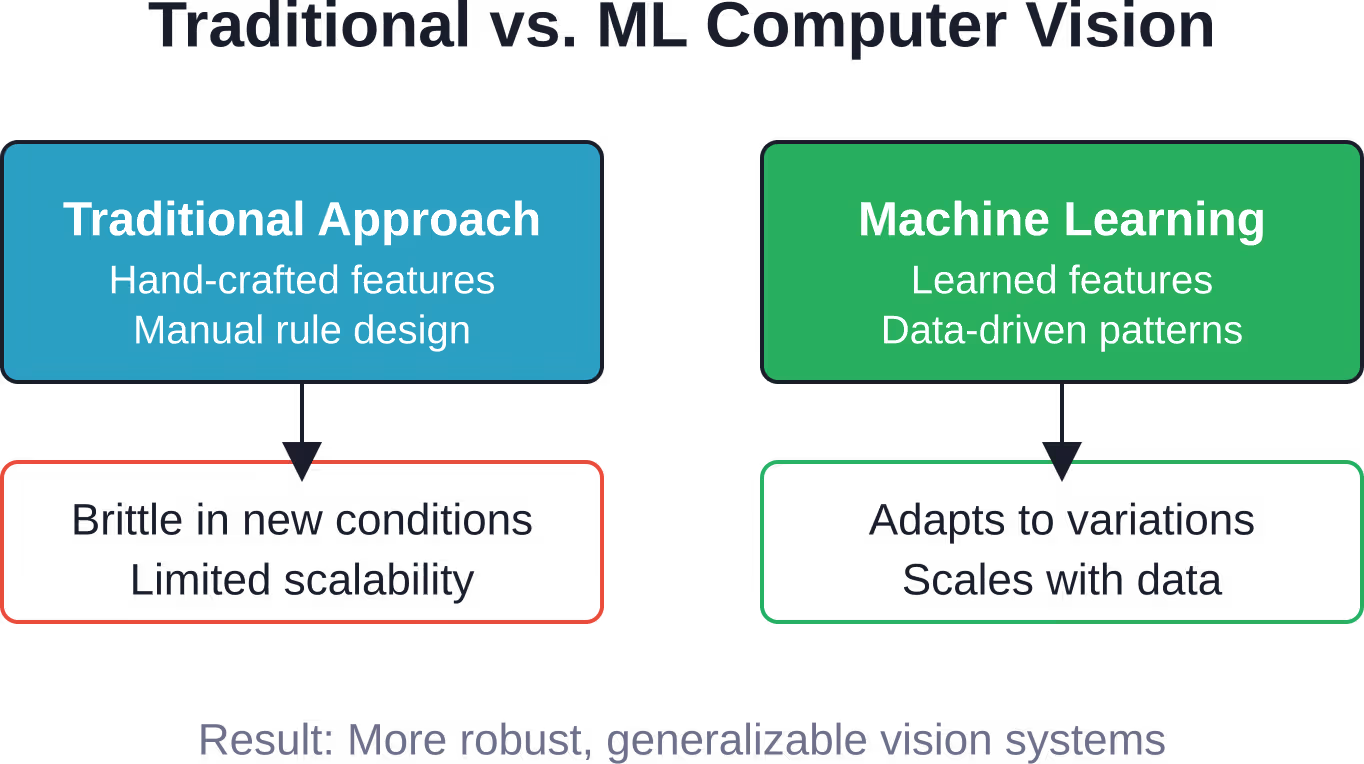
Traditionele computervisie was gebaseerd op handmatig ontworpen kenmerken. Ingenieurs ontwierpen handmatig filters en regels om randen, hoeken of specifieke patronen te detecteren. Dit werkte in gecontroleerde omgevingen, maar faalde wanneer de omstandigheden veranderden.
Machine learning heeft deze aanpak volledig omgedraaid. In plaats van functionaliteiten te ontwerpen, leren algoritmen deze nu automatisch uit trainingsdata. Dit maakt systemen robuuster en beter aanpasbaar aan nieuwe scenario's.
Diep leren: de gamechanger
Deep learning heeft de computervisie volledig veranderd. Met name convolutionele neurale netwerken hebben een revolutie teweeggebracht in de manier waarop machines visuele informatie verwerken.
CNN's bootsen de werking van de menselijke visuele cortex na. Vroege lagen detecteren eenvoudige kenmerken zoals randen en texturen. Diepere lagen combineren deze tot complexere patronen: vormen, objecten, complete scènes.
Volgens onderzoek naar convolutionele neurale netwerken zijn deze architecturen uitgegroeid tot de dominante aanpak omdat ze automatisch hiërarchische kenmerkrepresentaties rechtstreeks uit pixelgegevens leren.
Hoe werken convolutionele neurale netwerken?
Een CNN verwerkt afbeeldingen via meerdere lagen. Convolutionele lagen passen filters toe die de afbeelding scannen en patronen detecteren. Poolinglagen reduceren de dimensionaliteit terwijl belangrijke informatie behouden blijft. Volledig verbonden lagen aan het einde maken de uiteindelijke classificaties of voorspellingen.
De magie gebeurt tijdens de training. Het netwerk past miljoenen parameters aan om fouten op trainingsvoorbeelden te minimaliseren. Dit proces, backpropagatie genaamd, stelt het netwerk in staat te ontdekken welke kenmerken het belangrijkst zijn voor een bepaalde taak.
Eerlijk gezegd: het trainen van diepe neurale netwerken vereist enorme datasets en rekenkracht. Maar de resultaten rechtvaardigen de investering.
Voorbij de basis CNN's
Architecturen zijn aanzienlijk geëvolueerd. ResNet introduceerde skip-verbindingen die het mogelijk maken veel diepere netwerken te trainen. YOLO (You Only Look Once) verwerkt complete afbeeldingen in één enkele doorgang voor realtime objectdetectie. Vision transformers passen aandachtmechanismen, oorspronkelijk ontwikkeld voor taalverwerking, toe op visuele taken.
Onderzoek uit 2024 naar convoluties in deep learning documenteert deze architectonische innovaties en hun impact op de prestaties bij verschillende computervisie-taken.
Kerntaken van computervisie
Machine learning pakt verschillende fundamentele problemen op het gebied van computervisie aan. Elk probleem vereist een andere architectuur en trainingsaanpak.
Beeldclassificatie
Classificatie kent een label toe aan een complete afbeelding. Is dit een foto van een hond of een kat? Laat deze röntgenfoto een longontsteking zien?
Moderne classificatiesystemen behalen op veel gebieden een nauwkeurigheid die vergelijkbaar is met die van mensen. Ze vormen de basis voor uiteenlopende toepassingen, van apps voor het organiseren van foto's tot medische diagnosehulpmiddelen.
Objectdetectie
Detectie gaat verder dan dat het meerdere objecten binnen een afbeelding lokaliseert en classificeert. Autonome voertuigen gebruiken detectie om voetgangers, voertuigen en obstakels te identificeren. Winkelsystemen gebruiken het om de voorraad bij te houden.
Geavanceerde detectoren kunnen tientallen objectklassen in realtime videostreams identificeren. De YOLO-architectuur vertegenwoordigt de huidige beste praktijken en voorspelt nauwkeurig de begrenzingskaders rond objecten in afbeeldingen.
Beeldsegmentatie
Segmentatie verdeelt afbeeldingen in betekenisvolle gebieden. Semantische segmentatie labelt elke pixel met een klasse. Instantiesegmentatie scheidt individuele objecten van dezelfde klasse.
Volgens de datasetspecificaties uit 2024 bevatten uitgebreide benchmarks voor scèneanalyse 150 objectcategorieën: 35 materiaalklassen (muur, lucht, weg) en 115 afzonderlijke objecten (auto, persoon, tafel), waarbij de geannoteerde pixels 92,751 TP3T van alle pixels in de dataset beslaan.
Uit dezelfde gegevens blijkt dat objectcategorieën 60,921 TP3T aan geannoteerde pixels in beslag nemen, terwijl afzonderlijke objecten 31,831 TP3T vertegenwoordigen.

Gezichtsherkenning
Gezichtsherkenning identificeert personen aan de hand van gezichtskenmerken. Beveiligingssystemen, telefoonauthenticatie en het taggen van foto's maken allemaal gebruik van gezichtsherkenningsalgoritmen.
Deze systemen coderen gezichten in hoogdimensionale vectoren, waarbij gelijksoortige gezichten bij elkaar clusteren. Het vergelijken van nieuwe gezichten met databases wordt zo een geometrisch zoekprobleem.
Optische karakter erkenning
OCR extraheert tekst uit afbeeldingen. Moderne OCR-systemen kunnen overweg met diverse lettertypen, talen en uitdagende omstandigheden zoals handschrift of vervormde tekst.
Op deep learning gebaseerde OCR-systemen combineren detectie (het vinden van tekstgebieden) met herkenning (het lezen van de tekens).
Machine learning-visiemodellen trainen
Het bouwen van effectieve visiemodellen vereist zorgvuldige aandacht voor data, architectuurkeuze en trainingsprocedures.
Vereisten voor de dataset
Kwalitatief hoogwaardige data zijn essentieel voor het succes van visiesystemen. Modellen hebben duizenden of miljoenen gelabelde voorbeelden nodig om robuuste representaties te leren.
De kwaliteit van een dataset is net zo belangrijk als de kwantiteit. Volgens de documentatie van de MIT Scene Parsing Benchmark-dataset hebben gemiddeld 82,41 TP3T aan pixels in geannoteerde afbeeldingen consistente labels in de hele dataset.
Data-augmentatie is nuttig. Technieken zoals roteren, schalen, kleuraanpassing en bijsnijden vergroten de trainingssets kunstmatig en leren modellen omgaan met variaties.
Transferleren
Het trainen van grote netwerken vanaf nul is duur en vereist veel data. Transfer learning biedt een kortere weg.
Voorgegetrainde modellen leren algemene visuele kenmerken op enorme datasets. Het finetunen van deze modellen voor specifieke taken vereist veel minder data en trainingstijd. Een model dat is getraind op miljoenen natuurlijke afbeeldingen kan zich aanpassen aan gespecialiseerde medische beeldvorming met slechts duizenden voorbeelden.
Architectuurselectie
Verschillende taken vereisen verschillende architecturen. Voor classificatie kan ResNet of EfficientNet worden gebruikt. Objectdetectie heeft de voorkeur voor YOLO of Faster R-CNN. Segmentatie maakt vaak gebruik van U-Net of DeepLab.
De keuze hangt af van de nauwkeurigheidseisen, snelheidsbeperkingen en beschikbare rekenkracht. Realtime-toepassingen geven prioriteit aan efficiëntie. Offline-analyse kan gebruikmaken van grotere, nauwkeurigere modellen.
| Architectuurtype | Het beste voor | Belangrijkste sterkte | Afweging |
|---|---|---|---|
| ResNet | Beeldclassificatie | Zeer diepe netwerken, hoge nauwkeurigheid | Rekenkosten |
| YOLO | Realtime detectie | Snelheid, verwerking in één doorgang | Nauwkeurigheid van kleine objecten |
| U-Net | Medische segmentatie | Werkt met kleine datasets | Domeinspecifiek ontwerp |
| Visie Transformer | Grootschalige taken | Aandachtsmechanismen, schaalbaarheid | Vereist enorme hoeveelheden data. |

Bouw computervisiemodellen met superieure AI.
Computervisieprojecten vereisen vaak meer dan alleen modeltraining. Datakwaliteit, annotatie, testen en implementatie zijn allemaal van invloed op de betrouwbaarheid van het systeem in de praktijk. AI Superieur Helpt teams bij het structureren van computervisieprojecten, van de vroege planningsfase tot de modelontwikkeling en -validatie.
Hun team houdt zich bezig met AI-consultancy, machine learning, deep learning, ontwikkeling van computervisie, AI-softwareontwikkeling, ontwikkeling van proof-of-concepts en modelbeoordeling.
AI Superior kan computervisieprojecten ondersteunen met:
- Het beoordelen van beeld- of videogegevenssets
- Het definiëren van de toepassingsmogelijkheden en de technische reikwijdte van computervisie.
- Het bouwen van proof-of-concept-modellen
- Het ontwikkelen van deep learning- en computervisiesystemen
- Het testen van de nauwkeurigheid en betrouwbaarheid van het model.
- Het plannen van de implementatie in bestaande software of workflows.
- Ondersteuning van AI-productontwikkeling en -integratie
Voor computervisie kan dit onder andere objectdetectie, beeldclassificatie, visuele inspectie, analyse van medische beelden, videoanalyse, OCR en geautomatiseerde kwaliteitscontrolesystemen omvatten.
Neem contact op met AI Superior om het project te bespreken.
Toepassingen in de praktijk
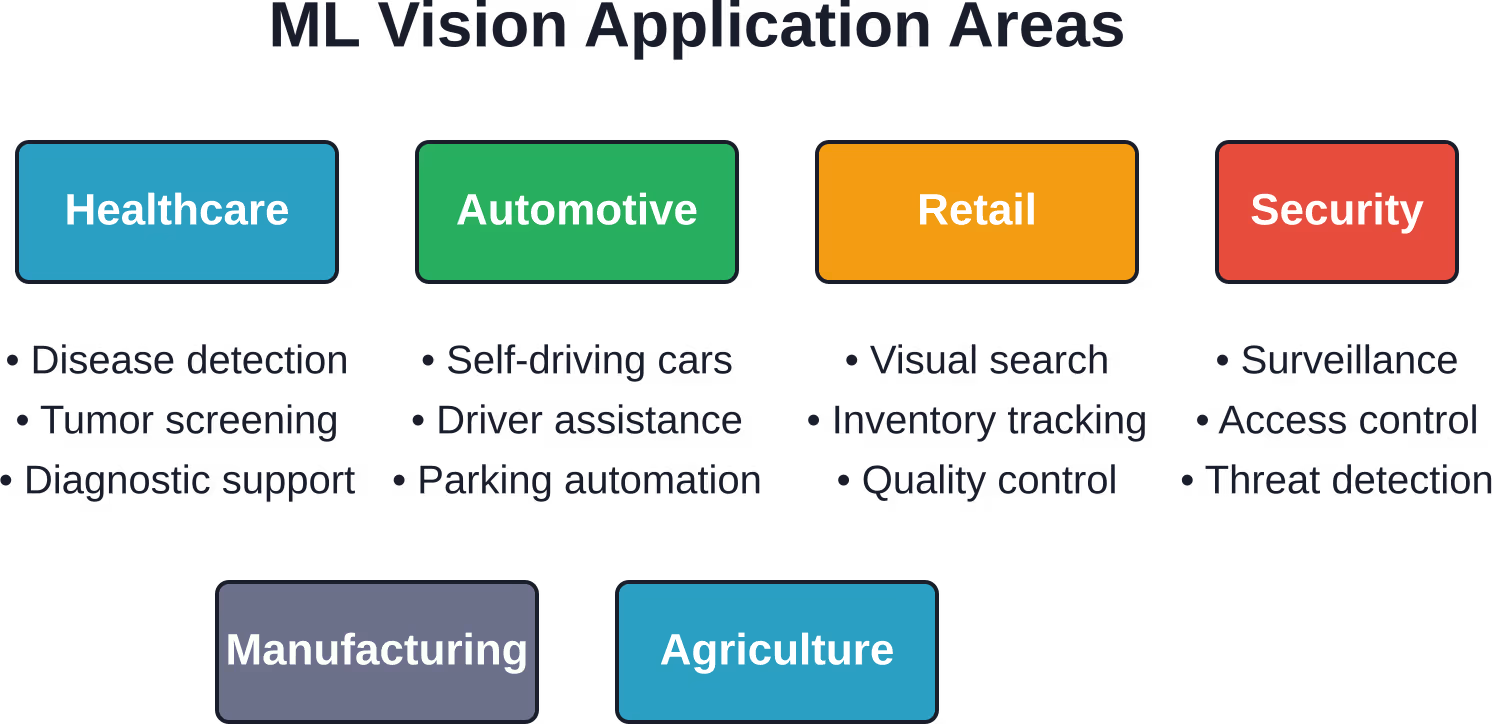
Computervisie, mogelijk gemaakt door machine learning, heeft de overstap gemaakt van onderzoekslaboratoria naar alledaagse producten en diensten.
Gezondheidszorg en medische beeldvorming
Medische beeldvorming is een van de meest impactvolle toepassingen. Convolutionele neurale netwerken (CNN's) kunnen ziekten detecteren op röntgenfoto's, MRI-scans en CT-scans met diagnostische nauwkeurigheid.
Recente grootschalige studies (bijv. McKinney et al., Nature) hebben aangetoond dat AI-systemen het aantal vals-positieve resultaten met 5,7% (VS) en 1,2% (VK) en het aantal vals-negatieve resultaten met 9,4% (VS) en 2,7% (VK) hebben verminderd in vergelijking met radiologen.
Diagnostische ondersteuningssystemen helpen radiologen scans sneller en nauwkeuriger te beoordelen. Ze vervangen de menselijke expertise niet, maar vullen deze aan.
Autonome voertuigen
Zelfrijdende auto's zijn volledig afhankelijk van computervisie. Meerdere camerabeelden worden verwerkt door neurale netwerken die rijstroken, voertuigen, voetgangers, verkeersborden en obstakels detecteren.
Deze systemen combineren beeldherkenning met andere sensoren zoals lidar en radar. Maar beeldherkenning biedt het rijke semantische begrip dat nodig is om te navigeren in complexe stedelijke omgevingen.
Detailhandel en e-commerce
Visueel zoeken stelt klanten in staat producten te vinden door foto's te uploaden. Voorraadbeheersystemen houden automatisch de voorraadniveaus bij. Kassaloze winkels gebruiken beeldherkenning om te identificeren wat klanten uit de schappen pakken.
Productaanbevelingssystemen analyseren de afbeeldingen die klanten bekijken om vergelijkbare artikelen voor te stellen. Kwaliteitscontrolesystemen inspecteren geproduceerde goederen op gebreken met een snelheid die voor menselijke inspecteurs onmogelijk is.
Beveiliging en bewaking
Videoanalyse detecteert ongebruikelijke activiteiten, volgt personen via cameranetwerken en identificeert beveiligingsrisico's. Toegangscontrolesystemen gebruiken gezichtsherkenning voor authenticatie.
Mensenmassa-analyse schat de bezettingsgraad in en identificeert opstoppingspatronen. Deze mogelijkheden verbeteren de veiligheid, maar werpen tegelijkertijd belangrijke vragen op over privacy.
Landbouw
Precisielandbouw maakt gebruik van dronebeelden en machine learning om de gewasgezondheid te monitoren, ziekten op te sporen en de irrigatie te optimaliseren. Plantherkenning helpt bij het identificeren van onkruid voor gerichte bestrijding.
Geautomatiseerde oogstsystemen identificeren rijpe producten voor robotgestuurde pluk. Veeteeltmonitoring houdt de gezondheid en het gedrag van de dieren in de gaten.
Uitdagingen en beperkingen
Ondanks indrukwekkende vooruitgang staat machinaal leren in computervisie nog steeds voor uitdagingen.
Gegevensafhankelijkheid
Deep learning is data-intensief. Modellen hebben enorme gelabelde datasets nodig om een hoge nauwkeurigheid te bereiken. Het verzamelen en annoteren van trainingsdata is duur en tijdrovend.
Voor specialistische domeinen is er vaak onvoldoende data beschikbaar. Medische beeldvorming, satellietanalyse en industriële toepassingen kampen met een gebrek aan data.
Generalisatieproblemen
Modellen die op één dataset zijn getraind, presteren vaak slecht op data uit andere bronnen. Een gezichtsherkenningssysteem dat is getraind op foto's van hoge kwaliteit, kan bijvoorbeeld falen op bewakingsbeelden.
Domeinadaptatietechnieken helpen wel, maar lossen het probleem niet volledig op. Modellen kunnen kwetsbaar zijn wanneer ze scenario's tegenkomen die buiten hun trainingsdataset vallen.
Rekenkundige vereisten
Geavanceerde modellen vereisen aanzienlijke rekenkracht. Training kan dagen of weken duren op dure GPU-clusters. Inferentie op edge-apparaten vereist modelcompressie en -optimalisatie.
Dit creëert belemmeringen voor kleinere organisaties en beperkt de implementatie in omgevingen met beperkte middelen.
Interpreteerbaarheid
Neurale netwerken zijn black boxes. Het blijft lastig te begrijpen waarom een model specifieke voorspellingen doet. Voor cruciale toepassingen zoals medische diagnoses of autonoom rijden, baart dit gebrek aan transparantie zorgen.
Onderzoek naar verklaarbare AI heeft als doel om visuele modellen beter interpreteerbaar te maken, maar er blijven aanzienlijke uitdagingen bestaan.
Vooroordelen en rechtvaardigheid
Visuele modellen kunnen vooroordelen in trainingsdata overnemen en versterken. Gezichtsherkenningssystemen vertonen verschillen in nauwkeurigheid tussen verschillende demografische groepen. Objectdetectoren presteren mogelijk anders op afbeeldingen uit verschillende geografische regio's.
Het aanpakken van vooroordelen vereist diverse trainingsgegevens, zorgvuldige evaluatie van verschillende populaties en continue monitoring tijdens de inzet.
De toekomst van machinaal leren in computervisie
Verschillende trends bepalen de toekomstige richting van computervisie.
Visie-taalmodellen
Systemen die beeldherkenning en taalbegrip combineren, winnen aan populariteit. Modellen zoals CLIP leren visuele concepten uit beschrijvingen in natuurlijke taal, waardoor objecten die nog nooit eerder zijn gelabeld, direct herkend kunnen worden.
Deze multimodale benaderingen beloven flexibelere systemen die visuele content begrijpen in de context van tekst, spraak en andere modaliteiten.
Zelfgestuurd leren
Zelflerende methoden leren van ongelabelde data door taken op te lossen die vooraf bepaalde informatie bevatten. Ze kunnen bijvoorbeeld beeldrotaties voorspellen, gemaskeerde gebieden invullen of augmented versies van dezelfde afbeelding vergelijken.
Dit vermindert de afhankelijkheid van dure gelabelde data, terwijl er tegelijkertijd rijke representaties worden geleerd die nuttig zijn voor vervolgtaken.
Edge-AI
Door beeldverwerkingsmodellen rechtstreeks op camera's, telefoons en IoT-apparaten uit te voeren, wordt de latentie van de cloud geëlimineerd en de privacy verbeterd. Modelcompressietechnieken maken krachtige netwerken mogelijk op hardware met beperkte middelen.
Edge-implementatie maakt realtime verwerking mogelijk voor robotica, augmented reality en autonome systemen.
3D-begrip
Modellen gaan verder dan 2D-beeldanalyse en leren redeneren over 3D-structuur, diepte en ruimtelijke verhoudingen. Dit is gunstig voor robotica, augmented reality en autonome navigatie.
Technieken zoals neurale stralingsvelden creëren gedetailleerde 3D-scèneweergaven op basis van 2D-afbeeldingen.
| Opkomende trend | Belangrijke innovatie | Impactgebied |
|---|---|---|
| Visie-taalmodellen | Multimodaal begrip | Nulpuntsherkenning, visueel redeneren |
| Zelfgestuurd leren | Leren zonder labels | Lagere annotatiekosten, betere functionaliteiten |
| Edge-AI | Verwerking op het apparaat zelf | Privacy, latentie, offline werking |
| 3D-visie | Ruimtelijk inzicht | Robotica, AR/VR, autonome systemen |
| Leren met weinig schoten | Leren van voorbeelden | Gespecialiseerde domeinen, snelle aanpassing |
Aan de slag met machine learning-visie
Organisaties die computervisie willen implementeren, moeten rekening houden met verschillende factoren.
Formuleer duidelijke doelstellingen.
Begin met concrete problemen. "Verbeter de kwaliteitscontrole" is vaag. "Het detecteren van krassen groter dan 2 mm op productoppervlakken" geeft duidelijke succescriteria.
Inzicht in de vereisten is bepalend voor de architectuurkeuze, de gegevensverzameling en de evaluatiemethoden.
Beoordeel de beschikbaarheid van gegevens
Hoeveel relevante data is er beschikbaar? Wat zou er nodig zijn om meer data te verzamelen? Is labelen haalbaar?
Beperkingen in de data bepalen vaak of maatwerkmodellen, transfer learning of standaardoplossingen de beste keuze zijn.
Maak gebruik van bestaande tools
Open-source frameworks zoals TensorFlow en PyTorch bieden bouwstenen. Voorgeïnstalleerde modellen bieden een startpunt. Cloudplatforms leveren de infrastructuur.
Bouwen op bestaande fundamenten versnelt de ontwikkeling en verlaagt de kosten.
Begin eenvoudig.
Begin met basisbenaderingen voordat u overstapt op complexe architecturen. Soms werken eenvoudigere modellen prima en zijn ze bovendien gemakkelijker te implementeren en te onderhouden.
Itereer op basis van daadwerkelijke prestatiegegevens in plaats van de nieuwste benchmarks na te jagen.
Plan voor de implementatie
Modellen die in notebooks werken, moeten worden overgezet naar een productieomgeving. Houd rekening met de inferentiesnelheid, de benodigde resources, monitoring en modelupdates.
De uitdagingen bij de implementatie zijn vaak groter dan de uitdagingen bij de training.
Veelgestelde vragen
Wat is het verschil tussen computervisie en machine learning?
Computervisie richt zich op het in staat stellen van machines om visuele informatie uit afbeeldingen en video's te interpreteren en te begrijpen. Machine learning levert de algoritmen waarmee systemen patronen uit data kunnen leren. Machine learning is de methodologie; computervisie is het toepassingsgebied. Moderne computervisiesystemen zijn sterk afhankelijk van machine learning-technieken, met name deep learning, om een hoge nauwkeurigheid te bereiken.
Gebruiken alle computervisiessystemen deep learning?
Nee, hoewel deep learning de moderne toepassingen domineert. Traditionele computervisie-technieken met handmatig geselecteerde kenmerken werken nog steeds voor specifieke, afgebakende problemen. Sommige toepassingen combineren klassieke methoden met machine learning. De keuze hangt af van de beschikbaarheid van data, rekenkracht en prestatie-eisen. Deep learning is echter de standaardaanpak geworden voor complexe, realistische computervisie-taken.
Hoeveel data is er nodig om een computervisiemodel te trainen?
Het verschilt enorm, afhankelijk van de complexiteit van de taak en de aanpak. Trainen vanaf nul kan duizenden tot miljoenen gelabelde afbeeldingen vereisen. Transfer learning kan werken met honderden voorbeelden door voorgegetrainde modellen te verfijnen. Few-shot learning-technieken gaan nog een stap verder en leren van slechts een handvol voorbeelden. De kwaliteit van de data is net zo belangrijk als de kwantiteit: schone, representatieve data zijn beter dan enorme maar ruisrijke datasets.
Kunnen machine learning-visiesystemen in realtime werken?
Ja, veel systemen verwerken video met meer dan 30 frames per seconde. De architectuurkeuze is belangrijk: YOLO en vergelijkbare detectoren zijn specifiek ontworpen voor snelheid. Hardwareversnelling met behulp van GPU's of gespecialiseerde chips maakt realtime prestaties mogelijk. Edge-apparaten kunnen geoptimaliseerde modellen uitvoeren met een acceptabele latentie voor veel toepassingen. De afweging tussen nauwkeurigheid en snelheid kan worden afgestemd op de vereisten.
Wat zijn de grootste uitdagingen bij het implementeren van computervisiemodellen?
Domeinverschuiving brengt grote problemen met zich mee: modellen die op één type data zijn getraind, hebben vaak moeite met andere omstandigheden. De rekenkracht die nodig is voor implementatie aan de rand van het netwerk kan onbetaalbaar zijn. Het behouden van modelprestaties naarmate de dataverdeling in de loop van de tijd verandert, vereist monitoring en hertraining. Het op een elegante manier omgaan met uitzonderlijke gevallen en fouten is cruciaal voor veiligheidskritische toepassingen. Gegevensprivacy en -beveiliging voegen extra complexiteit toe, met name voor systemen die gevoelige visuele informatie verwerken.
Hoe nauwkeurig zijn machine learning-visiesystemen vergeleken met mensen?
Bij specifieke, afgebakende taken met duidelijke definities evenaren of overtreffen moderne beeldverwerkingssystemen vaak de nauwkeurigheid van mensen. Beeldclassificatie op standaard benchmarks bereikte jaren geleden al een prestatieniveau dat vergelijkbaar is met dat van mensen. Recente grootschalige studies (bijv. McKinney et al., Nature) toonden aan dat AI-systemen het aantal vals-positieven met 5,71 TP3T (VS) en 1,21 TP3T (VK) verminderden en het aantal vals-negatieven met 9,41 TP3T (VS) en 2,71 TP3T (VK) vergeleken met radiologen. Mensen blijven echter superieur in algemeen visueel begrip, redeneren over nieuwe situaties en taken die gezond verstand vereisen.
Welke programmeertalen en tools zijn het meest geschikt voor computervisie?
Python domineert de ontwikkeling van machine learning en computervisie. TensorFlow en PyTorch zijn de toonaangevende frameworks voor deep learning. OpenCV biedt klassieke computervisie-algoritmen en -hulpmiddelen. Keras biedt API's op hoog niveau die het bouwen van modellen vereenvoudigen. Voor implementatie in productieomgevingen optimaliseren C++ en gespecialiseerde frameworks de prestaties. Cloudplatforms van grote aanbieders bieden beheerde computervisie-services en -infrastructuur.
Conclusie
Machine learning heeft computervisie getransformeerd van een vakgebied met handmatig ontworpen algoritmen naar adaptieve systemen die leren van data. Deep learning-architecturen, met name convolutionele neurale netwerken, hebben doorbraken mogelijk gemaakt op het gebied van beeldclassificatie, objectdetectie, segmentatie en herkenning.
Deze ontwikkelingen vormen de basis voor praktische toepassingen in de gezondheidszorg, de auto-industrie, de detailhandel, de beveiliging en de landbouw. Beeldverwerkingssystemen detecteren ziekten op medische scans, stellen autonome voertuigen in staat om over de weg te navigeren en helpen boeren hun oogst te optimaliseren.
Er blijven uitdagingen bestaan. Datavereisten, rekenkosten, generalisatieproblemen en interpreteerbaarheidsproblemen vereisen voortdurend onderzoek en ontwikkeling. Maar de trend is duidelijk: de mogelijkheden van computervisie blijven verbeteren en worden tegelijkertijd toegankelijker.
De combinatie van machine learning en computervisie is een van de meest praktische en impactvolle toepassingen van kunstmatige intelligentie. Organisaties die deze technologieën effectief inzetten, behalen concurrentievoordelen door automatisering, verbeterde besluitvorming en nieuwe mogelijkheden die voorheen ondenkbaar waren.
Of je nu begint met standaardoplossingen of maatwerkmodellen bouwt, succes komt voort uit duidelijk gedefinieerde doelstellingen, kwalitatieve data, een passende architectuurkeuze en zorgvuldige aandacht voor de implementatiepraktijk. De tools en kennis zijn er – nu gaat het erom ze doordacht toe te passen op relevante problemen.
 Dutch
Dutch  English
  German
  Arabic
  French
  Spanish