Korte samenvatting: Machine learning heeft een revolutie teweeggebracht in de detectie van malware door systemen in staat te stellen bedreigingen te identificeren via patroonherkenning en gedragsanalyse, in plaats van uitsluitend te vertrouwen op databases met signaturen. Moderne, op machine learning gebaseerde detectiesystemen behalen nauwkeurigheidspercentages van meer dan 95%, waarbij sommige modellen zelfs een nauwkeurigheid van 96% bereiken bij Windows PE-malware. Deze systemen analyseren dagelijks miljoenen samples, passen zich in realtime aan nieuwe bedreigingen aan en reduceren het aantal valse positieven en de detectietijd van uren naar seconden.
De cyberdreigingen nemen niet af. Met meer dan 500.000 schadelijke bestanden die dagelijks wereldwijd worden gedetecteerd, kunnen traditionele antivirusmethoden die afhankelijk zijn van databases met virusdefinities het tempo niet bijhouden. Het probleem? Nieuwe malwarevarianten duiken sneller op dan beveiligingsteams ze kunnen registreren.
Dat is waar machine learning om de hoek komt kijken. In plaats van te wachten op bekende kenmerken, leren ML-algoritmen hoe kwaadaardig gedrag eruitziet en sporen het vervolgens op, zelfs als de code gloednieuw is.
Deze verschuiving is niet theoretisch. Volgens CISA analyseert AI binnen enkele seconden of minuten de verbanden tussen bedreigingen zoals kwaadaardige bestanden en verdachte IP-adressen, waardoor de reactietijd drastisch wordt verkort. De technologie blijft zich verbeteren naarmate organisaties steeds geavanceerdere detectiesystemen implementeren.
Waarom traditionele malwaredetectie tekortschiet
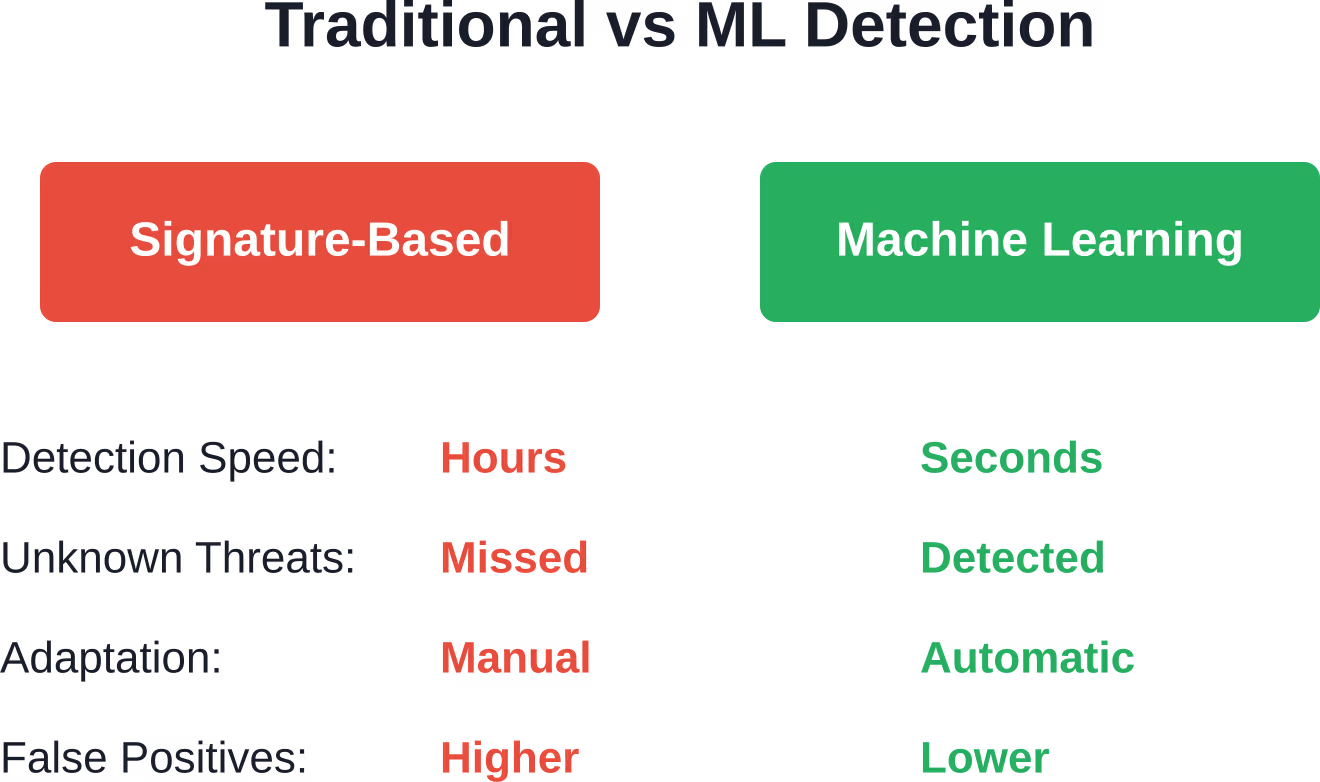
Detectie op basis van signaturen heeft decennialang goed gewerkt. Scan een bestand, vergelijk de hash ervan met een database van bekende bedreigingen en blokkeer het bestand als er een overeenkomst is. Simpel, toch?
Maar hier zit de crux: aanvallers hebben zich aangepast. Ze gebruiken polymorfe code die bij elke iteratie van signatuur verandert. Ze zetten bestandsloze malware in, zoals Kovter, die volledig in het geheugen draait en daardoor scans op basis van bestanden volledig omzeilt.
Eerlijk gezegd: tegen de tijd dat een signatuur aan de database wordt toegevoegd, kunnen duizenden systemen al gecompromitteerd zijn. De vertraging tussen ontdekking en bescherming creëert een gevaarlijke periode.
Traditionele methoden kampen ook met problemen zoals valse positieven. Als er te veel legitieme bestanden als verdacht worden aangemerkt, gaan gebruikers waarschuwingen negeren. Als er daadwerkelijke bedreigingen worden gemist, spreken de gevolgen voor zich.
Hoe machine learning de spelregels verandert
Machine learning gooit het roer om. In plaats van exacte signaturen te matchen, leren ML-modellen de kenmerken van kwaadaardige software kennen: gedragspatronen, codestructuren en systeeminteracties.
Het grootste voordeel? Detectie zonder voorafgaande blootstelling. Eenmaal getraind, identificeren deze modellen bedreigingen die ze nog nooit eerder zijn tegengekomen door patronen te herkennen die overeenkomen met bekende malwarefamilies.
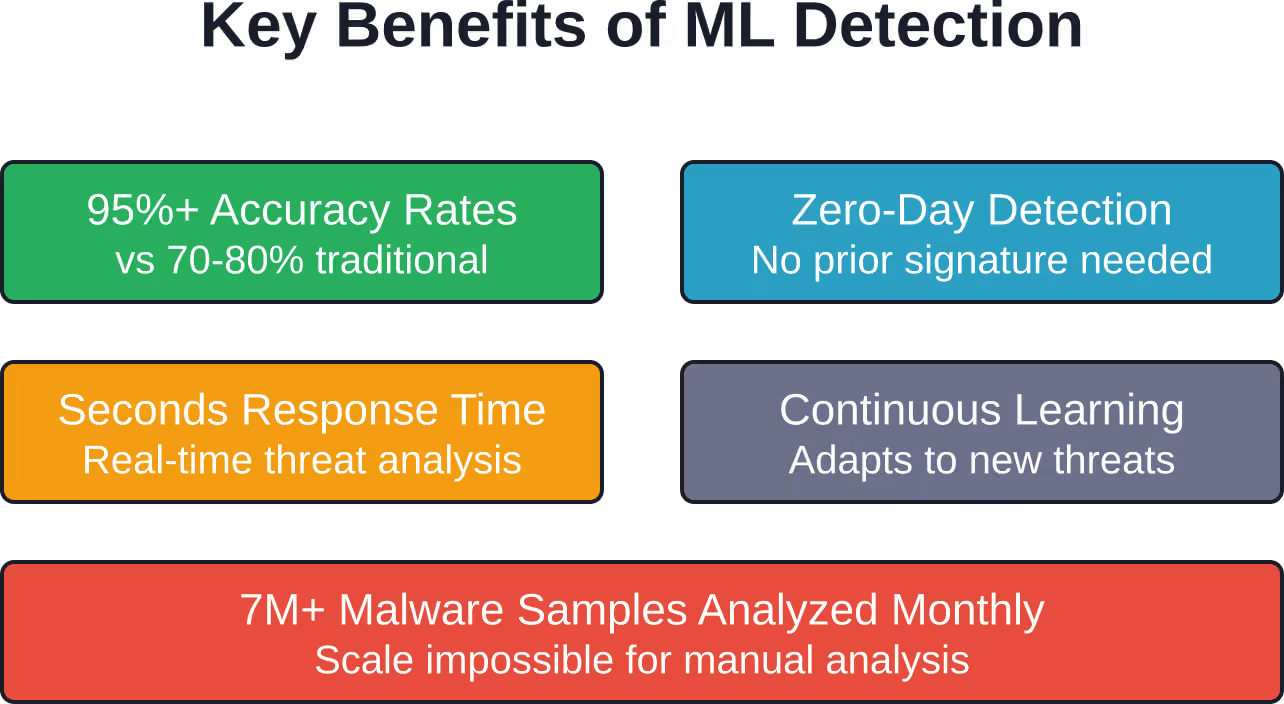
Microsoft Defender ATP bewijst dit in de praktijk. Het systeem identificeert meer dan 7 miljoen malware-aanvallen per maand met een detectiepercentage van 99%. Dat is niet zomaar een kleine verbetering, maar een fundamentele verschuiving in mogelijkheden.
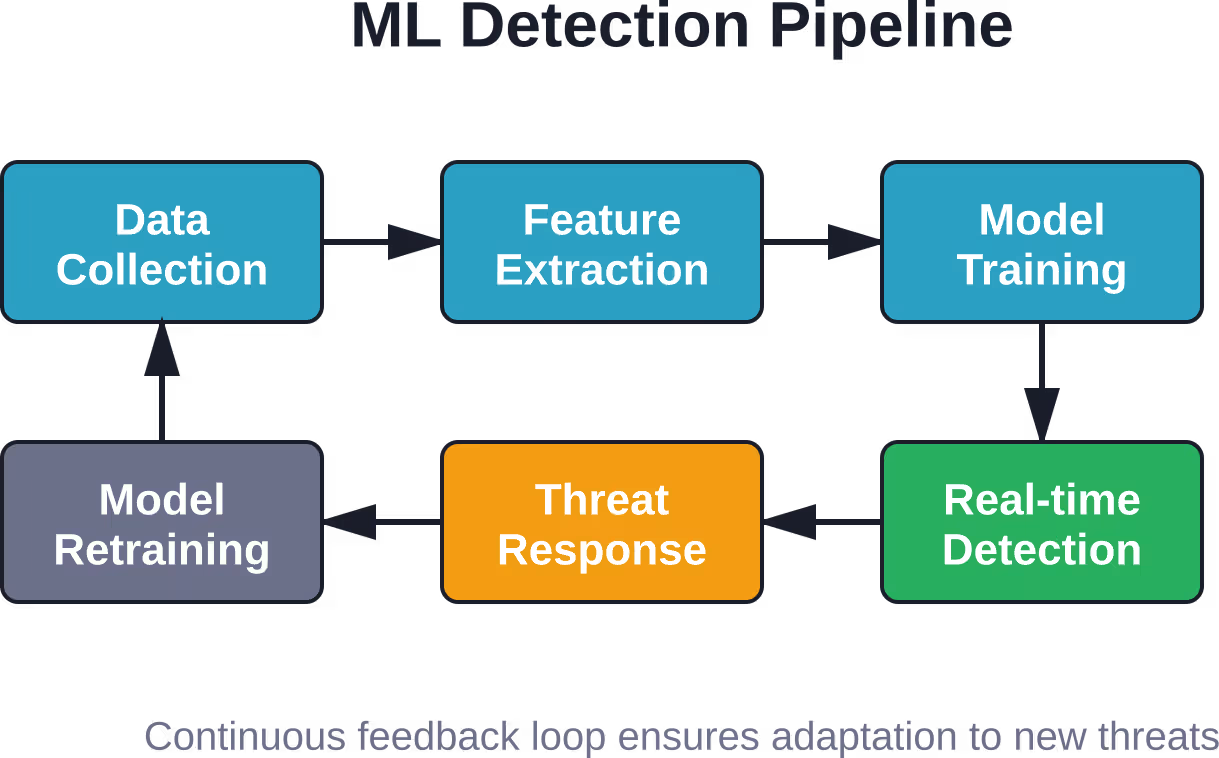
Machine learning is bovendien schaalbaar. Geautomatiseerde analyses verwerken dagelijks miljoenen samples, iets wat menselijke analisten handmatig niet zouden kunnen. En het blijft leren. Naarmate er nieuwe bedreigingen opduiken, worden de modellen opnieuw getraind op bijgewerkte datasets en aangepast aan de evoluerende aanvalsmethoden.

Verbeter de malwaredetectie met superieure AI.
Malware-detectiesystemen moeten grote hoeveelheden bestanden, logbestanden en gedragsgegevens verwerken en zich tegelijkertijd aanpassen aan veranderende bedreigingen. AI Superior Kan machine learning-projecten ondersteunen die gericht zijn op het identificeren van kwaadwillig gedrag, verdachte patronen of onbekende bedreigingen.
Hun diensten omvatten AI-consultancy, machine learning, data science, AI-softwareontwikkeling, ontwikkeling van proof-of-concepts en modelbeoordeling.
AI Superior kan malware-detectieteams helpen met:
- Taken definiëren voor het detecteren en classificeren van malware
- Het bouwen van proof-of-concept detectiemodellen
- Het ontwikkelen van systemen voor anomaliedetectie of dreigingsclassificatie.
- Testen van de modelprestaties en de detectienauwkeurigheid
- Integratie van de planning met de bestaande beveiligingsinfrastructuur.
- Ondersteuning bij de implementatie in operationele omgevingen
Voor malwaredetectie kan dit onder meer gedragsanalyse, classificatie van schadelijke bestanden, anomaliedetectie, endpointmonitoring en geautomatiseerde dreigingsidentificatie omvatten.
Neem contact op met AI Superior om de technische vereisten te onderzoeken.
Kerntechnieken van machinaal leren voor malwaredetectie
Verschillende machine learning-methoden benaderen malwaredetectie vanuit diverse invalshoeken. De keuze hangt af van de beschikbare data, computerbronnen en specifieke beveiligingsvereisten.
Methoden voor begeleid leren
Bij supervised learning wordt getraind op gelabelde datasets – voorbeelden die al geclassificeerd zijn als kwaadaardig of goedaardig. Het algoritme leert beslissingsgrenzen die de twee klassen scheiden.
Random Forest-classificatiesystemen presteren uitzonderlijk goed bij de detectie van malware. Deze ensemblemethoden combineren meerdere beslissingsbomen, waarbij elke boom stemt over de classificatie. Met de juiste afstemming en validatie zijn nauwkeurigheidspercentages van meer dan 95% haalbaar voor veelvoorkomende bedreigingen.
Support Vector Machines (SVM's) creëren optimale hypervlakken die malware scheiden van legitieme software in een hoogdimensionale kenmerkenruimte. Ze blinken uit in het omgaan met complexe, niet-lineaire beslissingsgrenzen.
Neurale netwerken en deep learning-modellen verwerken de complexe structuur van uitvoerbare bestanden. Het MalConv-model behaalt bijvoorbeeld een nauwkeurigheid van 96% bij het detecteren van Windows PE-malware door rechtstreeks ruwe bytevolgordes te verwerken.
Aangepaste perceptron-algoritmen zijn ook veelbelovend. Onderzoek van Dragos Gavrilut toonde een nauwkeurigheid aan die varieerde van 69,90% tot 96,18% voor verschillende algoritmevarianten, waarbij de best presterende versies complexere benaderingen evenaarden.
Onbegeleid en semi-begeleid leren
Niet alle detectiescenario's bieden gelabelde trainingsgegevens. Ongecontroleerde methoden identificeren anomalieën: monsters die significant afwijken van normale patronen.
Clusteringsalgoritmen groeperen vergelijkbare samples. Uitschieters die niet in de vastgestelde clusters passen, verdienen nader onderzoek als potentiële bedreigingen. Deze aanpak spoort zero-day exploits op waarvoor geen eerdere voorbeelden bestaan.
Volgens het trainingsmateriaal van CISA is machinaal leren voor anomaliedetectie een belangrijk onderdeel geworden van AI-gestuurde cybersecuritypraktijken, met name bij het omgaan met nieuwe aanvalsvectoren.
Benaderingen voor versterkingsleren
Reinforcement learning-modellen worden iteratief verbeterd door middel van vallen en opstaan, waarbij de robuustheid van het detectiesysteem wordt getest door het genereren van vijandige voorbeelden.
Maar wacht even. Er is hier ook een duistere kant: aanvallers gebruiken vergelijkbare technieken om detectie te omzeilen. Dit leidt tot een voortdurende wapenwedloop, waarbij zowel verdedigers als aanvallers gebruikmaken van machine learning.
Essentiële kenmerken voor malwareclassificatie
Machine learning-modellen hebben de juiste kenmerken nodig om nauwkeurige voorspellingen te kunnen doen. Welke eigenschappen onderscheiden kwaadaardige software het beste van goedaardige software?
Kenmerken van statische analyse
Statische kenmerken worden uit bestanden gehaald zonder dat ze worden uitgevoerd. PE-bestandsheaders, importtabellen en sectiekenmerken geven allemaal veelzeggende aanwijzingen.
Het .text-gedeelte van PE-bestanden, dat de uitvoerbare code bevat, is gemiddeld 97.000 bytes groot in malwaremonsters, wat neerkomt op ongeveer 10% aan totale malwaregrootte. Grootte alleen is niet doorslaggevend, maar in combinatie met andere kenmerken draagt het bij aan de classificatie.
Entropiemetingen detecteren versleuteling of verhulling. Waarden die wijzen op pogingen tot versleuteling of inpakken rechtvaardigen nader onderzoek als mogelijke indicatoren van kwaadwillige intentie.
Stringanalyse onthult hardgecodeerde URL's, IP-adressen, registersleutels en andere indicatoren van kwaadaardige intentie die in het binaire bestand zijn ingebed.
Dynamische gedragskenmerken
Dynamische analyse voert testprogramma's uit in gecontroleerde omgevingen (sandboxes) en monitort het gedrag. Wijzigt het programma systeembestanden? Probeert het netwerkverbindingen tot stand te brengen? Injecteert het code in andere processen?
API-aanroepsequenties bieden krachtige signalen. Malware volgt vaak karakteristieke patronen: het inventariseren van processen, het verhogen van privileges en het opzetten van persistentiemechanismen.
Het MITRE ATT&CK-raamwerk catalogiseert deze technieken uitgebreid. Detectiestrategieën koppelen specifiek gedrag aan bekende tactieken van de tegenstander, waardoor gestructureerde benaderingen voor gedragsanalyse ontstaan.
Uitdagingen bij het selecteren van functies
Meer kenmerken betekenen niet automatisch betere detectie. Hoogdimensionale kenmerkruimtes lopen het risico op overfitting: modellen die trainingsgegevens onthouden, maar falen bij nieuwe voorbeelden.
SHAP-waarden (SHapley Additive exPlanations) helpen bepalen welke kenmerken er daadwerkelijk toe doen. Onderzoek met 100 malwarevoorbeelden als achtergronddata en het berekenen van SHAP-waarden over 500 voorbeelden toonde aan dat bepaalde kenmerken consistent voorspellingen sturen, terwijl andere ruis toevoegen.
Tijdens robuustheidstests ontdekten onderzoekers dat het behouden van 80% aan featuregroepen en het verwijderen van 20% de robuustheid ten opzichte van gedeeltelijke feature-observeerbaarheid versterkt. Dit weerspiegelt praktijksituaties waarin niet alle features beschikbaar of betrouwbaar zijn.
| Functietype | Voorbeelden | Detectiewaarde | Incassokosten |
|---|---|---|---|
| Statische PE-headers | Sectiegroottes, importen, entropie | Medium | Laag |
| Snaaranalyse | URL's, IP-adressen, registersleutels | Middelhoog | Laag |
| Gedragsmatige API-aanroepen | Procesinjectie, persistentie | Hoog | Hoog |
| Netwerkverkeer | C&C-communicatie, data-exfiltratie | Hoog | Medium |
Uitdagingen bij de implementatie in de praktijk
Het implementeren van op machine learning gebaseerde malwaredetectie is geen kwestie van simpelweg aansluiten en gebruiken. Organisaties stuiten op praktische obstakels die in wetenschappelijke publicaties vaak worden genegeerd.
Vijandige machine learning
Aanvallers proberen actief detectiesystemen te misleiden. Vijandige voorbeelden – licht gemodificeerde malware die classificatie ontwijkt – vormen een ernstige bedreiging.
Onderzoek toont aan dat gecombineerde willekeurige AMG- en MAB-malwaregeneratoren een ontwijkingspercentage van 15,9% behalen tegen ML-detectoren. Dat klinkt misschien laag, maar in een omgeving met miljoenen dagelijkse samples vertegenwoordigt het duizenden succesvolle inbreuken.
Query-vrije ontwijkingsaanvallen met behulp van Generative Adversarial Networks (GAN's) hoeven de detector niet eens te testen. Ze genereren vijandige voorbeelden op basis van geleerde patronen, waardoor traditionele verdedigingsmechanismen worden omzeild.
De oplossing? Gecertificeerde detectiemethoden die aantoonbare garanties bieden. Recent onderzoek heeft betrouwbaarheidsintervallen van 99,9% vastgesteld met behulp van Wilson Score-berekeningen, waardoor de meeste voorspellingen ook onder ongunstige omstandigheden standhouden.
Beperkingen qua middelen
Deep learning-modellen vereisen aanzienlijke rekenkracht. Het trainen van complexe neurale netwerken vereist GPU's en veel geheugen, wat niet altijd beschikbaar is in omgevingen met beperkte middelen.
Voor eindapparaten met beperkte rekenkracht is efficiënte featureselectie cruciaal. Technieken voor het bepalen van de invloed van features helpen bij het identificeren van de minimale set features die de detectienauwkeurigheid behouden en tegelijkertijd de rekenlast verminderen.
Kwaliteit en beschikbaarheid van gegevens
De kwaliteit van machine learning hangt volledig af van de kwaliteit van de trainingsdata. Vertekende datasets leiden tot vertekende modellen. Verouderde voorbeelden missen opkomende bedreigingen.
Gelabelde malwaremonsters zijn waardevolle goederen. Het opbouwen van uitgebreide, representatieve datasets vereist continue verzameling, analyse en verificatie – een arbeidsintensief proces.
Privacykwesties bemoeilijken het delen van gegevens. Organisaties aarzelen om aanvalsvoorbeelden te delen die kwetsbaarheden aan het licht zouden kunnen brengen of gevoelige informatie over hun infrastructuur zouden kunnen onthullen.
Beheer van vals-positieve resultaten
Hoge detectiepercentages betekenen niets als beveiligingsteams overspoeld worden met valse meldingen. Het signaleren van legitieme software verstoort de bedrijfsvoering en leidt tot waarschuwingsmoeheid.
Het vinden van de juiste balans tussen gevoeligheid en specificiteit vereist een zorgvuldige afstemming van de drempelwaarden. Te agressief, en de productiviteit lijdt eronder. Te tolerant, en bedreigingen glippen erdoorheen.
Industriële toepassingen en casestudies
Theorie en praktijk komen samen bij cybersecurityleveranciers en beveiligingsafdelingen van bedrijven.
Microsoft Defender ATP
Microsoft Advanced Threat Protection demonstreert de inzet van machine learning op bedrijfsniveau. De verwerking van meer dan 7 miljoen malware-aanvallen per maand met een detectienauwkeurigheid van 99% bewijst dat deze systemen op grote schaal werken.
Het platform combineert meerdere detectietechnieken – gedragsanalyse, cloudgebaseerde intelligentie en geautomatiseerd onderzoek – en creëert zo een gelaagde verdediging.
Eindpuntdetectie en respons (EDR)
EDR-platforms maken gebruik van machine learning om bestandsloze malware zoals Kovter te detecteren. Traditionele bestandsscans missen deze bedreigingen volledig, omdat ze de schijf nooit aanraken.
Volgens het trainingsmateriaal van NICCS brengen EDR-onderzoeksmogelijkheden aanvalspaden in kaart en onthullen ze de doelstellingen van de tegenstander door middel van gedragscorrelatie – werk dat menselijke analisten uren of dagen zou kosten.
E-mailbeveiligingsgateways
Phishingaanvallen en schadelijke bijlagen komen via e-mail binnen. Machine learning-modellen analyseren de inhoud van berichten, de reputatie van de afzender, de kenmerken van bijlagen en ingesloten URL's om bedreigingen te blokkeren voordat ze in de inbox terechtkomen.
Natuurlijke taalverwerking (NLP), een andere AI-techniek die in de AI-toepassingencursus van CISA aan bod komt, helpt bij het identificeren van pogingen tot social engineering aan de hand van taalpatronen.
Analyse van netwerkverkeer
Machine learning detecteert commando-and-control-communicatie, data-exfiltratie en laterale beweging over netwerken. Het brengt normale verkeerspatronen in kaart en signaleert vervolgens afwijkingen.
Deze aanpak detecteert gecompromitteerde systemen die communiceren met de infrastructuur van de aanvaller, zelfs wanneer de initiële malware andere verdedigingsmechanismen heeft omzeild.
Een effectief ML-detectiesysteem bouwen
Organisaties die machine learning willen inzetten voor de detectie van malware, dienen beproefde ontwikkelingsmethoden te volgen.
Voorbereiding van de dataset
Begin met kwalitatief hoogwaardige data. Verzamel diverse malwarevoorbeelden die representatief zijn voor het huidige dreigingslandschap. Breng de datasets in evenwicht met gelijkwaardige legitieme softwarevoorbeelden om problemen met onevenwichtigheden in de verdeling te voorkomen.
Verdeel de data op de juiste manier: 70-80% voor training, 10-15% voor validatie en 10-15% voor de uiteindelijke test. Test nooit met de trainingsdata, want die meten het memoriseren, niet het generaliseren.
Modelselectie en training
Begin met eenvoudigere modellen. Random Forest-classificatiesystemen bieden een sterke basis met interpreteerbare resultaten. Evalueer de prestaties aan de hand van meerdere criteria: nauwkeurigheid, precisie, recall en ROC-AUC-curven.
Als de basisprestaties onvoldoende blijken, ga dan over op complexere benaderingen. Neurale netwerken en deep learning bieden een potentieel hogere nauwkeurigheid, maar vereisen meer data en rekenkracht.
Kruisvalidatie voorkomt overfitting. Train op meerdere datasets, waardoor consistente prestaties over alle vouwen worden gegarandeerd.
Functietechniek
Domeinexpertise is essentieel. Beveiligingsanalisten begrijpen welk gedrag wijst op kwaadaardige intentie. Vertaal die kennis naar meetbare kenmerken.
Test de belangrijkheid van kenmerken systematisch. Verwijder kenmerken met weinig waarde die ruis toevoegen zonder de classificatie te verbeteren. Eenvoudigere modellen met minder kenmerken presteren vaak beter dan complexe modellen met een overvloed aan kenmerken.
Robuustheidstesten
Onderwerp modellen aan vijandige tests. Genereer aangepaste voorbeelden met behulp van ruisinjectietechnieken: voeg Gaussiaanse ruis met een standaardafwijking van 0,3 toe aan 10% aan kenmerken, zoals gebruikt in onderzoeksvalidatie.
Test de gedeeltelijke beschikbaarheid van kenmerken door willekeurig 20% aan kenmerkgroepen te verwijderen. Detectiescenario's in de praktijk garanderen geen complete sets van kenmerken.
Meet de prestatievermindering onder vijandige omstandigheden. Robuuste modellen behouden een hoge nauwkeurigheid, zelfs wanneer aanvallers actief proberen detectie te omzeilen.
Implementatie en monitoring
Implementeer in fasen. In de schaduwmodus wordt de detectie naast bestaande systemen uitgevoerd zonder deze te blokkeren, waardoor prestatievalidatie mogelijk is vóór de productiestart.
Monitor de vals-positieve percentages nauwlettend. Stel feedbackloops in waarbij beveiligingsanalisten onjuiste voorspellingen labelen en die gegevens terugkoppelen naar de hertraining van het model.
Plan regelmatige bijscholing in. Malware evolueert voortdurend; modellen die getraind zijn op data uit 2025 zullen zonder updates niet optimaal presteren bij bedreigingen uit 2026.
| Ontwikkelingsfase | Belangrijkste activiteiten | Succesindicatoren |
|---|---|---|
| Gegevensverzameling | Verzamel diverse malwaremonsters en vergelijk deze met goedaardige bestanden. | Omvang van de dataset, verhouding van de klassenbalans |
| Functietechniek | Extraheer statische en dynamische kenmerken, test het belang ervan. | Relevantiescores van kenmerken, dimensionaliteit |
| Modeltraining | Train meerdere algoritmen, voer kruisvalidatie uit en stem hyperparameters af. | Nauwkeurigheid, precisie, herinnering, F1-score |
| Tegenstrijdige testen | Genereer ontwijkingspogingen en test de robuustheid onder aanval. | Nauwkeurigheid onder ongunstige omstandigheden |
| Productie-implementatie | Schaduwmodus, geleidelijke uitrol, feedbackintegratie | Vals-positief percentage, detectievertraging |
De toekomst van op machine learning gebaseerde dreigingsdetectie
Waar gaat deze technologie naartoe? Verschillende trends veranderen het landschap.
Verklaarbare AI voor beveiliging
Blackbox-modellen genereren voorspellingen zonder uit te leggen waarom. Beveiligingsteams moeten begrijpen waarom een bestand is gemarkeerd om de nauwkeurigheid te controleren en te leren van detecties.
SHAP-waarden en vergelijkbare verklaarbaarheidstechnieken bieden inzicht in modelbeslissingen. Deze transparantie schept vertrouwen en stelt analisten in staat de detectielogica te verbeteren.
Het AI-risicobeheerraamwerk van NIST benadrukt betrouwbaarheid en transparantie als kernprincipes. Verwacht dat regelgeving zal aandringen op de invoering van verklaarbare AI in de cyberbeveiliging.
Gefedereerd leren
Privacyoverwegingen beperken het delen van gegevens tussen organisaties. Federated learning traint modellen op basis van gedecentraliseerde datasets zonder gevoelige gegevens te centraliseren.
Organisaties werken samen aan het verbeteren van detectiemodellen, terwijl ze hun dreigingsinformatie in eigen beheer houden. Deze aanpak zorgt voor een evenwicht tussen collectieve verdediging en concurrentiebelangen.
Integratie met dreigingsinformatie
Machine learning werkt niet op zichzelf. Integratie met dreigingsinformatiebronnen – zoals Indicators of Compromise (IoC's), tactieken en procedures (TTP's) van aanvallers uit MITRE ATT&CK en kwetsbaarheidsdatabases – verrijkt de detectiecontext.
Door machine learning-patroonherkenning te combineren met zorgvuldig samengestelde dreigingsinformatie ontstaat een gelaagde verdediging. Algoritmen sporen onbekende varianten op; informatiefeeds identificeren bekende campagnes.
Geautomatiseerde respons en herstel
Detectie is slechts de eerste stap. Door AI aangedreven automatisering wordt de incidentrespons afgehandeld, worden geïnfecteerde systemen geïsoleerd, kwaadaardige processen beëindigd en wordt forensisch onderzoek gestart.
In het trainingsmateriaal van CISA wordt vermeld dat AI de tijd die beveiligingsanalisten nodig hebben om cruciale beslissingen te nemen en bedreigingen te verhelpen, verkort van uren naar minuten.
Vijandige wapenwedloop
Terwijl verdedigers machine learning inzetten, gebruiken aanvallers het ook. Vijandige machine learning genereert ontwijkende malware die specifiek is ontworpen om detectiealgoritmes te misleiden.
Dit leidt tot co-evolutie: continue aanpassing aan beide zijden. Onderzoek naar optimalisatie op twee niveaus onderzoekt het modelleren van deze iteratieve cyclus om robuuste detectiesystemen te ontwikkelen die bestand zijn tegen veranderende bedreigingen.
De wapenwedloop zal niet eindigen. Maar organisaties die machine learning omarmen, behalen aanzienlijke voordelen ten opzichte van organisaties die uitsluitend op traditionele methoden vertrouwen.
Aan de slag: praktische stappen
- Beoordeel de huidige mogelijkheden: Inventariseer bestaande beveiligingshulpmiddelen en gegevensbronnen. Bepaal welke telemetriegegevens al worden verzameld, zoals endpointlogs, netwerkverkeer en e-mailmetadata.
- Begin met augmentatie, niet met vervanging: Combineer ML-detectie met bestaande op handtekeningen gebaseerde tools. Gebruik beide benaderingen totdat de ML-systemen hun betrouwbaarheid hebben bewezen.
- Investeer in data-infrastructuur: De kwaliteit van machine learning hangt af van de kwaliteit van de data. Implementeer gecentraliseerde logging, stel beleid op voor gegevensbewaring en zorg voor consistentie in de gegevensverzameling.
- Bouwen of kopen: Commerciële EDR- en XDR-oplossingen integreren standaard ML-detectie. Maatwerk biedt flexibiliteit, maar vereist expertise op het gebied van datawetenschap en doorlopend onderhoud.
- Train beveiligingsteams: ML-systemen ondersteunen analisten, ze vervangen ze niet. Teams hebben training nodig in het interpreteren van ML-voorspellingen, het omgaan met valse positieven en het terugkoppelen van correcties.
- Meten en herhalen: Volg detectiestatistieken over tijd. Monitor trends in valse positieven. Verzamel feedback van incidentresponsteams. Gebruik die gegevens om modellen continu te verbeteren.
Veelgestelde vragen
Hoe nauwkeurig is machine learning bij het detecteren van malware?
Moderne ML-detectiesystemen behalen nauwkeurigheidspercentages van meer dan 95% voor veelvoorkomende bedreigingen, waarbij sommige gespecialiseerde modellen zoals MalConv een nauwkeurigheid van 96% bereiken voor Windows PE-malware. Microsoft Defender ATP demonstreert detectiepercentages van 99% op bedrijfsniveau en verwerkt maandelijks meer dan 7 miljoen malware-incidenten. De nauwkeurigheid varieert echter afhankelijk van de kwaliteit van het model, de selectie van kenmerken en de omstandigheden waaronder de aanvallers opereren. Goede training, validatie en continue updates zijn essentieel voor het behoud van een hoge nauwkeurigheid.
Kan machine learning zero-day malware detecteren?
Ja, dit is een van de belangrijkste voordelen van machine learning ten opzichte van detectie op basis van signaturen. Machine learning-modellen identificeren malware aan de hand van gedragspatronen en codekenmerken, in plaats van exacte overeenkomsten met signaturen. Eenmaal getraind, herkennen deze modellen kwaadaardige patronen in voorheen onbekende samples, waardoor zero-day-dreigingen zonder bestaande signaturen worden opgespoord. Technieken voor onbegeleid leren en anomaliedetectie richten zich specifiek op onbekende dreigingen door samples te markeren die significant afwijken van normale patronen.
Wat zijn de grootste uitdagingen bij het detecteren van malware met behulp van machine learning?
Vijandige machine learning vormt de grootste uitdaging: aanvallers ontwikkelen actief ontwijkingstechnieken die ML-modellen misleiden, waarbij gecombineerde aanvalsgeneratoren ontwijkingspercentages tot wel 15,9% behalen. Andere cruciale uitdagingen zijn: het verkrijgen van kwalitatief hoogwaardige gelabelde trainingsdata, het beheren van valse positieven zonder echte bedreigingen over het hoofd te zien, het omgaan met resourcebeperkingen op eindapparaten en het bijhouden van de snel evoluerende malwarevarianten. Continue hertraining van modellen en robuuste vijandige tests helpen deze problemen aan te pakken.
Hoe lang duurt het om een model voor malwaredetectie te trainen?
De trainingstijd varieert aanzienlijk, afhankelijk van de complexiteit van het model, de grootte van de dataset en de beschikbare computerbronnen. Eenvoudige Random Forest-classificatiesystemen op datasets van gemiddelde omvang kunnen in enkele minuten tot uren getraind worden. Deep learning-modellen zoals neurale netwerken die ruwe uitvoerbare bytes verwerken, kunnen dagen nodig hebben op GPU-hardware. Implementatie in de praktijk omvat ook dataverzameling, feature engineering en validatie, waardoor de totale ontwikkeltijd kan oplopen tot weken of maanden.
Moet ik mijn huidige antivirusprogramma vervangen door een programma met machine learning-gebaseerde detectie?
Nee, gelaagde verdediging werkt het beste. Op machine learning gebaseerde detectie is een aanvulling op, en geen vervanging van, traditionele, op signaturen gebaseerde antivirussoftware. Signaturen detecteren bekende bedreigingen nog steeds efficiënt, terwijl machine learning nieuwe varianten en gedragsdetectie afhandelt. De meeste moderne endpointbeveiligingsplatformen integreren beide benaderingen. Organisaties zouden machine learning-detectie in eerste instantie naast bestaande tools moeten implementeren en de prestaties in een testomgeving moeten valideren voordat ze er volledig op vertrouwen als primaire verdedigingslaag.
Welke kenmerken zijn het belangrijkst voor de classificatie van malware?
De meest waardevolle kenmerken combineren statische en dynamische analyse. Voor PE-bestanden bieden de kenmerken van de .text-sectie (gemiddeld 97.000 bytes in malware), entropiemetingen die wijzen op versleuteling en de inhoud van de importtabel sterke statische signalen. Dynamische gedragskenmerken – API-aanroepsequenties, pogingen tot procesinjectie, registerwijzigingen, netwerkverbindingen – bieden een nog hogere detectiewaarde, maar vereisen uitvoering in een sandbox. Onderzoek met behulp van SHAP-verklaarbaarheid toont aan dat het belang van kenmerken varieert per malwarefamilie, waardoor de selectie van kenmerken een continu optimalisatieproces is.
Hoe gaat machine learning-detectie om met malware die geen bestanden bevat?
Fileless malware zoals Kovter omzeilt traditionele scans op basis van bestanden doordat het volledig in het geheugen draait. Detectie met machine learning pakt dit aan door middel van gedragsanalyse en Endpoint Detection and Response (EDR)-platforms. Deze systemen monitoren procesgedrag, geheugeninjectietechnieken, misbruik van PowerShell of WMI en andere indicatoren voor fileless aanvallen. Machine learning-modellen die getraind zijn op gedragskenmerken kunnen kwaadaardige procespatronen identificeren, ongeacht of de code daadwerkelijk op de schijf wordt uitgevoerd. Dit maakt ze bijzonder effectief tegen geavanceerde persistente bedreigingen die gebruikmaken van fileless technieken.
Conclusie
Machine learning verandert fundamenteel de manier waarop organisaties zich verdedigen tegen malware. De verschuiving van reactieve signatuurvergelijking naar proactieve patroonherkenning maakt het mogelijk om bedreigingen op te sporen die anders door traditionele verdedigingsmechanismen zouden glippen.
De cijfers spreken voor zich. Detectiepercentages van meer dan 95%, reactietijden van seconden in plaats van uren, en de mogelijkheid om dagelijks miljoenen monsters te verwerken – capaciteiten die menselijke analisten simpelweg niet kunnen evenaren.
Maar machine learning is geen toverkunst. Succes vereist kwalitatieve data, doordachte feature engineering, robuuste tests met vijandige scenario's en continue modelupdates. Het dreigingslandschap verandert dagelijks en detectiesystemen moeten mee veranderen.
Organisaties die ML-gebaseerde detectie omarmen, behalen meetbare voordelen. Organisaties die dat niet doen, lopen het risico verder achterop te raken naarmate malware geavanceerder wordt en aanvallers hun eigen AI-gestuurde tools inzetten.
De wapenwedloop tussen tegenstanders gaat door. De vraag is niet of machine learning moet worden ingezet voor malwaredetectie, maar hoe snel een organisatie dit effectief kan implementeren.
Begin vandaag nog met het evalueren van de mogelijkheden van machine learning-detectie. Beoordeel uw huidige beveiligingsinfrastructuur, identificeer gegevensbronnen en plan uitbreidingsstrategieën. De bedreigingen wachten niet – en uw verdediging dus ook niet.